
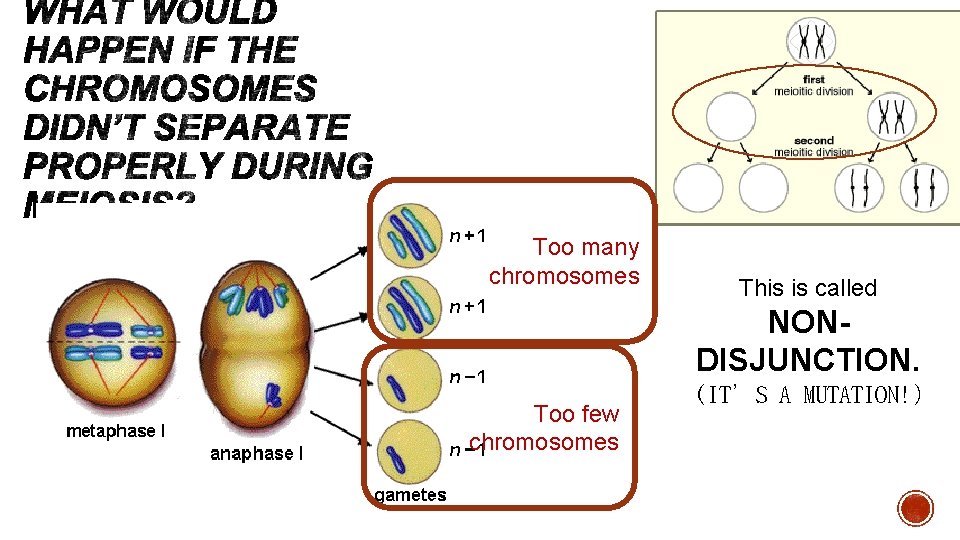
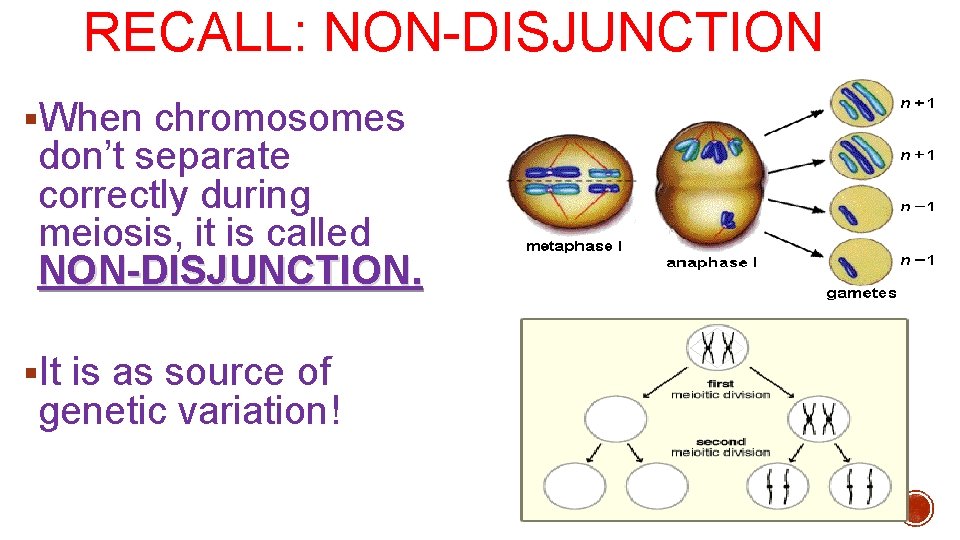
Too many chromosomes This is called NONDISJUNCTION Too

- Slides: 30
Too many chromosomes This is called NONDISJUNCTION. Too few chromosomes (IT’S A MUTATION!)
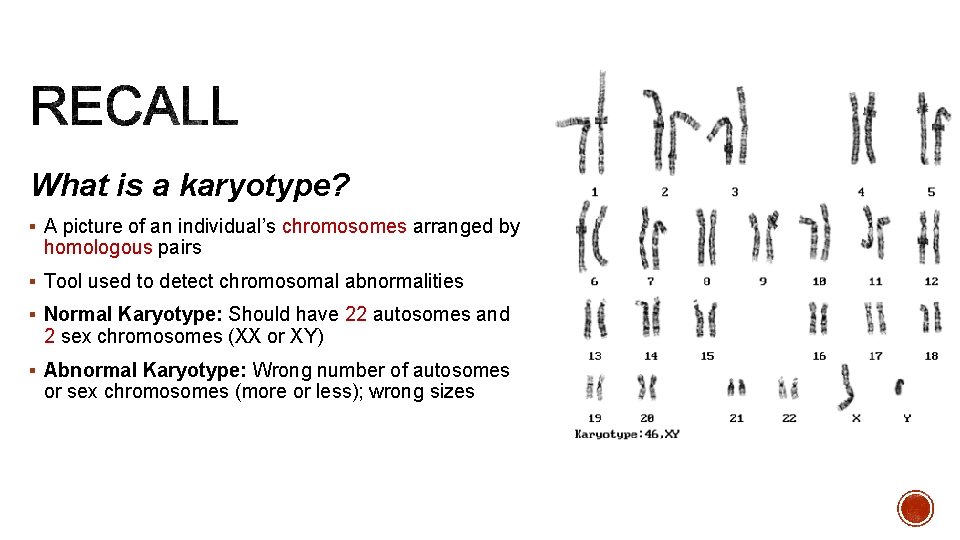
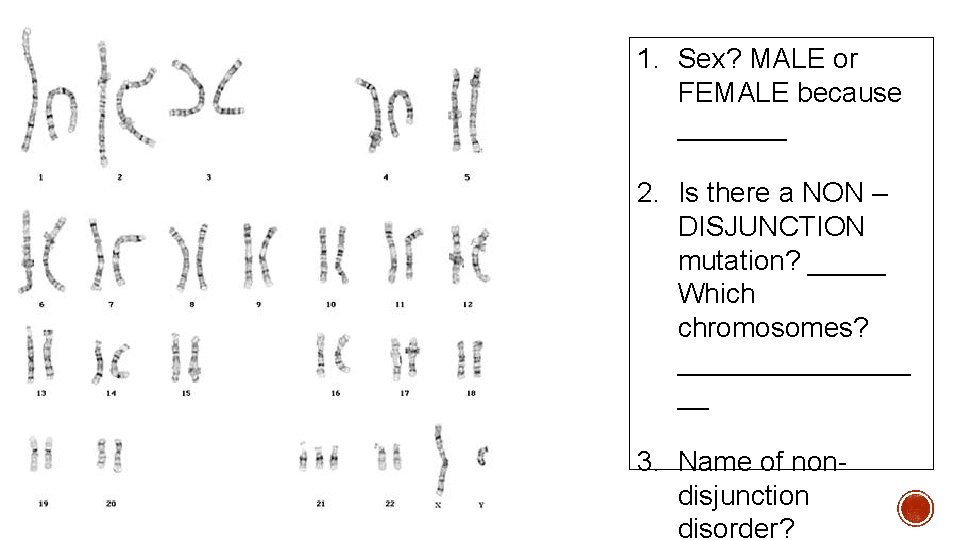
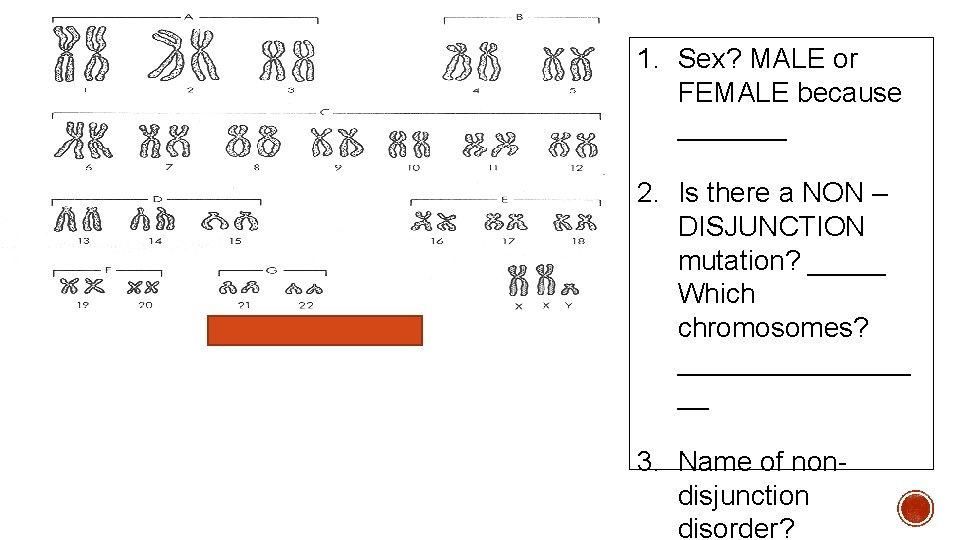
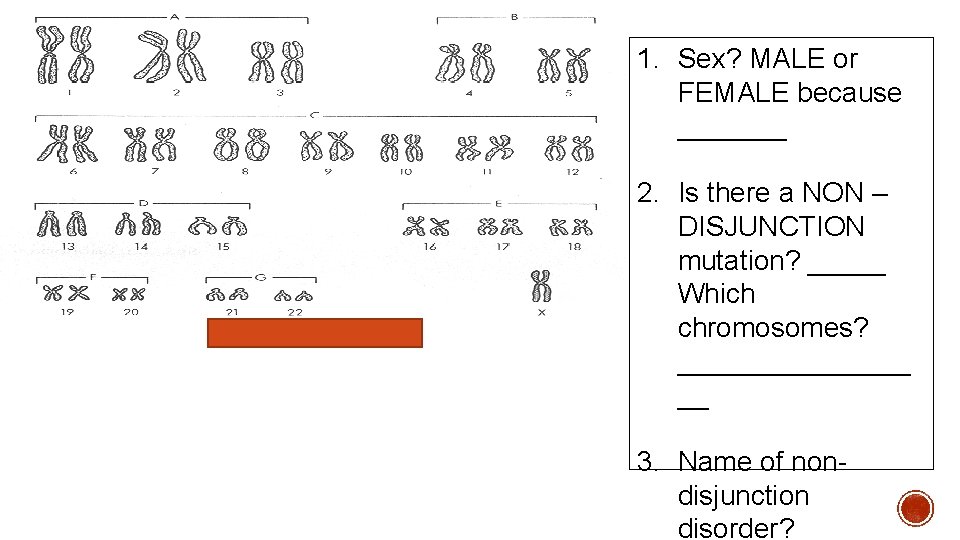
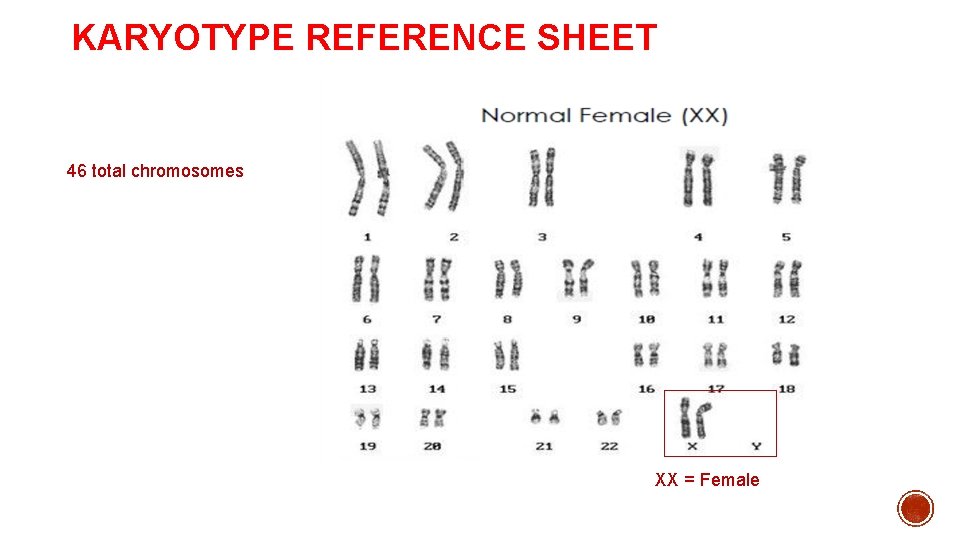
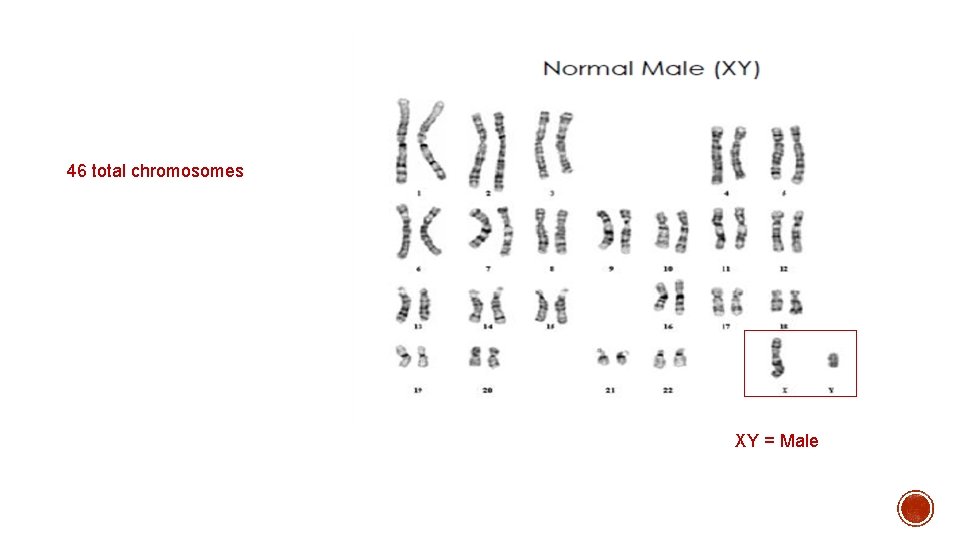
What is a karyotype? § A picture of an individual’s chromosomes arranged by homologous pairs § Tool used to detect chromosomal abnormalities § Normal Karyotype: Should have 22 autosomes and 2 sex chromosomes (XX or XY) § Abnormal Karyotype: Wrong number of autosomes or sex chromosomes (more or less); wrong sizes
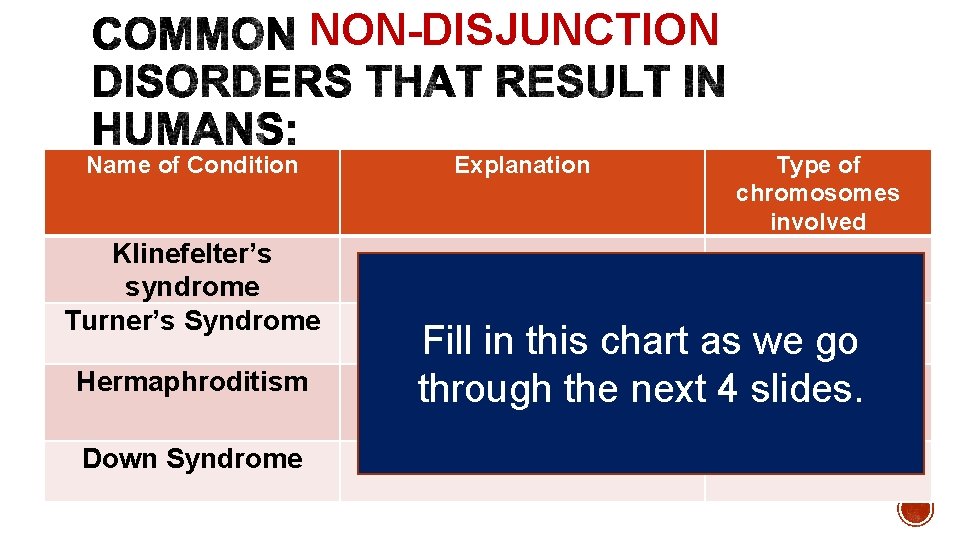
NON-DISJUNCTION Name of Condition Klinefelter’s syndrome Turner’s Syndrome Hermaphroditism Down Syndrome Explanation Type of chromosomes involved Fill in this chart as we go through the next 4 slides.
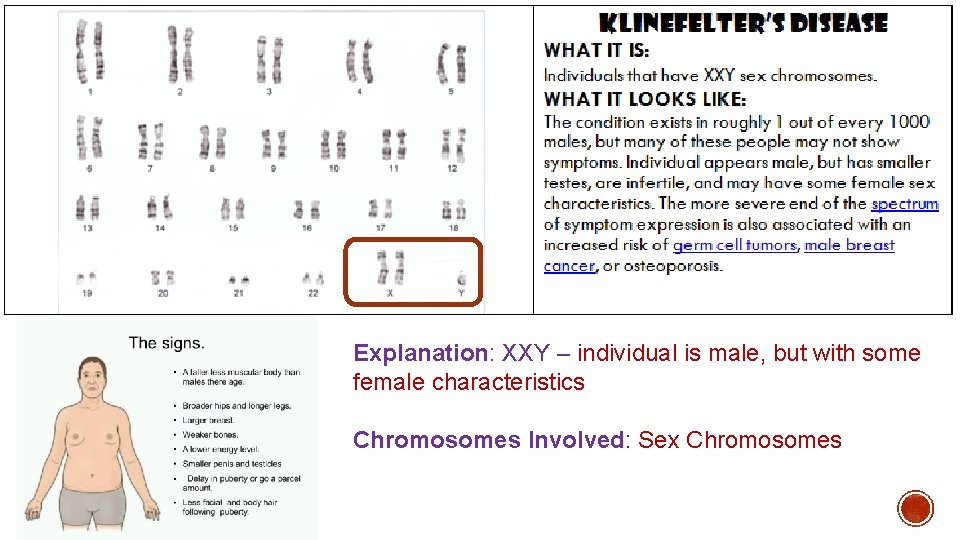
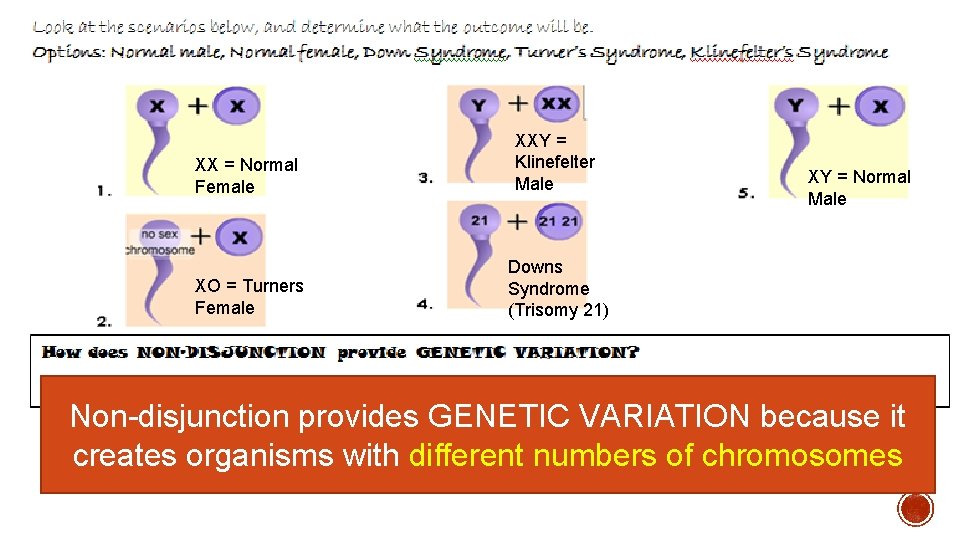
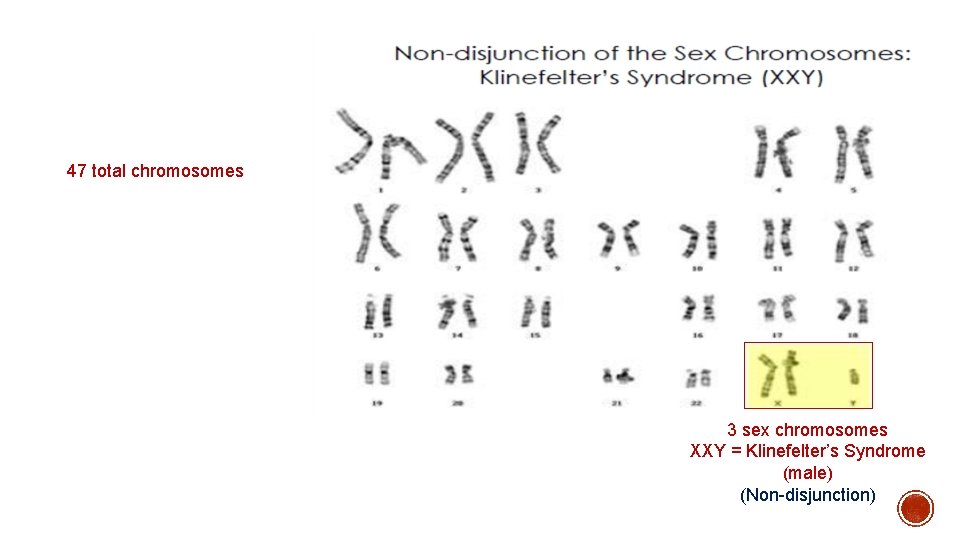
Explanation: XXY – individual is male, but with some female characteristics Chromosomes Involved: Sex Chromosomes
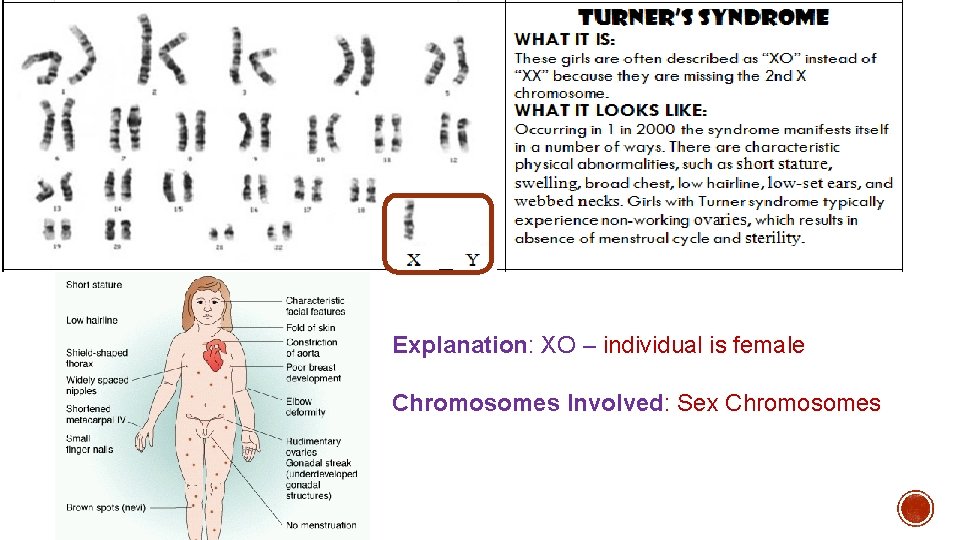
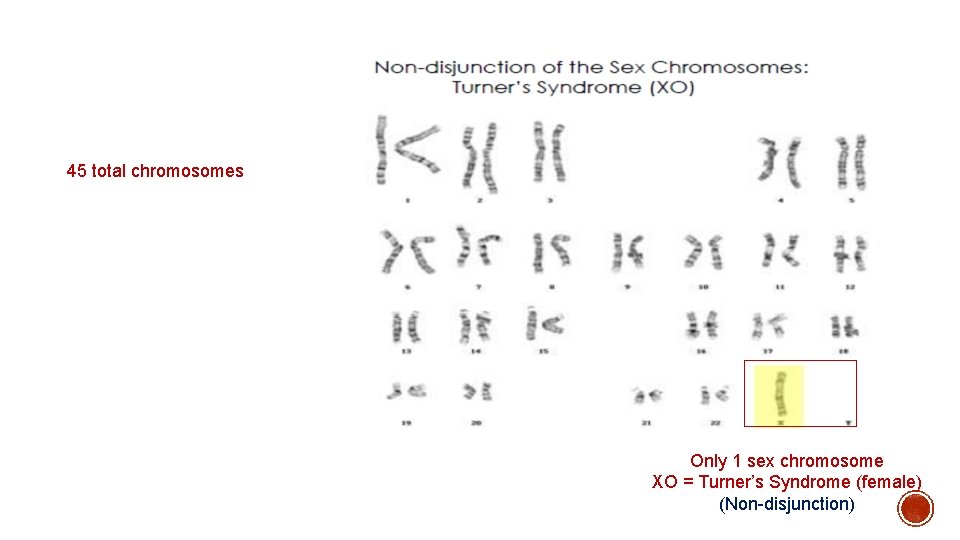
Explanation: XO – individual is female Chromosomes Involved: Sex Chromosomes
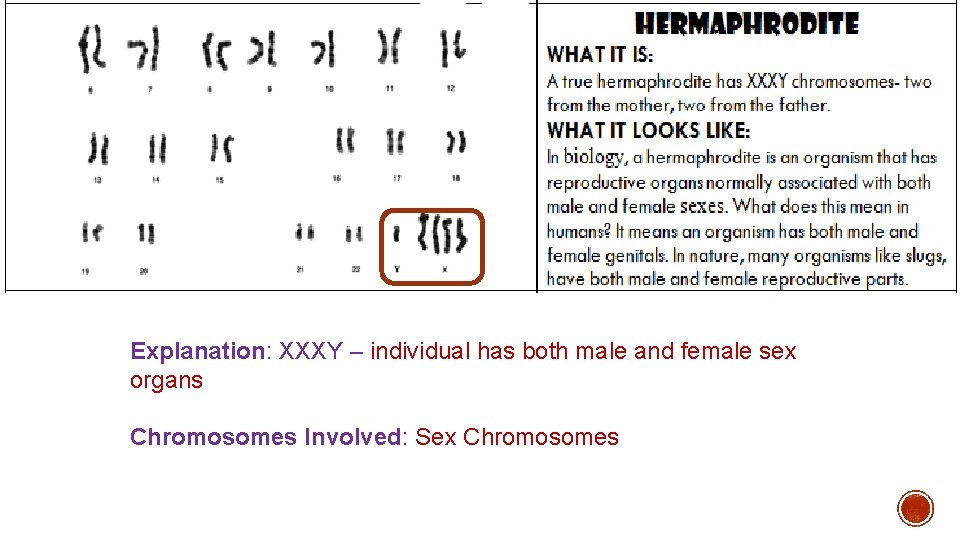
Explanation: XXXY – individual has both male and female sex organs Chromosomes Involved: Sex Chromosomes
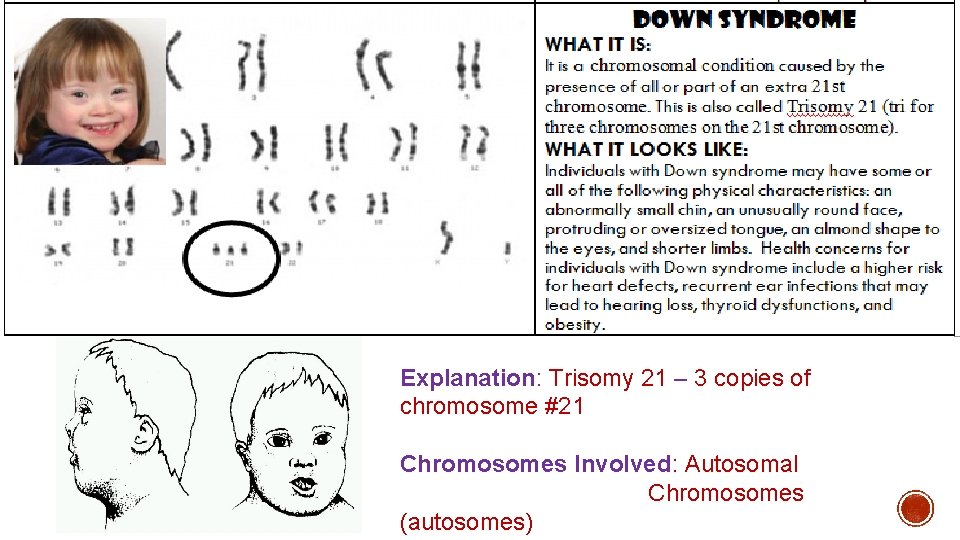
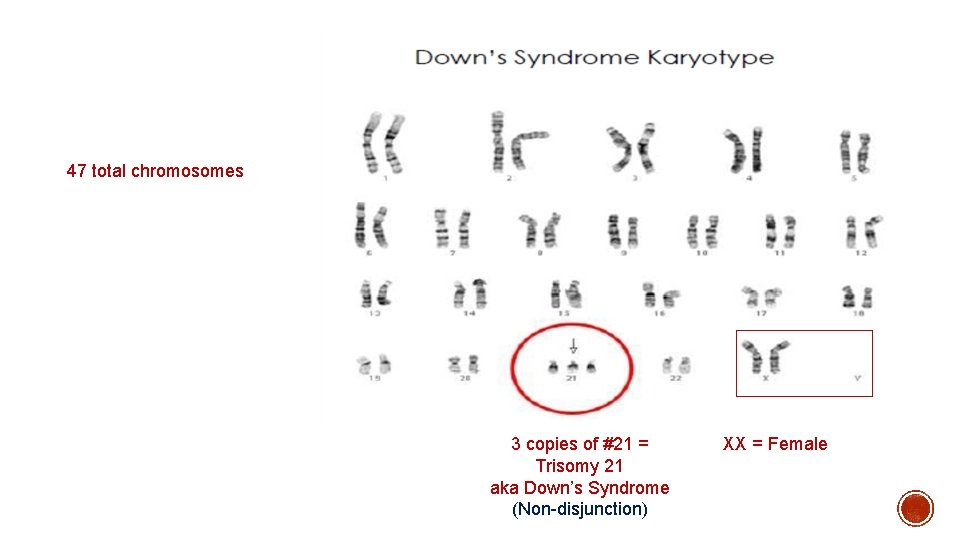
Explanation: Trisomy 21 – 3 copies of chromosome #21 Chromosomes Involved: Autosomal Chromosomes (autosomes)
XX = Normal Female XXY = Klinefelter Male XO = Turners Female Downs Syndrome (Trisomy 21) XY = Normal Male Non-disjunction provides GENETIC VARIATION because it creates organisms with different numbers of chromosomes
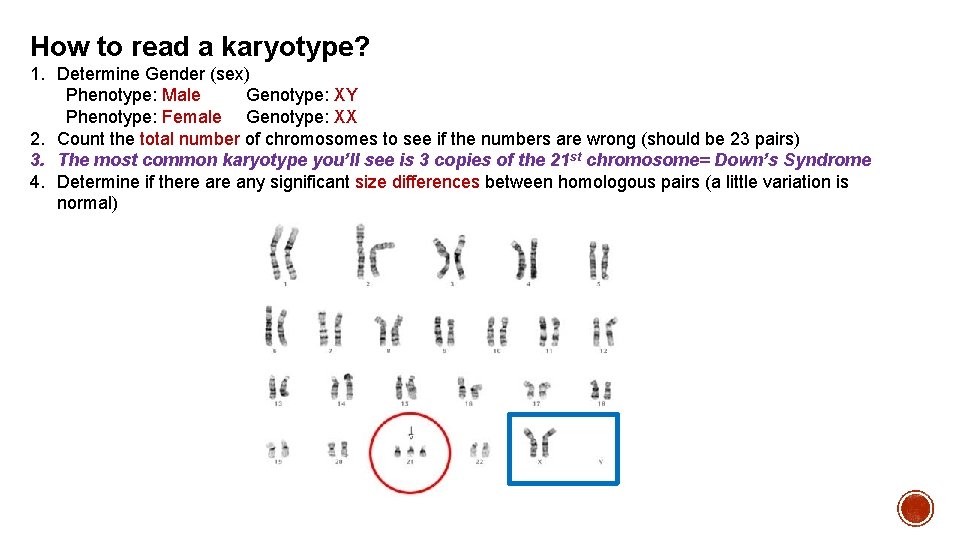
How to read a karyotype? 1. Determine Gender (sex) Phenotype: Male Genotype: XY Phenotype: Female Genotype: XX 2. Count the total number of chromosomes to see if the numbers are wrong (should be 23 pairs) 3. The most common karyotype you’ll see is 3 copies of the 21 st chromosome= Down’s Syndrome 4. Determine if there any significant size differences between homologous pairs (a little variation is normal)
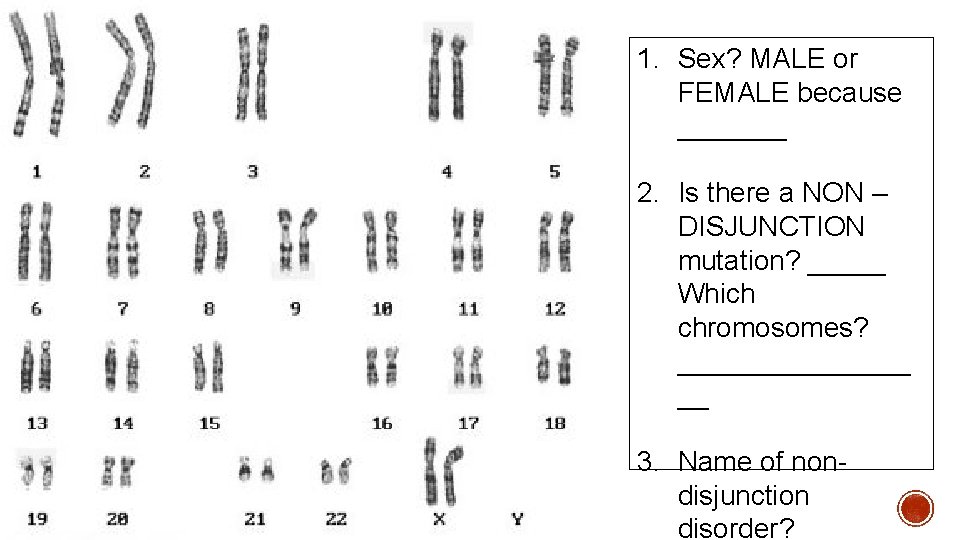
1. Sex? MALE or FEMALE because _______ 2. Is there a NON – DISJUNCTION mutation? _____ Which chromosomes? ________ __ 3. Name of nondisjunction disorder?
1. Sex? MALE or FEMALE because _______ 2. Is there a NON – DISJUNCTION mutation? _____ Which chromosomes? ________ __ 3. Name of nondisjunction disorder?
1. Sex? MALE or FEMALE because _______ 2. Is there a NON – DISJUNCTION mutation? _____ Which chromosomes? ________ __ 3. Name of nondisjunction disorder?
1. Sex? MALE or FEMALE because _______ 2. Is there a NON – DISJUNCTION mutation? _____ Which chromosomes? ________ __ 3. Name of nondisjunction disorder?
§Check your answers at the SSS when you finish! §
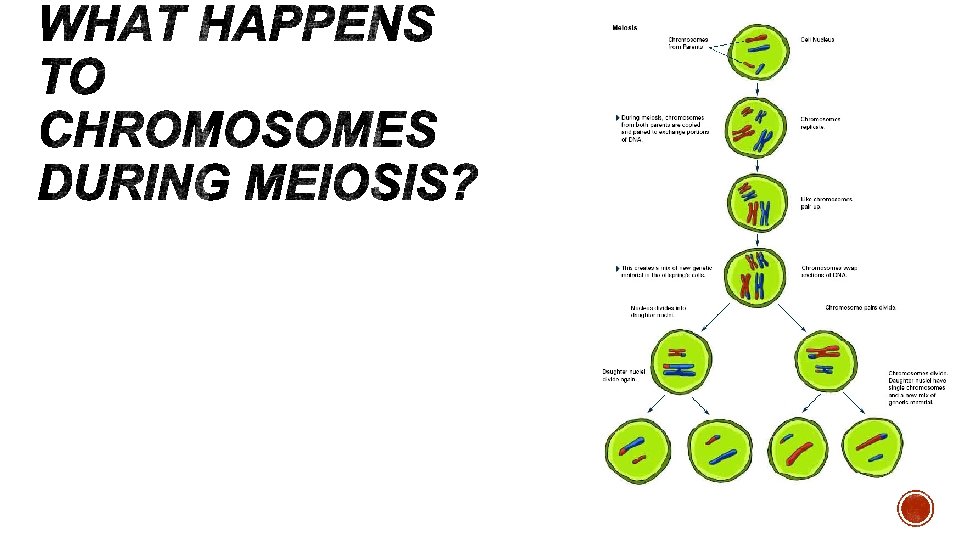
RECALL: NON-DISJUNCTION §When chromosomes don’t separate correctly during meiosis, it is called NON-DISJUNCTION. §It is as source of genetic variation!
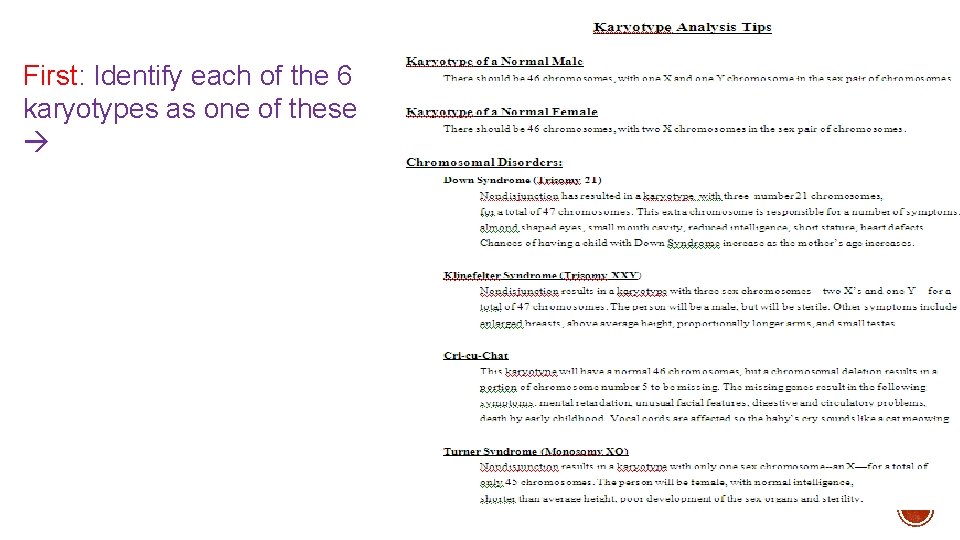
KARYOTYPE REFERENCE SHEET 46 total chromosomes XX = Female
46 total chromosomes XY = Male
47 total chromosomes 3 copies of #21 = Trisomy 21 aka Down’s Syndrome (Non-disjunction) XX = Female
45 total chromosomes Only 1 sex chromosome XO = Turner’s Syndrome (female) (Non-disjunction)
47 total chromosomes 3 sex chromosomes XXY = Klinefelter’s Syndrome (male) (Non-disjunction)
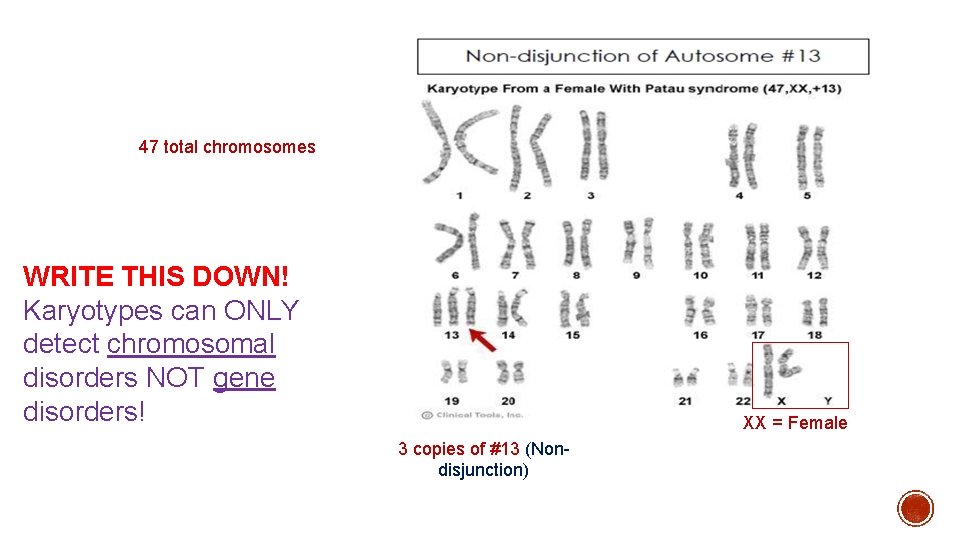
47 total chromosomes WRITE THIS DOWN! Karyotypes can ONLY detect chromosomal disorders NOT gene disorders! XX = Female 3 copies of #13 (Nondisjunction)
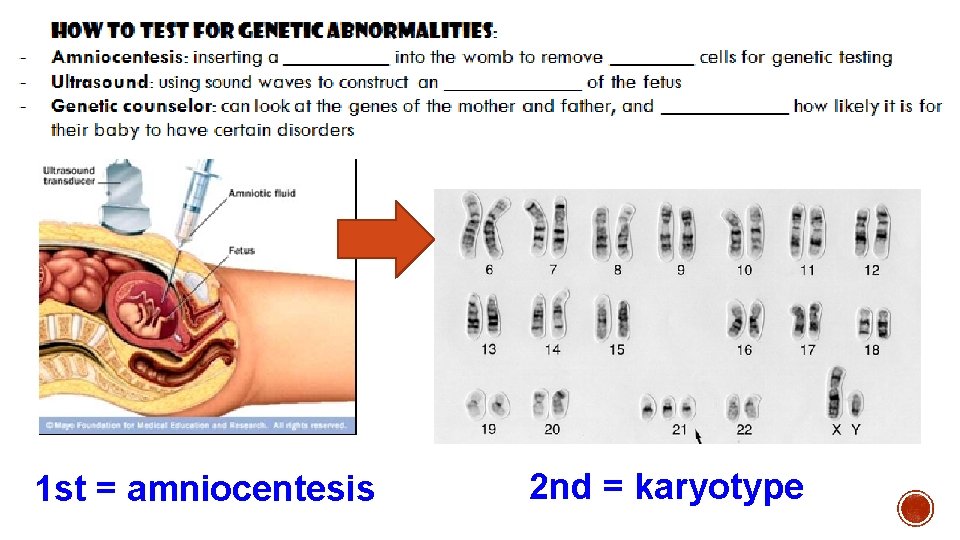
1 st = amniocentesis 2 nd = karyotype
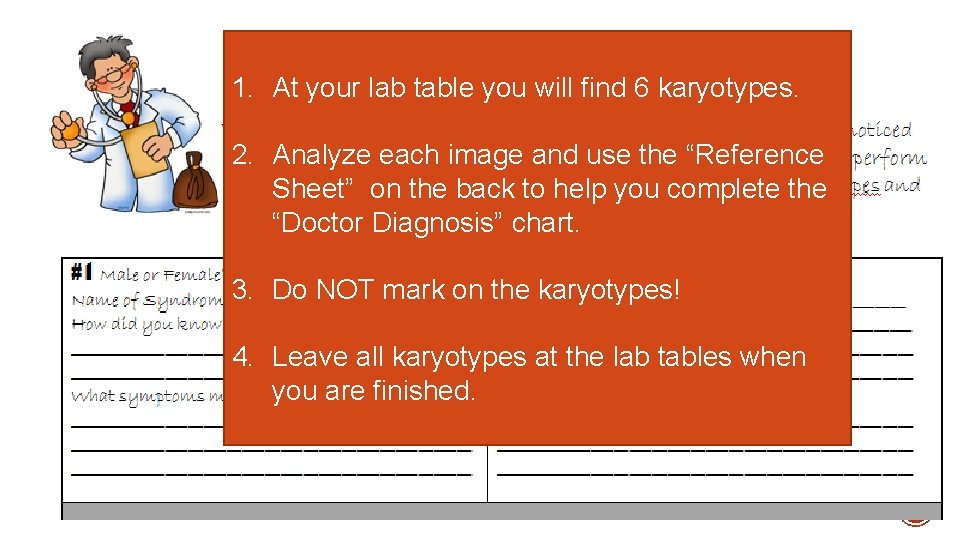
1. At your lab table you will find 6 karyotypes. 2. Analyze each image and use the “Reference Sheet” on the back to help you complete the “Doctor Diagnosis” chart. 3. Do NOT mark on the karyotypes! 4. Leave all karyotypes at the lab tables when you are finished.
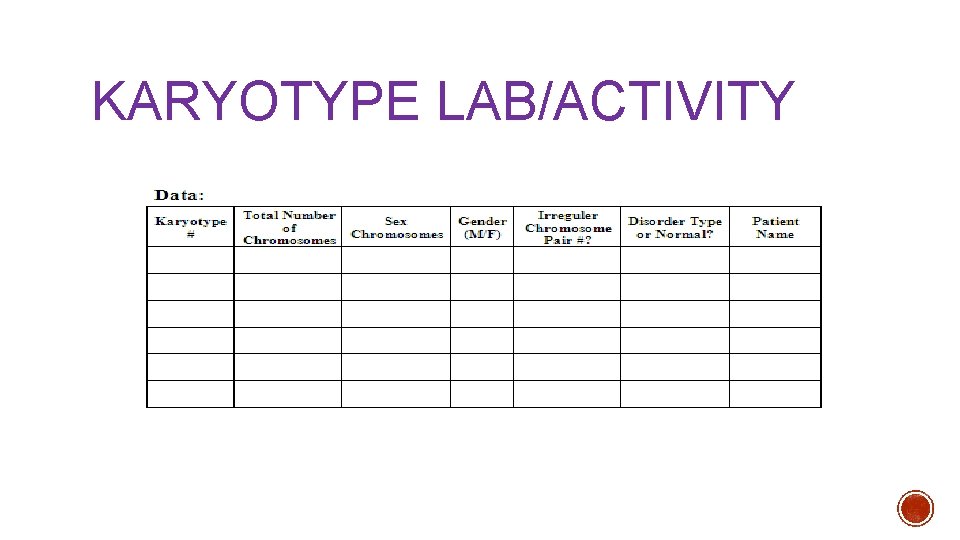
KARYOTYPE LAB/ACTIVITY
First: Identify each of the 6 karyotypes as one of these
Second: Match each patient to one of the 6 karyotypes using this page REMEMBER: Karyotypes can ONLY detect chromosomal problems, NOT genetic disorders!!!
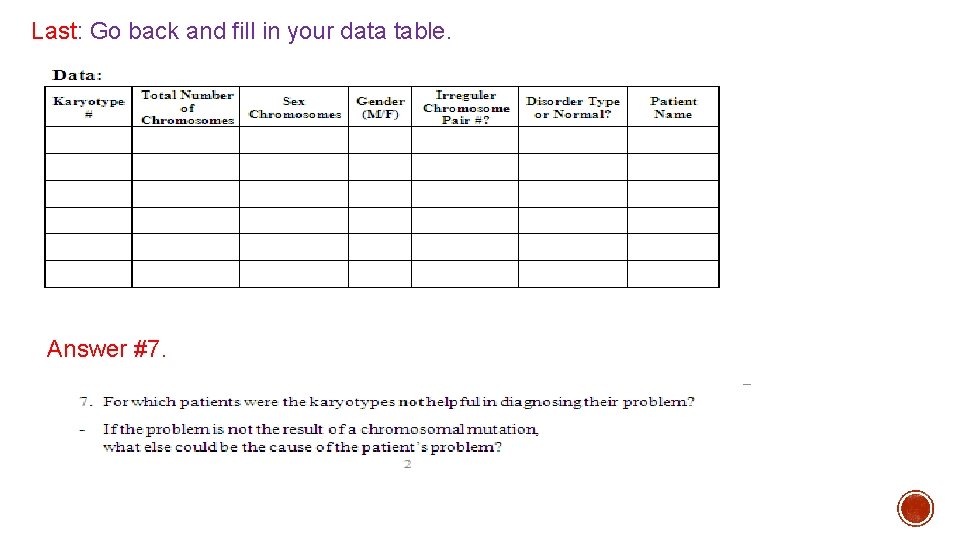
Last: Go back and fill in your data table. Answer #7.
PARTNER A PARTNER B