
Tonal Shading Drawing Using Tone Learning Objective To
Tonal Shading Drawing Using Tone
Learning Objective • To be able to understand how to create tone using pencil. Success Criteria • To use shading to create light, medium and dark tones. • To use cross hatching to achieve tone. • To identify what successful tonal shading looks like.
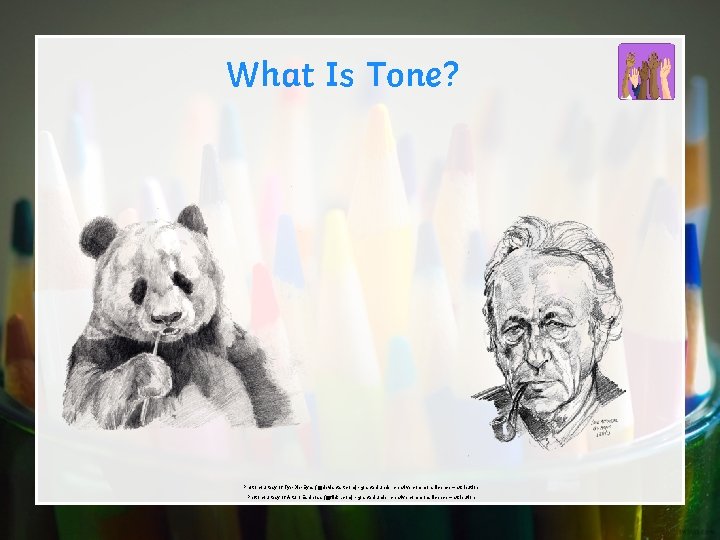
What Is Tone? Photo courtesy of Tye-Die-Eyes (@deviantart. com) - granted under creative commons licence – attribution Photo courtesy of Arturo Espinosa (@flickr. com) - granted under creative commons licence – attribution
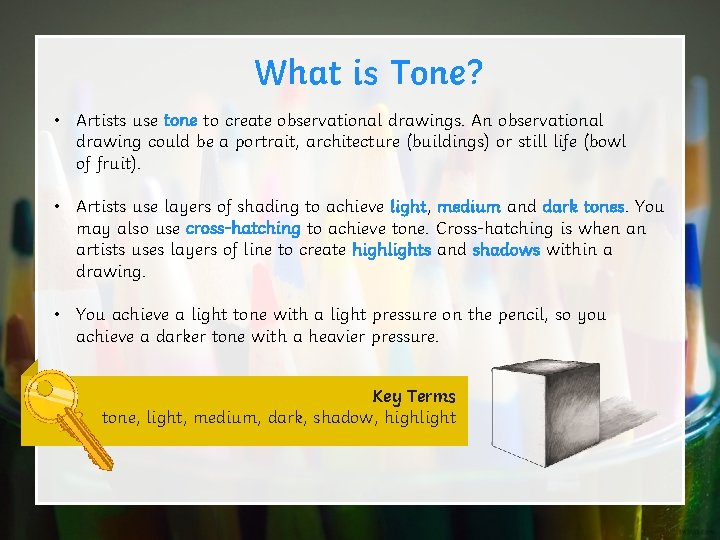
What is Tone? • Artists use tone to create observational drawings. An observational drawing could be a portrait, architecture (buildings) or still life (bowl of fruit). • Artists use layers of shading to achieve light, medium and dark tones. You may also use cross-hatching to achieve tone. Cross-hatching is when an artists uses layers of line to create highlights and shadows within a drawing. • You achieve a light tone with a light pressure on the pencil, so you achieve a darker tone with a heavier pressure. Key Terms tone, light, medium, dark, shadow, highlight
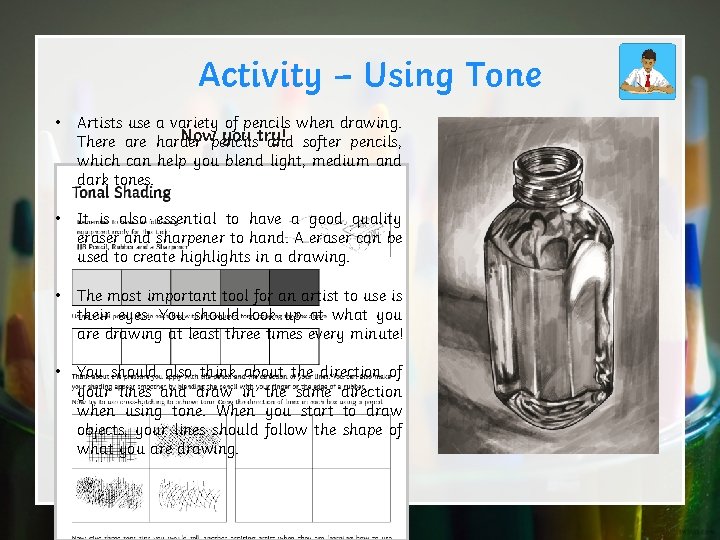
Activity – Using Tone • Artists use a variety of pencils when drawing. Nowpencils you try! There are harder and softer pencils, which can help you blend light, medium and dark tones. • It is also essential to have a good quality eraser and sharpener to hand. A eraser can be used to create highlights in a drawing. • The most important tool for an artist to use is their eyes. You should look up at what you are drawing at least three times every minute! • You should also think about the direction of your lines and draw in the same direction when using tone. When you start to draw objects, your lines should follow the shape of what you are drawing.
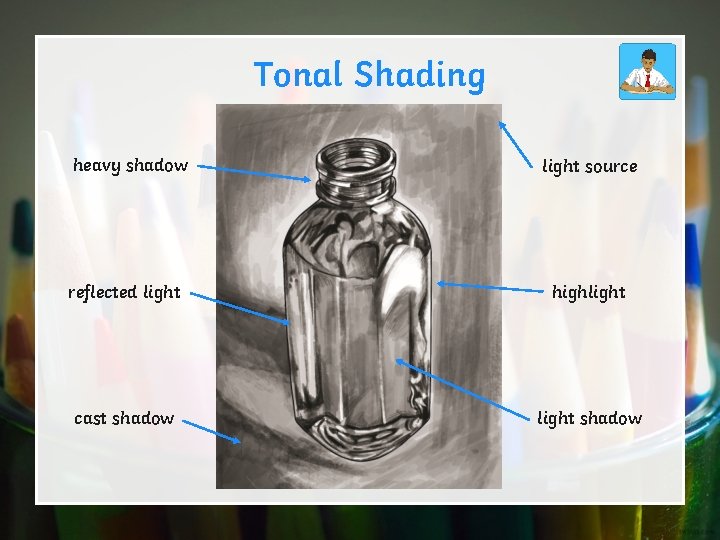
Tonal Shading heavy shadow light source reflected light highlight cast shadow light shadow

What have you learnt today? In pairs, swap your activity sheets (peer assessment). Look at each other’s work and write down two good things they have done today that meet the success criteria. Success Criteria • To use shading to create light, medium and dark tones. • To use cross hatching to achieve tone. • To identify what successful tonal shading looks like. Now give your partner one point to improve upon. Be clear and specific. Remember: it’s nice to be nice! Pause for Thought: Think about how your partner has achieved the success criteria today.

- Slides: 8