
Tombstone Weathering Lab Preparation Reading on Weathering Processes
Tombstone Weathering Lab
Preparation • Reading on Weathering Processes • Lecture on Weathering Processes – Chemical – Physical • Class-generated list of factors controlling weathering rates
Goals • Examine weathered surfaces and infer weathering processes • Make qualitative and quantitative measures of weathering extent • Estimate weathering rate • Deal with noisy natural data • Generate hypotheses on controls of weathering extent in addition to time
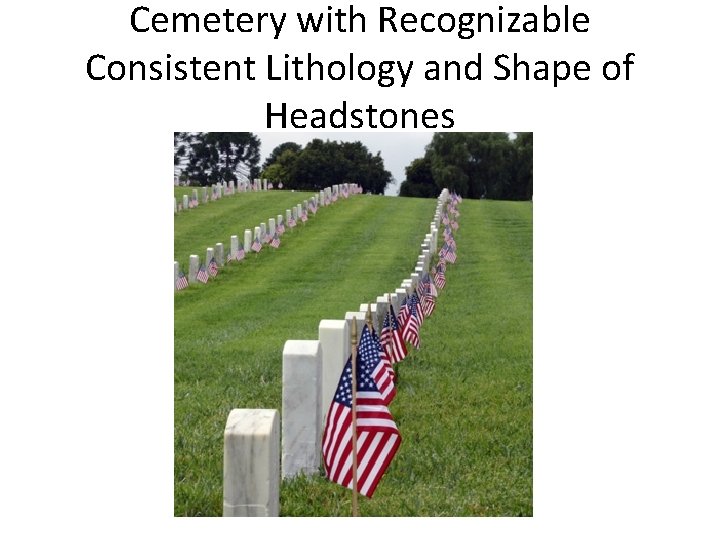
Cemetery with Recognizable Consistent Lithology and Shape of Headstones
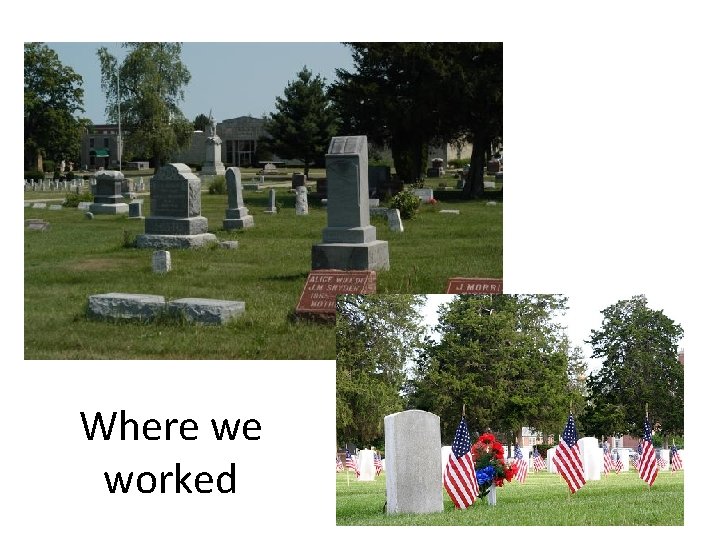
Where we worked
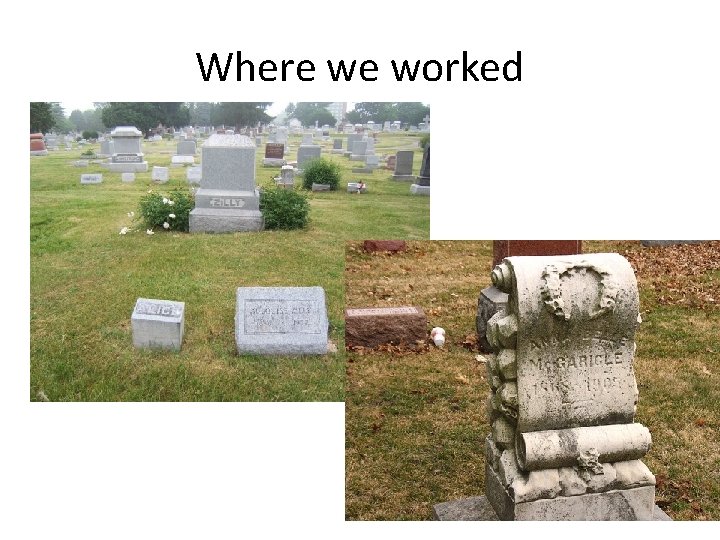
Where we worked
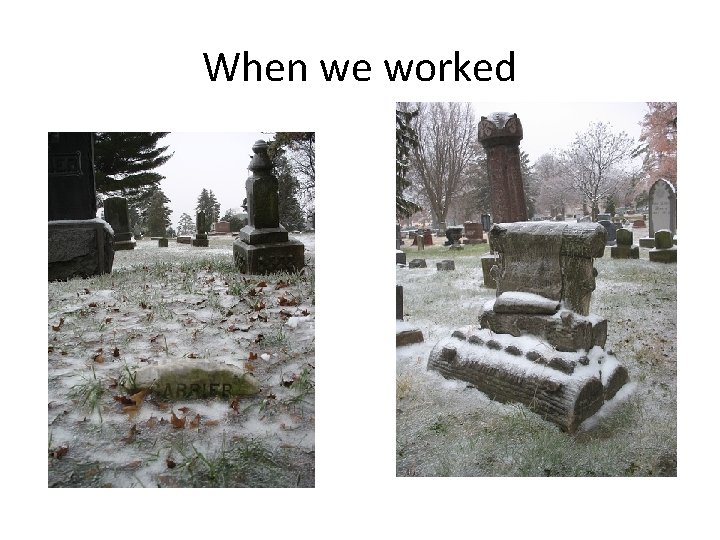
When we worked
Field Trip Steps • 5 minute intro from owner – Jewish section pointed out & off-limits • 10 minutes observations of weathering in a small area • 10 minute group discussion of weathering processes
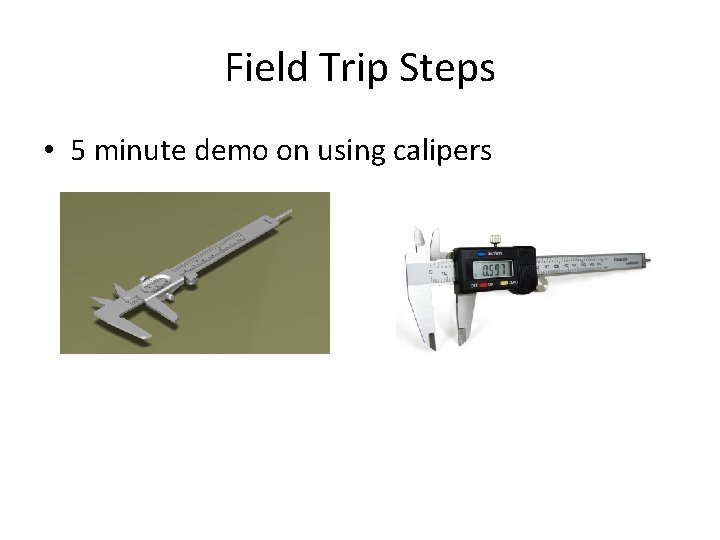
Field Trip Steps • 5 minute demo on using calipers
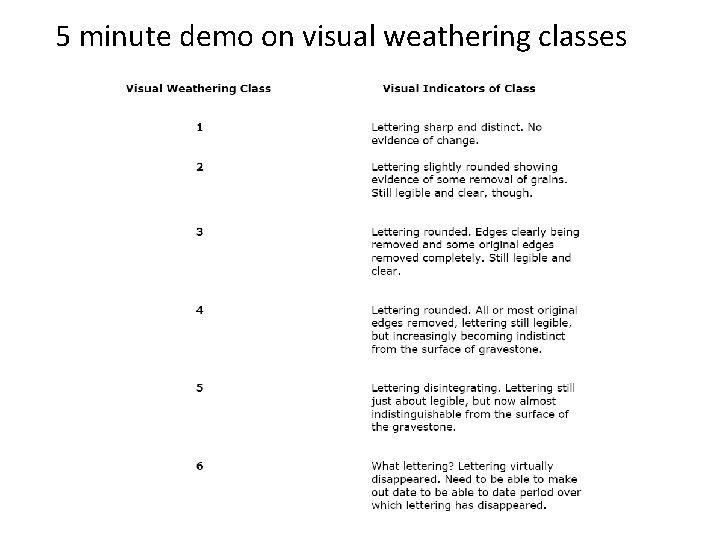
5 minute demo on visual weathering classes

Group Work • Identify a headstone (shape, readable, sandstone) • Measure width of top and bottom of stone • Determine visual weathering class • Other observations • Spend ~60 minutes

Data Analysis • Scatter plots of age and VWC and change in thickness • Estimate weathering rates • Class discussion about scatter: “How good do we expect it to look? ”
Hypotheses on other controls • Class brainstorming on other factors • In-class writing – pick a hypothesis, describe how you could test it • Interesting idea: aspect as a control
Practical Considerations • Finding the right cemetery – uniform lithology is key, uniform shape is good • Cemetery permission (hard to find people in charge for small, country places) • Winter is OK (if not too cold) • Calipers should be more than 6” long • Engineers may need help to recognize sandstone
- Slides: 14