
Tokugawa Japan Background A civil war in 1467
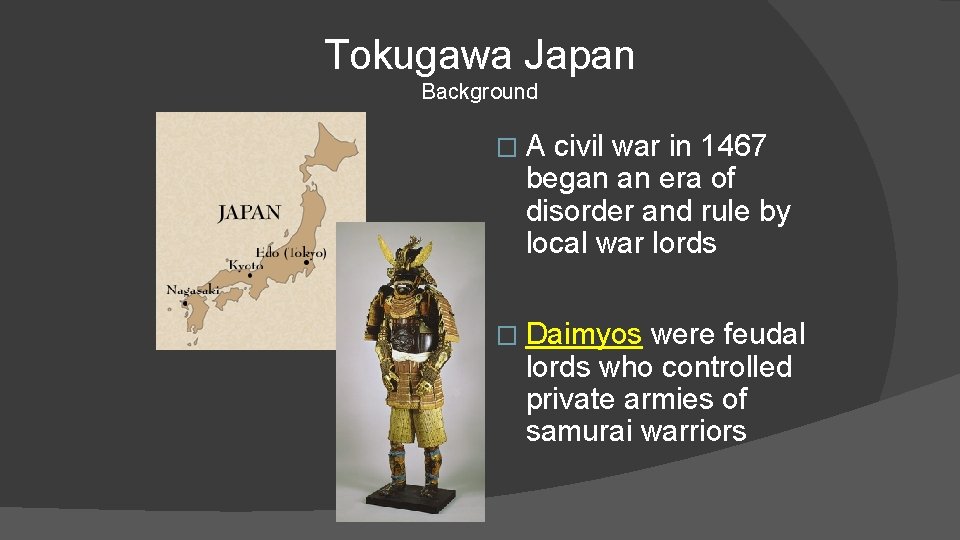
Tokugawa Japan Background �A civil war in 1467 began an era of disorder and rule by local war lords � Daimyos were feudal lords who controlled private armies of samurai warriors
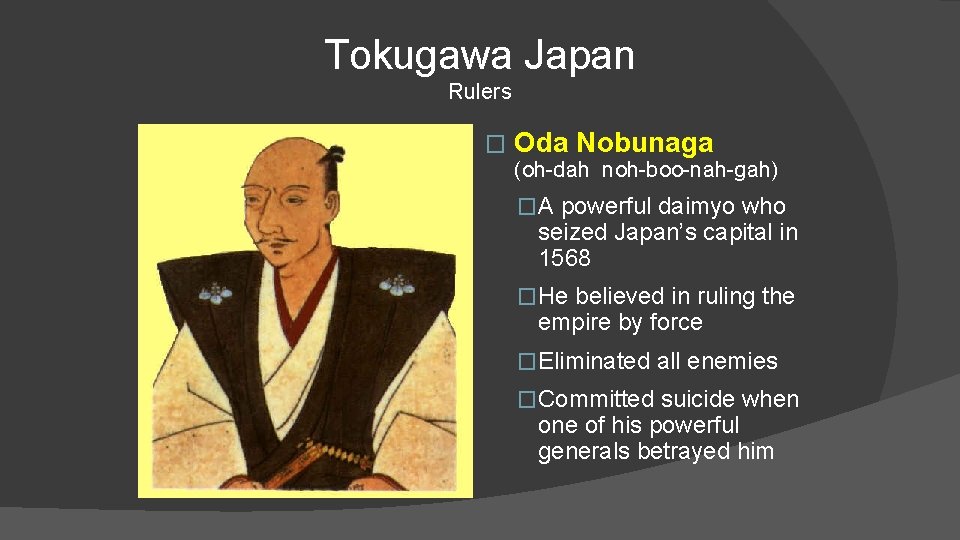
Tokugawa Japan Rulers � Oda Nobunaga (oh-dah noh-boo-nah-gah) �A powerful daimyo who seized Japan’s capital in 1568 �He believed in ruling the empire by force �Eliminated all enemies �Committed suicide when one of his powerful generals betrayed him
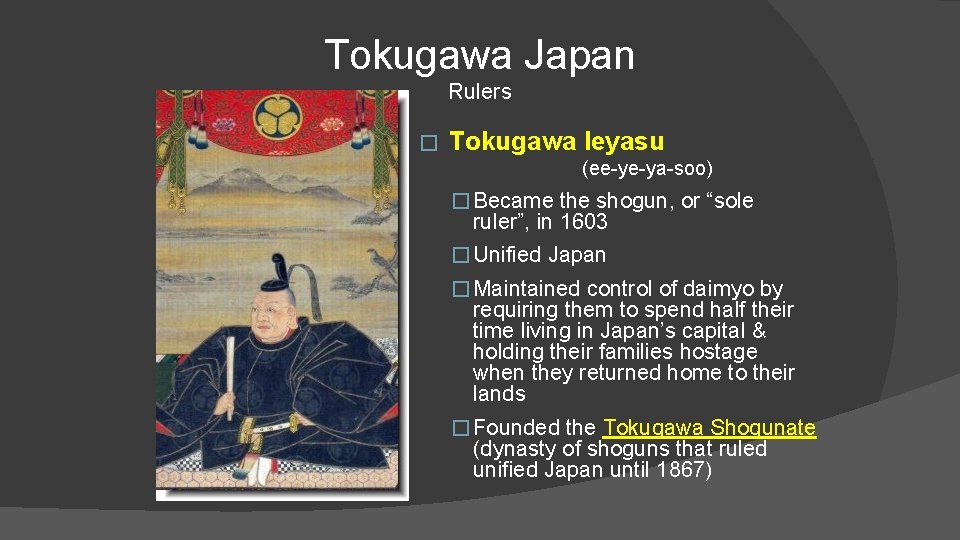
Tokugawa Japan Rulers � Tokugawa Ieyasu (ee-ye-ya-soo) � Became the shogun, or “sole ruler”, in 1603 � Unified Japan � Maintained control of daimyo by requiring them to spend half their time living in Japan’s capital & holding their families hostage when they returned home to their lands � Founded the Tokugawa Shogunate (dynasty of shoguns that ruled unified Japan until 1867)
Tokugawa Japan Foreign Policy � At first, welcomed foreigners � Began to dislike the influence that Christian missionaries had on Japanese culture (abandoning traditional beliefs & fear of uprising) � Banned Christianity in 1612 and began to persecute all Christians � In 1639, began a “closed country policy” � Only one port remained open to foreigners, but only Dutch and Chinese traders were allowed � Japanese were forbidden from leaving Japan
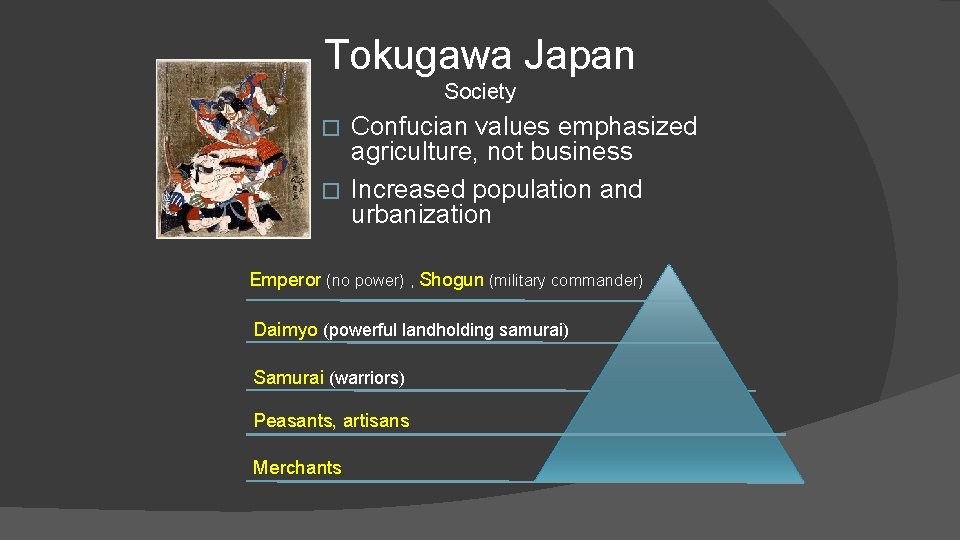
Tokugawa Japan Society Confucian values emphasized agriculture, not business � Increased population and urbanization � Emperor (no power) , Shogun (military commander) Daimyo (powerful landholding samurai) Samurai (warriors) Peasants, artisans Merchants
- Slides: 5