
Tokamak Physics Jan Mlyn 9 Plasma edge and
- Slides: 33
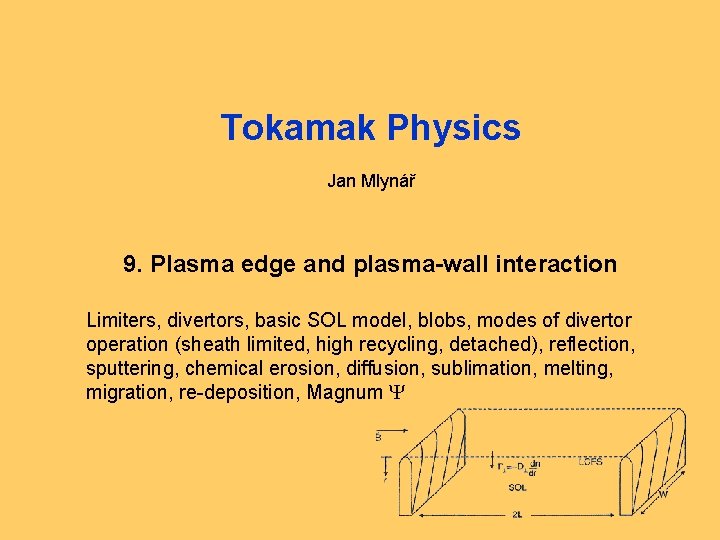
Tokamak Physics Jan Mlynář 9. Plasma edge and plasma-wall interaction Limiters, divertors, basic SOL model, blobs, modes of divertor operation (sheath limited, high recycling, detached), reflection, sputtering, chemical erosion, diffusion, sublimation, melting, migration, re-deposition, Magnum Y Fyzika tokamaků 1: Úvod, opakování
Plasma Edge Plasma edge: Scrape-off layer (SOL) + region where atomic physics has strong influence on power balance (in H-mode, the pedestal) This lecture materials courtesy of: IPP Summer school (K Krieger), Carolus Magnus Summer school (B. Unterberg, V. Phillips), Focus On JET (myself. . . ) and others. More detailed information… P. Stangeby: The Boundary of Magnetic Fusion Devices, Io. P 2000, 744 pages, ISBN / EAN: 0750305592 Tokamak Physics 9: Plasma edge and plasma-wall interaction
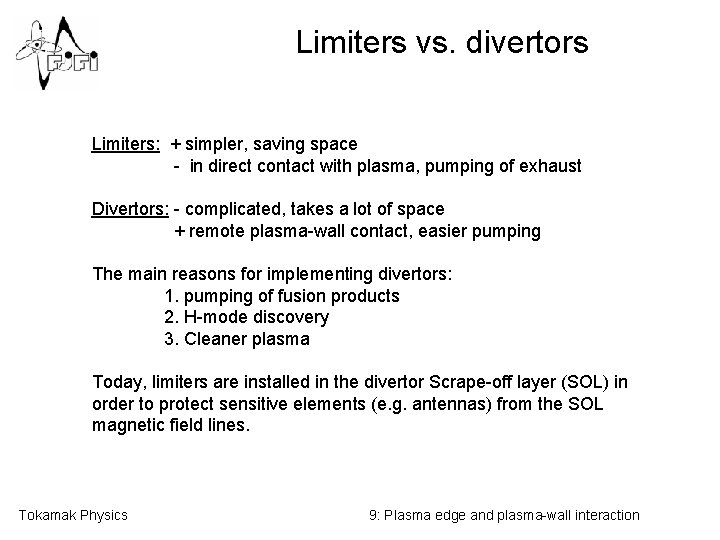
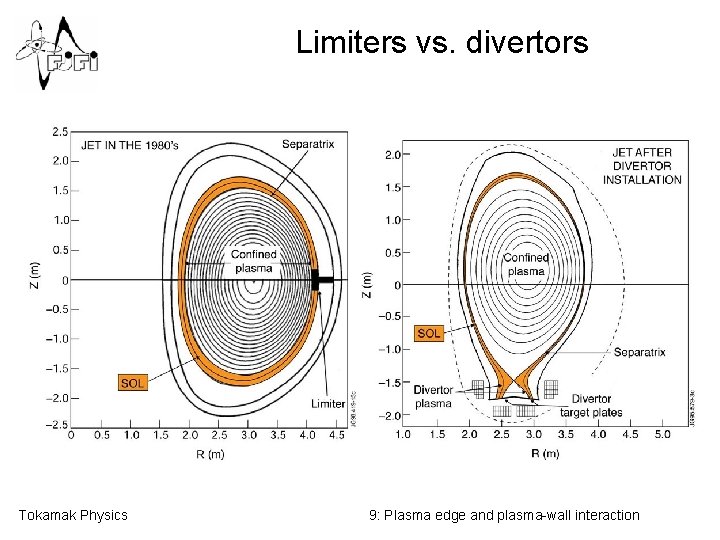
Limiters vs. divertors Limiters: + simpler, saving space - in direct contact with plasma, pumping of exhaust Divertors: - complicated, takes a lot of space + remote plasma-wall contact, easier pumping The main reasons for implementing divertors: 1. pumping of fusion products 2. H-mode discovery 3. Cleaner plasma Today, limiters are installed in the divertor Scrape-off layer (SOL) in order to protect sensitive elements (e. g. antennas) from the SOL magnetic field lines. Tokamak Physics 9: Plasma edge and plasma-wall interaction
Limiters vs. divertors Tokamak Physics 9: Plasma edge and plasma-wall interaction
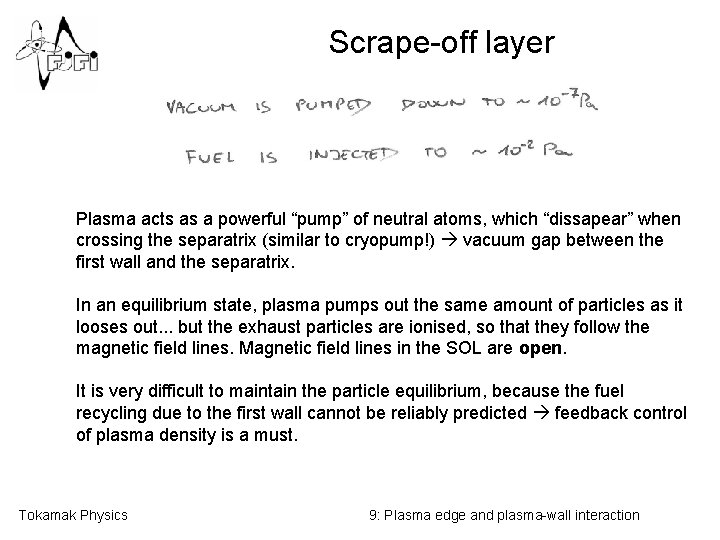
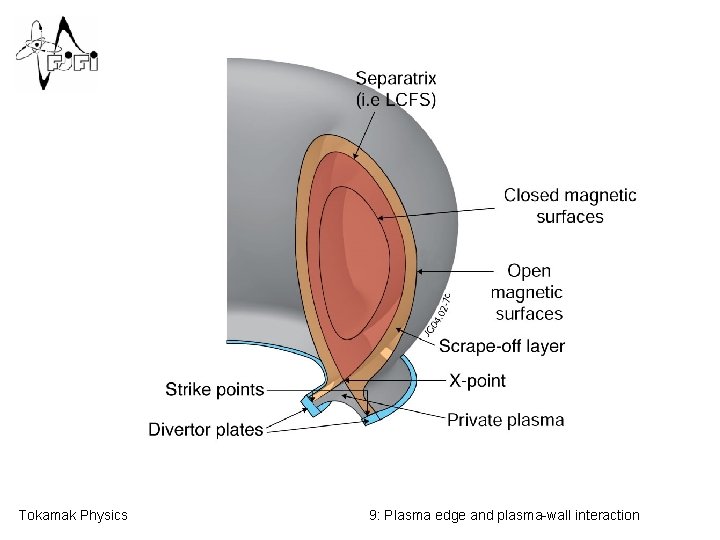
Scrape-off layer Plasma acts as a powerful “pump” of neutral atoms, which “dissapear” when crossing the separatrix (similar to cryopump!) vacuum gap between the first wall and the separatrix. In an equilibrium state, plasma pumps out the same amount of particles as it looses out. . . but the exhaust particles are ionised, so that they follow the magnetic field lines. Magnetic field lines in the SOL are open. It is very difficult to maintain the particle equilibrium, because the fuel recycling due to the first wall cannot be reliably predicted feedback control of plasma density is a must. Tokamak Physics 9: Plasma edge and plasma-wall interaction
Tokamak Physics 9: Plasma edge and plasma-wall interaction
Basic SOL model c Tokamak Physics 9: Plasma edge and plasma-wall interaction
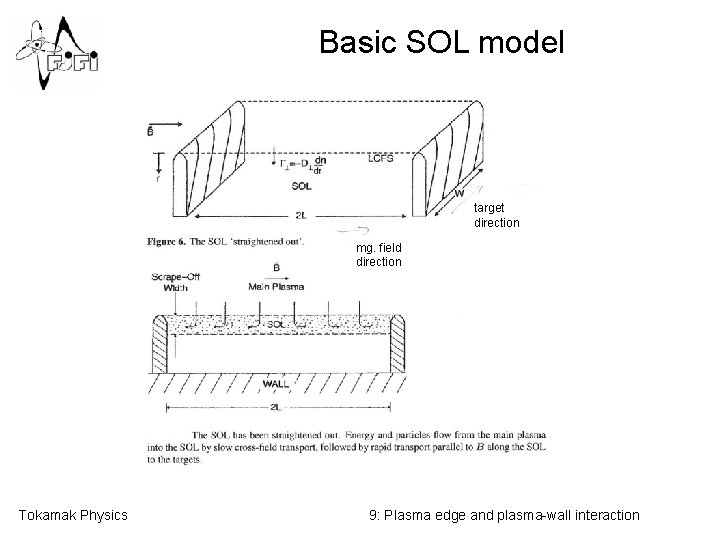
Basic SOL model target direction mg. field direction Tokamak Physics 9: Plasma edge and plasma-wall interaction
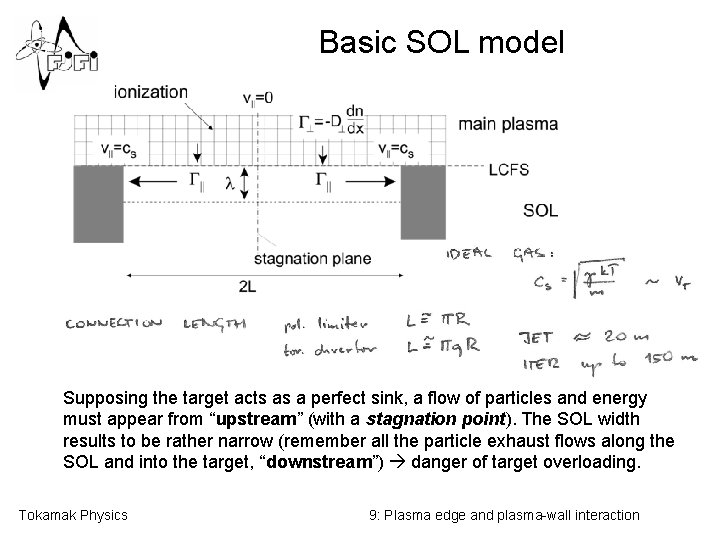
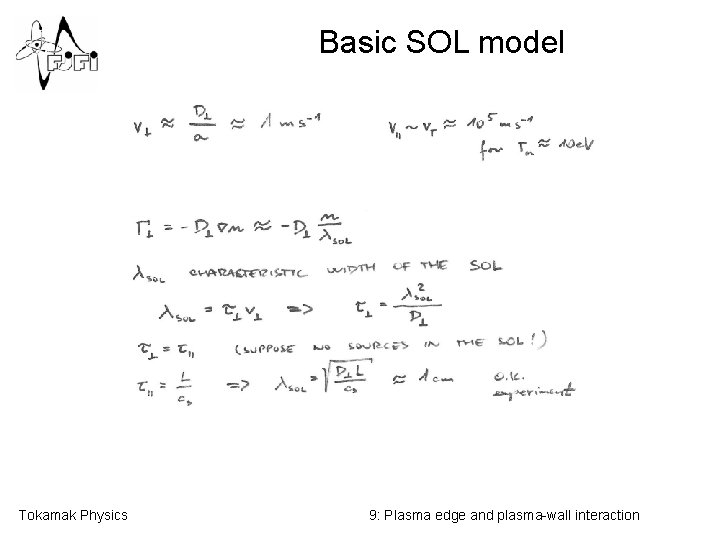
Basic SOL model Supposing the target acts as a perfect sink, a flow of particles and energy must appear from “upstream” (with a stagnation point). The SOL width results to be rather narrow (remember all the particle exhaust flows along the SOL and into the target, “downstream”) danger of target overloading. Tokamak Physics 9: Plasma edge and plasma-wall interaction
Basic SOL model Tokamak Physics 9: Plasma edge and plasma-wall interaction
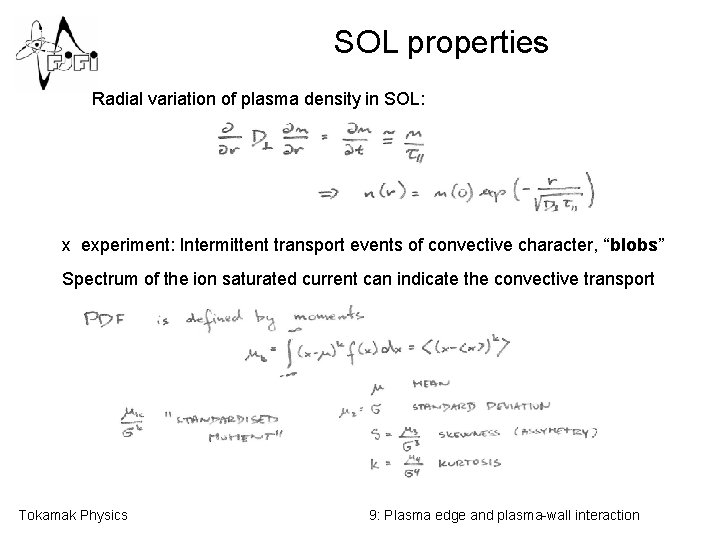
SOL properties Radial variation of plasma density in SOL: x experiment: Intermittent transport events of convective character, “blobs” Spectrum of the ion saturated current can indicate the convective transport Tokamak Physics 9: Plasma edge and plasma-wall interaction
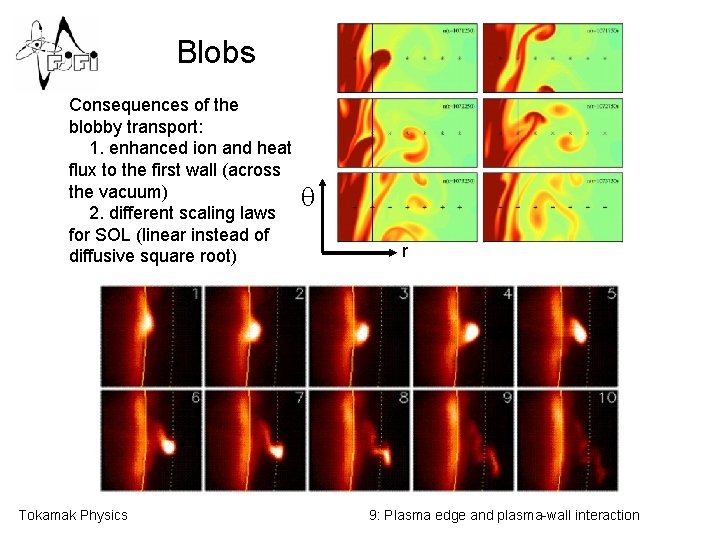
Blobs Consequences of the blobby transport: 1. enhanced ion and heat flux to the first wall (across the vacuum) 2. different scaling laws for SOL (linear instead of diffusive square root) Tokamak Physics r 9: Plasma edge and plasma-wall interaction
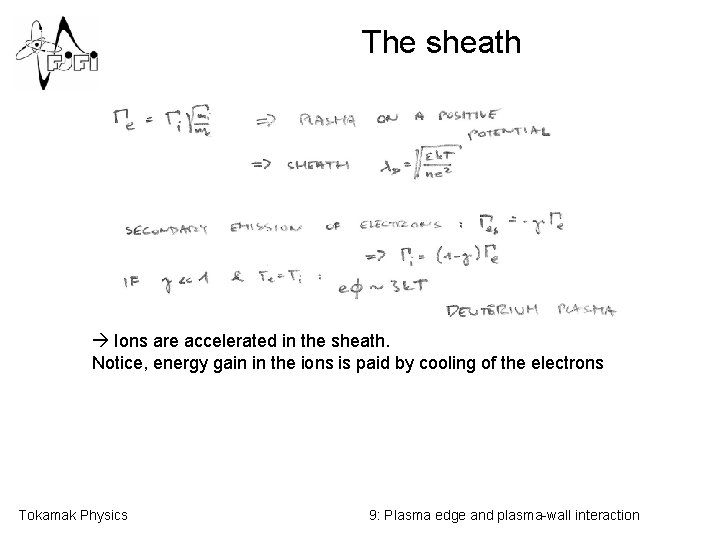
The sheath Ions are accelerated in the sheath. Notice, energy gain in the ions is paid by cooling of the electrons Tokamak Physics 9: Plasma edge and plasma-wall interaction
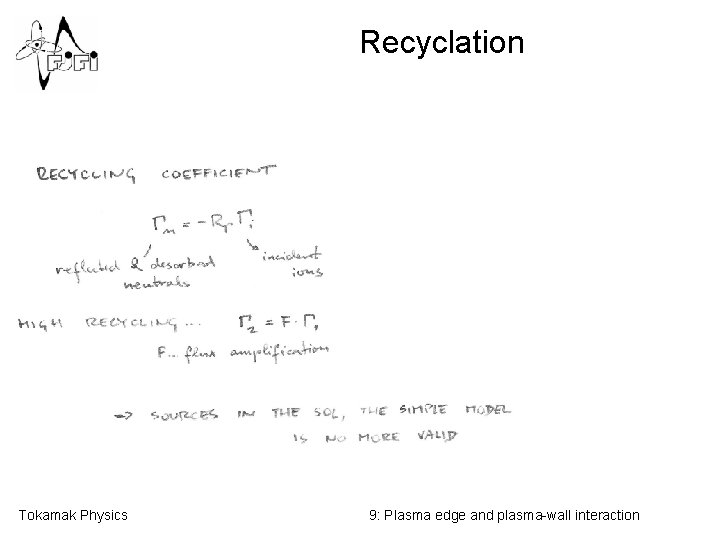
Recyclation Tokamak Physics 9: Plasma edge and plasma-wall interaction
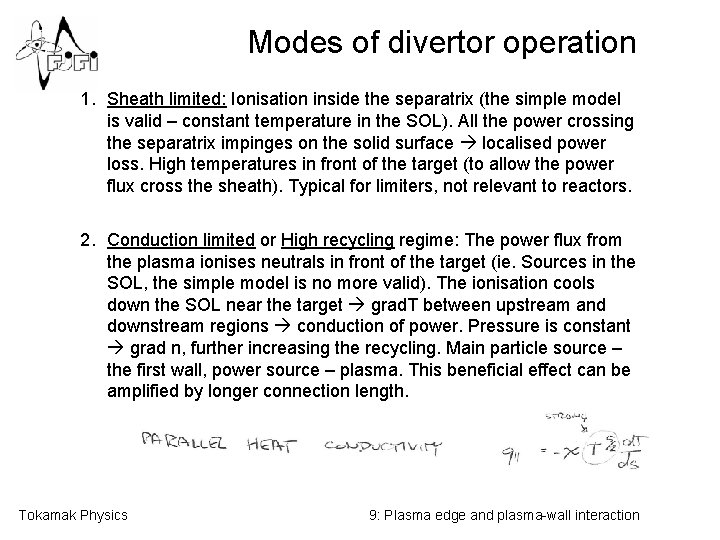
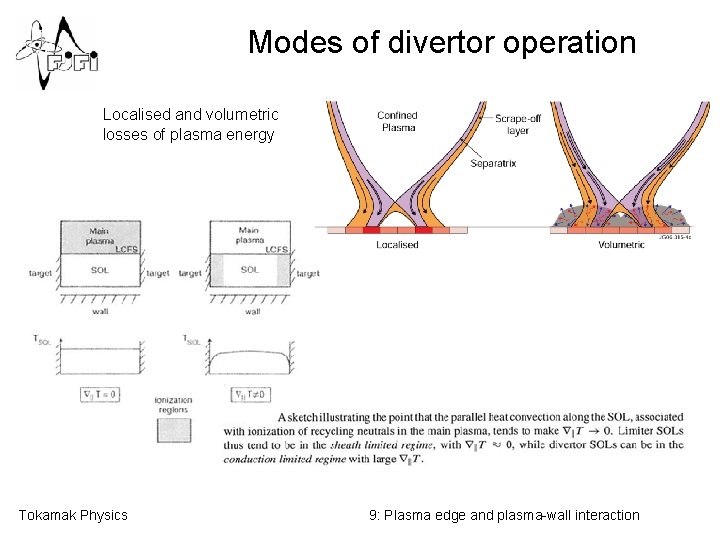
Modes of divertor operation 1. Sheath limited: Ionisation inside the separatrix (the simple model is valid – constant temperature in the SOL). All the power crossing the separatrix impinges on the solid surface localised power loss. High temperatures in front of the target (to allow the power flux cross the sheath). Typical for limiters, not relevant to reactors. 2. Conduction limited or High recycling regime: The power flux from the plasma ionises neutrals in front of the target (ie. Sources in the SOL, the simple model is no more valid). The ionisation cools down the SOL near the target grad. T between upstream and downstream regions conduction of power. Pressure is constant grad n, further increasing the recycling. Main particle source – the first wall, power source – plasma. This beneficial effect can be amplified by longer connection length. Tokamak Physics 9: Plasma edge and plasma-wall interaction
Modes of divertor operation Localised and volumetric losses of plasma energy Tokamak Physics 9: Plasma edge and plasma-wall interaction
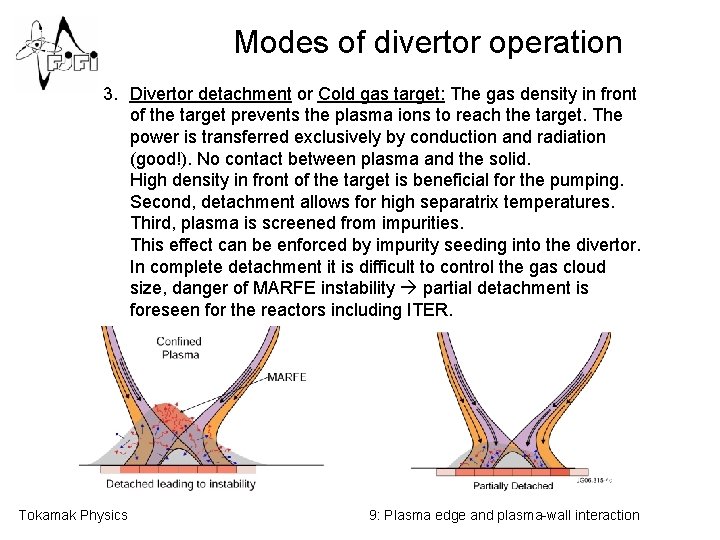
Modes of divertor operation 3. Divertor detachment or Cold gas target: The gas density in front of the target prevents the plasma ions to reach the target. The power is transferred exclusively by conduction and radiation (good!). No contact between plasma and the solid. High density in front of the target is beneficial for the pumping. Second, detachment allows for high separatrix temperatures. Third, plasma is screened from impurities. This effect can be enforced by impurity seeding into the divertor. In complete detachment it is difficult to control the gas cloud size, danger of MARFE instability partial detachment is foreseen for the reactors including ITER. Tokamak Physics 9: Plasma edge and plasma-wall interaction
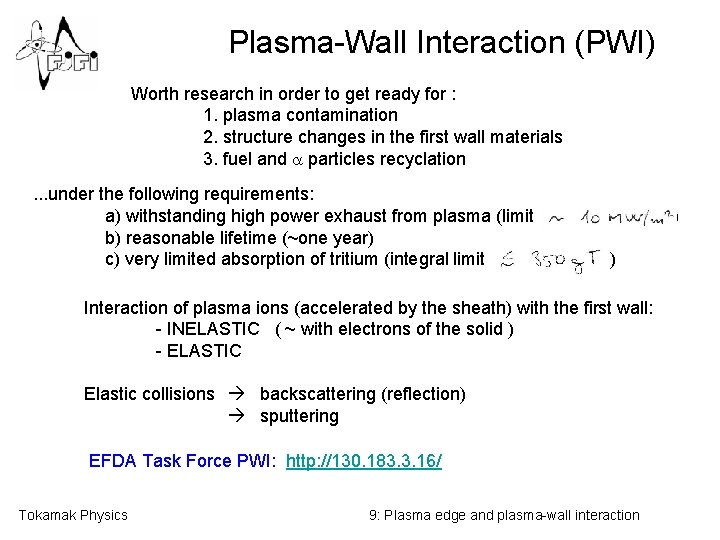
Plasma-Wall Interaction (PWI) Worth research in order to get ready for : 1. plasma contamination 2. structure changes in the first wall materials 3. fuel and a particles recyclation. . . under the following requirements: a) withstanding high power exhaust from plasma (limit b) reasonable lifetime (~one year) c) very limited absorption of tritium (integral limit ) ) Interaction of plasma ions (accelerated by the sheath) with the first wall: - INELASTIC ( ~ with electrons of the solid ) - ELASTIC Elastic collisions backscattering (reflection) sputtering EFDA Task Force PWI: http: //130. 183. 3. 16/ Tokamak Physics 9: Plasma edge and plasma-wall interaction
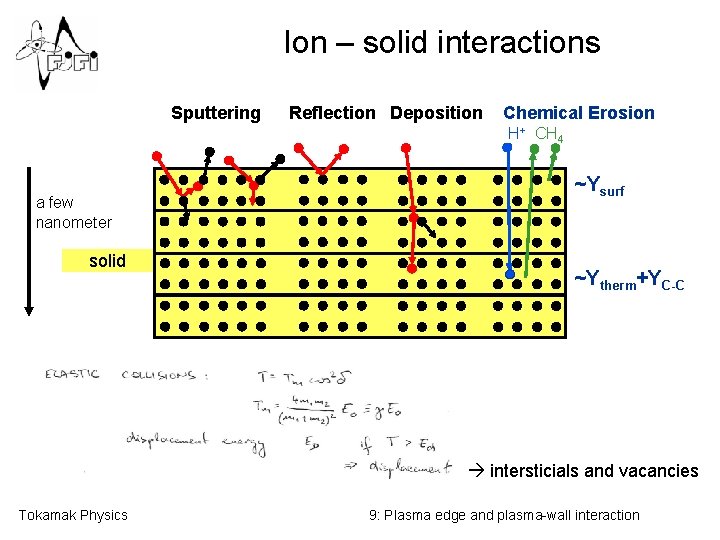
Ion – solid interactions Sputtering Reflection Deposition Chemical Erosion H+ CH 4 a few nanometer solid ~Ysurf ~Ytherm+YC-C intersticials and vacancies Tokamak Physics 9: Plasma edge and plasma-wall interaction
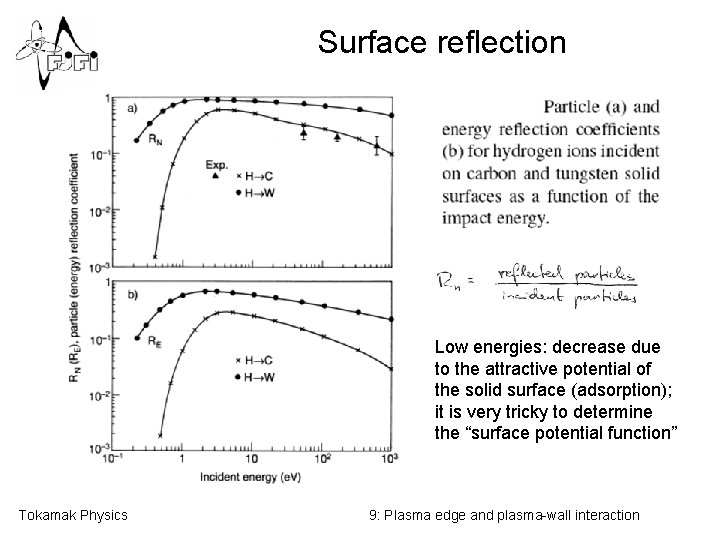
Surface reflection Low energies: decrease due to the attractive potential of the solid surface (adsorption); it is very tricky to determine the “surface potential function” Tokamak Physics 9: Plasma edge and plasma-wall interaction
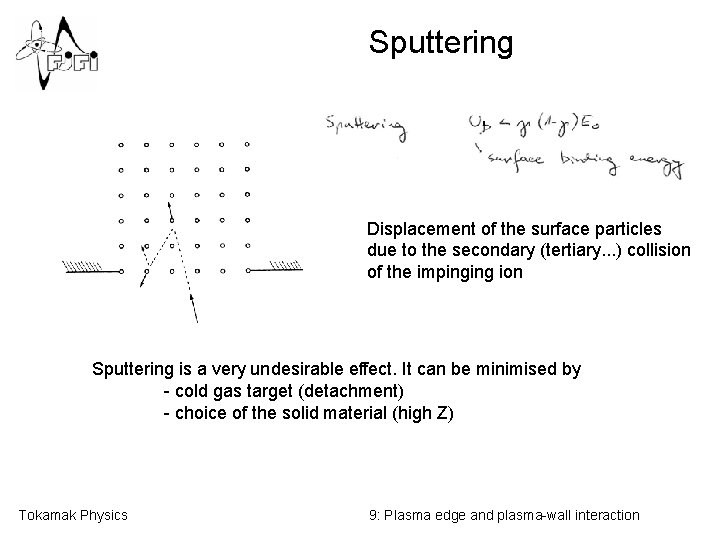
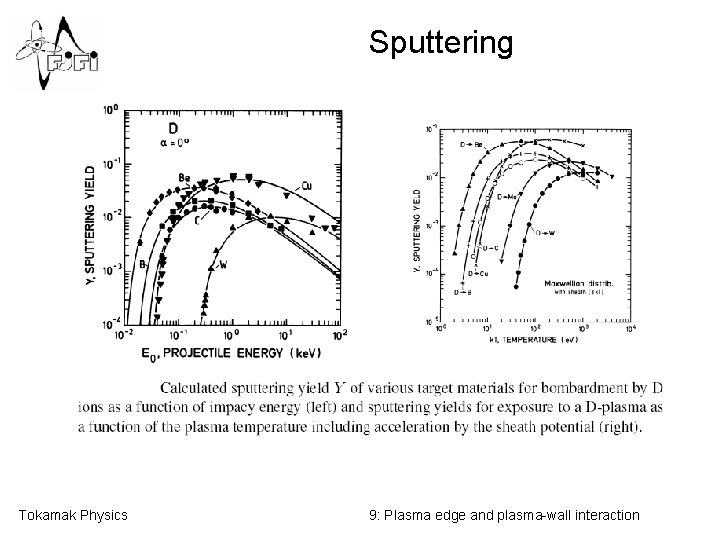
Sputtering Displacement of the surface particles due to the secondary (tertiary. . . ) collision of the impinging ion Sputtering is a very undesirable effect. It can be minimised by - cold gas target (detachment) - choice of the solid material (high Z) Tokamak Physics 9: Plasma edge and plasma-wall interaction
Sputtering Tokamak Physics 9: Plasma edge and plasma-wall interaction
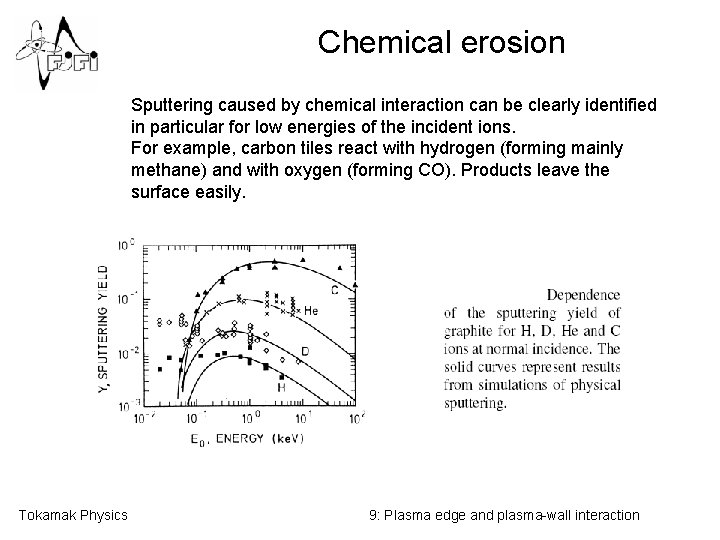
Chemical erosion Sputtering caused by chemical interaction can be clearly identified in particular for low energies of the incident ions. For example, carbon tiles react with hydrogen (forming mainly methane) and with oxygen (forming CO). Products leave the surface easily. Tokamak Physics 9: Plasma edge and plasma-wall interaction
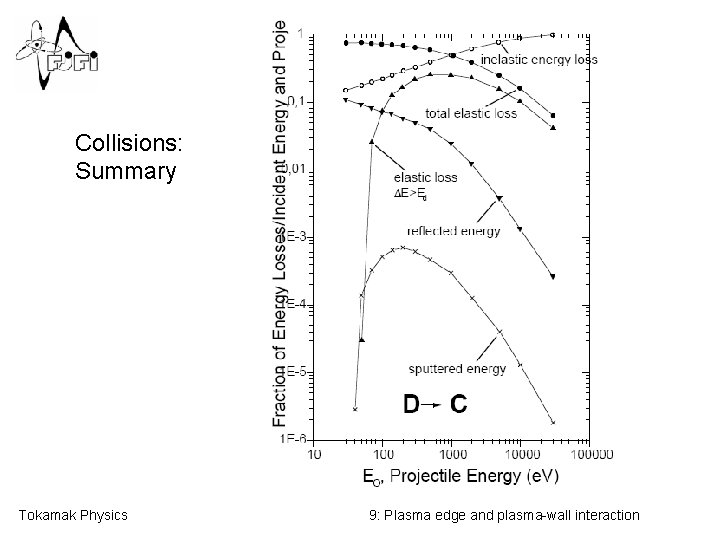
Collisions: Summary Tokamak Physics 9: Plasma edge and plasma-wall interaction
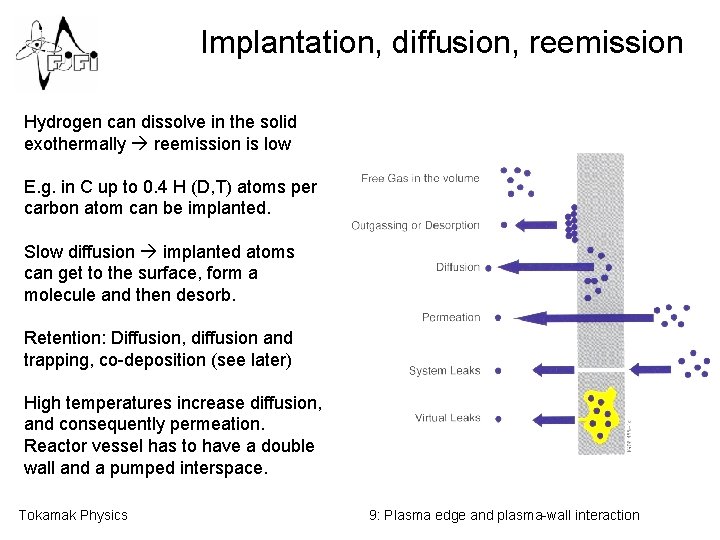
Implantation, diffusion, reemission Hydrogen can dissolve in the solid exothermally reemission is low E. g. in C up to 0. 4 H (D, T) atoms per carbon atom can be implanted. Slow diffusion implanted atoms can get to the surface, form a molecule and then desorb. Retention: Diffusion, diffusion and trapping, co-deposition (see later) High temperatures increase diffusion, and consequently permeation. Reactor vessel has to have a double wall and a pumped interspace. Tokamak Physics 9: Plasma edge and plasma-wall interaction
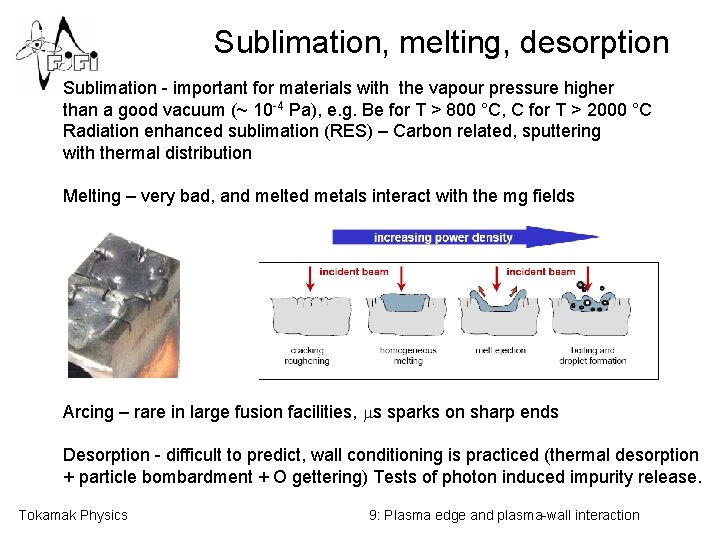
Sublimation, melting, desorption Sublimation - important for materials with the vapour pressure higher than a good vacuum (~ 10 -4 Pa), e. g. Be for T > 800 °C, C for T > 2000 °C Radiation enhanced sublimation (RES) – Carbon related, sputtering with thermal distribution Melting – very bad, and melted metals interact with the mg fields Arcing – rare in large fusion facilities, ms sparks on sharp ends Desorption - difficult to predict, wall conditioning is practiced (thermal desorption + particle bombardment + O gettering) Tests of photon induced impurity release. Tokamak Physics 9: Plasma edge and plasma-wall interaction
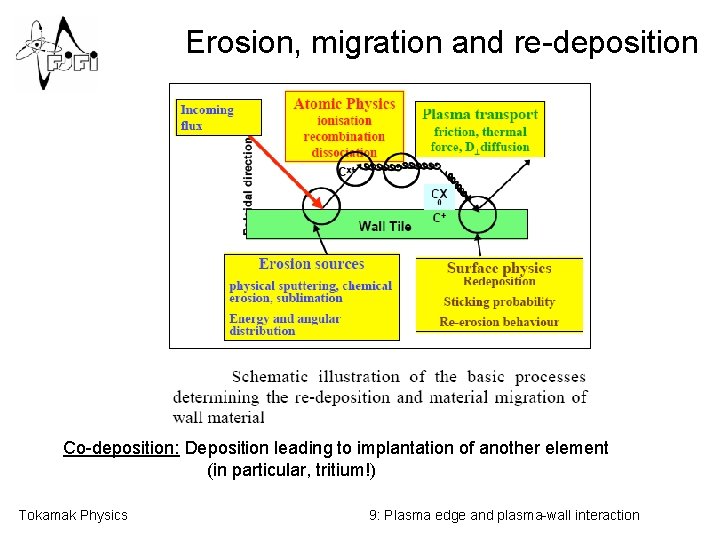
Erosion, migration and re-deposition Co-deposition: Deposition leading to implantation of another element (in particular, tritium!) Tokamak Physics 9: Plasma edge and plasma-wall interaction
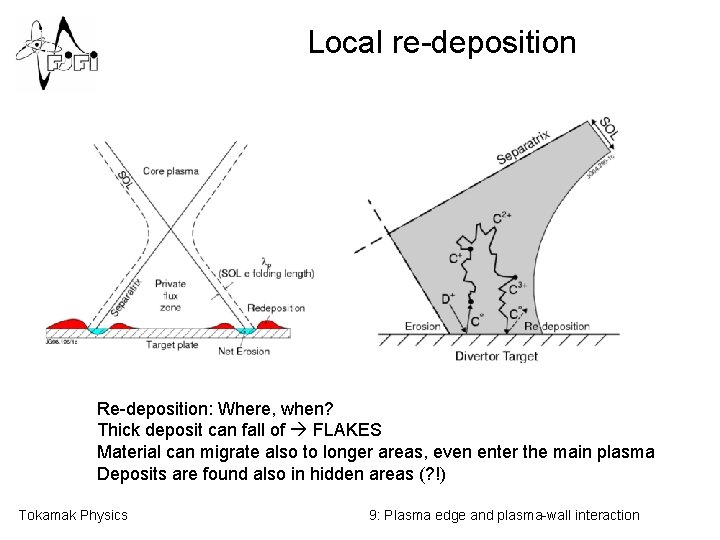
Local re-deposition Re-deposition: Where, when? Thick deposit can fall of FLAKES Material can migrate also to longer areas, even enter the main plasma Deposits are found also in hidden areas (? !) Tokamak Physics 9: Plasma edge and plasma-wall interaction
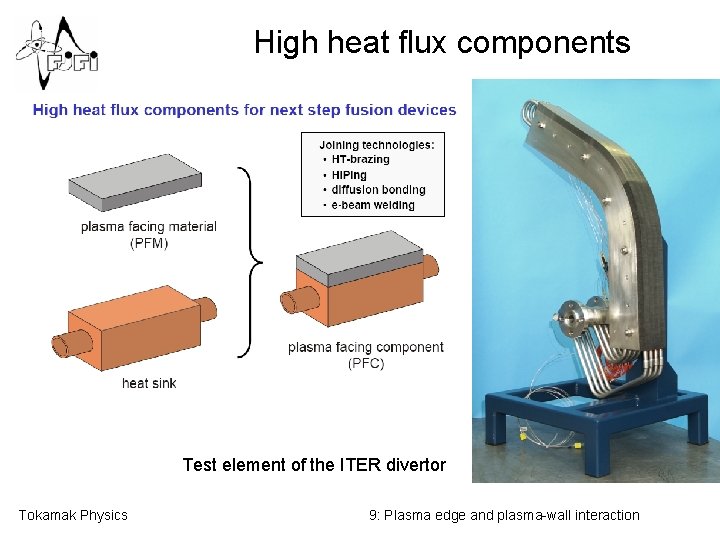
High heat flux components Test element of the ITER divertor Tokamak Physics 9: Plasma edge and plasma-wall interaction
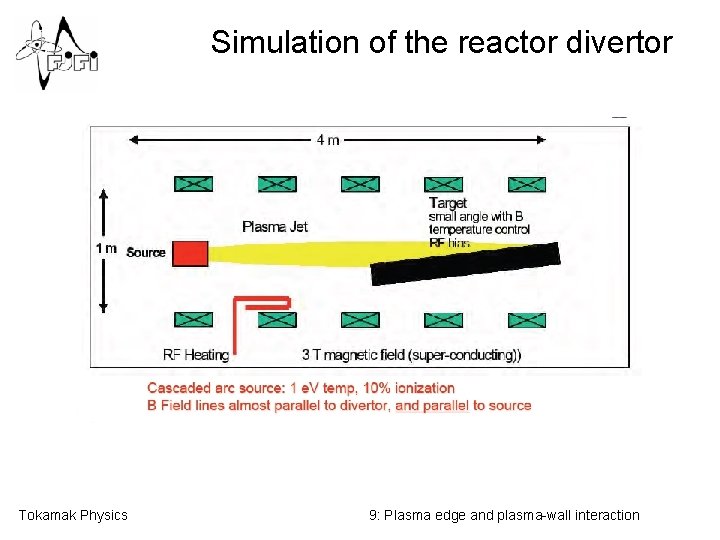
Simulation of the reactor divertor Tokamak Physics 9: Plasma edge and plasma-wall interaction
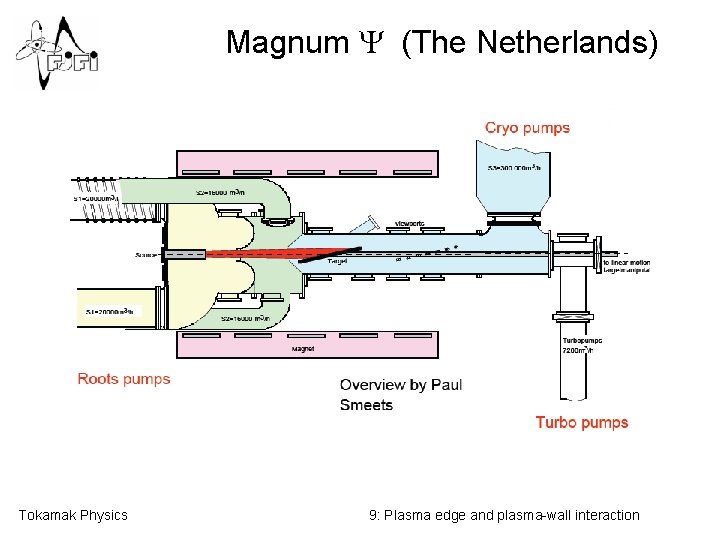
Magnum Y (The Netherlands) Tokamak Physics 9: Plasma edge and plasma-wall interaction
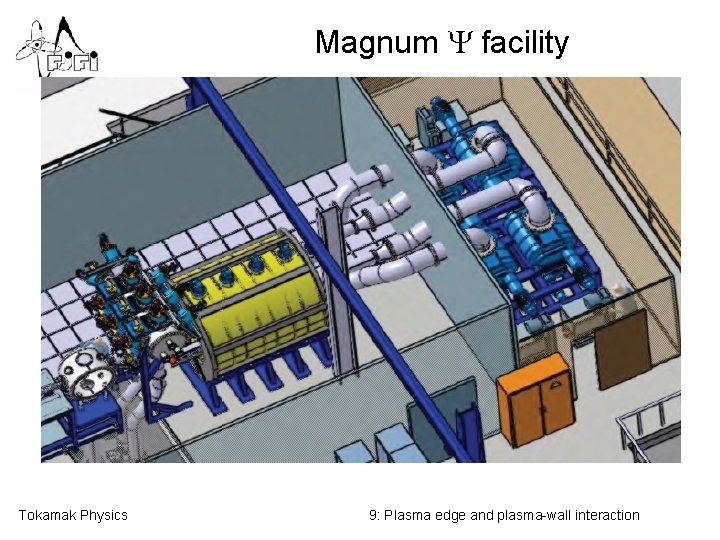
Magnum Y facility Tokamak Physics 9: Plasma edge and plasma-wall interaction
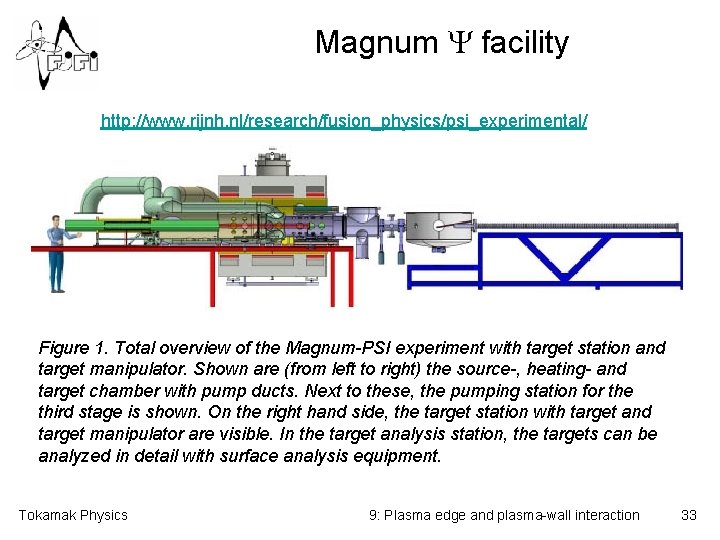
Magnum Y facility http: //www. rijnh. nl/research/fusion_physics/psi_experimental/ Figure 1. Total overview of the Magnum-PSI experiment with target station and target manipulator. Shown are (from left to right) the source-, heating- and target chamber with pump ducts. Next to these, the pumping station for the third stage is shown. On the right hand side, the target station with target and target manipulator are visible. In the target analysis station, the targets can be analyzed in detail with surface analysis equipment. Tokamak Physics 9: Plasma edge and plasma-wall interaction 33