
TOGAF 9 Fundamental 3 TOGAF ADM Romi Satria
- Slides: 45
TOGAF 9 Fundamental: 3. TOGAF ADM Romi Satria Wahono romi@romisatriawahono. net http: //romisatriawahono. net/tfu WA/SMS: +6281586220090
Romi Satria Wahono • • SD Sompok Semarang (1987) SMPN 8 Semarang (1990) SMA Taruna Nusantara Magelang (1993) B. Eng, M. Eng and Ph. D in Software Engineering from Saitama University Japan (1994 -2004) Universiti Teknikal Malaysia Melaka (2014) Research Interests: Software Engineering, Machine Learning Founder Ilmu. Komputer. Com PNS di PDII LIPI (1994 -2007) Founder dan CEO PT Brainmatics Cipta Informatika 2
Course Outline 1. Introduction 2. TOGAF Concepts 3. TOGAF ADM 4. BPMN Overview 5. UML Overview 6. TOGAF Case Study 3
3. TOGAF ADM 3. 1 ADM Iteration 3. 2 ADM Process 3. 2 TOGAF Artifacts 4
3. 1 ADM Iteration 5
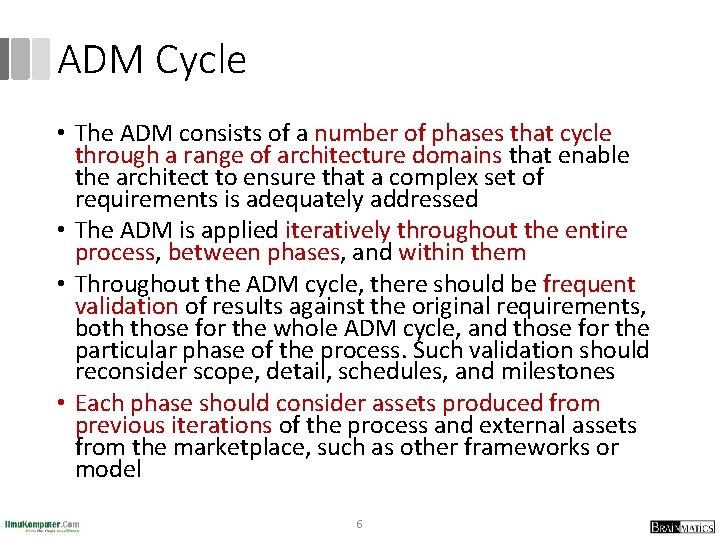
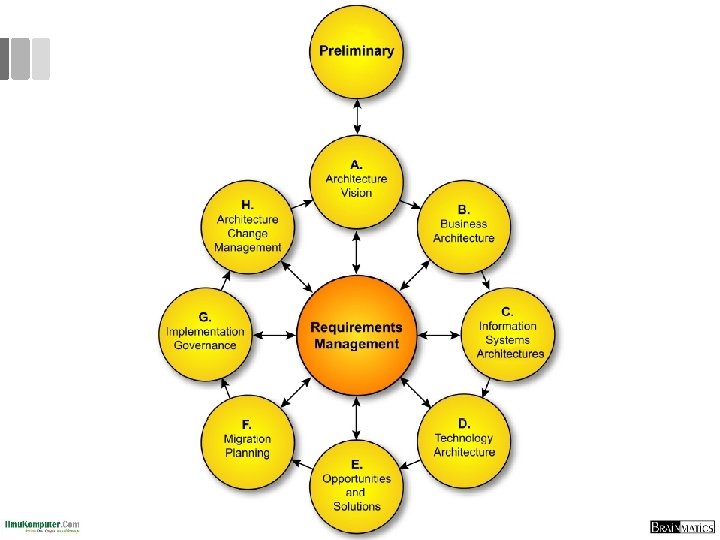
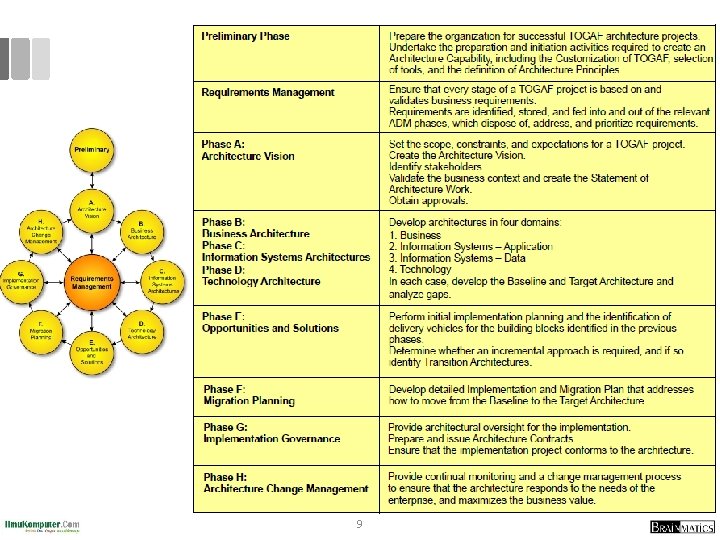
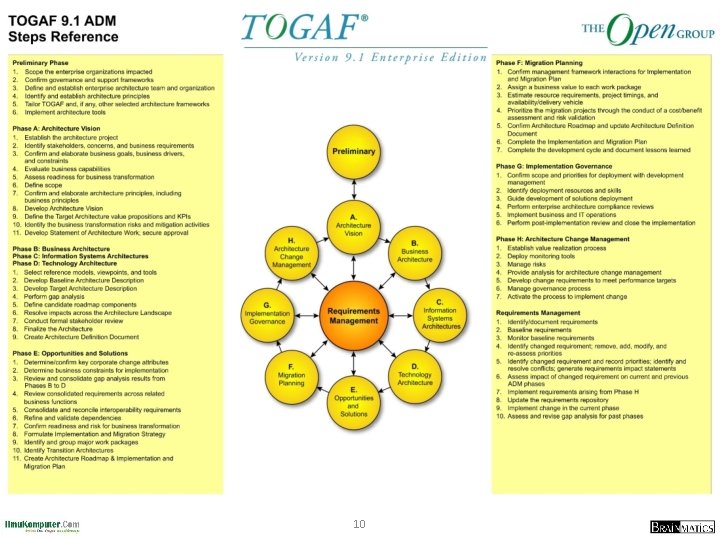
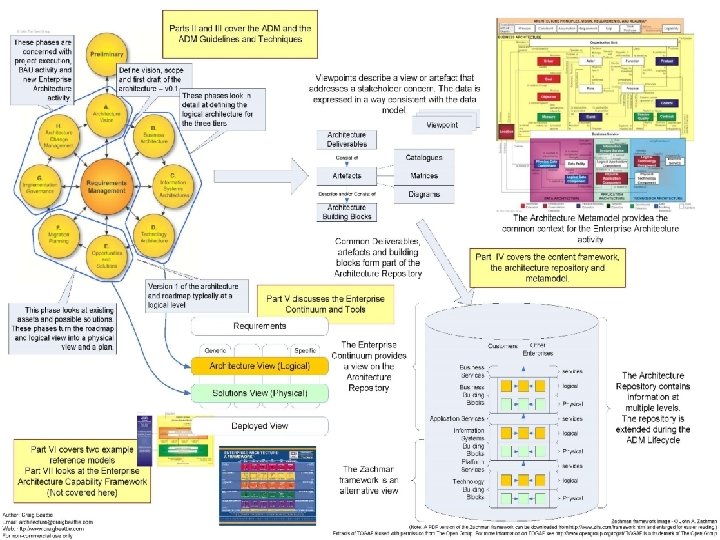
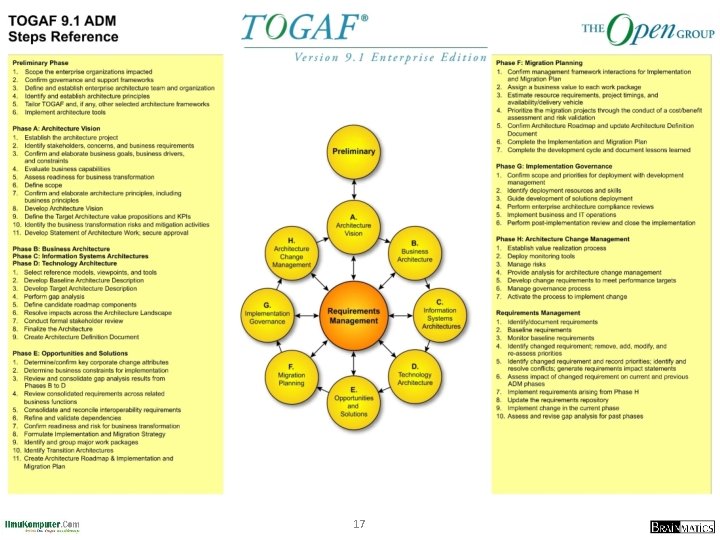
ADM Cycle • The ADM consists of a number of phases that cycle through a range of architecture domains that enable the architect to ensure that a complex set of requirements is adequately addressed • The ADM is applied iteratively throughout the entire process, between phases, and within them • Throughout the ADM cycle, there should be frequent validation of results against the original requirements, both those for the whole ADM cycle, and those for the particular phase of the process. Such validation should reconsider scope, detail, schedules, and milestones • Each phase should consider assets produced from previous iterations of the process and external assets from the marketplace, such as other frameworks or model 6
7
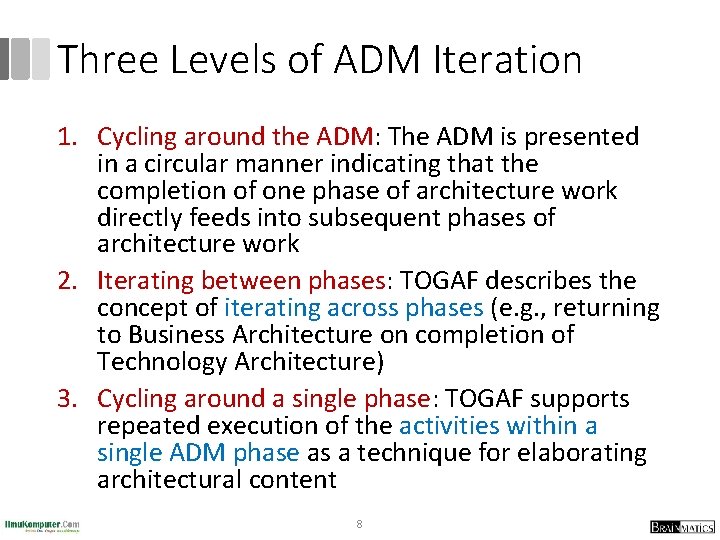
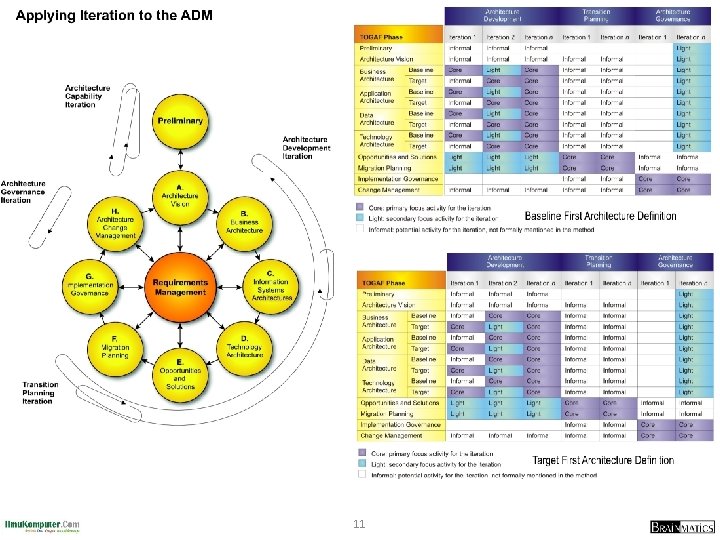
Three Levels of ADM Iteration 1. Cycling around the ADM: The ADM is presented in a circular manner indicating that the completion of one phase of architecture work directly feeds into subsequent phases of architecture work 2. Iterating between phases: TOGAF describes the concept of iterating across phases (e. g. , returning to Business Architecture on completion of Technology Architecture) 3. Cycling around a single phase: TOGAF supports repeated execution of the activities within a single ADM phase as a technique for elaborating architectural content 8
9
10
11
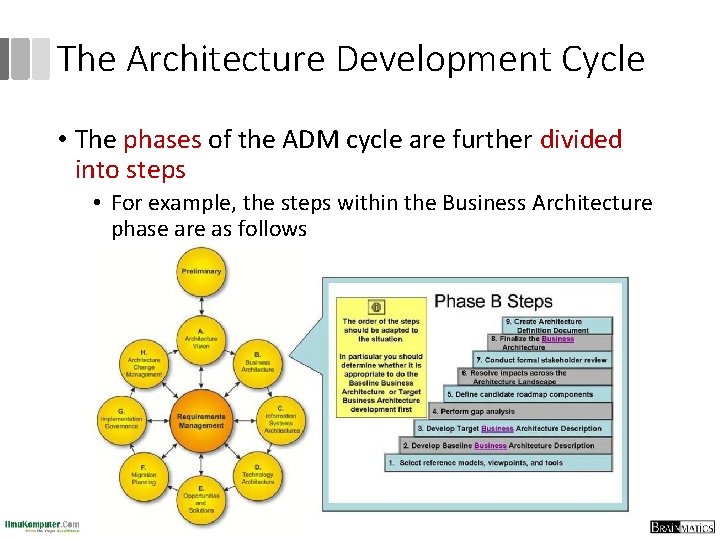
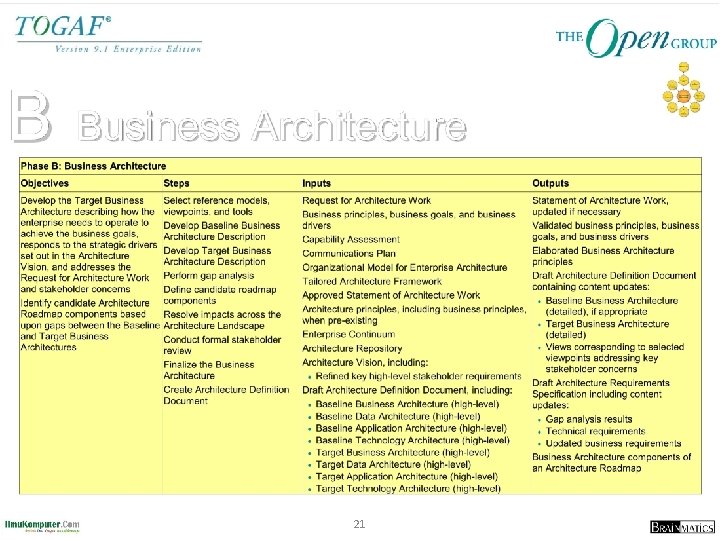
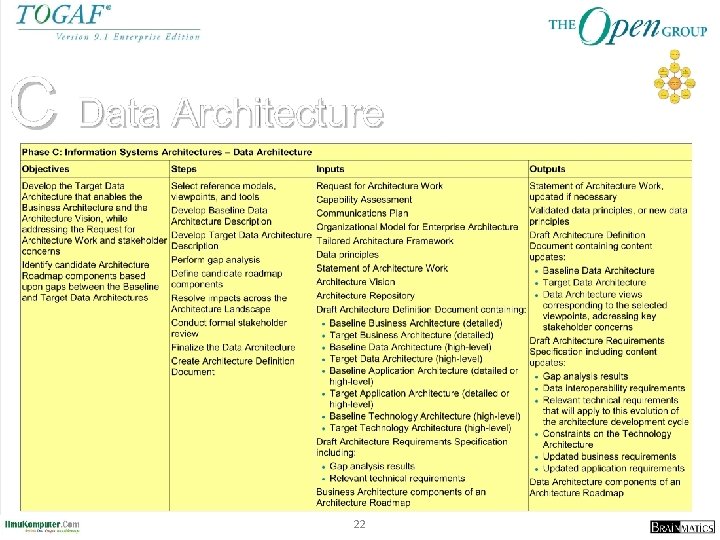
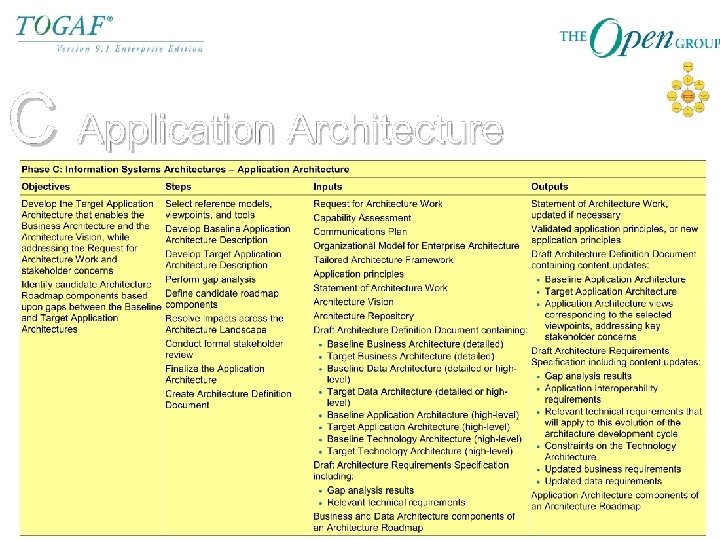
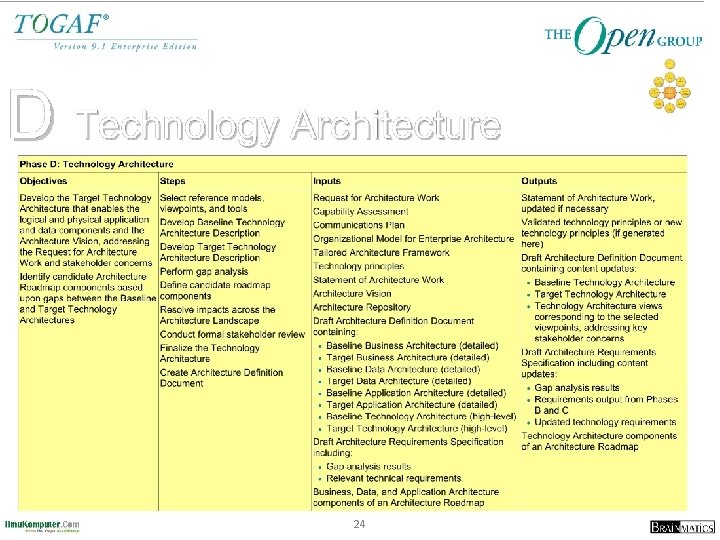
The Architecture Development Cycle • The phases of the ADM cycle are further divided into steps • For example, the steps within the Business Architecture phase are as follows 12
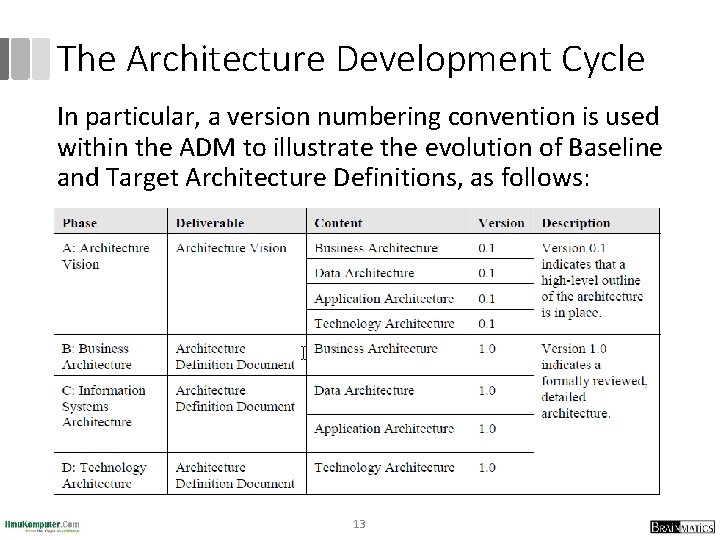
The Architecture Development Cycle In particular, a version numbering convention is used within the ADM to illustrate the evolution of Baseline and Target Architecture Definitions, as follows: 13
14
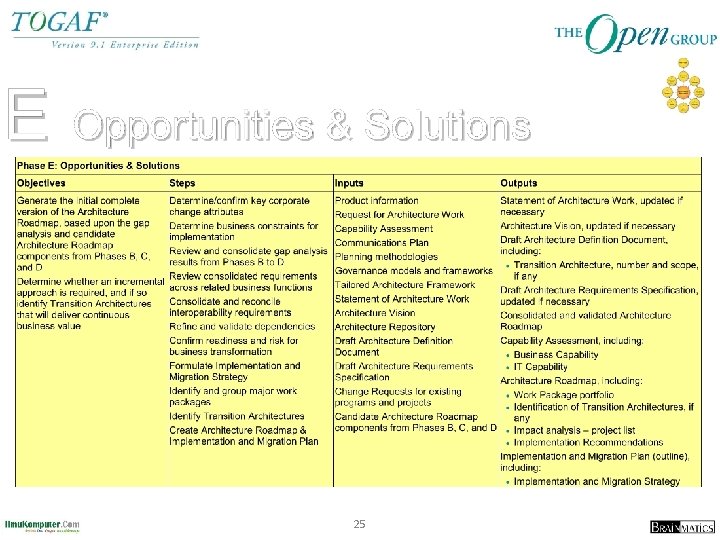
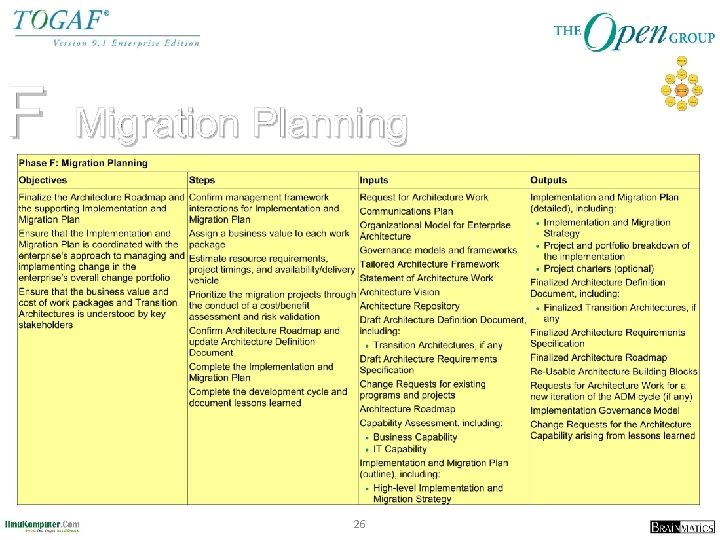
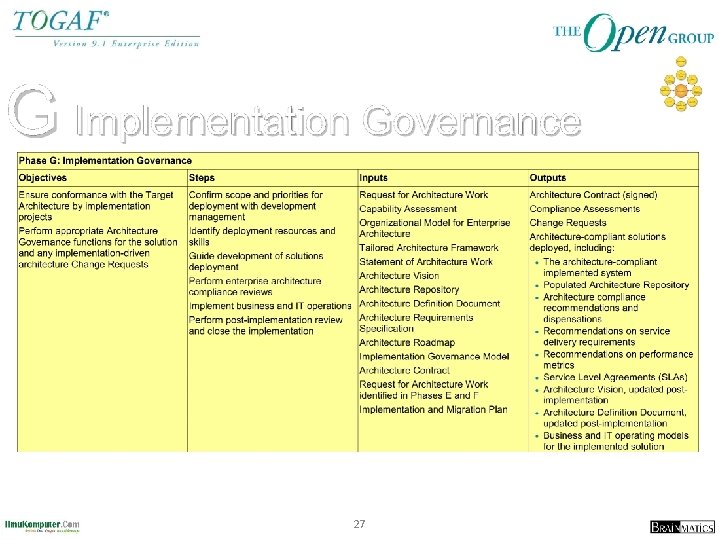
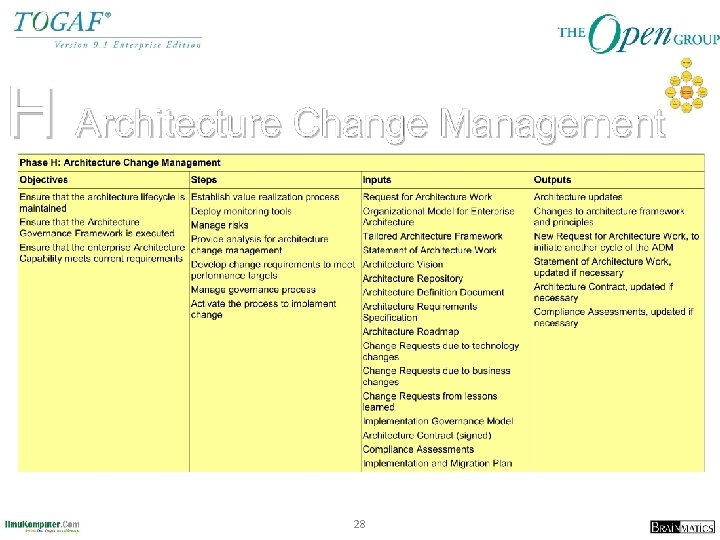
3. 2 ADM Process 15
16
17
18
19
20
21
22
23
24
25
26
27
28
3. 3 TOGAF Artifacts 29
30
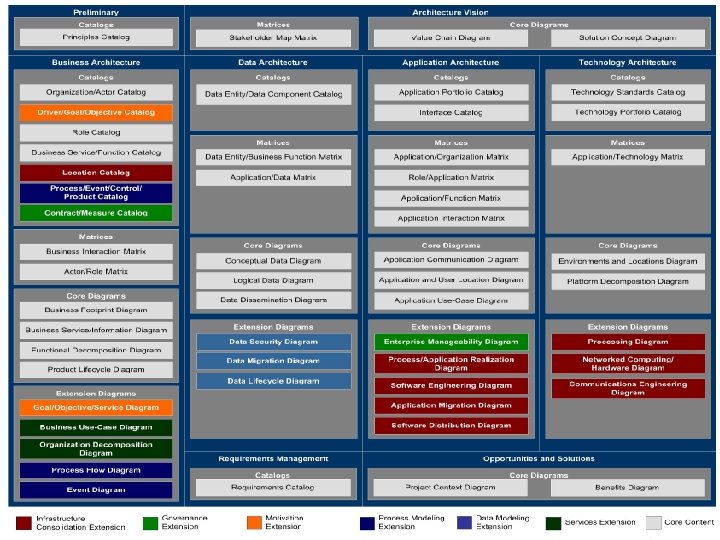
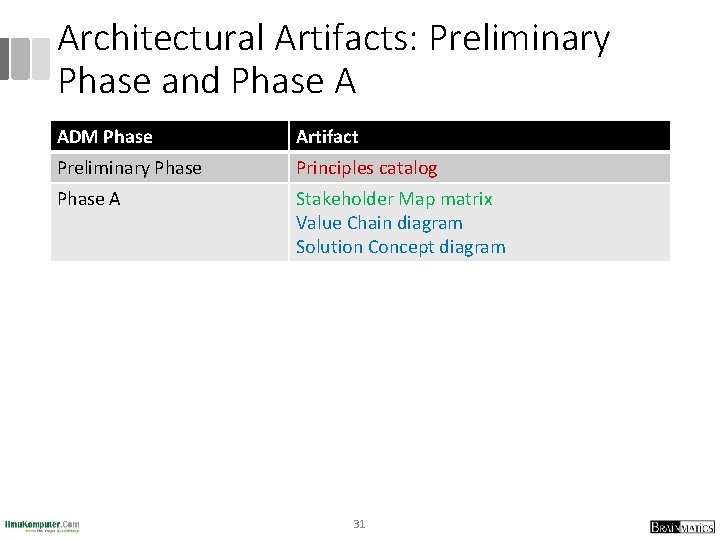
Architectural Artifacts: Preliminary Phase and Phase A ADM Phase Artifact Preliminary Phase Principles catalog Phase A Stakeholder Map matrix Value Chain diagram Solution Concept diagram 31
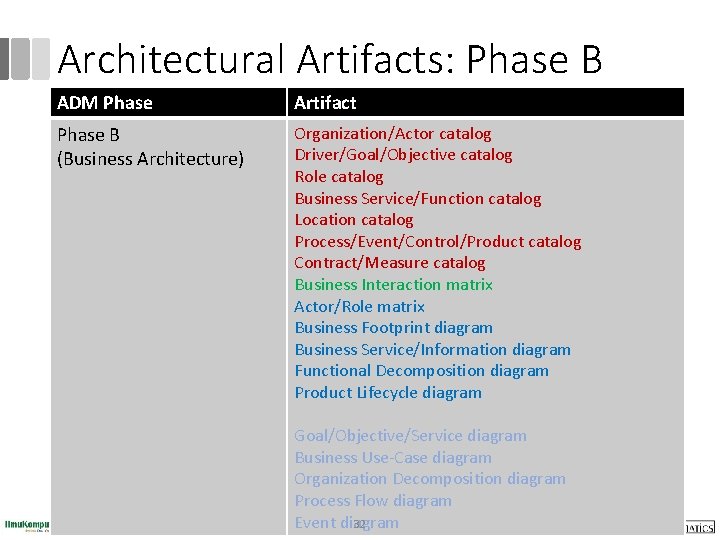
Architectural Artifacts: Phase B ADM Phase Artifact Phase B (Business Architecture) Organization/Actor catalog Driver/Goal/Objective catalog Role catalog Business Service/Function catalog Location catalog Process/Event/Control/Product catalog Contract/Measure catalog Business Interaction matrix Actor/Role matrix Business Footprint diagram Business Service/Information diagram Functional Decomposition diagram Product Lifecycle diagram Goal/Objective/Service diagram Business Use-Case diagram Organization Decomposition diagram Process Flow diagram Event diagram 32
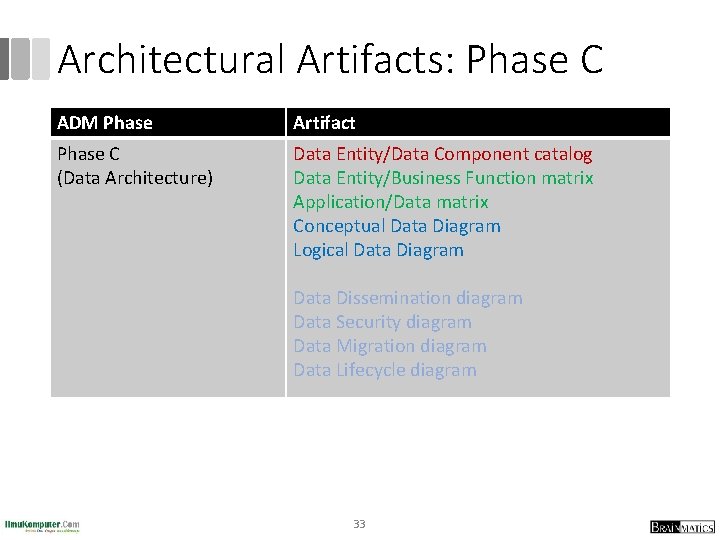
Architectural Artifacts: Phase C ADM Phase Artifact Phase C (Data Architecture) Data Entity/Data Component catalog Data Entity/Business Function matrix Application/Data matrix Conceptual Data Diagram Logical Data Diagram Data Dissemination diagram Data Security diagram Data Migration diagram Data Lifecycle diagram 33
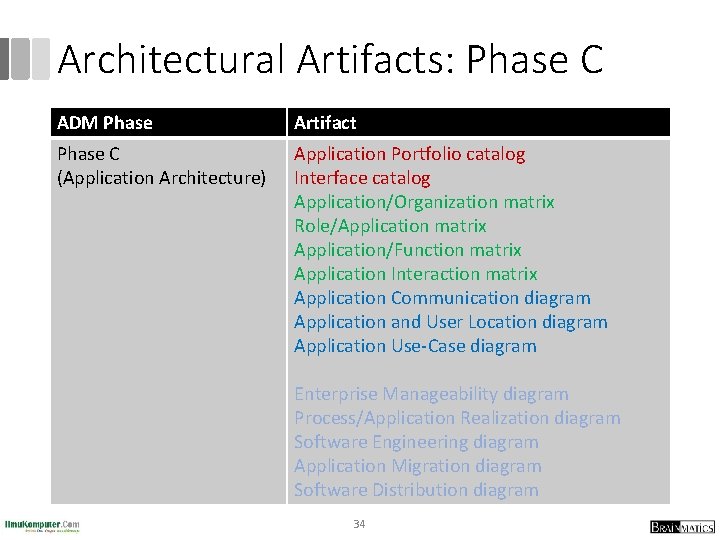
Architectural Artifacts: Phase C ADM Phase Artifact Phase C (Application Architecture) Application Portfolio catalog Interface catalog Application/Organization matrix Role/Application matrix Application/Function matrix Application Interaction matrix Application Communication diagram Application and User Location diagram Application Use-Case diagram Enterprise Manageability diagram Process/Application Realization diagram Software Engineering diagram Application Migration diagram Software Distribution diagram 34
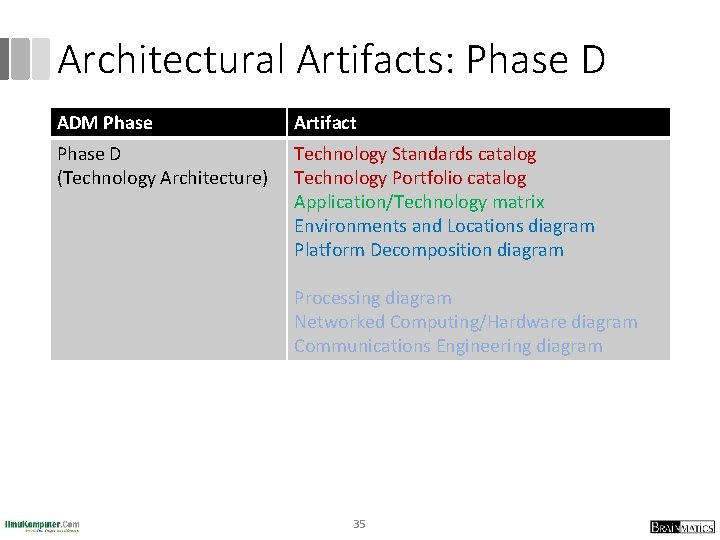
Architectural Artifacts: Phase D ADM Phase Artifact Phase D (Technology Architecture) Technology Standards catalog Technology Portfolio catalog Application/Technology matrix Environments and Locations diagram Platform Decomposition diagram Processing diagram Networked Computing/Hardware diagram Communications Engineering diagram 35
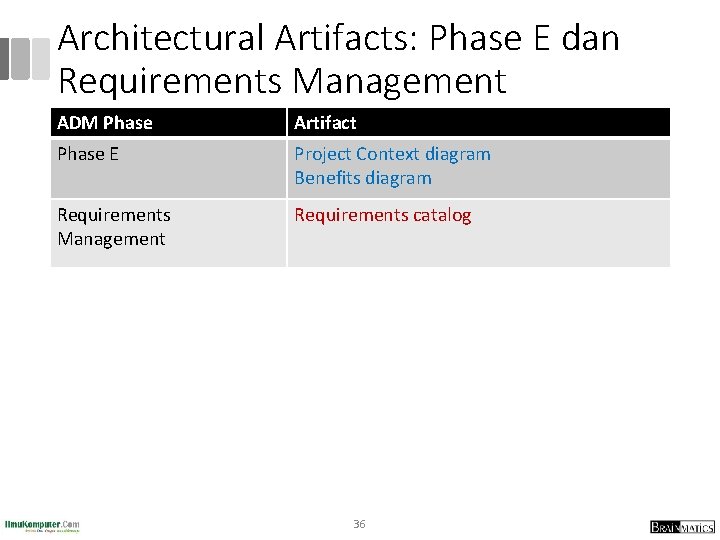
Architectural Artifacts: Phase E dan Requirements Management ADM Phase Artifact Phase E Project Context diagram Benefits diagram Requirements Management Requirements catalog 36
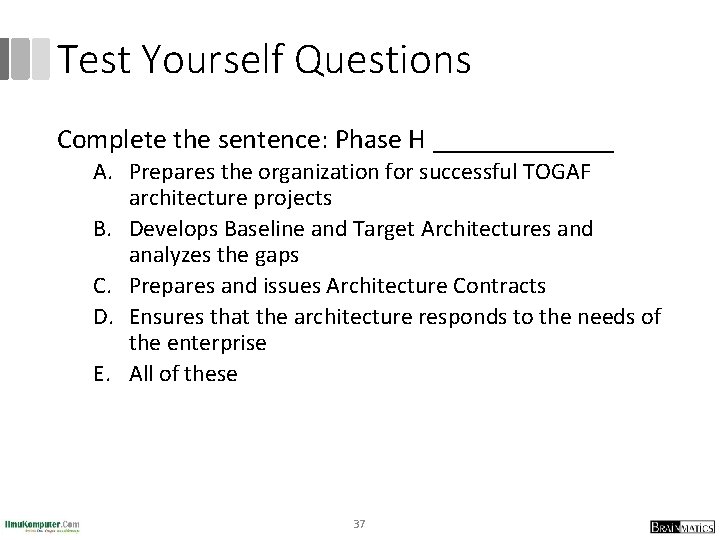
Test Yourself Questions Complete the sentence: Phase H _______ A. Prepares the organization for successful TOGAF architecture projects B. Develops Baseline and Target Architectures and analyzes the gaps C. Prepares and issues Architecture Contracts D. Ensures that the architecture responds to the needs of the enterprise E. All of these 37
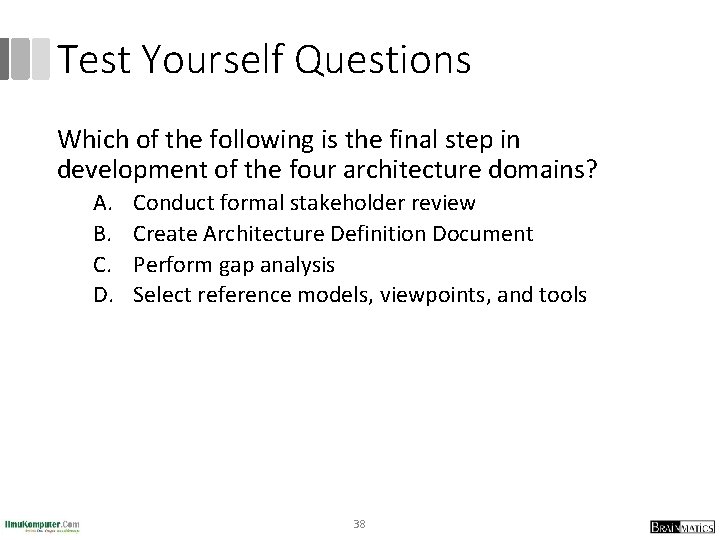
Test Yourself Questions Which of the following is the final step in development of the four architecture domains? A. B. C. D. Conduct formal stakeholder review Create Architecture Definition Document Perform gap analysis Select reference models, viewpoints, and tools 38
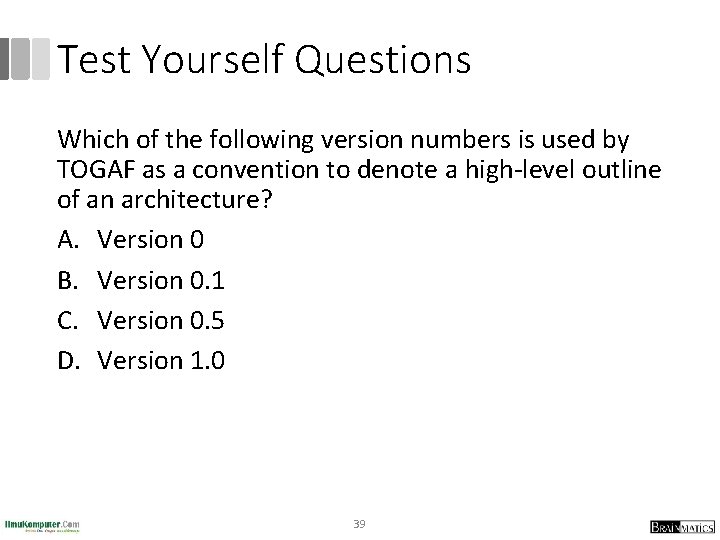
Test Yourself Questions Which of the following version numbers is used by TOGAF as a convention to denote a high-level outline of an architecture? A. Version 0 B. Version 0. 1 C. Version 0. 5 D. Version 1. 0 39
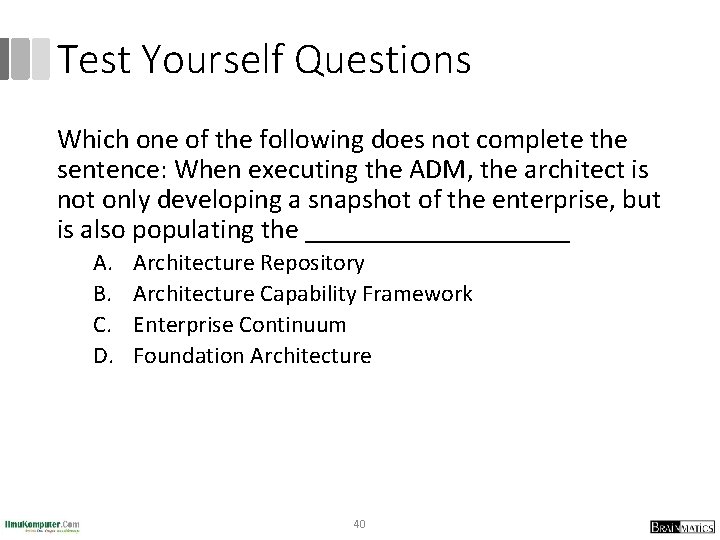
Test Yourself Questions Which one of the following does not complete the sentence: When executing the ADM, the architect is not only developing a snapshot of the enterprise, but is also populating the __________ A. B. C. D. Architecture Repository Architecture Capability Framework Enterprise Continuum Foundation Architecture 40
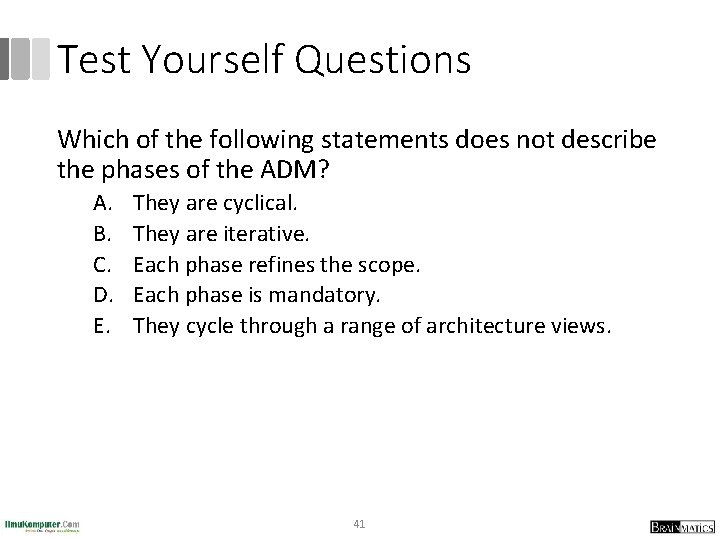
Test Yourself Questions Which of the following statements does not describe the phases of the ADM? A. B. C. D. E. They are cyclical. They are iterative. Each phase refines the scope. Each phase is mandatory. They cycle through a range of architecture views. 41
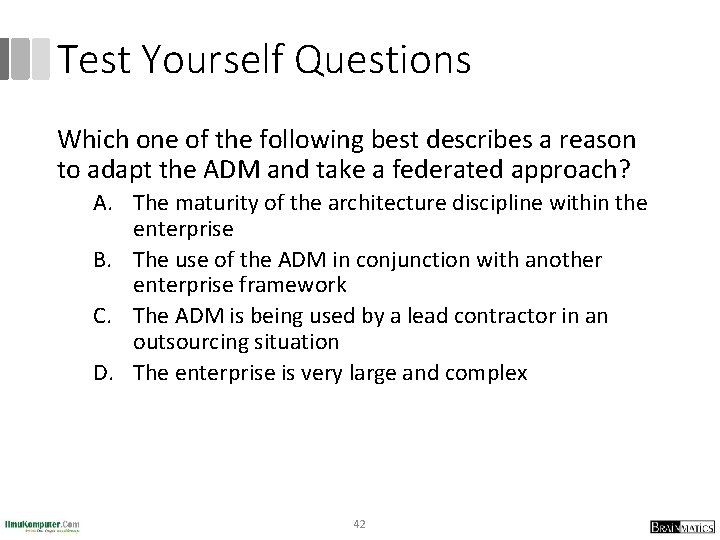
Test Yourself Questions Which one of the following best describes a reason to adapt the ADM and take a federated approach? A. The maturity of the architecture discipline within the enterprise B. The use of the ADM in conjunction with another enterprise framework C. The ADM is being used by a lead contractor in an outsourcing situation D. The enterprise is very large and complex 42
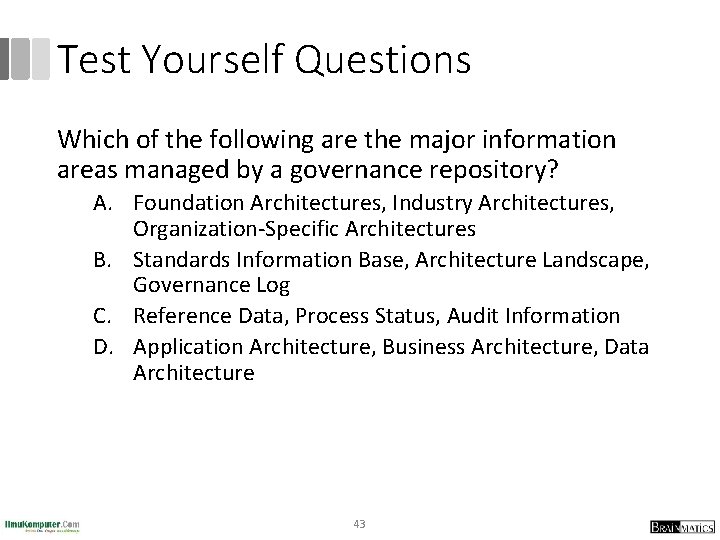
Test Yourself Questions Which of the following are the major information areas managed by a governance repository? A. Foundation Architectures, Industry Architectures, Organization-Specific Architectures B. Standards Information Base, Architecture Landscape, Governance Log C. Reference Data, Process Status, Audit Information D. Application Architecture, Business Architecture, Data Architecture 43
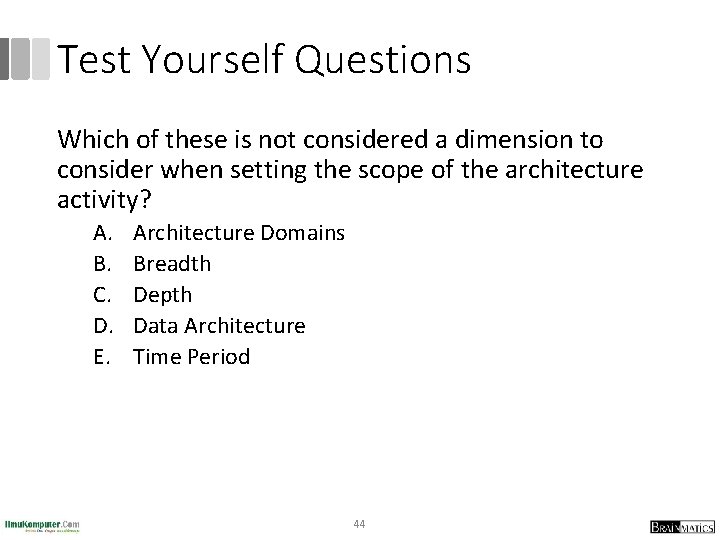
Test Yourself Questions Which of these is not considered a dimension to consider when setting the scope of the architecture activity? A. B. C. D. E. Architecture Domains Breadth Depth Data Architecture Time Period 44
References 1. Rachel Harrison, Study Guide TOGAF® 9 Foundation 2 nd Edition, The Open Group, 2011 2. Rachel Harrison, Study Guide TOGAF® 9 Certified 2 nd Edition, The Open Group, 2011 3. Open Group Standard, TOGAF® Version 9. 1 (G 116), The Open Group, 2011 4. Open Group Standard, TOGAF® Version 9. 1 – A Pocket Guide (G 117), The Open Group, 2011 5. Daniel Minoli, Enterprise Architecture A to Z: Frameworks, Business Process Modeling, SOA, and Infrastructure Technology, Taylor & Francis, 2008 6. Jon Holt and Simon Perry, Modelling Enterprise Architectures, The Institution of Engineering and Technology, 2010 7. Alan Dennis et al, Systems Analysis and Design with UML 4 th Edition, John Wiley and Sons, 2013 45