
Todays Session Final Lesson on photosynthesis Looking at


- Slides: 24
Today’s Session Final Lesson on photosynthesis • Looking at Limiting Factors • Photosynthesis experiments • Exam Questions to summarise
Recap from last week. . .
Limiting factors in photosynthesis • The ideal conditions for a plant vary from one plant to another • Most plant species need – High light intensity of a certain wavelength – A certain temperature of around 25 o. C – A certain carbon dioxide level – 0. 4% – Water This means all of these factors can limit the rate of photosynthesis
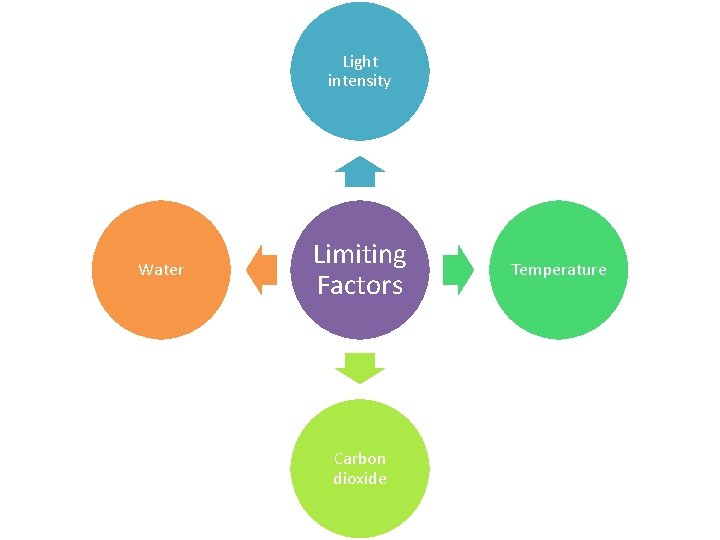
Light intensity Water Limiting Factors Carbon dioxide Temperature
A limiting factor is a variable that can slow down the rate of a reaction Light, temperature and carbon dioxide levels are all limiting factors because they can limit the rate of photosynthesis, if any one of these factors are too low or too high it will slow it down even if the other factors are at the right level
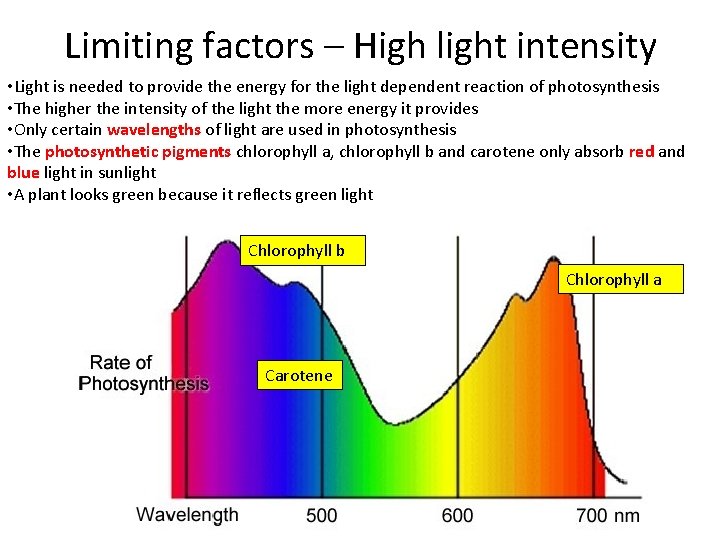
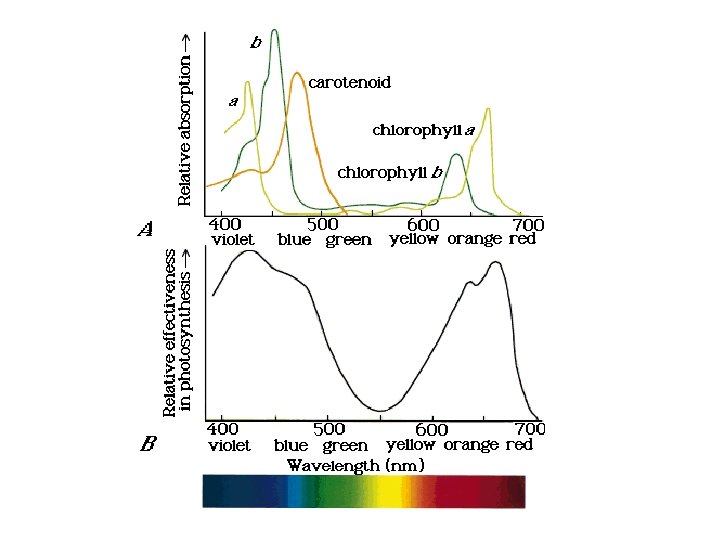
Limiting factors – High light intensity • Light is needed to provide the energy for the light dependent reaction of photosynthesis • The higher the intensity of the light the more energy it provides • Only certain wavelengths of light are used in photosynthesis • The photosynthetic pigments chlorophyll a, chlorophyll b and carotene only absorb red and blue light in sunlight • A plant looks green because it reflects green light Chlorophyll b Chlorophyll a Carotene
Limiting factors – Temperature • Photosynthesis involves the enzymes Rubisco and ATP synthase • Enzymes only work between certain temperatures – Below 10 o. C and they will become inactive – Above 45 o. C and they may denature (bonds holding the tertiary structure break and it loses its 3 D shape) • Stomata will also close to conserve water, this will slow down photosynthesis
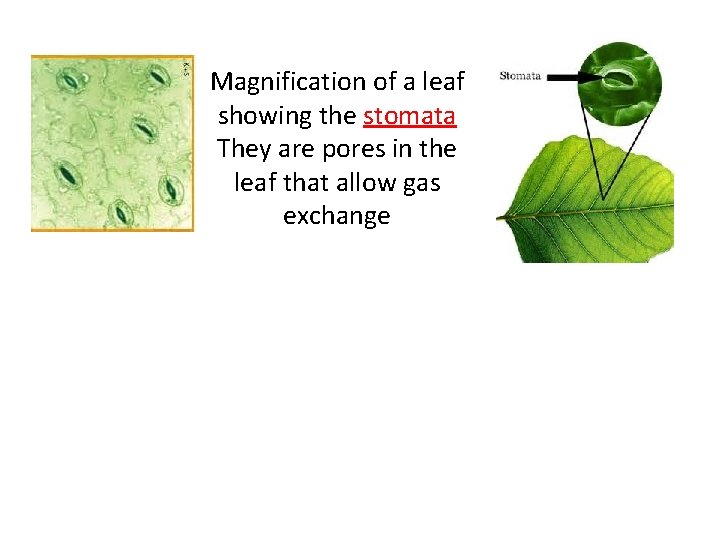
Magnification of a leaf showing the stomata They are pores in the leaf that allow gas exchange
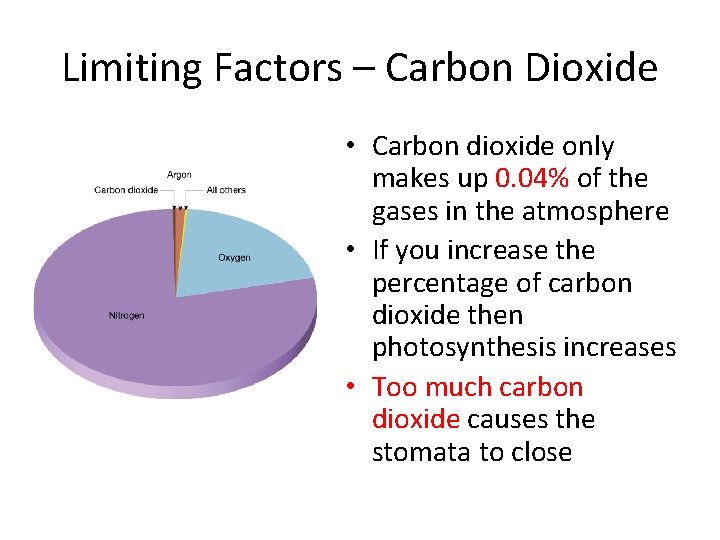
Limiting Factors – Carbon Dioxide • Carbon dioxide only makes up 0. 04% of the gases in the atmosphere • If you increase the percentage of carbon dioxide then photosynthesis increases • Too much carbon dioxide causes the stomata to close
Limiting factors – Water • Plants need a constant supply of water for photosynthesis • Too little and it will stop • Too much water means the soil becomes waterlogged – Water logged soil has less oxygen in it – The roots will not be able to respire aerobically – This means less ATP for active transport of minerals into the roots – Less minerals like magnesium means pigments cant be made like chlorophyll a
In summary light temperature and carbon dioxide need to be at the right levels for photosynthesis to happen so glucose can be made which will go through respiration to make ATP (which is needed for other processes in the plant) Often when looking at limiting factors the exam board likes to use graphs which you need to be able to interpret. .
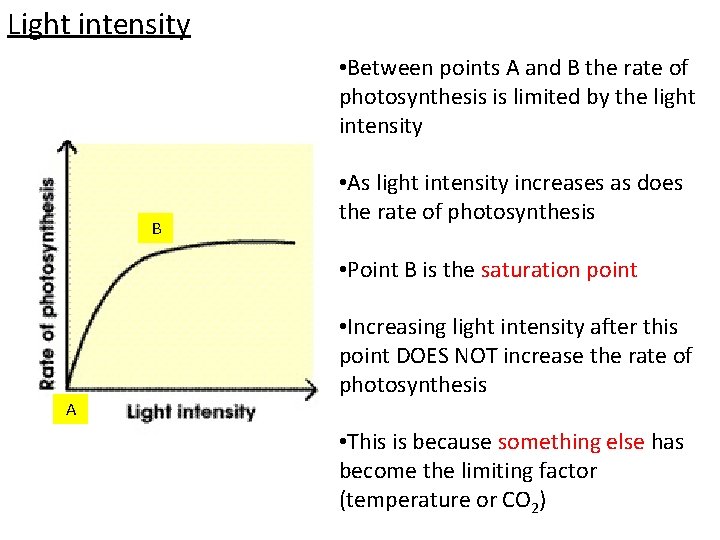
Light intensity • Between points A and B the rate of photosynthesis is limited by the light intensity B • As light intensity increases as does the rate of photosynthesis • Point B is the saturation point A • Increasing light intensity after this point DOES NOT increase the rate of photosynthesis • This is because something else has become the limiting factor (temperature or CO 2)
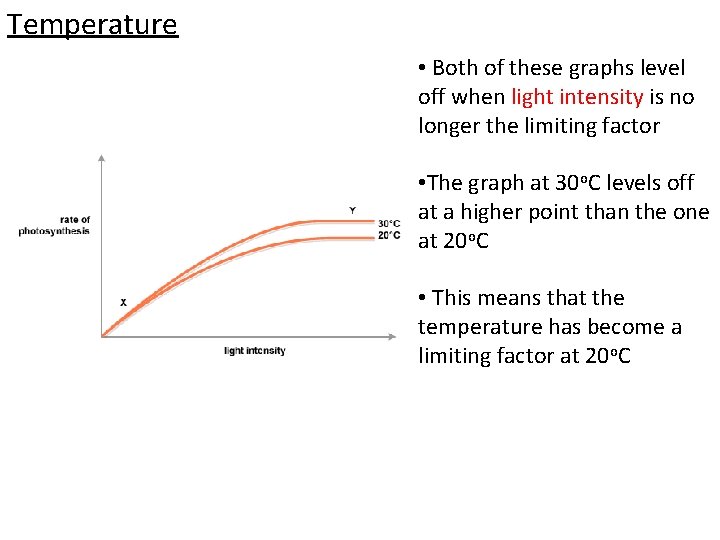
Temperature • Both of these graphs level off when light intensity is no longer the limiting factor • The graph at 30 o. C levels off at a higher point than the one at 20 o. C • This means that the temperature has become a limiting factor at 20 o. C
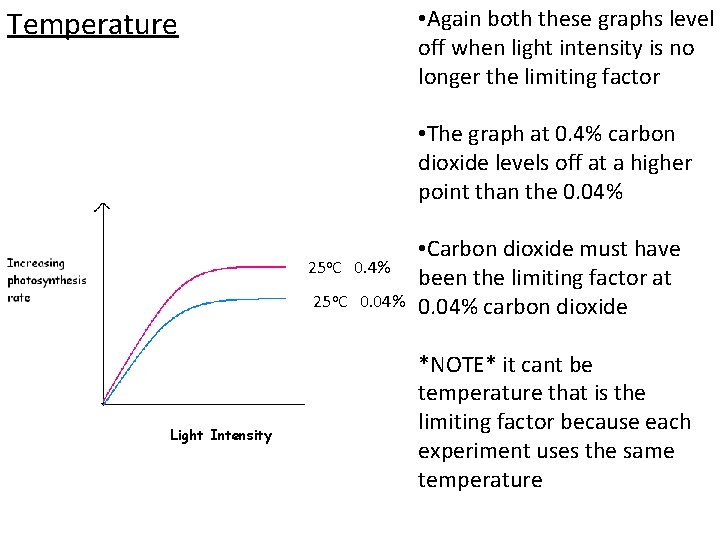
Temperature • Again both these graphs level off when light intensity is no longer the limiting factor • The graph at 0. 4% carbon dioxide levels off at a higher point than the 0. 04% 25 o. C 0. 04% Light Intensity • Carbon dioxide must have been the limiting factor at 0. 04% carbon dioxide *NOTE* it cant be temperature that is the limiting factor because each experiment uses the same temperature
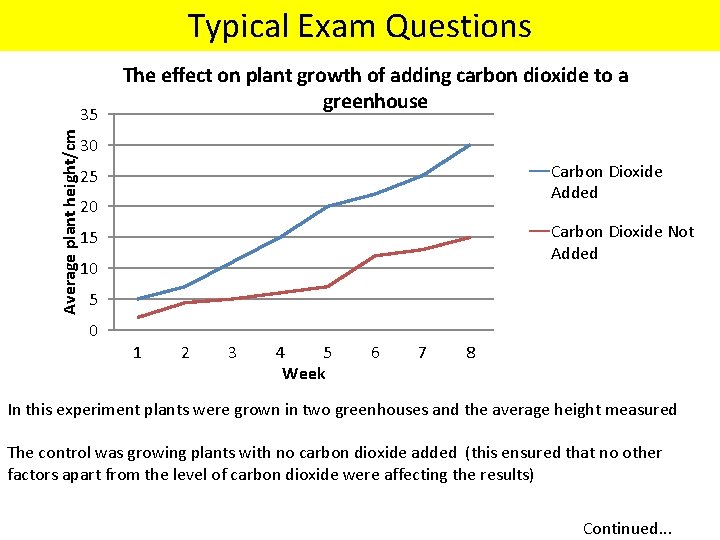
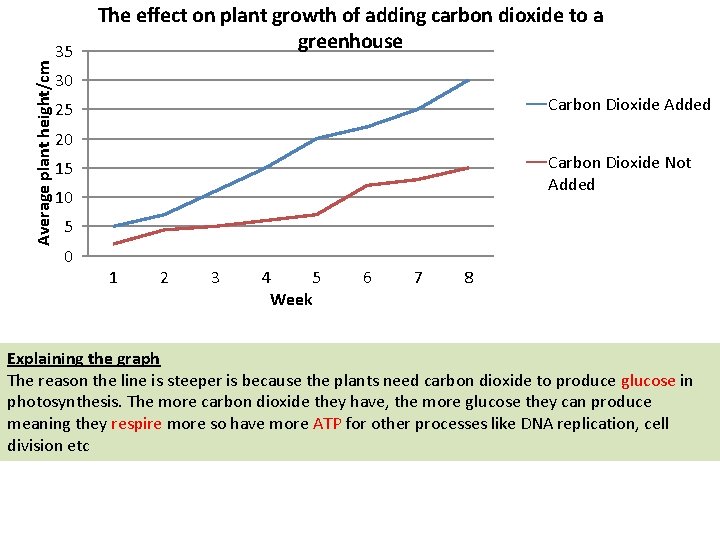
Typical Exam Questions Average plant height/cm 35 The effect on plant growth of adding carbon dioxide to a greenhouse 30 Carbon Dioxide Added 25 20 Carbon Dioxide Not Added 15 10 5 0 1 2 3 4 5 Week 6 7 8 In this experiment plants were grown in two greenhouses and the average height measured The control was growing plants with no carbon dioxide added (this ensured that no other factors apart from the level of carbon dioxide were affecting the results) Continued. . .
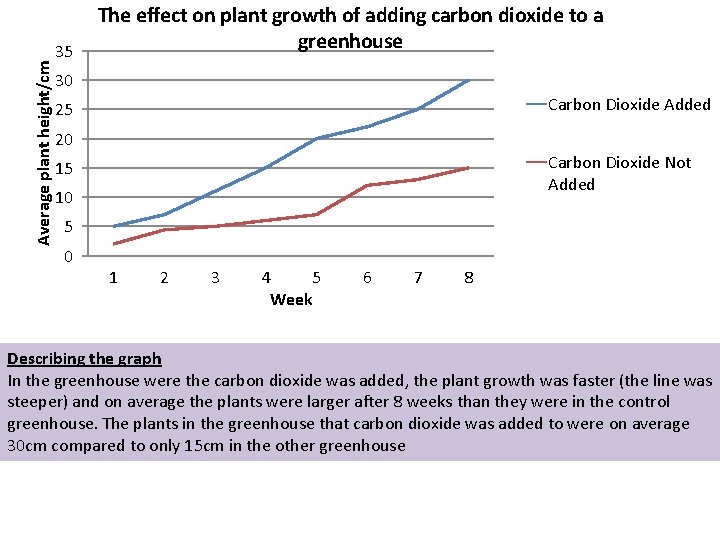
Average plant height/cm 35 The effect on plant growth of adding carbon dioxide to a greenhouse 30 Carbon Dioxide Added 25 20 Carbon Dioxide Not Added 15 10 5 0 1 2 3 4 5 Week 6 7 8 Describing the graph In the greenhouse were the carbon dioxide was added, the plant growth was faster (the line was steeper) and on average the plants were larger after 8 weeks than they were in the control greenhouse. The plants in the greenhouse that carbon dioxide was added to were on average 30 cm compared to only 15 cm in the other greenhouse
Average plant height/cm 35 The effect on plant growth of adding carbon dioxide to a greenhouse 30 Carbon Dioxide Added 25 20 Carbon Dioxide Not Added 15 10 5 0 1 2 3 4 5 Week 6 7 8 Explaining the graph The reason the line is steeper is because the plants need carbon dioxide to produce glucose in photosynthesis. The more carbon dioxide they have, the more glucose they can produce meaning they respire more so have more ATP for other processes like DNA replication, cell division etc
Page 42 A 2 level book for another example *NOTE* Most limiting factors exam questions are on the end of other photosynthesis exam questions rather than a stand alone question
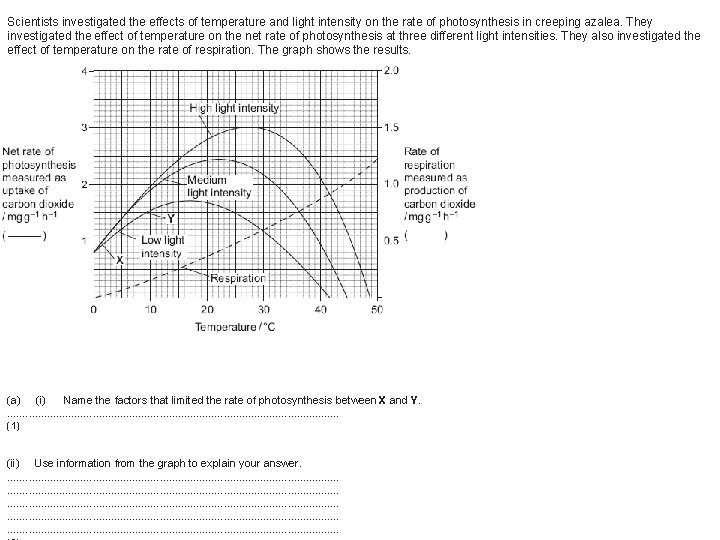
Scientists investigated the effects of temperature and light intensity on the rate of photosynthesis in creeping azalea. They investigated the effect of temperature on the net rate of photosynthesis at three different light intensities. They also investigated the effect of temperature on the rate of respiration. The graph shows the results. (a) (i) Name the factors that limited the rate of photosynthesis between X and Y. . . . . . . (1) (ii) Use information from the graph to explain your answer. . . . . . . . . . . . . . . . . . . . . . . . . . . . . . . . . .
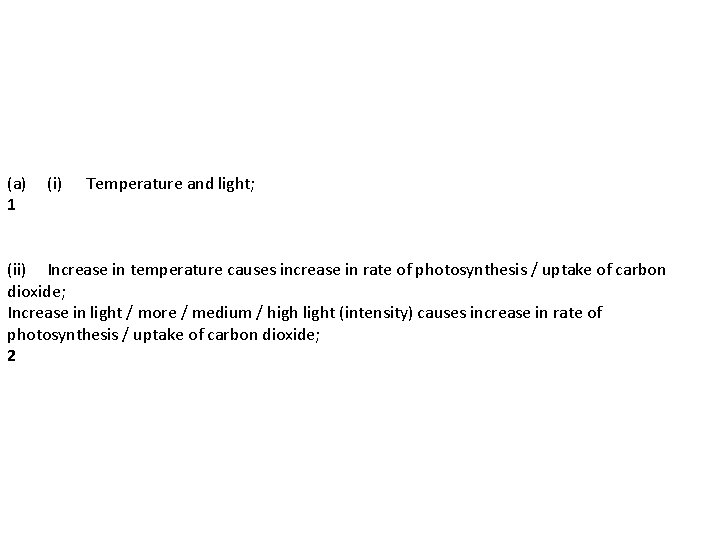
(a) 1 (i) Temperature and light; (ii) Increase in temperature causes increase in rate of photosynthesis / uptake of carbon dioxide; Increase in light / more / medium / high light (intensity) causes increase in rate of photosynthesis / uptake of carbon dioxide; 2
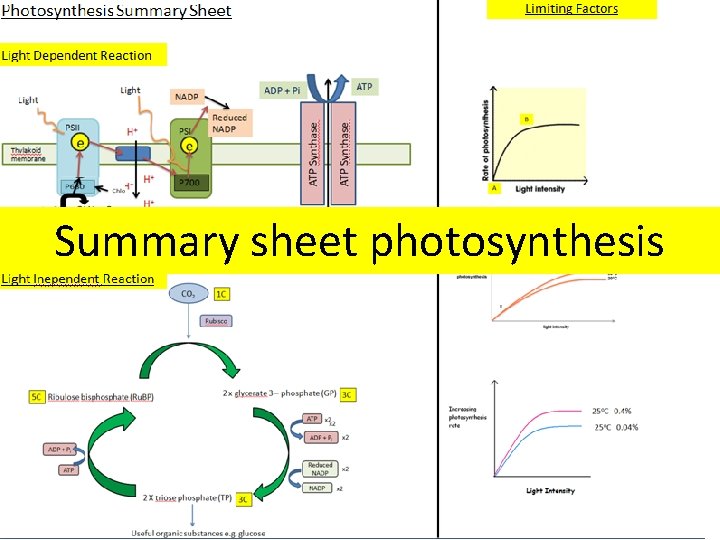
Summary sheet photosynthesis
Exam Questions Paper exam questions
The final part of the photosynthesis topic is looking at the experiments linked to different aspects of the photosynthesis process You need to be able to know how to carry out • Chromatography to investigate the pigments in leaves • Using a colorimeter to investigate the activity of dehydrogenise in chloroplasts Page 34 ipad A level text book