
Todays presentation is available to download at http
Today’s presentation is available to download at http: //www. rercglasgow. org/clplpresentations. html
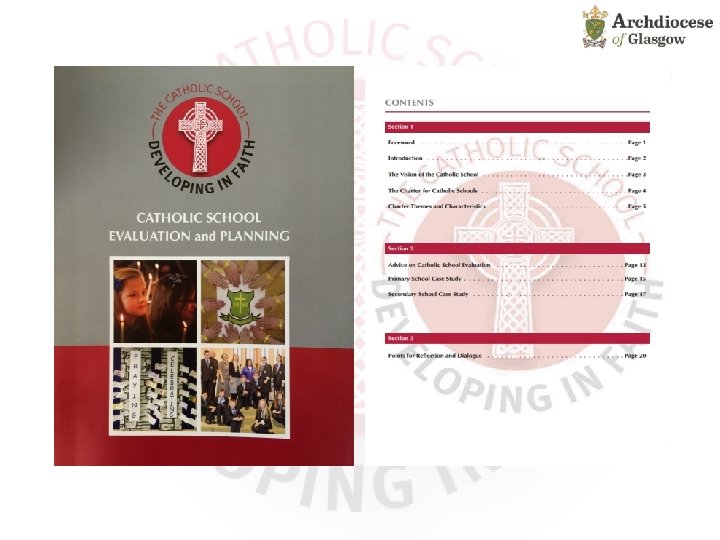
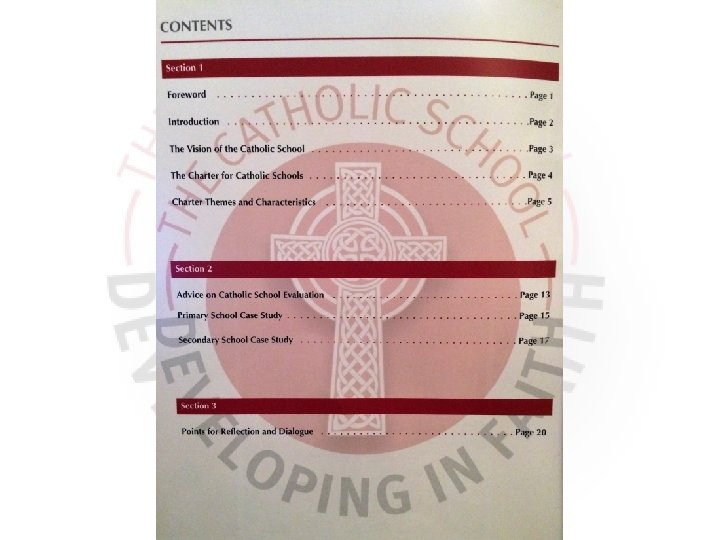
Aims: • To provide an overview of ‘The Catholic School: Developing in Faith’ • To reflect on the mission and vision of Catholic education as expressed in the Charter • To explore how ‘Developing in Faith’ can be integrated into the normal self-evaluation process within a school • To provide a toolkit to support reflection, evaluation and practical application of ‘Developing in Faith’
The Charter and Developing in Faith 19 th September 2016
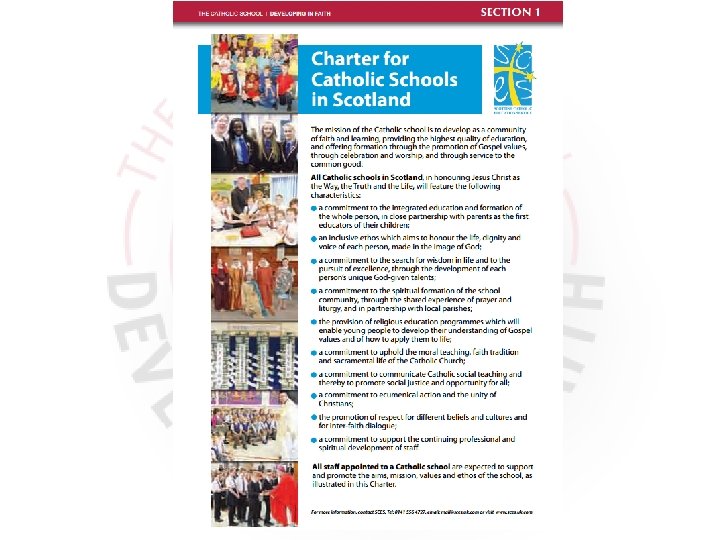
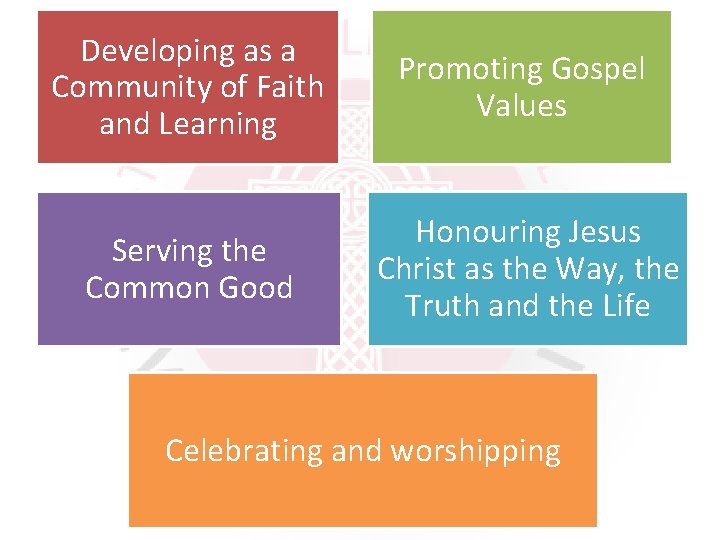
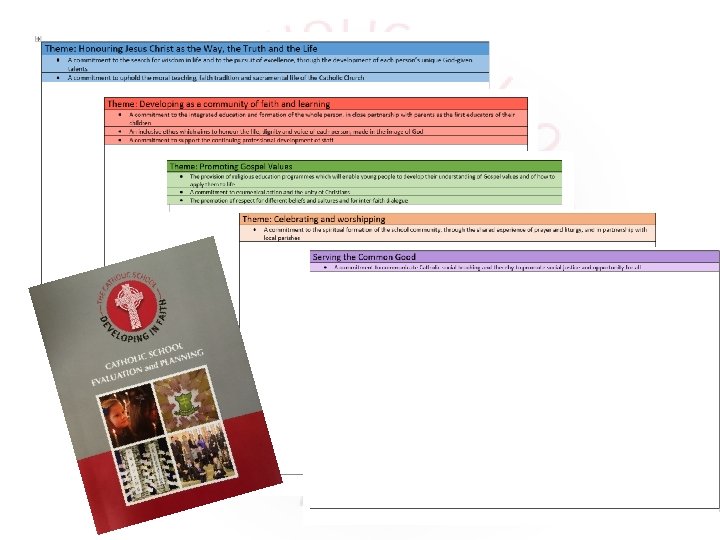
Developing as a Community of Faith and Learning Promoting Gospel Values Serving the Common Good Honouring Jesus Christ as the Way, the Truth and the Life Celebrating and worshipping
Developing as a community of faith and learning “What makes the Catholic school distinctive is its attempt to generate a community climate that is permeated by the Gospel spirit of freedom and love. ”
Developing as a community of faith and learning 1. A commitment to the integrated education and formation of the whole person, in close partnership with parents as the first educators of their children. 2. An inclusive ethos which aims to honour the life, dignity and voice of each person, made in the image and likeness of God. 3. A commitment to support the continuing professional and spiritual development of staff.
Promoting Gospel Values “It is precisely in the Gospel of Christ, taking root in the minds and lives of the faithful, that the Catholic school finds its definition as it comes to terms with the cultural conditions of the times. ”
Promoting Gospel Values 1. The provision of religious education programmes which will enable young people to develop their understanding of Gospel values and of how to apply them to life. 2. A commitment to ecumenical action and the unity of Christians. 3. The promotion of respect for different beliefs and cultures and for inter-faith dialogue.
Serving the Common Good “Knowledge is not to be considered as a means of material prosperity and success, but as a call to serve and to be responsible for others. ”
Serving the Common Good 1. A commitment to communicate all Catholic social teaching and thereby to promote social justice for all.
Honouring Jesus Christ as the Way, the Truth and the Life “The Catholic school is committed to the development of the whole person since, in Christ, all human values find their fulfilment and unity. ”
Honouring Jesus Christ as the Way, the Truth and the Life 1. A commitment to the search for wisdom in life and to the pursuit of excellence, through the development of each person’s unique God-given talents. 2. A commitment to uphold the moral teaching, faith tradition and sacramental life of the Catholic Church.
Celebrating and Worshipping “It is important that lay Catholics who work in a Catholic school participate simply and actively in the liturgical and sacramental life of the school. Students will share in this life more readily when they have concrete examples; when they see the importance that this life has for its believers. ”
Celebrating and Worshipping 1. A commitment to the spiritual formation of the school community, through the shared experience of prayer and liturgy, and in partnership with local parishes.

Overview: • The document and HGIOS? 4 • The Evaluation Process • Toolkit for schools • Demonstrate links with existing school improvement initiatives
The Catholic school loses its purpose without constant reference to the Gospel and a frequent encounter with Christ. The Catholic School, Scared Congregation for Catholic Education, 1977, n 55
• To reflect on the educational vision on which it is founded • To evaluate how the school is being faithful to the faith mission which it receives from the Church • To report annually on its development as a Catholic school to members of the wider faith community- parents, parish and Diocese
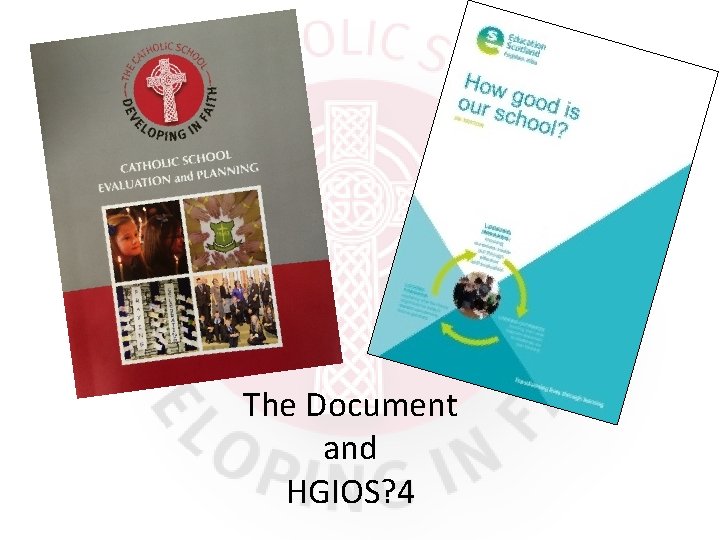
The Document and HGIOS? 4
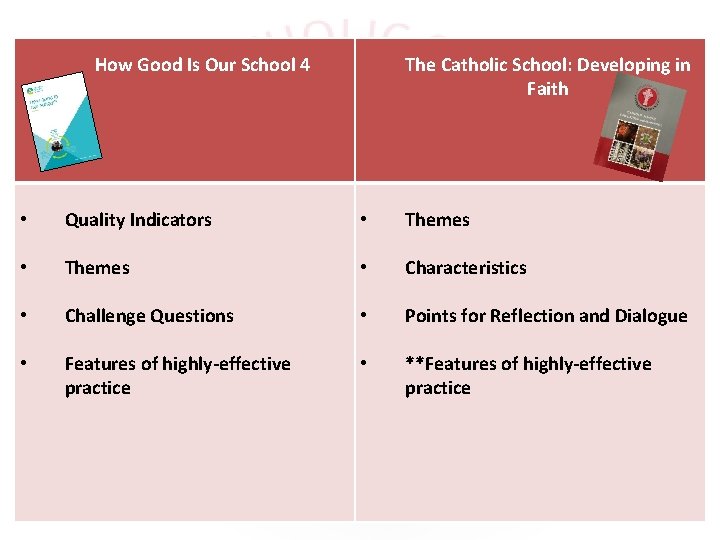
How Good Is Our School 4 The Catholic School: Developing in Faith • Quality Indicators • Themes • Characteristics • Challenge Questions • Points for Reflection and Dialogue • Features of highly-effective practice • **Features of highly-effective practice
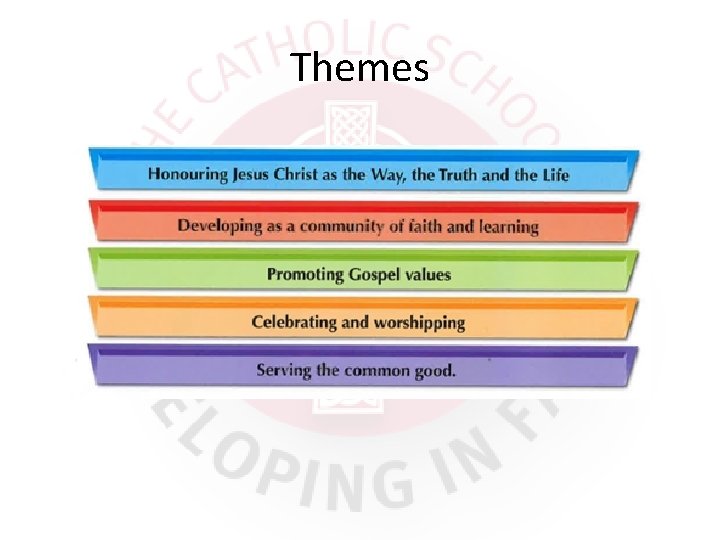
Themes
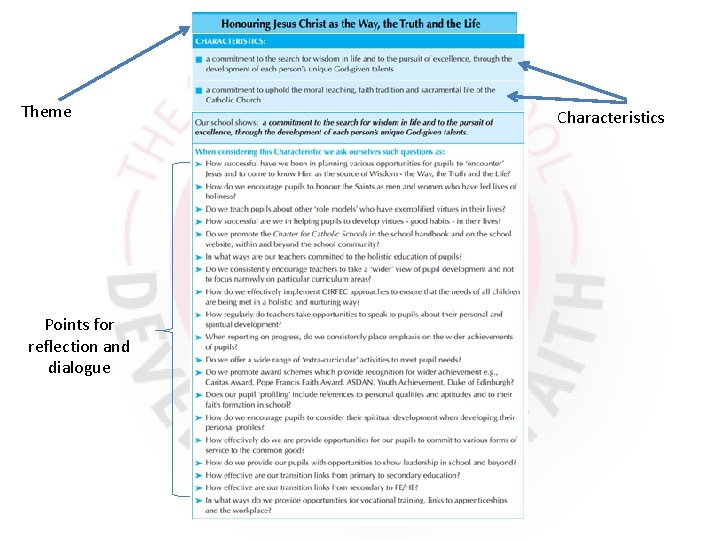
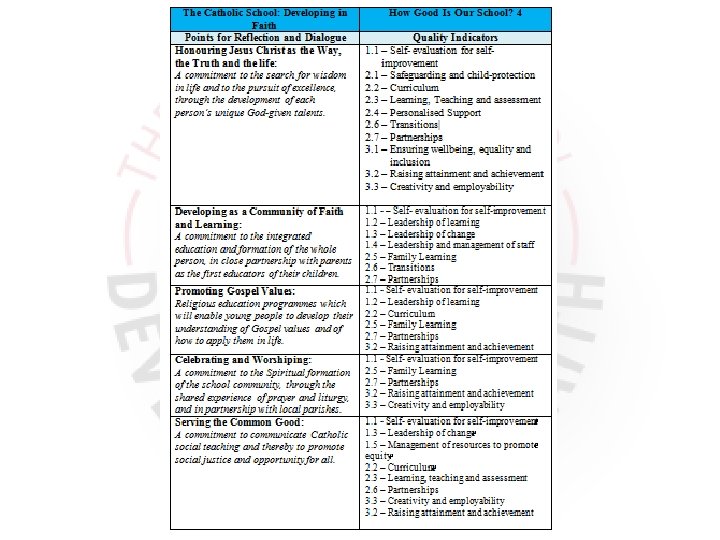
Theme Points for reflection and dialogue Characteristics
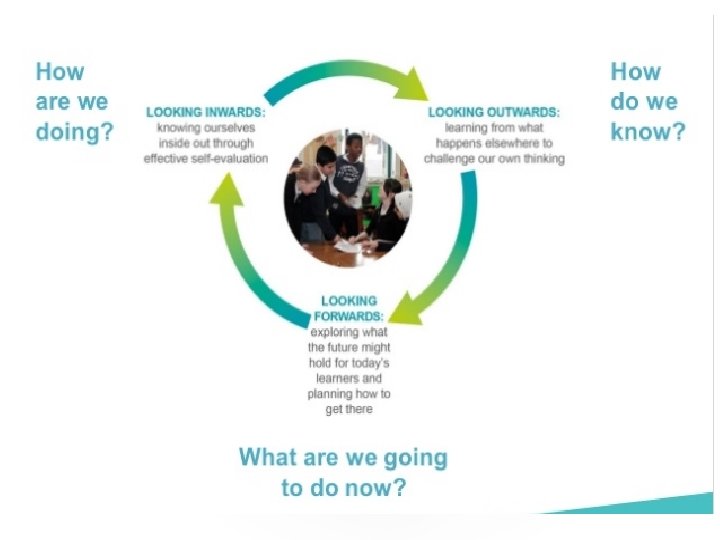
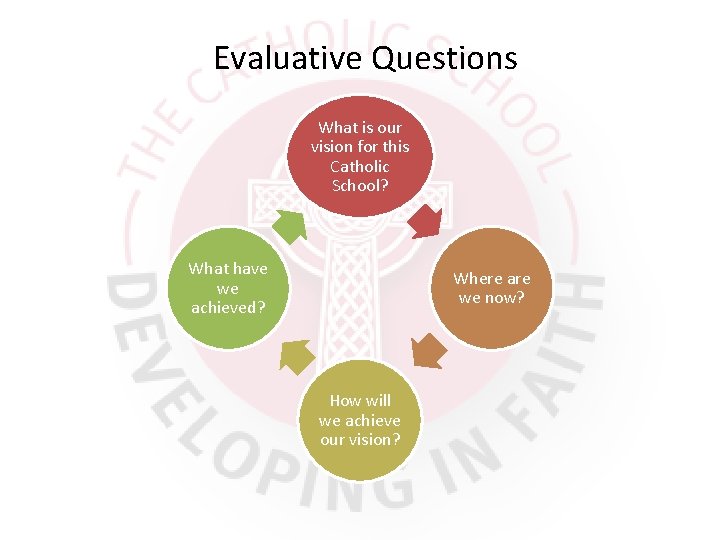
Evaluative Questions What is our vision for this Catholic School? What have we achieved? Where are we now? How will we achieve our vision?
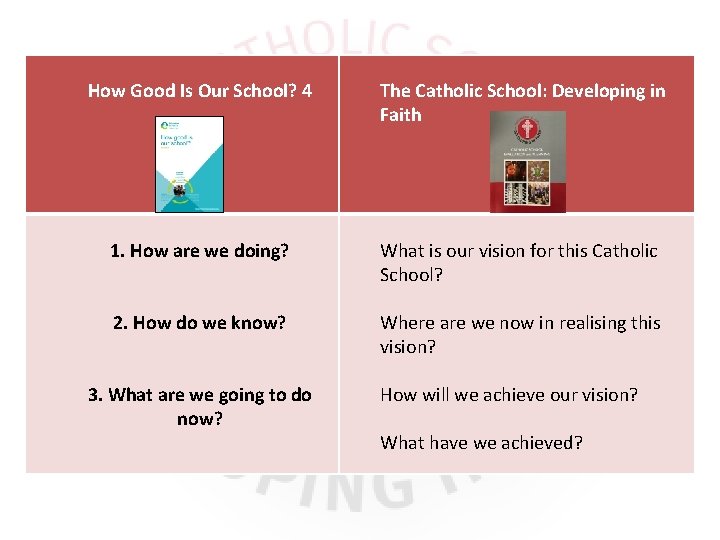
How Good Is Our School? 4 The Catholic School: Developing in Faith 1. How are we doing? What is our vision for this Catholic School? 2. How do we know? Where are we now in realising this vision? 3. What are we going to do now? How will we achieve our vision? What have we achieved?

The Process
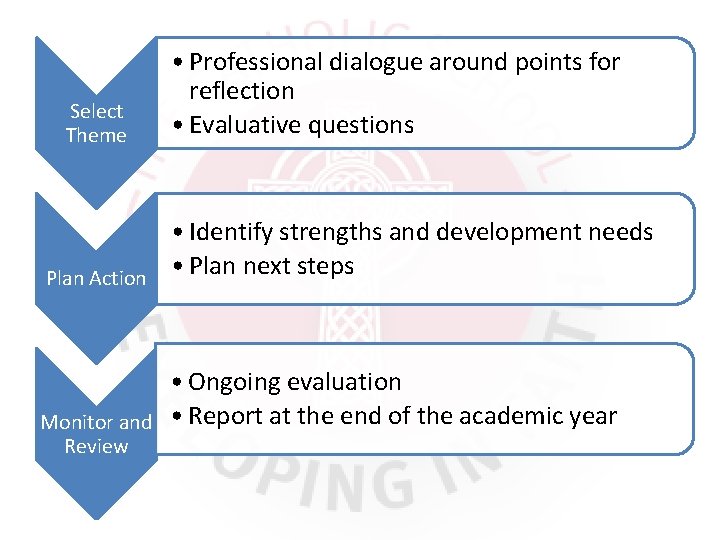
Select Theme Plan Action Monitor and Review • Professional dialogue around points for reflection • Evaluative questions • Identify strengths and development needs • Plan next steps • Ongoing evaluation • Report at the end of the academic year
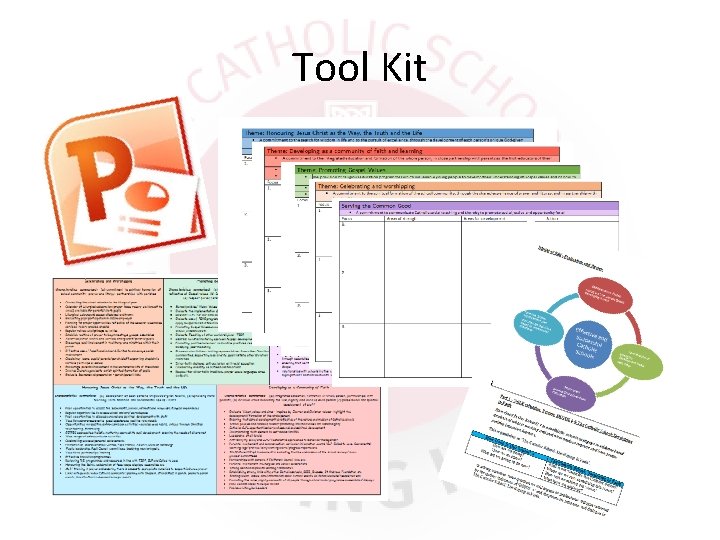
Tool Kit
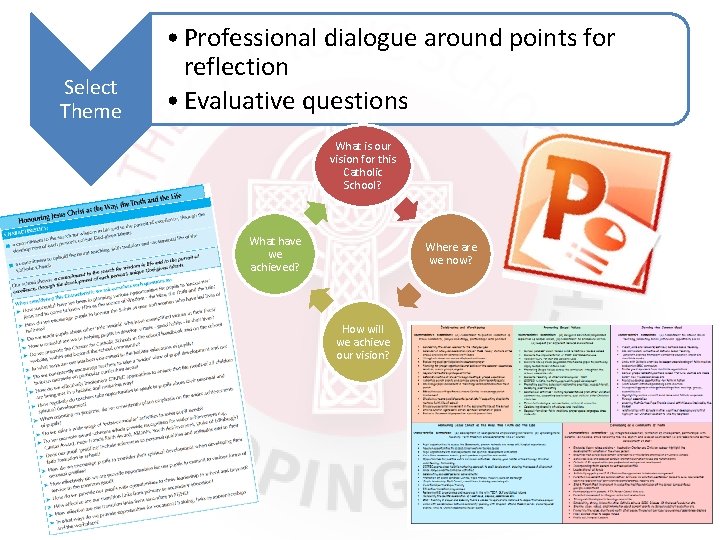
Select Theme • Professional dialogue around points for reflection • Evaluative questions What is our vision for this Catholic School? What have we achieved? Where are we now? How will we achieve our vision?
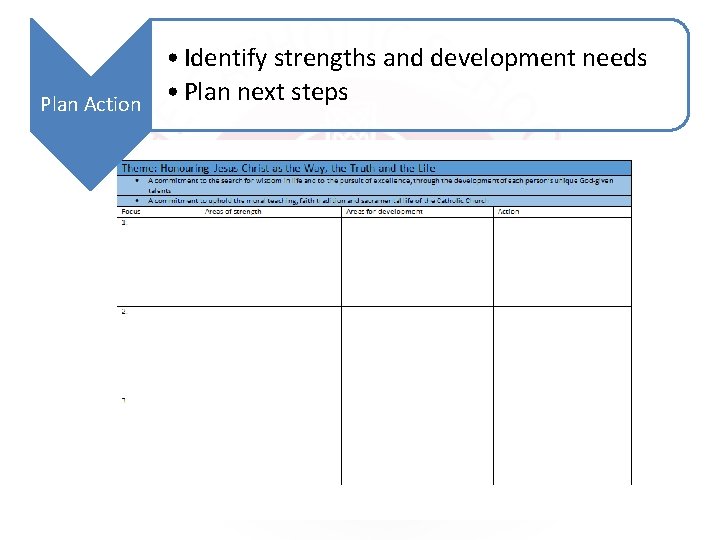
Plan Action • Identify strengths and development needs • Plan next steps
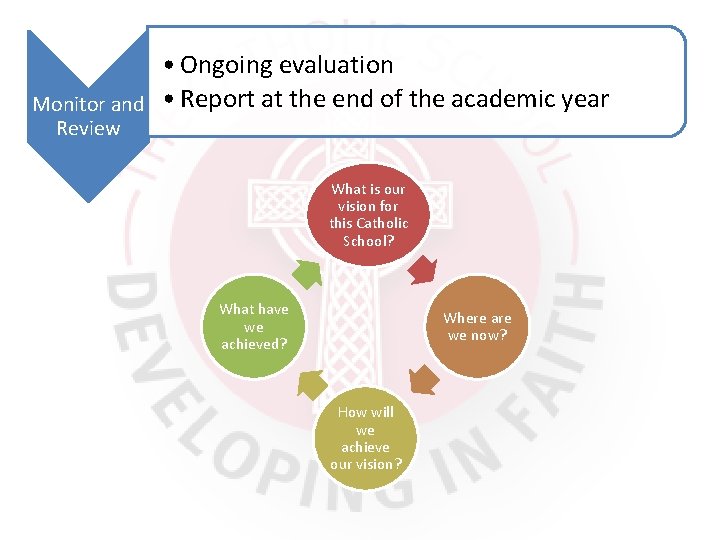
Monitor and Review • Ongoing evaluation • Report at the end of the academic year What is our vision for this Catholic School? What have we achieved? Where are we now? How will we achieve our vision?
It will help focus attention on “the nature and distinctive characteristics of a school which would present itself as Catholic”. It is intended to compliment and enhance the normal processes of school evaluation and improvement by promoting a particular focus on the distinctive faith characteristics of a Catholic school.
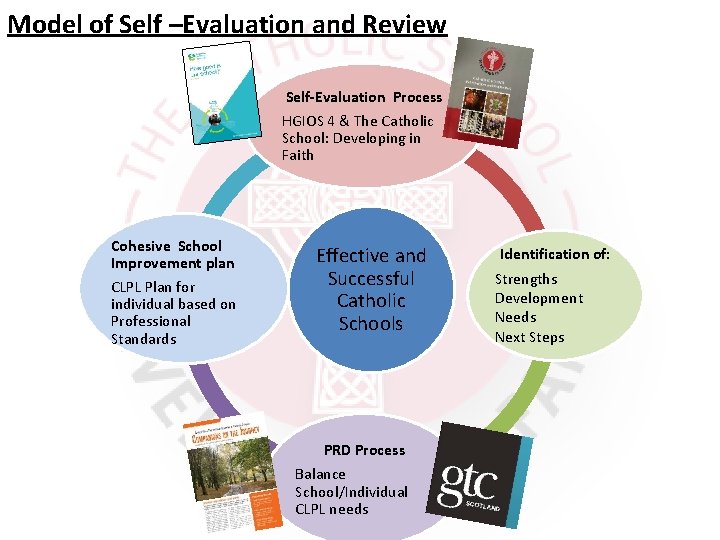
Model of Self –Evaluation and Review Self-Evaluation Process HGIOS 4 & The Catholic School: Developing in Faith Cohesive School Improvement plan CLPL Plan for individual based on Professional Standards Effective and Successful Catholic Schools PRD Process Balance School/Individual CLPL needs Identification of: Strengths Development Needs Next Steps
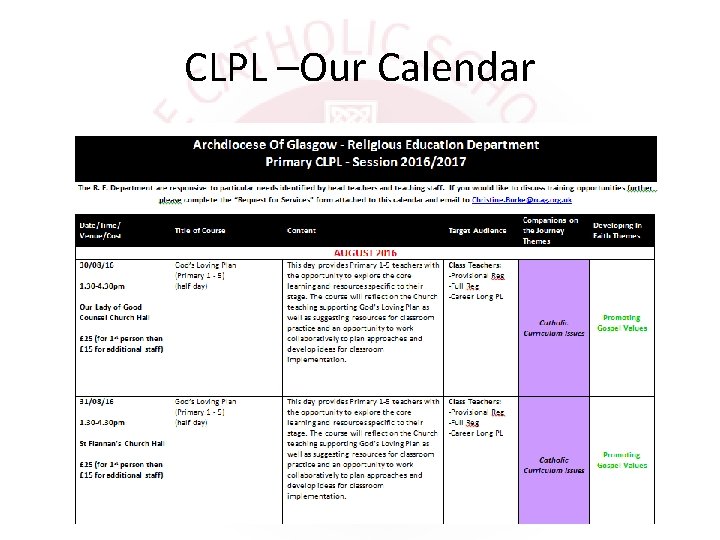
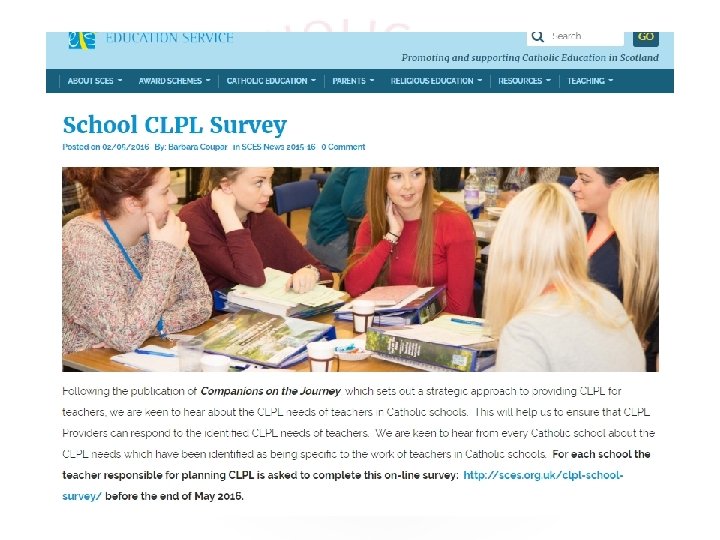
CLPL –Our Calendar
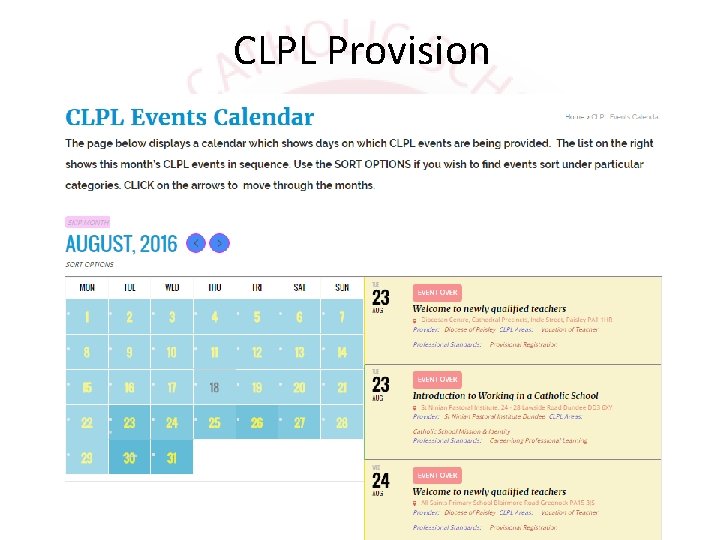
CLPL Provision
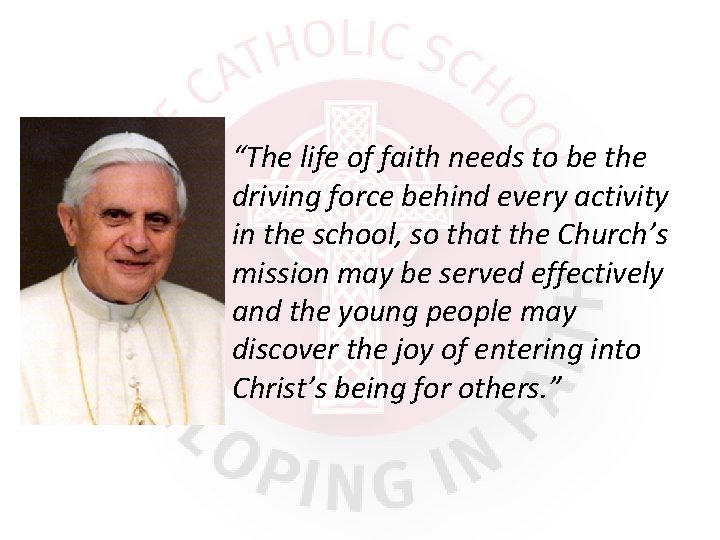
“The life of faith needs to be the driving force behind every activity in the school, so that the Church’s mission may be served effectively and the young people may discover the joy of entering into Christ’s being for others. ”
- Slides: 44