
Todays Objectives Identify proper lab behavior Identify proper
Today’s Objectives: Identify proper lab behavior Identify proper safety symbols Know what to do in a lab emergency situation
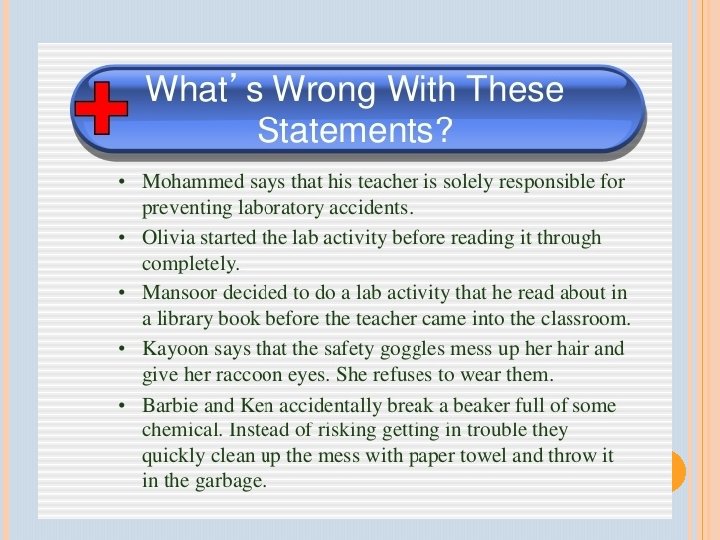
WHY FOLLOW SAFETY RULES? Hands-on experiences are essential to learning in science class, but safety must be the first concern. The following rules exist for your safety. These rules help to prevent accidents in the lab and allow for more efficient work to occur. Report all accidents immediately to the teacher, no matter how small. This includes broken glass, cuts and scrapes, chemical spills and fire. Learn the proper techniques for handling these accidents. Remain calm!
CONSEQUENCES Misbehavior CANNOT and WILL NOT be tolerated! Immediately notify your teacher of any unsafe conditions you observe. Work with your group at your station only. First Offense: Warning Second Offense: Ejection from lab with no credit. Third Offense: Ejection from lab with no credit and detention Fourth Offense: Ejection from lab with no credit, detention and the student will no longer be allowed to participate in lab activities until further notice. The student will receive alternative assignments to do instead.
1. FIRST THING’S FIRST When first entering the science room, DO NOT TOUCH any equipment, chemicals or other materials until you are instructed to do so. Sit down at your desk until you receive instructions. NEVER enter the room if unsupervised.

2. FOLLOW INSTRUCTIONS PAY ATTENTION to all written and verbal instructions. ASK QUESTIONS before proceeding if you are unsure. Read the entire lab procedure before beginning. Know what you are to do before you do it.
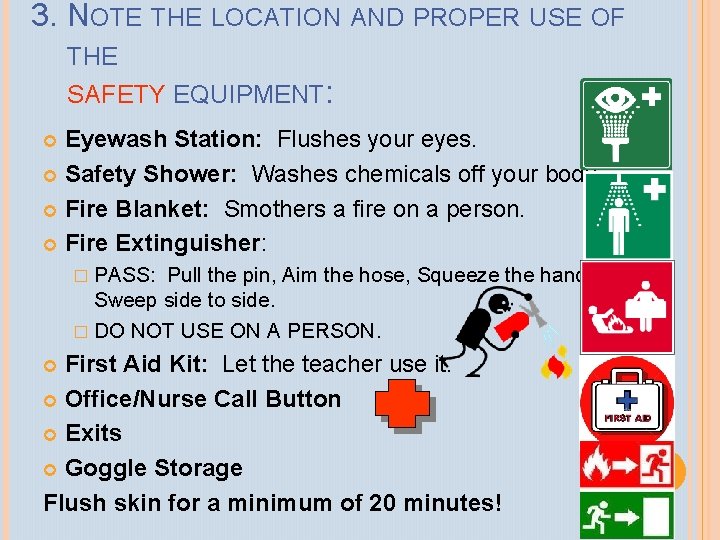
3. NOTE THE LOCATION AND PROPER USE OF THE SAFETY EQUIPMENT: Eyewash Station: Flushes your eyes. Safety Shower: Washes chemicals off your body. Fire Blanket: Smothers a fire on a person. Fire Extinguisher: � PASS: Pull the pin, Aim the hose, Squeeze the handle, Sweep side to side. � DO NOT USE ON A PERSON. First Aid Kit: Let the teacher use it. Office/Nurse Call Button Exits Goggle Storage Flush skin for a minimum of 20 minutes!

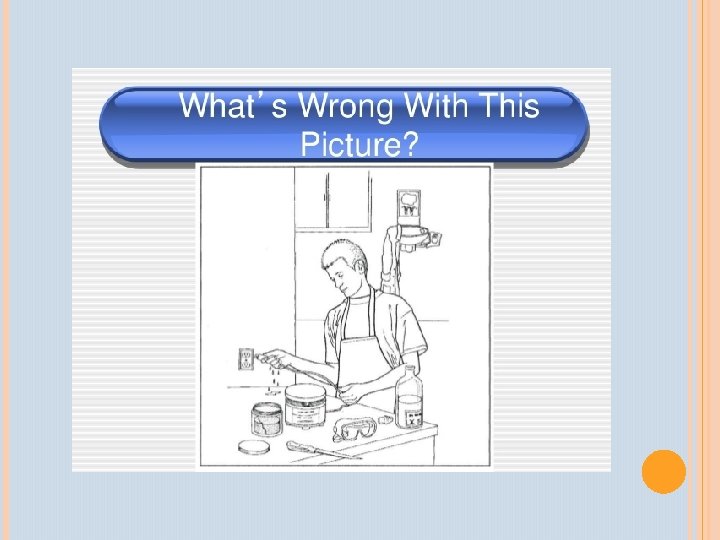
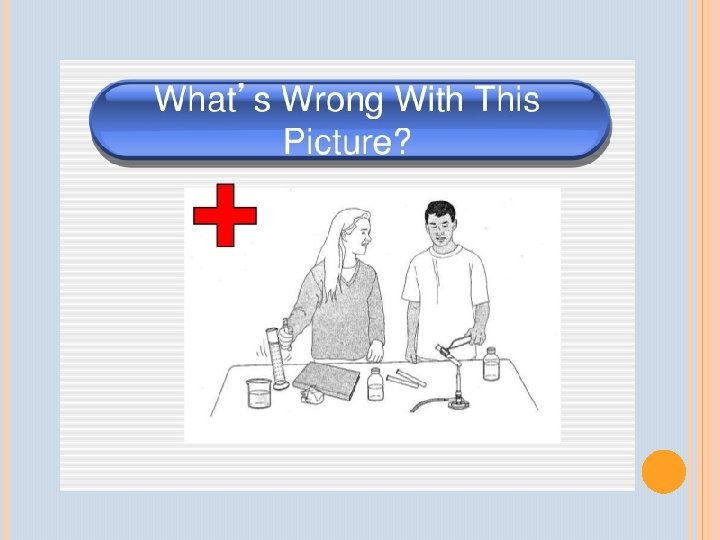
4. DRESS SAFELY ALWAYS wear safety goggles When needed, wear gloves and aprons Proper dress for lab includes: � Tying back long hair � Removing dangling jewelry � Roll up loose sleeves � Securing baggy clothing � Long Pants (No shorts) � No open toed shoes

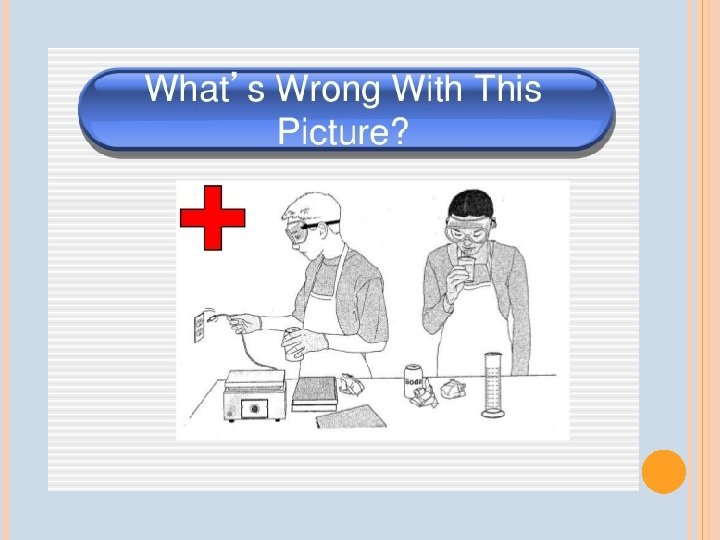
5. ACCIDENTAL CONSUMPTION NEVER eat or drink in the lab. Keep hands away from eyes, mouth, and body while using chemicals. Wash your hands with soap and water after performing lab activities. NEVER touch, taste, or smell any chemicals unless specified to do so.

6. READ SIGNS AND WARNINGS Use the posted procedure and evacuation route for exiting the classroom and building if necessary. Know your warning symbols: � BIOHAZARD: A biological substance that can infect other biological substances. � RADIOACTIVE: Material is radioactive. � TOXIC/POISON: Leads to death if inhaled, ingested, or absorbed by skin. � HIGH VOLTAGE: Electrical equipment that uses high voltage. � FLAMMABLE: Burns if exposed to flame. � EXPLOSIVE: May explode if exposed to heat, flames, noise, or movement. � IRRITANT: Causes inflammation upon contact. � CORROSIVE: Can destroy or burn living tissue and can eat away other material. � ENVIRONMENTAL: harmful to the environment and cannot be washed down the drain.
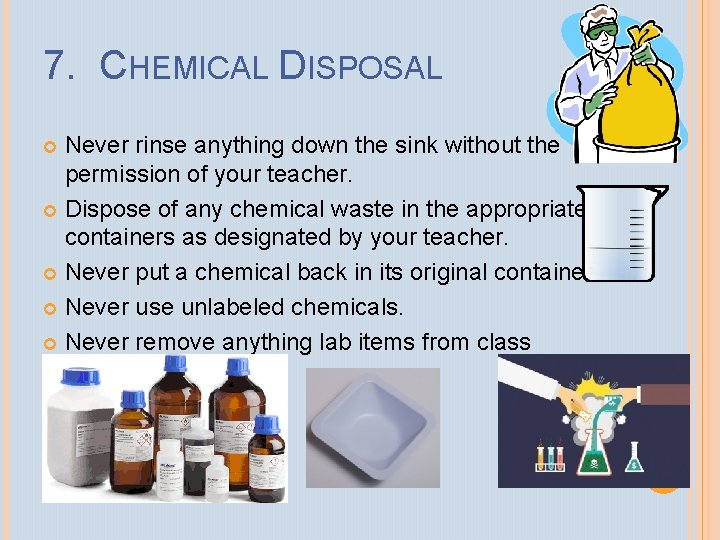
7. CHEMICAL DISPOSAL Never rinse anything down the sink without the permission of your teacher. Dispose of any chemical waste in the appropriate containers as designated by your teacher. Never put a chemical back in its original container. Never use unlabeled chemicals. Never remove anything lab items from class
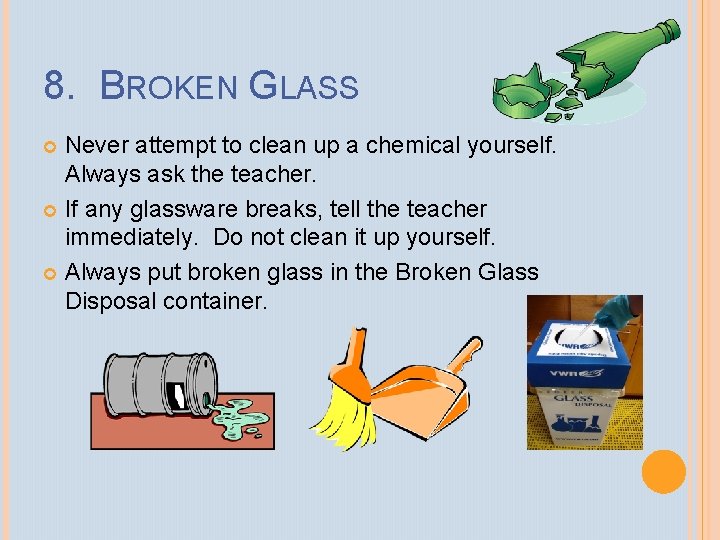
8. BROKEN GLASS Never attempt to clean up a chemical yourself. Always ask the teacher. If any glassware breaks, tell the teacher immediately. Do not clean it up yourself. Always put broken glass in the Broken Glass Disposal container.
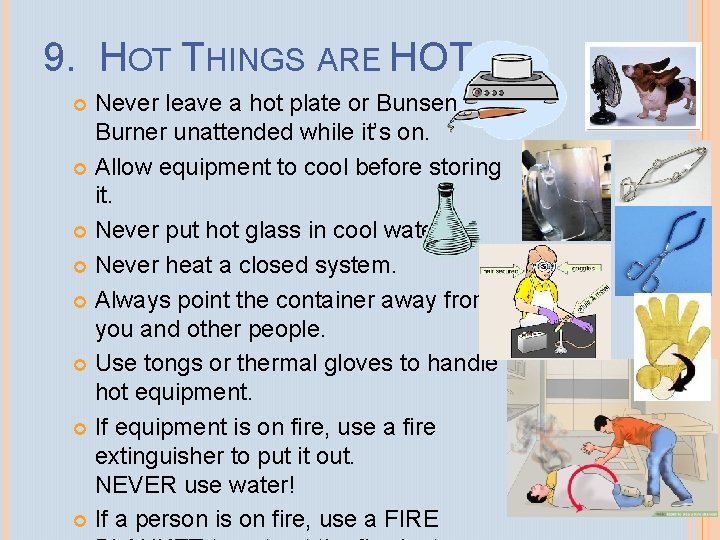
9. HOT THINGS ARE HOT Never leave a hot plate or Bunsen Burner unattended while it’s on. Allow equipment to cool before storing it. Never put hot glass in cool water. Never heat a closed system. Always point the container away from you and other people. Use tongs or thermal gloves to handle hot equipment. If equipment is on fire, use a fire extinguisher to put it out. NEVER use water! If a person is on fire, use a FIRE
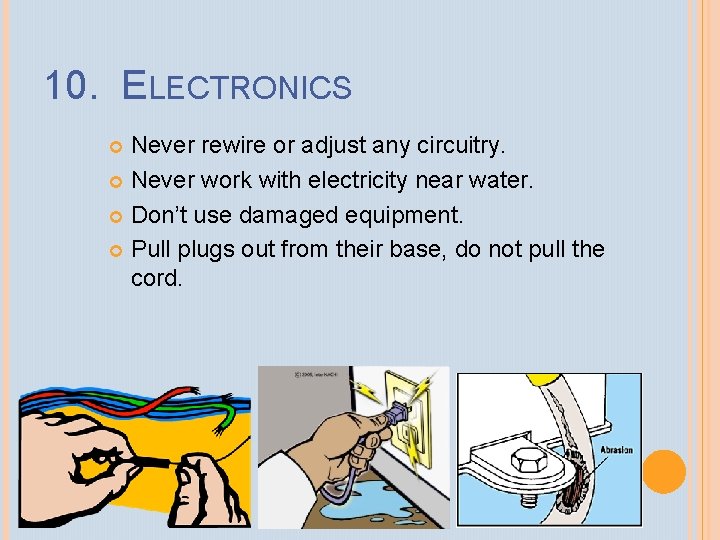
10. ELECTRONICS Never rewire or adjust any circuitry. Never work with electricity near water. Don’t use damaged equipment. Pull plugs out from their base, do not pull the cord.
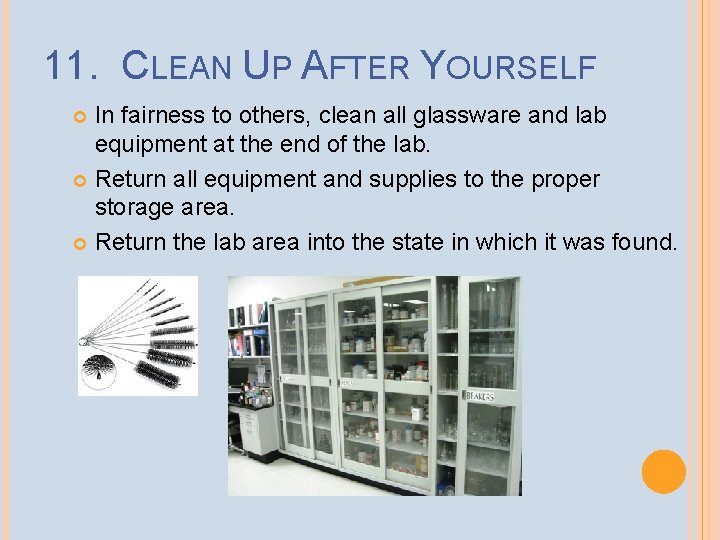
11. CLEAN UP AFTER YOURSELF In fairness to others, clean all glassware and lab equipment at the end of the lab. Return all equipment and supplies to the proper storage area. Return the lab area into the state in which it was found.
12. SAFETY CONTRACT You will receive a safety contract that you and your parent must sign. This has to be done before you can do a lab. Failure to comply with safety guidelines may result in your removal from the class and loss of credit for the work that is done in your absence.
PRACTICE SAFE SCIENCE…OR ELSE!
LAB SAFETY RAP VIDEO https: //www. youtube. com/watch? v=PSd. Y 4 g. Ef. CHY
- Slides: 21