
Todays lecture System Implementation Discrete Time signals generation
- Slides: 11
Today's lecture − − − − System Implementation Discrete Time signals generation Sampling Theorem Sampling Rate Sinusoidal Signal Sampling Concept of Aliasing Spectrum for Discrete Time Domain Digital Frequency 1
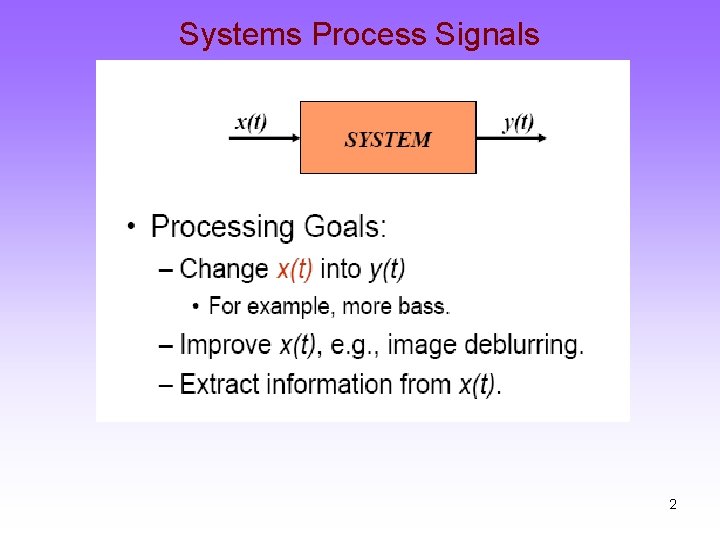
Systems Process Signals 2
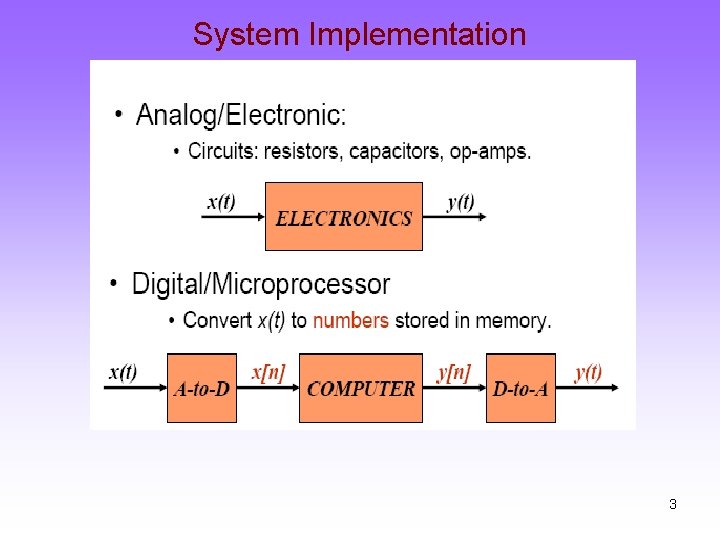
System Implementation 3
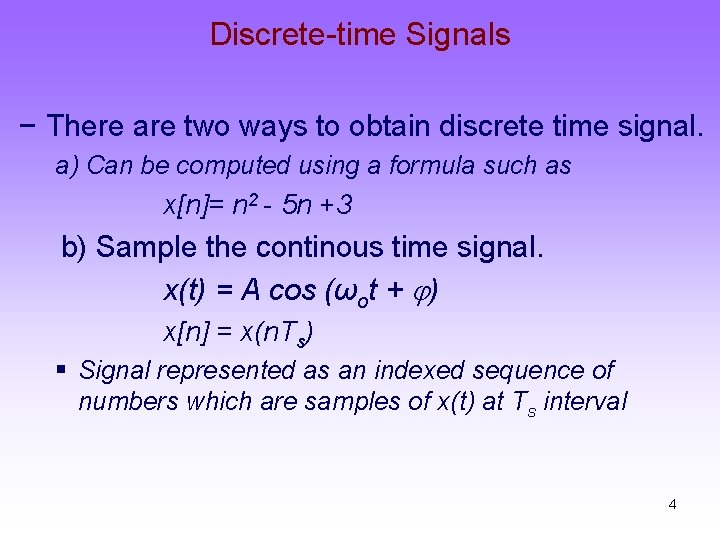
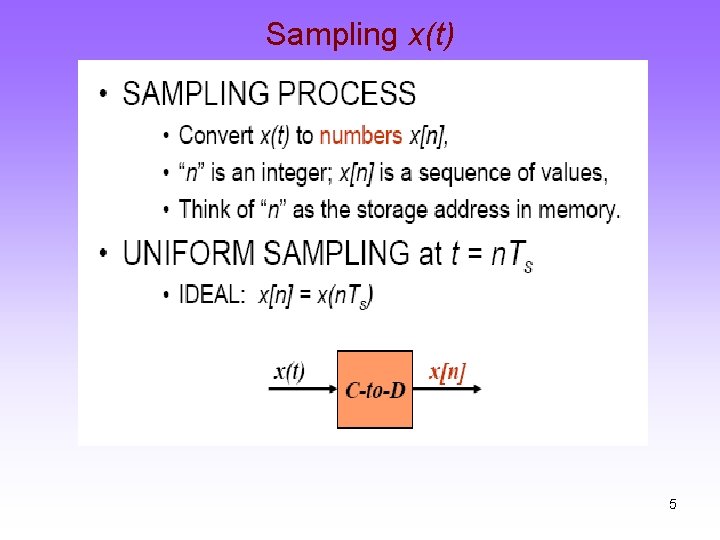
Discrete-time Signals − There are two ways to obtain discrete time signal. a) Can be computed using a formula such as x[n]= n 2 - 5 n +3 b) Sample the continous time signal. x(t) = A cos (ωot + ) x[n] = x(n. Ts) § Signal represented as an indexed sequence of numbers which are samples of x(t) at Ts interval 4
Sampling x(t) 5
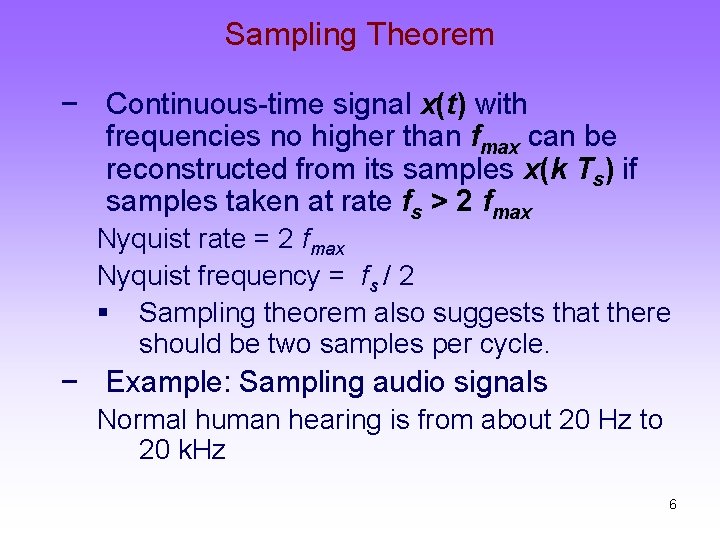
Sampling Theorem − Continuous-time signal x(t) with frequencies no higher than fmax can be reconstructed from its samples x(k Ts) if samples taken at rate fs > 2 fmax Nyquist rate = 2 fmax Nyquist frequency = fs / 2 § Sampling theorem also suggests that there should be two samples per cycle. − Example: Sampling audio signals Normal human hearing is from about 20 Hz to 20 k. Hz 6
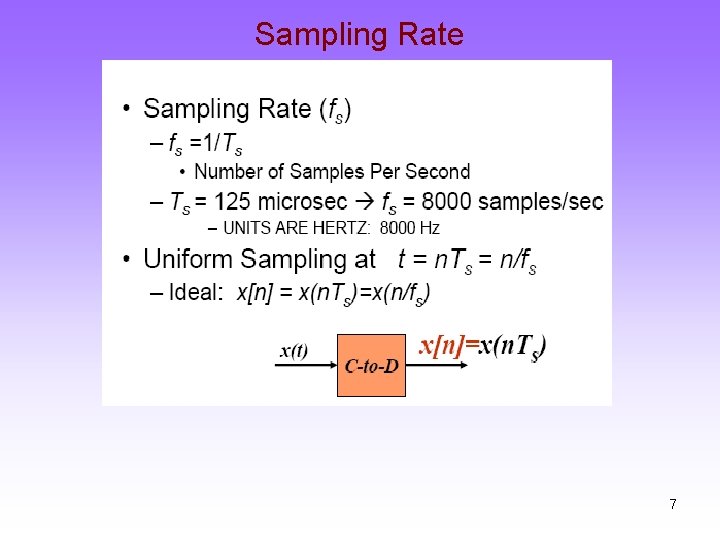
Sampling Rate 7
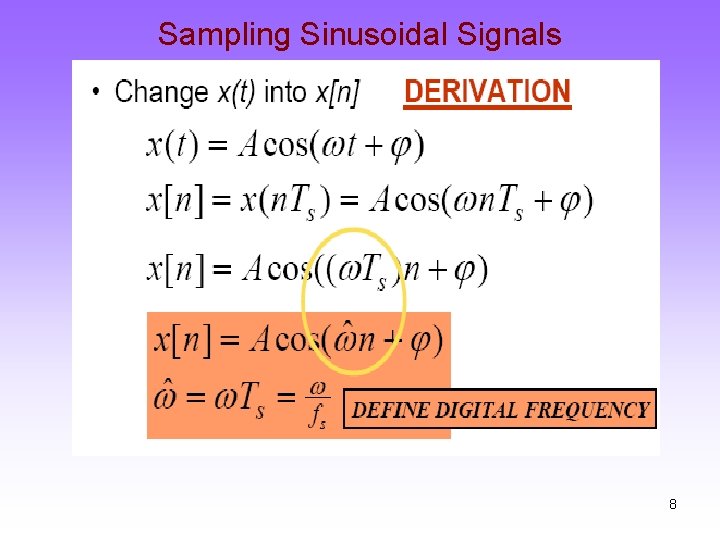
Sampling Sinusoidal Signals 8
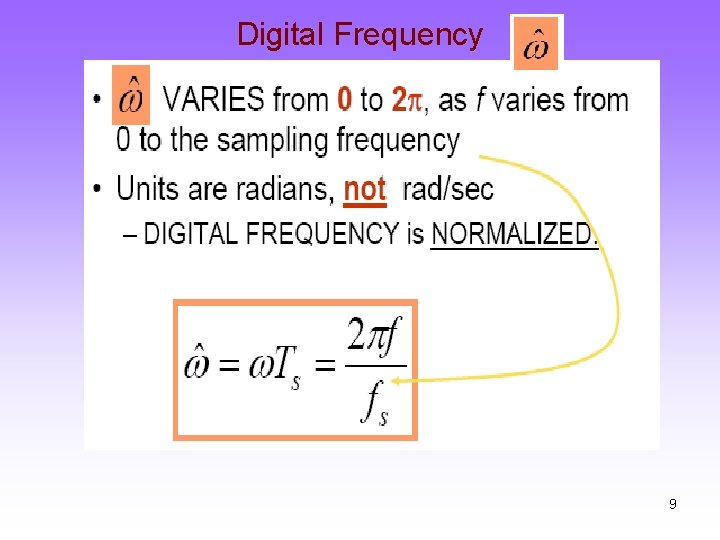
Digital Frequency 9
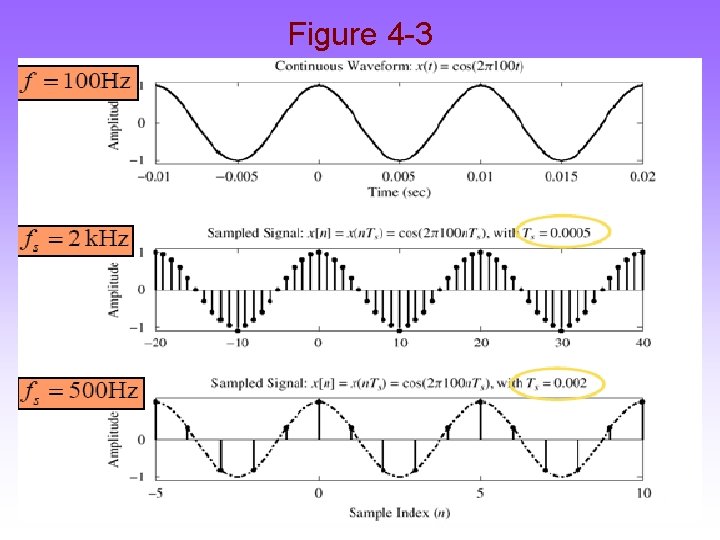
Figure 4 -3 10
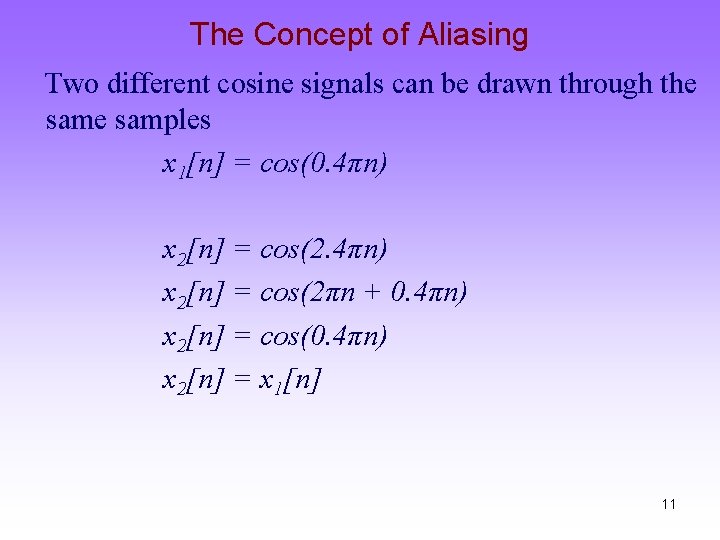
The Concept of Aliasing Two different cosine signals can be drawn through the samples x 1[n] = cos(0. 4πn) x 2[n] = cos(2πn + 0. 4πn) x 2[n] = cos(0. 4πn) x 2[n] = x 1[n] 11