
Todays Journal The Beauty Scale 1 ugly 3
Today’s Journal: The Beauty Scale 1 = ugly 3 = below average 5 = average 7 = above average 10 = gorgeous/beautiful/handsome
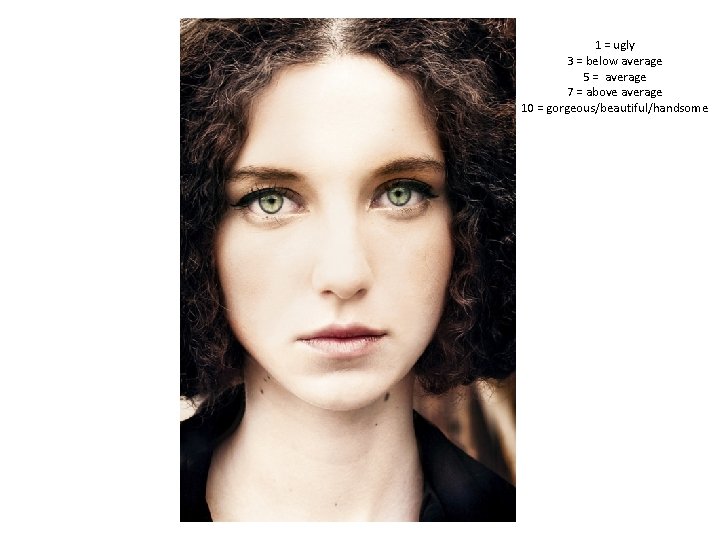
1 = ugly 3 = below average 5 = average 7 = above average 10 = gorgeous/beautiful/handsome

1 = ugly 3 = below average 5 = above average 7 = above average 10 = gorgeous/beautiful/handsome
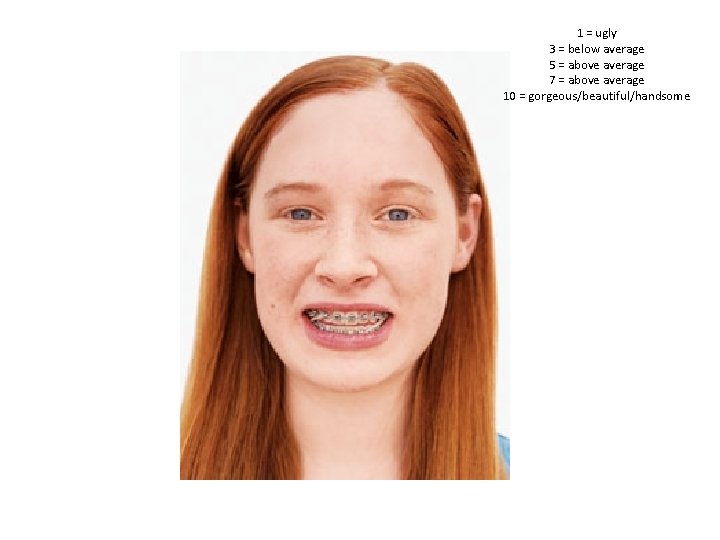
1 = ugly 3 = below average 5 = above average 7 = above average 10 = gorgeous/beautiful/handsome
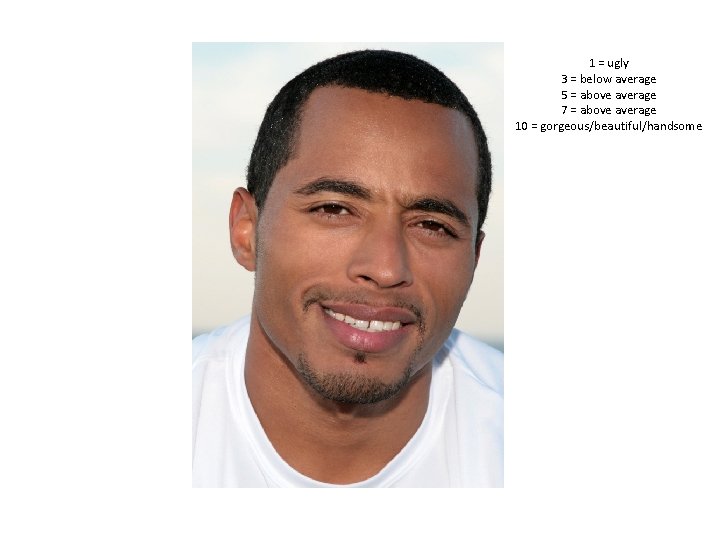
1 = ugly 3 = below average 5 = above average 7 = above average 10 = gorgeous/beautiful/handsome
1 = ugly 3 = below average 5 = above average 7 = above average 10 = gorgeous/beautiful/handsome
1 = ugly 3 = below average 5 = above average 7 = above average 10 = gorgeous/beautiful/handsome
1 = ugly 3 = below average 5 = above average 7 = above average 10 = gorgeous/beautiful/handsome

1 = ugly 3 = below average 5 = above average 7 = above average 10 = gorgeous/beautiful/handsome
1 = ugly 3 = below average 5 = above average 7 = above average 10 = gorgeous/beautiful/handsome
1 = ugly 3 = below average 5 = above average 7 = above average 10 = gorgeous/beautiful/handsome
What is Beauty? • How did you learn to distinguish between “beautiful” and “ugly”? • What has influenced your definition of beauty or beautiful? • Advertising? TV? Celebrities? Family? Friends? Comments from others? • Why do teenagers often not like the way they look?
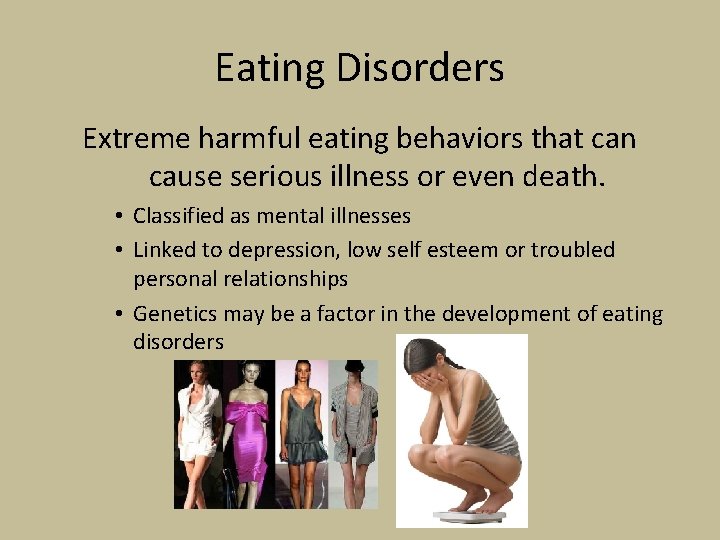
Eating Disorders Extreme harmful eating behaviors that can cause serious illness or even death. • Classified as mental illnesses • Linked to depression, low self esteem or troubled personal relationships • Genetics may be a factor in the development of eating disorders
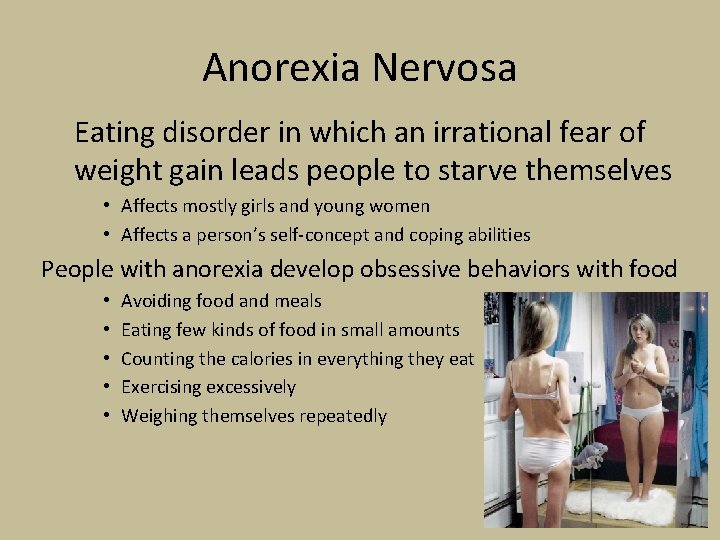
Anorexia Nervosa Eating disorder in which an irrational fear of weight gain leads people to starve themselves • Affects mostly girls and young women • Affects a person’s self-concept and coping abilities People with anorexia develop obsessive behaviors with food • • • Avoiding food and meals Eating few kinds of food in small amounts Counting the calories in everything they eat Exercising excessively Weighing themselves repeatedly
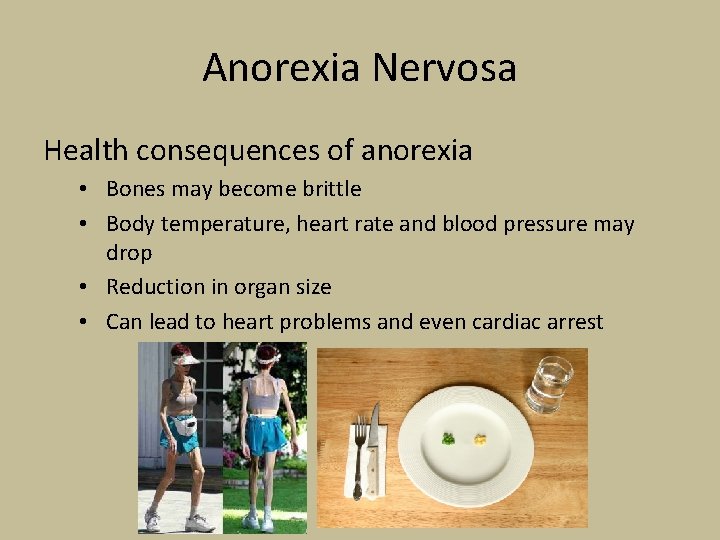
Anorexia Nervosa Health consequences of anorexia • Bones may become brittle • Body temperature, heart rate and blood pressure may drop • Reduction in organ size • Can lead to heart problems and even cardiac arrest
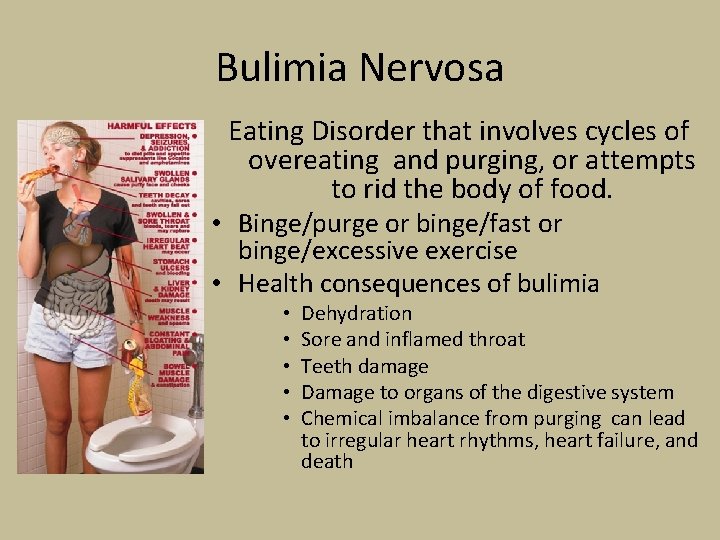
Bulimia Nervosa Eating Disorder that involves cycles of overeating and purging, or attempts to rid the body of food. • Binge/purge or binge/fast or binge/excessive exercise • Health consequences of bulimia • • • Dehydration Sore and inflamed throat Teeth damage Damage to organs of the digestive system Chemical imbalance from purging can lead to irregular heart rhythms, heart failure, and death
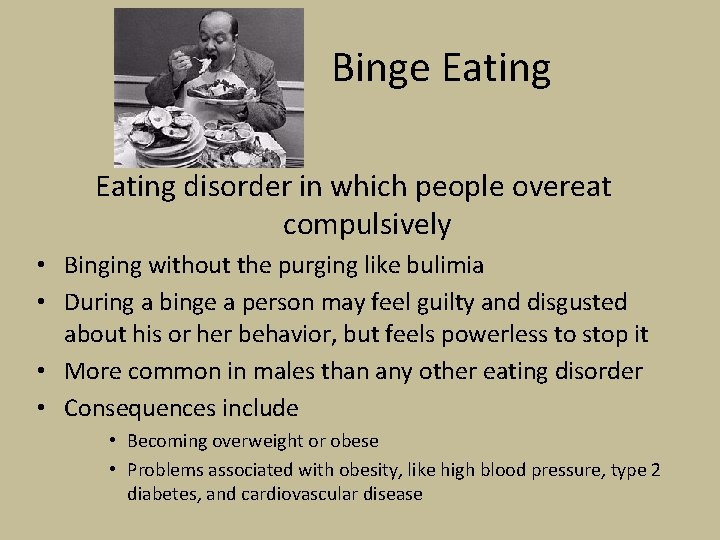
Binge Eating disorder in which people overeat compulsively • Binging without the purging like bulimia • During a binge a person may feel guilty and disgusted about his or her behavior, but feels powerless to stop it • More common in males than any other eating disorder • Consequences include • Becoming overweight or obese • Problems associated with obesity, like high blood pressure, type 2 diabetes, and cardiovascular disease
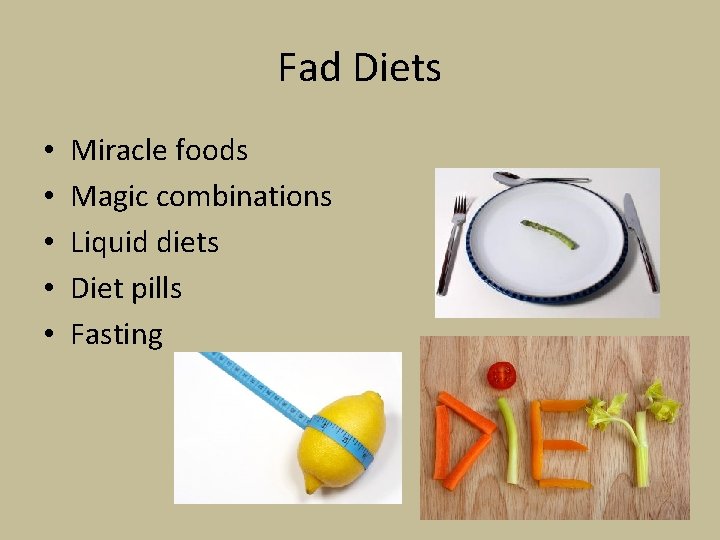
Fad Diets • • • Miracle foods Magic combinations Liquid diets Diet pills Fasting
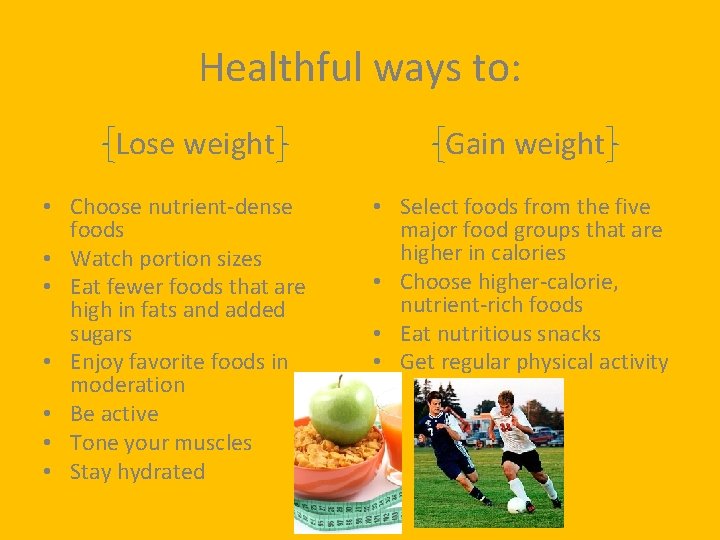
Healthful ways to: Lose weight • Choose nutrient-dense foods • Watch portion sizes • Eat fewer foods that are high in fats and added sugars • Enjoy favorite foods in moderation • Be active • Tone your muscles • Stay hydrated Gain weight • Select foods from the five major food groups that are higher in calories • Choose higher-calorie, nutrient-rich foods • Eat nutritious snacks • Get regular physical activity
Energy Balance • Calories: units used to measure the energy found in food. • Consuming more calories than you need = weight gain • Using more calories than you take in = weight loss • Metabolism: process by which the body breaks down substances and gets energy from food. • 3, 500 calories = 1 pound of body fat, thus if you consume 500 fewer calories than you use every day, your will lose 1 pound per week
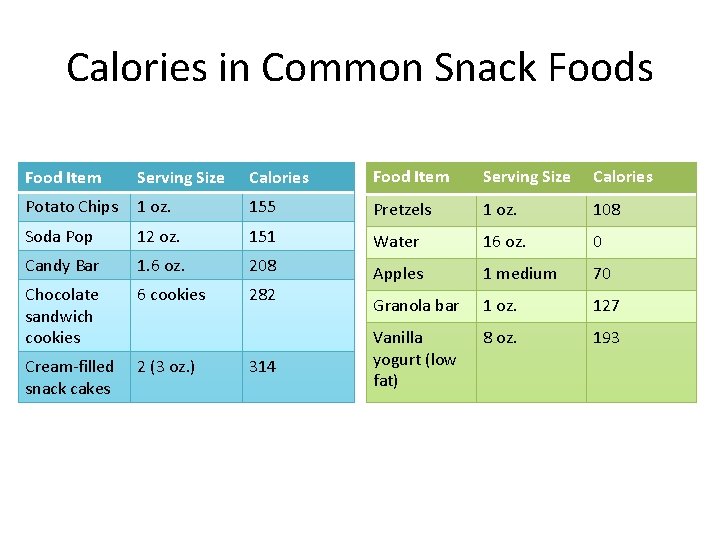
Calories in Common Snack Foods Food Item Serving Size Calories Potato Chips 1 oz. 155 Pretzels 1 oz. 108 Soda Pop 12 oz. 151 Water 16 oz. 0 Candy Bar 1. 6 oz. 208 Chocolate sandwich cookies 6 cookies 282 Apples 1 medium 70 Granola bar 1 oz. 127 8 oz. 193 Cream-filled snack cakes 2 (3 oz. ) Vanilla yogurt (low fat) 314
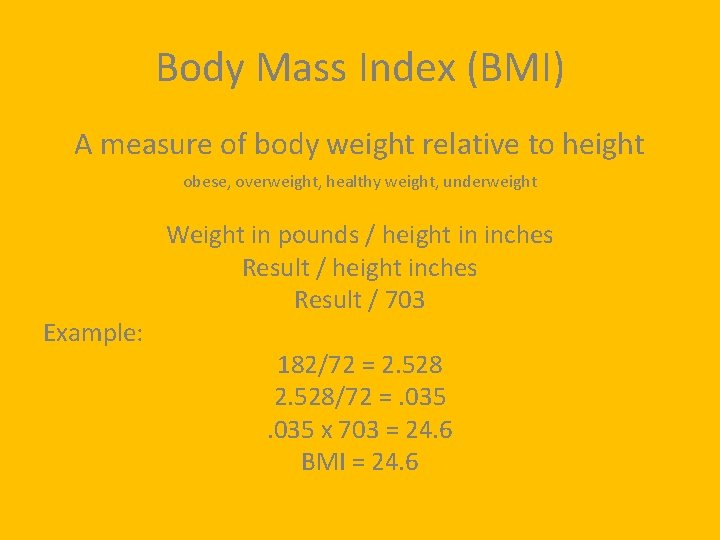
Body Mass Index (BMI) A measure of body weight relative to height obese, overweight, healthy weight, underweight Example: Weight in pounds / height in inches Result / height inches Result / 703 182/72 = 2. 528/72 =. 035 x 703 = 24. 6 BMI = 24. 6
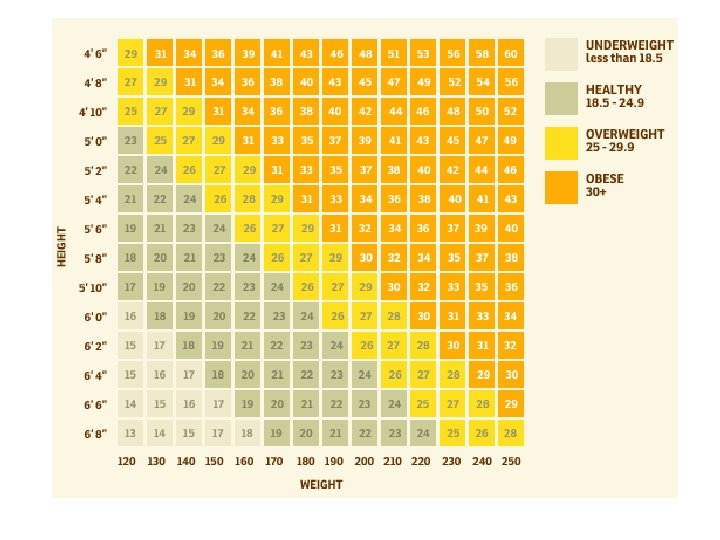
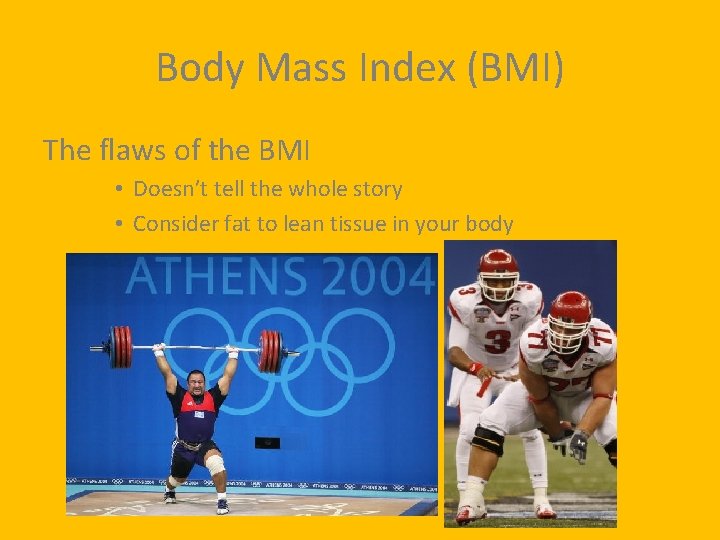
Body Mass Index (BMI) The flaws of the BMI • Doesn’t tell the whole story • Consider fat to lean tissue in your body
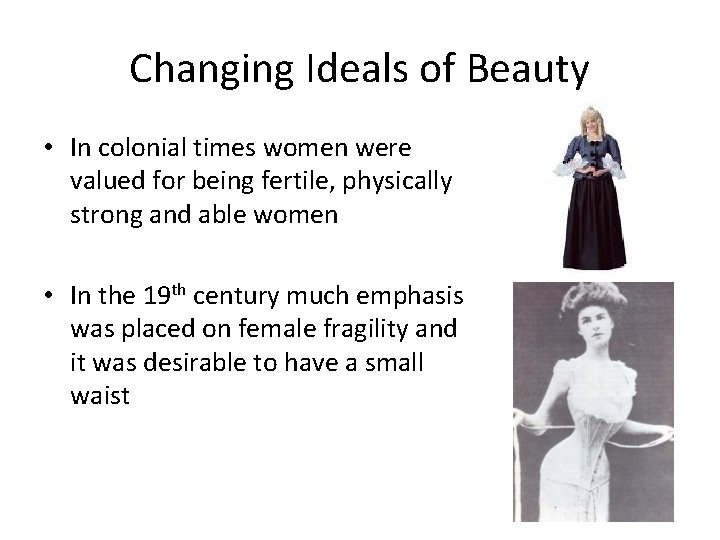
Changing Ideals of Beauty • In colonial times women were valued for being fertile, physically strong and able women • In the 19 th century much emphasis was placed on female fragility and it was desirable to have a small waist
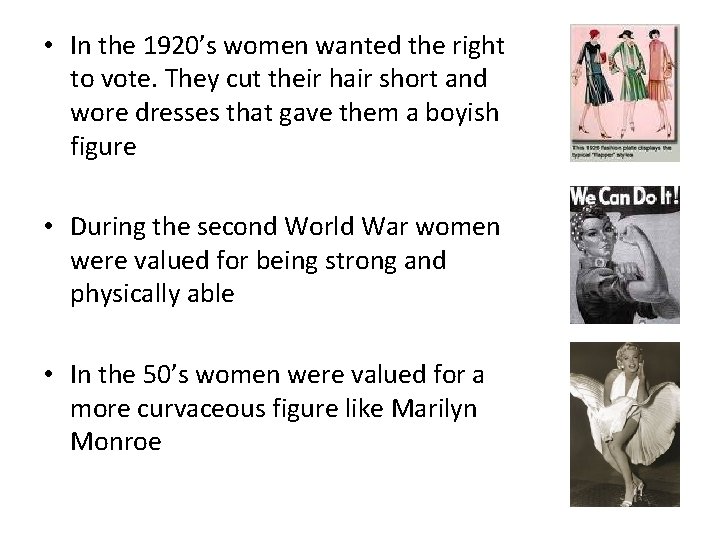
• In the 1920’s women wanted the right to vote. They cut their hair short and wore dresses that gave them a boyish figure • During the second World War women were valued for being strong and physically able • In the 50’s women were valued for a more curvaceous figure like Marilyn Monroe
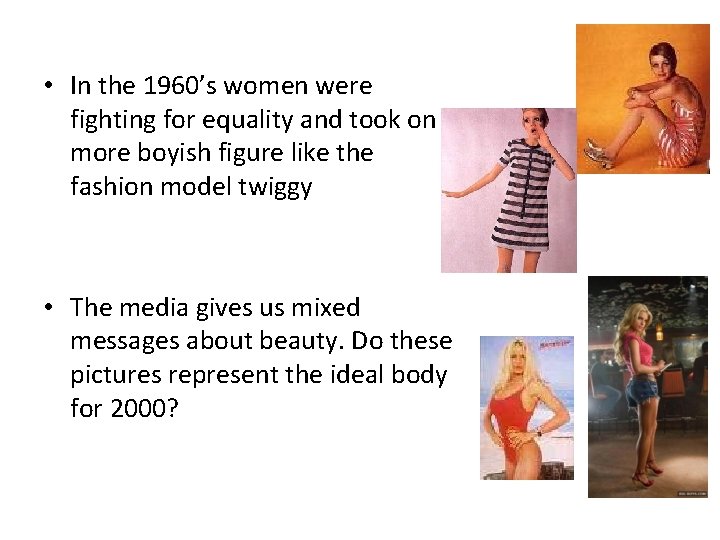
• In the 1960’s women were fighting for equality and took on a more boyish figure like the fashion model twiggy • The media gives us mixed messages about beauty. Do these pictures represent the ideal body for 2000?
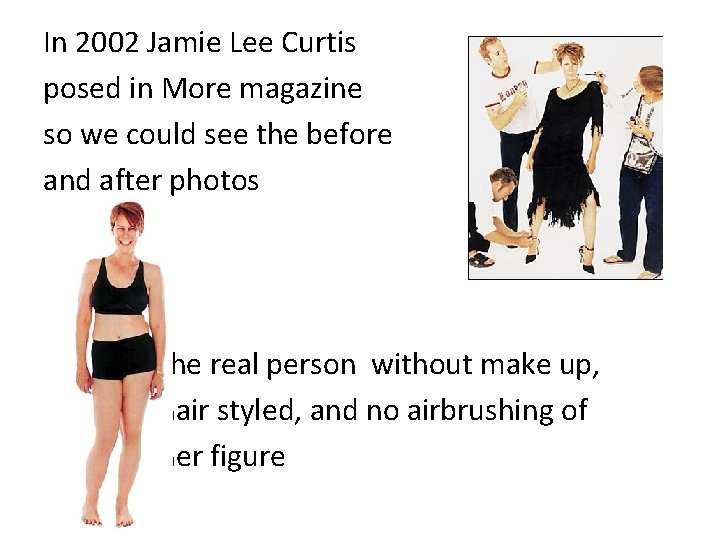
In 2002 Jamie Lee Curtis posed in More magazine so we could see the before and after photos the real person without make up, hair styled, and no airbrushing of her figure
- Slides: 28