
Todays Agenda Goals Packet Physical Fitness Questionnaire Components


- Slides: 27
Today’s Agenda -Goals Packet -Physical Fitness Questionnaire -Components of Physical Activity Notes -Heart Rate Game -Journal
PHYSICAL ACTIVITY
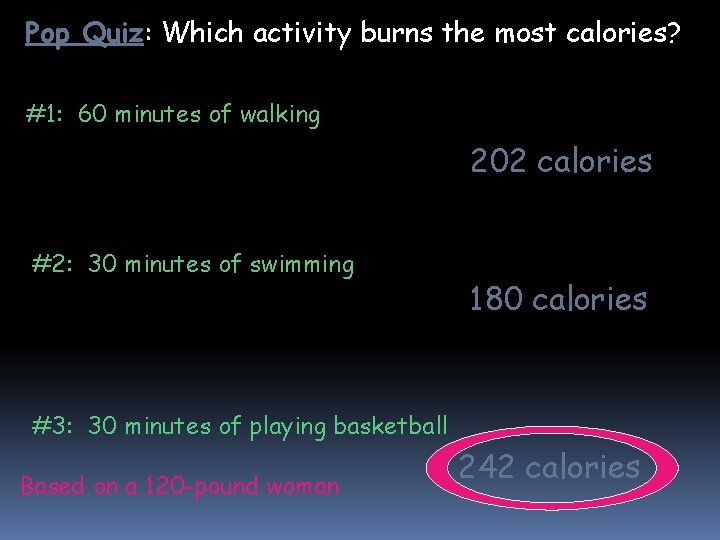
Pop Quiz: Which activity burns the most calories? #1: 60 minutes of walking 202 calories #2: 30 minutes of swimming 180 calories #3: 30 minutes of playing basketball Based on a 120 -pound woman 242 calories
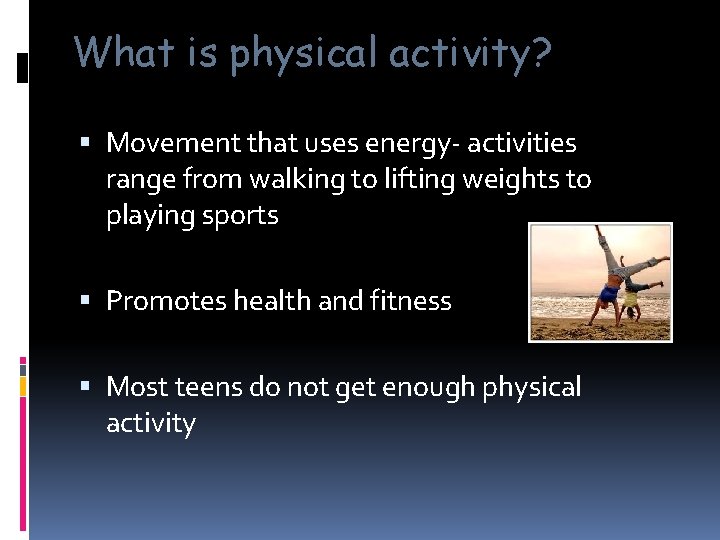
What is physical activity? Movement that uses energy- activities range from walking to lifting weights to playing sports Promotes health and fitness Most teens do not get enough physical activity
You want me to run? Exercise - Any activity that makes the body work hard Physical Fitness - When all body systems are working at their best
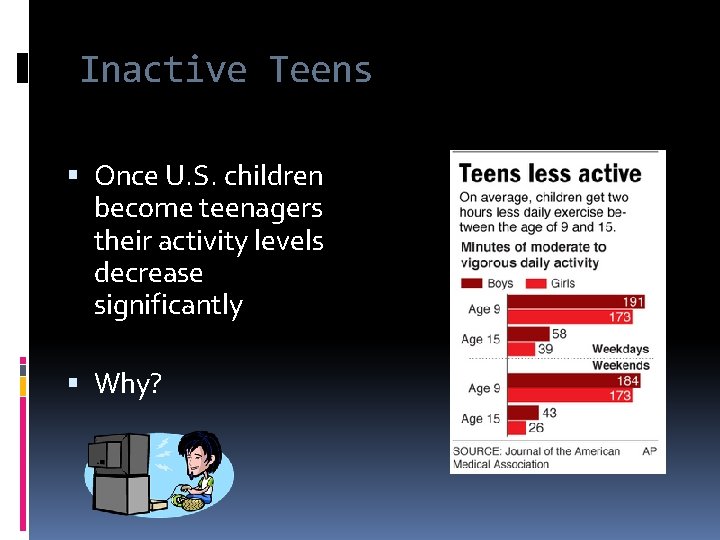
Inactive Teens Once U. S. children become teenagers their activity levels decrease significantly Why?
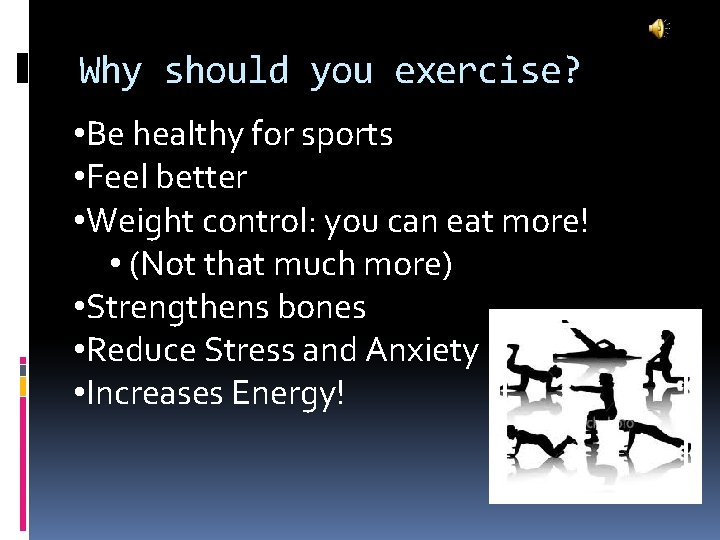
Why should you exercise? • Be healthy for sports • Feel better • Weight control: you can eat more! • (Not that much more) • Strengthens bones • Reduce Stress and Anxiety • Increases Energy!
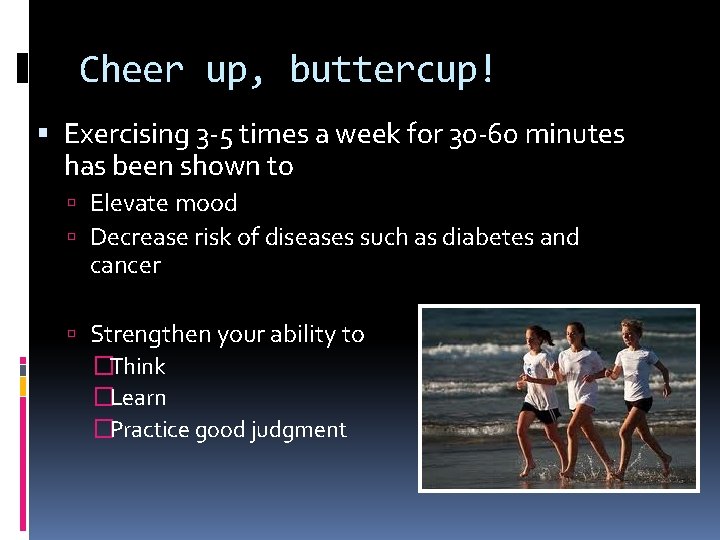
Cheer up, buttercup! Exercising 3 -5 times a week for 30 -60 minutes has been shown to Elevate mood Decrease risk of diseases such as diabetes and cancer Strengthen your ability to �Think �Learn �Practice good judgment
Benefits of Physical Activity Better sleep Weight control Bone health Enhanced immunity Lower disease risk Lower risk of depression Strong self-image
Risks of Physical Inactivity Unhealthy weight gain Cardiovascular disease Type 2 diabetes Cancer Increased risk of osteoporosis: Decrease in bone density, producing porous and fragile bones Reduced ability to manage stress Decreased opportunities to meet and form friendships with active people who value and live a healthy lifestyle
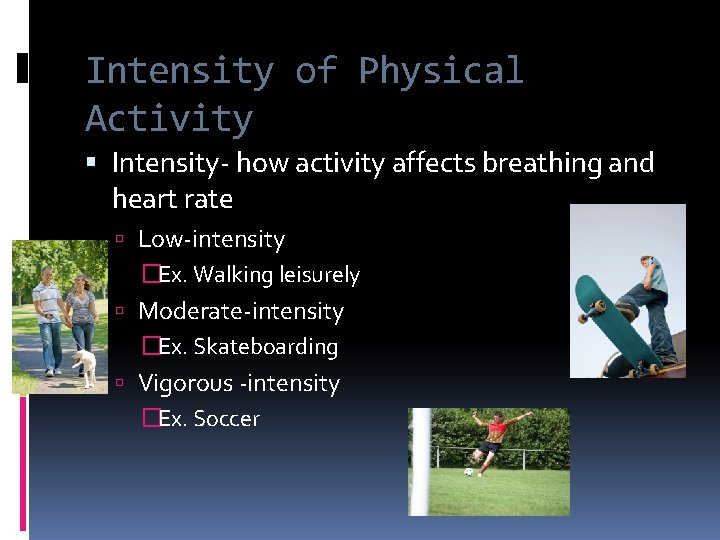
Intensity of Physical Activity Intensity- how activity affects breathing and heart rate Low-intensity �Ex. Walking leisurely Moderate-intensity �Ex. Skateboarding Vigorous -intensity �Ex. Soccer
Rule of Thumb Talk test- simple way to measure intensity Moderate-intensity: you can talk, but not sing, during activity Vigorous-intensity: you will not be able to say more than a few words during activity
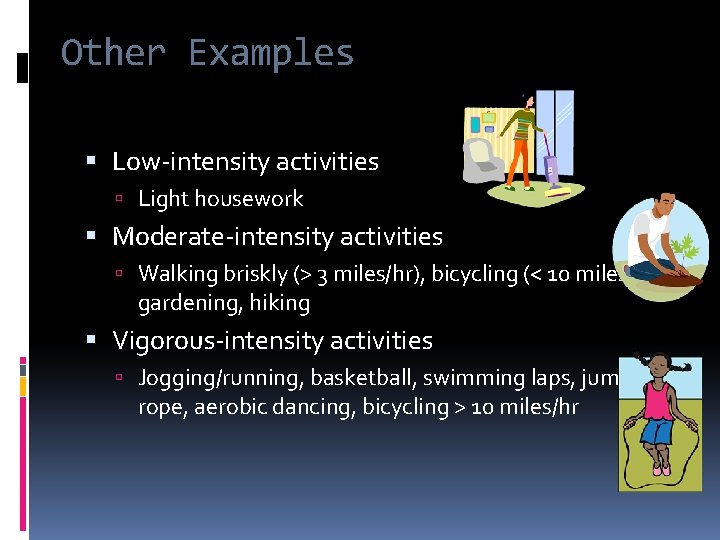
Other Examples Low-intensity activities Light housework Moderate-intensity activities Walking briskly (> 3 miles/hr), bicycling (< 10 miles/hr), gardening, hiking Vigorous-intensity activities Jogging/running, basketball, swimming laps, jumping rope, aerobic dancing, bicycling > 10 miles/hr
5 Components of Fitness Cardio-respiratory Endurance: Ability of the heart, lungs, and blood vessels to utilize and send fuel and oxygen to the body’s tissues during long periods of moderate-tovigorous activity. Flexibility: Ability to move a body part through a full range of motion Body Composition: Ratio of body fat to lean body tissue, including muscle, bone, water, and connective tissue such as ligaments, cartilage, and tendons Muscle Endurance: Ability of the muscles to perform physical tasks over a period of time without becoming fatigued. Muscular Strength: Amount of force a muscle can exert.
How much do I need? Teens need 1 hour (60 minutes) or more of physical activity every day Most should be either moderate- or vigorous-intensity aerobic physical activity Vigorous-intensity activity on at least 3 days per week Muscle-strengthening and bone-strengthening activity on at least 3 days per week
Hydration When you are physically active, it is even more important to stay hydrated. The best way to stay well- hydrated for exercise is to drink: Before During After Remember! Drink regardless of whether you are thirsty or not!
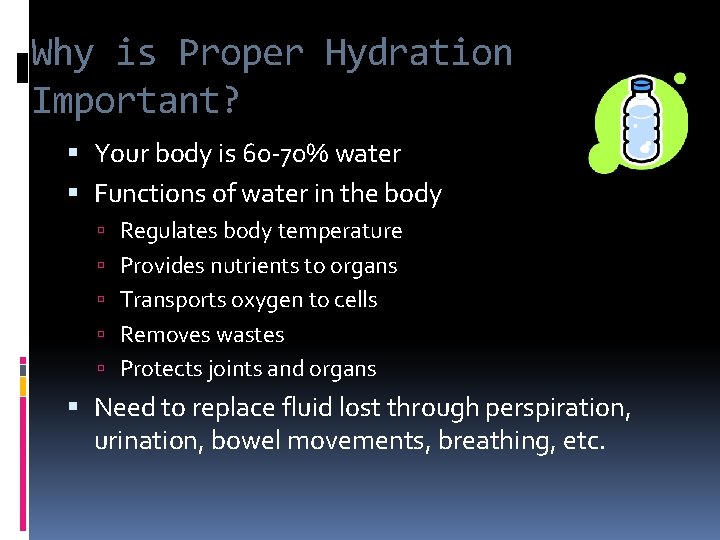
Why is Proper Hydration Important? Your body is 60 -70% water Functions of water in the body Regulates body temperature Provides nutrients to organs Transports oxygen to cells Removes wastes Protects joints and organs Need to replace fluid lost through perspiration, urination, bowel movements, breathing, etc.
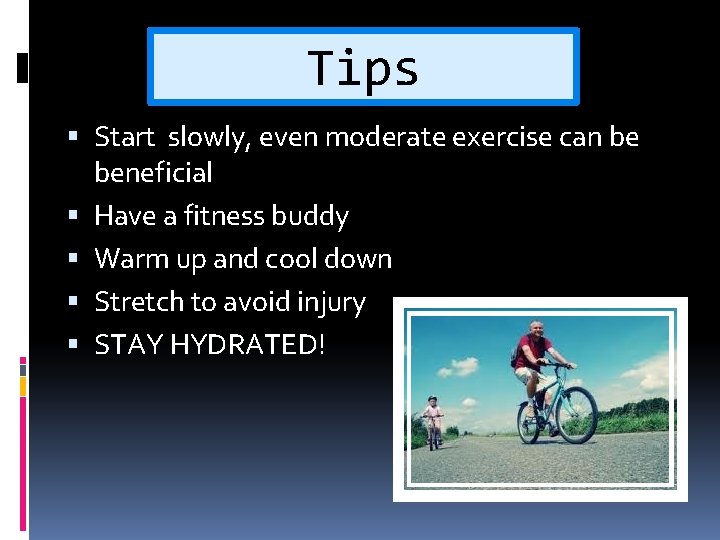
Tips Start slowly, even moderate exercise can be beneficial Have a fitness buddy Warm up and cool down Stretch to avoid injury STAY HYDRATED!
Journal Reflection Do you think you drink enough water a day? If not how can you be more conscious to ensure you are staying hydrated?
https: //www. youtube. com/watch? v=PZq_FPq ll. Ns
Activity: Stretchercise First, we need to make a big circle in the center of the room. The teacher will demonstrate different types of stretches and the class will hold the stretch. To release the stretch, the teacher will ask a trivia question. When the correct answer is received, the stretch will be released.
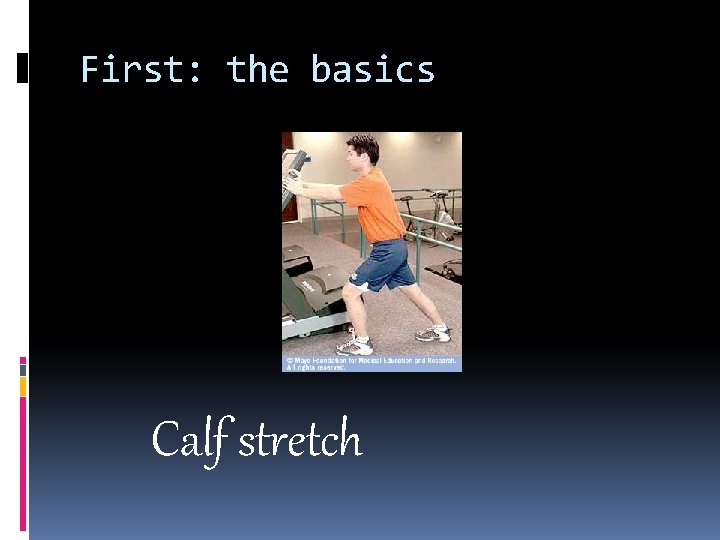
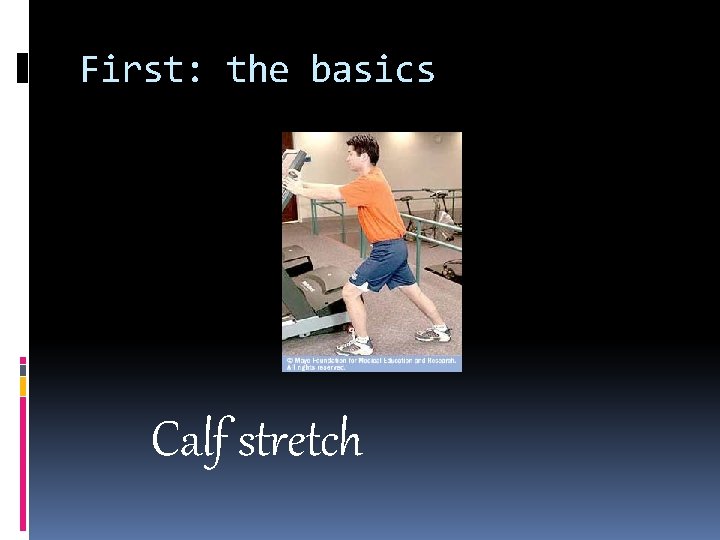
First: the basics Calf stretch
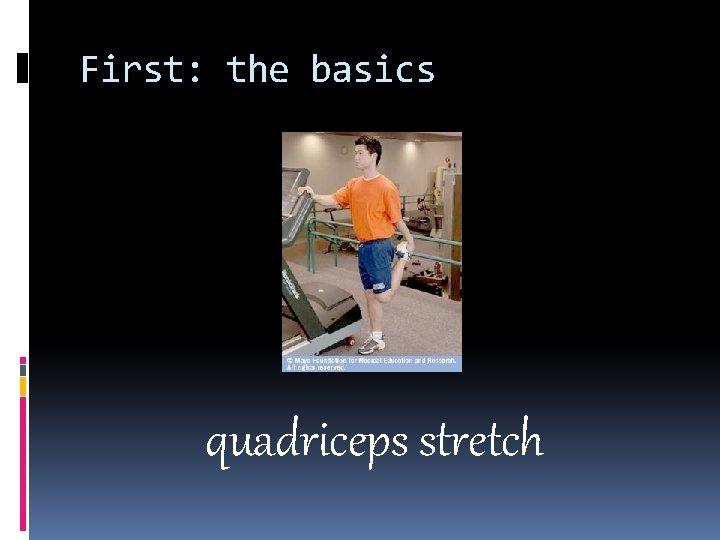
First: the basics quadriceps stretch
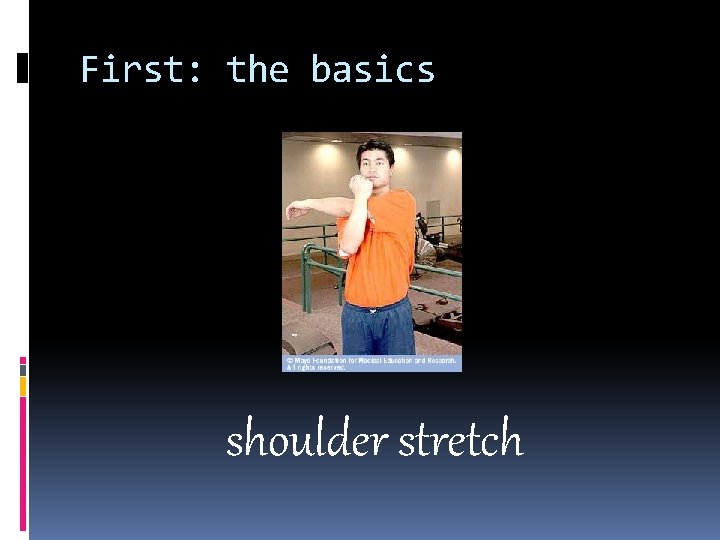
First: the basics shoulder stretch
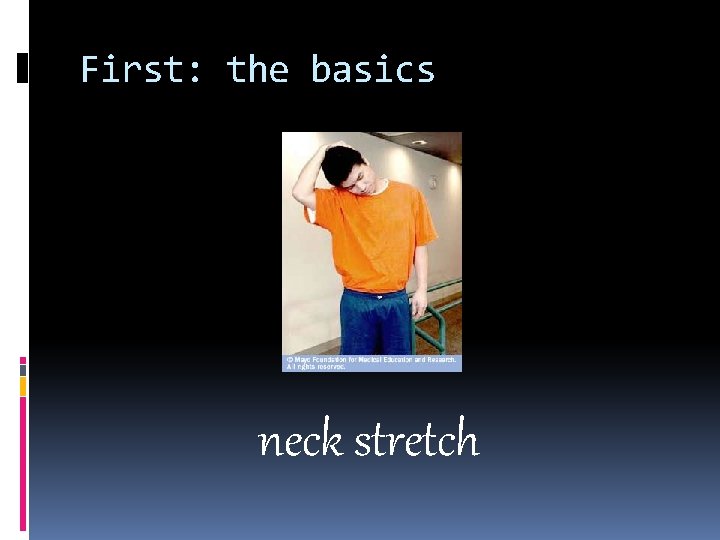
First: the basics neck stretch
First: the basics Calf stretch