
Today we will be translating a story about
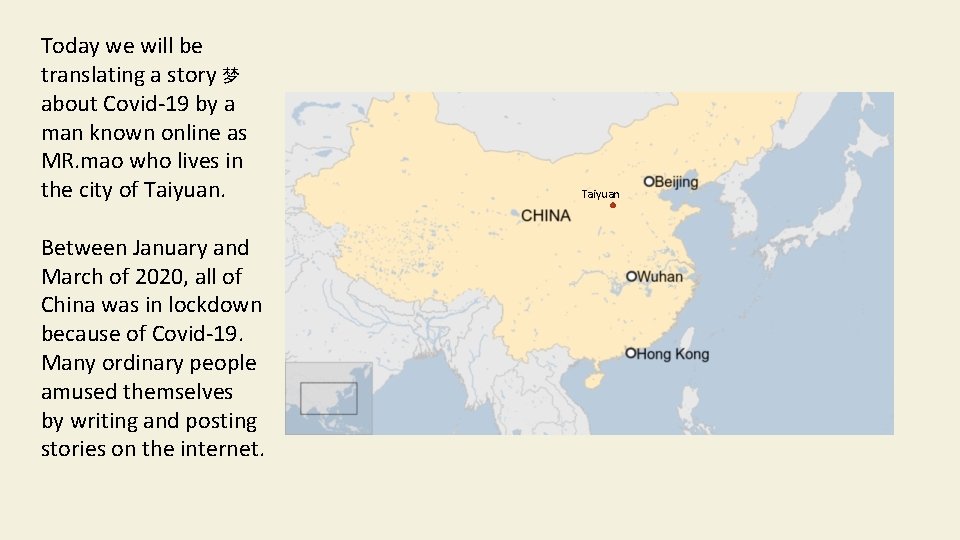
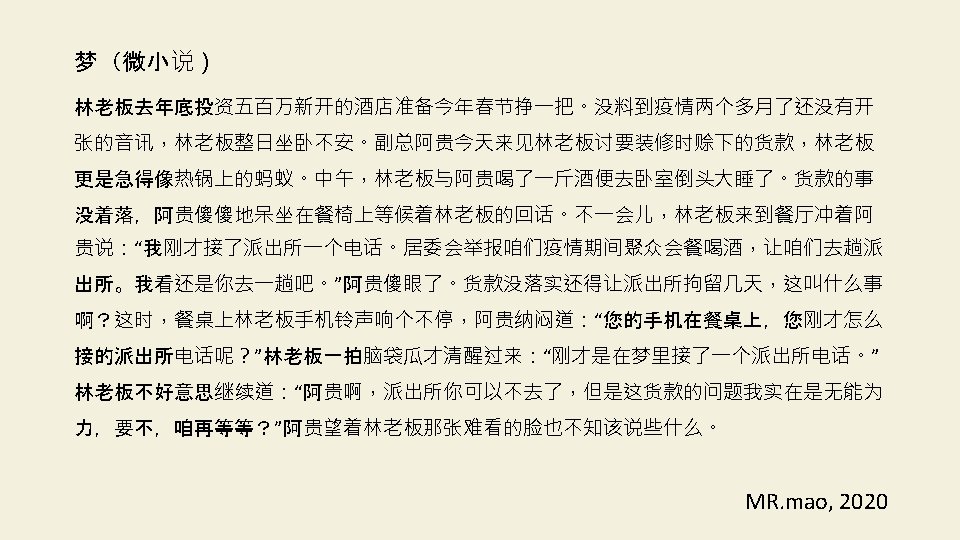
Today we will be translating a story 梦 about Covid-19 by a man known online as MR. mao who lives in the city of Taiyuan. Between January and March of 2020, all of China was in lockdown because of Covid-19. Many ordinary people amused themselves by writing and posting stories on the internet. Taiyuan
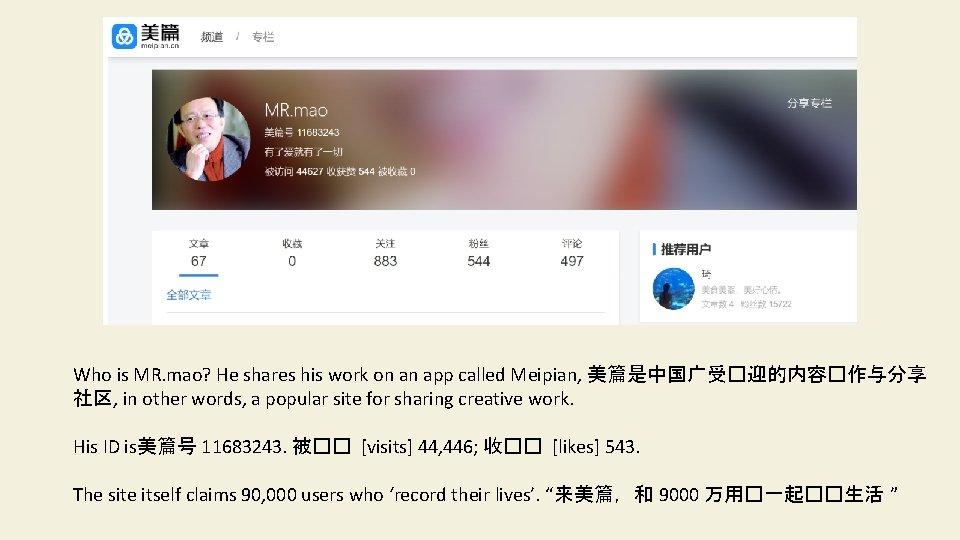
Who is MR. mao? He shares his work on an app called Meipian, 美篇是中国广受�迎的内容�作与分享 社区, in other words, a popular site for sharing creative work. His ID is美篇号 11683243. 被�� [visits] 44, 446; 收�� [likes] 543. The site itself claims 90, 000 users who ‘record their lives’. “来美篇,和 9000 万用�一起��生活 ”
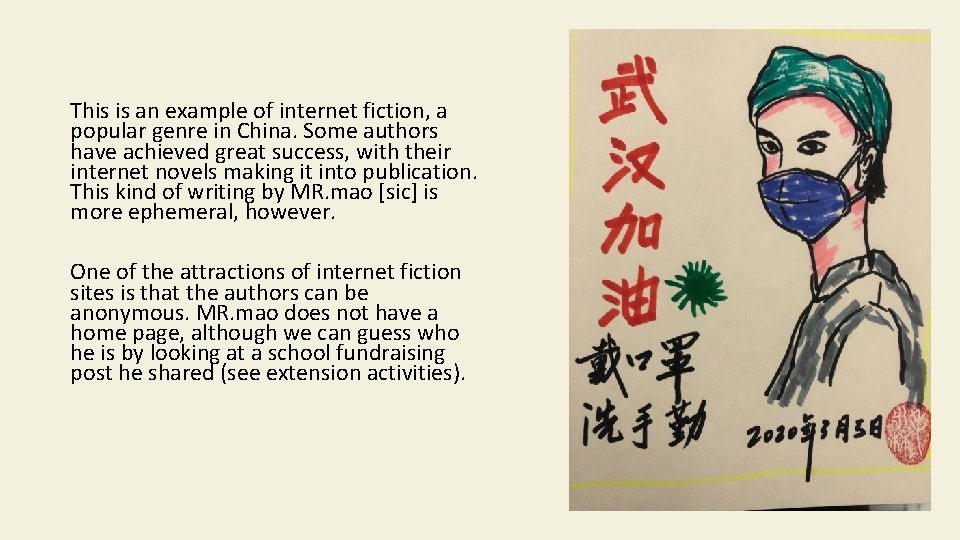
This is an example of internet fiction, a popular genre in China. Some authors have achieved great success, with their internet novels making it into publication. This kind of writing by MR. mao [sic] is more ephemeral, however. One of the attractions of internet fiction sites is that the authors can be anonymous. MR. mao does not have a home page, although we can guess who he is by looking at a school fundraising post he shared (see extension activities).

Time to Translate! A reminder of some important things to keep in mind when translating: ● Word-for-word (‘literal’) translations can be meaningless: replacing one word in Mandarin for an equivalent English word often results in nonsense. ● This is why translators have to be creative: it is your job to make the translation sound like it was written in English – so translators are creative writers as well as readers. ● Translation is about meaning, not just words, so you have to think about what sort of mood or meaning is conveyed in the original and try to recreate that in your translation.
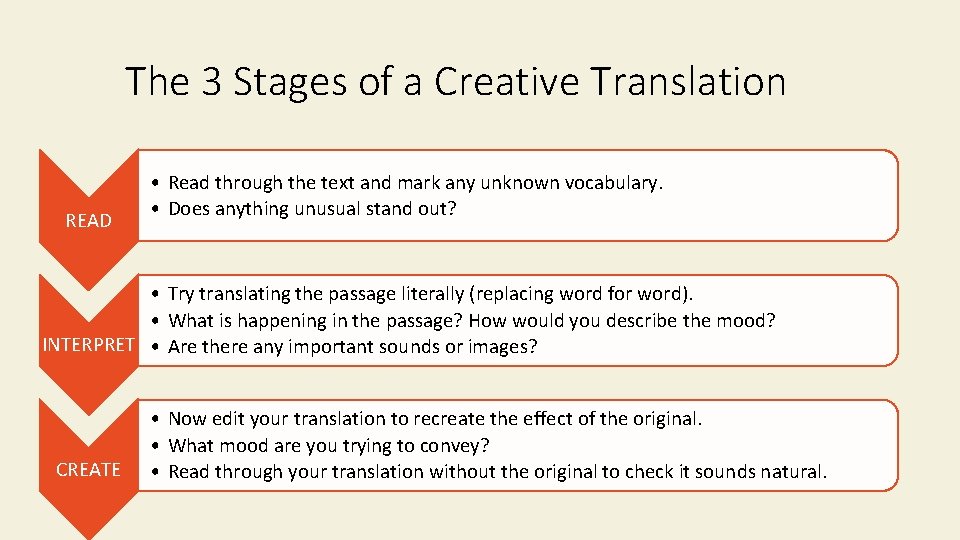
The 3 Stages of a Creative Translation READ • Read through the text and mark any unknown vocabulary. • Does anything unusual stand out? • Try translating the passage literally (replacing word for word). • What is happening in the passage? How would you describe the mood? INTERPRET • Are there any important sounds or images? CREATE • Now edit your translation to recreate the effect of the original. • What mood are you trying to convey? • Read through your translation without the original to check it sounds natural.
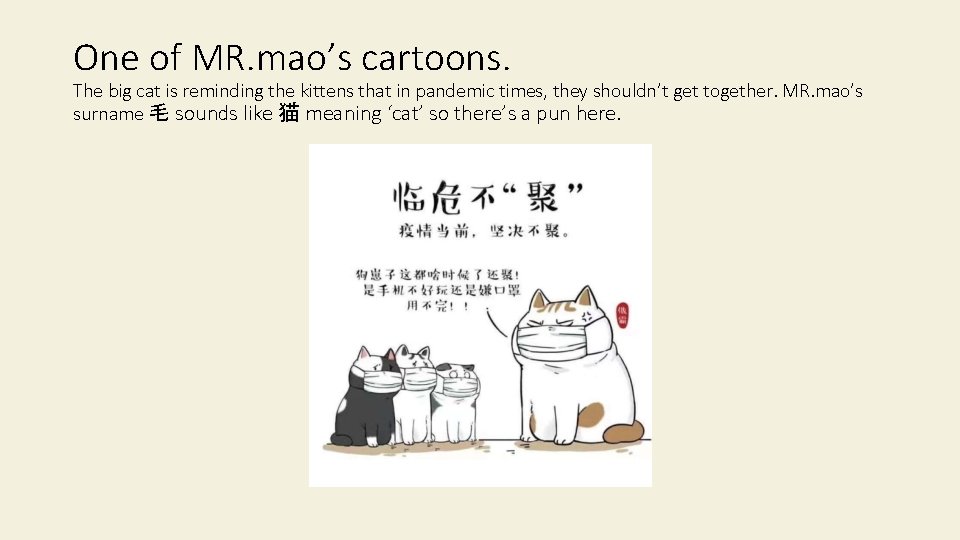
One of MR. mao’s cartoons. The big cat is reminding the kittens that in pandemic times, they shouldn’t get together. MR. mao’s surname 毛 sounds like 猫 meaning ‘cat’ so there’s a pun here.
Extension activities • Explore blogs by the same man. Here is another one: 抗疫随笔 https: //www. meipian. cn/2 qo 9 i 8 ej about his real-life situation during lockdown. • 疫期宅家找事做 His calligraphy page and a stamped poster, urging support for the folk of Wuhan加油! https: //www. meipian. cn/2 rrbnp 7 f. Scroll down to see a fundraiser for Wuhan at a school in Taiyuan where a certain Mao Yonglin 毛永林 is the head teacher. • Another of his blogs抗疫随笔 recounts the horror of life during the worst of the pandemic in China: https: //www. meipian. cn/2 qlyvr 40 • You can also read other essays on COVID-19 by Chinese authors in English for free online on the Paper Republic website: https: //paper-republic. org/pubs/read/series/epidemic/
Presentation © Queen’s College Translation Exchange 2020 Designed by Paper Republic with Holly Langstaff & Clare Savory
- Slides: 10