
Today This morning What is a phylogenetic tree
- Slides: 28
Today ● This morning ● ● ● What is a phylogenetic tree? How to “read” simple phylogenetic trees How can you make a phylogeny? How can you root a phylogeny? Gene Duplications & orthology
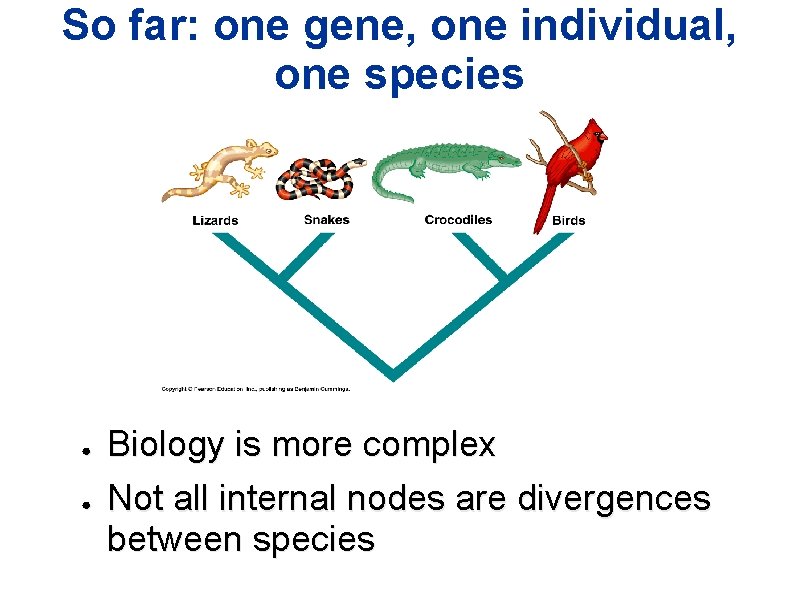
So far: one gene, one individual, one species ● ● Biology is more complex Not all internal nodes are divergences between species
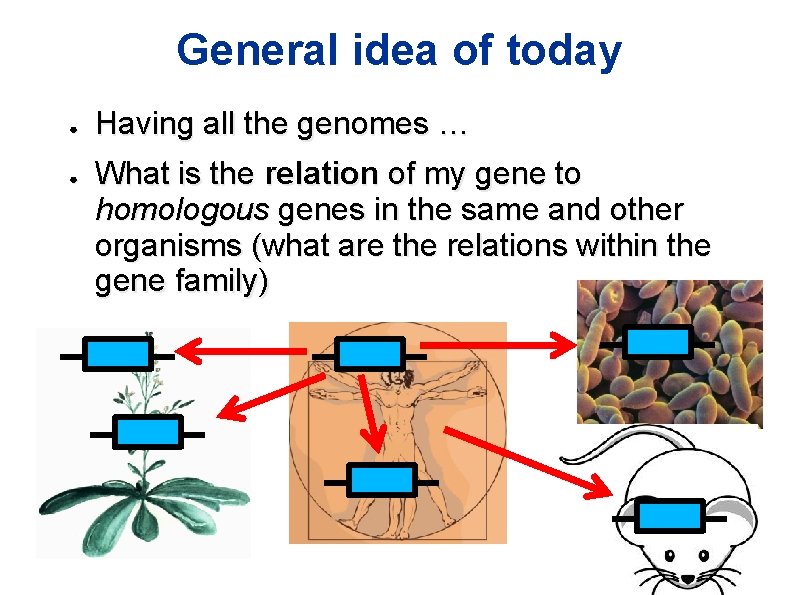
General idea of today ● ● Having all the genomes … What is the relation of my gene to homologous genes in the same and other organisms (what are the relations within the gene family)
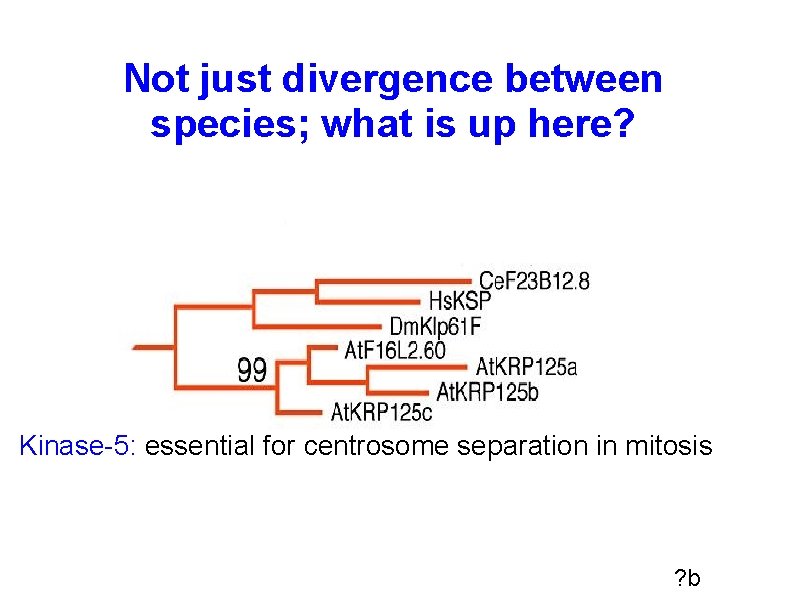
Not just divergence between species; what is up here? Kinase-5: essential for centrosome separation in mitosis ? b
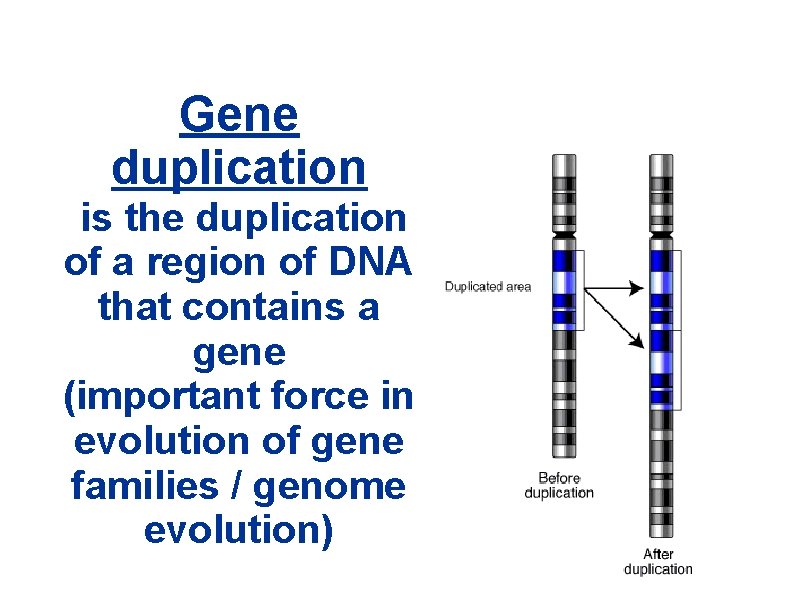
Gene duplication is the duplication of a region of DNA that contains a gene (important force in evolution of gene families / genome evolution)
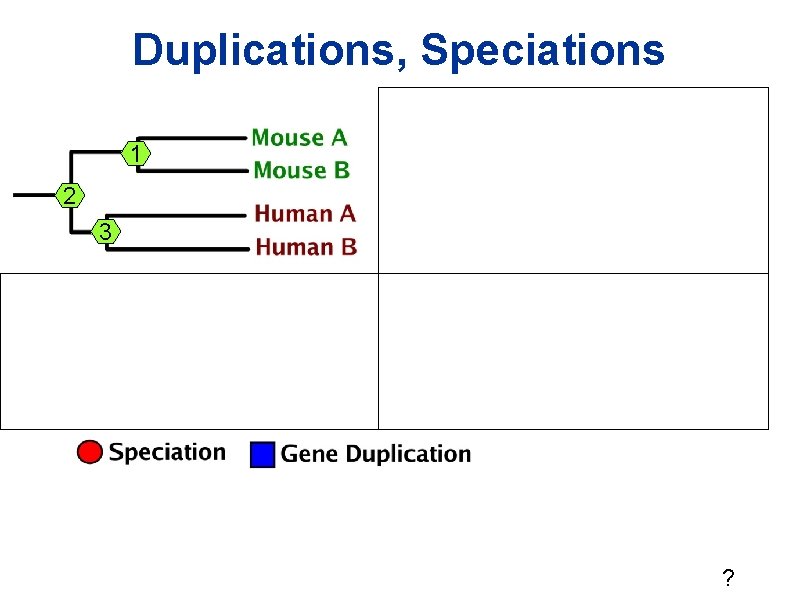
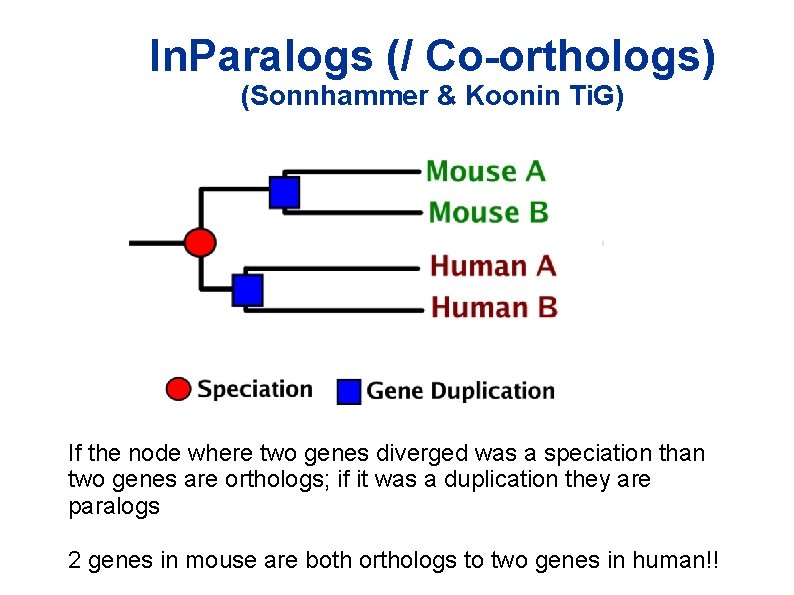
Two genes per species: how to differentiate between one ancient or two recent duplications? ● Two genes in Human chromosomes ( Human A & Human B) & two genes in mouse chromosomes (Mouse A & Mouse B)
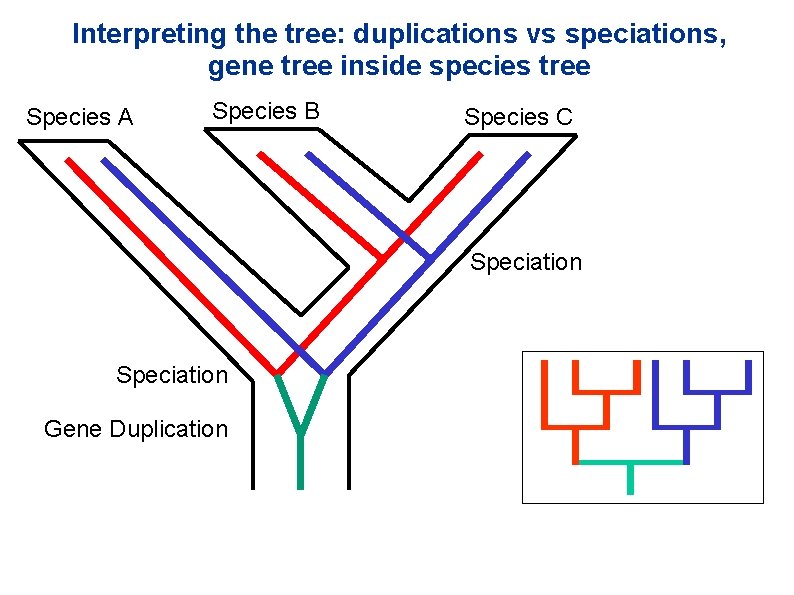
Duplications, Speciations 1 2 3 ?
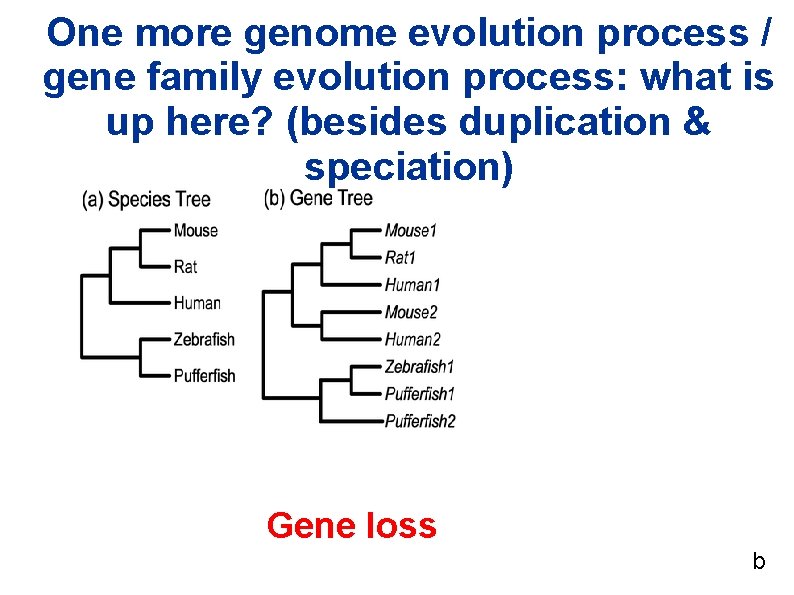
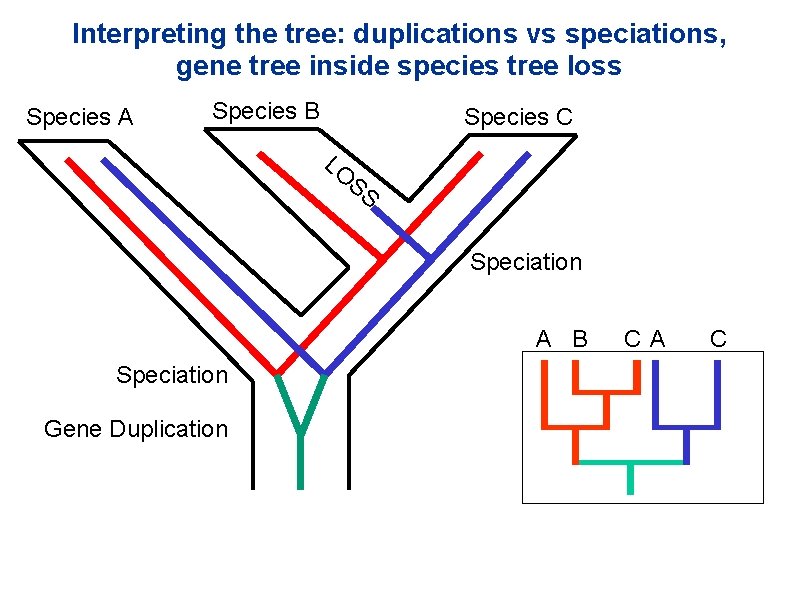
One more genome evolution process / gene family evolution process: what is up here? (besides duplication & speciation) Gene loss b
Interpreting the tree: duplications vs speciations, gene tree inside species tree Species A Species B Species C Speciation Gene Duplication
Interpreting the tree: duplications vs speciations, gene tree inside species tree loss Species A Species B Species C LO SS Speciation A B Speciation Gene Duplication CA C
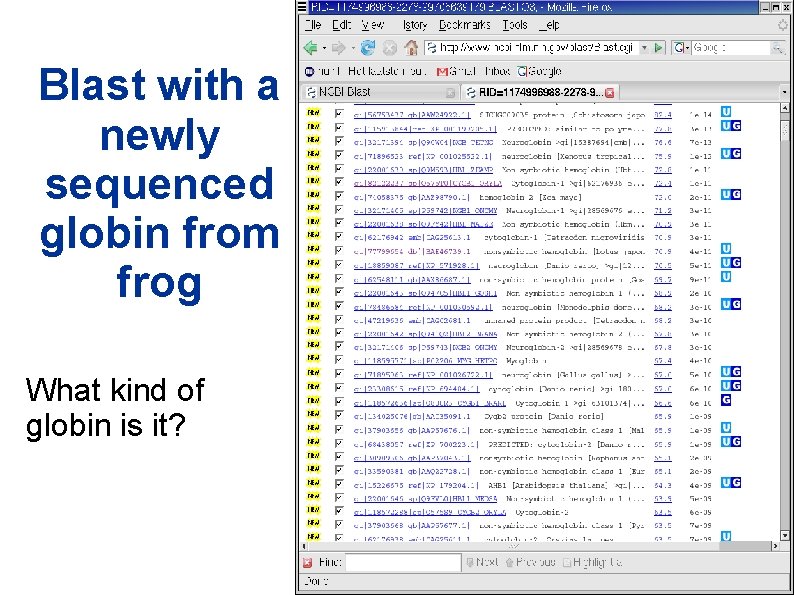
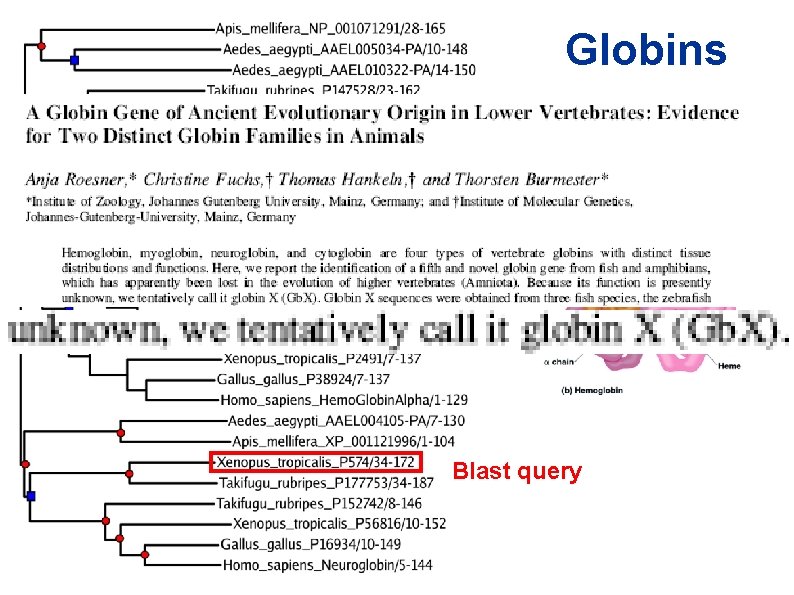
Blast with a newly sequenced globin from frog What kind of globin is it?
Globins Blast query
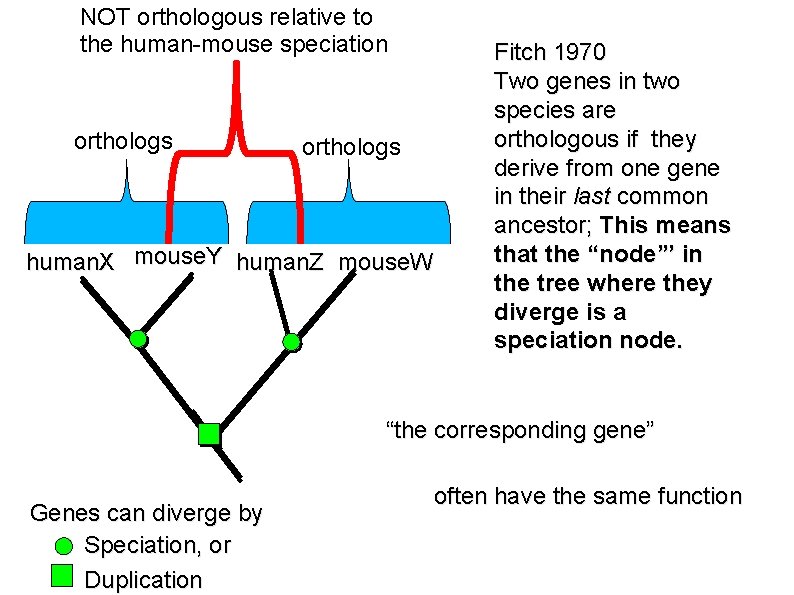
NOT orthologous relative to the human-mouse speciation orthologs human. X mouse. Y human. Z mouse. W Fitch 1970 Two genes in two species are orthologous if they derive from one gene in their last common ancestor; This means that the “node”’ in the tree where they diverge is a speciation node. “the corresponding gene” Genes can diverge by Speciation, or Duplication often have the same function
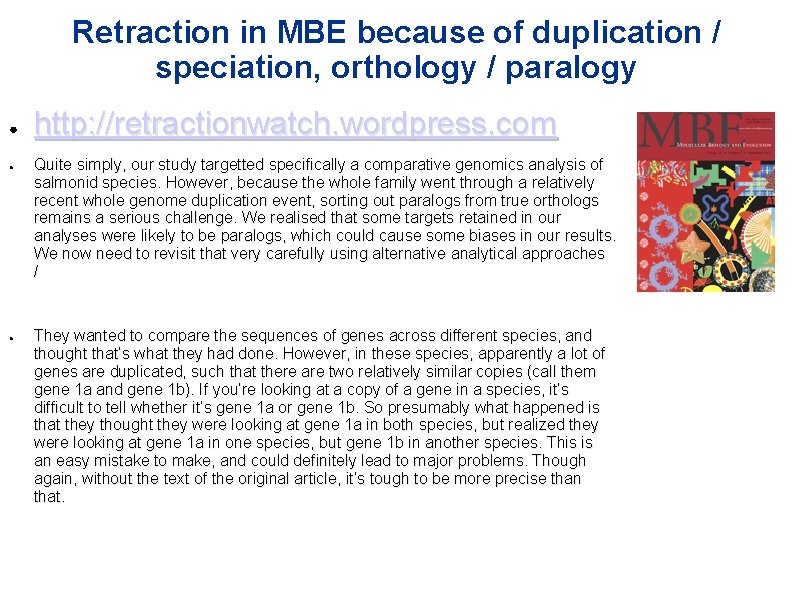
Retraction in MBE because of duplication / speciation, orthology / paralogy ● ● ● http: //retractionwatch. wordpress. com Quite simply, our study targetted specifically a comparative genomics analysis of salmonid species. However, because the whole family went through a relatively recent whole genome duplication event, sorting out paralogs from true orthologs remains a serious challenge. We realised that some targets retained in our analyses were likely to be paralogs, which could cause some biases in our results. We now need to revisit that very carefully using alternative analytical approaches / They wanted to compare the sequences of genes across different species, and thought that’s what they had done. However, in these species, apparently a lot of genes are duplicated, such that there are two relatively similar copies (call them gene 1 a and gene 1 b). If you’re looking at a copy of a gene in a species, it’s difficult to tell whether it’s gene 1 a or gene 1 b. So presumably what happened is that they thought they were looking at gene 1 a in both species, but realized they were looking at gene 1 a in one species, but gene 1 b in another species. This is an easy mistake to make, and could definitely lead to major problems. Though again, without the text of the original article, it’s tough to be more precise than that.
In. Paralogs (/ Co-orthologs) (Sonnhammer & Koonin Ti. G) If the node where two genes diverged was a speciation than two genes are orthologs; if it was a duplication they are paralogs 2 genes in mouse are both orthologs to two genes in human!!
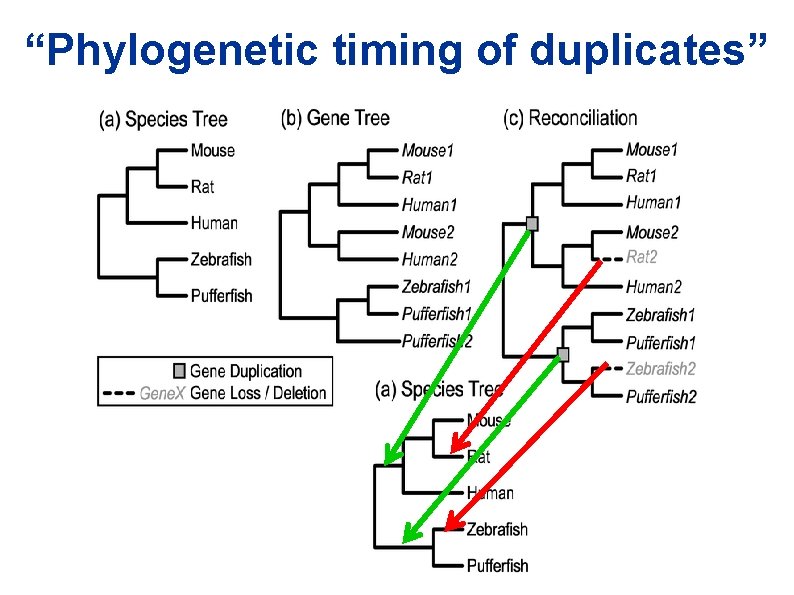
“Phylogenetic timing of duplicates”
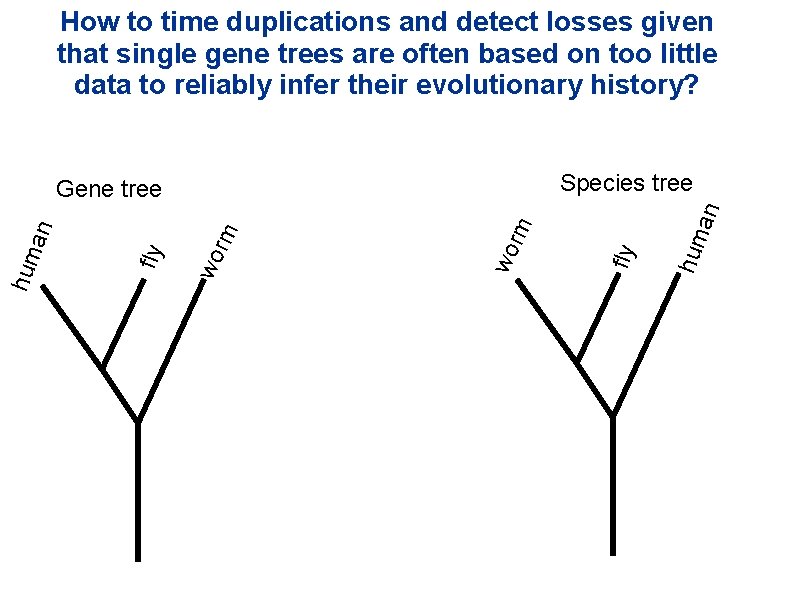
How to time duplications and detect losses given that single gene trees are often based on too little data to reliably infer their evolutionary history? hum fly wo rm fly an hum an Species tree Gene tree
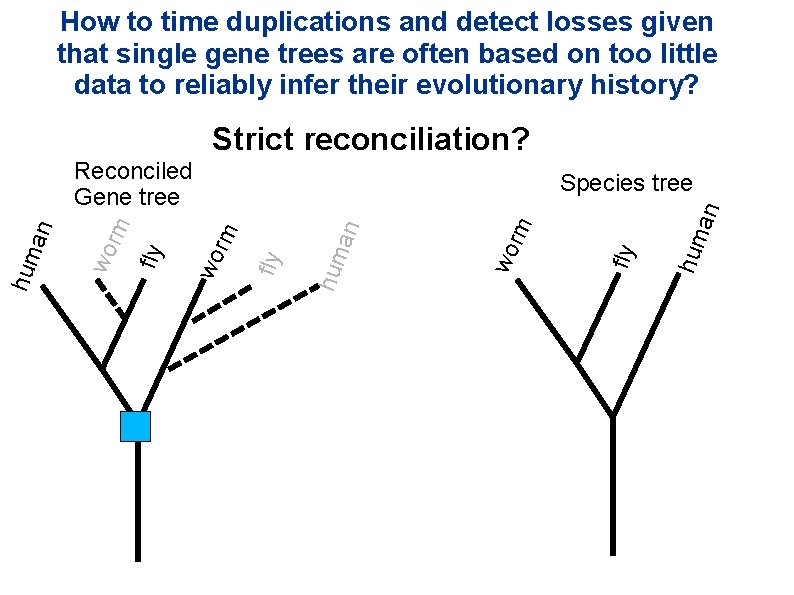
How to time duplications and detect losses given that single gene trees are often based on too little data to reliably infer their evolutionary history? Strict reconciliation? an hum fly wo rm hum an Species tree fly wo rm hum an Reconciled Gene tree
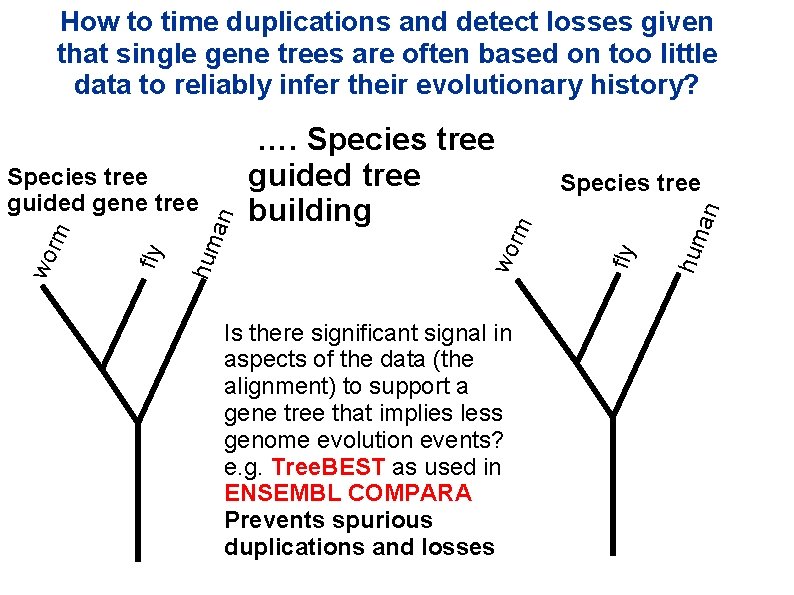
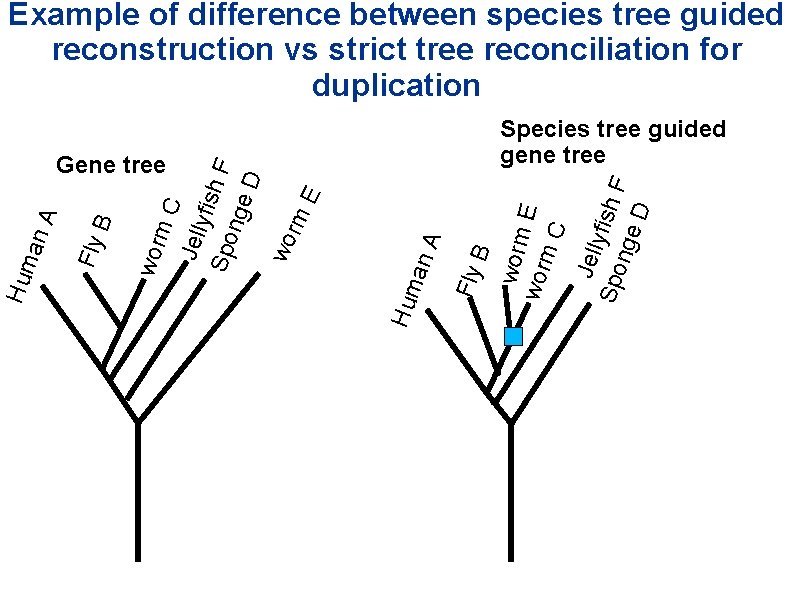
Is there significant signal in aspects of the data (the alignment) to support a gene tree that implies less genome evolution events? e. g. Tree. BEST as used in ENSEMBL COMPARA Prevents spurious duplications and losses hum an Species tree fly …. Species tree guided tree building wo rm hum fly wo rm Species tree guided gene tree an How to time duplications and detect losses given that single gene trees are often based on too little data to reliably infer their evolutionary history?
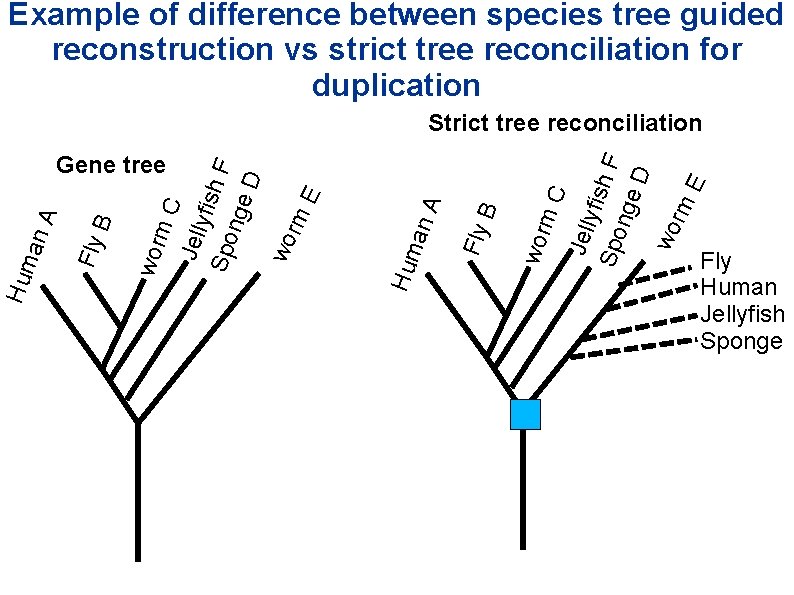
Example of difference between species tree guided reconstruction vs strict tree reconciliation for duplication m C wor B Fly an A Hum m C Jell yfis h F Spo nge D wo rm E wor B Fly Hum an A Gene tree Jell yfis h F Spo nge D wo rm E Strict tree reconciliation Fly Human Jellyfish Sponge
Example of difference between species tree guided reconstruction vs strict tree reconciliation for duplication B worm E wor m C Fly an A Hum m C Jell yfis h F Spo nge D wo rm E wor B Fly Hum an A Gene tree Jell Spo yfish F nge D Species tree guided gene tree
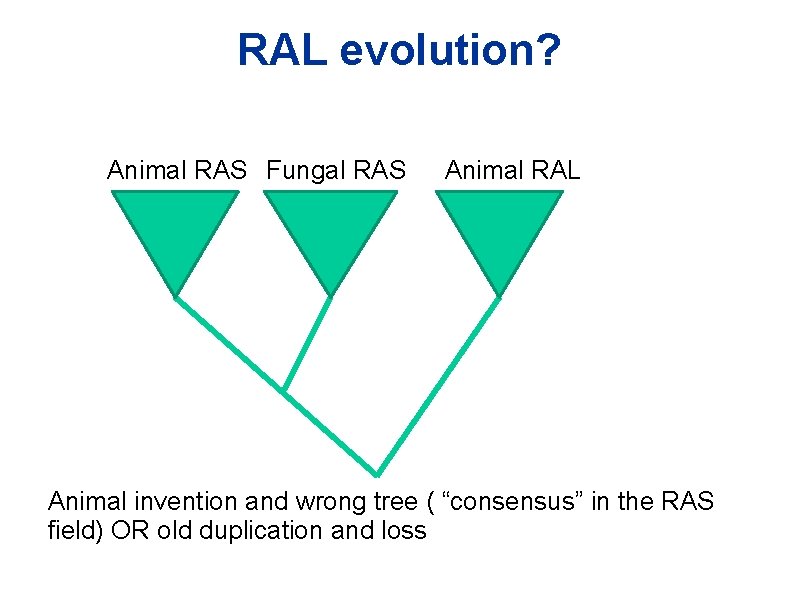
RAL evolution? Animal RAS Fungal RAS Animal RAL Animal invention and wrong tree ( “consensus” in the RAS field) OR old duplication and loss
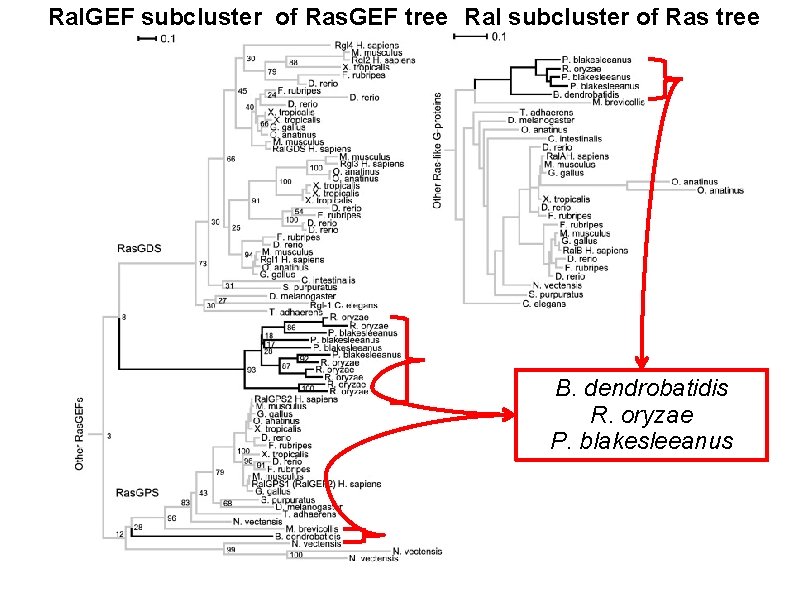
Ral. GEF subcluster of Ras. GEF tree Ral subcluster of Ras tree B. dendrobatidis R. oryzae P. blakesleeanus
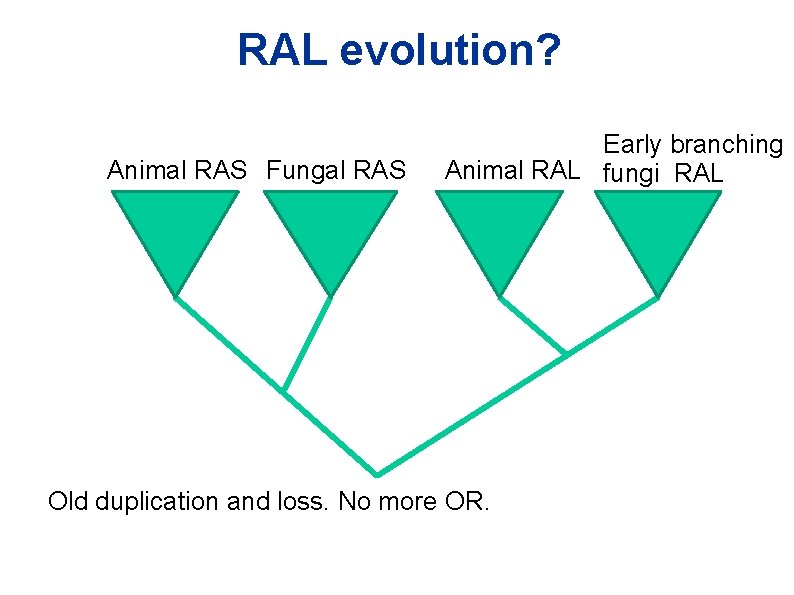
RAL evolution? Animal RAS Fungal RAS Early branching Animal RAL fungi RAL Old duplication and loss. No more OR.
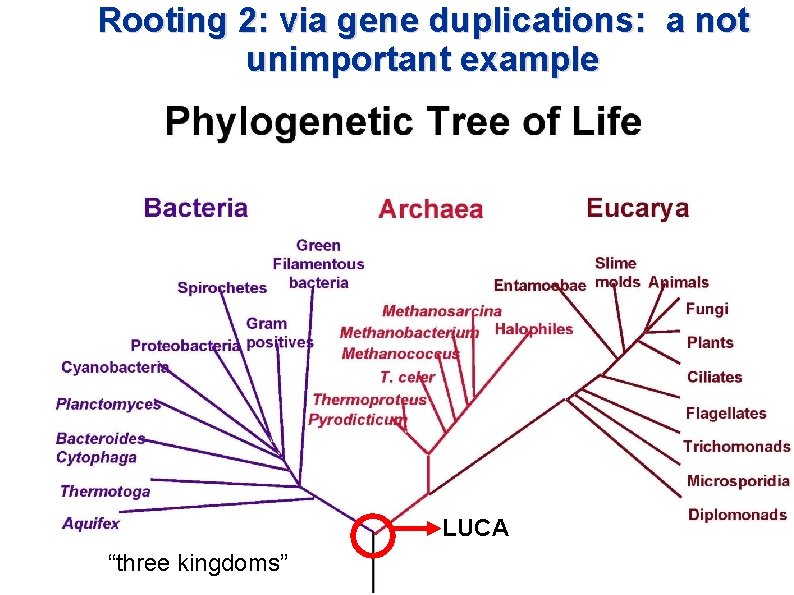
Rooting 2: via gene duplications: a not unimportant example LUCA “three kingdoms”
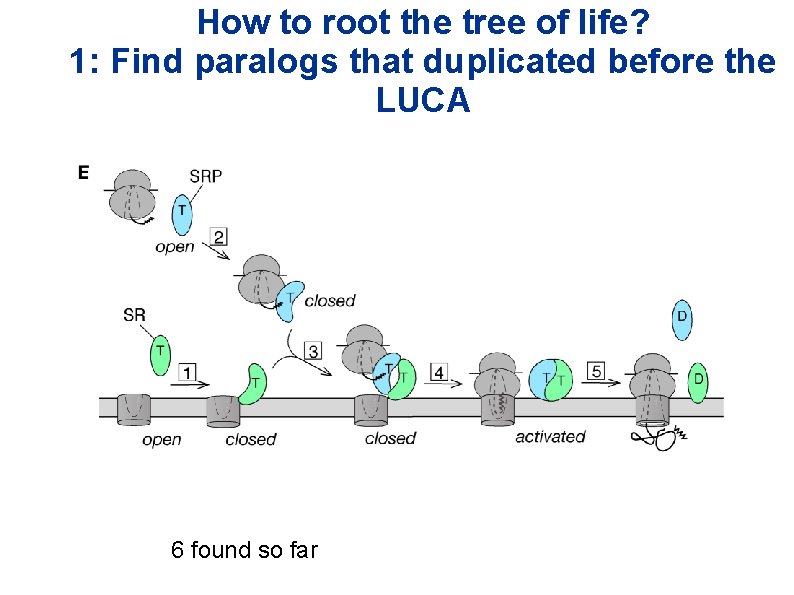
How to root the tree of life? 1: Find paralogs that duplicated before the LUCA 6 found so far
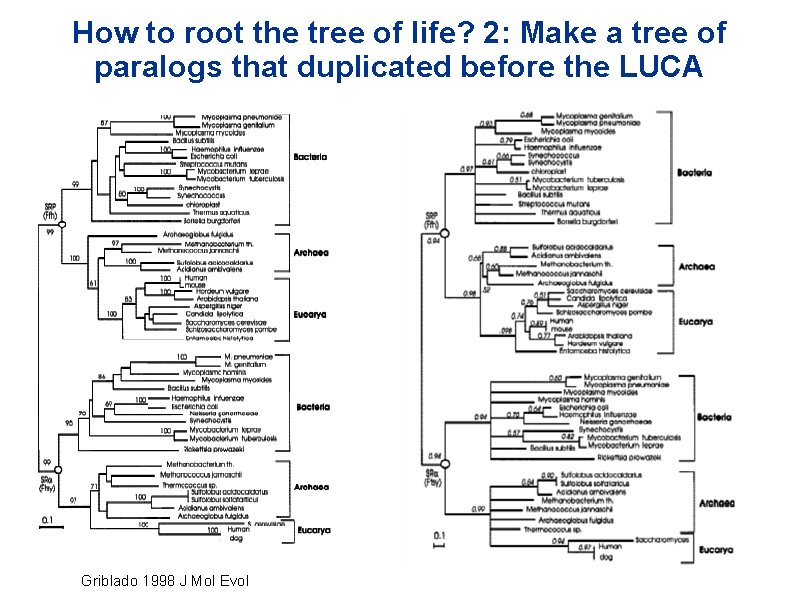
How to root the tree of life? 2: Make a tree of paralogs that duplicated before the LUCA Griblado 1998 J Mol Evol
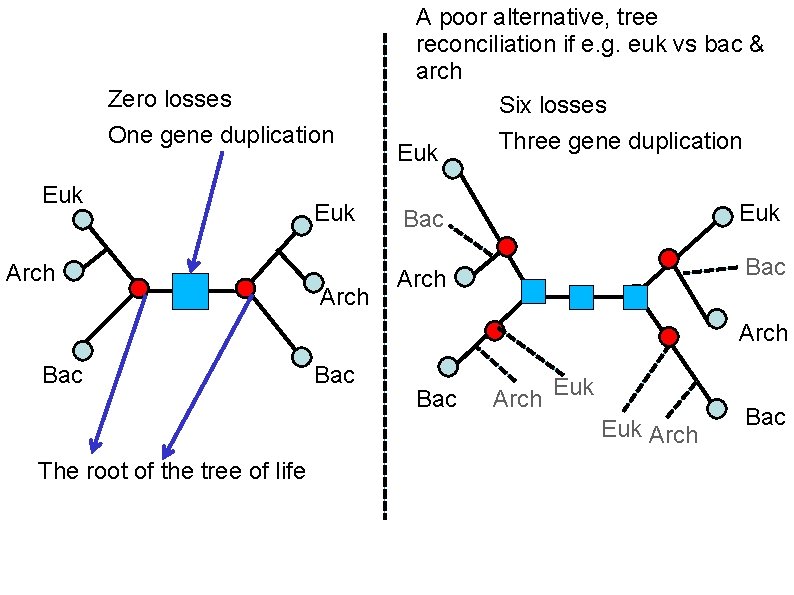
A poor alternative, tree reconciliation if e. g. euk vs bac & arch Six losses Zero losses One gene duplication Euk Arch Euk Three gene duplication Euk Bac Arch Bac Bac Arch Euk Arch The root of the tree of life Bac