
Today Quiz Earth Day Nutrients as Pollutants More


- Slides: 58
Today - Quiz - Earth Day - Nutrients as Pollutants - More Atmospheric Pollutants - Begin Water Pollution - In-class Debate Prep
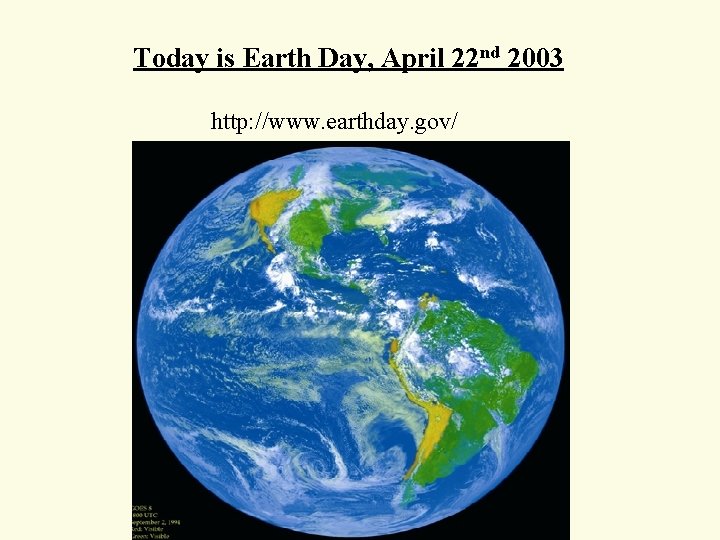
Today is Earth Day, April 22 nd 2003 http: //www. earthday. gov/
Our Society needs a better understanding of how we get clean water for all human needs • It isn’t the pollution that’s harming the environment. It’s the impurities in our air and water that are doing it. – Dan Quayle
What can you do? ENERGY STAR - Energy-efficient choices can save families about a third on their energy bill with similar savings of greenhouse gas emissions, without sacrificing features, style or comfort. ENERGY STAR is a governmentbacked program helping businesses and individuals protect the environment and make the energy-efficient choice. Global Warming Actions In the Home - This page contains information about how individuals can cut their utility bills by purchasing energy-efficient appliances, fixtures, and other home equipment and products while reducing the risk of global warming. Manage Your Household’s Water Pollution - Although individual homes may contribute only minor amounts of water pollution, the combined effect of an entire neighborhood can be serious.
What can you do? Learn to Conserve Water in Your Home - You can also take a virtual tour that will show you how to save water in nearly every room in your house at the California Urban Water Conservation Council's Web site H 2 OUSE Maintain Your Septic System - One in four American homes is served by septic systems. The U. S. Bureau of the Census reported that at least 10% of septic systems failed in the previous year. Help Prevent Stormwater Runoff - Pollution from stormwater runoff is the most common cause of water pollution today. Help Prevent Pollution in Your Community - Learn about a variety of steps you can take.
Ecosystems • an assemblage of different species and their physical environment, all organized in a way that each population of organisms obtains energy and nutrients through specific pathways within the ecosystem.
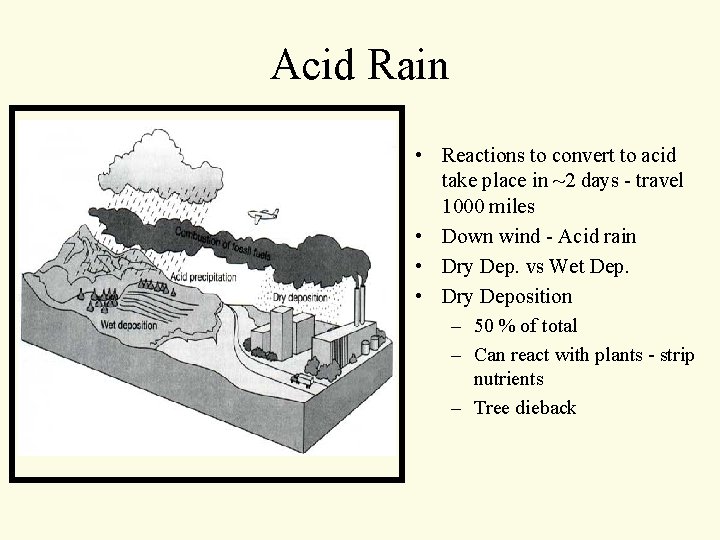
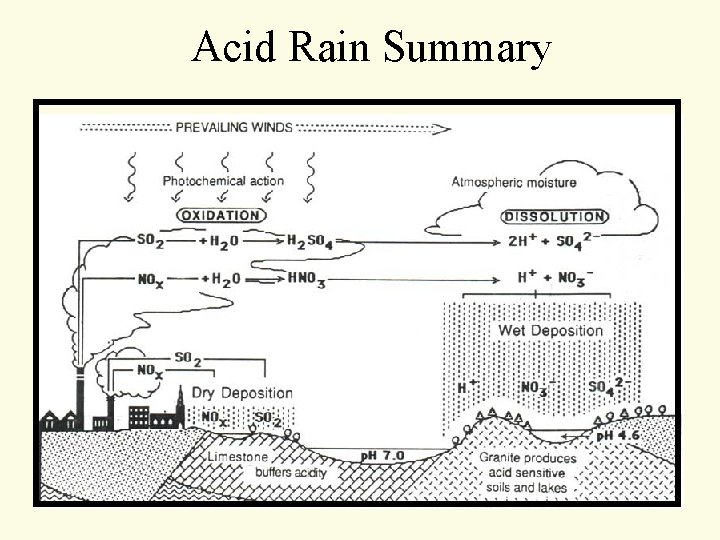
Acid Rain • Reactions to convert to acid take place in ~2 days - travel 1000 miles • Down wind - Acid rain • Dry Dep. vs Wet Dep. • Dry Deposition – 50 % of total – Can react with plants - strip nutrients – Tree dieback
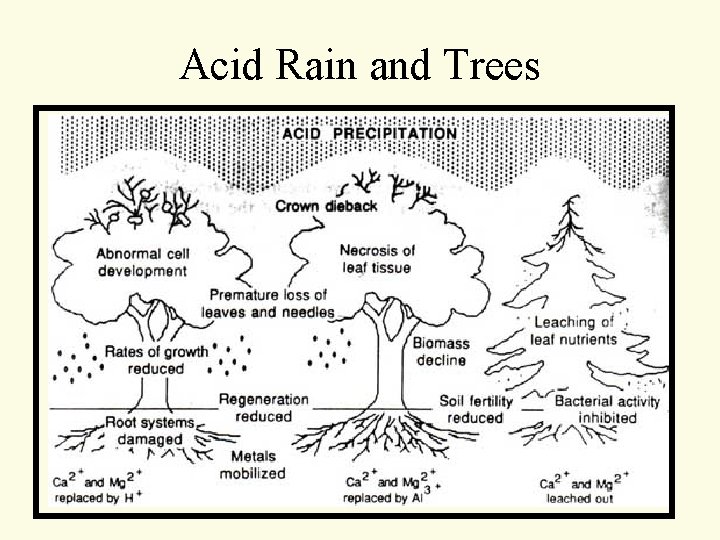
Acid Rain and Trees
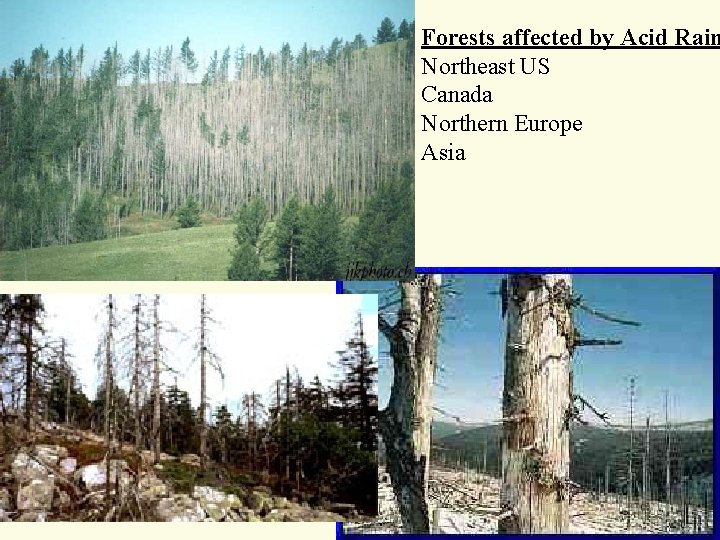
Forests affected by Acid Rain Northeast US Canada Northern Europe Asia
Acid Rain and Buildings Many buildings are made of concrete and or stone These compounds act as bases and react with acid The building technically “weathers” very fast, or Non technically “crumbles”
Europe The US Capitol
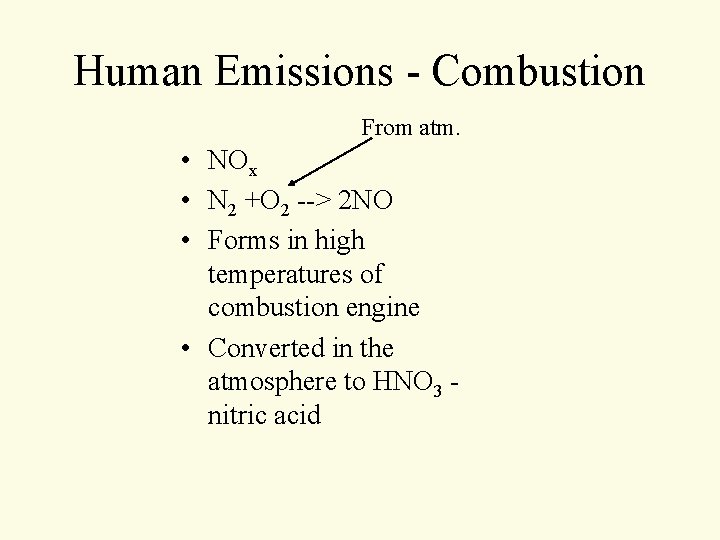
Human Emissions - Combustion From atm. • NOx • N 2 +O 2 --> 2 NO • Forms in high temperatures of combustion engine • Converted in the atmosphere to HNO 3 nitric acid
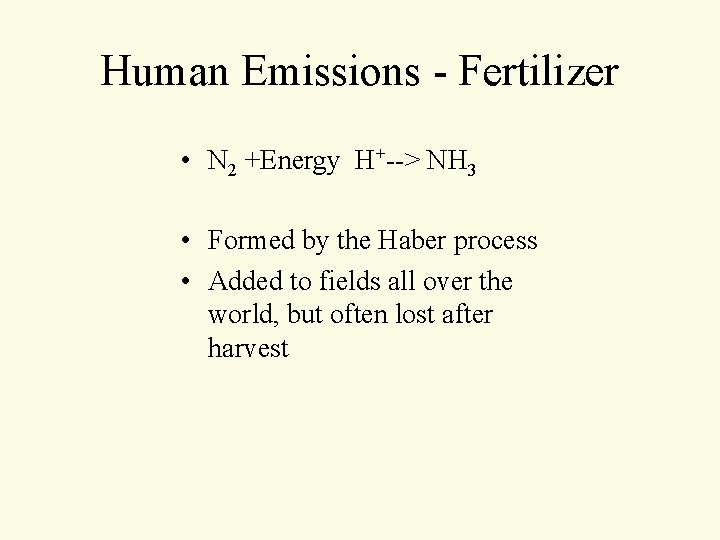
Human Emissions - Fertilizer • N 2 +Energy H+--> NH 3 • Formed by the Haber process • Added to fields all over the world, but often lost after harvest
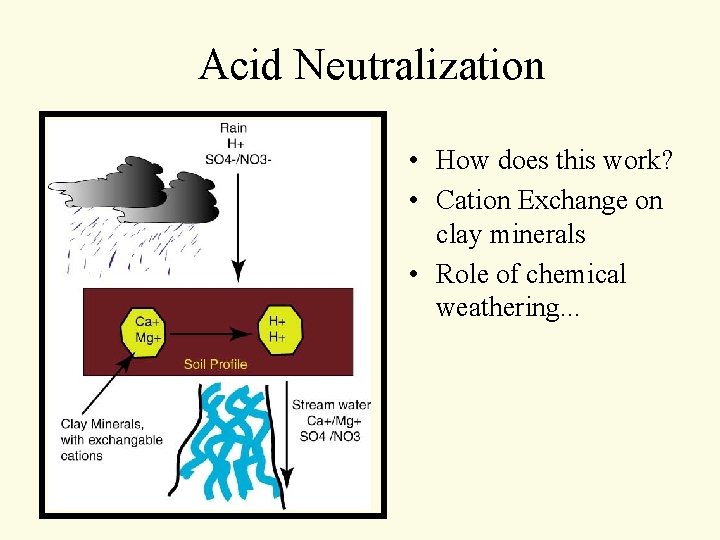
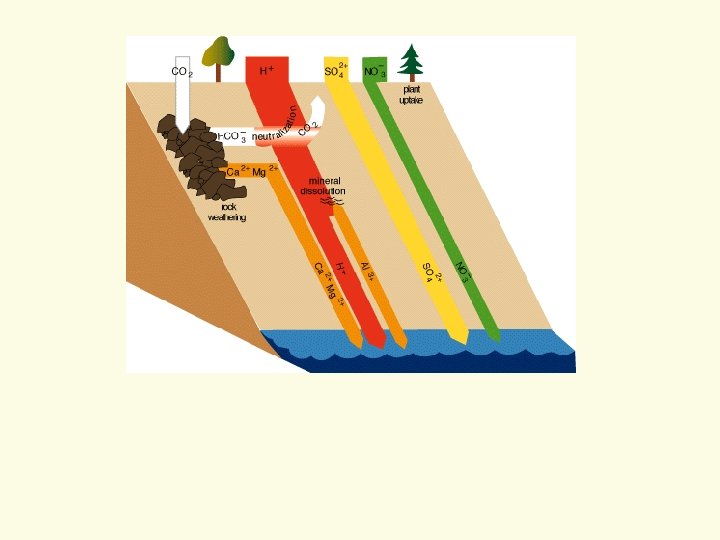
Acid Neutralization • How does this work? • Cation Exchange on clay minerals • Role of chemical weathering. . .
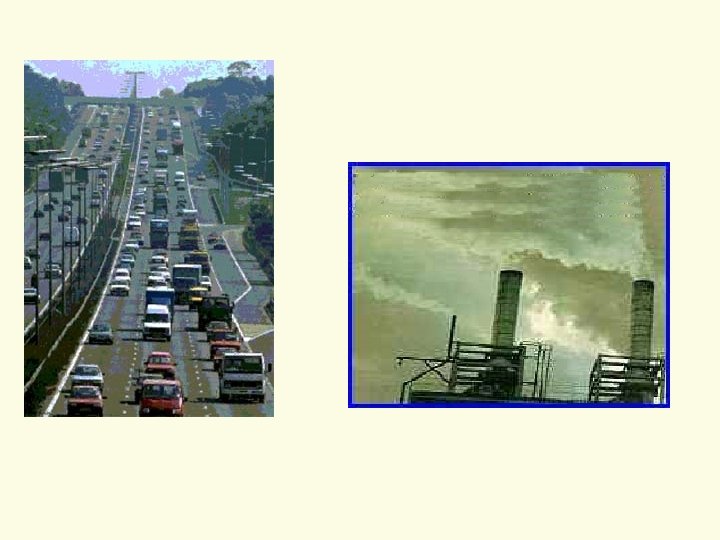
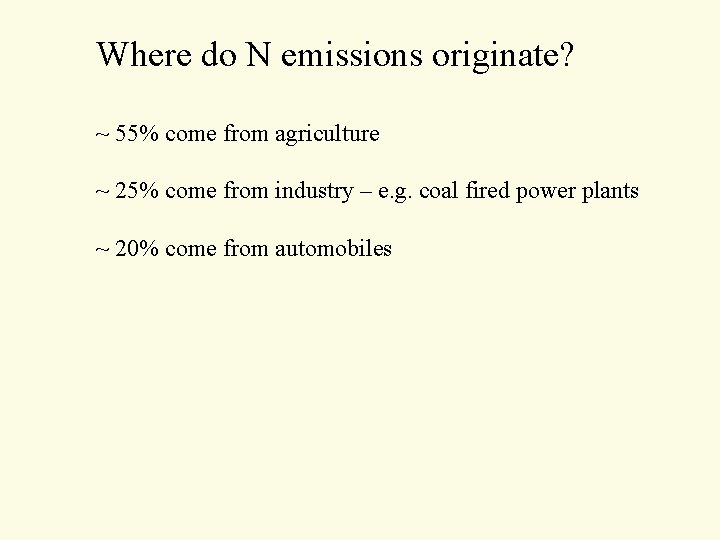
Where do N emissions originate? ~ 55% come from agriculture ~ 25% come from industry – e. g. coal fired power plants ~ 20% come from automobiles
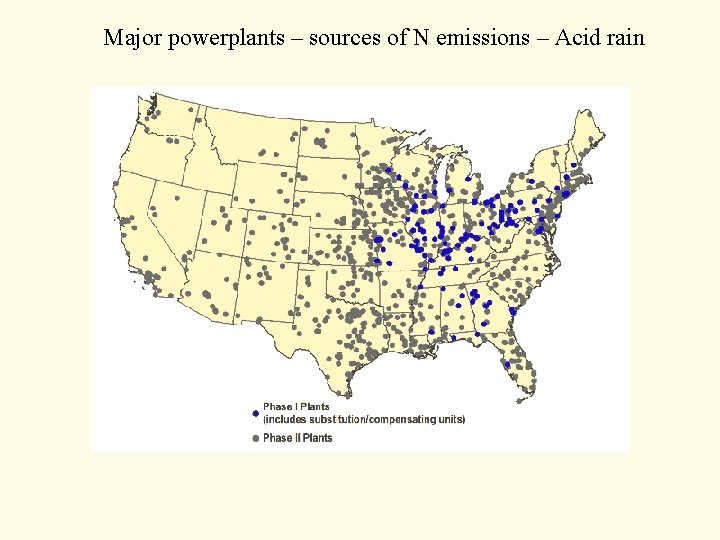
Major powerplants – sources of N emissions – Acid rain
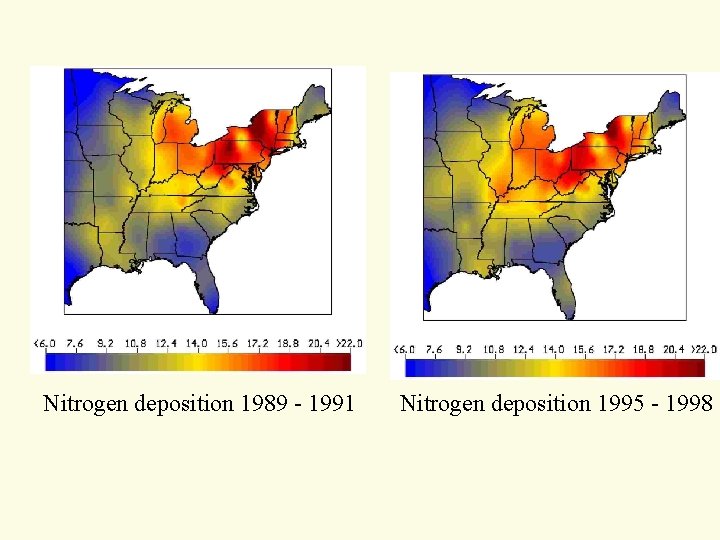
Nitrogen deposition 1989 - 1991 Nitrogen deposition 1995 - 1998
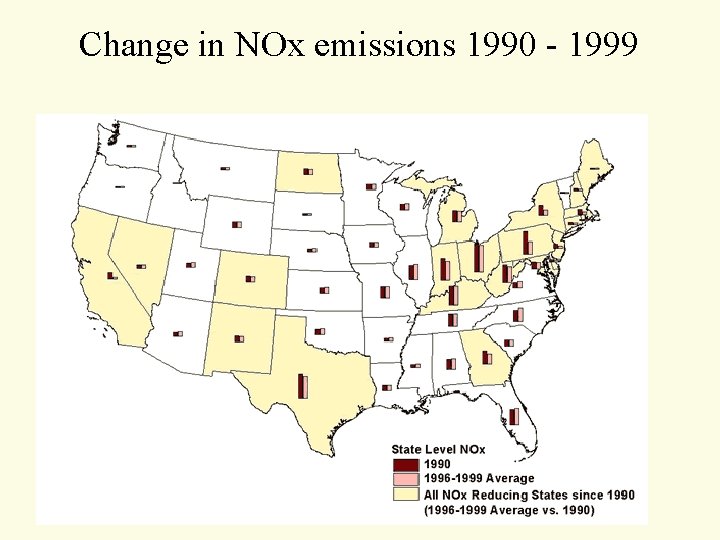
Change in NOx emissions 1990 - 1999
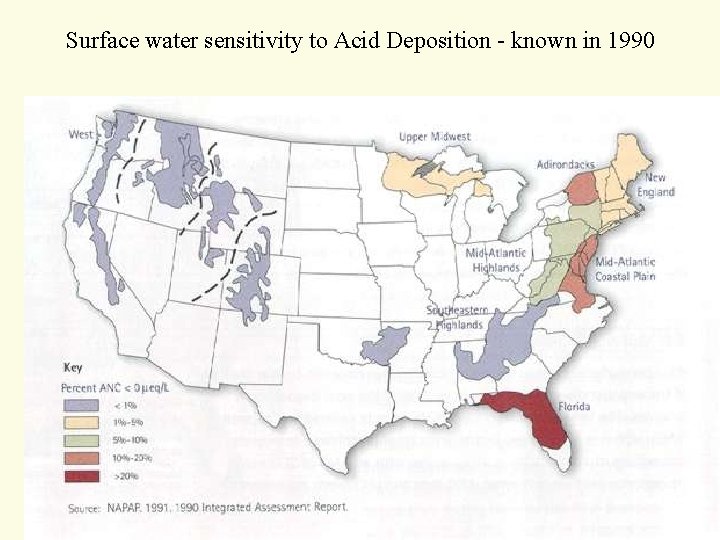
Surface water sensitivity to Acid Deposition - known in 1990
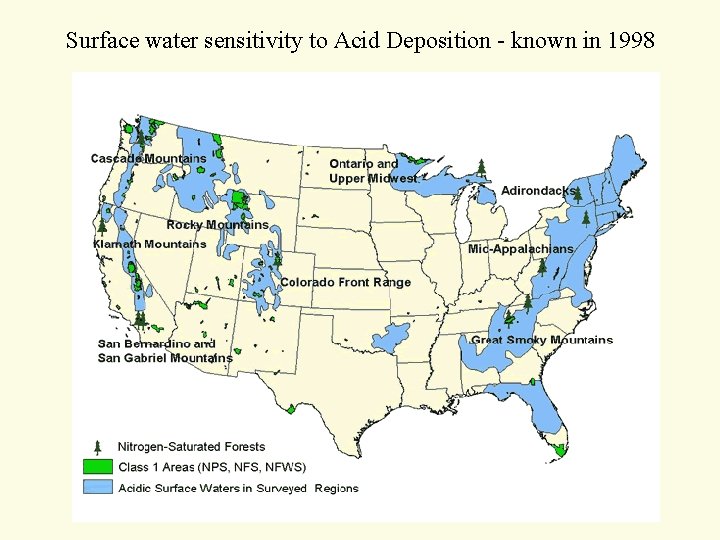
Surface water sensitivity to Acid Deposition - known in 1998
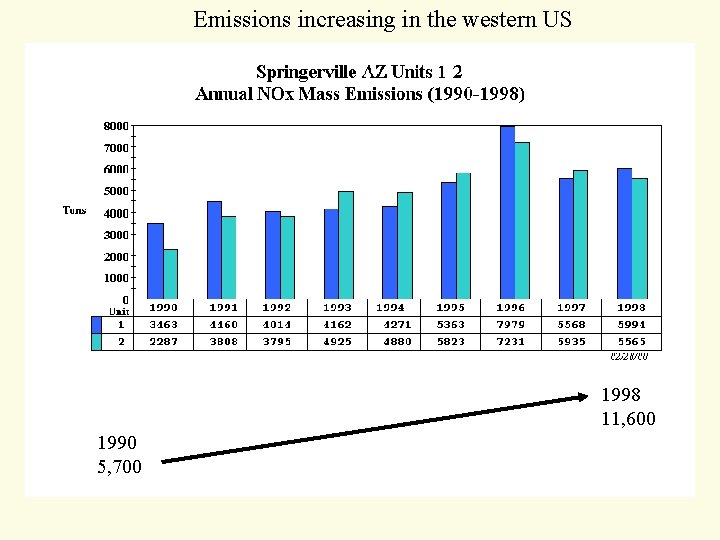
Emissions increasing in the western US 1998 11, 600 1990 5, 700
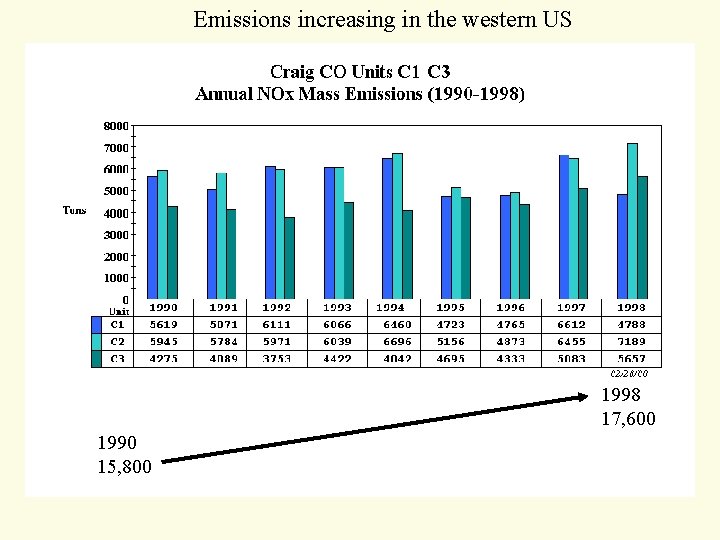
Emissions increasing in the western US 1998 17, 600 1990 15, 800
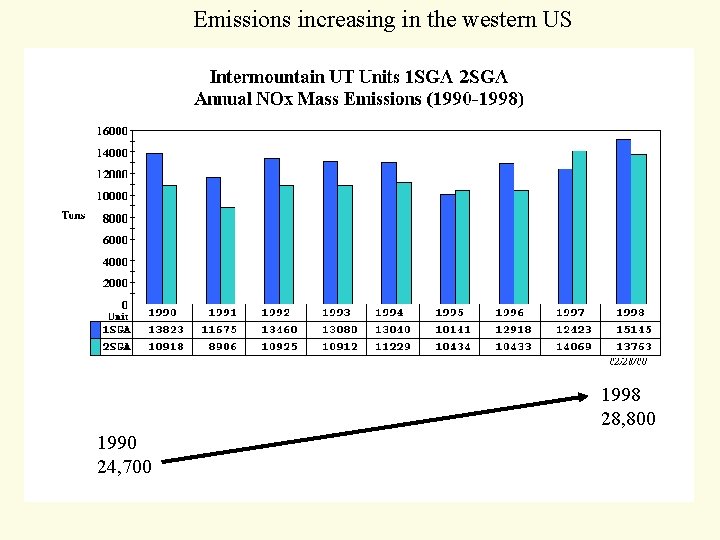
Emissions increasing in the western US 1998 28, 800 1990 24, 700
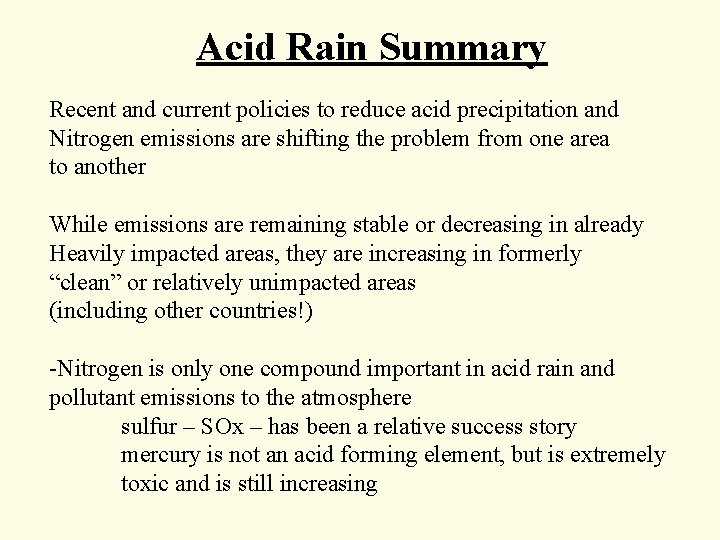
Acid Rain Summary Recent and current policies to reduce acid precipitation and Nitrogen emissions are shifting the problem from one area to another While emissions are remaining stable or decreasing in already Heavily impacted areas, they are increasing in formerly “clean” or relatively unimpacted areas (including other countries!) -Nitrogen is only one compound important in acid rain and pollutant emissions to the atmosphere sulfur – SOx – has been a relative success story mercury is not an acid forming element, but is extremely toxic and is still increasing
Other types of air pollution • The difference between stratospheric and tropospheric ozone • Photochemical smog – Inversion layers
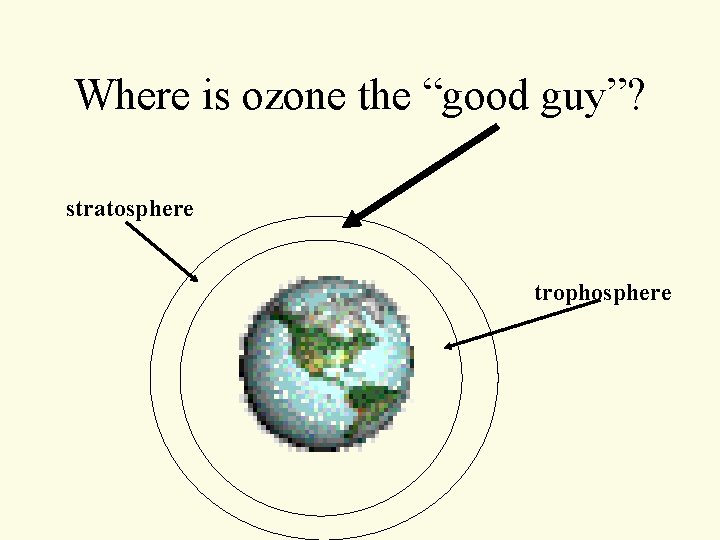
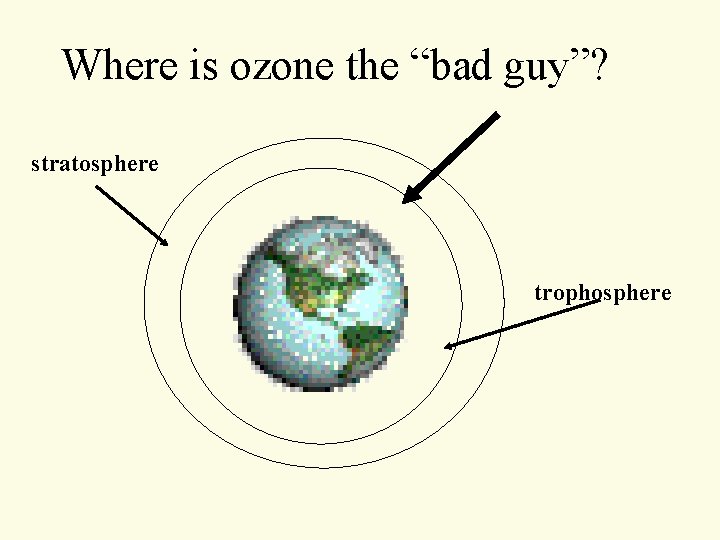
Where is ozone the “good guy”? stratosphere trophosphere
In the stratosphere…. • Ozone blocks incoming Ultra-violet radiation • Ultraviolet radiation – Skin cancer – Cataracts – Plant Damage
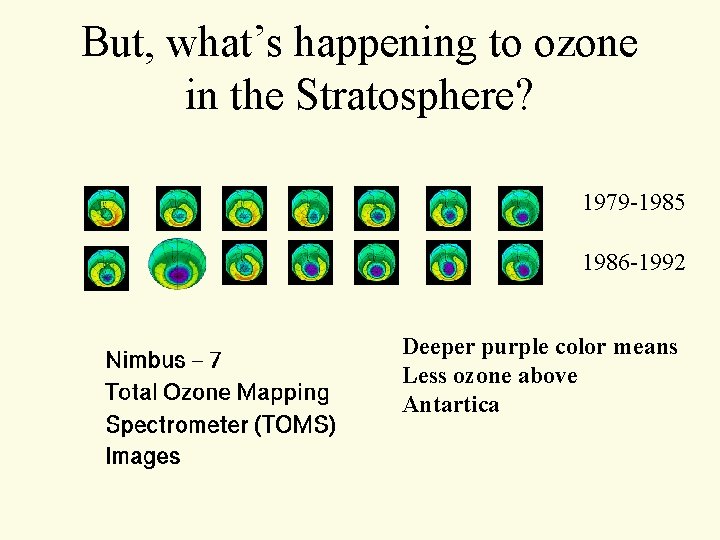
But, what’s happening to ozone in the Stratosphere? 1979 -1985 1986 -1992 Deeper purple color means Less ozone above Antartica
Why? • Chlorofluorocarbons (CFC) are very stable compounds that we produce at earth’s surface • They migrate to the stratosphere • Their chlorine gets excited by ultraviolet light • After excitation, chlorine attacks ozone layer, depleting it.
The Montreal Protocol has reduced use of CFC’s, but… • Their long life span means that they will be in the stratosphere for a long time, still destroying ozone. • However, the rate of increase of ozone depletion has slow, showing we are on the right track • By the way, ozone “holes” are opening up in places other than Antarctica
Where is ozone the “bad guy”? stratosphere trophosphere
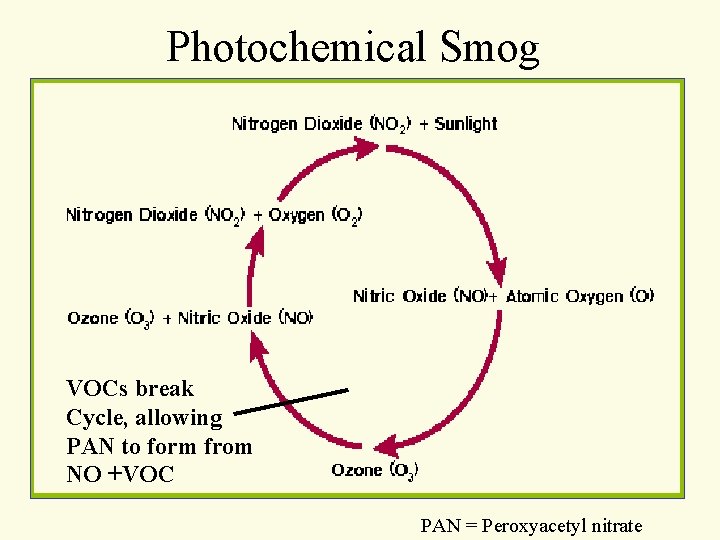
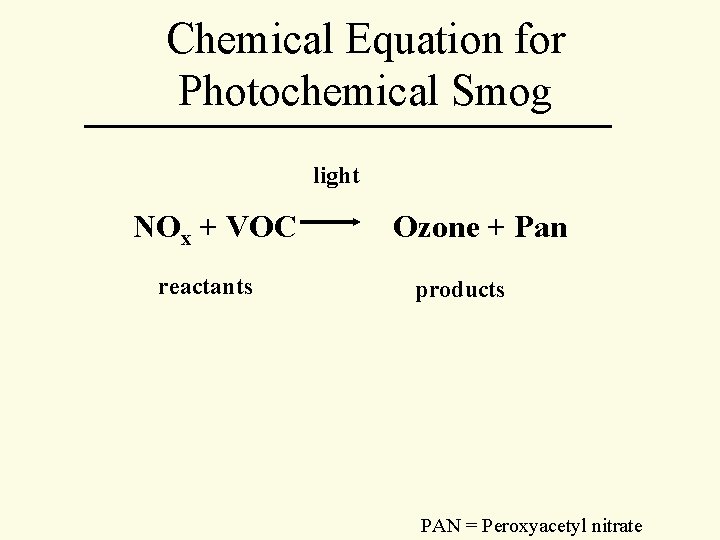
Photochemical Smog VOCs break Cycle, allowing PAN to form from NO +VOC PAN = Peroxyacetyl nitrate
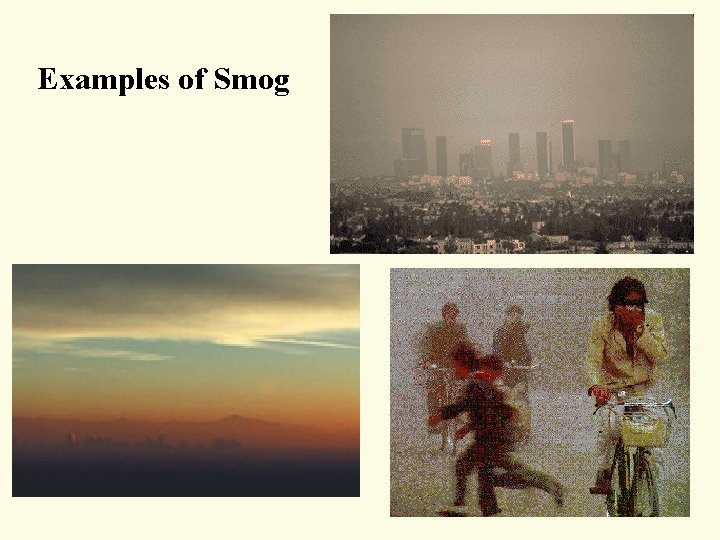
Examples of Smog
Chemical Equation for Photochemical Smog light NOx + VOC reactants Ozone + Pan products PAN = Peroxyacetyl nitrate
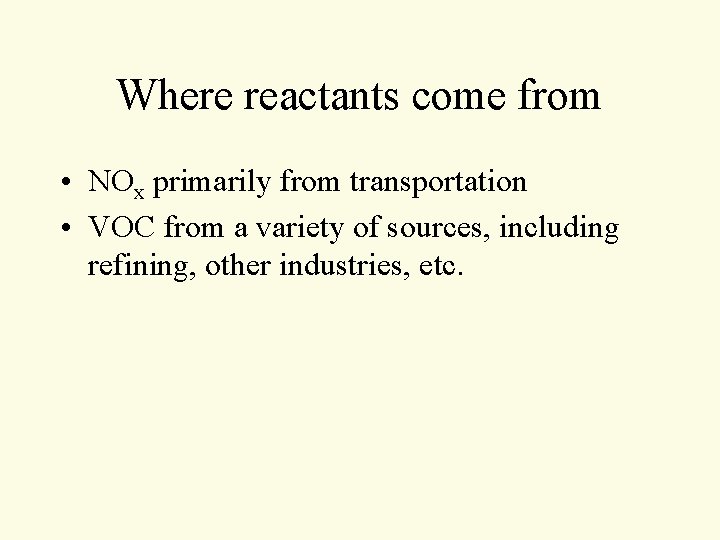
Where reactants come from • NOx primarily from transportation • VOC from a variety of sources, including refining, other industries, etc.
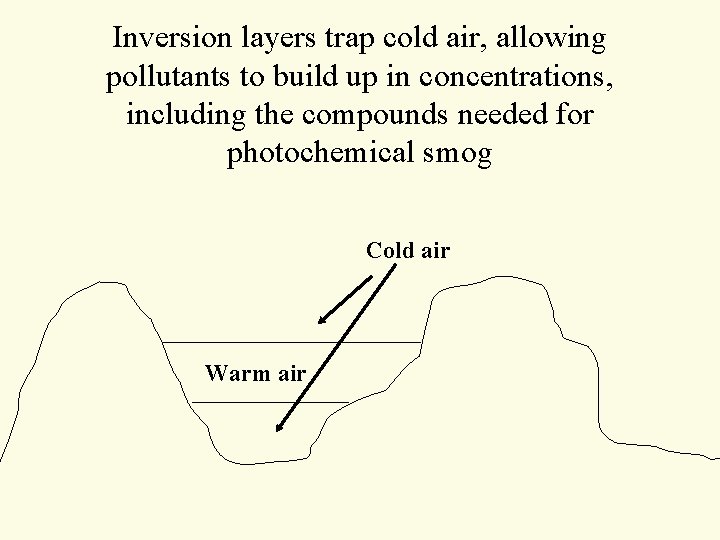
Inversion layers trap cold air, allowing pollutants to build up in concentrations, including the compounds needed for photochemical smog Cold air Warm air
Ozone’s bad features • Extremely reactive will burn leaves, lungs, synthetic compounds (e. g. rubbers, plastics) • Because of reactivity, is toxic in very low concentrations (parts per billion)
Water Pollution Humans depend on very small reservoirs of water for all our needs These reservoirs cycle/ turnover very quickly As they cycle they can either collect pollution from other sources, or be cleaned by passing through functioning ecosystems
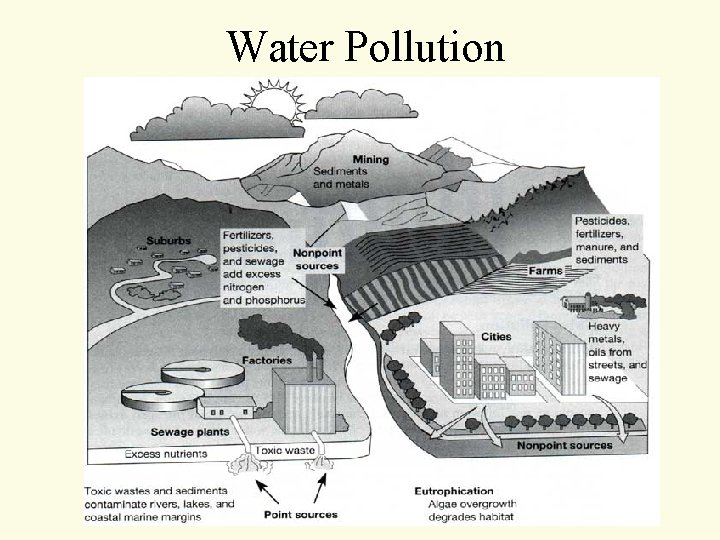
Water Pollution
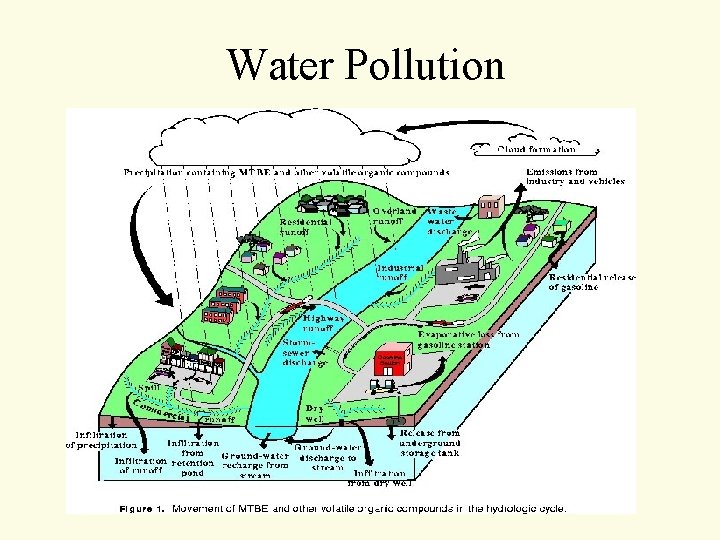
Water Pollution
Water Pollution Two major classifications • Point Source • Non-point Source
Point Sources • Single large source • Can localize it to one spot – Industrial Plants - Sewage pipes
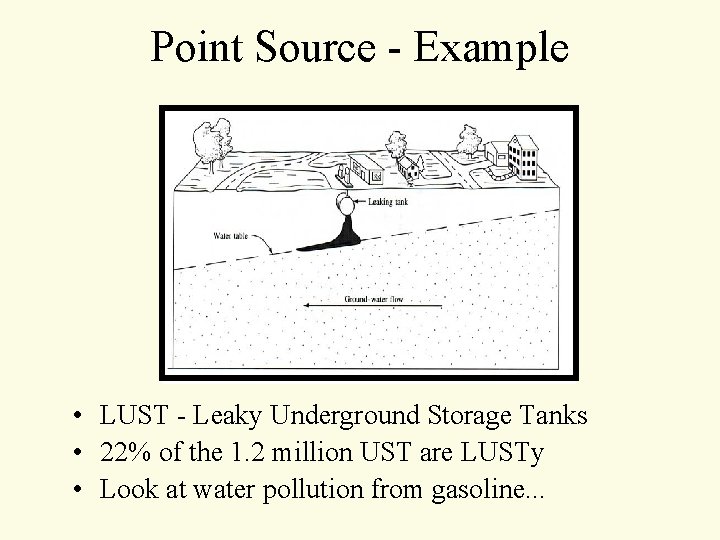
Point Source - Example • LUST - Leaky Underground Storage Tanks • 22% of the 1. 2 million UST are LUSTy • Look at water pollution from gasoline. . .
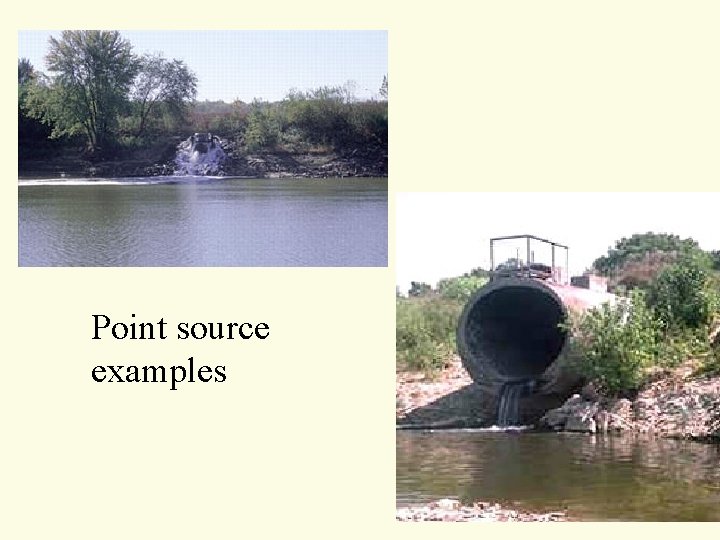
Point source examples
• Non-point Sources • Diffuse source or many smaller point sources • Automobiles • Fertilizer on fields
Non point source examples
Non-point source pollutants - nutrients
End Lecture 4/22/03
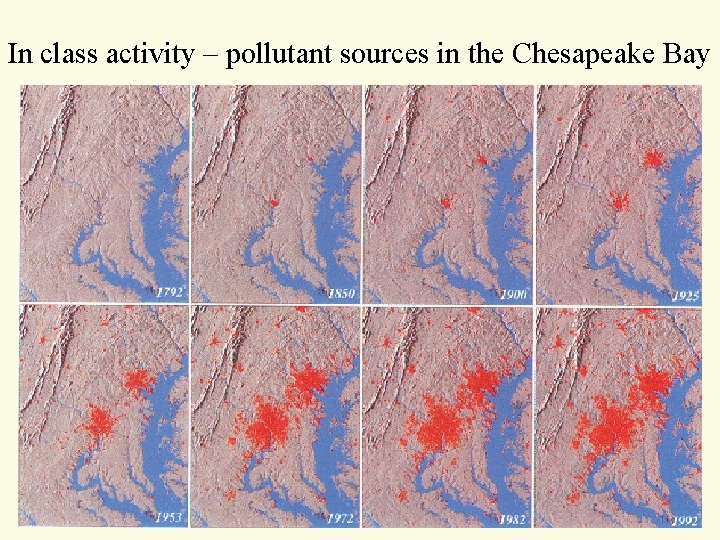
In class activity – pollutant sources in the Chesapeake Bay
The four main roles for class debate on 5/1/2003 Pacific Lumber Company /Maxxam Corporation The CEO’s The managing directors of the project Environmentalists Sierra Club Members Earth. First! Activists Townspeople Local loggers Local sports persons Government Representatives Bureau of Land Management California Representative who introduced the legislation
How does acid kill the fish? One way is mobilizing metals • When all base cations are striped from soils • Acid now reacts with metals e. g. aluminum – Normally aluminum is immobile – below p. H 5 - mobile aluminum • Fish breath in the water – Aluminum comes out of solution – Clogs gills - suffocate
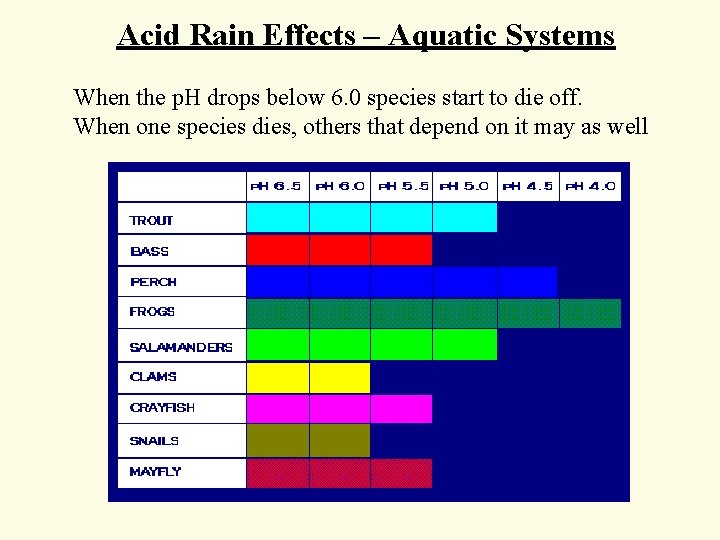
Acid Rain Effects – Aquatic Systems When the p. H drops below 6. 0 species start to die off. When one species dies, others that depend on it may as well
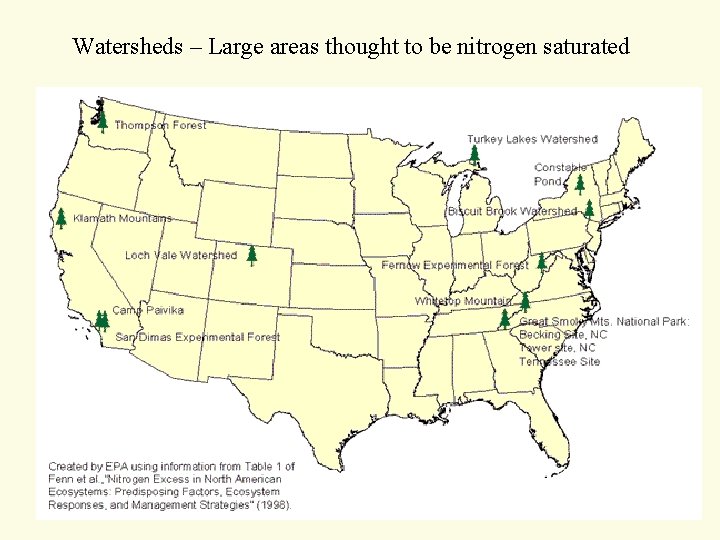
Watersheds – Large areas thought to be nitrogen saturated
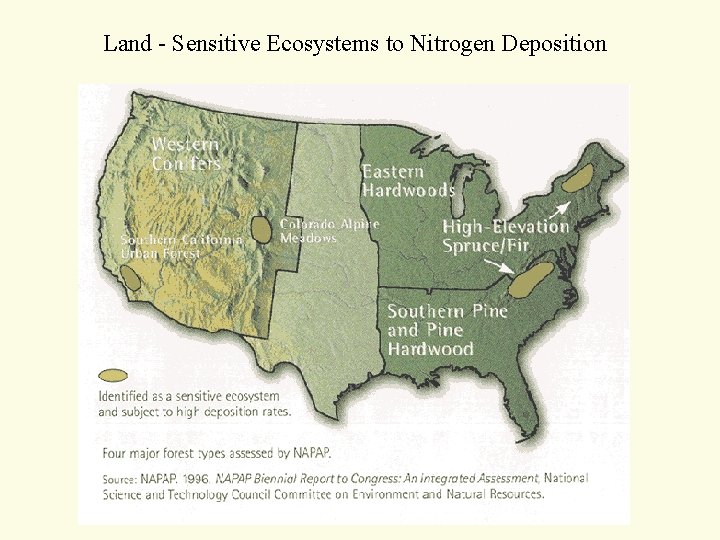
Land - Sensitive Ecosystems to Nitrogen Deposition
Acid Rain Summary
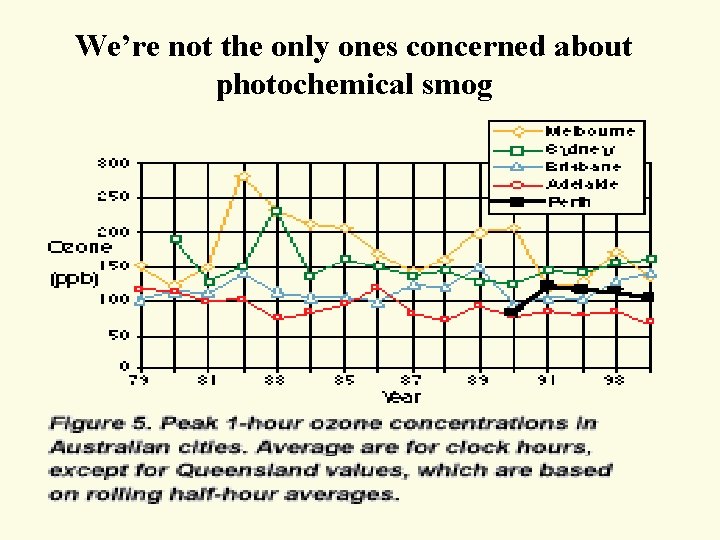
We’re not the only ones concerned about photochemical smog