
Today Chromosomes information carriers Cell division daughter cells
- Slides: 23
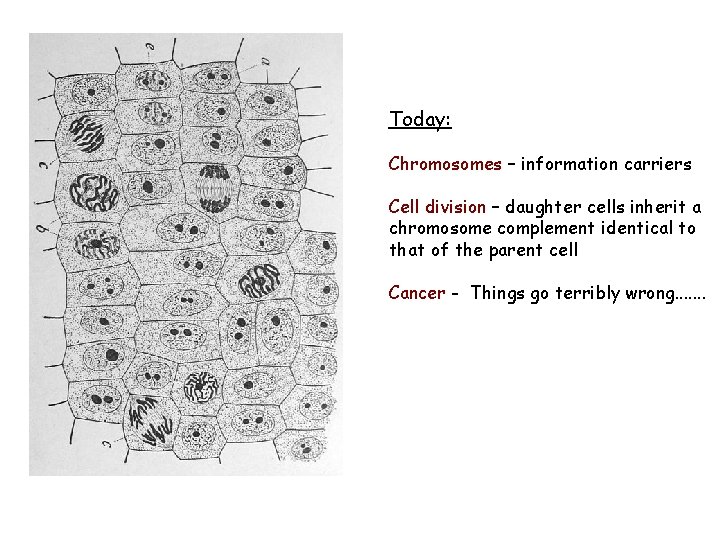
Today: Chromosomes – information carriers Cell division – daughter cells inherit a chromosome complement identical to that of the parent cell Cancer - Things go terribly wrong. . . .
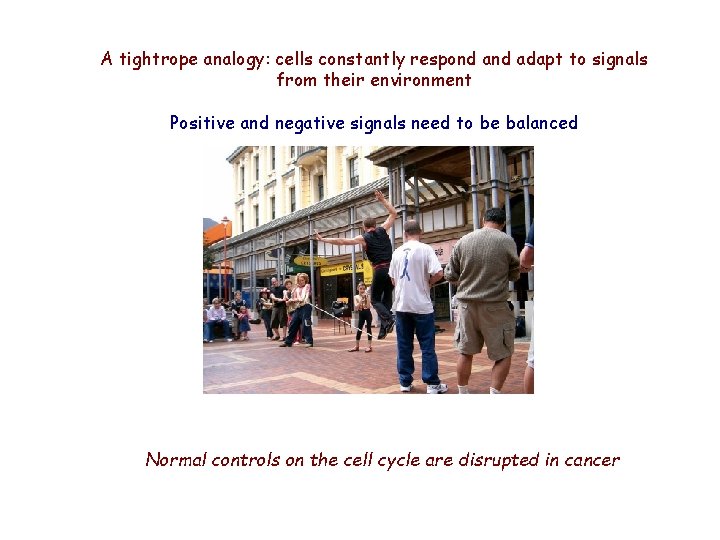
A tightrope analogy: cells constantly respond adapt to signals from their environment Positive and negative signals need to be balanced Normal controls on the cell cycle are disrupted in cancer
From chromosomes to cancer. . • Chromosomes carry large numbers of genes • Normal cells are euploid – they have the expected number of chromosome sets in a karyotype (23 pairs of chromosomes in humans) • Aneuploid cells have abnormal numbers of chromosomes. Very few aneuploidies are viable, because gene products must be balanced for proper cell function Cancer cells are characterized by MANY mutations that disrupt the balance in cells as well as chromosomal abnormalities
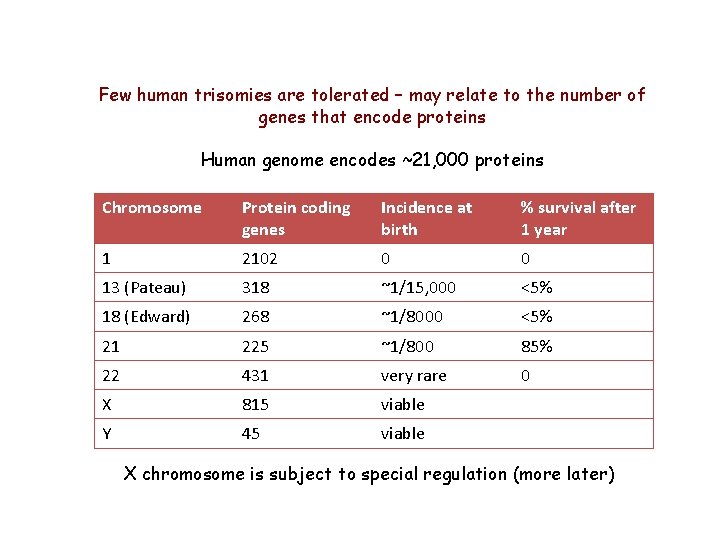
Few human trisomies are tolerated – may relate to the number of genes that encode proteins Human genome encodes ~21, 000 proteins Chromosome Protein coding genes Incidence at birth % survival after 1 year 1 2102 0 0 13 (Pateau) 318 ~1/15, 000 <5% 18 (Edward) 268 ~1/8000 <5% 21 225 ~1/800 85% 22 431 very rare 0 X 815 viable Y 45 viable X chromosome is subject to special regulation (more later)
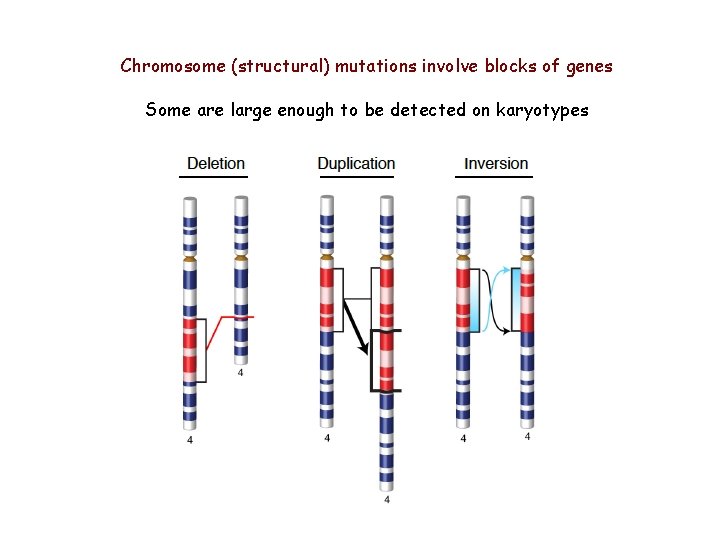
Chromosome (structural) mutations involve blocks of genes Some are large enough to be detected on karyotypes
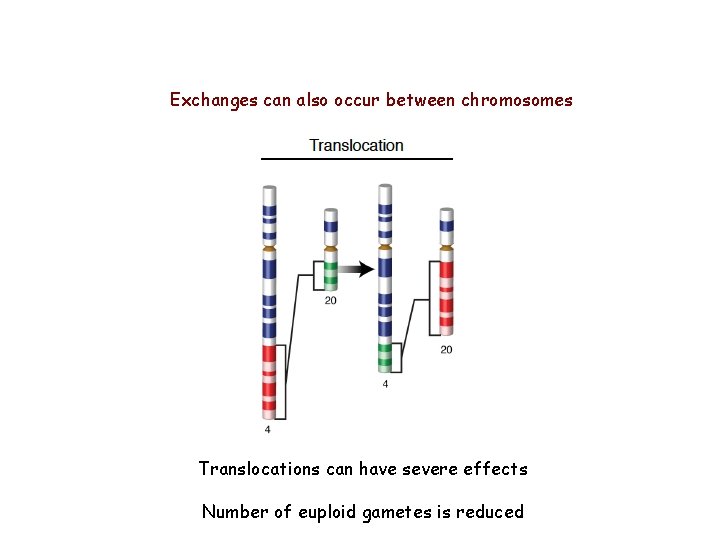
Exchanges can also occur between chromosomes Translocations can have severe effects Number of euploid gametes is reduced
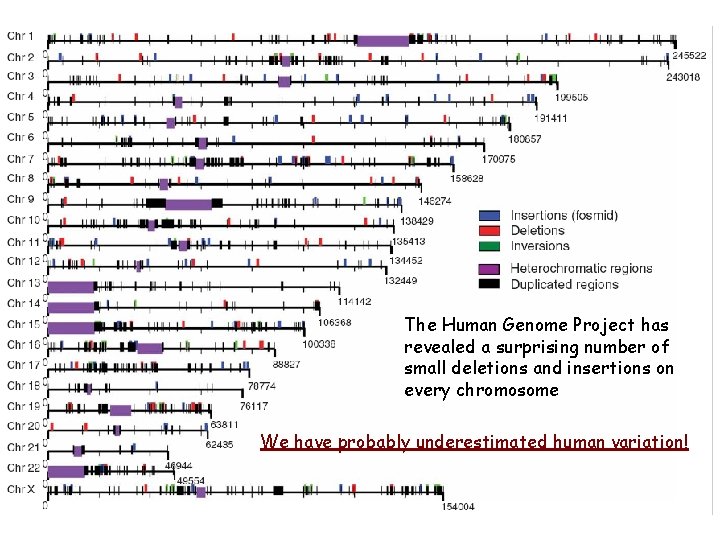
The Human Genome Project has revealed a surprising number of small deletions and insertions on every chromosome We have probably underestimated human variation!
Cell Division Daughter cells are identical copies of the parent cell
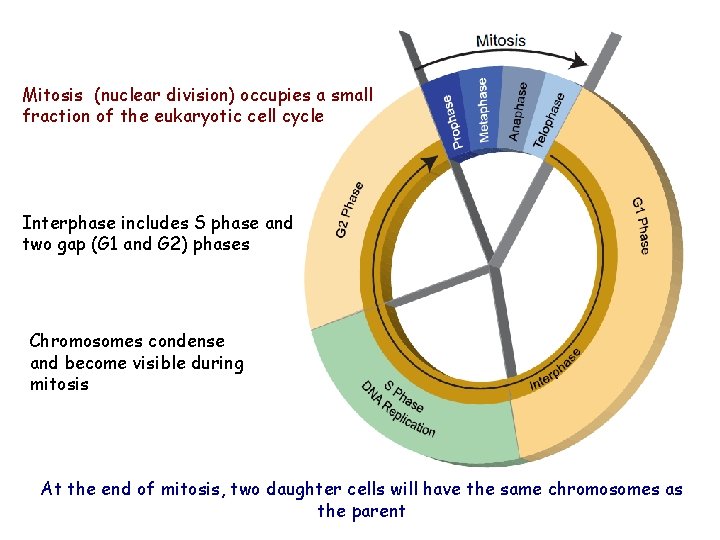
Mitosis (nuclear division) occupies a small fraction of the eukaryotic cell cycle Interphase includes S phase and two gap (G 1 and G 2) phases Chromosomes condense and become visible during mitosis At the end of mitosis, two daughter cells will have the same chromosomes as the parent
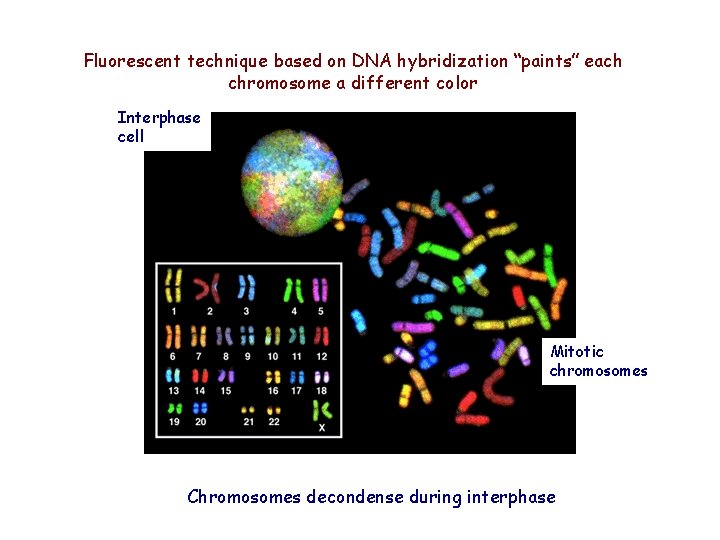
Fluorescent technique based on DNA hybridization “paints” each chromosome a different color Interphase cell Mitotic chromosomes Chromosomes decondense during interphase
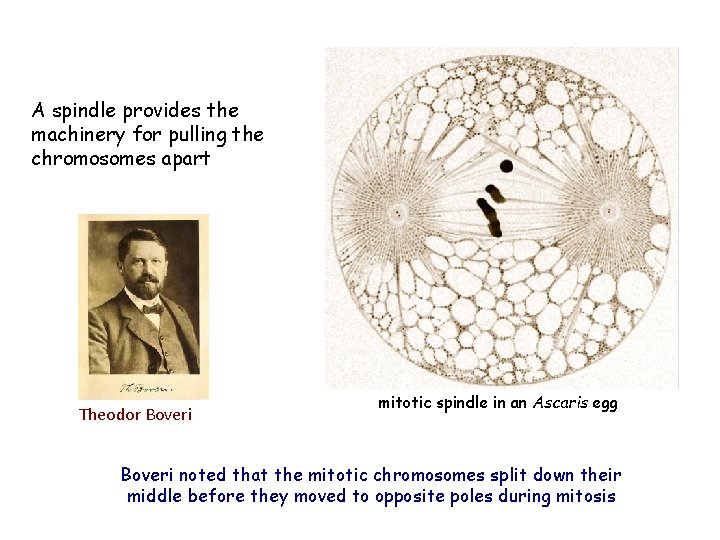
A spindle provides the machinery for pulling the chromosomes apart Theodor Boveri mitotic spindle in an Ascaris egg Boveri noted that the mitotic chromosomes split down their middle before they moved to opposite poles during mitosis
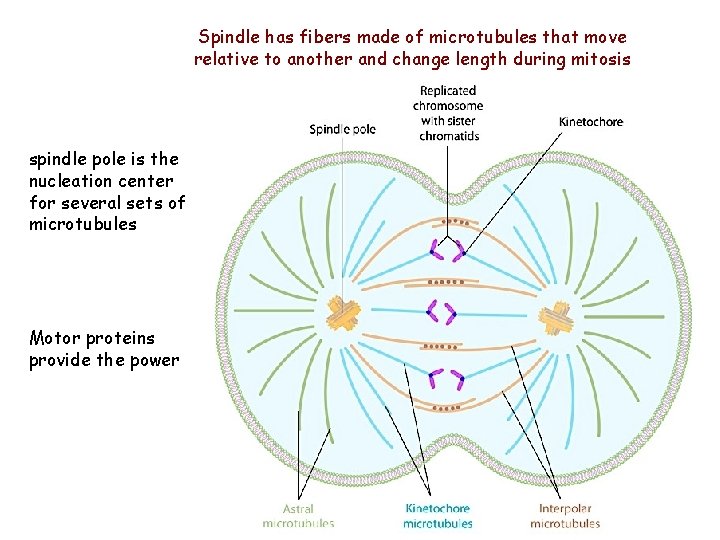
Spindle has fibers made of microtubules that move relative to another and change length during mitosis spindle pole is the nucleation center for several sets of microtubules Motor proteins provide the power
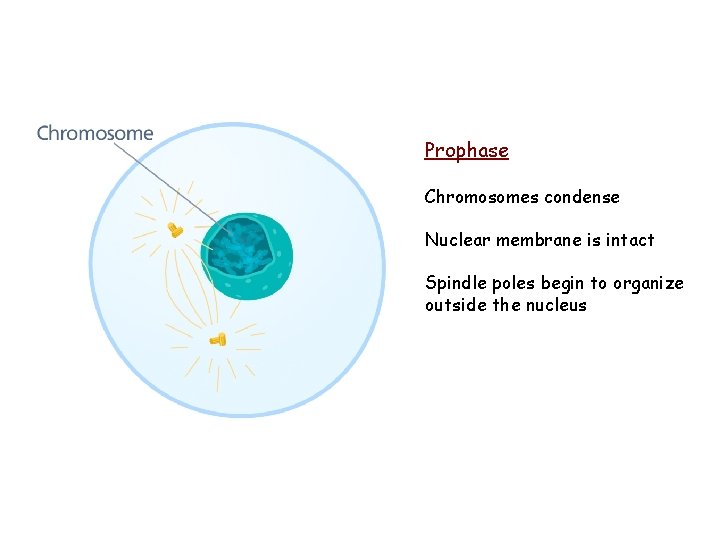
Prophase Chromosomes condense Nuclear membrane is intact Spindle poles begin to organize outside the nucleus
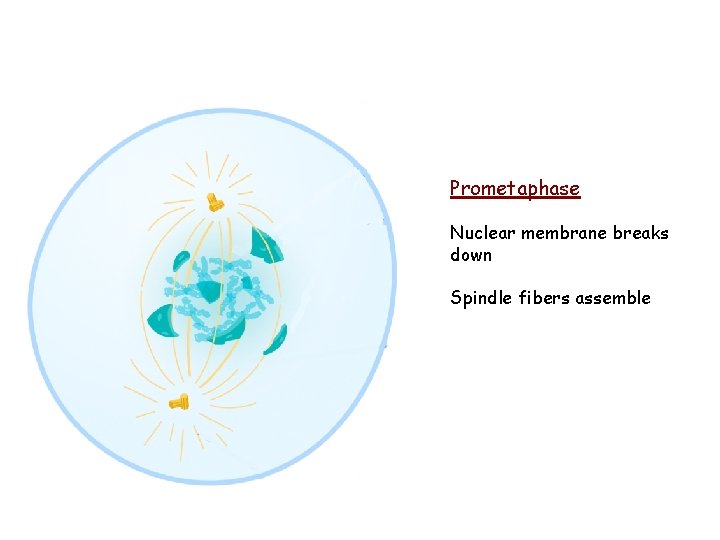
Prometaphase Nuclear membrane breaks down Spindle fibers assemble
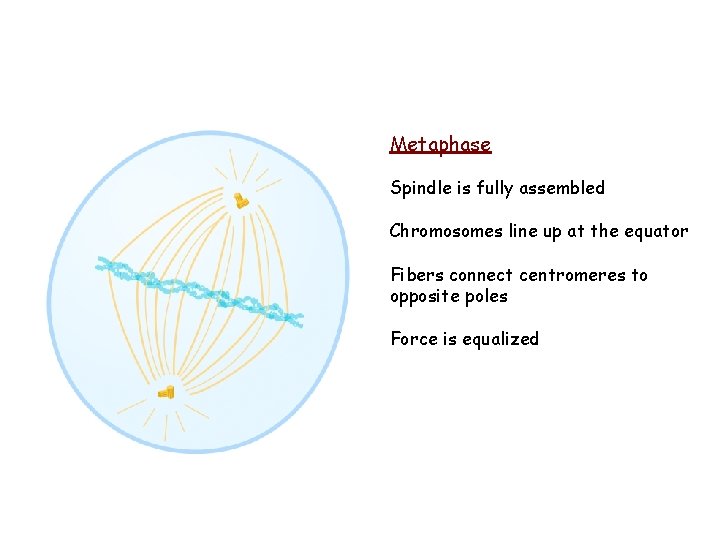
Metaphase Spindle is fully assembled Chromosomes line up at the equator Fibers connect centromeres to opposite poles Force is equalized
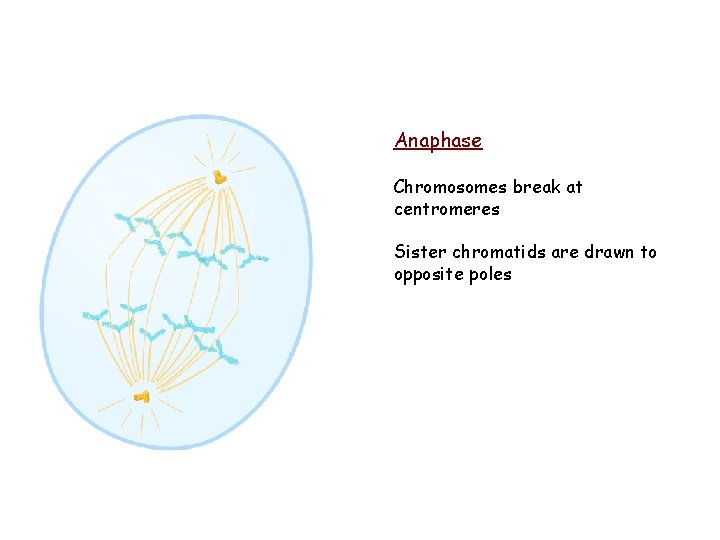
Anaphase Chromosomes break at centromeres Sister chromatids are drawn to opposite poles
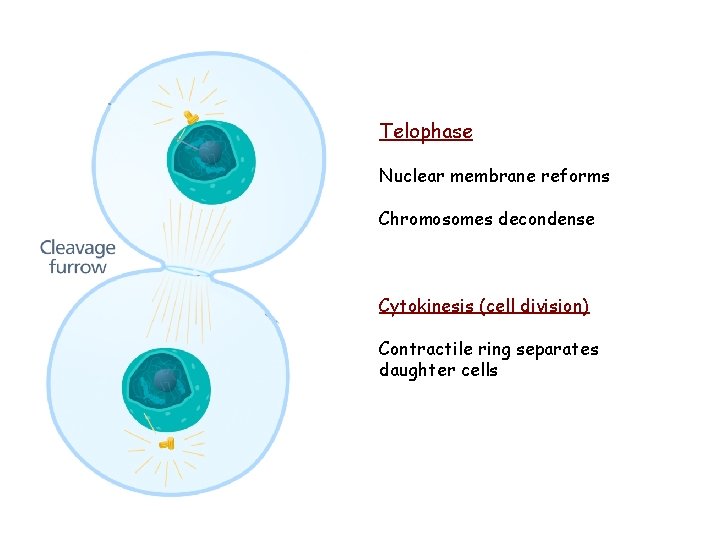
Telophase Nuclear membrane reforms Chromosomes decondense Cytokinesis (cell division) Contractile ring separates daughter cells
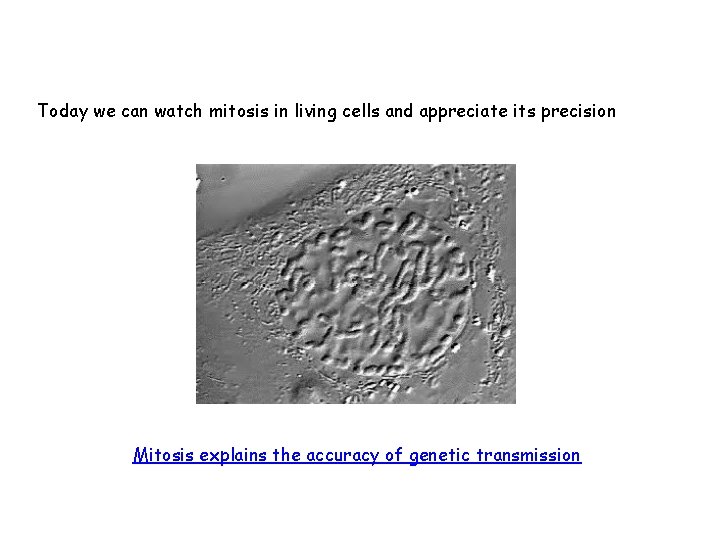
Today we can watch mitosis in living cells and appreciate its precision Mitosis explains the accuracy of genetic transmission
Mr. W’s Mitosis Rap
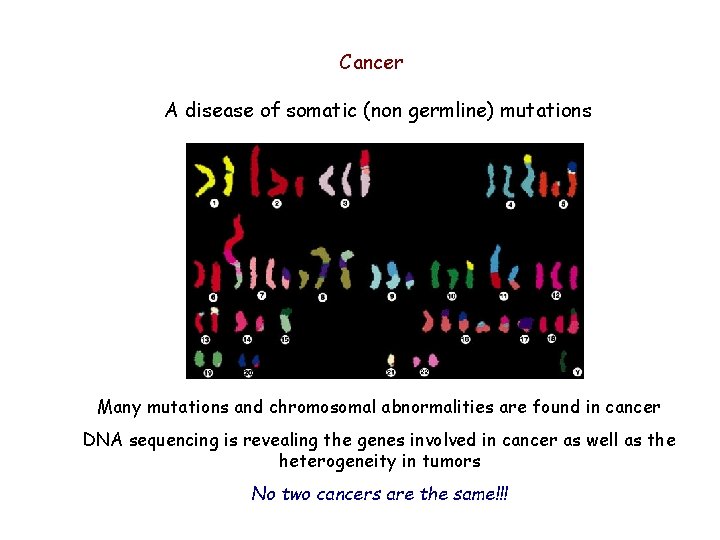
Cancer A disease of somatic (non germline) mutations Many mutations and chromosomal abnormalities are found in cancer DNA sequencing is revealing the genes involved in cancer as well as the heterogeneity in tumors No two cancers are the same!!!
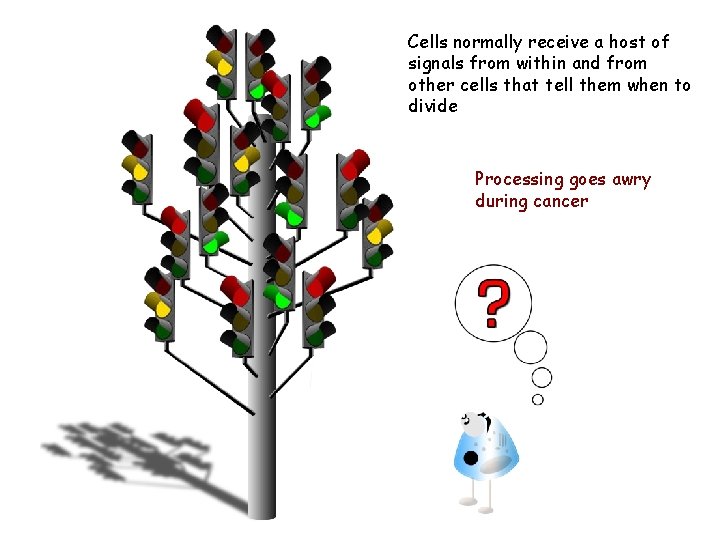
Cells normally receive a host of signals from within and from other cells that tell them when to divide Processing goes awry during cancer
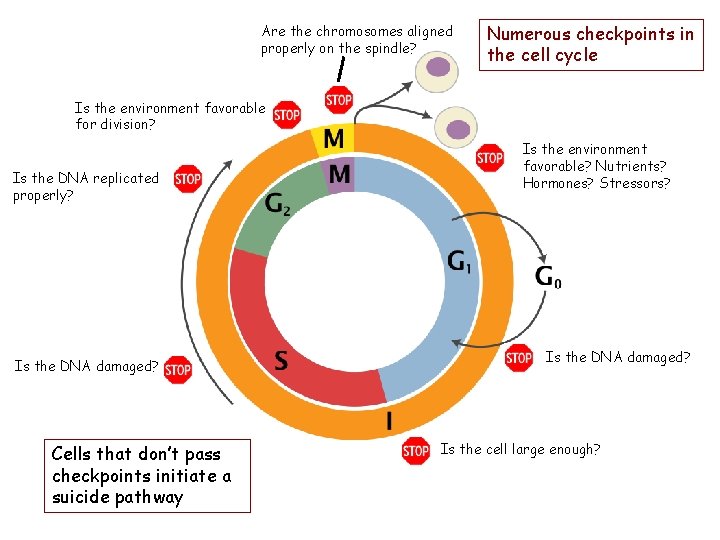
Are the chromosomes aligned properly on the spindle? Numerous checkpoints in the cell cycle Is the environment favorable for division? Is the DNA replicated properly? Is the DNA damaged? Cells that don’t pass checkpoints initiate a suicide pathway Is the environment favorable? Nutrients? Hormones? Stressors? Is the DNA damaged? Is the cell large enough?
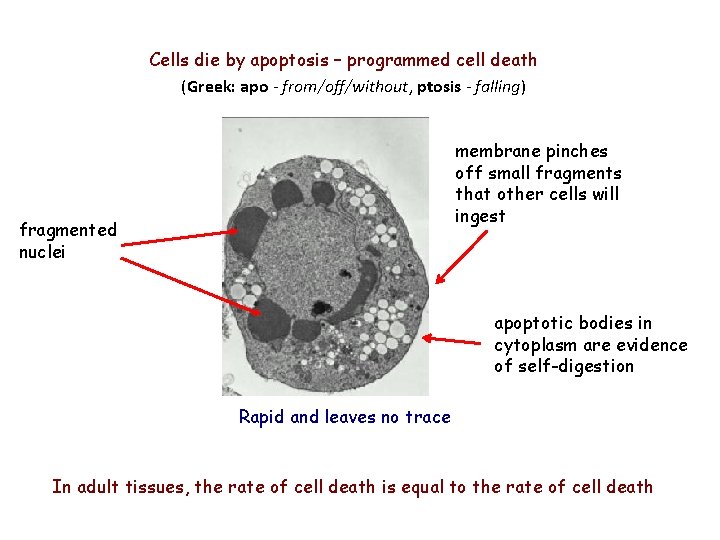
Cells die by apoptosis – programmed cell death (Greek: apo - from/off/without, ptosis - falling) membrane pinches off small fragments that other cells will ingest fragmented nuclei apoptotic bodies in cytoplasm are evidence of self-digestion Rapid and leaves no trace In adult tissues, the rate of cell death is equal to the rate of cell death