
Today Cellular Respiration part 2 Energy can change
- Slides: 44
Today: • Cellular Respiration part 2 Energy can change form! https: //www. youtube. com/watch? v=Iv. UU 8 jo. Bb 1 Q
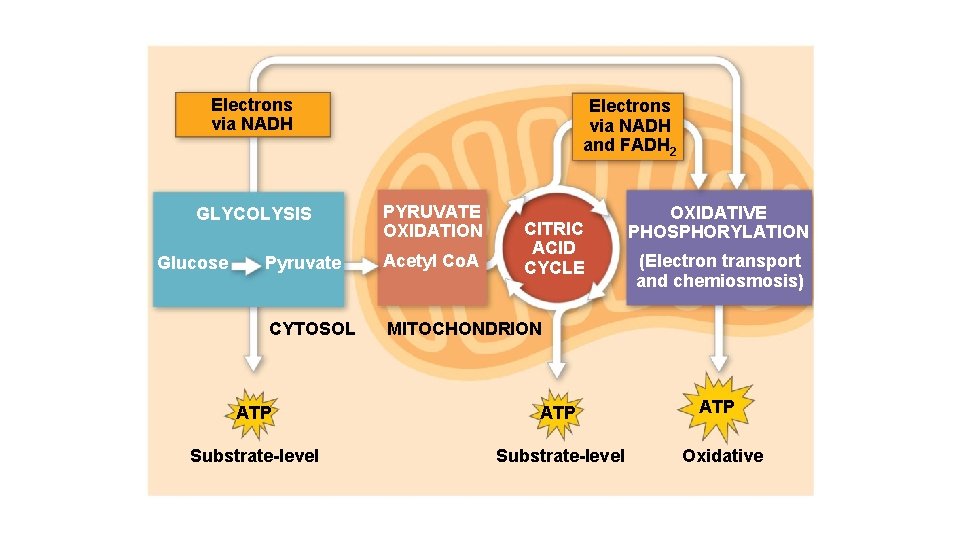
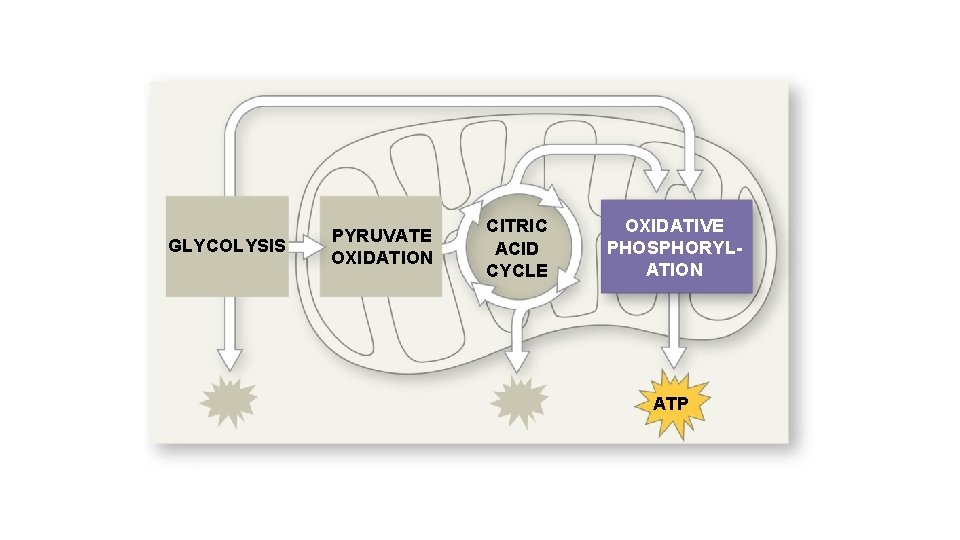
Electrons via NADH GLYCOLYSIS Glucose Electrons via NADH and FADH 2 PYRUVATE OXIDATION CITRIC ACID CYCLE Pyruvate Acetyl Co. A CYTOSOL MITOCHONDRION OXIDATIVE PHOSPHORYLATION (Electron transport and chemiosmosis) ATP ATP Substrate-level Oxidative
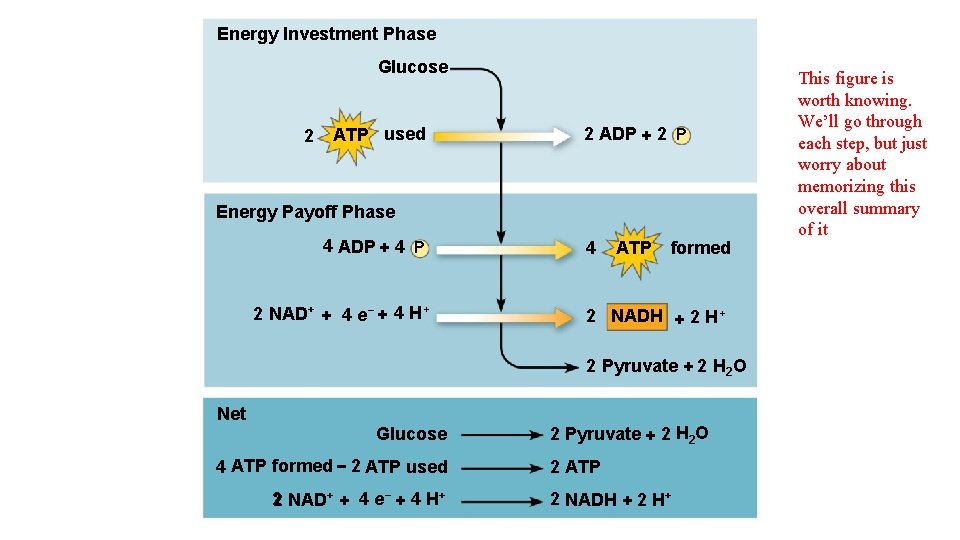
Glycolysis harvests chemical energy by oxidizing glucose to pyruvate • Glycolysis (“sugar splitting”) breaks down glucose into two molecules of pyruvate • Glycolysis occurs in the cytoplasm and has two major phases • Energy investment phase • Energy payoff phase • Glycolysis occurs whether or not O 2 is present
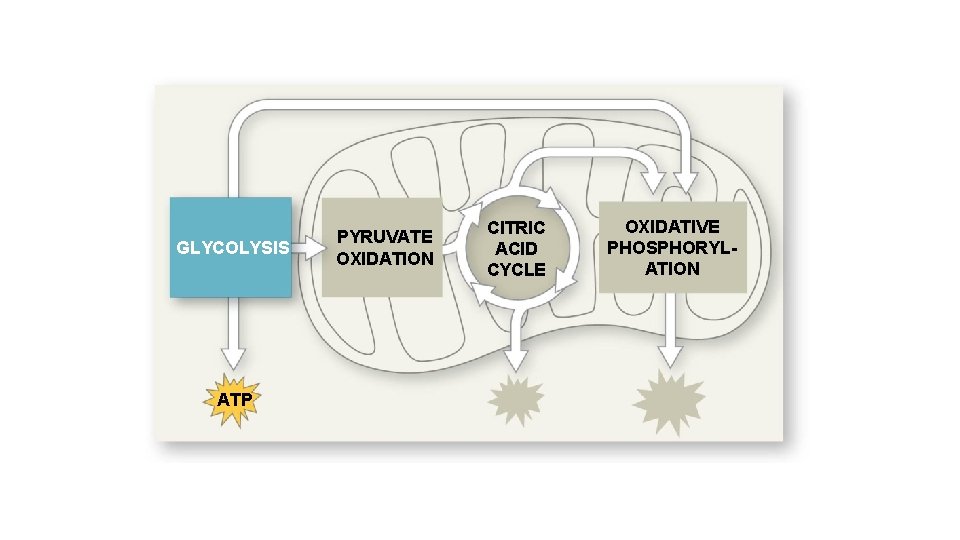
GLYCOLYSIS ATP PYRUVATE OXIDATION CITRIC ACID CYCLE OXIDATIVE PHOSPHORYLATION
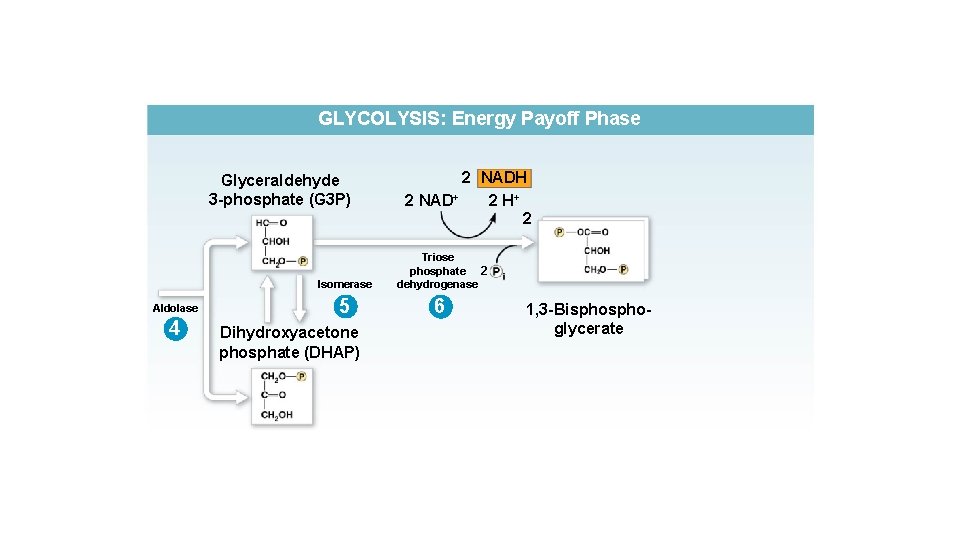
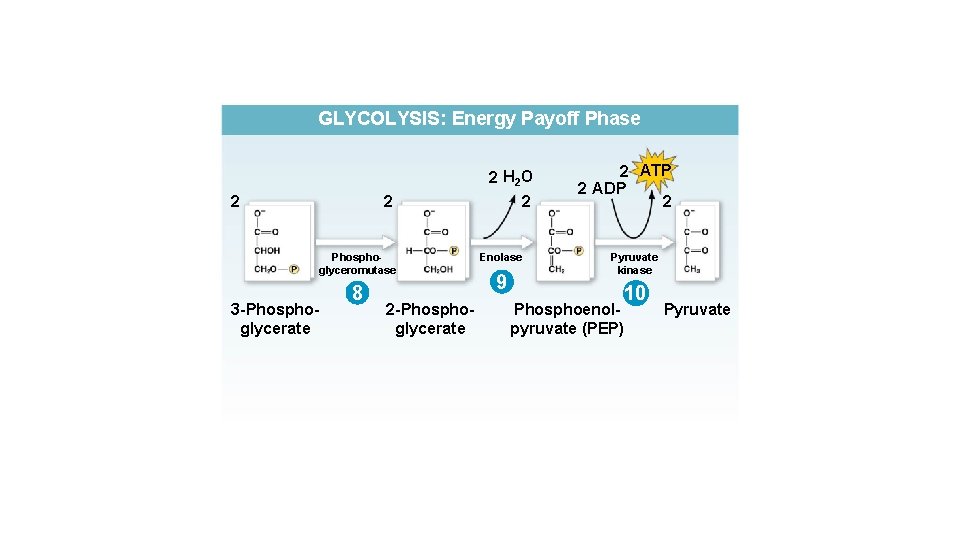
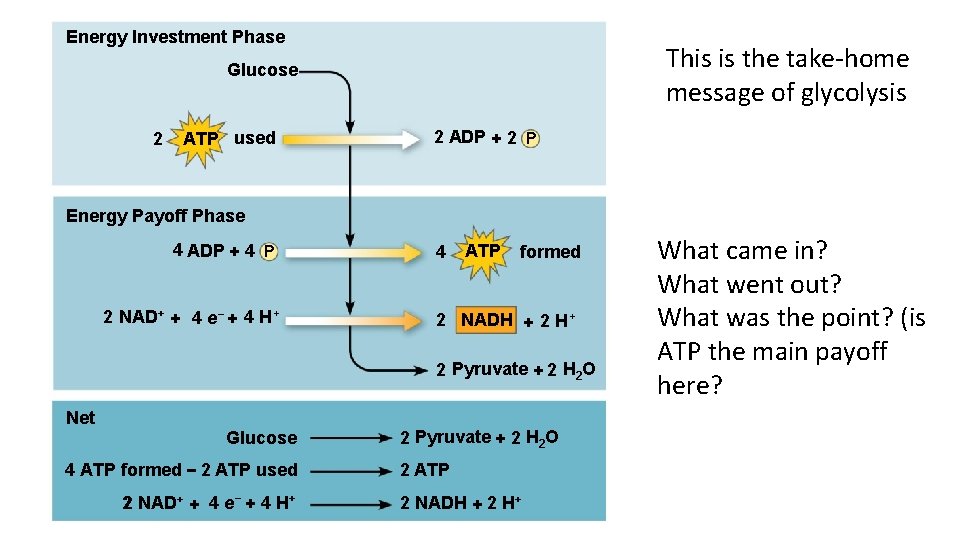
Energy Investment Phase Glucose 2 ATP used 2 ADP + 2 P Energy Payoff Phase 4 ADP + 4 P 2 NAD+ + 4 e− + 4 H+ 4 ATP formed 2 NADH + 2 H+ 2 Pyruvate + 2 H 2 O Net Glucose 4 ATP formed − 2 ATP used 2 NAD+ + 4 e− + 4 H+ 2 Pyruvate + 2 H 2 O 2 ATP 2 NADH + 2 H+ This figure is worth knowing. We’ll go through each step, but just worry about memorizing this overall summary of it
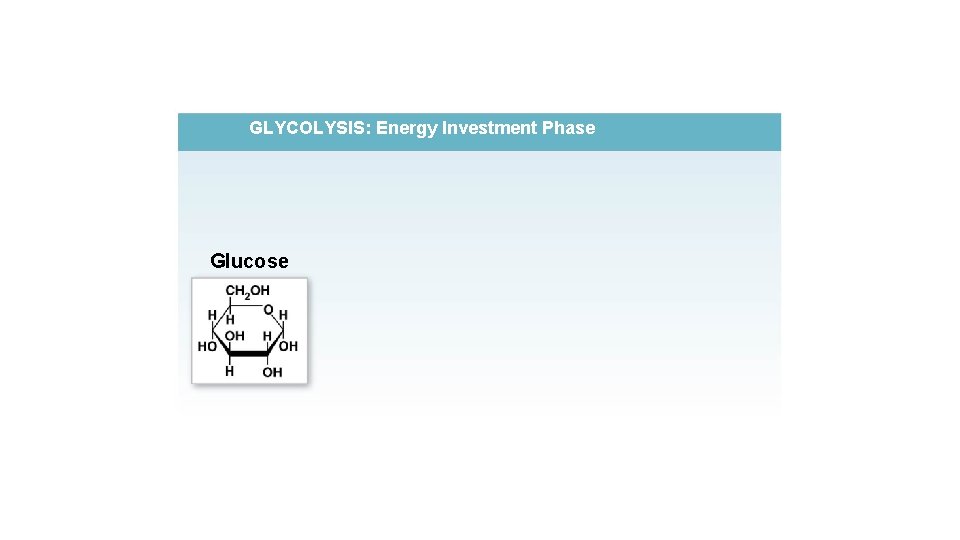
GLYCOLYSIS: Energy Investment Phase Glucose
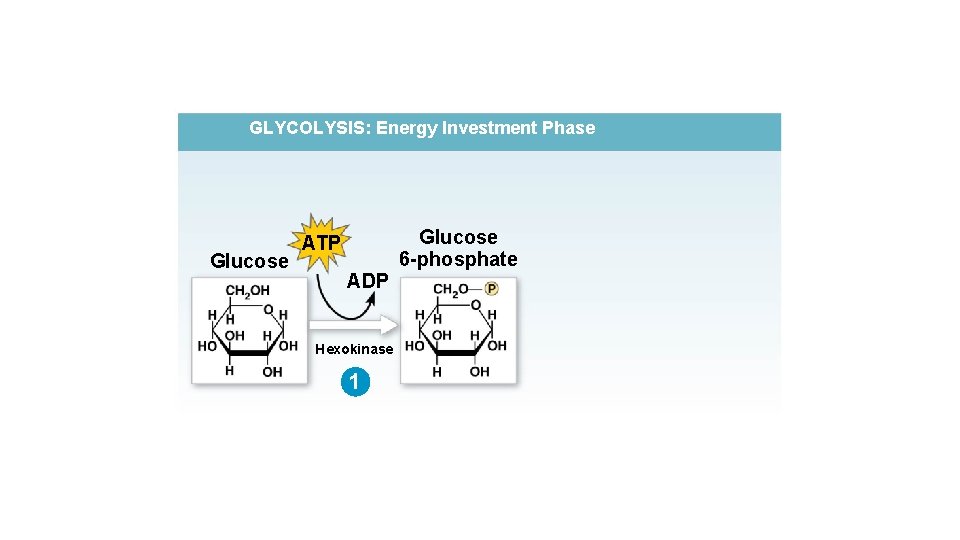
GLYCOLYSIS: Energy Investment Phase Glucose ATP ADP Hexokinase 1 Glucose 6 -phosphate
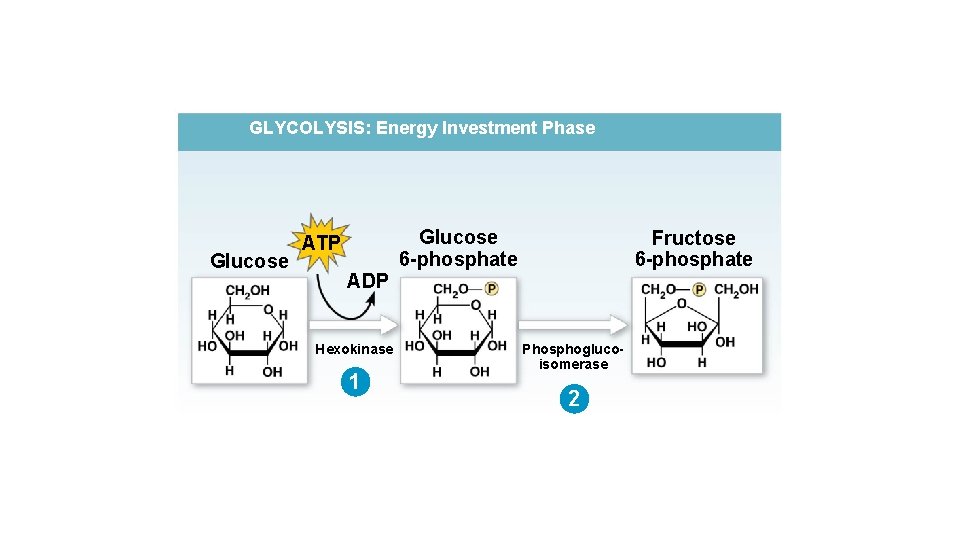
GLYCOLYSIS: Energy Investment Phase Glucose ATP ADP Hexokinase 1 Glucose 6 -phosphate Fructose 6 -phosphate Phosphoglucoisomerase 2
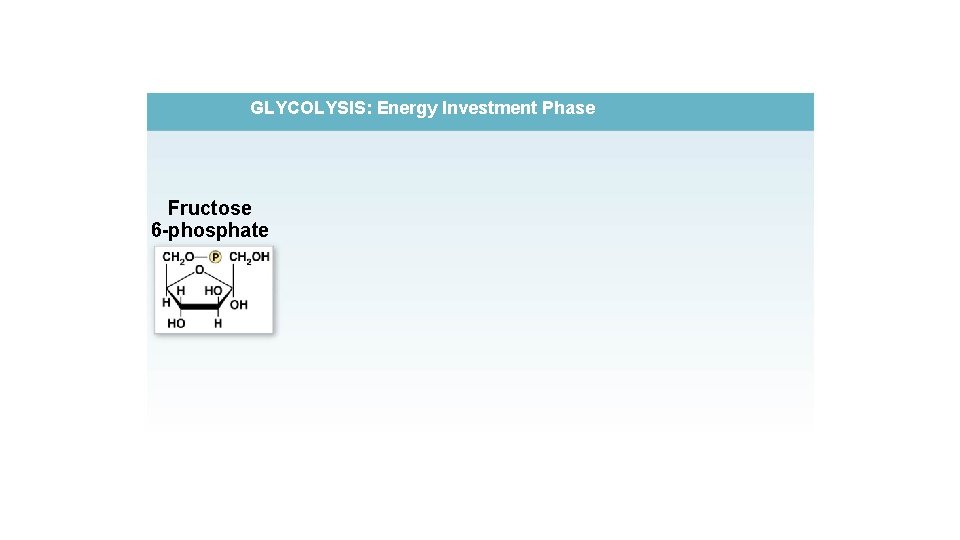
GLYCOLYSIS: Energy Investment Phase Fructose 6 -phosphate
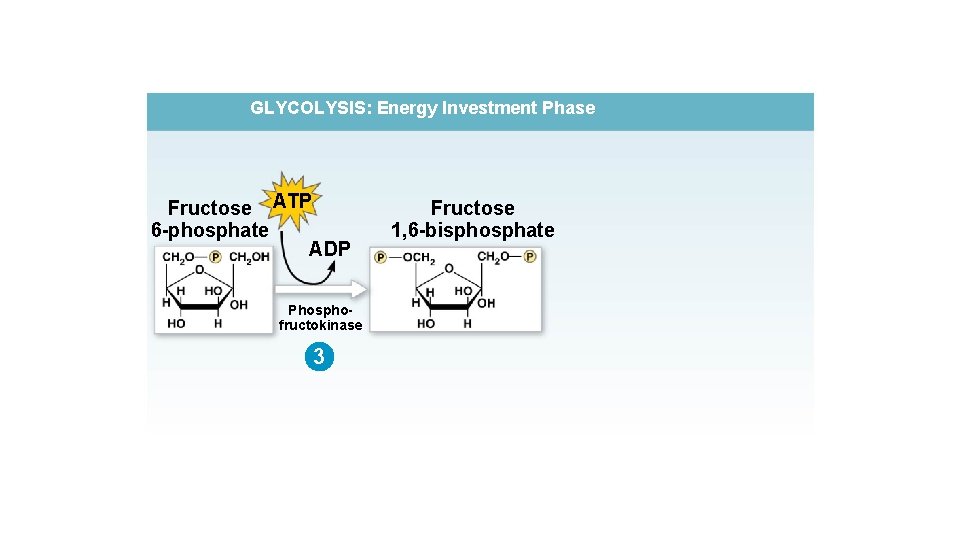
GLYCOLYSIS: Energy Investment Phase Fructose ATP 6 -phosphate ADP Phosphofructokinase 3 Fructose 1, 6 -bisphosphate
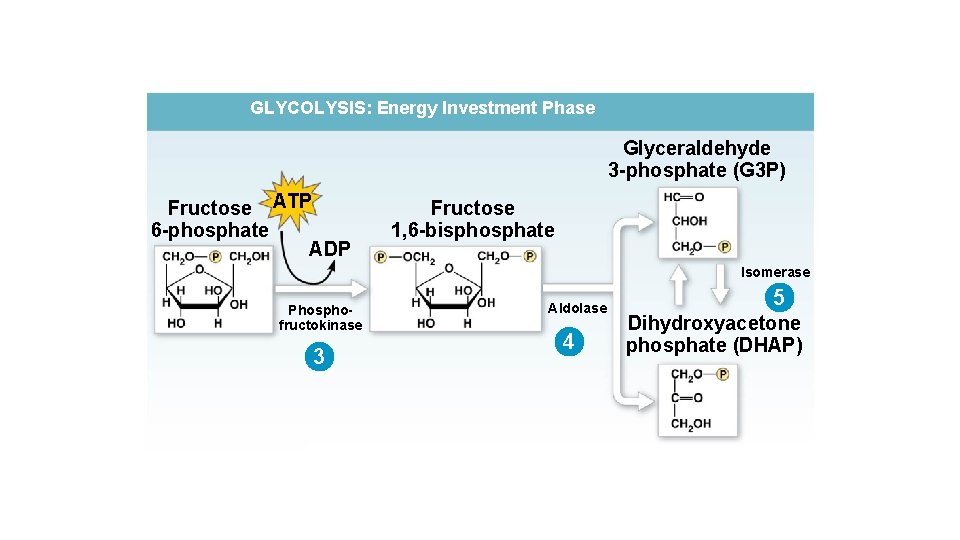
GLYCOLYSIS: Energy Investment Phase Glyceraldehyde 3 -phosphate (G 3 P) Fructose ATP 6 -phosphate ADP Fructose 1, 6 -bisphosphate Isomerase Phosphofructokinase 3 Aldolase 4 5 Dihydroxyacetone phosphate (DHAP)
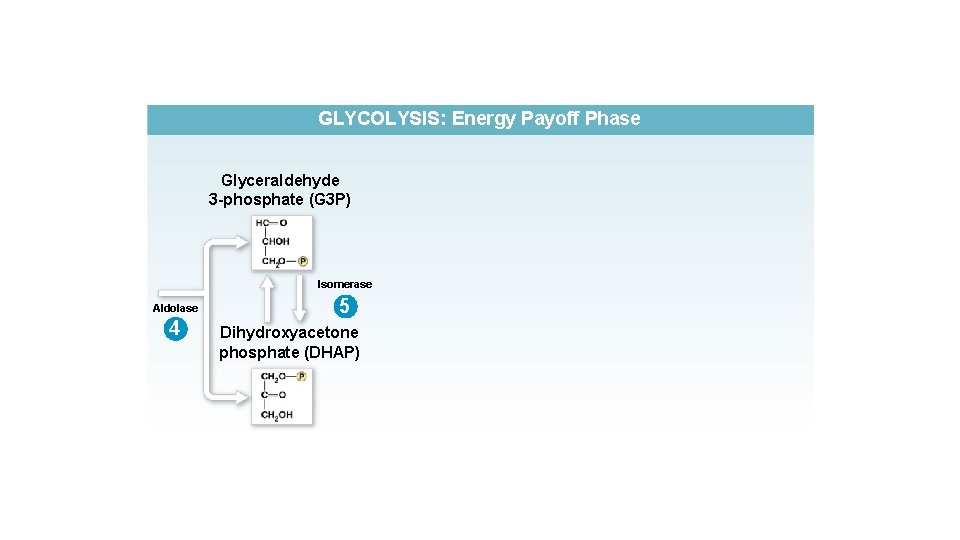
GLYCOLYSIS: Energy Payoff Phase Glyceraldehyde 3 -phosphate (G 3 P) Isomerase Aldolase 4 5 Dihydroxyacetone phosphate (DHAP)
GLYCOLYSIS: Energy Payoff Phase Glyceraldehyde 3 -phosphate (G 3 P) Aldolase 4 2 NADH 2 NAD+ 2 H+ 2 Isomerase Triose phosphate 2 dehydrogenase 5 6 Dihydroxyacetone phosphate (DHAP) 1, 3 -Bisphoglycerate
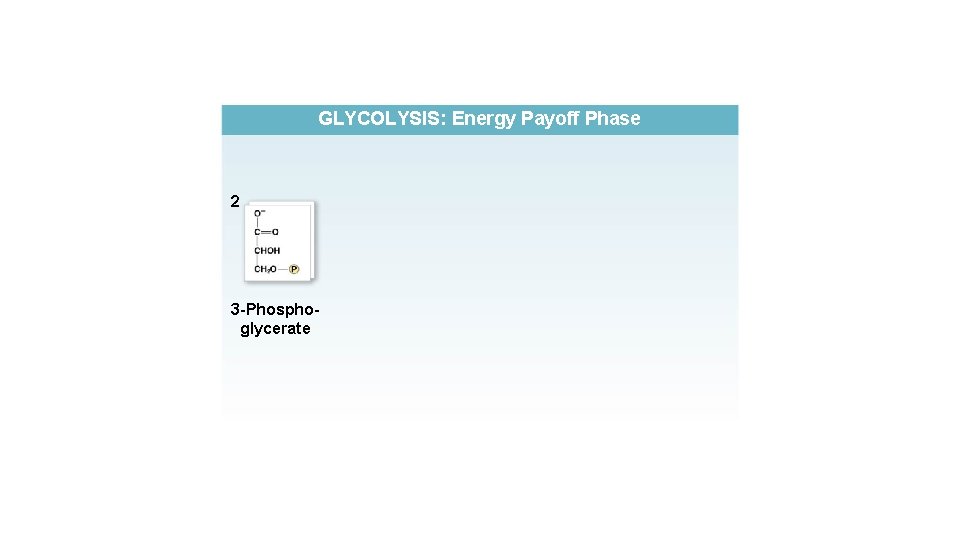
GLYCOLYSIS: Energy Payoff Phase 2 3 -Phosphoglycerate
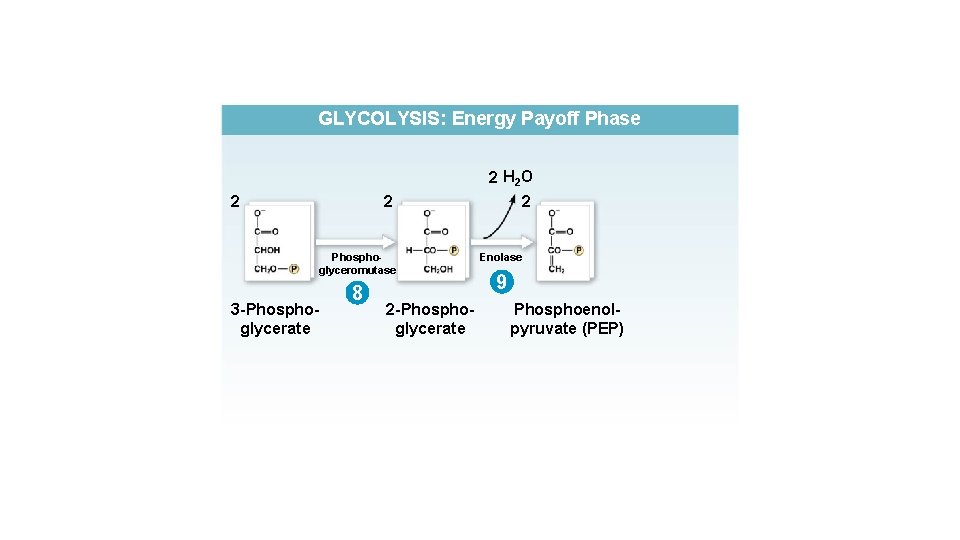
GLYCOLYSIS: Energy Payoff Phase 2 2 Phosphoglyceromutase 3 -Phosphoglycerate 8 2 -Phosphoglycerate 2 H 2 O 2 Enolase 9 Phosphoenolpyruvate (PEP)
GLYCOLYSIS: Energy Payoff Phase 2 2 Phosphoglyceromutase 3 -Phosphoglycerate 8 2 -Phosphoglycerate 2 H 2 O 2 Enolase 9 2 ATP 2 ADP 2 Pyruvate kinase 10 Phosphoenolpyruvate (PEP) Pyruvate
Energy Investment Phase This is the take-home message of glycolysis Glucose 2 ATP used 2 ADP + 2 P Energy Payoff Phase 4 ADP + 4 P 2 NAD+ + 4 e− + 4 H+ 4 ATP formed 2 NADH + 2 H+ 2 Pyruvate + 2 H 2 O Net Glucose 4 ATP formed − 2 ATP used 2 NAD+ + 4 e− + 4 H+ 2 Pyruvate + 2 H 2 O 2 ATP 2 NADH + 2 H+ What came in? What went out? What was the point? (is ATP the main payoff here?
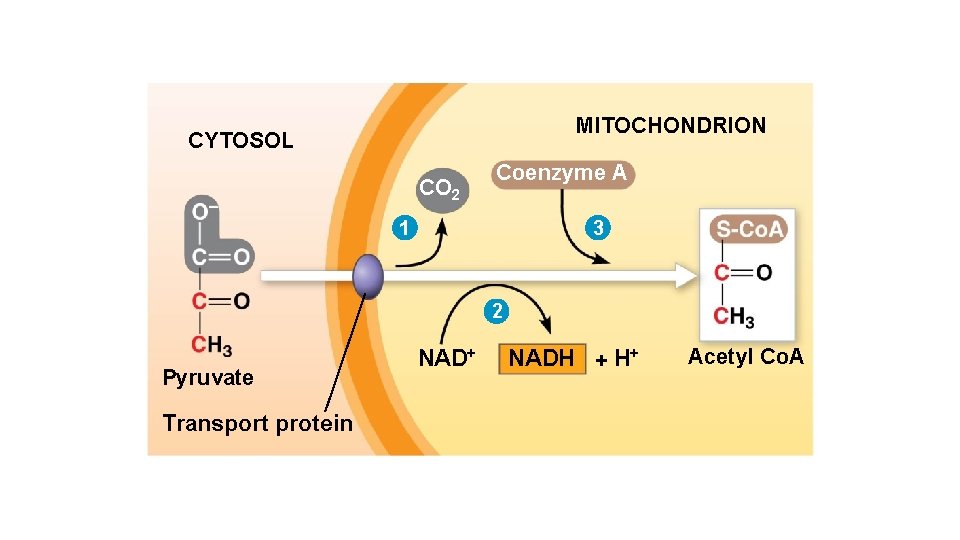
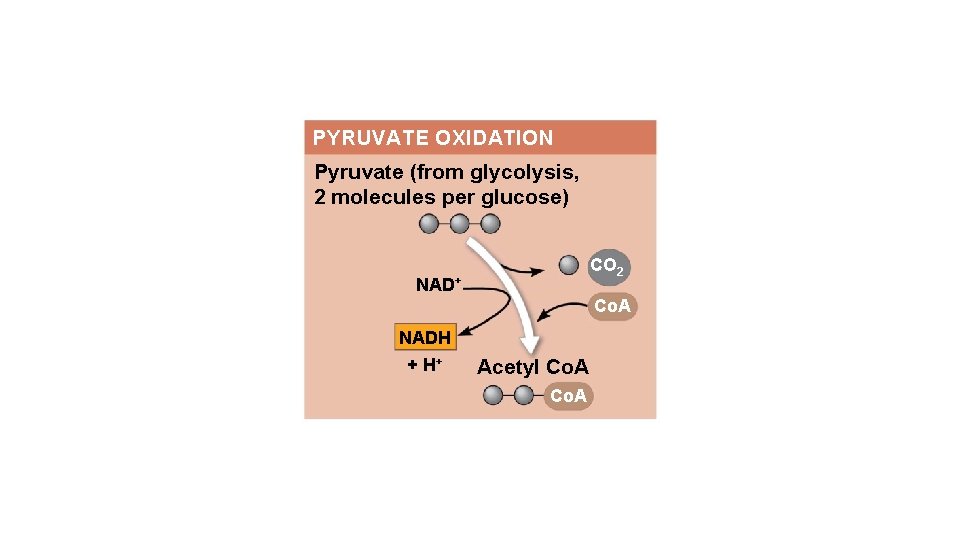
• In the presence of O 2, pyruvate enters the mitochondrion (in eukaryotic cells) where the oxidation of glucose is completed • Before the citric acid cycle can begin, pyruvate must be converted to acetyl Coenzyme A (acetyl Co. A), which links glycolysis to the citric acid cycle • This step is carried out by a multi-enzyme complex that catalyzes three reactions
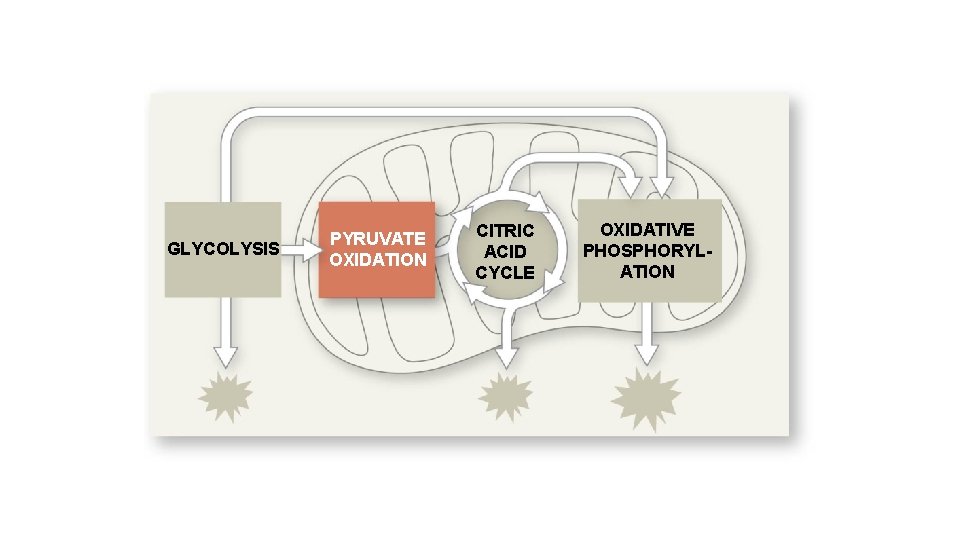
GLYCOLYSIS PYRUVATE OXIDATION CITRIC ACID CYCLE OXIDATIVE PHOSPHORYLATION
MITOCHONDRION CYTOSOL CO 2 Coenzyme A 3 1 2 Pyruvate Transport protein NAD+ NADH + H+ Acetyl Co. A
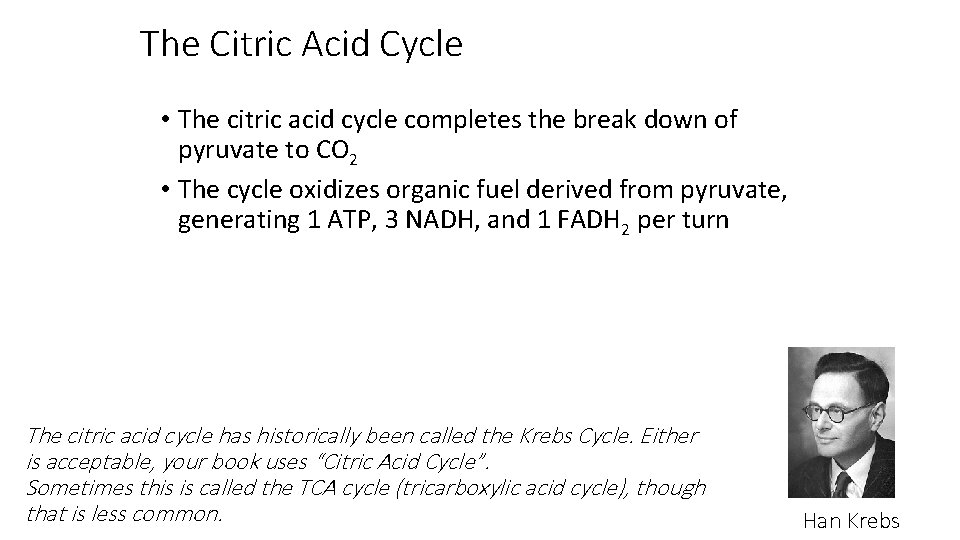
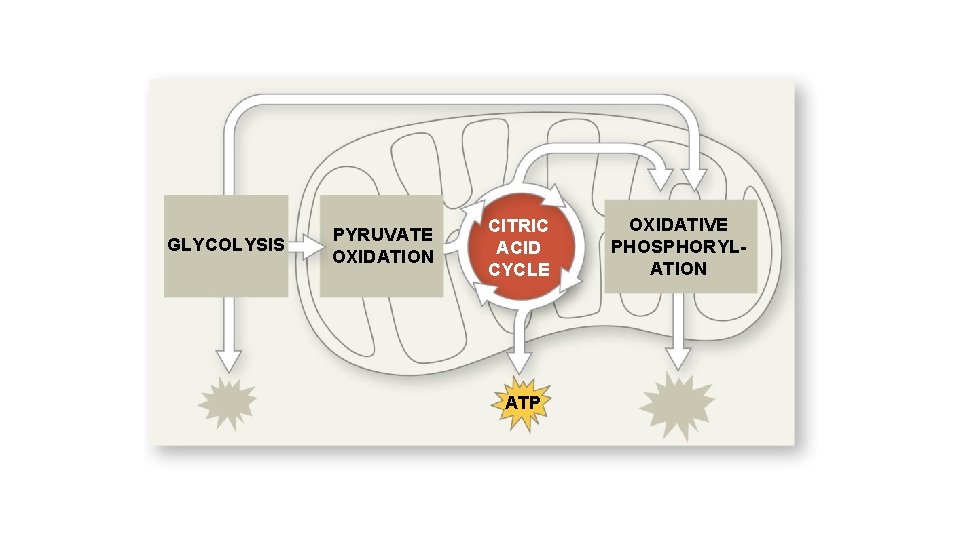
The Citric Acid Cycle • The citric acid cycle completes the break down of pyruvate to CO 2 • The cycle oxidizes organic fuel derived from pyruvate, generating 1 ATP, 3 NADH, and 1 FADH 2 per turn The citric acid cycle has historically been called the Krebs Cycle. Either is acceptable, your book uses “Citric Acid Cycle”. Sometimes this is called the TCA cycle (tricarboxylic acid cycle), though that is less common. Han Krebs
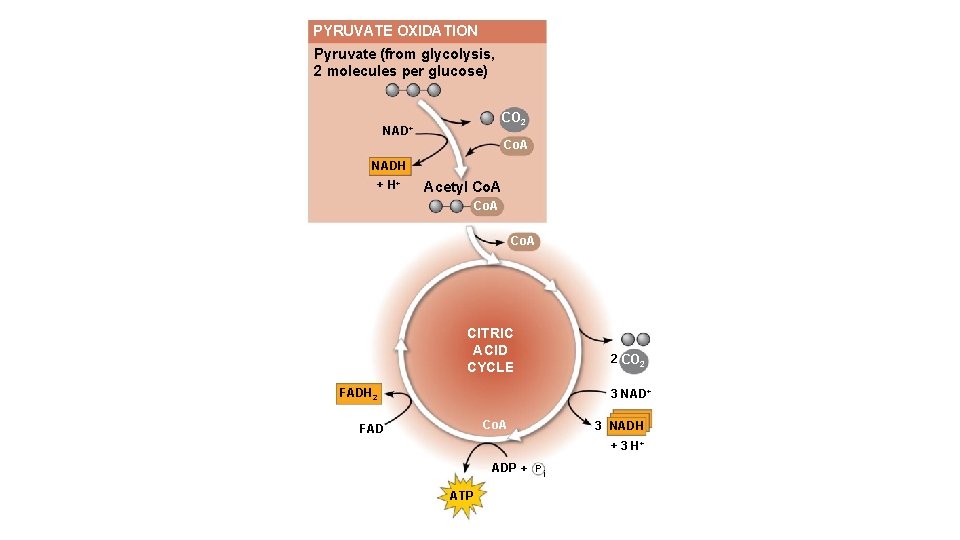
PYRUVATE OXIDATION Pyruvate (from glycolysis, 2 molecules per glucose) CO 2 NAD+ Co. A NADH + H+ Acetyl Co. A CITRIC ACID CYCLE FADH 2 2 CO 2 3 NAD+ Co. A FAD 3 NADH + 3 H+ ADP + P i ATP
PYRUVATE OXIDATION Pyruvate (from glycolysis, 2 molecules per glucose) CO 2 NAD+ Co. A NADH + H+ Acetyl Co. A
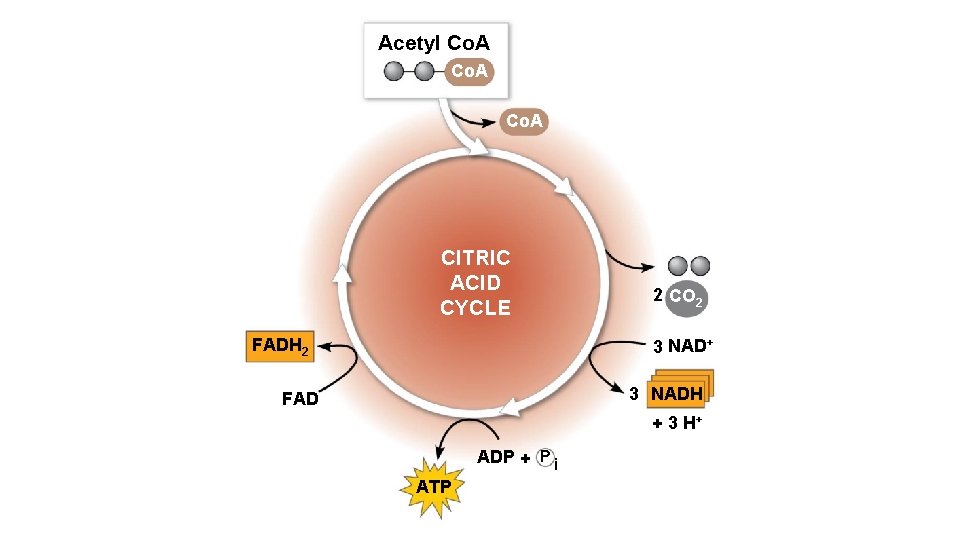
Acetyl Co. A CITRIC ACID CYCLE FADH 2 2 CO 2 3 NAD+ 3 NADH FAD + 3 H+ ADP + P i ATP
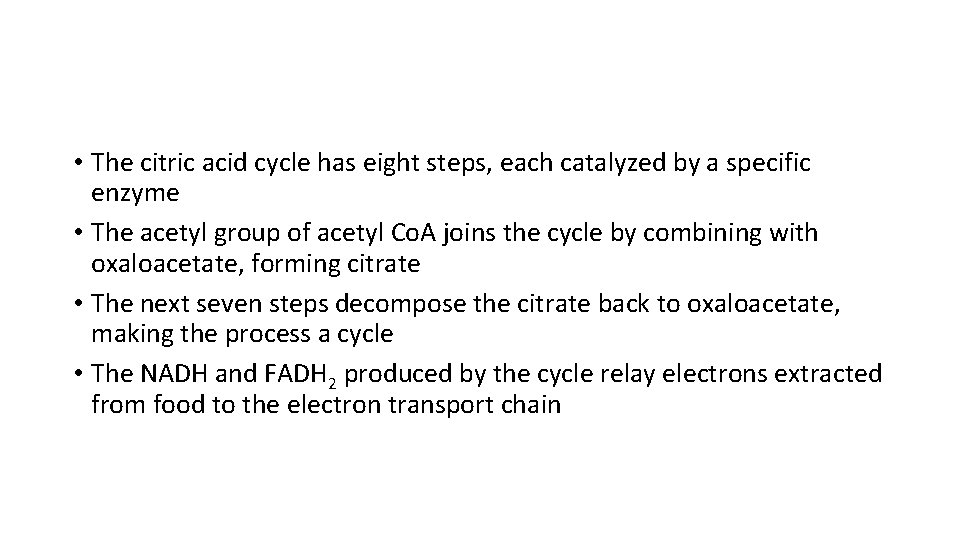
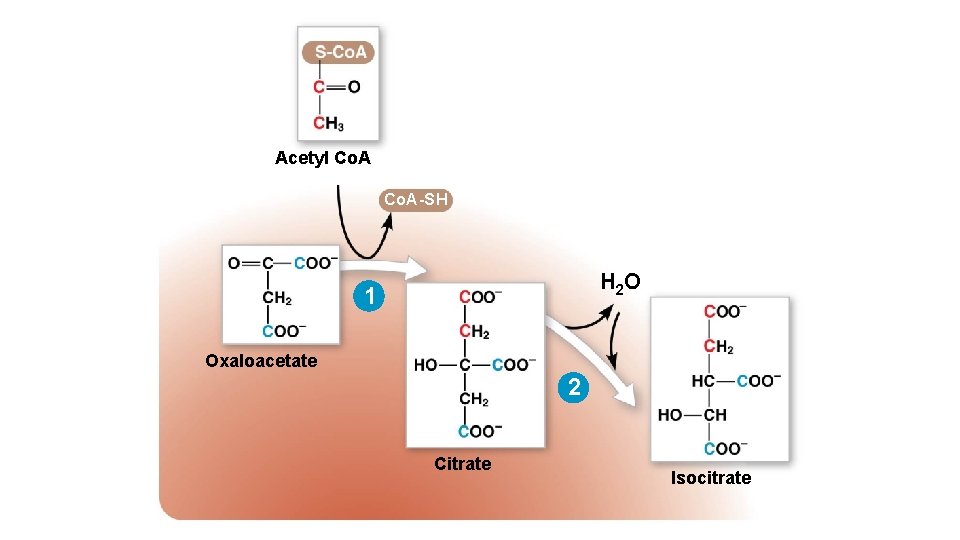
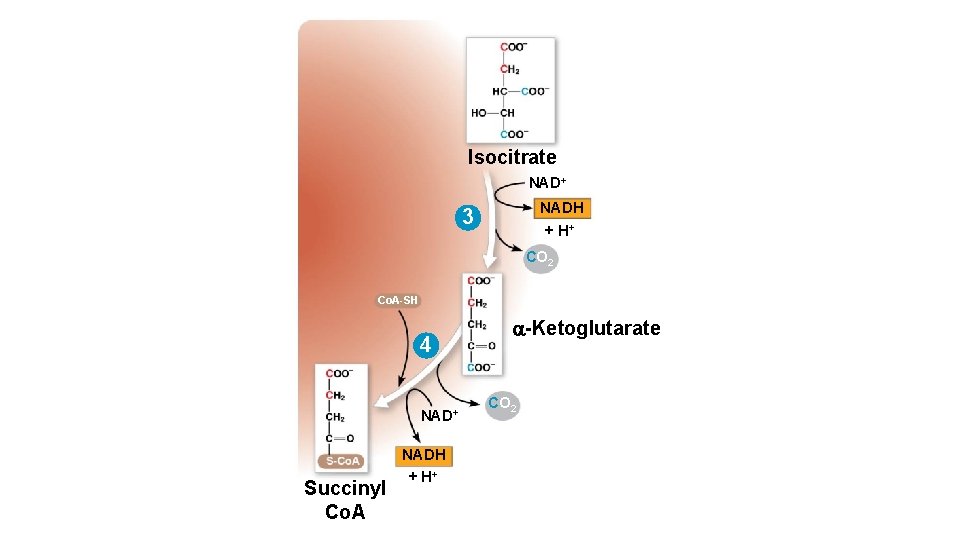
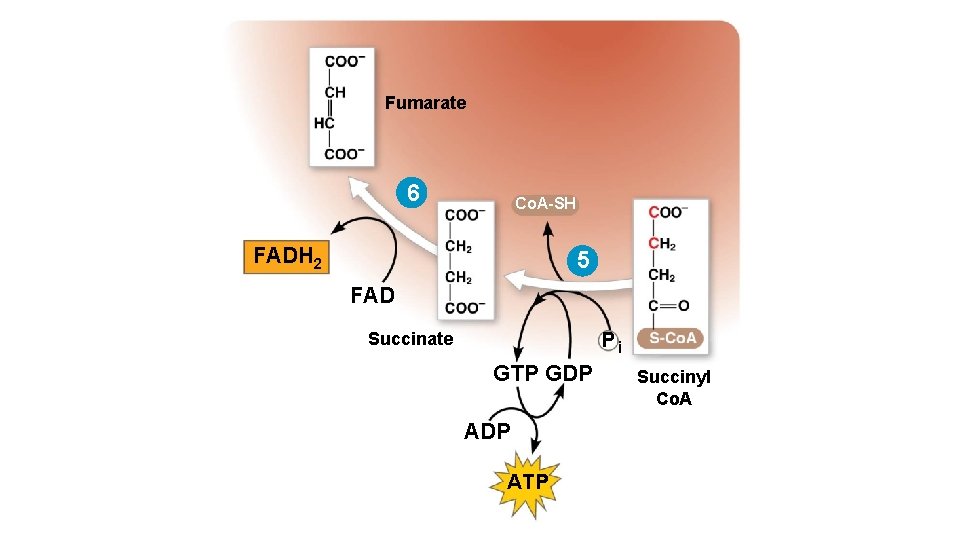
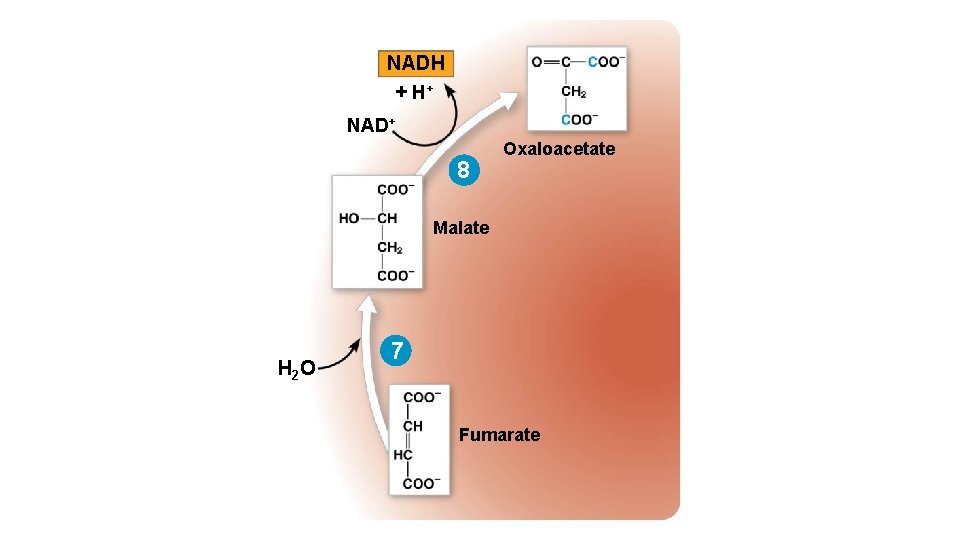
• The citric acid cycle has eight steps, each catalyzed by a specific enzyme • The acetyl group of acetyl Co. A joins the cycle by combining with oxaloacetate, forming citrate • The next seven steps decompose the citrate back to oxaloacetate, making the process a cycle • The NADH and FADH 2 produced by the cycle relay electrons extracted from food to the electron transport chain
GLYCOLYSIS PYRUVATE OXIDATION CITRIC ACID CYCLE ATP OXIDATIVE PHOSPHORYLATION
Acetyl Co. A-SH H 2 O 1 Oxaloacetate 2 Citrate Isocitrate
Isocitrate NAD+ NADH + H+ 3 CO 2 Co. A-SH 4 NAD+ Succinyl Co. A NADH + H+ -Ketoglutarate CO 2
Fumarate 6 Co. A-SH FADH 2 5 FAD Pi Succinate GTP GDP ATP Succinyl Co. A
NADH + H+ NAD+ 8 Oxaloacetate Malate H 2 O 7 Fumarate
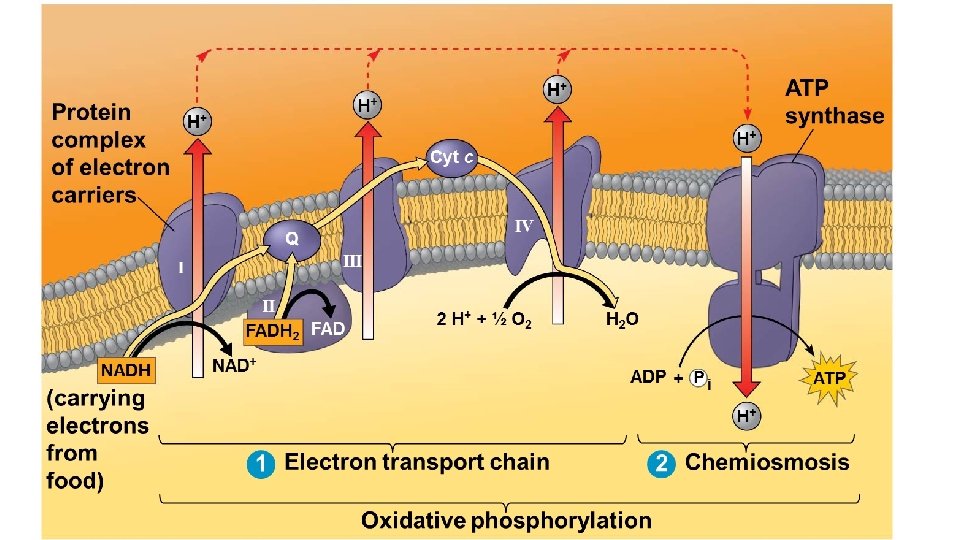
During oxidative phosphorylation, chemiosmosis couples electron transport to ATP synthesis • Following glycolysis and the citric acid cycle, NADH and FADH 2 account for most of the energy extracted from food • These two electron carriers donate electrons to the electron transport chain, which powers ATP synthesis via oxidative phosphorylation
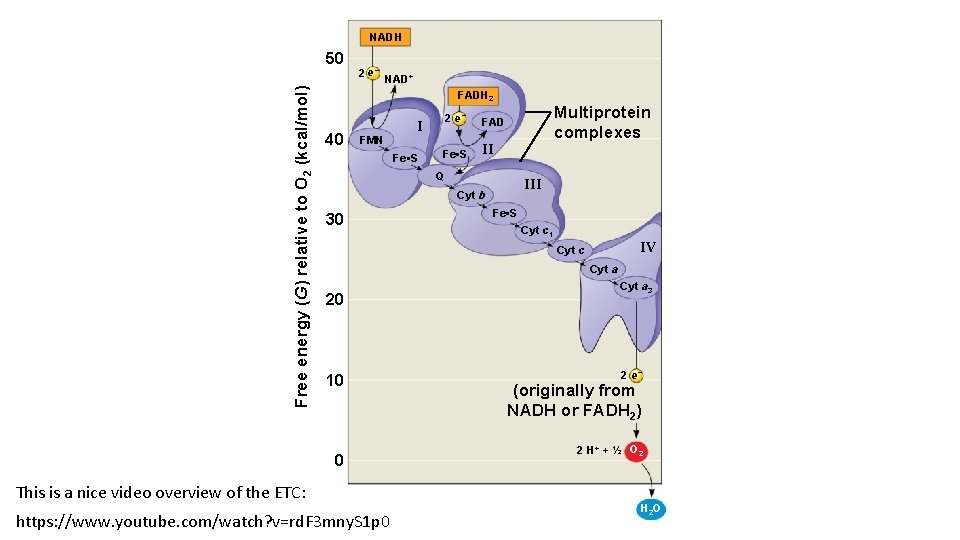
The Pathway of Electron Transport • The electron transport chain is in the inner membrane (cristae) of the mitochondrion • Most of the chain’s components are proteins, which exist in multiprotein complexes • The carriers alternate reduced and oxidized states as they accept and donate electrons • Electrons drop in free energy as they go down the chain and are finally passed to O 2, forming H 2 O
GLYCOLYSIS PYRUVATE OXIDATION CITRIC ACID CYCLE OXIDATIVE PHOSPHORYLATION ATP
NADH Free energy (G) relative to O 2 (kcal/mol) 50 2 e− NAD+ FADH 2 40 FMN 2 e− FAD Fe • S II I Fe • S Multiprotein complexes Q III Cyt b 30 Fe • S Cyt c 1 IV Cyt c Cyt a 20 10 0 This is a nice video overview of the ETC: https: //www. youtube. com/watch? v=rd. F 3 mny. S 1 p 0 Cyt a 3 2 e− (originally from NADH or FADH 2) 2 H+ + ½ O 2 H 2 O
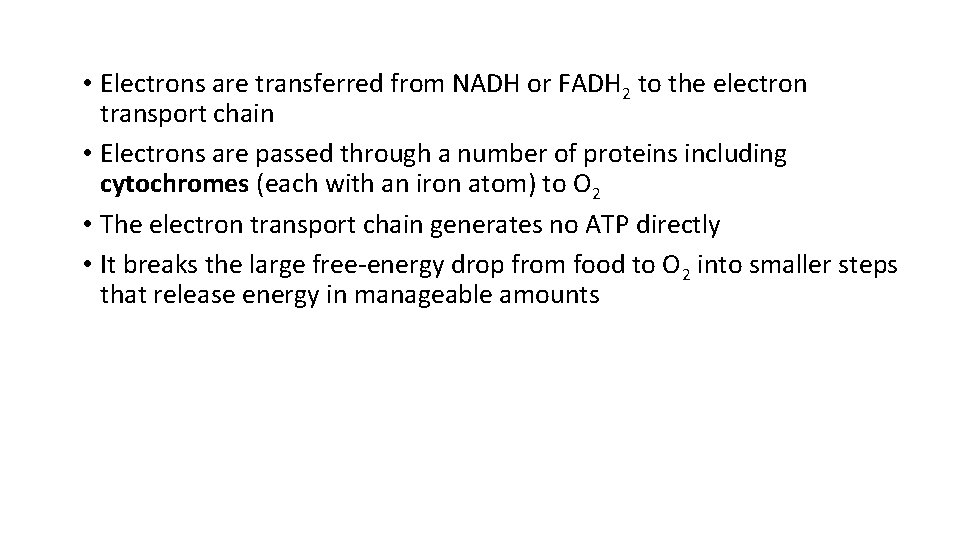
• Electrons are transferred from NADH or FADH 2 to the electron transport chain • Electrons are passed through a number of proteins including cytochromes (each with an iron atom) to O 2 • The electron transport chain generates no ATP directly • It breaks the large free-energy drop from food to O 2 into smaller steps that release energy in manageable amounts
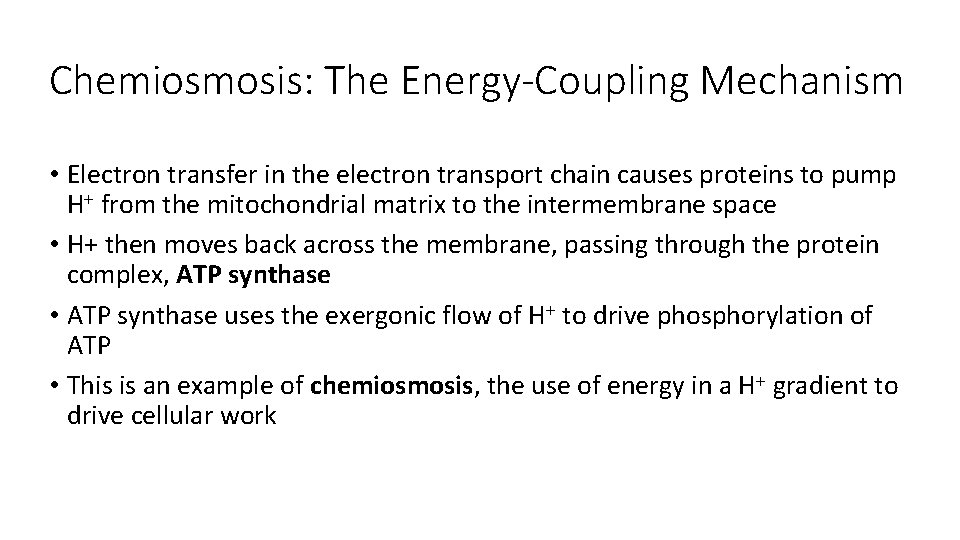
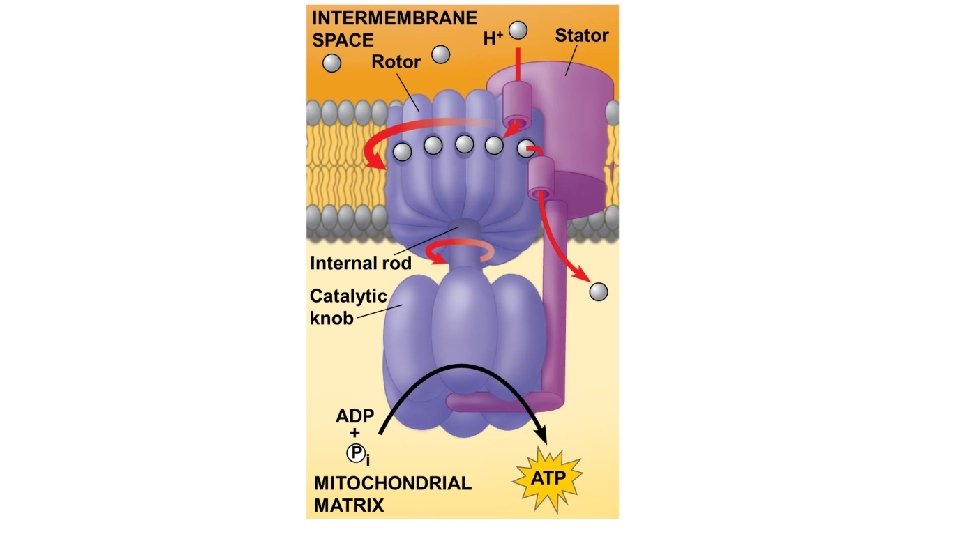
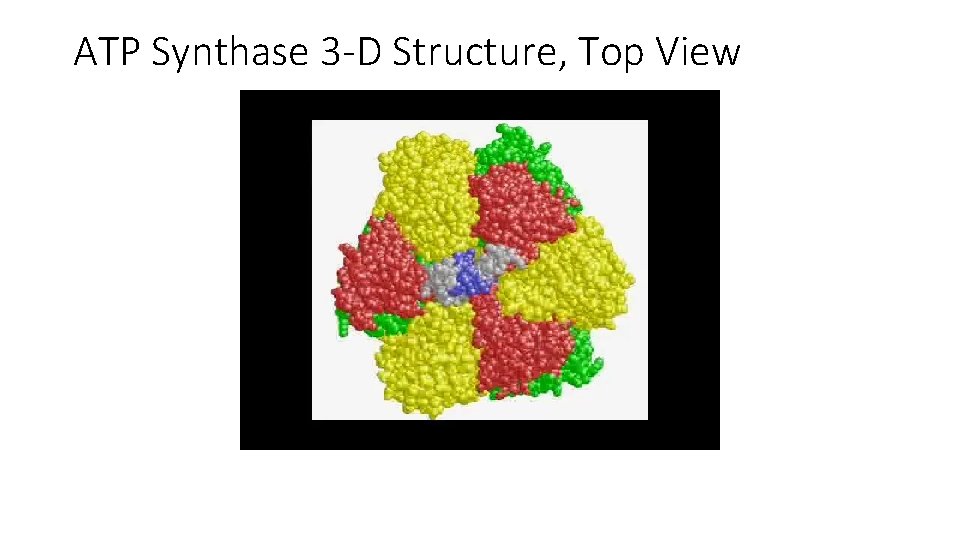
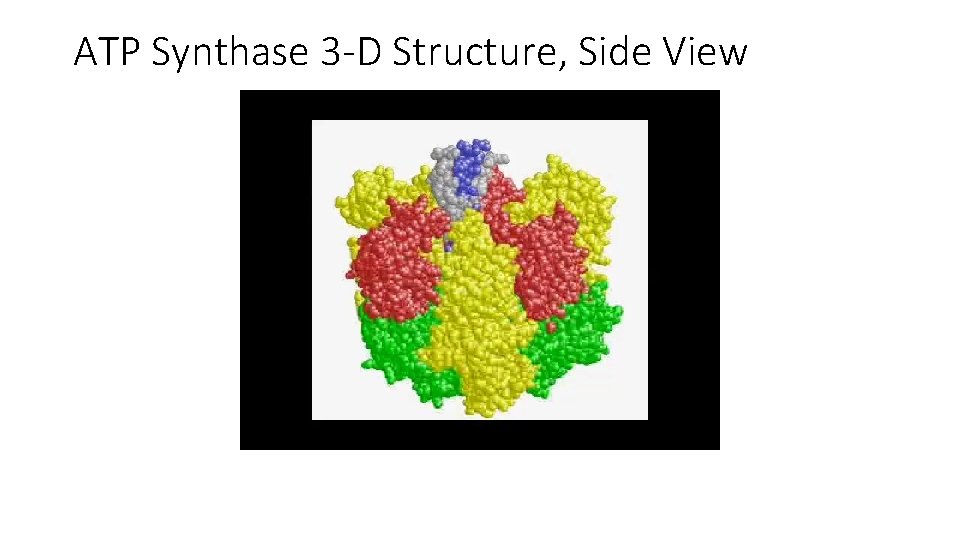
Chemiosmosis: The Energy-Coupling Mechanism • Electron transfer in the electron transport chain causes proteins to pump H+ from the mitochondrial matrix to the intermembrane space • H+ then moves back across the membrane, passing through the protein complex, ATP synthase • ATP synthase uses the exergonic flow of H+ to drive phosphorylation of ATP • This is an example of chemiosmosis, the use of energy in a H+ gradient to drive cellular work
ATP Synthase 3 -D Structure, Top View
ATP Synthase 3 -D Structure, Side View
• The energy stored in a H+ gradient across a membrane couples the redox reactions of the electron transport chain to ATP synthesis • The H+ gradient is referred to as a proton-motive force, emphasizing its capacity to do work
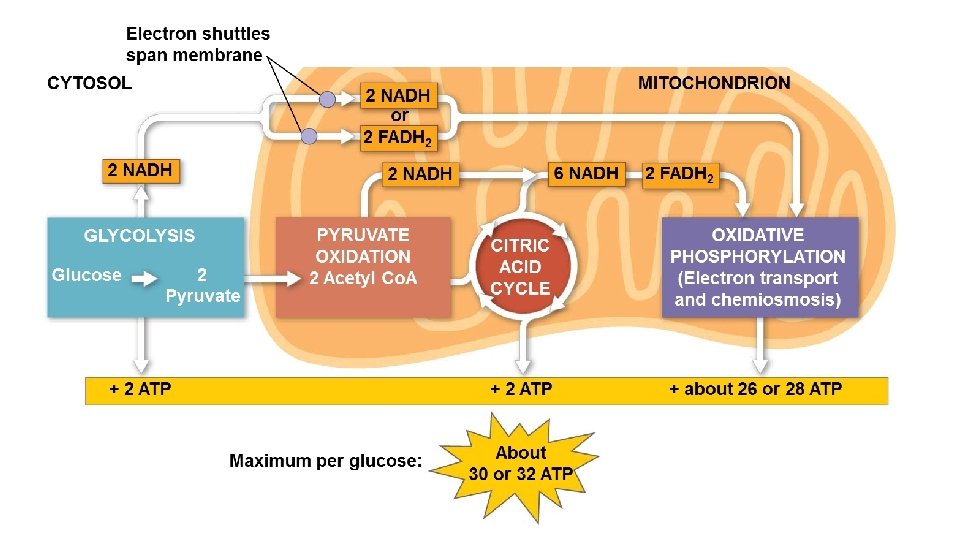
An Accounting of ATP Production by Cellular Respiration • During cellular respiration, most energy flows in this sequence: glucose → NADH → electron transport chain → proton-motive force → ATP • About 34% of the energy in a glucose molecule is transferred to ATP during cellular respiration, making about 32 ATP • There are several reasons why the number of ATP is not known exactly
Things to think about: • What happens during glycolysis? What goes in, what comes out, why is this important, where does this happen? • What happens during pyruvate oxidation? What goes in, what comes out, why is this important, where does this happen? • What happens during the citric acid cycle? What goes in, what comes out, why is this important, where does this happen?