
To what extent were womens lives already changing

- Slides: 27
To what extent were women's lives already changing before World War One? Key Stage 4: History Learning Aims and Outcomes • Students will use primary evidence to help in their understanding of women's lives in the period leading up to WW 1 • Students will be able to demonstrate skills in assessing and using primary evidence, such as the creation of criteria • Students will have a more secure basis on which to judge the effects of WW 1 and the suffrage movement on women's lives Relates to: OCR B - Britain in Peace and War, 1900– 1918 - Women This Power. Point relates to the Teaching Activity: To what extent were women’s lives already changing before WW 1?
Background • Women's lives were different after World War One - one important change being that they were allowed to vote. • But when did women's lives begin to change? Were they already changing before the war? • In order to answer this question we will look at evidence to help us build up a better picture of how women from different social backgrounds lived in the period leading up to it - the late Victorian and Edwardian periods (1880 s - 1914).
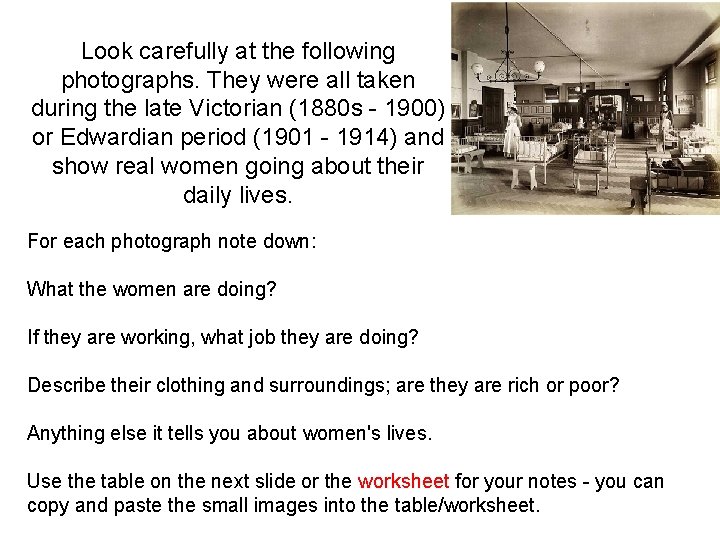
Look carefully at the following photographs. They were all taken during the late Victorian (1880 s - 1900) or Edwardian period (1901 - 1914) and show real women going about their daily lives. For each photograph note down: What the women are doing? If they are working, what job they are doing? Describe their clothing and surroundings; are they are rich or poor? Anything else it tells you about women's lives. Use the table on the next slide or the worksheet for your notes - you can copy and paste the small images into the table/worksheet.
Image Description Job Rich or Poor More
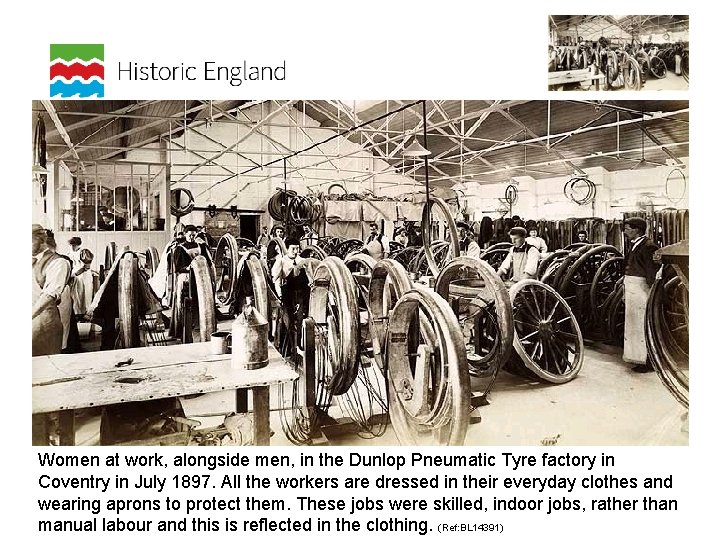
Women at work, alongside men, in the Dunlop Pneumatic Tyre factory in Coventry in July 1897. All the workers are dressed in their everyday clothes and wearing aprons to protect them. These jobs were skilled, indoor jobs, rather than manual labour and this is reflected in the clothing. (Ref: BL 14391)
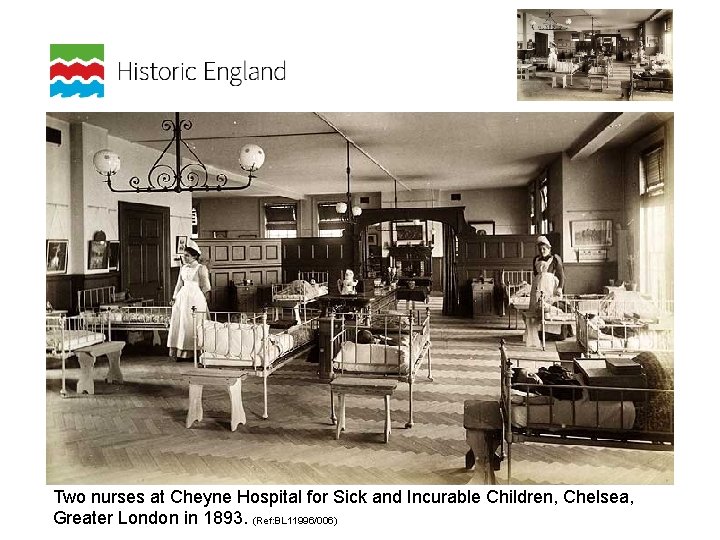
Two nurses at Cheyne Hospital for Sick and Incurable Children, Chelsea, Greater London in 1893. (Ref: BL 11996/006)
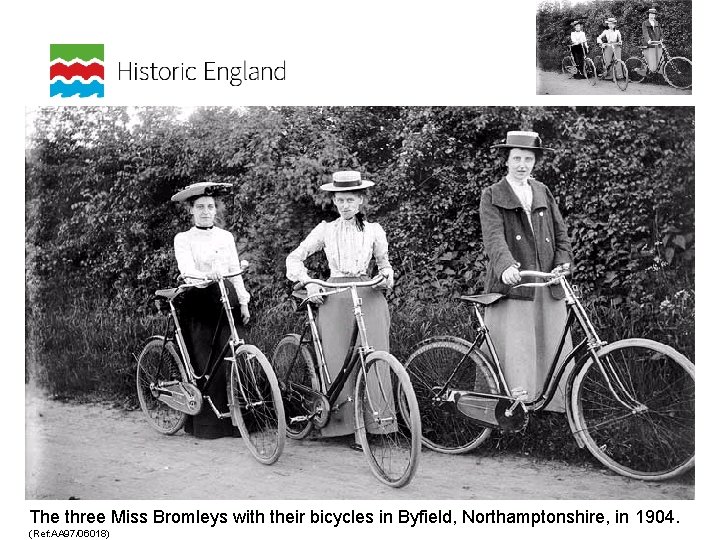
The three Miss Bromleys with their bicycles in Byfield, Northamptonshire, in 1904. (Ref: AA 97/06018)
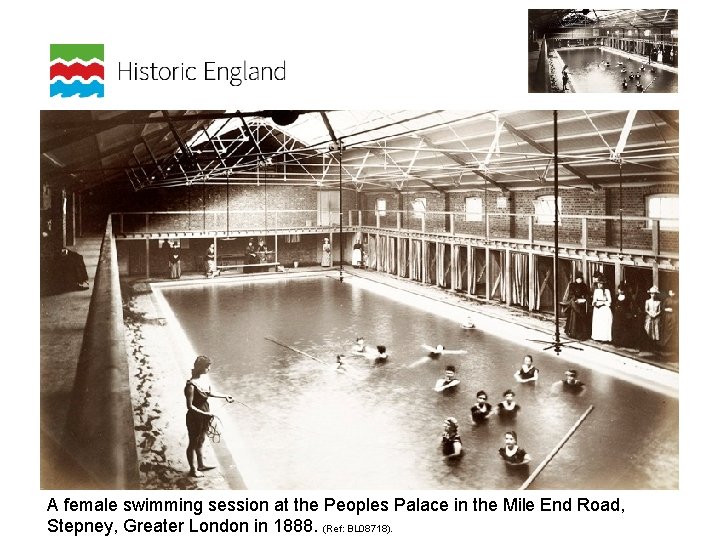
A female swimming session at the Peoples Palace in the Mile End Road, Stepney, Greater London in 1888. (Ref: BL 08718).
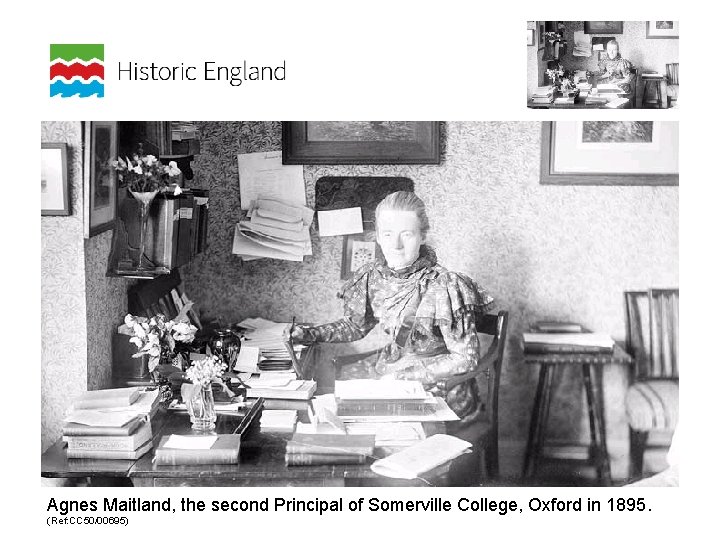
Agnes Maitland, the second Principal of Somerville College, Oxford in 1895. (Ref: CC 50/00695)
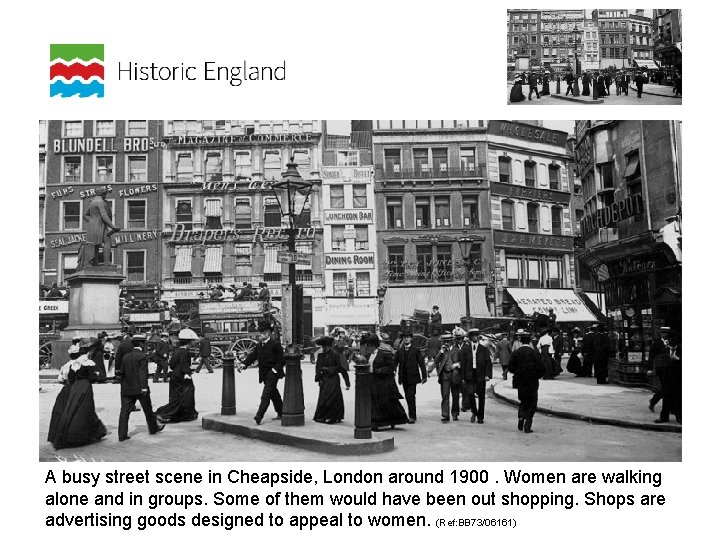
A busy street scene in Cheapside, London around 1900. Women are walking alone and in groups. Some of them would have been out shopping. Shops are advertising goods designed to appeal to women. (Ref: BB 73/06161)
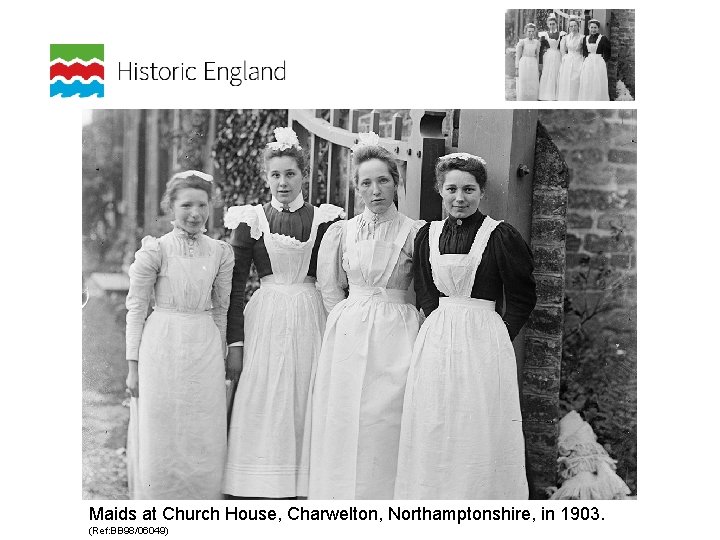
Maids at Church House, Charwelton, Northamptonshire, in 1903. (Ref: BB 98/06049)
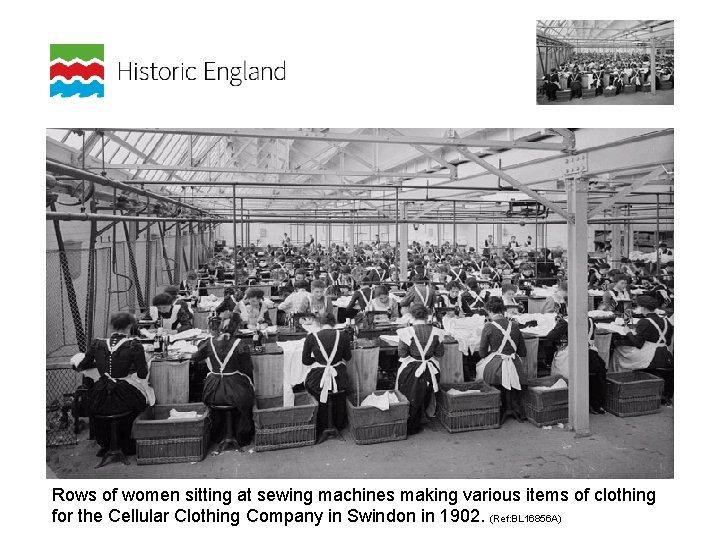
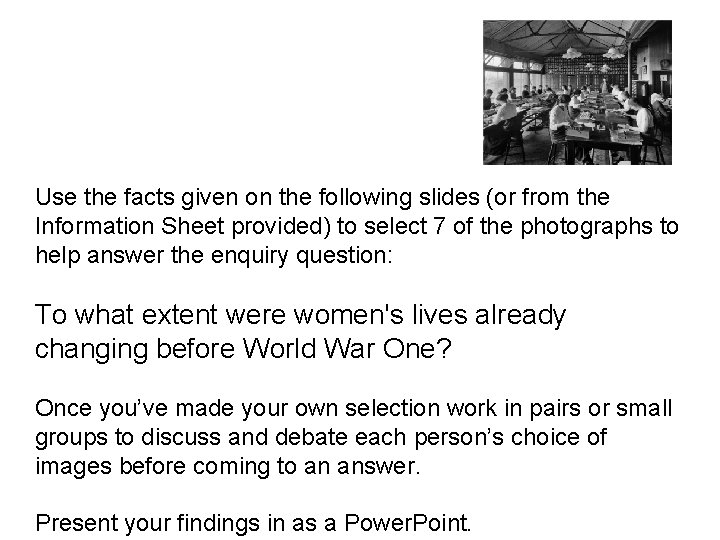
Rows of women sitting at sewing machines making various items of clothing for the Cellular Clothing Company in Swindon in 1902. (Ref: BL 16856 A)
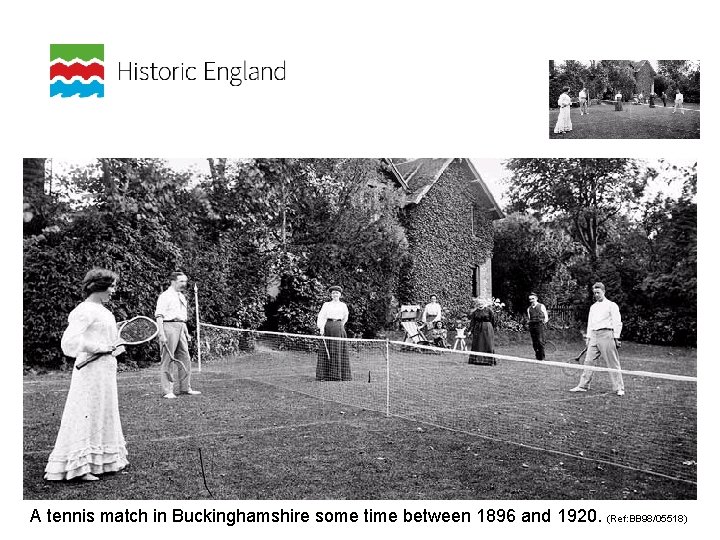
A tennis match in Buckinghamshire some time between 1896 and 1920. (Ref: BB 98/05518)
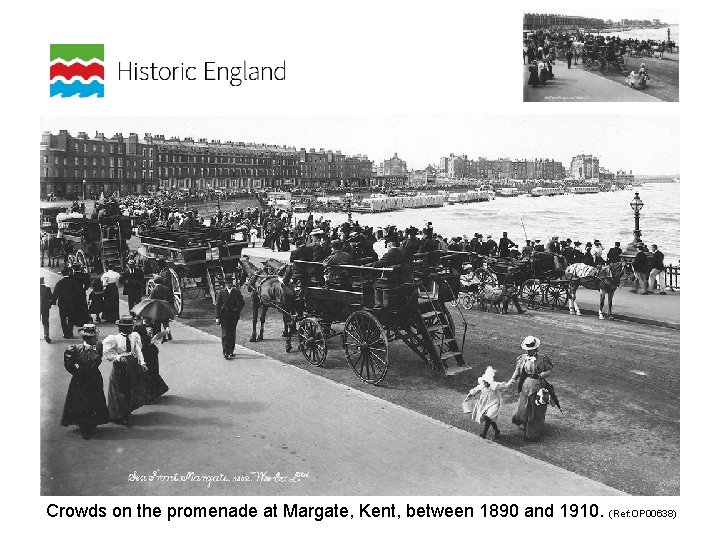
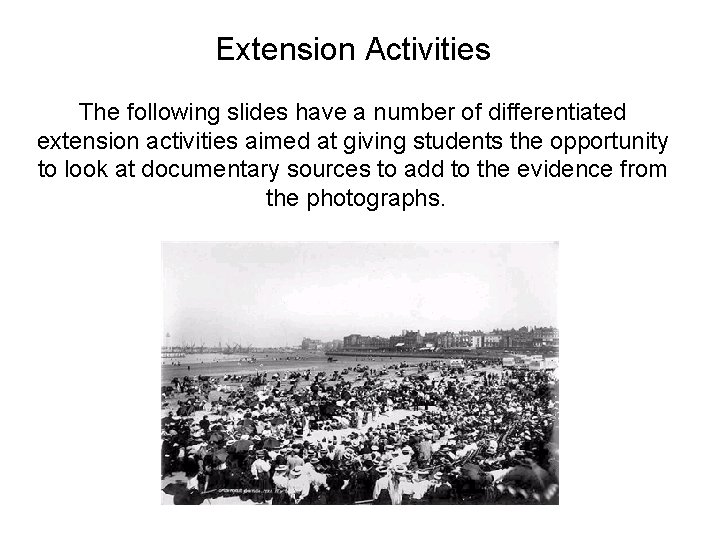
Crowds on the promenade at Margate, Kent, between 1890 and 1910. (Ref: OP 00638)
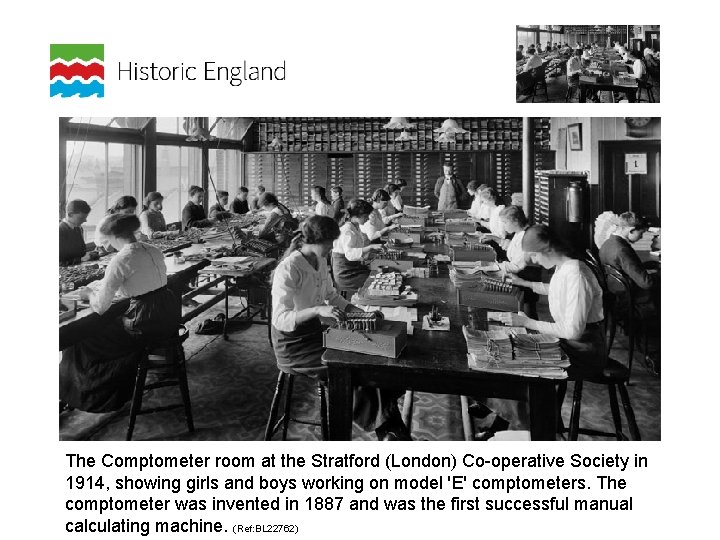
The Comptometer room at the Stratford (London) Co-operative Society in 1914, showing girls and boys working on model 'E' comptometers. The comptometer was invented in 1887 and was the first successful manual calculating machine. (Ref: BL 22762)
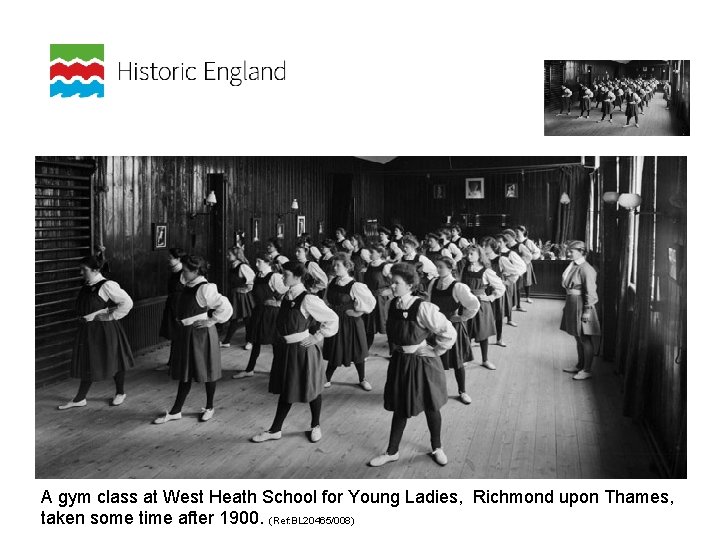
A gym class at West Heath School for Young Ladies, Richmond upon Thames, taken some time after 1900. (Ref: BL 20465/008)
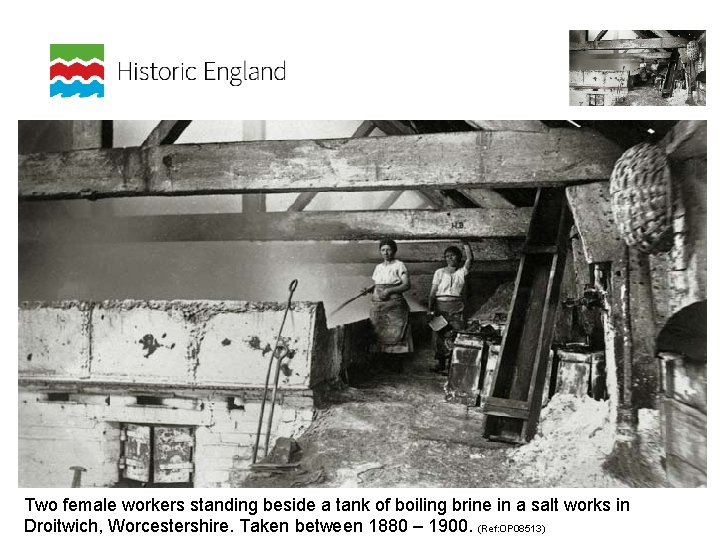
Two female workers standing beside a tank of boiling brine in a salt works in Droitwich, Worcestershire. Taken between 1880 – 1900. (Ref: OP 08513)
Use the facts given on the following slides (or from the Information Sheet provided) to select 7 of the photographs to help answer the enquiry question: To what extent were women's lives already changing before World War One? Once you’ve made your own selection work in pairs or small groups to discuss and debate each person’s choice of images before coming to an answer. Present your findings in as a Power. Point.
Additional Information • New jobs opened up for middle and working class women - often as a result of new technology. Examples include; jobs as machinists making clothes, office jobs such as comptometer operators, photographic processors, typists and working on telephone switchboards. • The development of department stores, aimed at women, led to middle class women going out to shop instead of ordering from catalogues. Girls and women got jobs as shop assistants and some began to live away from home in hostels, often provided by the stores. Hostels built specifically for low-waged single working women emerged from 1900. In 1910 there were about 60 lodging houses for lower-middle and middle class working women in London. • Teashops in London were 'an enormous move to freedom', providing cheap meals with female staff enabling 'respectable' women to use them. The first teashop opened in 1884 and there were over 50 shops by 1890. These were followed by the Lyons Tea Shop from 1894 and Lyons Corner Houses from 1909.
• Laws were passed to try and regulate women’s working conditions - the 1899 Seats for Shop Assistants Act prompted inventions for temporary seating for women shop assistants who worked an 80 hour week and were forced to stand all day – the act failed because there was no enforcement. In 1894 the drapery union called this work 'The Slavery of the Counter' • The 1895 Co-operative Women's Guild enquiry found female apprentice milliners (hat makers) and dressmakers under 18 in its 104 Co-operative Stores received no wages at all. • The 1909 Women's Industrial Council reported that women homeworkers such as London 'fancy blouse-makers' made only 5 s (25 p) a week after expenses. By comparison, Fabian Women's Group research showed men's weekly wages in Lambeth averaging from 18 s (90 p) to 30 s (£ 1. 50). • As early as 1855, a magazine called 'The Sempstress' carried an article on how rich young ladies could help working women by refusing to shop at any 'emporium' where 'one gets such delightful bargains' and asking why the goods were so cheap.
• Florence Nightingale set up the Nightingale Nurses Training School at St Thomas' Hospital, London SE 1 in 1860. • The 1911 census report records that in "all other occupations" (which includes domestic and other allied services, professional occupations, commercial clerks, and all manufacturing industries) the total females increased from 3, 817, 453 to 4, 258, 405, or by 11. 6 per cent (compared with 1901 – the previous census). It states ‘Probably a large part of the recorded increase for the unmarried represents a real extension of female employment’. • Women’s clothing changed from restricting crinolines to clothes that allowed them to take up sports and new pastimes such tennis or cycling • The Ladies' Lavatory Company opened its first public toilet for women near Oxford Circus, in 1884. • Women began to travel on public transport – some trains had carriages just for women.
• From 1880 all children had to go to school between the ages of 5 and 10. By 1900 97% of children could read and write. • By 1900 women were allowed to attend some universities and teacher training colleges. Additional useful weblinks: https: //historicengland. org. uk/research/inclusive-heritage/womens-history/ https: //historicengland. org. uk/research/inclusive-heritage/womenshistory/visible-in-stone/fashion-for-shopping/ http: //www. nationalarchives. gov. uk/pathways/census/living/making/women. htm http: //www. visionofbritain. org. uk/census/EW 1911 GEN/5
Extension Activities The following slides have a number of differentiated extension activities aimed at giving students the opportunity to look at documentary sources to add to the evidence from the photographs.
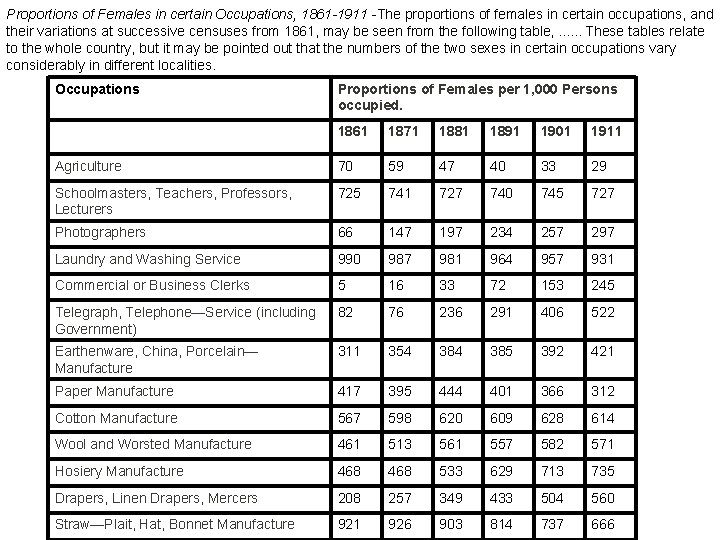
Extension Work 1 - Find out more from the census • Ask students to look at the table on the next slide. This shows changes in the proportions of women employed in a variety of occupations (the numbers are women as a proportion of all employed people over the age of 12, men and women, in that trade). The information was gathered in the censuses of 1861 - 1911. • The figures are taken from a larger table which is part of the 1911 census General report. The whole document, along with the reports from other census years can be found on the Vision of Britain website • Ask students what evidence can be drawn from the figures. Does any of this evidence confirm or challenge the evidence they drew from the photographs?
Proportions of Females in certain Occupations, 1861 -1911 -The proportions of females in certain occupations, and their variations at successive censuses from 1861, may be seen from the following table, . . . These tables relate to the whole country, but it may be pointed out that the numbers of the two sexes in certain occupations vary considerably in different localities. Occupations Proportions of Females per 1, 000 Persons occupied. 1861 1871 1881 1891 1901 1911 Agriculture 70 59 47 40 33 29 Schoolmasters, Teachers, Professors, Lecturers 725 741 727 740 745 727 Photographers 66 147 197 234 257 297 Laundry and Washing Service 990 987 981 964 957 931 Commercial or Business Clerks 5 16 33 72 153 245 Telegraph, Telephone—Service (including Government) 82 76 236 291 406 522 Earthenware, China, Porcelain— Manufacture 311 354 385 392 421 Paper Manufacture 417 395 444 401 366 312 Cotton Manufacture 567 598 620 609 628 614 Wool and Worsted Manufacture 461 513 561 557 582 571 Hosiery Manufacture 468 533 629 713 735 Drapers, Linen Drapers, Mercers 208 257 349 433 504 560 Straw—Plait, Hat, Bonnet Manufacture 921 926 903 814 737 666
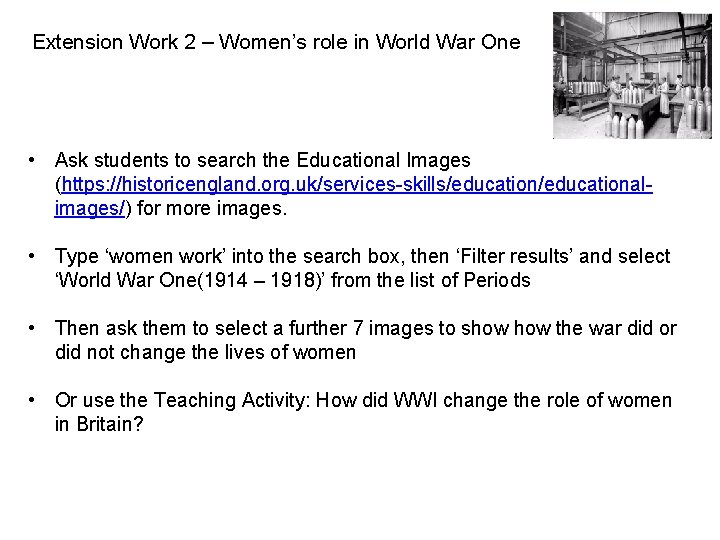
Extension Work 2 – Women’s role in World War One • Ask students to search the Educational Images (https: //historicengland. org. uk/services-skills/educationalimages/) for more images. • Type ‘women work’ into the search box, then ‘Filter results’ and select ‘World War One(1914 – 1918)’ from the list of Periods • Then ask them to select a further 7 images to show the war did or did not change the lives of women • Or use the Teaching Activity: How did WWI change the role of women in Britain?
Find more teaching resources at: Historic. England. org. uk/Education