
To understand identify the different purposes of texts


- Slides: 20
§ To understand identify the different purposes of texts. § To understand how the author’s point of view affects the text.
§ Did you know that everything you read has a purpose? § When an author writes something (book, magazine, textbook, newspaper article), he/she chooses his/her words for a purpose.
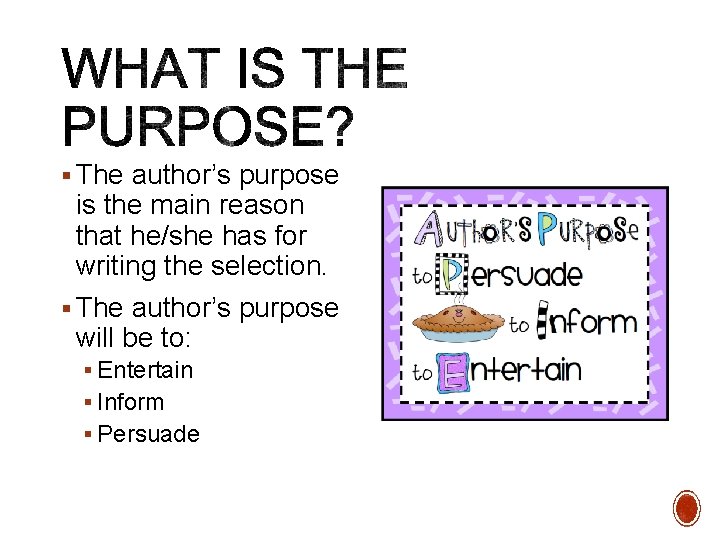
§ The author’s purpose is the main reason that he/she has for writing the selection. § The author’s purpose will be to: § Entertain § Inform § Persuade
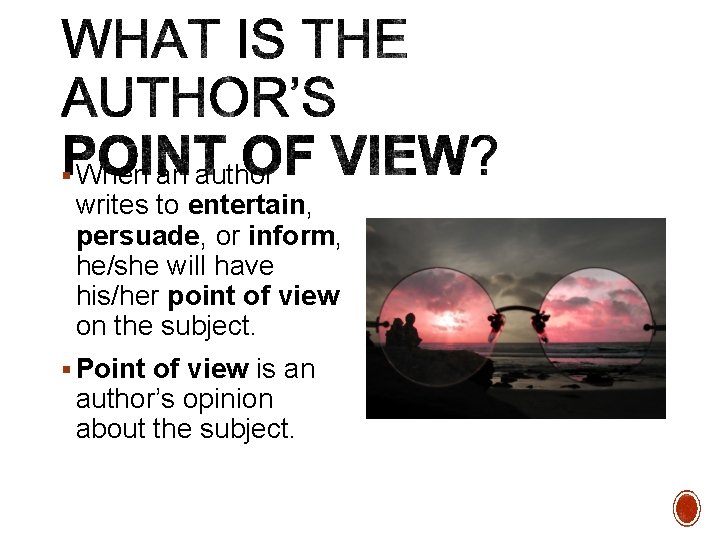
§ When an author writes to entertain, persuade, or inform, he/she will have his/her point of view on the subject. § Point of view is an author’s opinion about the subject.
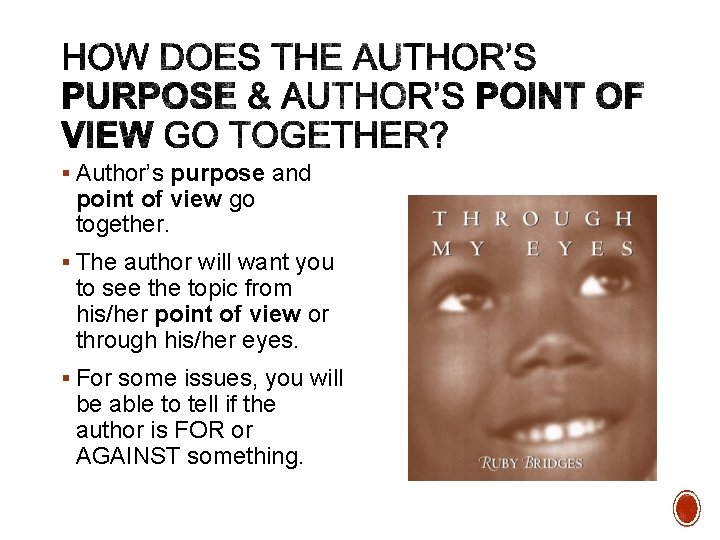
§ Author’s purpose and point of view go together. § The author will want you to see the topic from his/her point of view or through his/her eyes. § For some issues, you will be able to tell if the author is FOR or AGAINST something.
§ When you are able to recognize the author’s purpose, you will have a better understanding of the selection. § The purpose will determine how you read a selection.
§ Some selections will have two purposes. § For example, if an article is about eating healthy, it will try to persuade you to eat your vegetables as well as, inform you about the different types of food groups.
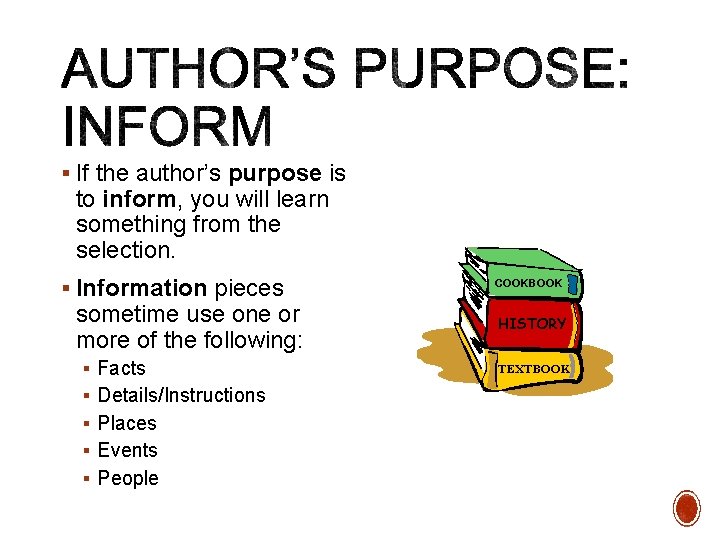
§ If the author’s purpose is to inform, you will learn something from the selection. § Information pieces sometime use one or more of the following: § Facts § Details/Instructions § Places § Events § People
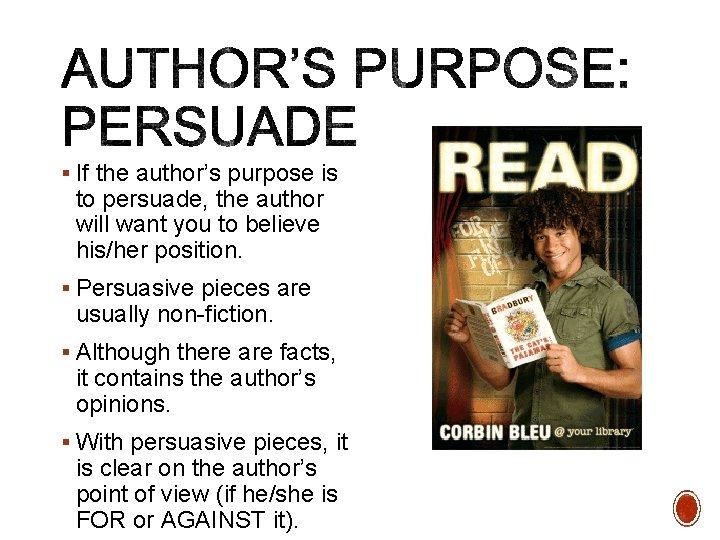
§ If the author’s purpose is to persuade, the author will want you to believe his/her position. § Persuasive pieces are usually non-fiction. § Although there are facts, it contains the author’s opinions. § With persuasive pieces, it is clear on the author’s point of view (if he/she is FOR or AGAINST it).
§ If the author’s purpose is to entertain, one goal may be to tell a story or to describe characters, places or events (real or imaginary). § Examples of entertaining texts include plays, poems, stories, jokes, or even comic strips.
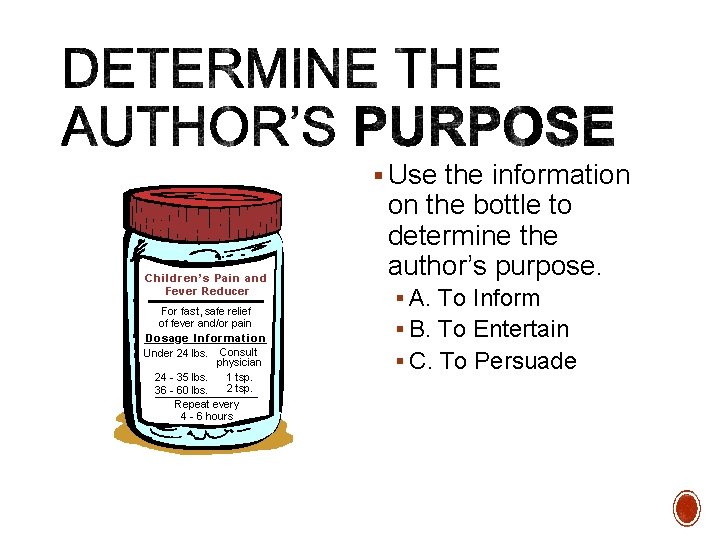
§ Use the information on the bottle to determine the author’s purpose. § A. To Inform § B. To Entertain § C. To Persuade
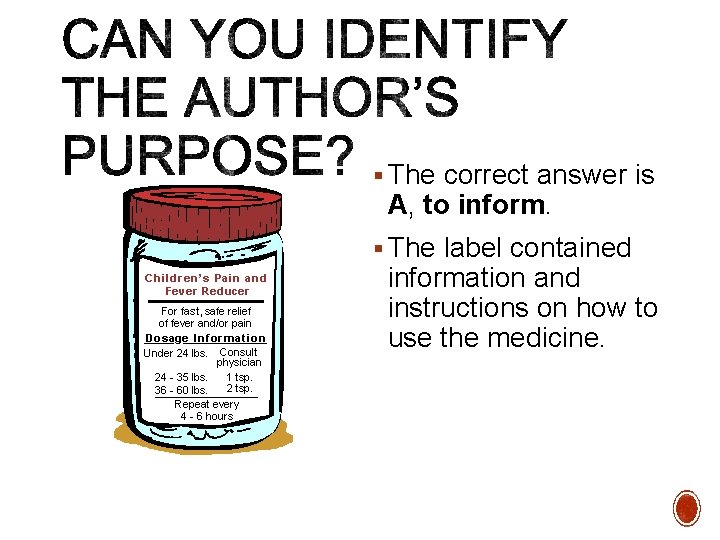
§ The correct answer is A, to inform. § The label contained information and instructions on how to use the medicine.
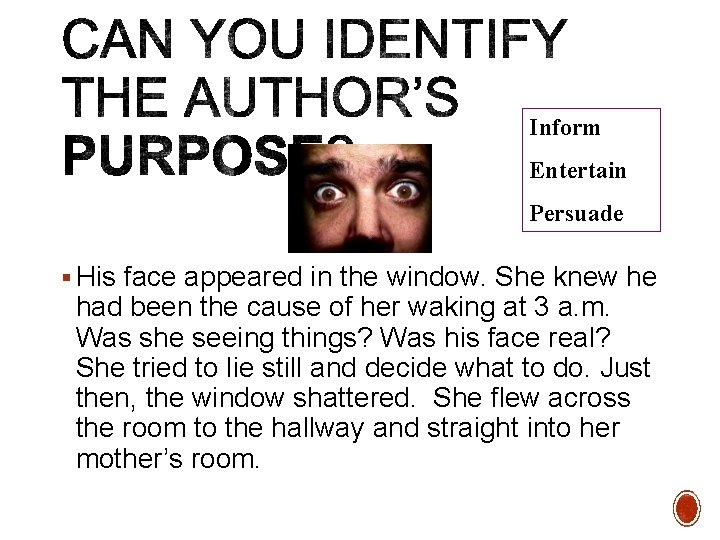
Inform Entertain Persuade § His face appeared in the window. She knew he had been the cause of her waking at 3 a. m. Was she seeing things? Was his face real? She tried to lie still and decide what to do. Just then, the window shattered. She flew across the room to the hallway and straight into her mother’s room.
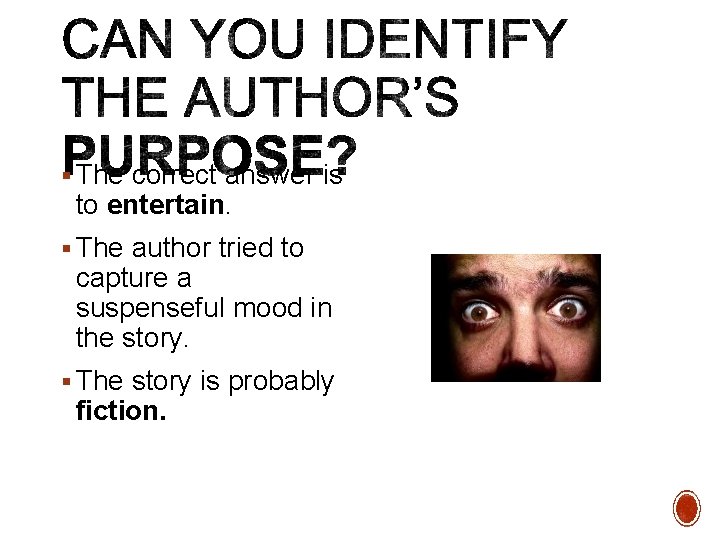
§ The correct answer is to entertain. § The author tried to capture a suspenseful mood in the story. § The story is probably fiction.
§ It is recommended that parents read to their children everyday, starting as early as six months of age. When you read with your children, you are starting them off in life as a life-long reader and learner. It is never too late to pick up a book and read; people in their eighties have learned how to read and discovered the pleasure of reading. Turn off the television and read a book!
§ You can tell the author wrote this passage to § A. Inform § B. Entertain § C. Persuade
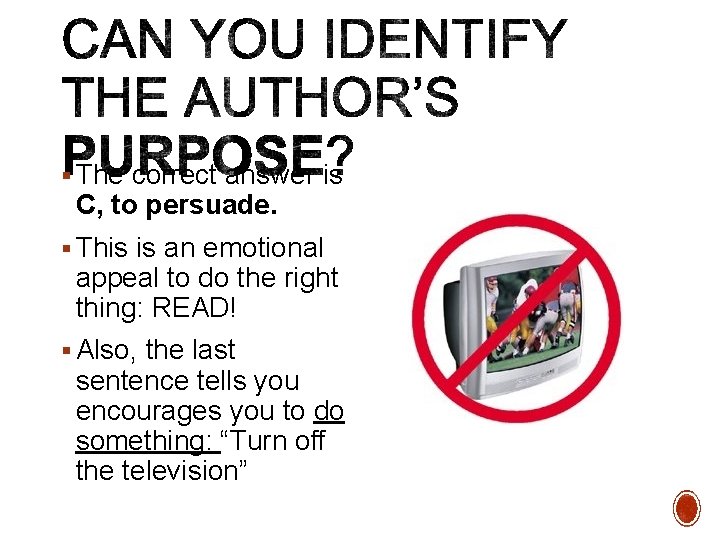
§ The correct answer is C, to persuade. § This is an emotional appeal to do the right thing: READ! § Also, the last sentence tells you encourages you to do something: “Turn off the television”
§ You will be put in groups of four and five. This group will be your team for this activity § We will watch a set of clips. You will need to decide what the author's purpose was for creating each clip § For every correct answer your team gets, you will earn one point. § The group with the most points will win a prize ��
§ https: //youtu. be/Tsd. RXDp. T 3 VQ