
to the Professional Development Session About Differentiating Instruction
to the Professional Development Session About Differentiating Instruction ©HIDOE - Differentiation, 2003 Differentiation Overview 1
not very - listen to the prompt - place yourself along the line/continuum (very comfortable – you can teach, name, design a lesson) (not very comfortable- you have questions, heard the term but not much else) - split into two lines and pair up - debrief ©HIDOE - Differentiation, 2003 Differentiation Overview 2
Where Are We? ©HIDOE - Differentiation, 2003 Differentiation Overview 3
The need for a nurturing and challenging environment with supports for all learners is recognized in our - Standards Implementation Design System (SID) - Comprehensive Student Support System (CSSS) ©HIDOE - Differentiation, 2003 Differentiation Overview 4

Through the Standards Implementation Design (SID) Process, each school must critically consider… ©HIDOE - Differentiation, 2003 Differentiation Overview 5
• Does the school have a safe, healthy, nurturing environment that reflects the school’s purpose? • Is the school environment characterized by a respect for differences, trust, caring, professionalism, support and high expectations for each student? • To what extent does the professional staff design and implement a variety of learning experiences that meet the diverse needs and learning styles of students? The Standards Implementation Design System, 2000 ©HIDOE - Differentiation, 2003 Differentiation Overview 6
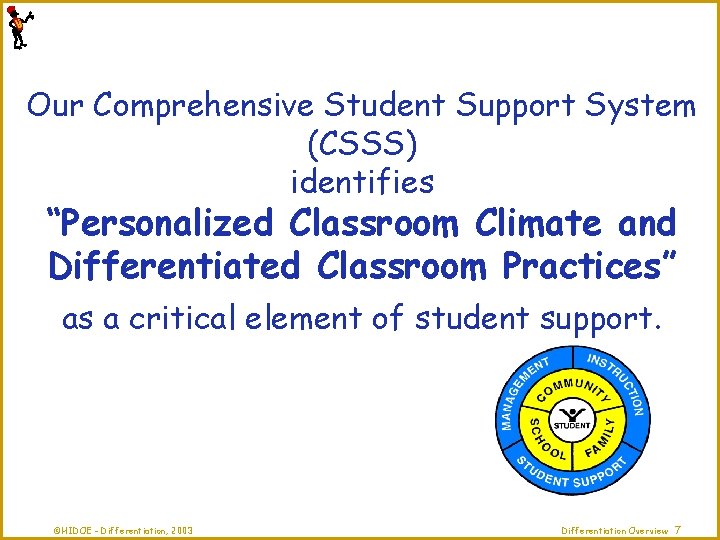
Our Comprehensive Student Support System (CSSS) identifies “Personalized Classroom Climate and Differentiated Classroom Practices” as a critical element of student support. ©HIDOE - Differentiation, 2003 Differentiation Overview 7
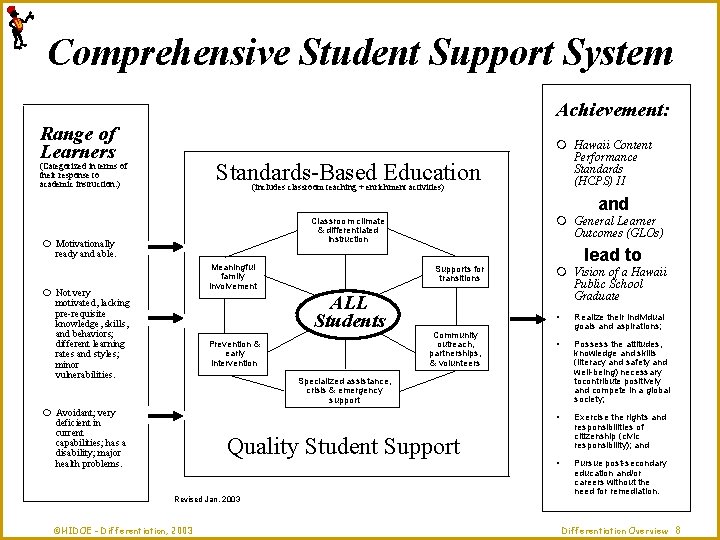
Comprehensive Student Support System Achievement: Range of Learners Standards-Based Education (Categorized in terms of their response to academic instruction. ) (includes classroom teaching + enrichment activities) m Hawaii Content Performance Standards (HCPS) II and m General Learner Outcomes (GLOs) Classroom climate & differentiated instruction m Motivationally ready and able. Meaningful family involvement m Not very motivated, lacking pre-requisite knowledge, skills, and behaviors; different learning rates and styles; minor vulnerabilities. Supports for transitions ALL Students Prevention & early intervention Community outreach, partnerships, & volunteers lead to m Vision of a Hawaii Public School Graduate • Realize their individual goals and aspirations; • Possess the attitudes, knowledge and skills (literacy and safety and well-being) necessary tocontribute positively and compete in a global society; • Exercise the rights and responsibilities of citizenship (civic responsibility); and • Pursue post-secondary education and/or careers without the need for remediation. Specialized assistance, crisis & emergency support m Avoidant; very deficient in current capabilities; has a disability; major health problems. Quality Student Support Revised Jan. 2003 ©HIDOE - Differentiation, 2003 Differentiation Overview 8
Personalized Classroom Climate and Differentiated Classroom Practices Means… • The student’s background experiences are recognized through the instructional practices of the teacher. • Effective instructional strategies used by teachers address the individual learning styles of students on a regular basis. • Student progress is frequently assessed and teaching/learning strategies are continually revised accordingly. • Instructional support services capitalize on the strengths of the child. CSSS Operations Manual, 1999 ©HIDOE - Differentiation, 2003 Differentiation Overview 9

How might this support for all students be translated to effective classroom practices? ©HIDOE - Differentiation, 2003 Differentiation Overview 10
GOAL: To increase your understanding about Differentiating Instruction OBJECTIVES: Upon completion of this professional development session about Differentiating Instruction, you should be able to: - describe the elements and characteristics of and strategies for differentiating instruction - explain the role of assessment when differentiating instruction - apply the planning process when designing instruction - implement strategies for differentiation and evaluate their impact on student learning - share information about differentiation with parents, students and colleagues ©HIDOE - Differentiation, 2003 Differentiation Overview 11
Who are the students that enter our classrooms…what do we know about them? How do we support each and every one of them to meet Hawaii’s Content and Performance Standards (HCPS II)? ©HIDOE - Differentiation, 2003 Differentiation Overview 12
Students of Today Activity - obtain the worksheet entitled “Students of Today” - complete the worksheet independently - share and compare responses ©HIDOE - Differentiation, 2003 Differentiation Overview 13
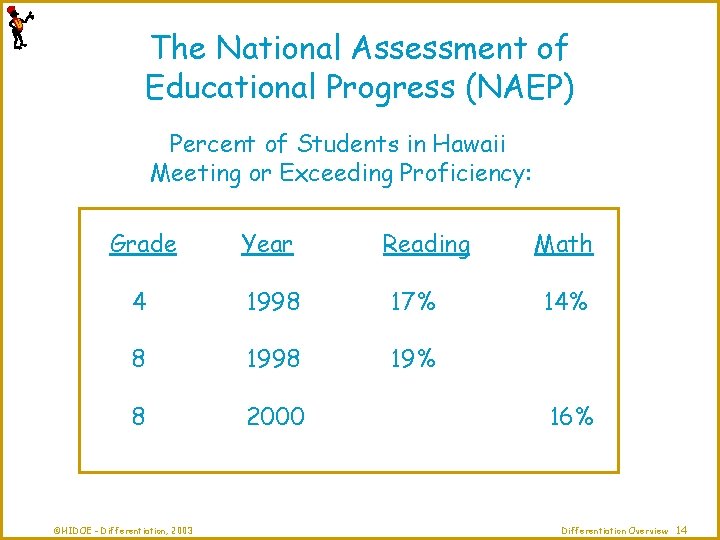
The National Assessment of Educational Progress (NAEP) Percent of Students in Hawaii Meeting or Exceeding Proficiency: Grade Year Reading 4 1998 17% 8 1998 19% 8 2000 ©HIDOE - Differentiation, 2003 Math 14% 16% Differentiation Overview 14
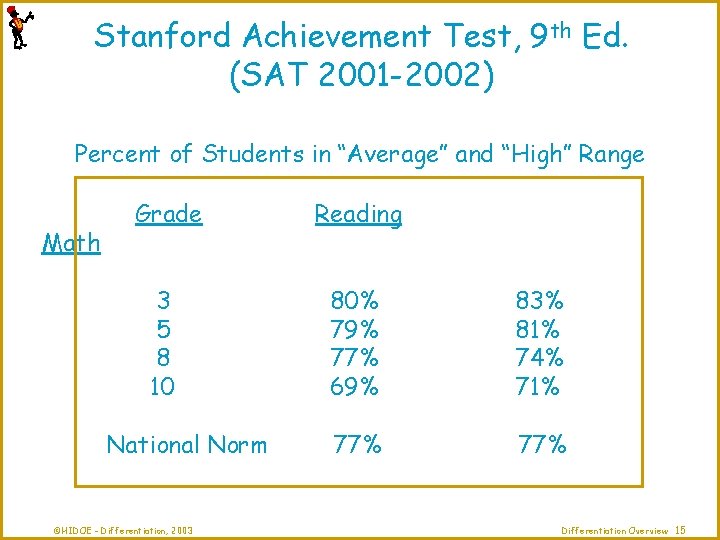
Stanford Achievement Test, 9 th Ed. (SAT 2001 -2002) Percent of Students in “Average” and “High” Range Math Grade Reading 3 5 8 10 80% 79% 77% 69% 83% 81% 74% 71% 77% National Norm ©HIDOE - Differentiation, 2003 Differentiation Overview 15
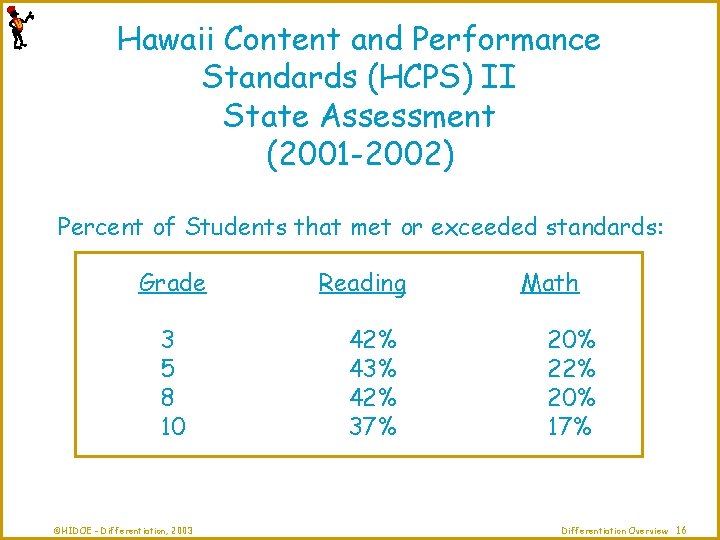
Hawaii Content and Performance Standards (HCPS) II State Assessment (2001 -2002) Percent of Students that met or exceeded standards: Grade 3 5 8 10 ©HIDOE - Differentiation, 2003 Reading 42% 43% 42% 37% Math 20% 22% 20% 17% Differentiation Overview 16
Hawaii’s Intermediate Goals for Meeting Adequate Yearly Progress (AYP) ©HIDOE - Differentiation, 2003 Differentiation Overview 17
What is Your Understanding About Differentiating Instruction ©HIDOE - Differentiation, 2003 Differentiation Overview 18
A Closer Look at Differentiating Instruction: The Dichotomy ©HIDOE - Differentiation, 2003 Differentiation Overview 19
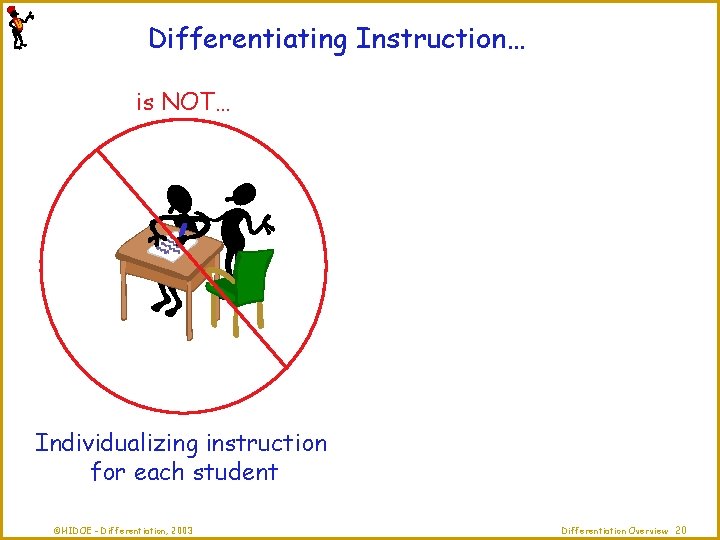
Differentiating Instruction… is NOT… Individualizing instruction for each student ©HIDOE - Differentiation, 2003 Differentiation Overview 20
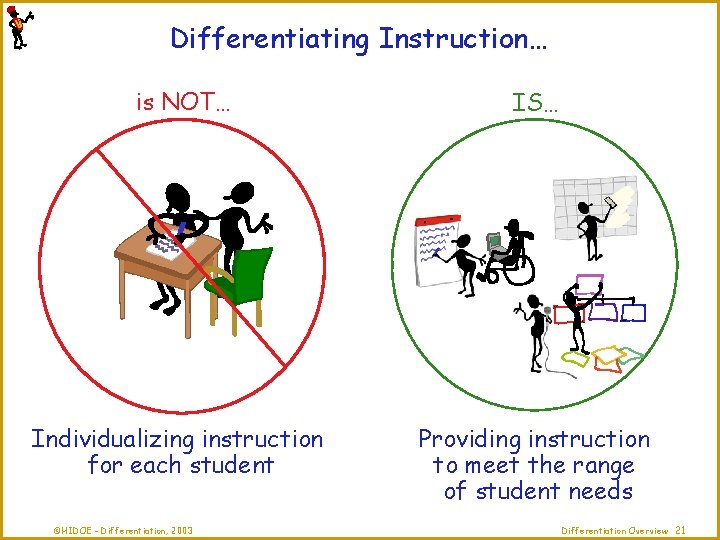
Differentiating Instruction… is NOT… IS… Individualizing instruction for each student Providing instruction to meet the range of student needs ©HIDOE - Differentiation, 2003 Differentiation Overview 21
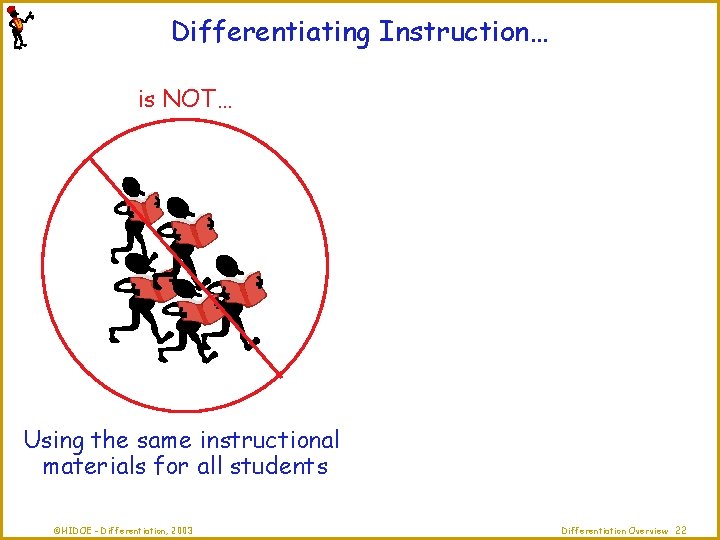
Differentiating Instruction… is NOT… Using the same instructional materials for all students ©HIDOE - Differentiation, 2003 Differentiation Overview 22
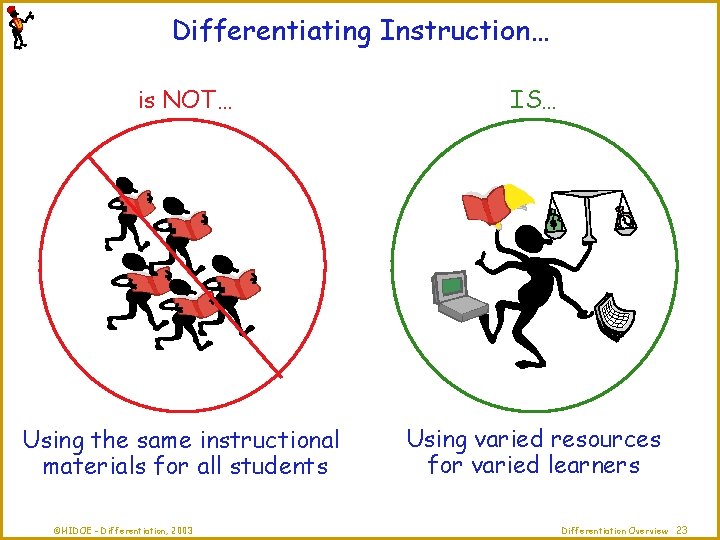
Differentiating Instruction… is NOT… IS… Using the same instructional materials for all students Using varied resources for varied learners ©HIDOE - Differentiation, 2003 Differentiation Overview 23
Differentiating Instruction… is NOT… Teaching from the text-cover-to-cover ©HIDOE - Differentiation, 2003 Differentiation Overview 24
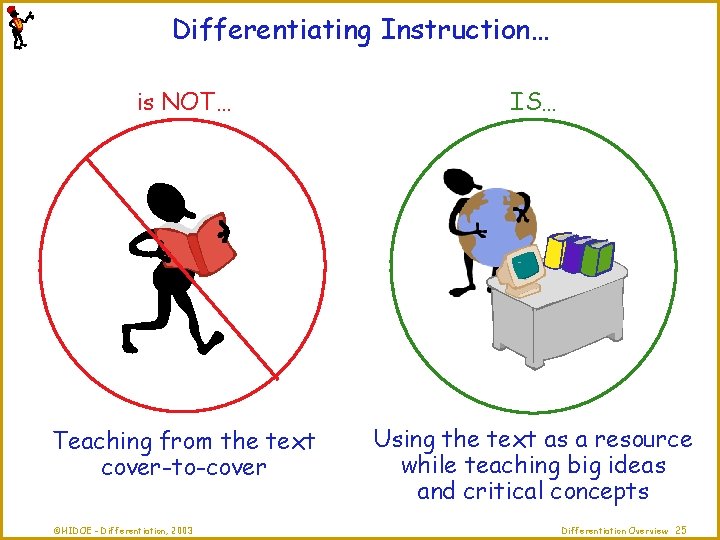
Differentiating Instruction… is NOT… IS… Teaching from the text cover-to-cover Using the text as a resource while teaching big ideas and critical concepts ©HIDOE - Differentiation, 2003 Differentiation Overview 25
Differentiating Instruction… is NOT… Assigning high-achieving students more and more work ©HIDOE - Differentiation, 2003 Differentiation Overview 26
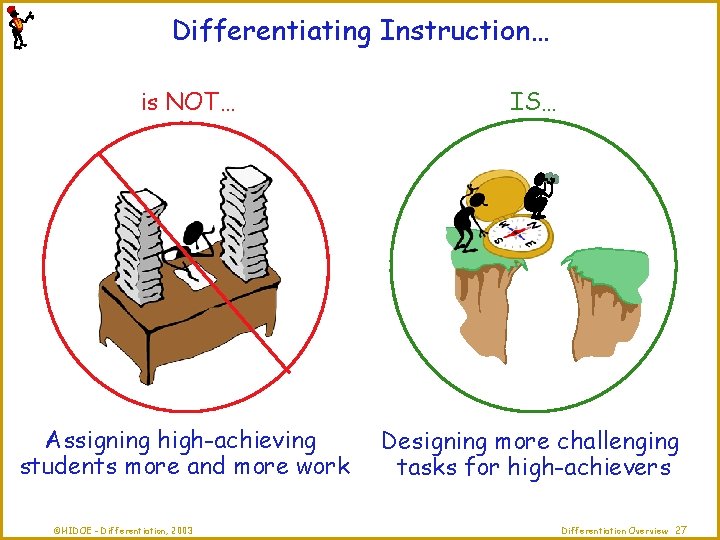
Differentiating Instruction… is NOT… IS… Assigning high-achieving students more and more work Designing more challenging tasks for high-achievers ©HIDOE - Differentiation, 2003 Differentiation Overview 27
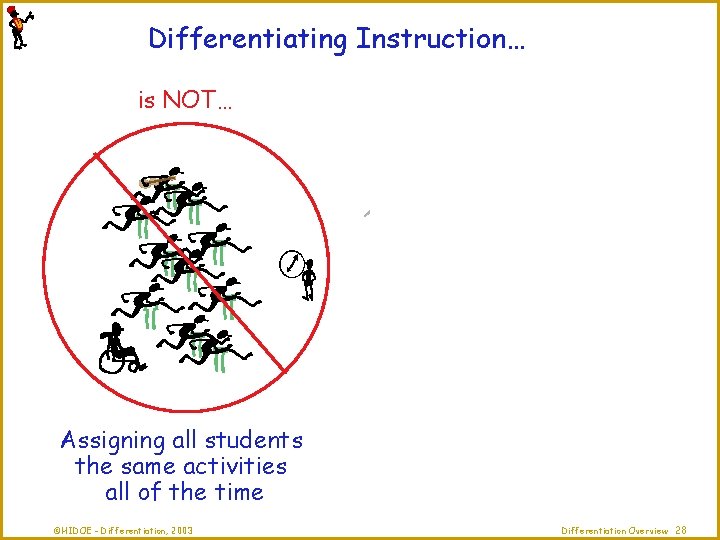
Differentiating Instruction… is NOT… Assigning all students the same activities all of the time ©HIDOE - Differentiation, 2003 Differentiation Overview 28
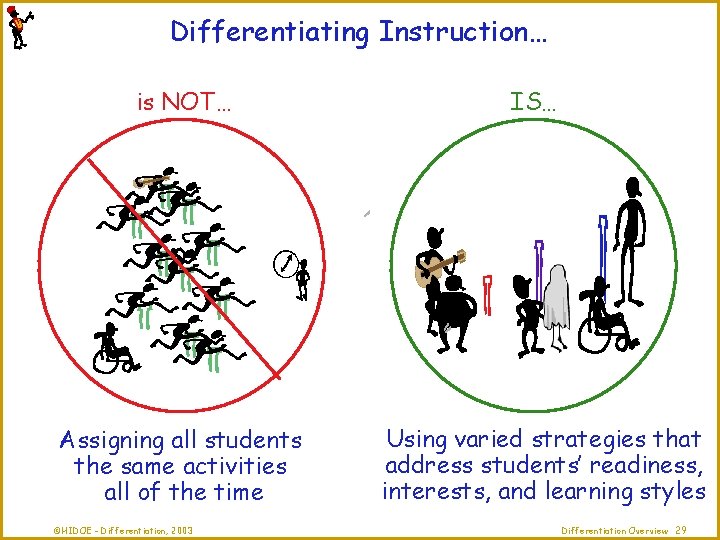
Differentiating Instruction… is NOT… Assigning all students the same activities all of the time ©HIDOE - Differentiation, 2003 IS… Using varied strategies that address students’ readiness, interests, and learning styles Differentiation Overview 29
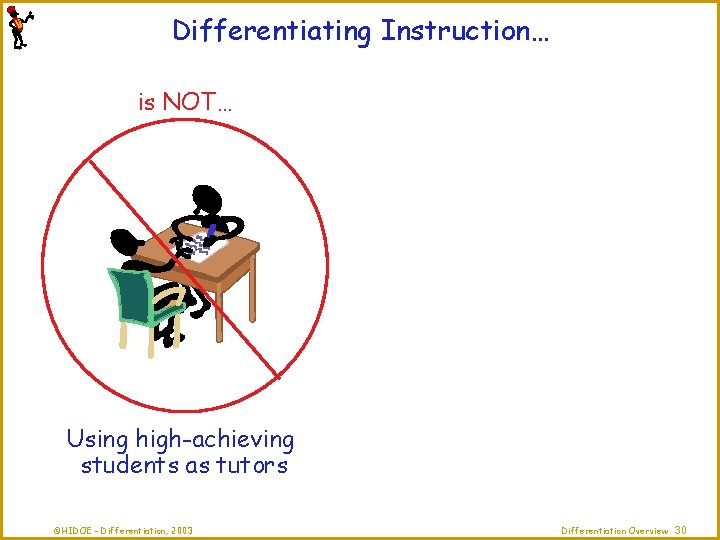
Differentiating Instruction… is NOT… Using high-achieving students as tutors ©HIDOE - Differentiation, 2003 Differentiation Overview 30
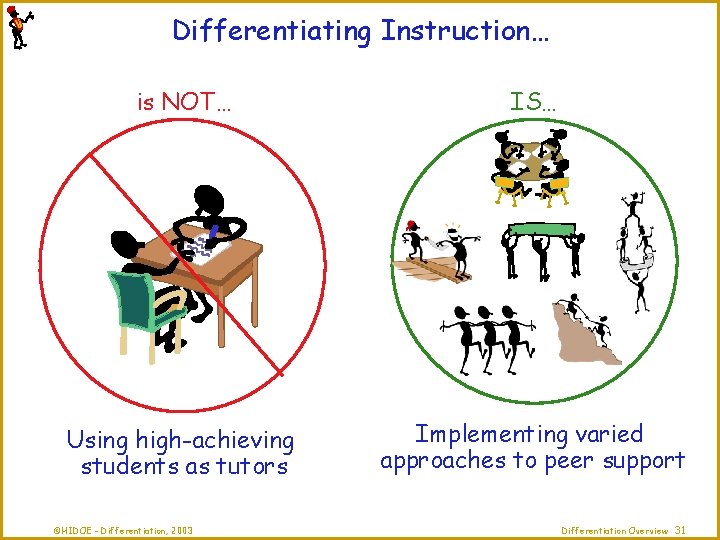
Differentiating Instruction… is NOT… IS… Using high-achieving students as tutors Implementing varied approaches to peer support ©HIDOE - Differentiation, 2003 Differentiation Overview 31
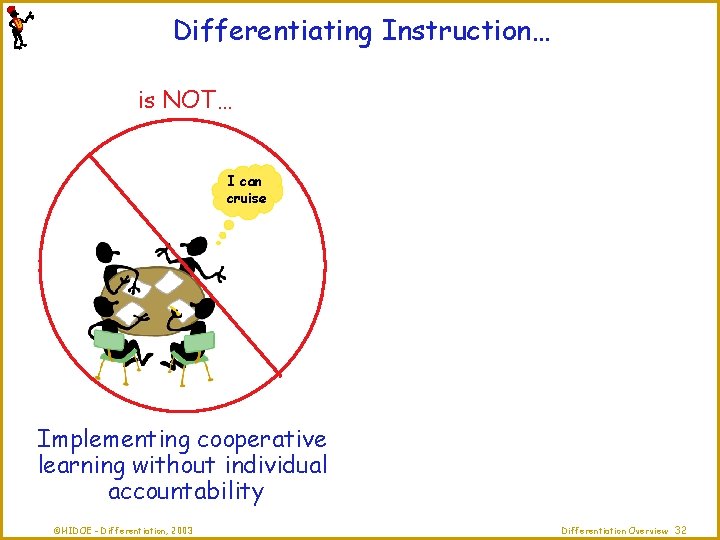
Differentiating Instruction… is NOT… I can cruise Implementing cooperative learning without individual accountability ©HIDOE - Differentiation, 2003 Differentiation Overview 32
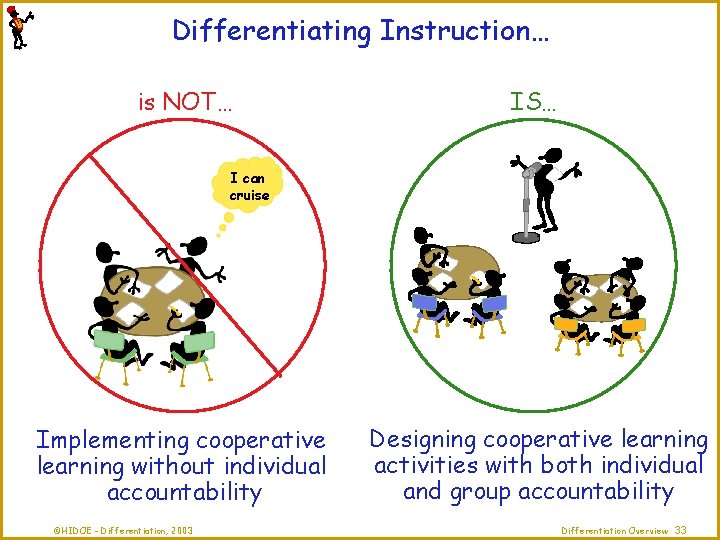
Differentiating Instruction… is NOT… IS… I can cruise Implementing cooperative learning without individual accountability ©HIDOE - Differentiation, 2003 Designing cooperative learning activities with both individual and group accountability Differentiation Overview 33
Differentiating Instruction… is NOT… Assessing all students’ learning in the same way ©HIDOE - Differentiation, 2003 Differentiation Overview 34
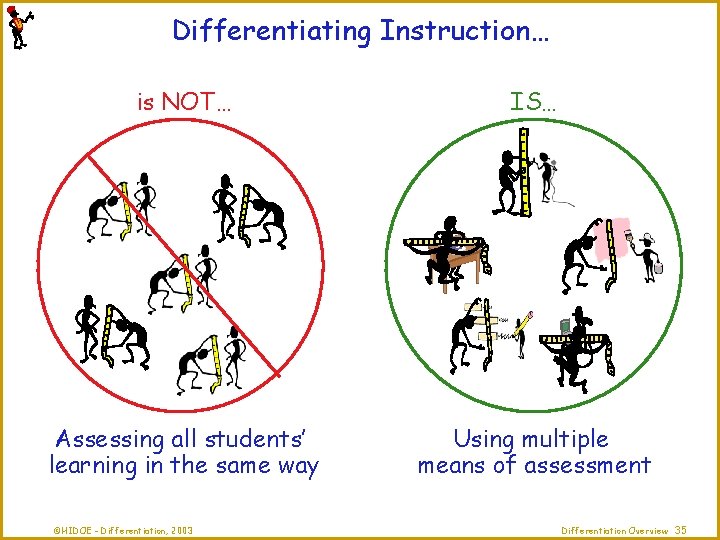
Differentiating Instruction… is NOT… IS… Assessing all students’ learning in the same way Using multiple means of assessment ©HIDOE - Differentiation, 2003 Differentiation Overview 35
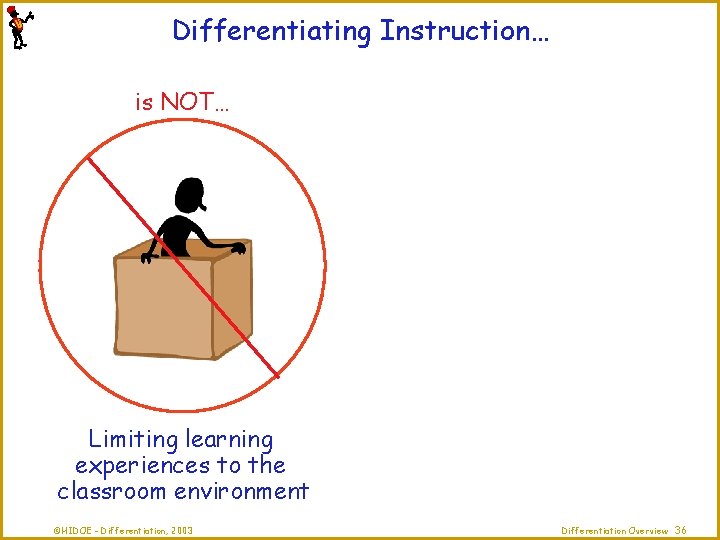
Differentiating Instruction… is NOT… Limiting learning experiences to the classroom environment ©HIDOE - Differentiation, 2003 Differentiation Overview 36
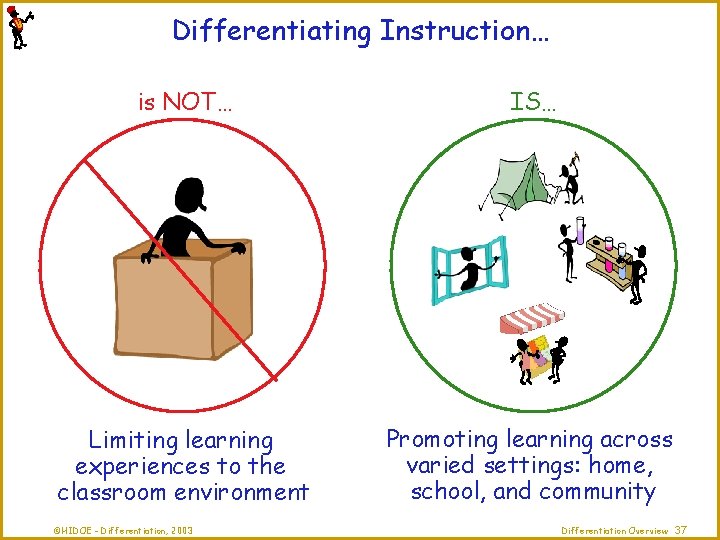
Differentiating Instruction… is NOT… IS… Limiting learning experiences to the classroom environment Promoting learning across varied settings: home, school, and community ©HIDOE - Differentiation, 2003 Differentiation Overview 37
Let’s Reflect Upon Your Definition of Differentiating Instruction ©HIDOE - Differentiation, 2003 Differentiation Overview 38
Let’s Review Others’ Definitions of Differentiating Instruction ©HIDOE - Differentiation, 2003 Differentiation Overview 39
A Look at Our Definition of Differentiating Instruction ©HIDOE - Differentiation, 2003 Differentiation Overview 40
Differentiating Instruction Differentiating instruction is a way of thinking about teaching and learning that seeks to recognize, learn about, and address the learning needs of all students. To that end, teachers use varied approaches for curriculum, instruction, and assessment that promote learning opportunities and outcomes across learning environments. ©HIDOE - Differentiation, 2003 Differentiation Overview 41
Let’s Compare Your Definition With Our Definition of Differentiating Instruction ©HIDOE - Differentiation, 2003 Differentiation Overview 42
A Look at the Elements and Characteristics of and Strategies for Differentiating Instruction ©HIDOE - Differentiation, 2003 Differentiation Overview 43
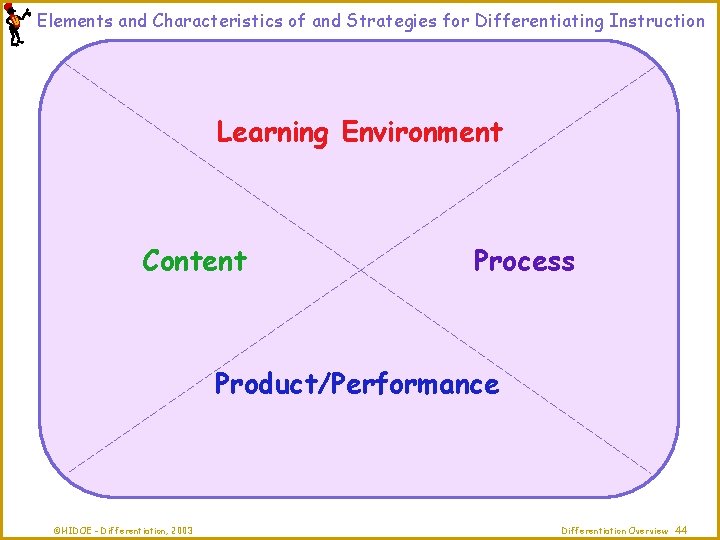
Elements and Characteristics of and Strategies for Differentiating Instruction Learning Environment Content Process Product/Performance ©HIDOE - Differentiation, 2003 Differentiation Overview 44
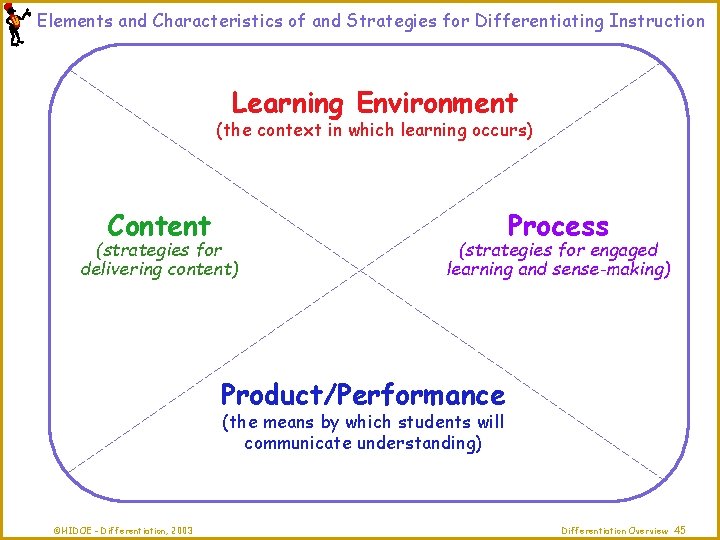
Elements and Characteristics of and Strategies for Differentiating Instruction Learning Environment (the context in which learning occurs) Content (strategies for delivering content) Process (strategies for engaged learning and sense-making) Product/Performance (the means by which students will communicate understanding) ©HIDOE - Differentiation, 2003 Differentiation Overview 45
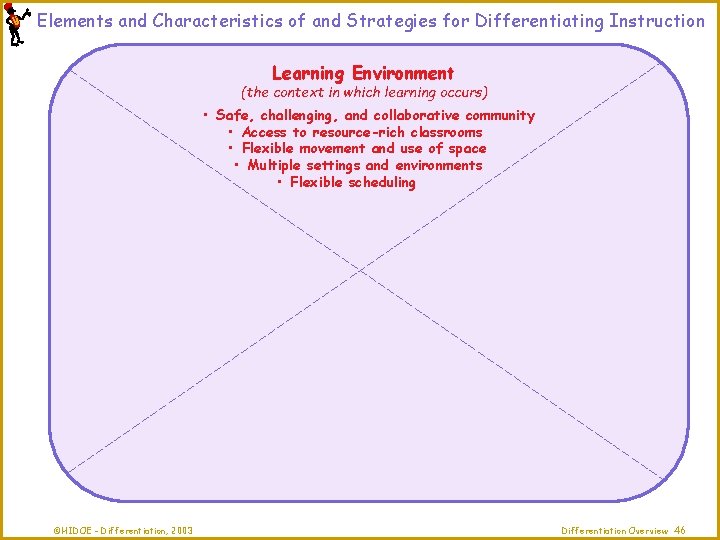
Elements and Characteristics of and Strategies for Differentiating Instruction Learning Environment (the context in which learning occurs) • Safe, challenging, and collaborative community • Access to resource-rich classrooms • Flexible movement and use of space • Multiple settings and environments • Flexible scheduling ©HIDOE - Differentiation, 2003 Differentiation Overview 46
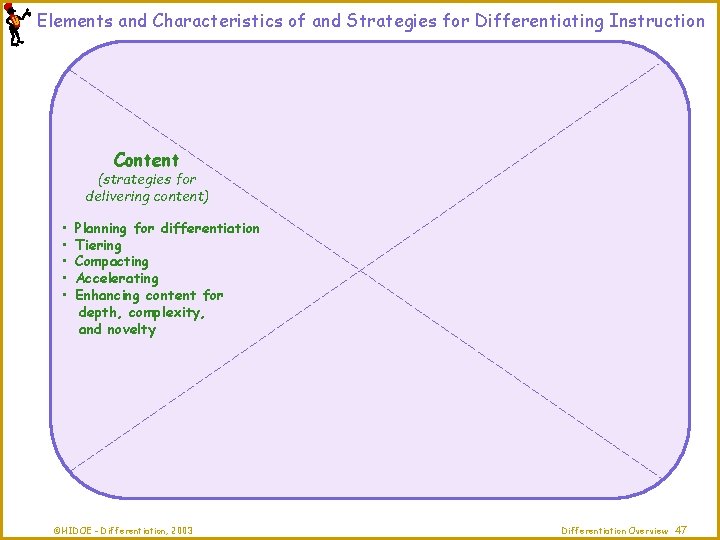
Elements and Characteristics of and Strategies for Differentiating Instruction Content (strategies for delivering content) • • • Planning for differentiation Tiering Compacting Accelerating Enhancing content for depth, complexity, and novelty ©HIDOE - Differentiation, 2003 Differentiation Overview 47
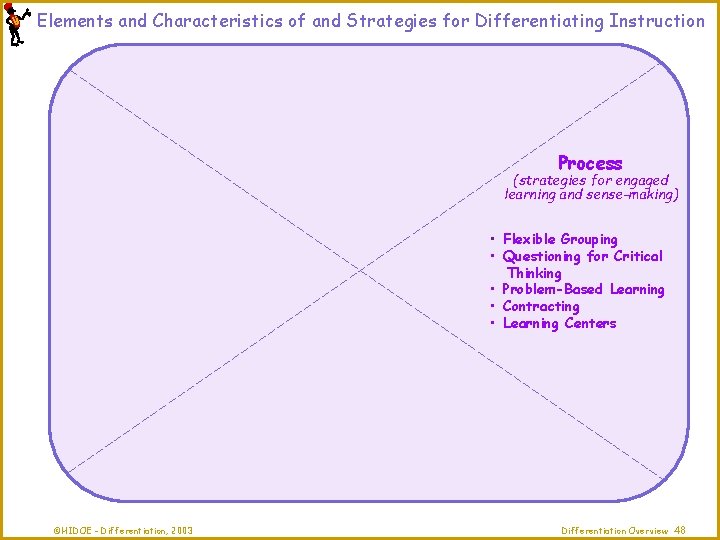
Elements and Characteristics of and Strategies for Differentiating Instruction Process (strategies for engaged learning and sense-making) • Flexible Grouping • Questioning for Critical Thinking • Problem-Based Learning • Contracting • Learning Centers ©HIDOE - Differentiation, 2003 Differentiation Overview 48
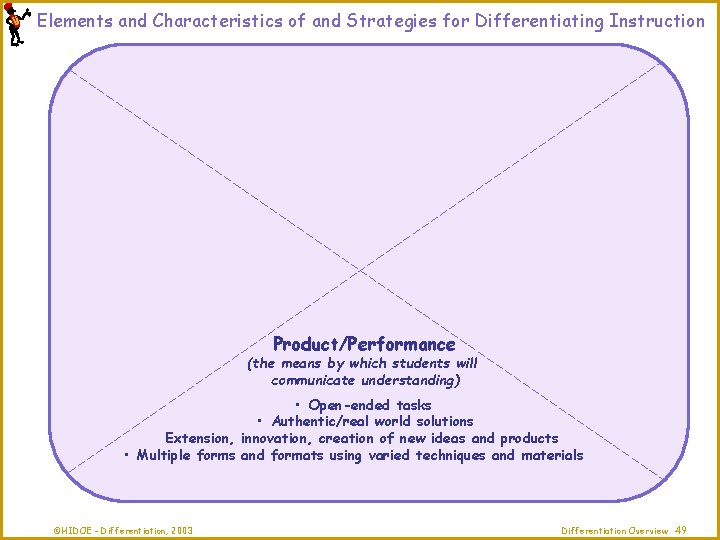
Elements and Characteristics of and Strategies for Differentiating Instruction Product/Performance (the means by which students will communicate understanding) • Open-ended tasks • Authentic/real world solutions Extension, innovation, creation of new ideas and products • Multiple forms and formats using varied techniques and materials ©HIDOE - Differentiation, 2003 Differentiation Overview 49
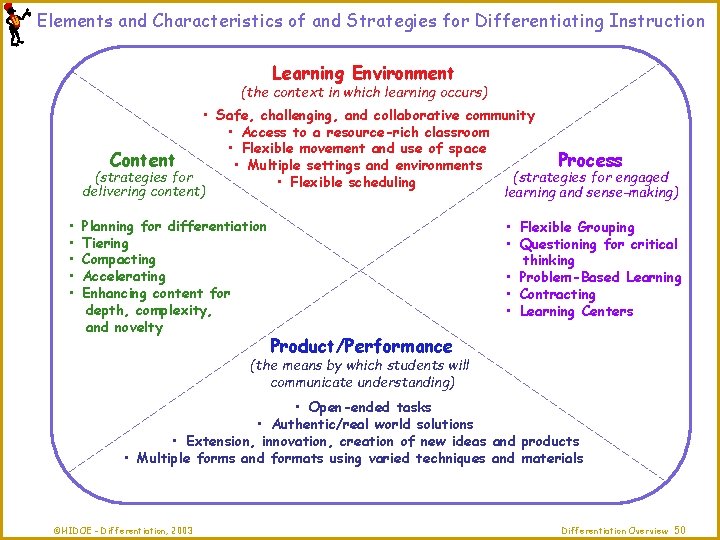
Elements and Characteristics of and Strategies for Differentiating Instruction Learning Environment (the context in which learning occurs) • Safe, challenging, and collaborative community • Access to a resource-rich classroom • Flexible movement and use of space Content Process • Multiple settings and environments (strategies for engaged • Flexible scheduling delivering content) learning and sense-making) • • • Planning for differentiation Tiering Compacting Accelerating Enhancing content for depth, complexity, and novelty • Flexible Grouping • Questioning for critical thinking • Problem-Based Learning • Contracting • Learning Centers Product/Performance (the means by which students will communicate understanding) • Open-ended tasks • Authentic/real world solutions • Extension, innovation, creation of new ideas and products • Multiple forms and formats using varied techniques and materials ©HIDOE - Differentiation, 2003 Differentiation Overview 50
Planning Process for Differentiating Instruction ©HIDOE - Differentiation, 2003 Differentiation Overview 51
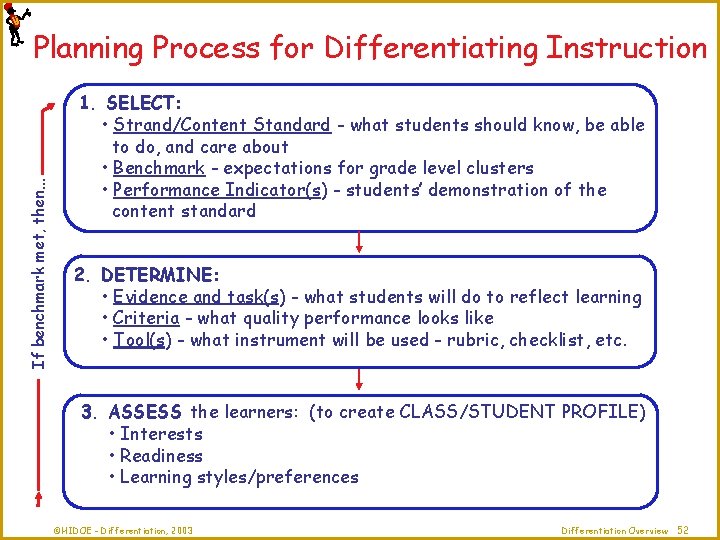
If benchmark met, then… Planning Process for Differentiating Instruction 1. SELECT: • Strand/Content Standard - what students should know, be able to do, and care about • Benchmark - expectations for grade level clusters • Performance Indicator(s) - students’ demonstration of the content standard 2. DETERMINE: • Evidence and task(s) - what students will do to reflect learning • Criteria - what quality performance looks like • Tool(s) - what instrument will be used - rubric, checklist, etc. 3. ASSESS the learners: (to create CLASS/STUDENT PROFILE) • Interests • Readiness • Learning styles/preferences ©HIDOE - Differentiation, 2003 Differentiation Overview 52
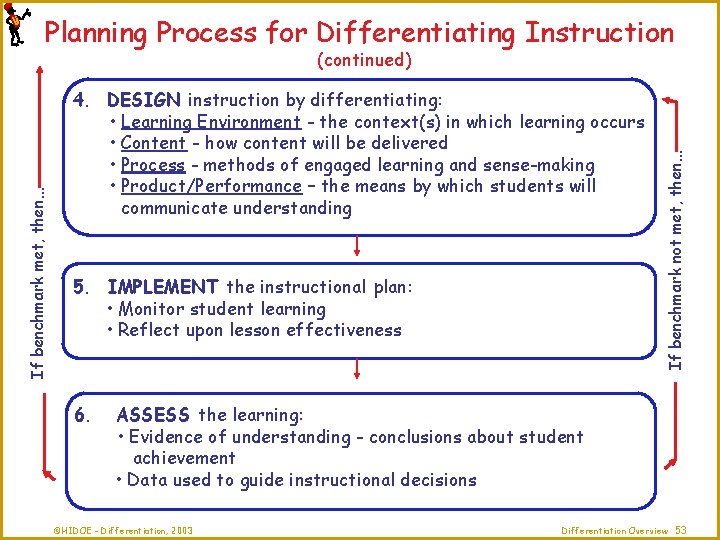
Planning Process for Differentiating Instruction 4. DESIGN instruction by differentiating: • Learning Environment - the context(s) in which learning occurs • Content - how content will be delivered • Process - methods of engaged learning and sense-making • Product/Performance – the means by which students will communicate understanding 5. IMPLEMENT the instructional plan: • Monitor student learning • Reflect upon lesson effectiveness 6. If benchmark not met, then… If benchmark met, then… (continued) ASSESS the learning: • Evidence of understanding - conclusions about student achievement • Data used to guide instructional decisions ©HIDOE - Differentiation, 2003 Differentiation Overview 53
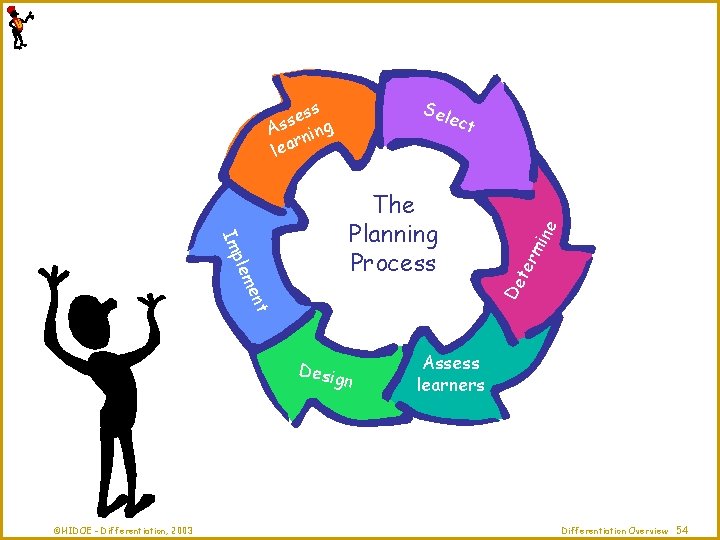
Sel ss e s As ning r Assesslea ect Desig n ©HIDOE - Differentiation, 2003 De ter m nt me ple Im The Planning Process ine learning Assess learners Differentiation Overview 54
Assessing the Learners’ • readiness • interest • learning styles/preferences Assessing the Learning ©HIDOE - Differentiation, 2003 Differentiation Overview 55
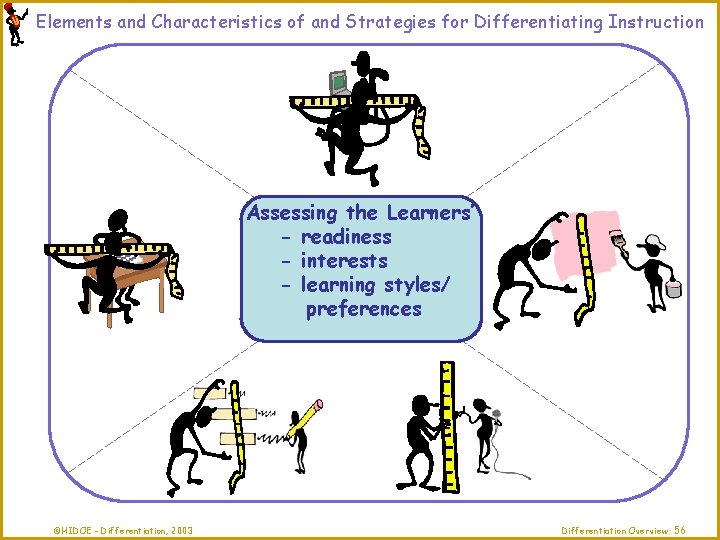
Elements and Characteristics of and Strategies for Differentiating Instruction Assessing the Learners’ - readiness - interests - learning styles/ preferences ©HIDOE - Differentiation, 2003 Differentiation Overview 56
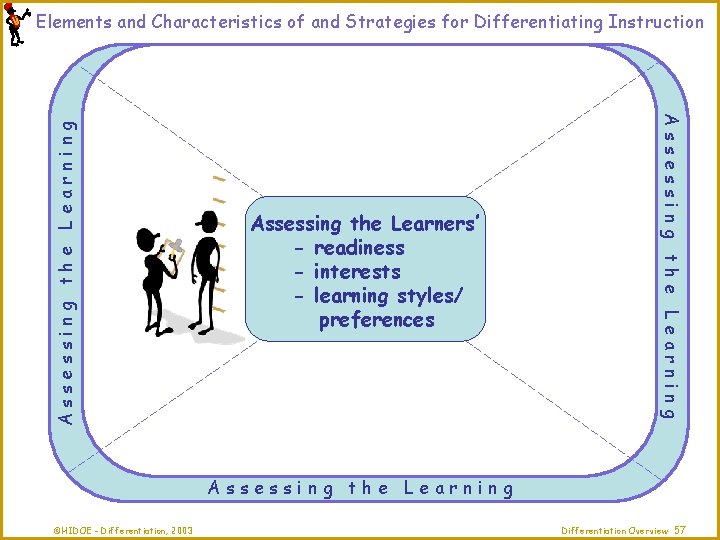
Assessing the Learners’ Assessing - readiness the - interests - Learner learning styles/ preferences Assessing the Learning Elements and Characteristics of and Strategies for Differentiating Instruction Assessing the Learning ©HIDOE - Differentiation, 2003 Differentiation Overview 57
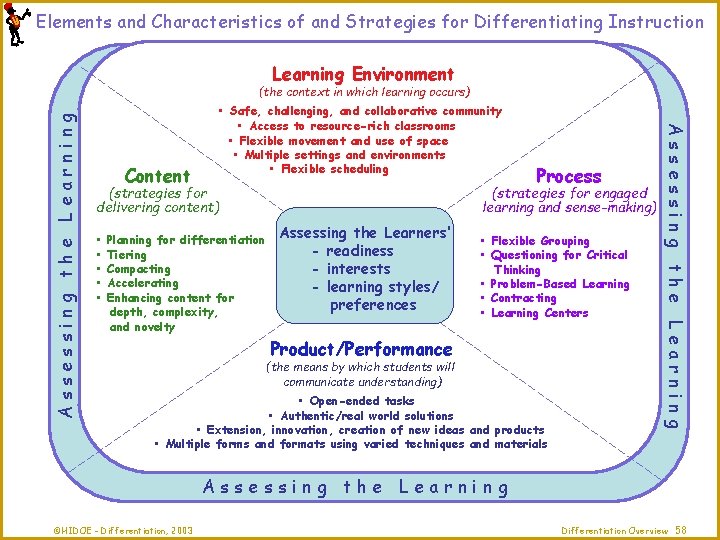
Elements and Characteristics of and Strategies for Differentiating Instruction Learning Environment Content • Safe, challenging, and collaborative community • Access to resource-rich classrooms • Flexible movement and use of space • Multiple settings and environments • Flexible scheduling (strategies for delivering content) • • • Planning for differentiation Tiering Compacting Accelerating Enhancing content for depth, complexity, and novelty Assessing the Learners’ - readiness - interests - learning styles/ preferences Process (strategies for engaged learning and sense-making) • Flexible Grouping • Questioning for Critical Thinking • Problem-Based Learning • Contracting • Learning Centers Product/Performance (the means by which students will communicate understanding) • Open-ended tasks • Authentic/real world solutions • Extension, innovation, creation of new ideas and products • Multiple forms and formats using varied techniques and materials Assessing the Learning (the context in which learning occurs) Assessing the Learning ©HIDOE - Differentiation, 2003 Differentiation Overview 58
Assessing Your Current Understanding About Differentiating Instruction ©HIDOE - Differentiation, 2003 Differentiation Overview 59
Remember… The old saw is correct: Every journey does begin with a single step. The journey to successfully differentiated or personalized classrooms will succeed only if we carefully take the first step—ensuring a foundation of best-practice curriculum and instruction. Source: Tomlinson, “Mapping a Route Toward Differentiated Instruction”, 1999 ©HIDOE - Differentiation, 2003 Differentiation Overview 60
- Slides: 60