
TO OVERCOME COMMUNICATION CHALLENGES IN DISTRIBUTEDVIRTUAL SCRUM TEAMS
TO OVERCOME COMMUNICATION CHALLENGES IN DISTRIBUTED/VIRTUAL SCRUM TEAMS Priyamvada Walimbe Student Id: 113552 Master of Science in Project Management Harrisburg University GRAD 699 PMGT Project Supervisor: Dr. Thomas Sheives
TABLE OF CONTENTS FOR THESIS • Abstract • Introduction • Literature review • Methodology • Results • Discussion and Conclusions • Recommendations
ABSTRACT • The Purpose – To explore communication in scrum and find solution to overcome this challenge in distributed/virtual scrum teams. • Design of the study – Literature review • Why to study this issue – principle of scrum is to facilitate a free flow of communication. • Findings – Communication challenges can be solved by using right communication tool, building trust, coordination, conducting daily scrum meeting, by solving time zone issue and language barrier. • Implication of the study – Solve communication issue, Other researchers can solve their research question.
INTRODUCTION • Agile Project Management – Less risks, more visibility, more business value. • Overall Scrum – Roles, Benefits and Communication • Problem Statement - ‘’How to Overcome Communication Challenges in Distributed/ Virtual Scrum Teams’’. • Justification of the problem – Globalization and technology has given rise to distributed projects. • Scope of the study – Inclusion -Only Scrum projects. Exclusion- Other Agile Methodologies.
DISTRIBUTED TEAMS § Reduces Cost § Hire people with different skill sets § High Productivity § Reach different markets § Fun and Freedom
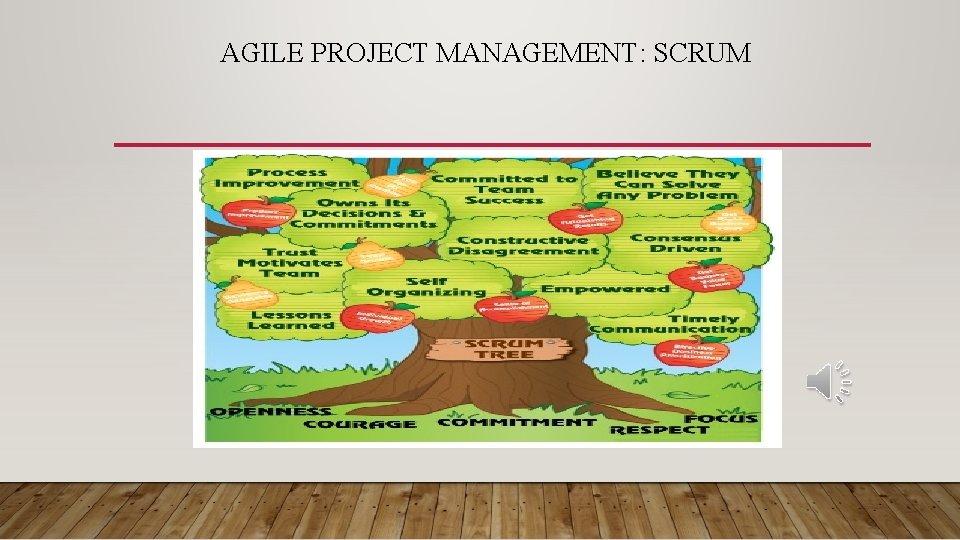
AGILE PROJECT MANAGEMENT: SCRUM
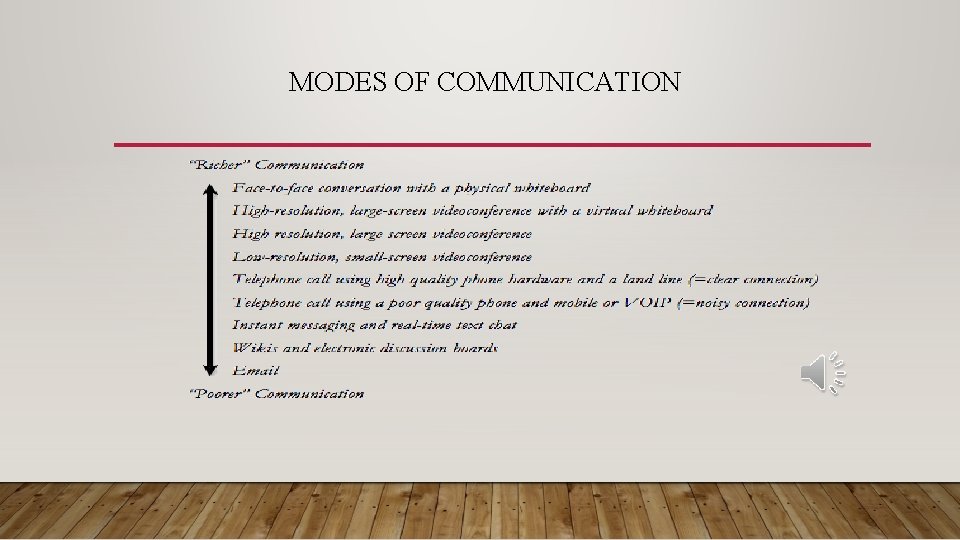
MODES OF COMMUNICATION
LITERATURE REVIEW § There are less primary studies to establish the relation among scrum framework and its application in distributed teams. § Only 1 Systematic literature review - Hossain E, Babar M, Paikh H, 2009 Only 4 empirical studies in scrum 16 paper studied challenges in scrum 9 papers stated communication as a challenge.
REASONS FOR COMMUNICATION CHALLENGE IN LITERATURE REVIEW § Lack of face to face communication • Different time zone • Cultural differences • Absence of communication tools • Short daily stand up meeting
SOLUTIONS STATED IN LITERATURE REVIEW • Training to scrum teams • Proper communication tools like videoconferencing. • Controlling work hours as per different time zones • Appointing scrum master. • Secured communication rules • Use of Wiki • Improve organizational culture
METHODOLOGY • Literature review – 15 case studies 2007 -2010 - (Cho, 2007), (Moe N, Dingsoyr T, 2008), (Sutherland J, Schoonheim G, Kumar N, 2009) 2011 -2013 - (Dorairaj S, Noble J, Malik P, 2011) , (Niinimaki T, 2011), (Bannerman P, Hossain E, Jeffery R, 2012), (Noordeloos R, Manteli C, Vliet H, 2012), (Raty P, Behm B, Dikert K, Paasivaara M, Lassenius C, Damian D, 2013) (Stray V, Lindsjorn Y, Sjoberj D, 2013), (Zieris F, Salinger S, 2013). 2014 -2016 - (Alotaibi A, Qureshi M, 2014), (Kilpa M, Karkkainen T, 2015), (Qureshi M, Sayid I, 2015)(Hummel M, Rosenkranz C, Holten R , 2016), (Usman M, Abbas Q, Akram B, Hussain J, 2016) Selection criteria – Full articles, deal around topic communication in scrum, reliable publications. Limitation – No Interviews.
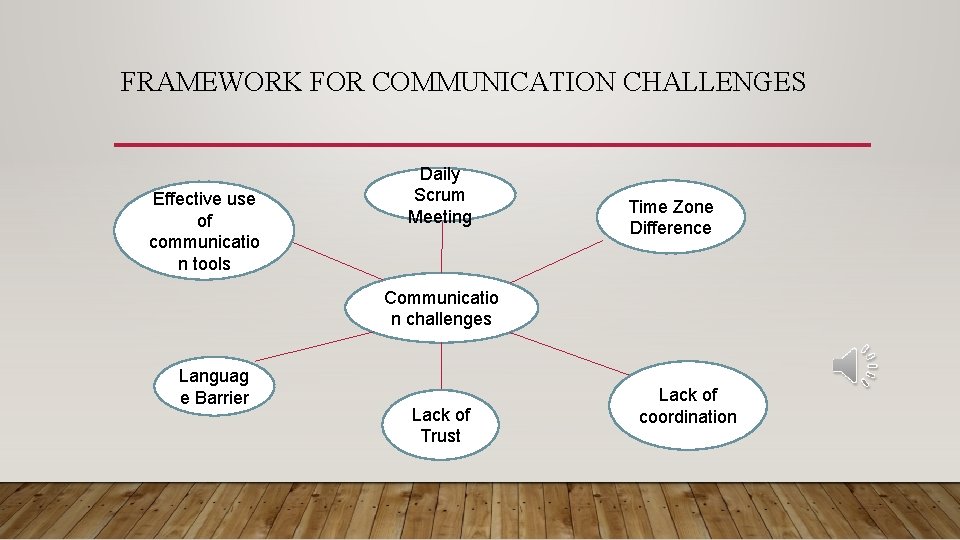
FRAMEWORK FOR COMMUNICATION CHALLENGES Effective use of communicatio n tools Daily Scrum Meeting Time Zone Difference Communicatio n challenges Languag e Barrier Lack of Trust Lack of coordination
RESULTS • Effective Communication tools – Skype, Hangout, phone, IM, SMS, email. 40 -50 emails per day (not effective), 80 -100 IM per day. • Daily Scrum Meetings- Should be 15 minutes and well organized Important questions must be asked in this meeting • Time Zone Difference – Select locations with less time zone difference Overlap working hours
RESULTS § Language Barrier – Posting answers related to scrum questions on Wiki Common language example English Speak slowly to make good pronunciations § Lack of Trust - Avoid fear of scrum master Help each other and have responsibility of work § Lack of Coordination- Use of collaboration tools Have set of standards and procedures.
DISCUSSION § Effective use of Communication Tools – Reduce the number of emails. Use video conferencing instead of phone calls. § Daily scrum meeting – Not be just focused on general issues. Alternate the role of scrum master so everyone gets a chance to talk. Synchronous Meeting to be managed 15 minutes in advance of daily scrum meetings.
DISCUSSION • Time Zone difference – Employees should be given the flexibility to work from home to maintain synchronous communication as per the timing of other located teams. • Language Barrier- Hire a person who understands the language of offshore team. • Lack of Trust - Scrum master must be a bridge among teams to develop trust. • Lack of Coordination- Regular visit and use of informal communication.
OTHER WAYS. . § Replies of emails should be done within 12 hours. • Developer in the position of a facilitator. • Sprint review, retrospective and planning meetings are an excellent mode to give useful feedback to each other. • Other scrum meetings should be conducted to resolve issues.
CONCLUSIONS • Effective use of communication tools Accurate communication tool should be selected. Video conferencing tool Skype, Google Hangout, IM and Email. § Daily Scrum Meetings Daily scrum meetings must not exceed more than 15 minutes. Rotate the role of scrum master. § Time Zone Difference Allow work from home and Overlap working hours.
CONCLUSIONS • Language Barrier Important data should be posted on the wiki like the meeting reports, etc. Hire scrum master who speaks the inherent language of the virtual team • Lack of Trust Scrum master visiting to the offshore teams. The scrum master must adapt the best scrum practices § Lack of Coordination Use of right collaboration tools and regular visits
RECOMMENDATIONS • More research is needed on the application of these best practices. • Other researchers can apply the framework to their research papers. • This research can be used to solve similar communication issue in distributed scrum. • This research can be used to solve other challenges in scrum.
REFERENCES • Hossain E, Babar M, Paikh H. (2009). Using Scrum In Global Software Development : A Systematic Literature Review. 4 th IEEE International Conference on Global Software Engineering , 175 -184. • Raty P, Behm B, Dikert K, Paasivaara M, Lassenius C, Damian D. (2013). Communication Practices in Distributed Scrum Projects. • Weimann P, Hinz C, Scott E, Pollock M. (2010). Changing The Communication Culture of Distributed Teams In A World Where Communication Is Neither Perfect Nor Complete. Electronic Journal of Information Systems Evaluation, 13(2), 187 -196.
- Slides: 21