
To My Old Master Lesson Objective To learn
To My Old Master Lesson Objective: To learn the difference between inferred and literal meanings within a text. This lesson would be used as part of a series of themed lessons about prejudice. Blue eye/ brow eyes activity…
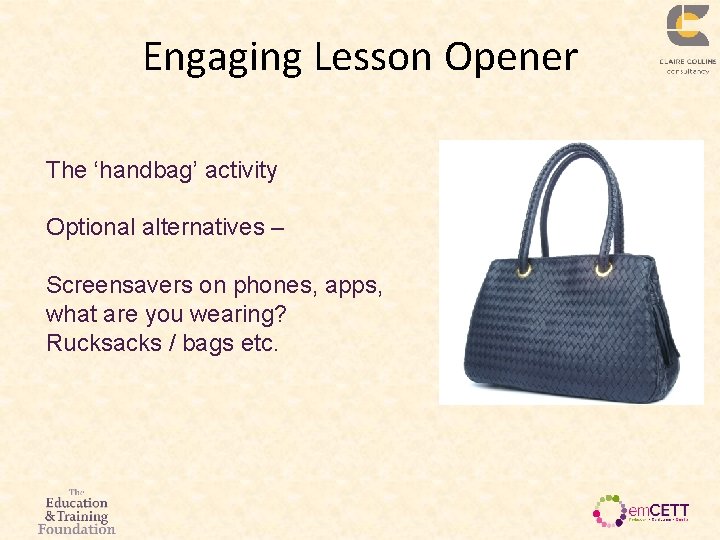
Engaging Lesson Opener The ‘handbag’ activity Optional alternatives – Screensavers on phones, apps, what are you wearing? Rucksacks / bags etc.
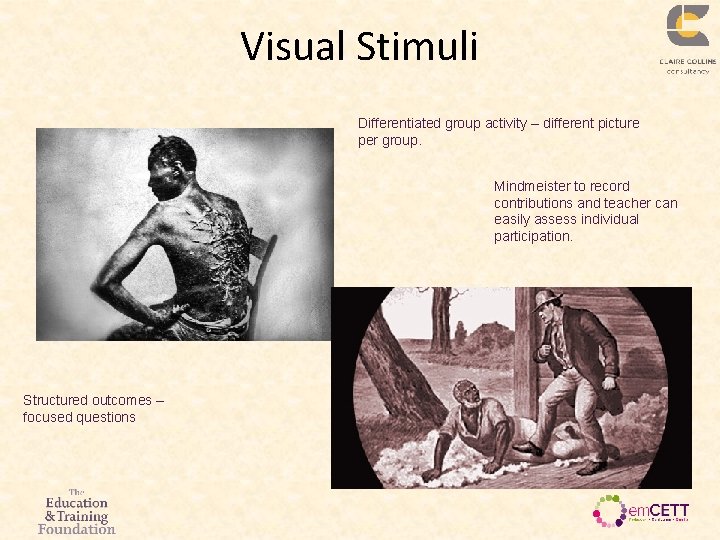
Visual Stimuli Differentiated group activity – different picture per group. Mindmeister to record contributions and teacher can easily assess individual participation. Structured outcomes – focused questions

Delivering the text • Either teacher read or if possible an audio recording from an actor reading the letter. • Highlight any new words or words you don’t understand. • these words into a ‘VCOP BOX’ or create a PADLET glossary. • Learners work in pairs to deduce the meaning of unfamiliar words themselves. Learners then report back sharing the strategies they used, i. e. reading around the sentence, the context, breaking the word down into parts, etc. • Discussion of offensive terms used in the text. • Post-It activity. Learners write one word each they find offensive (not from the text) anonymously onto a post-it note and stick it on a ‘graffiti wall’. • Linking inference to derogatory terms, e. g. ‘stud’ and ‘slag’.
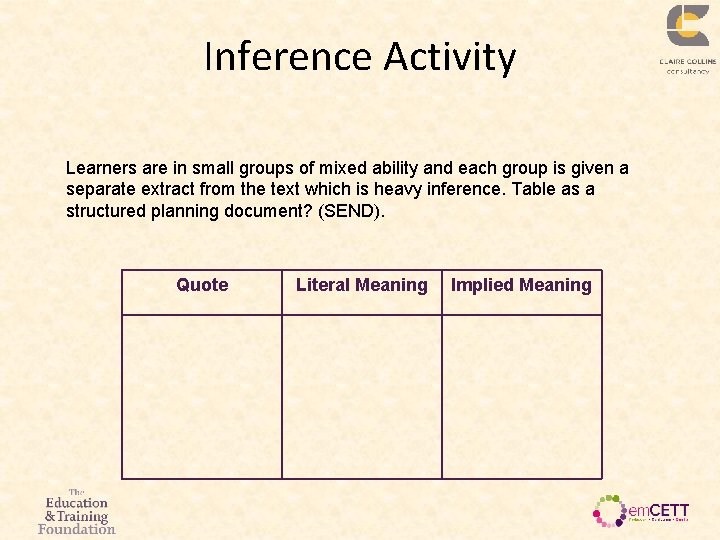
Inference Activity Learners are in small groups of mixed ability and each group is given a separate extract from the text which is heavy inference. Table as a structured planning document? (SEND). Quote Literal Meaning Implied Meaning
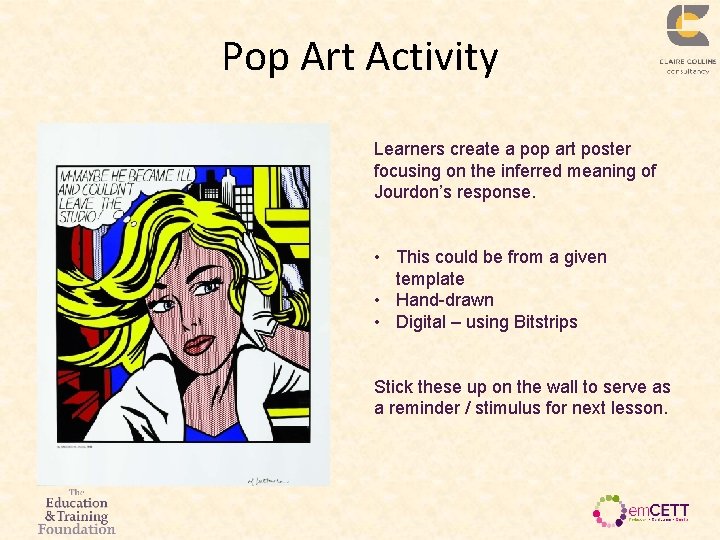
Pop Art Activity Learners create a pop art poster focusing on the inferred meaning of Jourdon’s response. • This could be from a given template • Hand-drawn • Digital – using Bitstrips Stick these up on the wall to serve as a reminder / stimulus for next lesson.
Writing Activity Learners write the original letter from Colonel P. H. Anderson. Learners are exercising their inference skills by writing what the Colonel asked in his original letter. Also uses creativity, letter structure, knowledge of character, appropriate language use, i. e. formal, position of authority etc.
Homework Activity Ask learners to find examples of inference in every day life, i. e. magazines, problem pages and take a photograph on their phones to share back next lesson / create a meme that has implied meaning.
Exit Strategy • Mix and match cards of implied and literal meanings – physical activity or on Socrative. • Learners have to match a pair in order to get an exit ticket.
- Slides: 9