
TO KILL A MOCKINGBIRD ExpositionSetting Dialectical Journal Text

TO KILL A MOCKINGBIRD Exposition/Setting

Dialectical Journal ■ Text ■ Comment
Welcome! Agenda – Get Books – Setting Presentation – Chapter 1 – Personal Exposition Homework: Finish chapter 1 and personal exposition Learning Targets – I can identify the elements of setting in To Kill a Mockingbird. – I can use chapter 1 as a model text for my personal exposition.
Setting Up Your Notebook for Today ■ Setting Notes Lecture Notes from lecture ■ Setting Chapter 1 Notes from reading

Setting Up Your Notebook for Today ■ Neighborhood Map This is where you will draw your neighborhood.

SETTING Where it all happens
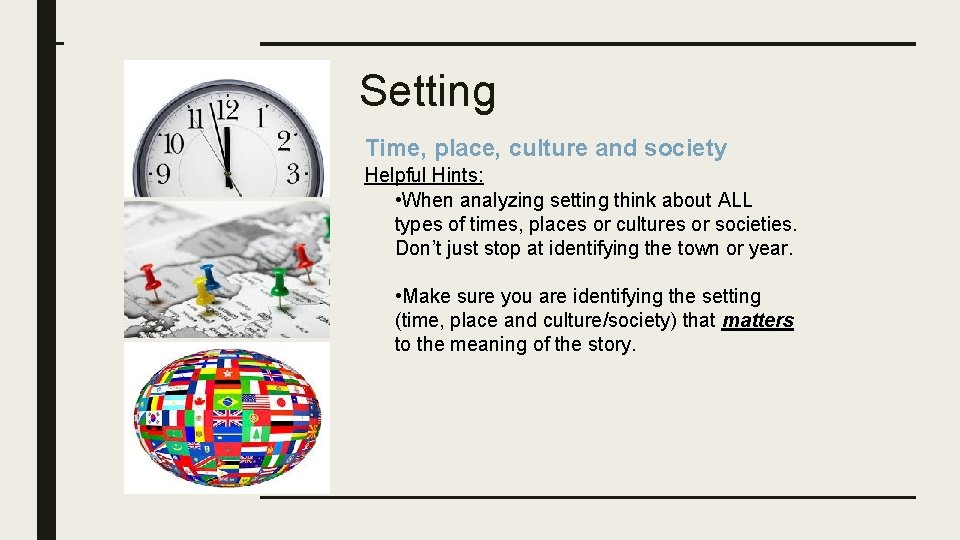
Setting Time, place, culture and society Helpful Hints: • When analyzing setting think about ALL types of times, places or cultures or societies. Don’t just stop at identifying the town or year. • Make sure you are identifying the setting (time, place and culture/society) that matters to the meaning of the story.
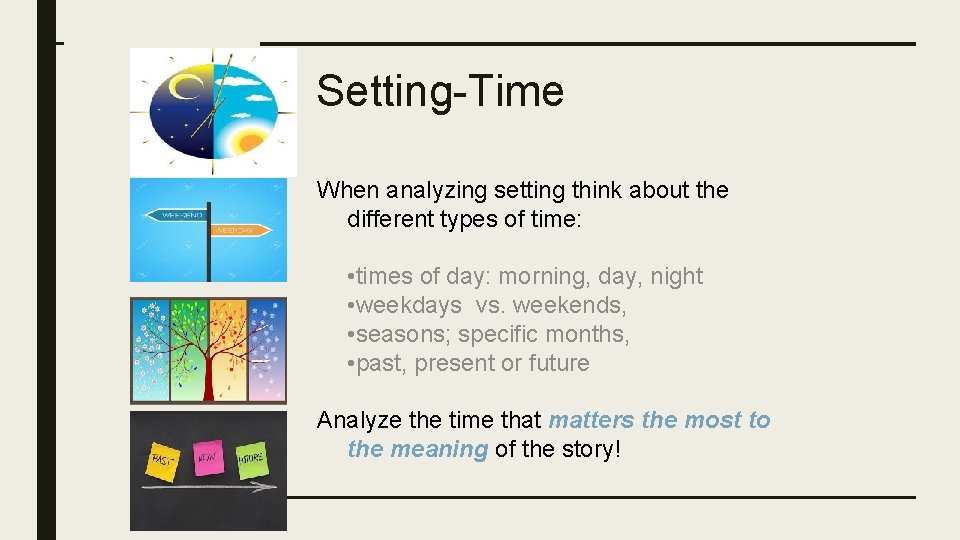
Setting-Time When analyzing setting think about the different types of time: • times of day: morning, day, night • weekdays vs. weekends, • seasons; specific months, • past, present or future Analyze the time that matters the most to the meaning of the story!
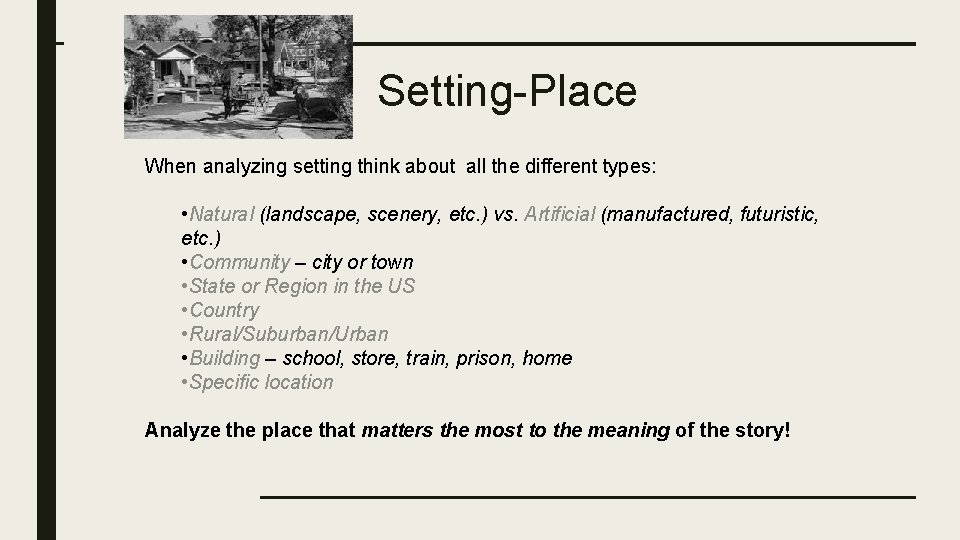
Setting-Place When analyzing setting think about all the different types: • Natural (landscape, scenery, etc. ) vs. Artificial (manufactured, futuristic, etc. ) • Community – city or town • State or Region in the US • Country • Rural/Suburban/Urban • Building – school, store, train, prison, home • Specific location Analyze the place that matters the most to the meaning of the story!
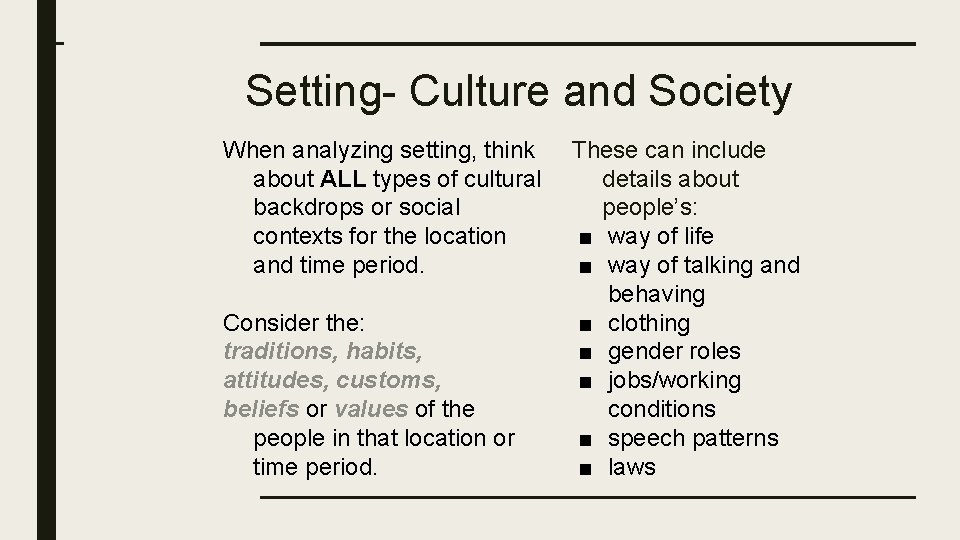
Setting- Culture and Society When analyzing setting, think about ALL types of cultural backdrops or social contexts for the location and time period. Consider the: traditions, habits, attitudes, customs, beliefs or values of the people in that location or time period. These can include details about people’s: ■ way of life ■ way of talking and behaving ■ clothing ■ gender roles ■ jobs/working conditions ■ speech patterns ■ laws
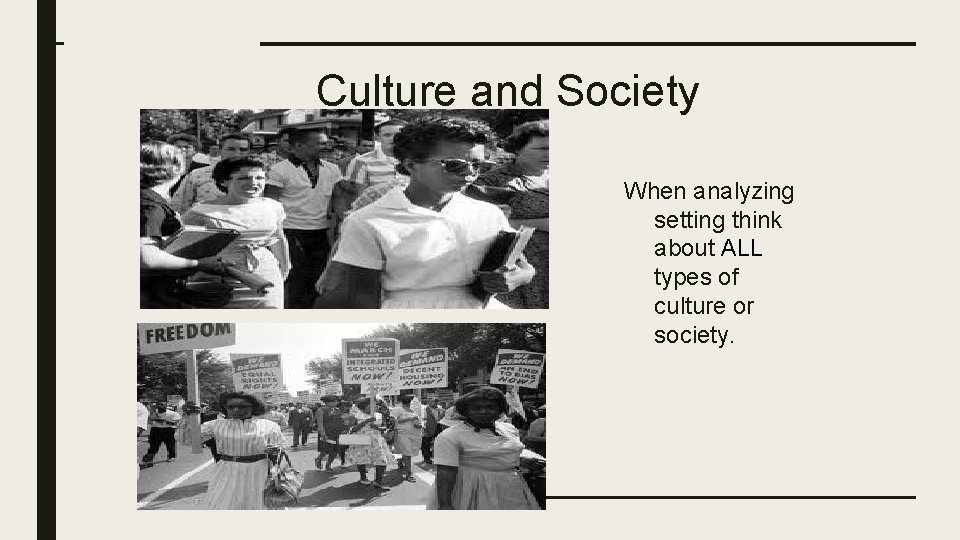
Culture and Society When analyzing setting think about ALL types of culture or society.
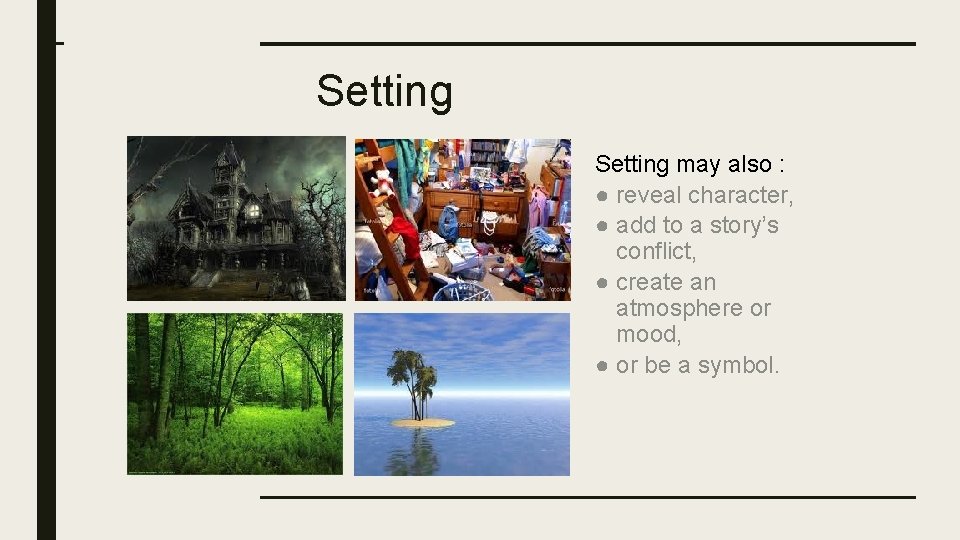
Setting may also : ● reveal character, ● add to a story’s conflict, ● create an atmosphere or mood, ● or be a symbol.
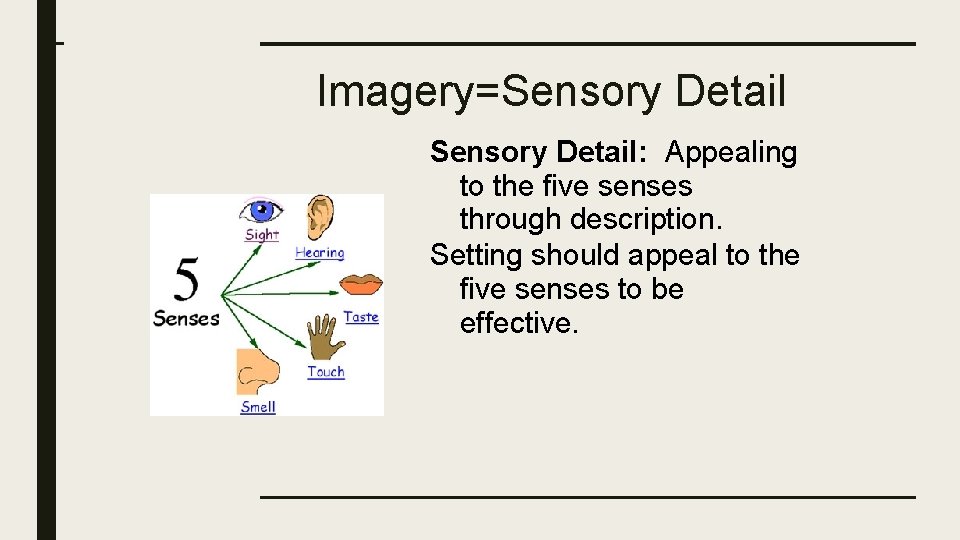
Imagery=Sensory Detail: Appealing to the five senses through description. Setting should appeal to the five senses to be effective.
Practice As we read the next section of To Kill a Mockingbird, watch to see how Haper Lee describes the setting. Identify the time, place, culture and society she is writing about.
Setting-Raise the Bones -How does Lee describe Maycomb? -How does Lee describe the people of Maycomb? -How does Lee describe the Finch’s family history? -How does Lee describe the community/neighborhood? -How does she use this to introduce a larger story?
Setting-Your Turn ● Create a personal exposition that mirrors what we just read. It should: ● reveal culture and society, ● give a specific time and place, ● introduce characters and/or a larger story. ● evoke an atmosphere or mood, ● Use imagery (sensory detail – 5 senses) to create your setting! ● Be sure to identify somewhere on your paper what your setting is (all three parts) and which effect you were trying to accomplish. ● We will share these next class.
Setting Chapter 1 As we read watch for the following things: -How does Lee describe Maycomb? -How does Lee describe the people of Maycomb? -How does Lee describe the Finch’s family history? -How does Lee describe the community/neighborhood? -What is the mood? -How does she use this to introduce a larger story?
Chapter 1 - Highlight for the moves ■ Using highlighters mark the text for Lee’s moves. ■ Color 1 - Setting – What time does this take place? – What is the location? – What elements of society/culture do you see? Allusions? ■ Color 2 - Sensory Details – How does she paint the picture in your mind? – How does she create a mood? ■ Color 3 - Life Details – How does Lee use this to go from the big picture of Maycomb to Scout’s life?
Your Turn- Neighborhood Map ■ Take the next five minutes to draw the neighborhood you grew up in. This can be anyplace that has lots of memories. ■ Every time you come up with a memory mark it with an X. ■ In ten minutes we will share these stories.
Your Turn- Neighborhood Map ■ Share 3 or 4 of your X’s with someone at your table. Use them to help you find the one you really want to talk about. ■ Use this map to help you write your personal exposition.
Setting-Your Turn ● Create a personal exposition that mirrors what we just read. It should: ● reveal culture and society, ● give a specific time and place, ● introduce characters and/or a larger story. ● evoke an atmosphere or mood, Double Check: ● Make sure your have sensory details to create your setting! ● Make sure you can identify somewhere on your paper what your setting is (all three parts). We will share these next class.
- Slides: 21