
To Kill A Mockingbird Characterization Characterization the methods
To Kill A Mockingbird Characterization
Characterization: �the methods by which an author develops characters: � * the physical description of the character � * the actions and speech of that character � * the thoughts and beliefs of that character � * what other characters say about that character
Functions of Minor Characters: � � � * to advance plot * to develop the major character(s) * to develop theme * to act as a foil, contrast, or antagonist * to provide comic relief
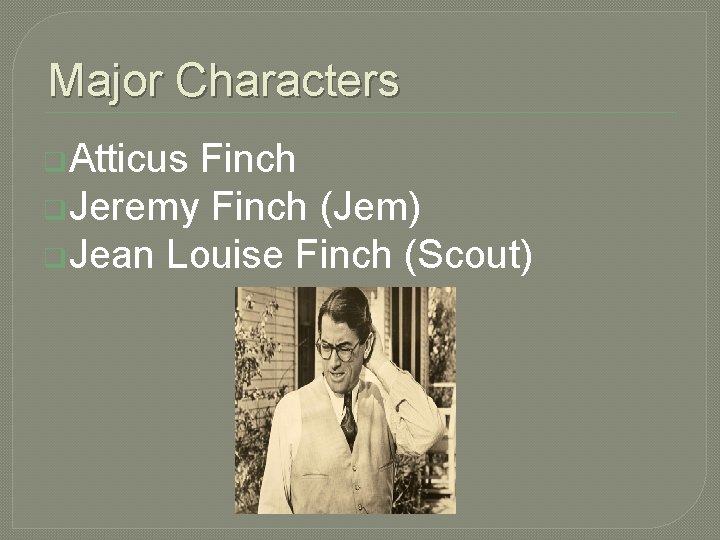
Major Characters q. Atticus Finch q. Jeremy Finch (Jem) q. Jean Louise Finch (Scout)
Protagonist: � character who experiences the conflict and functions to develop theme of the story. This character is considered to be DYNAMIC or WELL ROUNDED if he/she is developed using most of the below methods: � Physical description: what the character looks like, any discerning physical features � What the character says and does: action and speech are clear indicators of personality, values, motivation etc.
Protagonist cont’d �What others say about the character: help define how others see traits about the character that might never be exposed by the protagonist (especially if the story is told in the first person) �Thoughts and Feelings of the character: if the story is told in the 1 st person or omniscient points of view, insight into the “brain” of the character also helps to develop character
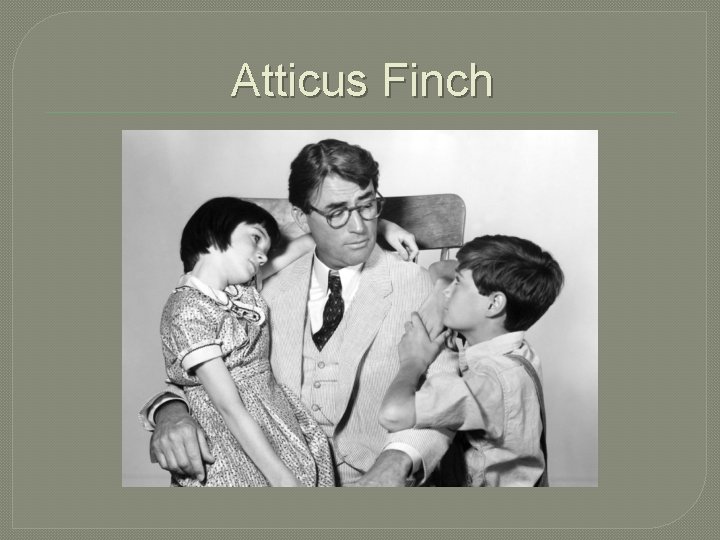
Atticus Finch
What Atticus says and does � Atticus treats his children as intelligent young adults - he speaks in a clear matter-of-fact way, and answers questions directly (including technical points of law and definitions of rape). �“This is their home, sister. . . We’ve made it this way for them, they might as well learn to cope with it. ” p. 212 � He is very fair - he tries to hear both sides of an argument. �“When a child asks you something, answer him, for goodness sake. But don’t make a production out of it. Children are children, but they can spot an evasion quicker than adults, and evasion muddles ‘em. ” p. 87
Atticus cont’d � He does not beat his children, but is firm in some matters - as when he insists that Jem read to Mrs. Dubose, or makes them obey Calpurnia and Aunt Alexandra. �“Let’s make this clear: you do as Calpurnia tells you, you do as I tell you, and as long as your aunt’s in this house, you do as she tells you. Understand? p. 136 � He does not stereotype people - he is quite happy for Scout to be a tomboy. � He sees that the children need a mother figure, and recognizes that Calpurnia is far better able than he is to be a homemaker. p. 137
Atticus cont’d � Atticus is frequently criticized by others people. He does not take advantage of his social standing to retaliate. � Atticus remains calm when provoked directly - look, for example, at how he handles Bob Ewell's challenge: “Too proud to fight? ” “No, ” says Atticus, “too old. ” (Think about the ambiguity - on the surface it seems to mean that Atticus is no longer strong and fit enough to fight; but also it might mean that fighting is not something that adults should do - which could imply that Bob has not grown up). Atticus understands the importance of allowing people to pay for his services, even though he has no need of their gifts - as when he accepts payment in kind from the Cunninghams, or gifts from the black people of Maycomb after Tom's trial.
What others say about Atticus: � � Bob Ewell’s attitudes and actions Stephanie Crawford’s gossip/criticisms • “Miss Stephanie said you had to hand it to Atticus Finch, he could be right dry sometimes. � � Alexandra’s mild and partly well-meant criticisms Harsh comments of Mrs. Dubose p. 217 • `Not only a Finch waiting tables but one in the courthouse lawing for niggers. . Your father`s no better than the niggers and trash he works for! p. 101 -2 � Clear sightedness and honesty of Miss Maudie Atkinson: • “He's the same in the courtroom as he is on the public streets” Chapter 19 • “There are some men in the world who were born to do our unpleasant jobs for us. Your father's one of them” Chapter 22 • “Did it ever strike you that Judge Taylor naming Atticus to defend that boy was no accident? ” Chapter 22
- Slides: 11