
To familiarize students with reverse engineering RE the


- Slides: 11
• To familiarize students with reverse engineering (RE), the process of taking something (a device, an electrical component, a software program, etc. ) apart and analyzing its workings in detail, usually with the intention to construct a new device or program that does the same thing without actually copying anything from the original.
• Read the article, “How Soviets Copied America’s Best Bomber During WWII. ” • http: //archives. cnn. com/2001/US/01/ 25/smithsonian. cold. war/
• Reverse Engineering - the process of taking something (a device, an electrical component, a software program, etc. ) apart and analyzing its workings in detail • The intention is to construct a new device or program that does the same thing without actually copying anything from the original.
• Resulting knowledge gained through the reverse-engineering process can be applied to the design of similar products • Capitalizing on successes and learning from the shortcomings of existing designs is the objective of reverse engineering.
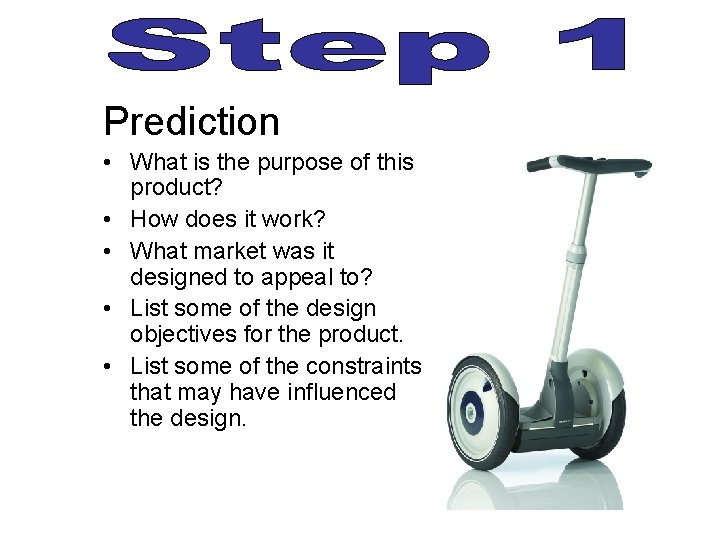
Prediction • What is the purpose of this product? • How does it work? • What market was it designed to appeal to? • List some of the design objectives for the product. • List some of the constraints that may have influenced the design.
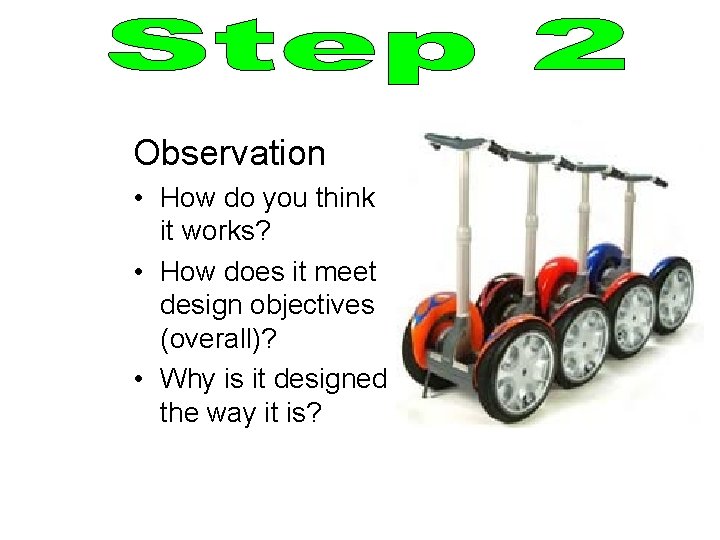
Observation • How do you think it works? • How does it meet design objectives (overall)? • Why is it designed the way it is?
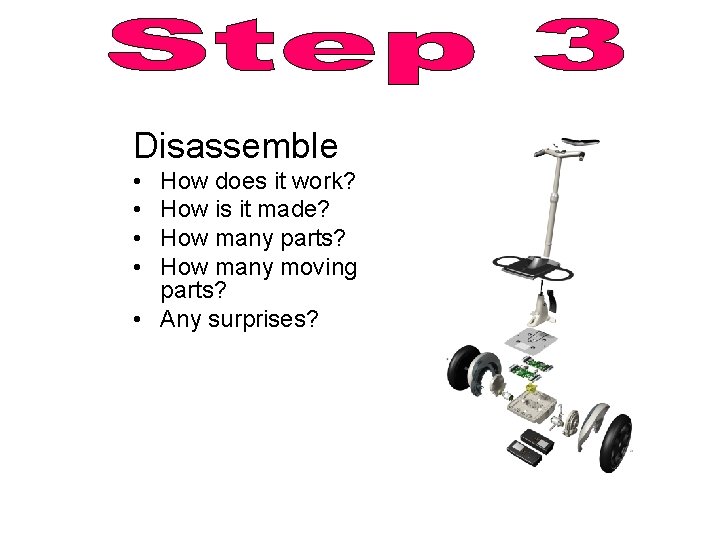
Disassemble • • How does it work? How is it made? How many parts? How many moving parts? • Any surprises?
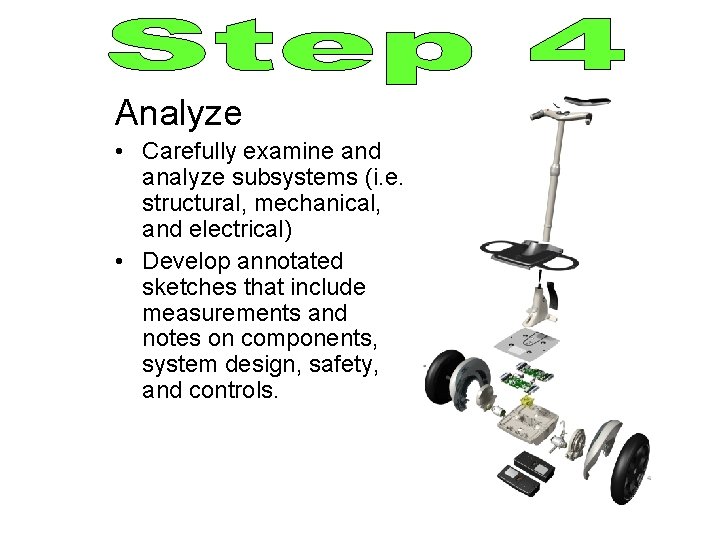
Analyze • Carefully examine and analyze subsystems (i. e. structural, mechanical, and electrical) • Develop annotated sketches that include measurements and notes on components, system design, safety, and controls.
Test • Carefully reassemble the product. • Operate the device and record observations about its performance in terms of functionality (operational and ergonomic) and projected durability.
Documentation • Inferred design goals • Inferred constraints • Design (functionality, form (geometry), and materials) • Schematic diagrams • Lists (materials, components, critical components, flaws, successes, etc. ) • Identify any refinements that might enhance the product’s usefulness. • Upgrades and changes
• Use Pro Desk Top to “Reverse Engineer” the over all dimensions of an item of your choice. – Cell Phone, I-Pod, Remote Control • Make at least one major change. • Project your name into the surface • Create a Rapid Prototype of Product.