
To be successful today 1 2 Parent reflection
To be successful today… 1) 2) Parent reflection due WED 11/15 Add to TOC and set up Notes: Plant Structures 3) HW: Job for Life WS BYOD Color of the day is Phones are in put away in backpacks
Plant Systems Essential Question: How do the major structures contribute to the plant’s survival and overall life functions?
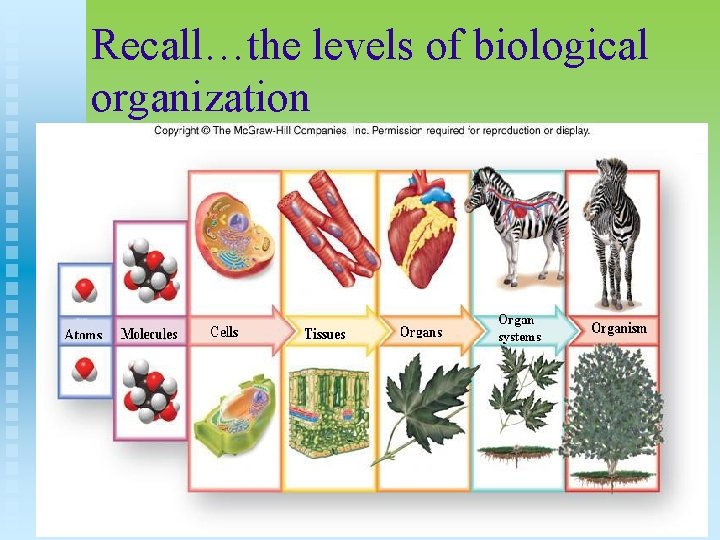
Recall…the levels of biological organization
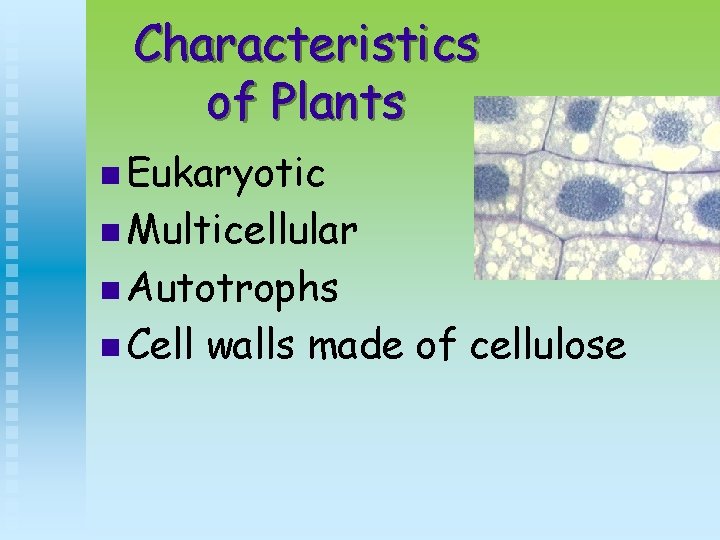
Characteristics of Plants n Eukaryotic n Multicellular n Autotrophs n Cell walls made of cellulose
Importance of plants n Earth’s major producers n Provide food and shelter for many organisms n Supply oxygen needed for respiration u. Take in CO 2 and release O 2
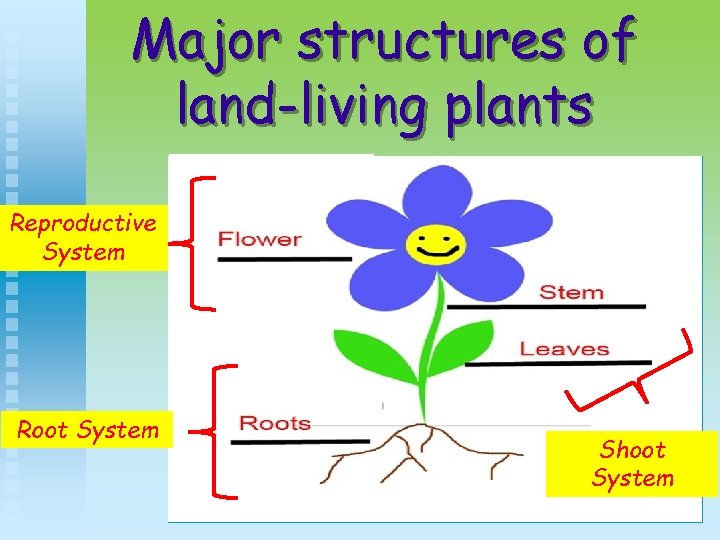
Major structures of land-living plants Reproductive System Root System Shoot System
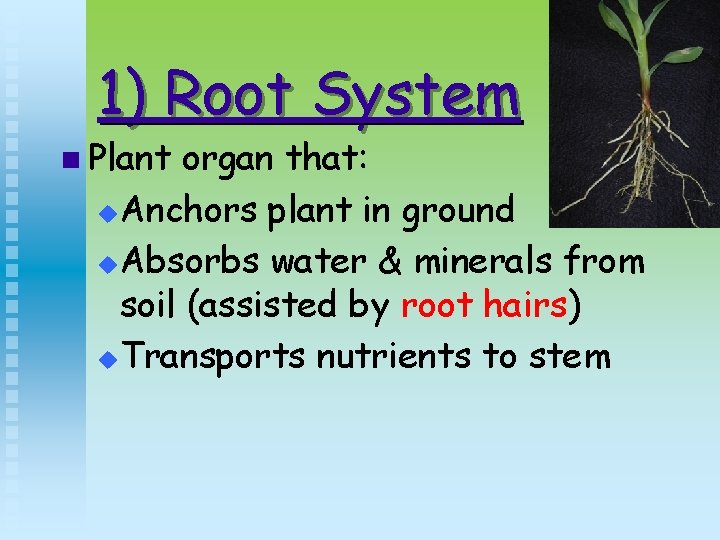
1) Root System n Plant organ that: u Anchors plant in ground u Absorbs water & minerals from soil (assisted by root hairs) u Transports nutrients to stem
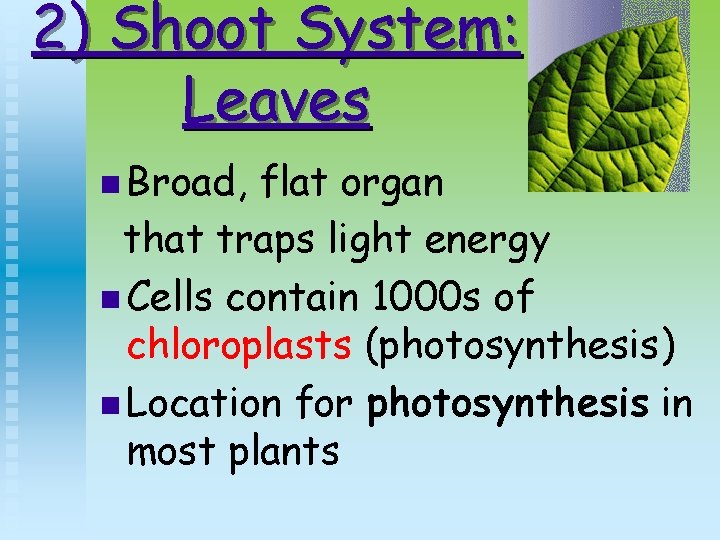
2) Shoot System: Leaves n Broad, flat organ that traps light energy n Cells contain 1000 s of chloroplasts (photosynthesis) n Location for photosynthesis in most plants
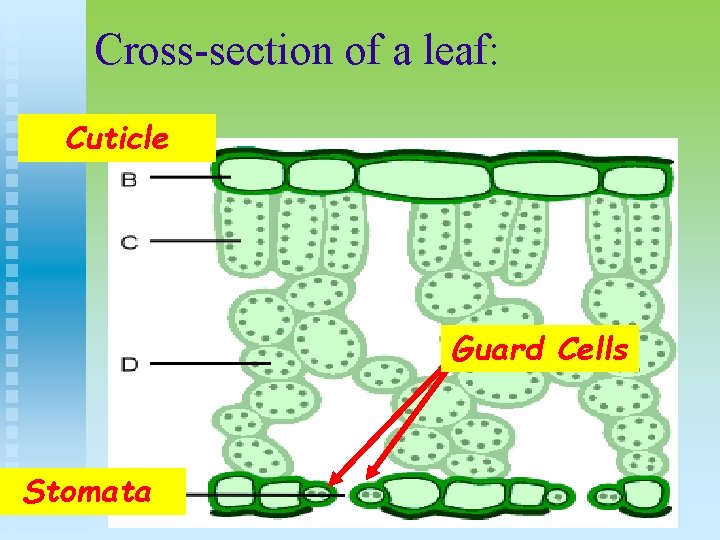
Cross-section of a leaf: Cuticle Guard Cells Stomata
Cuticle n Protective waxy layer on leaves n Prevents evaporation & tissues from drying out
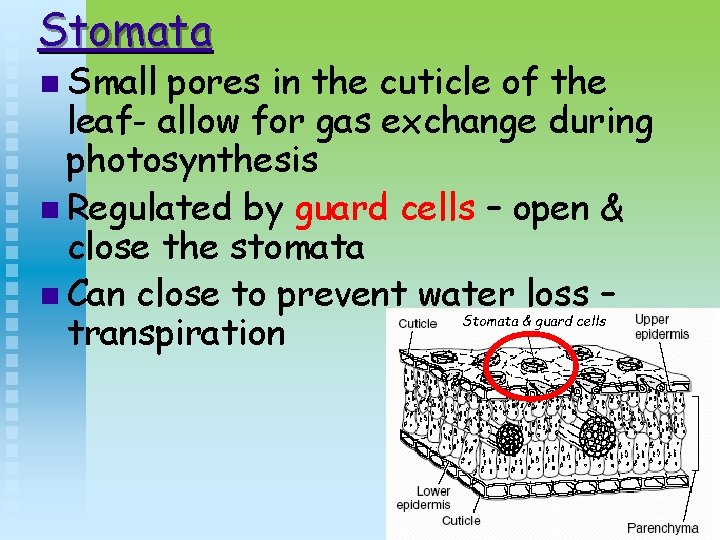
Stomata n Small pores in the cuticle of the leaf- allow for gas exchange during photosynthesis n Regulated by guard cells – open & close the stomata n Can close to prevent water loss – transpiration Stomata & guard cells
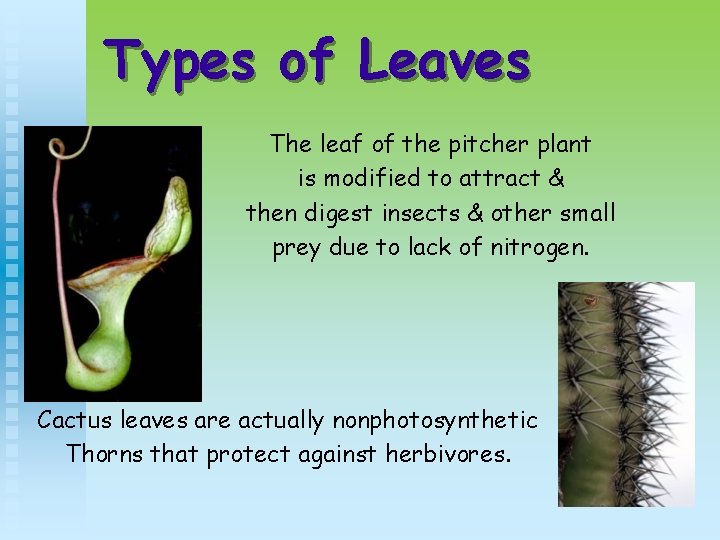
Types of Leaves The leaf of the pitcher plant is modified to attract & then digest insects & other small prey due to lack of nitrogen. Cactus leaves are actually nonphotosynthetic Thorns that protect against herbivores.
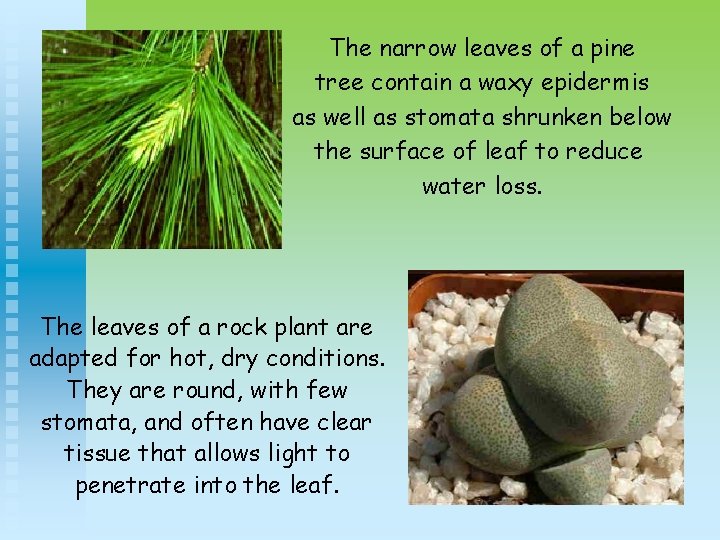
The narrow leaves of a pine tree contain a waxy epidermis as well as stomata shrunken below the surface of leaf to reduce water loss. The leaves of a rock plant are adapted for hot, dry conditions. They are round, with few stomata, and often have clear tissue that allows light to penetrate into the leaf.
2) Shoot System: Stem n Provides support for upright growth n Some green stems may also carry out photosynthesis n Contains vascular tissues for transporting nutrients from one part of the plant to another
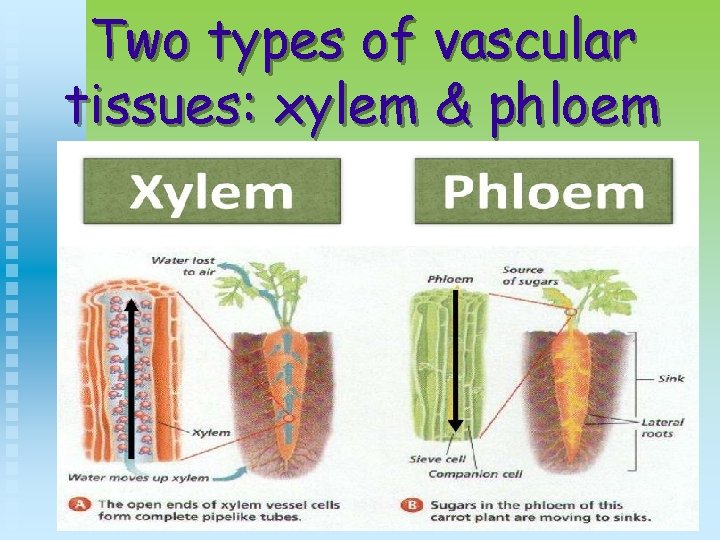
Two types of vascular tissues: xylem & phloem
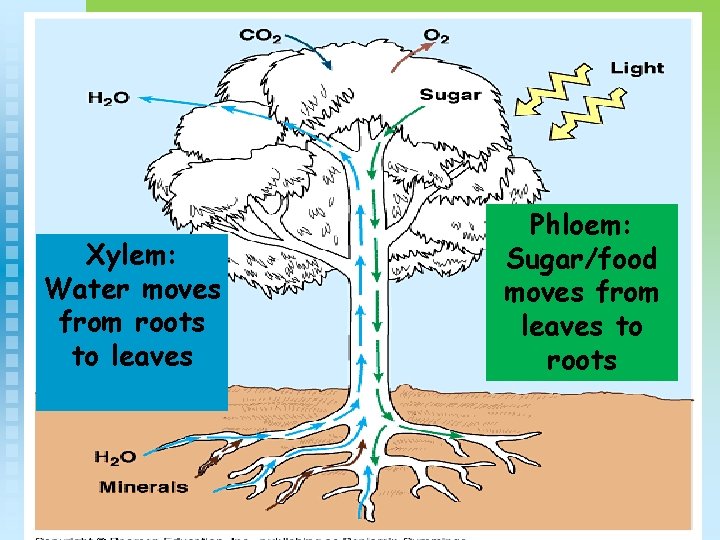
Xylem: Water moves from roots to leaves Phloem: Sugar/food moves from leaves to roots
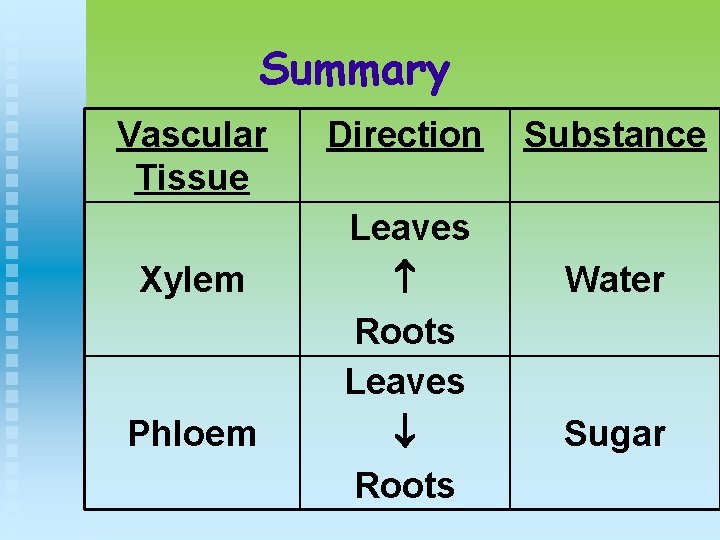
Summary Vascular Tissue Xylem Phloem Direction Leaves Roots Substance Water Sugar
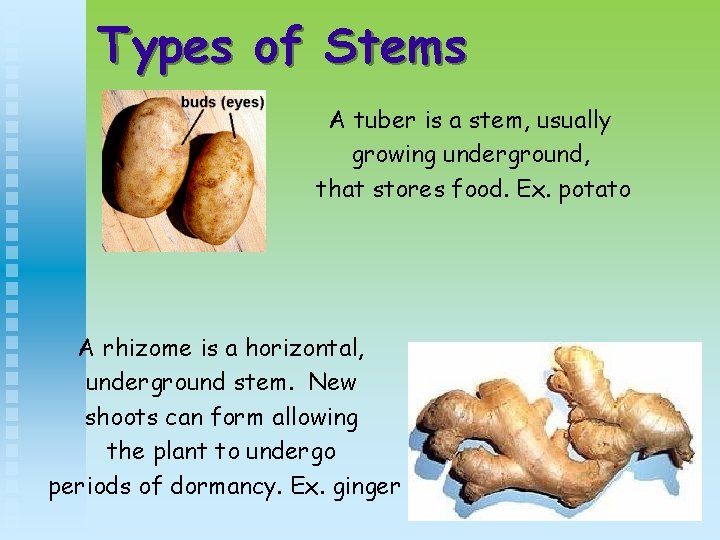
Types of Stems A tuber is a stem, usually growing underground, that stores food. Ex. potato A rhizome is a horizontal, underground stem. New shoots can form allowing the plant to undergo periods of dormancy. Ex. ginger
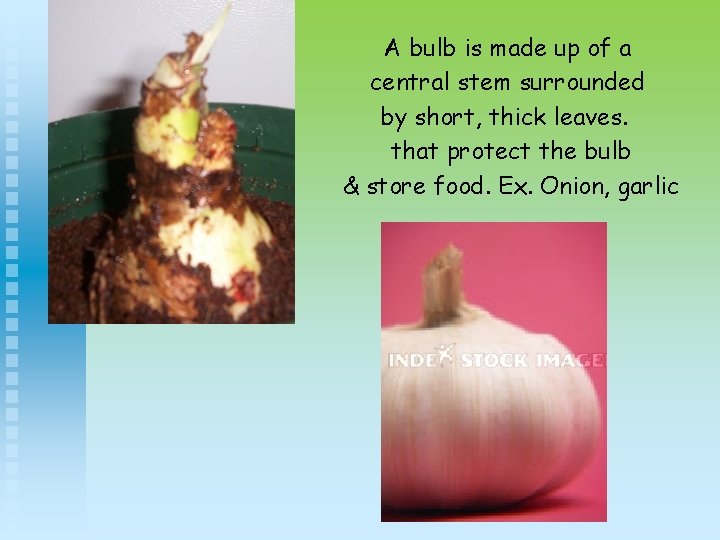
A bulb is made up of a central stem surrounded by short, thick leaves. that protect the bulb & store food. Ex. Onion, garlic
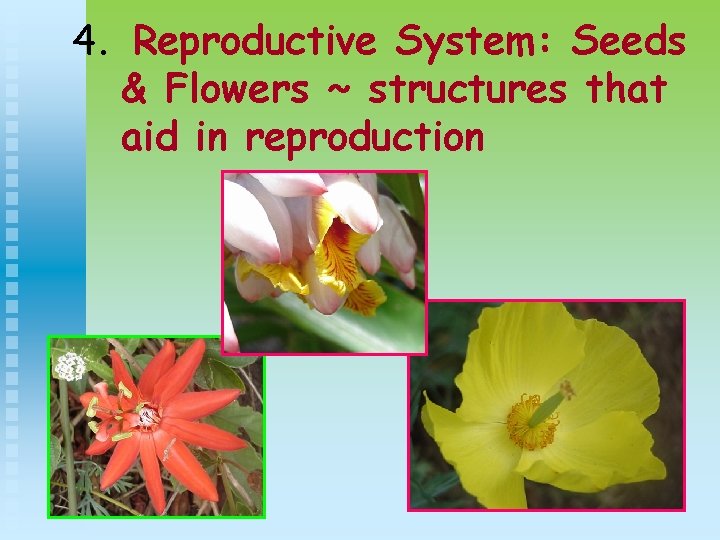
4. Reproductive System: Seeds & Flowers ~ structures that aid in reproduction
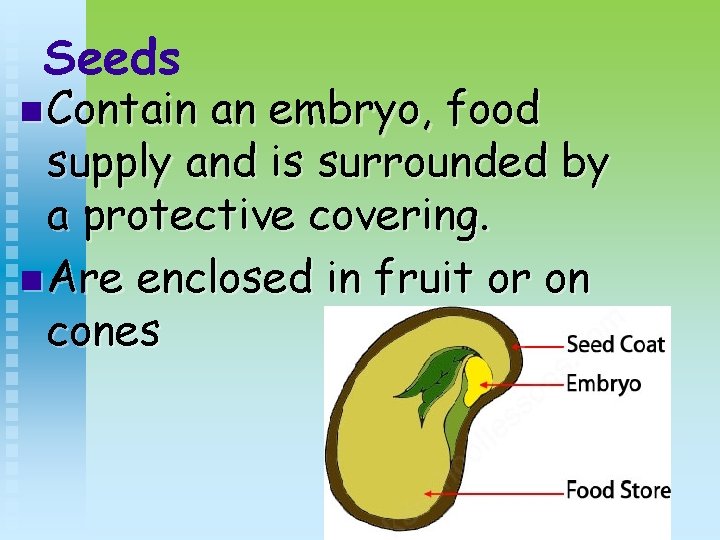
Seeds n Contain an embryo, food supply and is surrounded by a protective covering. n Are enclosed in fruit or on cones
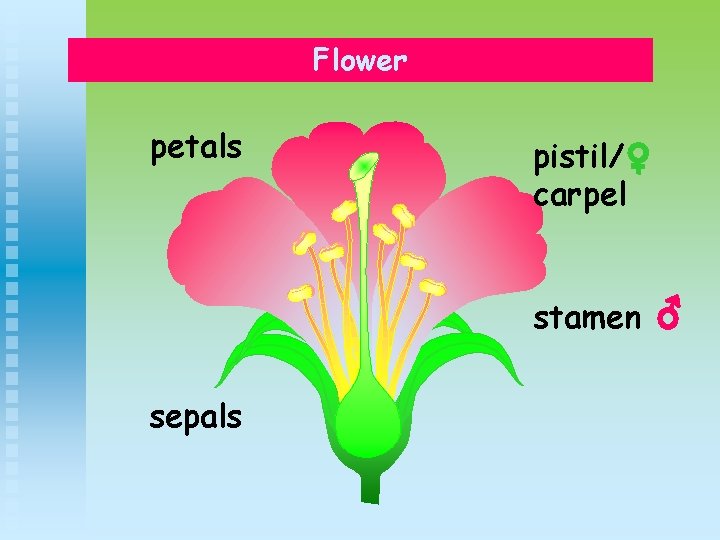
Flower petals pistil/ carpel stamen sepals
- Slides: 23