
TKT YL Teaching Knowledge Test Young Learners Aims

- Slides: 23
TKT: YL Teaching Knowledge Test: Young Learners
Aims of the seminar § § to identify the benefits of taking TKT YL Module to give a brief overview of the format and content of TKT YL Module to practice some tasks in the test format to discuss the strategies for successful test preparation
Benefits of Taking TKT § § § helps systemize and structure knowledge of language and teaching & learning the language boosts professional development and leads to a higher level of proficiency in language teaching methodology is up-to-date and recognized internationally is helpful (gives a model of how complex concepts and techniques can be dealt with in relatively straightforward ways) is motivating (teacher – friendly, gives a sense of achievement, certificates)
The test aims to test knowledge in 4 syllabus areas: § § Knowledge of young learners and principles of teaching English to young learners (Part 1) Planning and preparing young learner lessons (Part 2) Teaching young learners (Part 3) Assessing young learner through classroombased learning (Part 4)
§ 80 questions § Task types: 3 -option multiple choice; 1 -1 matching; 3/4/5 -option matching; odd one out.
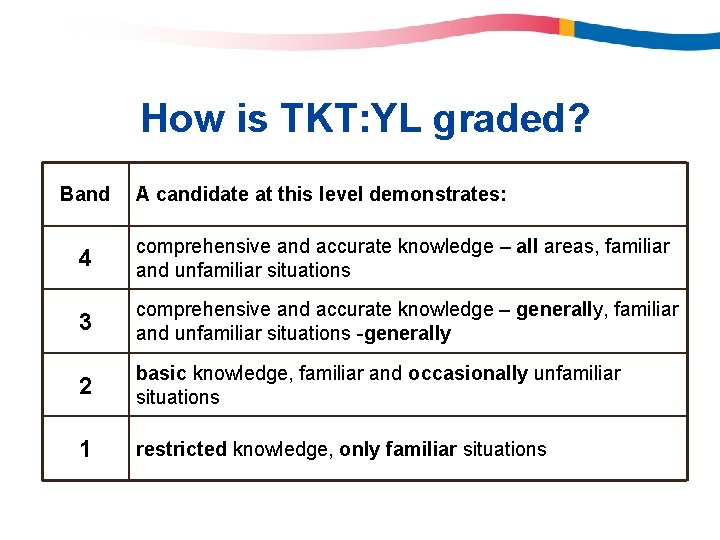
How is TKT: YL graded? Band A candidate at this level demonstrates: 4 comprehensive and accurate knowledge – all areas, familiar and unfamiliar situations 3 comprehensive and accurate knowledge – generally, familiar and unfamiliar situations -generally 2 basic knowledge, familiar and occasionally unfamiliar situations 1 restricted knowledge, only familiar situations
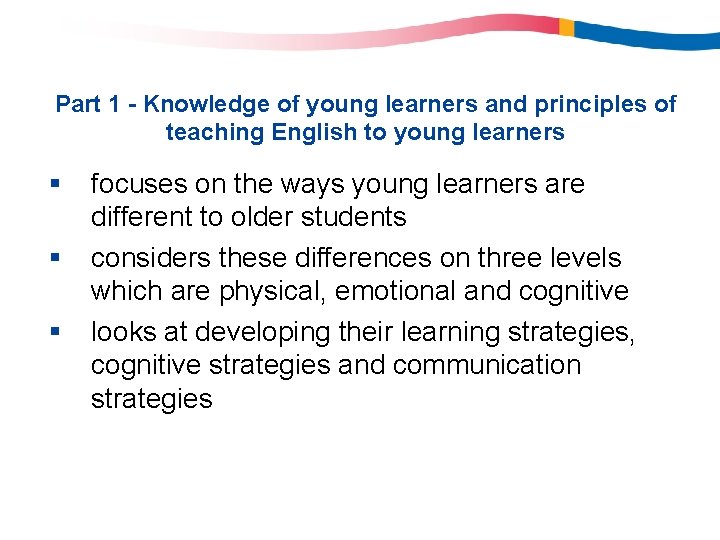
Part 1 - Knowledge of young learners and principles of teaching English to young learners § § § focuses on the ways young learners are different to older students considers these differences on three levels which are physical, emotional and cognitive looks at developing their learning strategies, cognitive strategies and communication strategies
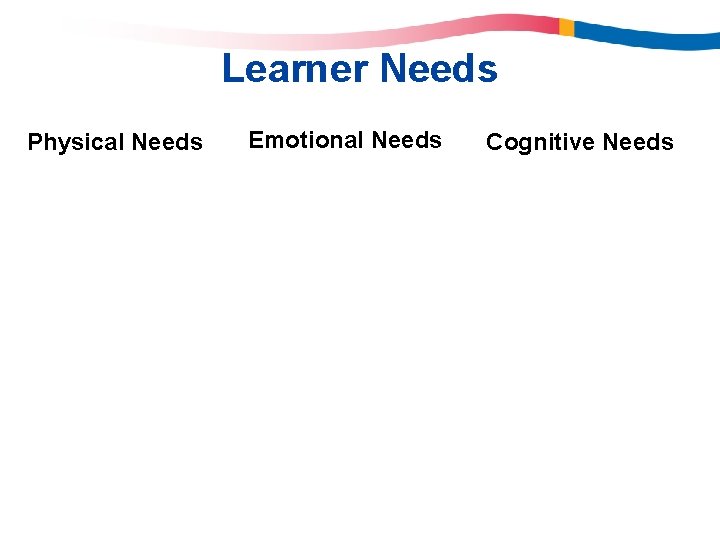
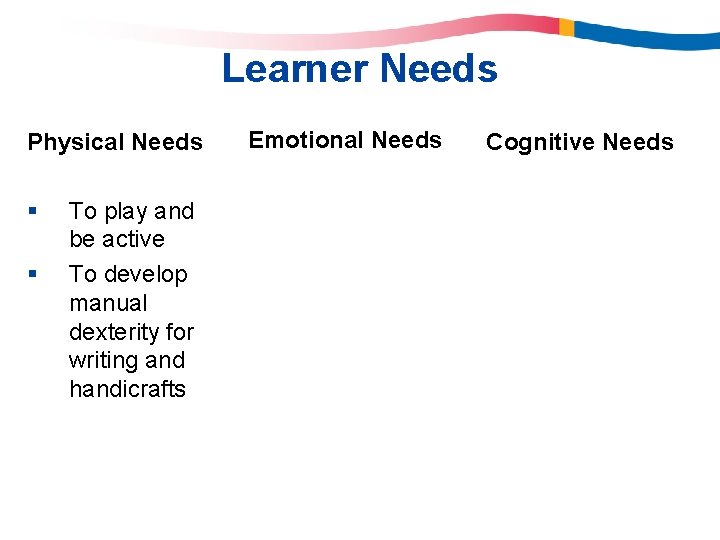
Learner Needs Physical Needs Emotional Needs Cognitive Needs
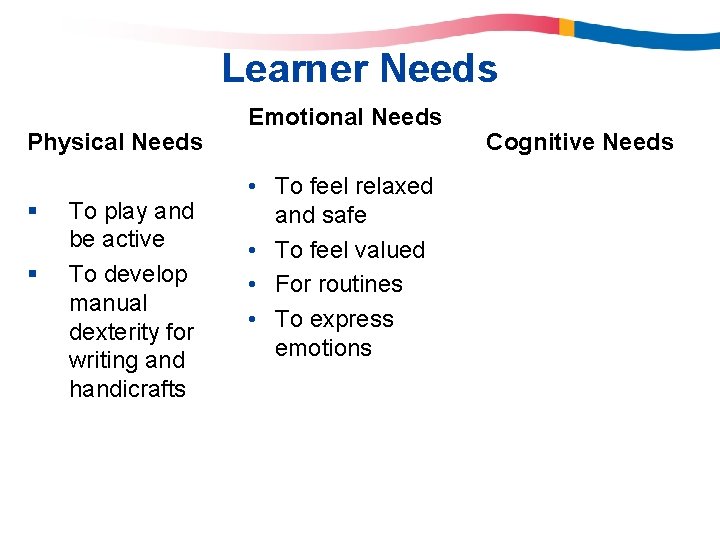
Learner Needs Physical Needs § § To play and be active To develop manual dexterity for writing and handicrafts Emotional Needs Cognitive Needs
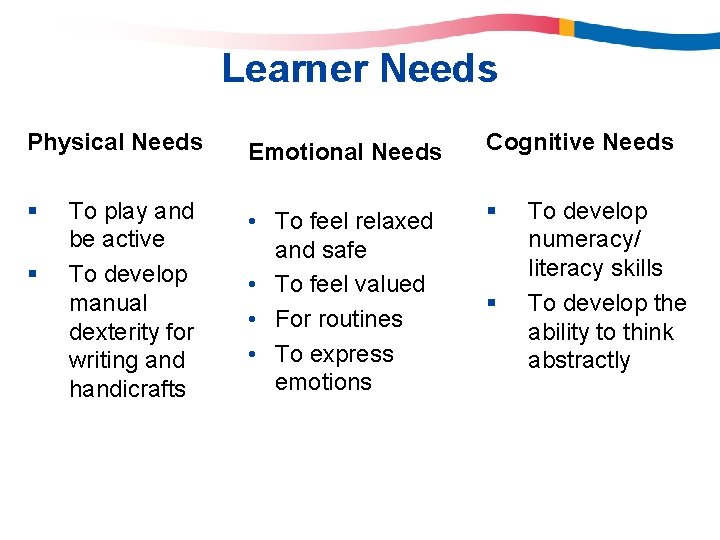
Learner Needs Physical Needs § § To play and be active To develop manual dexterity for writing and handicrafts Emotional Needs • To feel relaxed and safe • To feel valued • For routines • To express emotions Cognitive Needs
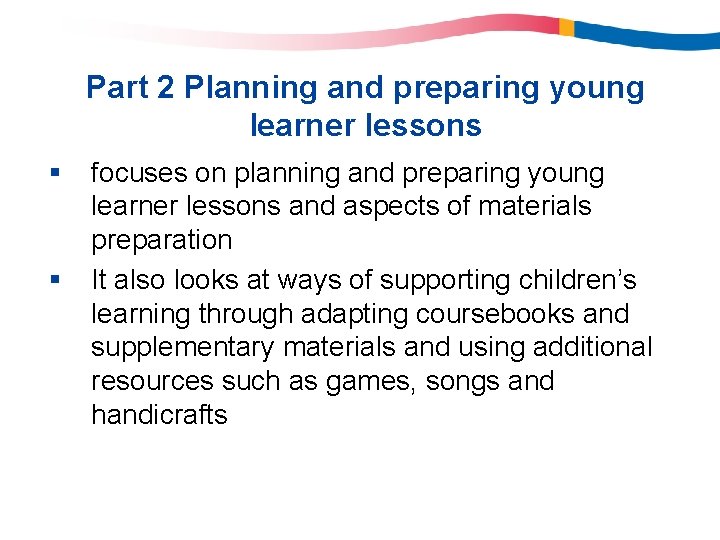
Learner Needs Physical Needs Emotional Needs Cognitive Needs § • To feel relaxed and safe • To feel valued • For routines • To express emotions § § To play and be active To develop manual dexterity for writing and handicrafts § To develop numeracy/ literacy skills To develop the ability to think abstractly
Part 2 Planning and preparing young learner lessons § § focuses on planning and preparing young learner lessons and aspects of materials preparation It also looks at ways of supporting children’s learning through adapting coursebooks and supplementary materials and using additional resources such as games, songs and handicrafts
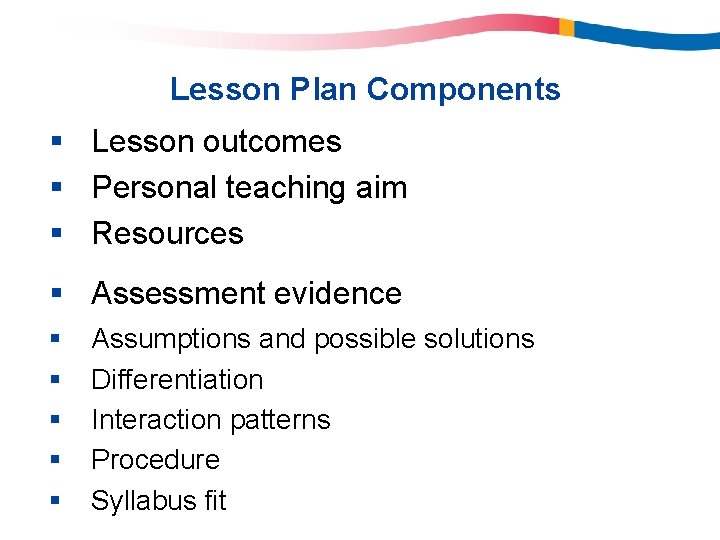
Lesson Plan Components § Lesson outcomes § Personal teaching aim § Resources § Assessment evidence § § § Assumptions and possible solutions Differentiation Interaction patterns Procedure Syllabus fit
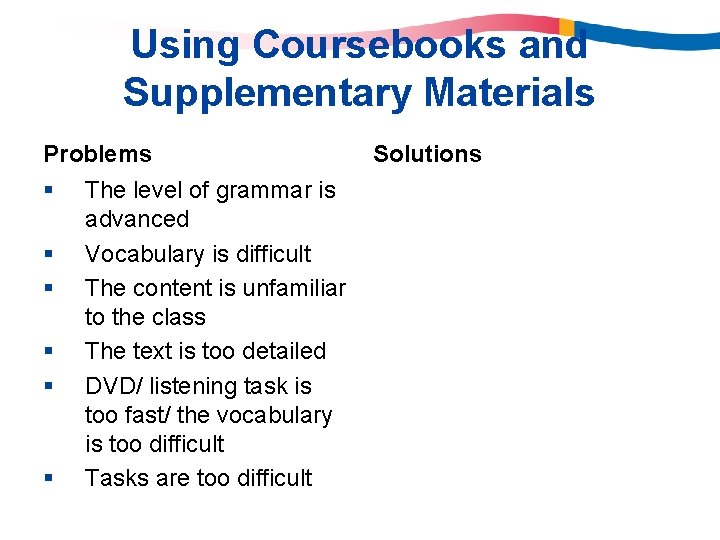
Using Coursebooks and Supplementary Materials Problems § § § The level of grammar is advanced Vocabulary is difficult The content is unfamiliar to the class The text is too detailed DVD/ listening task is too fast/ the vocabulary is too difficult Tasks are too difficult Solutions
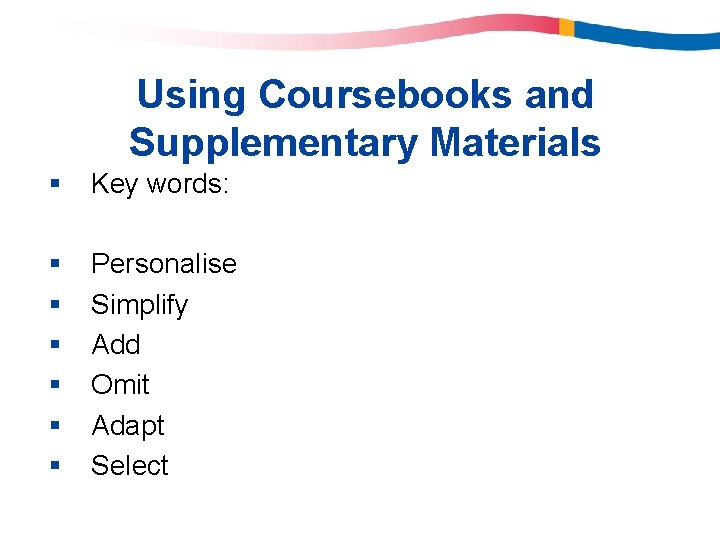
Using Coursebooks and Supplementary Materials § Key words: § § § Personalise Simplify Add Omit Adapt Select
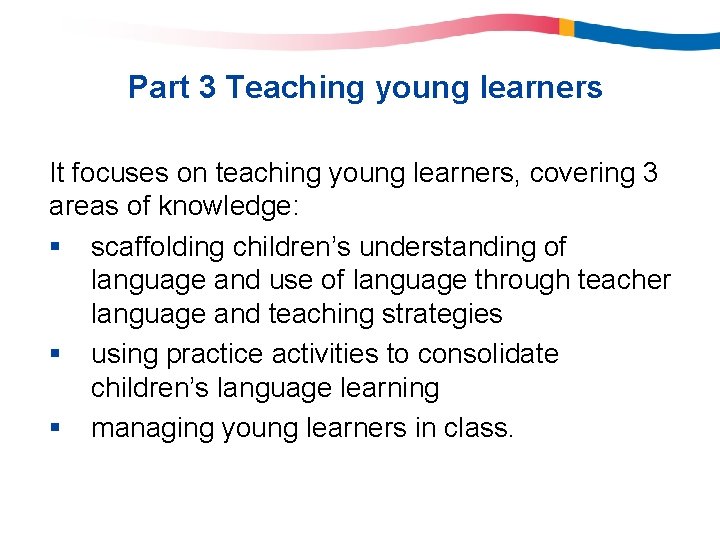
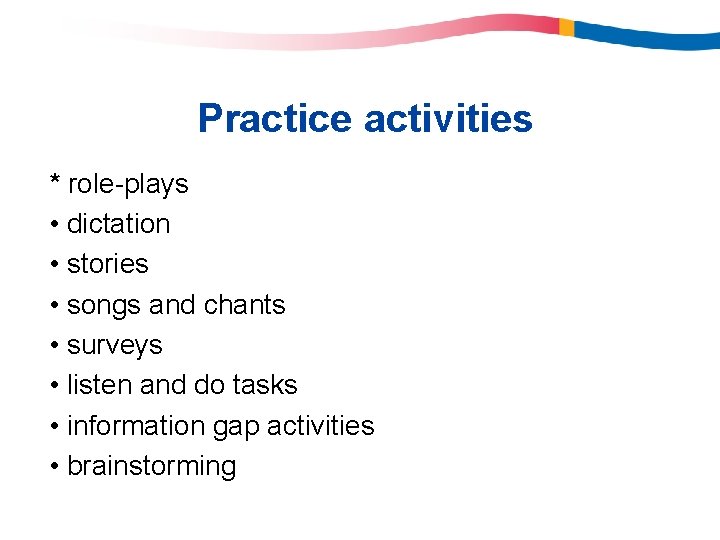
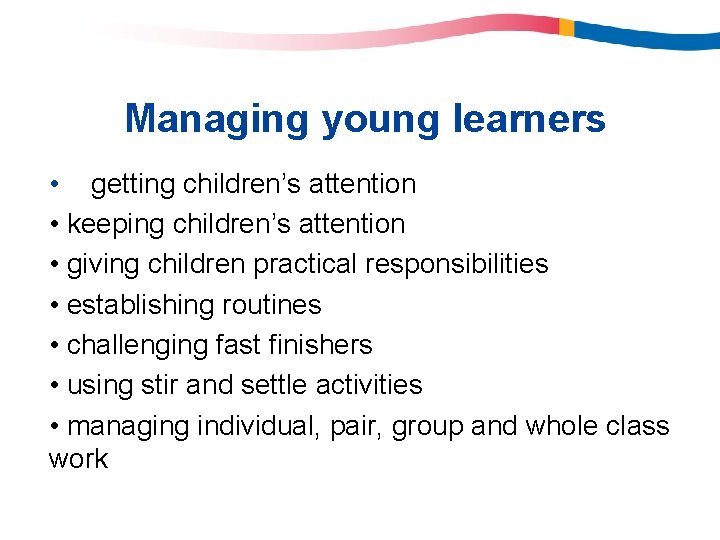
Part 3 Teaching young learners It focuses on teaching young learners, covering 3 areas of knowledge: § scaffolding children’s understanding of language and use of language through teacher language and teaching strategies § using practice activities to consolidate children’s language learning § managing young learners in class.
Scaffolding § Scaffolding learning through teacher language and teaching strategies
Practice activities * role-plays • dictation • stories • songs and chants • surveys • listen and do tasks • information gap activities • brainstorming
Managing § Managing young learners in class § e. g. getting children’s attention
Managing young learners • getting children’s attention • keeping children’s attention • giving children practical responsibilities • establishing routines • challenging fast finishers • using stir and settle activities • managing individual, pair, group and whole class work
Part 4 Assessing young learner learning through classroom-based assessment It focuses on informal assessment, covering three areas of knowledge: § § § Purposes of assessing learning, Focuses of assessing learning Acting on assessment evidence.
Further information www. cambridgeenglish. org
Online Professional Development • Courses Earn a certificate from Cambridge. • Webinars Interact with expert trainers. • Knowledge Articles with industry-leading ideas. Join at www. Cambridge. English. Teacher. org