
TKT CLIL Teaching Knowledge Test Content and Language

- Slides: 76
TKT: CLIL Teaching Knowledge Test: Content and Language Integrated Learning
Aims of the seminar § § to clarify what CLIL is to understand what TKT: CLIL is to be able to identify parts of the test to practise tasks in the test format
What Is CLIL? An approach in which a foreign language is used as the medium for teaching a curricular subject such as Science, History or Art. The target language and the subject content have a joint role in the learning.
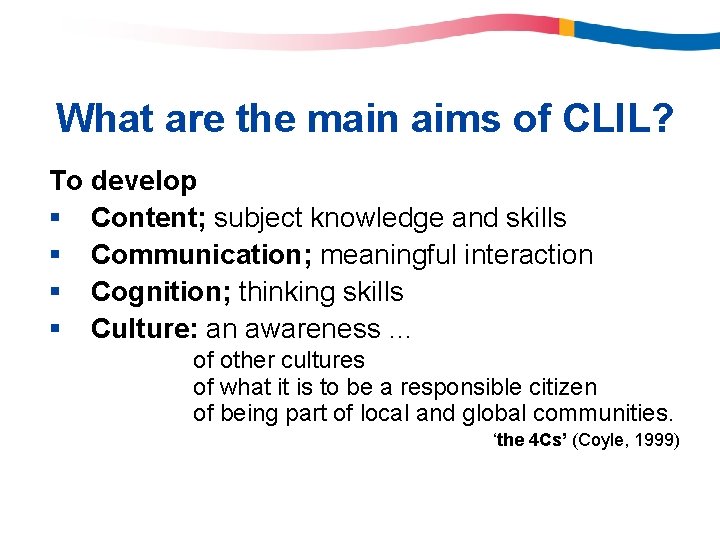
What are the main aims of CLIL? To develop § Content; subject knowledge and skills § Communication; meaningful interaction § Cognition; thinking skills § Culture: an awareness … of other cultures of what it is to be a responsible citizen of being part of local and global communities. ‘the 4 Cs’ (Coyle, 1999)
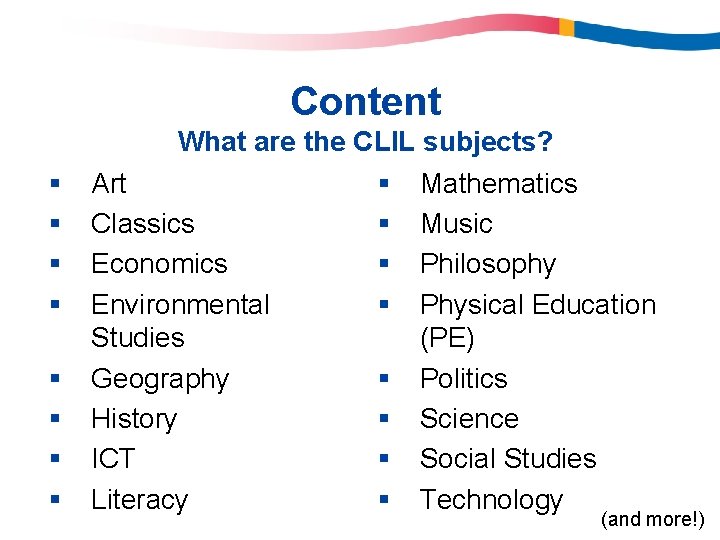
Content § § § § What are the CLIL subjects? Art § Mathematics Classics § Music Economics § Philosophy Environmental § Physical Education Studies (PE) Geography § Politics History § Science ICT § Social Studies Literacy § Technology (and more!)
Communication The European Commission for Education and Culture states that CLIL should: ‘enable pupils to develop language skills which emphasize effective communication…for real practical purposes. ’ (Eurydice Survey, 2006: ‘CLIL at School in Europe’) CLIL Aim Increase ttdenu. S Talking Time
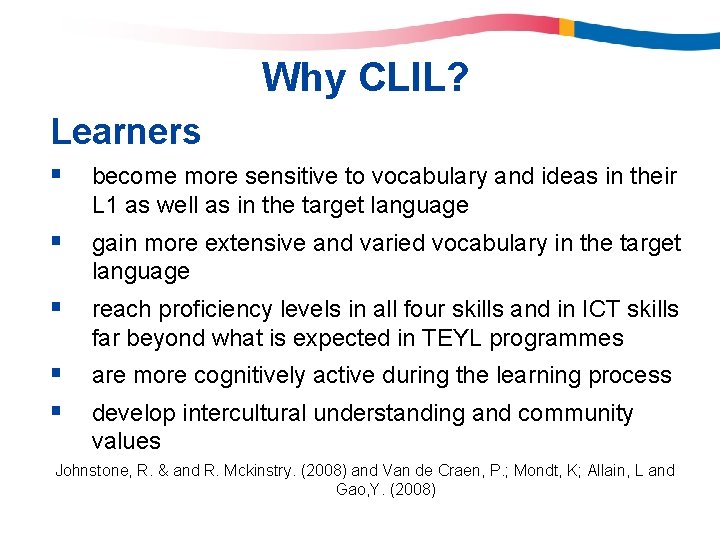
Why CLIL? Learners § become more sensitive to vocabulary and ideas in their L 1 as well as in the target language § gain more extensive and varied vocabulary in the target language § reach proficiency levels in all four skills and in ICT skills far beyond what is expected in TEYL programmes § § are more cognitively active during the learning process develop intercultural understanding and community values Johnstone, R. & and R. Mckinstry. (2008) and Van de Craen, P. ; Mondt, K; Allain, L and Gao, Y. (2008)
What is TKT: CLIL? § § § a test of knowledge about CLIL an optional module of TKT independent of TKT: CLIL is NOT § a test of subject knowledge § a test of language proficiency § a test of teaching skills
Who is TKT: CLIL for? § § § subject teachers who use English as a medium of study English language teachers who teach curriculum subjects classroom teachers who teach curriculum subjects in English classroom assistants working in CLIL contexts English as an Additional Language (EAL) teachers who work with non-native speaker learners in mainstream classes
What does TKT: CLIL test? Part 1 § Knowledge of CLIL and Principles of CLIL Part 2 § Lesson Preparation § Lesson Delivery § Assessment
Lesson Preparation - Part 2 (25 items) Knowledge of § planning a lesson or a series of lessons § language demands of subject content and accompanying tasks § resources including multi-media and visual organisers § materials selection, adaptation § activity types
Lesson Delivery - Part 2 (20 items) Knowledge of § classroom language § scaffolding content and language learning § methods to help learners develop learning strategies § consolidating learning and differentiation
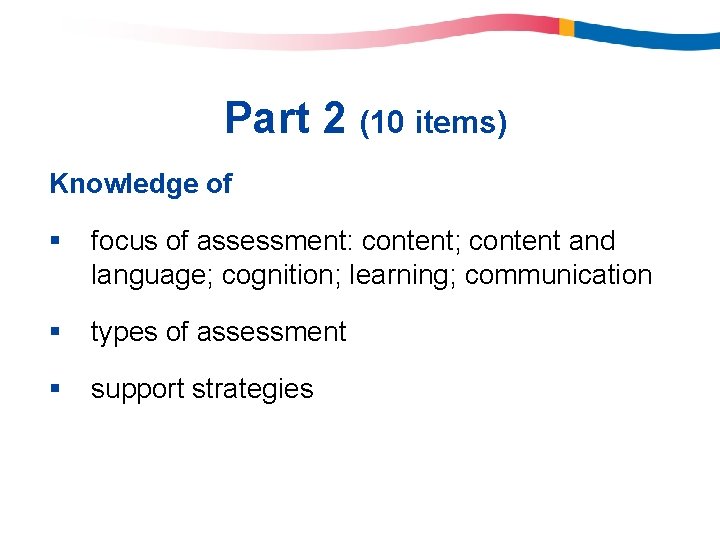
Part 2 (10 items) Knowledge of § focus of assessment: content; content and language; cognition; learning; communication § types of assessment § support strategies
Candidates are expected to be familiar with the language of teaching represented in the separate TKT glossary as well as the terminology related to the description of language, subject vocabulary and concepts for TKT: CLIL.
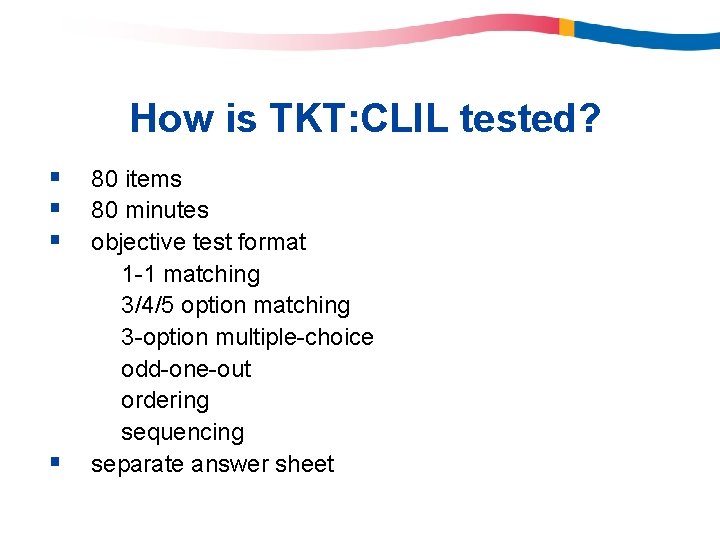
How is TKT: CLIL tested? § § 80 items 80 minutes objective test format 1 -1 matching 3/4/5 option matching 3 -option multiple-choice odd-one-out ordering sequencing separate answer sheet
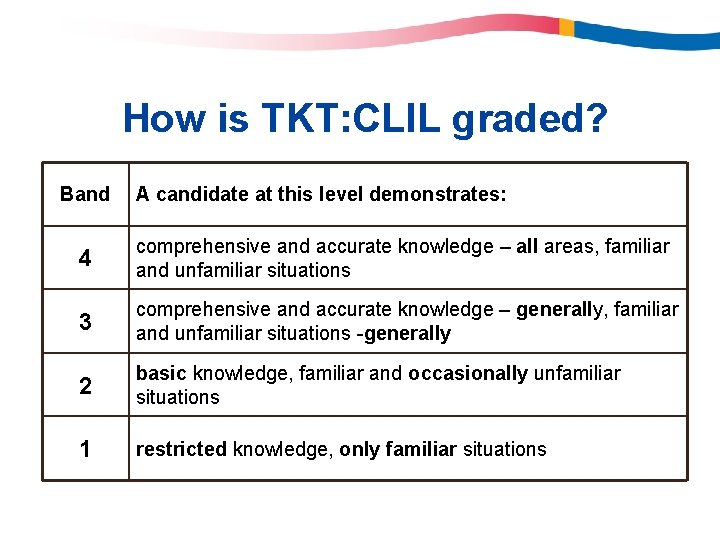
How is TKT: CLIL graded? Band A candidate at this level demonstrates: 4 comprehensive and accurate knowledge – all areas, familiar and unfamiliar situations 3 comprehensive and accurate knowledge – generally, familiar and unfamiliar situations -generally 2 basic knowledge, familiar and occasionally unfamiliar situations 1 restricted knowledge, only familiar situations
What teachers say about CLIL § “It would have been useful for us if during the last year of our degree we had the chance to sit a test like this. ” § “The test was quite comprehensive…. we were able to evaluate and assess our teaching strategies and methodologies. § “I think I’m not used to thinking about my teaching practice and the test has helped me to be more aware of what I do or should do…” § N. B. Successful candidates are likely to have at least some experience of teaching school subjects through English
What are the parts of CLIL? § § Part 1 Knowledge of CLIL and Principles of CLIL Part 2 § Lesson Preparation § Lesson Delivery § Assessment
BICS and CALP § BICS – Basic Interpersonal Communicative Skills – skills needed for social, conversational situations
BICS and CALP § CALP – Cognitive Academic Language Proficiency – a level required for academic school study
The Role of Language in CLIL Content – obligatory language Content – compatible language Subject-specific vocabulary HB p. 24 - 27
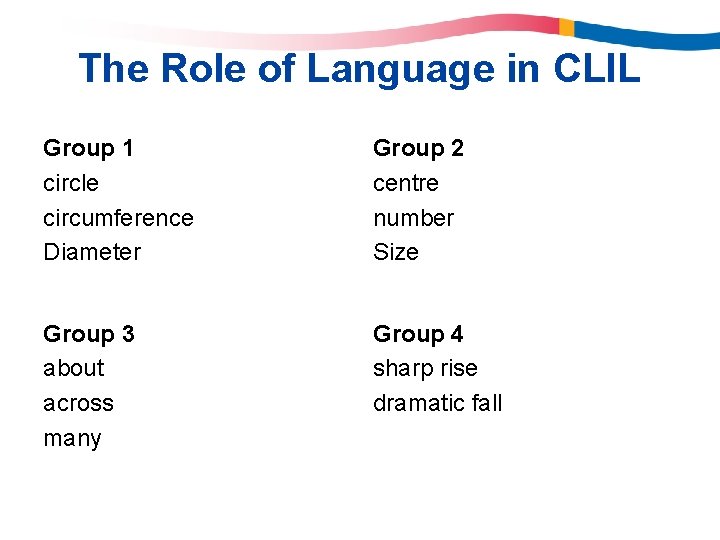
The Role of Language in CLIL Group 1 circle circumference Diameter Group 2 centre number Size Group 3 about across many Group 4 sharp rise dramatic fall
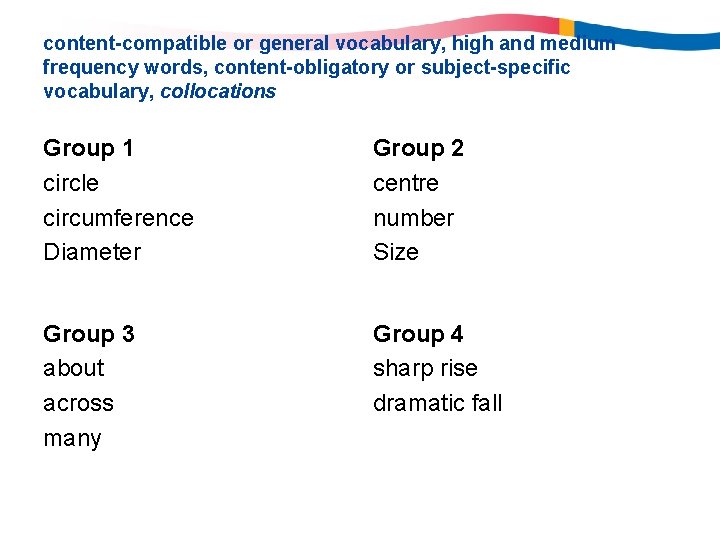
content-compatible or general vocabulary, high and medium frequency words, content-obligatory or subject-specific vocabulary, collocations Group 1 circle circumference Diameter Group 2 centre number Size Group 3 about across many Group 4 sharp rise dramatic fall
The Role of Language in CLIL STRUCTURES
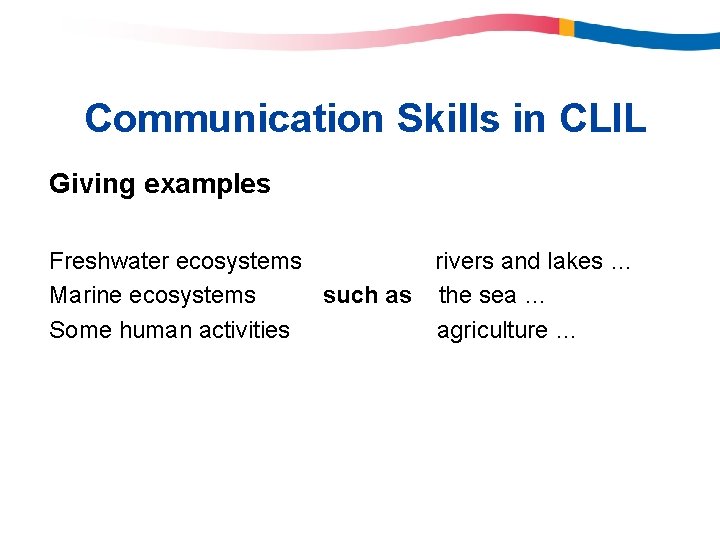
Communication Skills in CLIL Giving examples Freshwater ecosystems rivers and lakes … Marine ecosystems such as the sea … Some human activities agriculture …
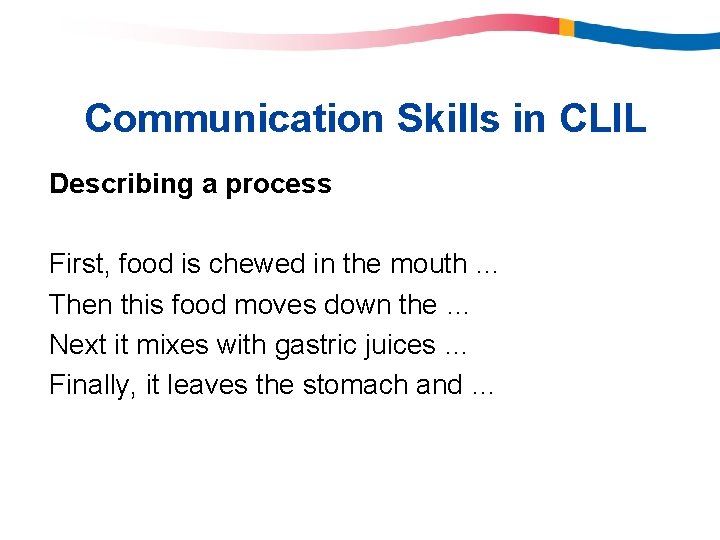
Communication Skills in CLIL Describing a process First, food is chewed in the mouth … Then this food moves down the … Next it mixes with gastric juices … Finally, it leaves the stomach and …
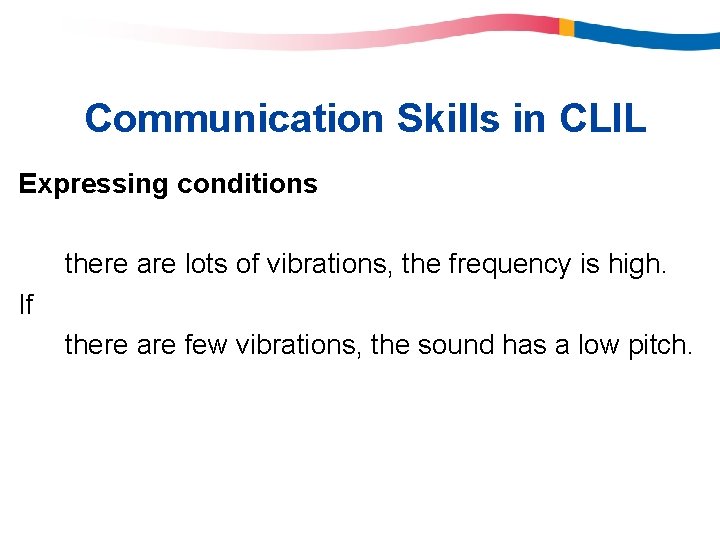
Communication Skills in CLIL Expressing conditions there are lots of vibrations, the frequency is high. If there are few vibrations, the sound has a low pitch.
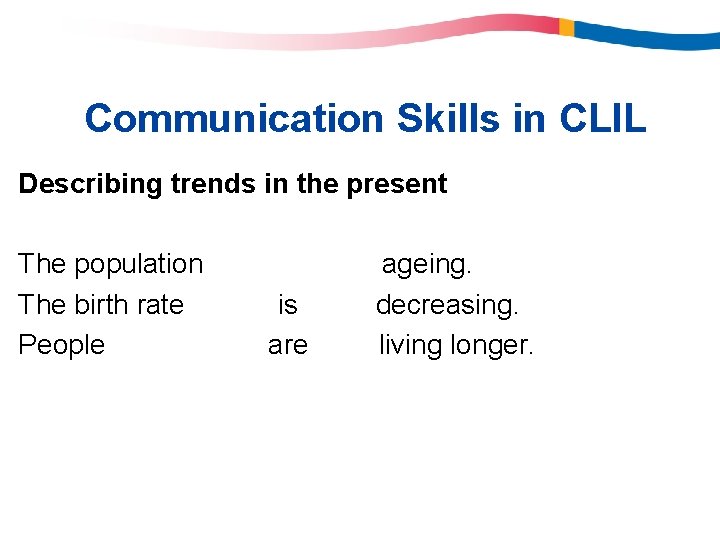
Communication Skills in CLIL Describing trends in the present The population The birth rate People is are ageing. decreasing. living longer.
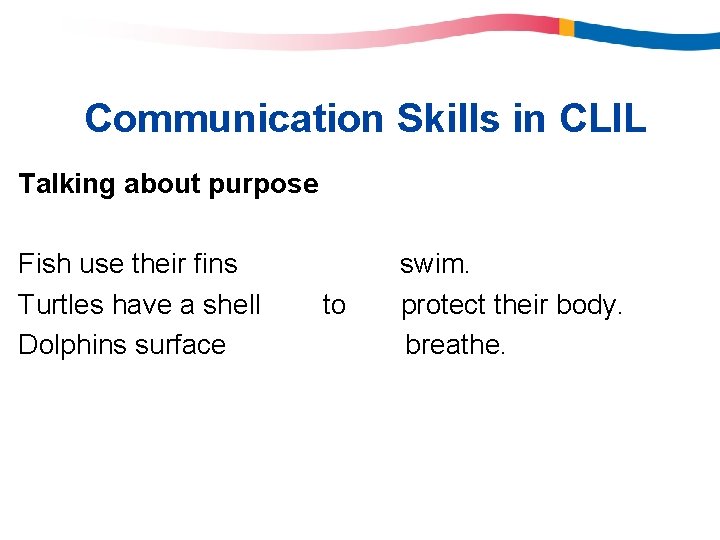
Communication Skills in CLIL Talking about purpose Fish use their fins Turtles have a shell Dolphins surface to swim. protect their body. breathe.
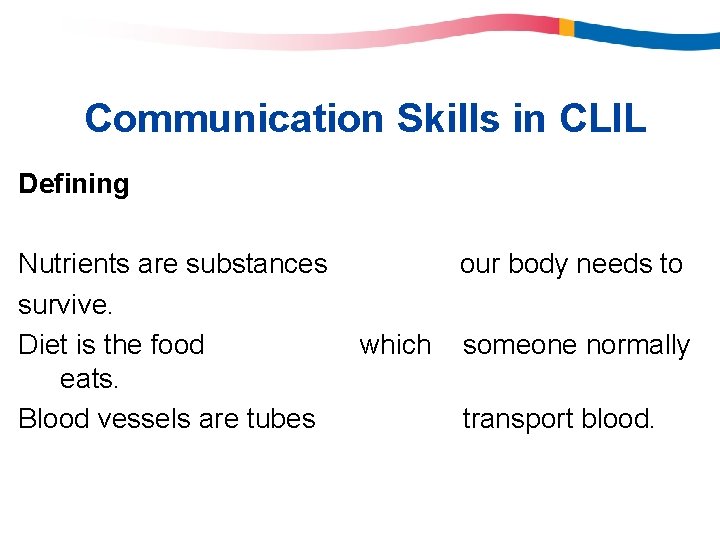
Communication Skills in CLIL Defining Nutrients are substances survive. Diet is the food eats. Blood vessels are tubes our body needs to which someone normally transport blood.
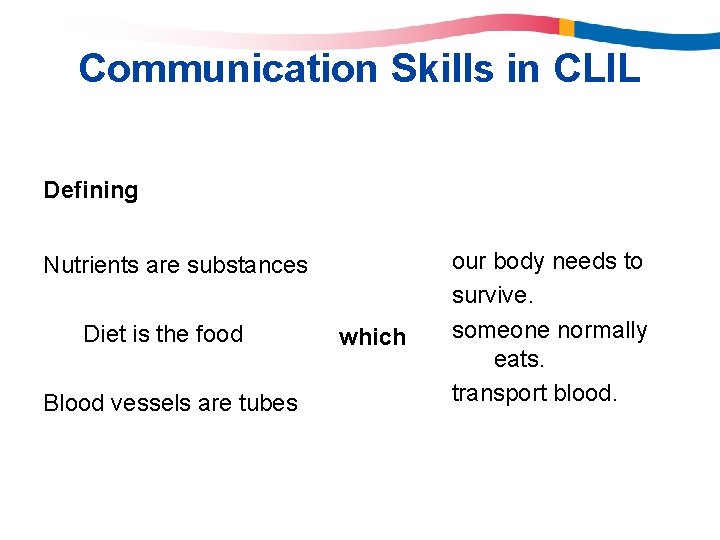
Communication Skills in CLIL Defining Nutrients are substances Diet is the food Blood vessels are tubes which our body needs to survive. someone normally eats. transport blood.
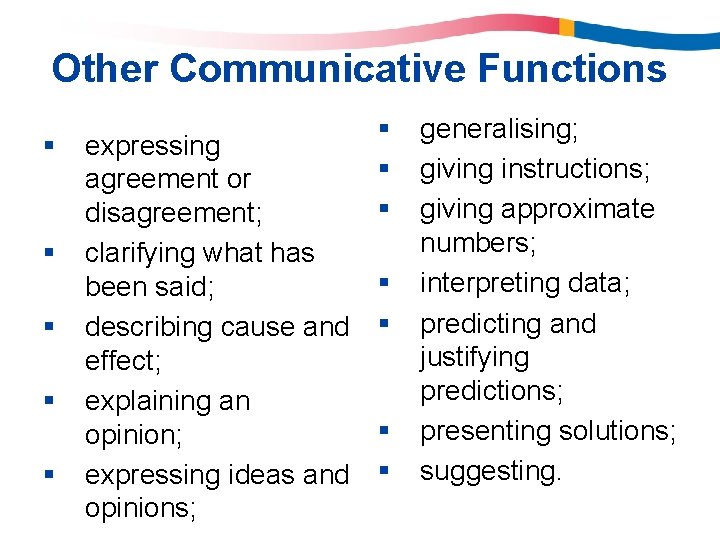
Other Communicative Functions § § § expressing agreement or disagreement; clarifying what has been said; describing cause and effect; explaining an opinion; expressing ideas and opinions; § § § § generalising; giving instructions; giving approximate numbers; interpreting data; predicting and justifying predictions; presenting solutions; suggesting.
Communication Skills in CLIL CODE SWITCHING
Cognitive Skills = thinking skills Concrete thinking skills – identifying and organising information What When Where Which Who How many questions
Cognitive Skills = thinking skills Abstract thinking skills – reasoning and hypothesising Why What if questions
Other examples of thinking skills Creative thinking (synthesis) – (to solve problems and think of new ideas) Enquiry skills (to do research) Evaluation skills (to use criteria to comment on how good the work is)
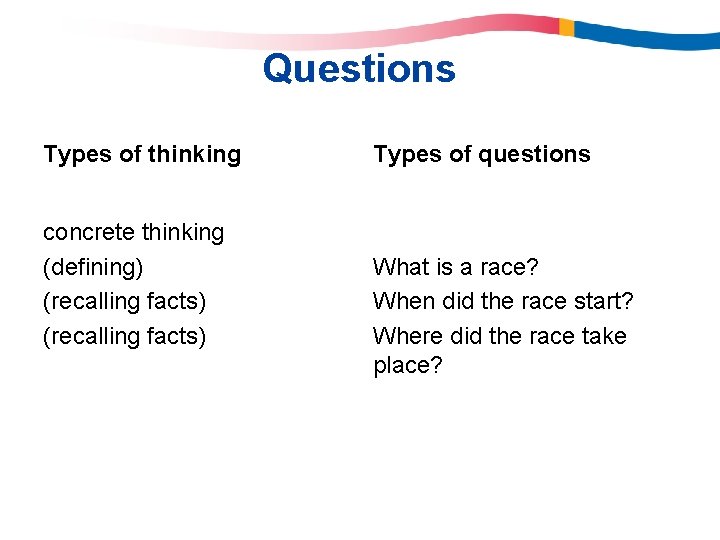
Questions Types of thinking concrete thinking (defining) (recalling facts) Types of questions What is a race? When did the race start? Where did the race take place?
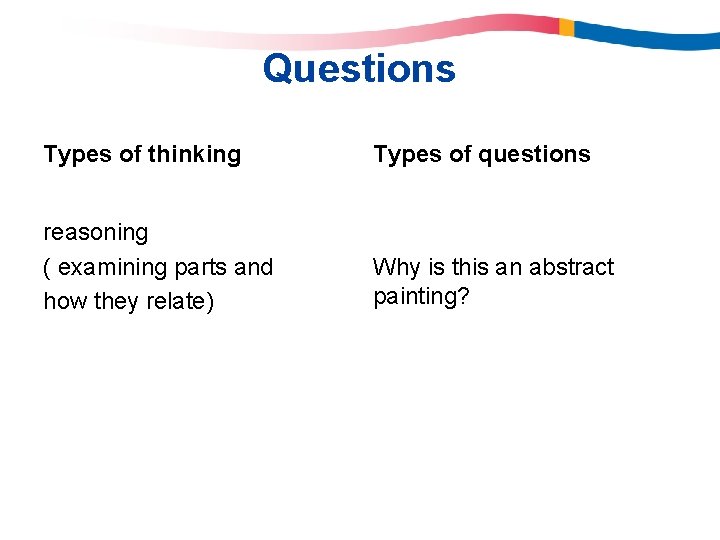
Questions Types of thinking Types of questions reasoning ( examining parts and how they relate) Why is this an abstract painting?
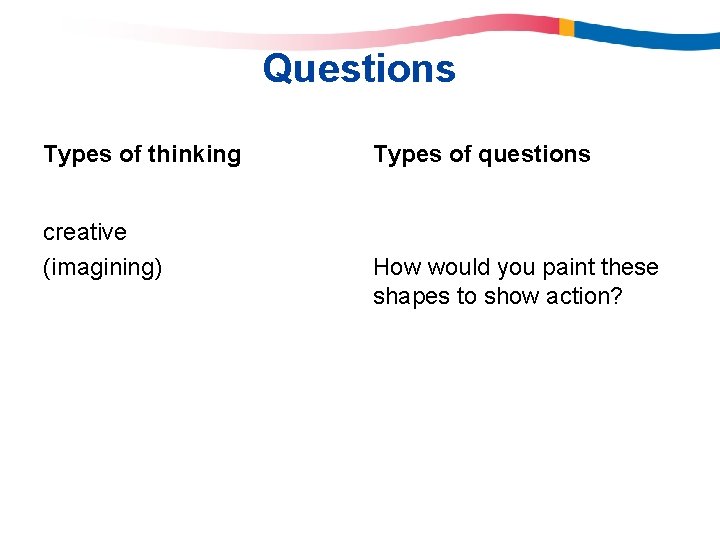
Questions Types of thinking creative (imagining) Types of questions How would you paint these shapes to show action?
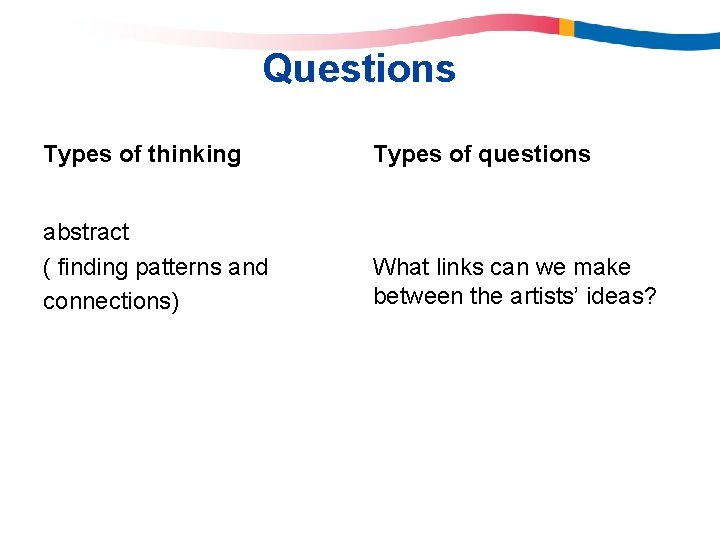
Questions Types of thinking Types of questions abstract ( finding patterns and connections) What links can we make between the artists’ ideas?
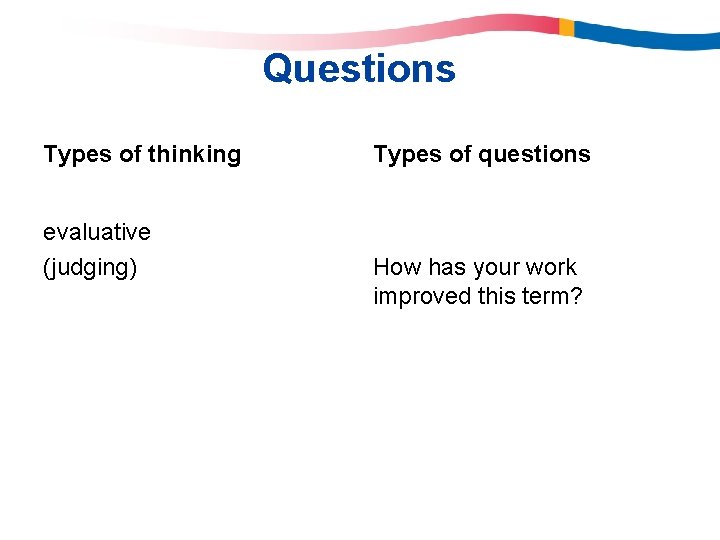
Questions Types of thinking evaluative (judging) Types of questions How has your work improved this term?
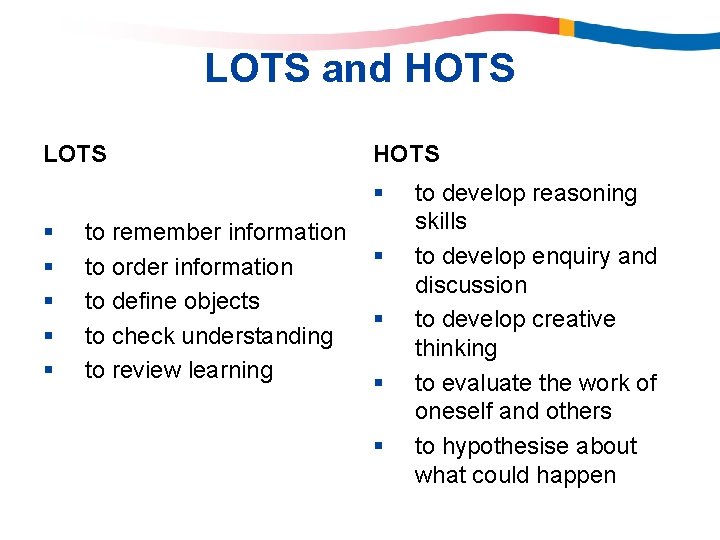
LOTS and HOTS LOTS HOTS § § § to remember information to order information to define objects to check understanding to review learning § § to develop reasoning skills to develop enquiry and discussion to develop creative thinking to evaluate the work of oneself and others to hypothesise about what could happen
Learning Skills which involve learning how to learn and developing learner autonomy.
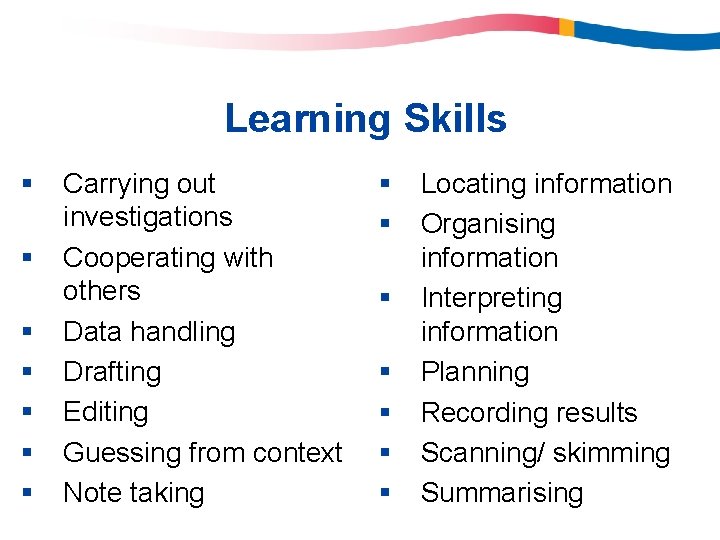
Learning Skills § § § § Carrying out investigations Cooperating with others Data handling Drafting Editing Guessing from context Note taking § § § § Locating information Organising information Interpreting information Planning Recording results Scanning/ skimming Summarising
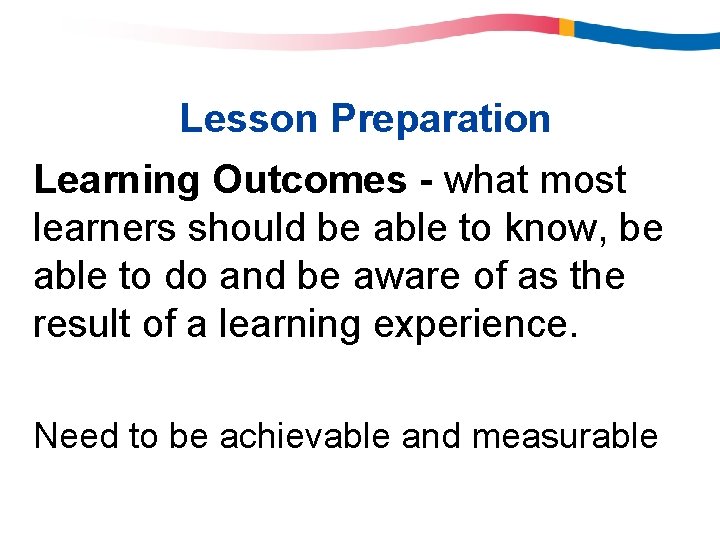
Lesson Preparation Learning Outcomes - what most learners should be able to know, be able to do and be aware of as the result of a learning experience. Need to be achievable and measurable
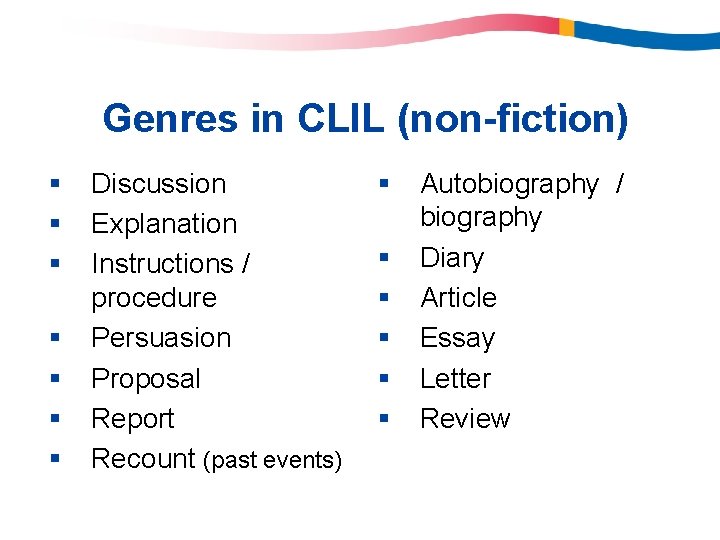
Genres in CLIL (non-fiction) § § § § Discussion Explanation Instructions / procedure Persuasion Proposal Report Recount (past events) § § § Autobiography / biography Diary Article Essay Letter Review
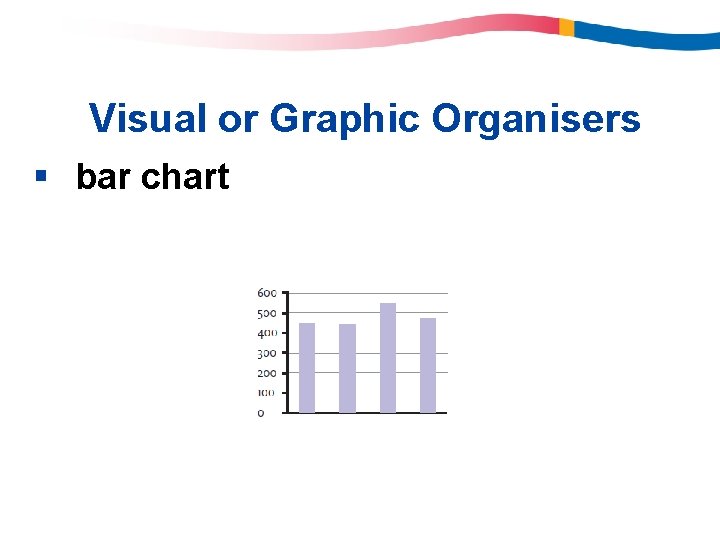
Visual or Graphic Organisers § bar chart
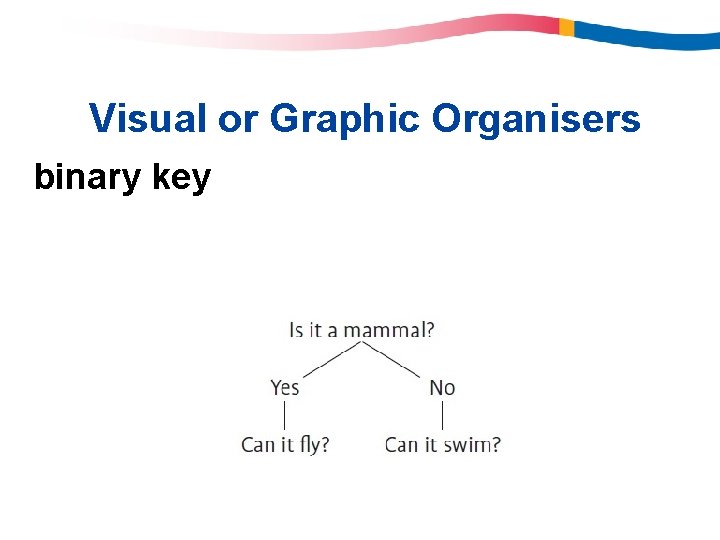
Visual or Graphic Organisers binary key
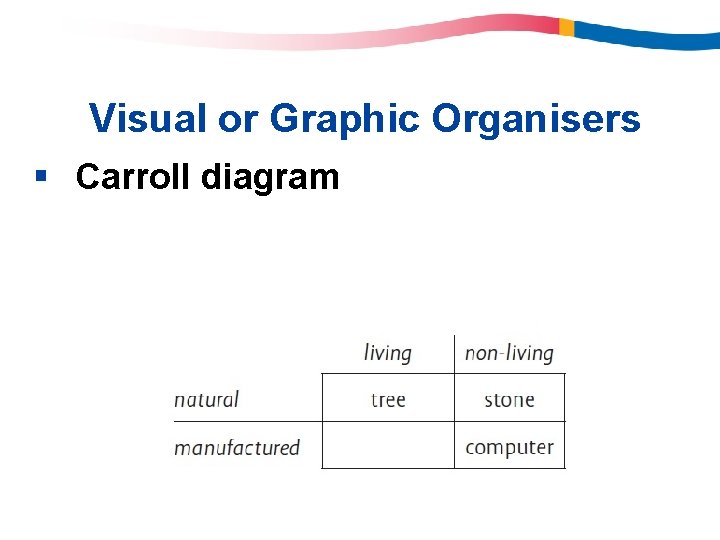
Visual or Graphic Organisers § Carroll diagram
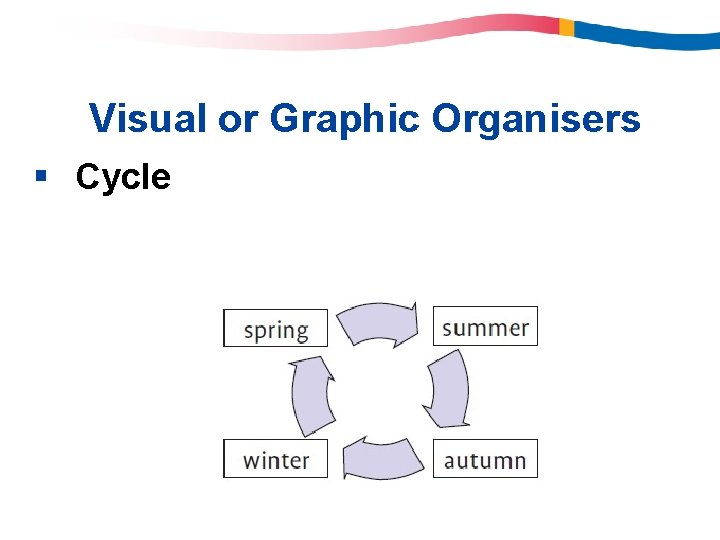
Visual or Graphic Organisers § Cycle
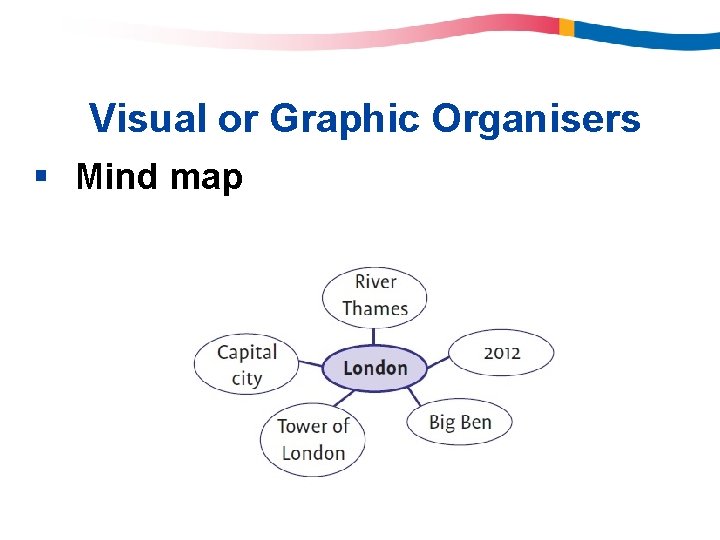
Visual or Graphic Organisers § Mind map
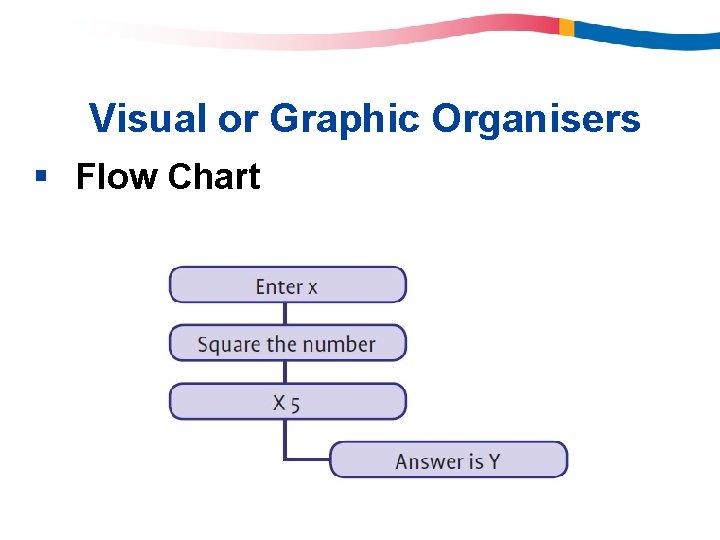
Visual or Graphic Organisers § Flow Chart
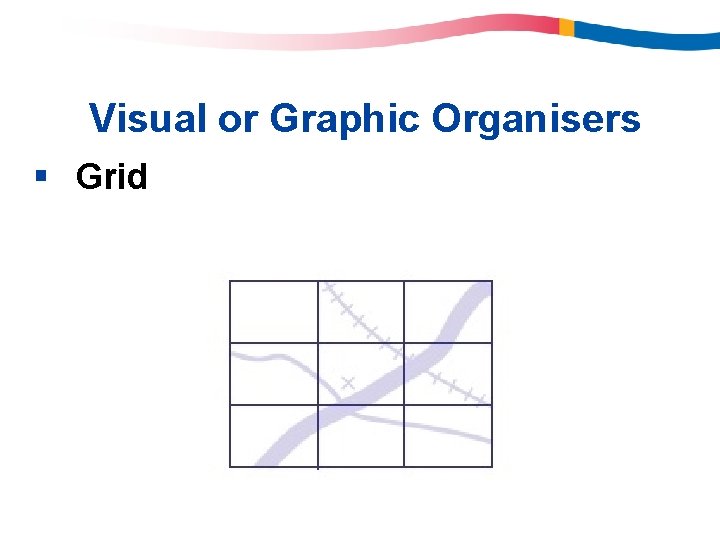
Visual or Graphic Organisers § Grid
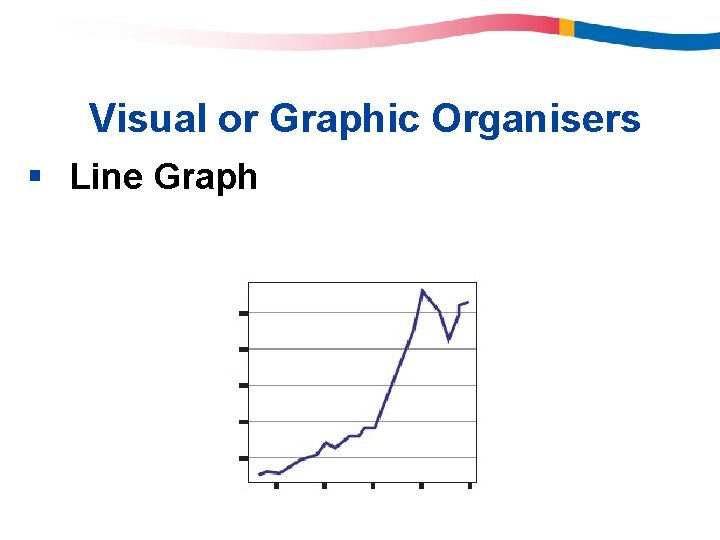
Visual or Graphic Organisers § Line Graph
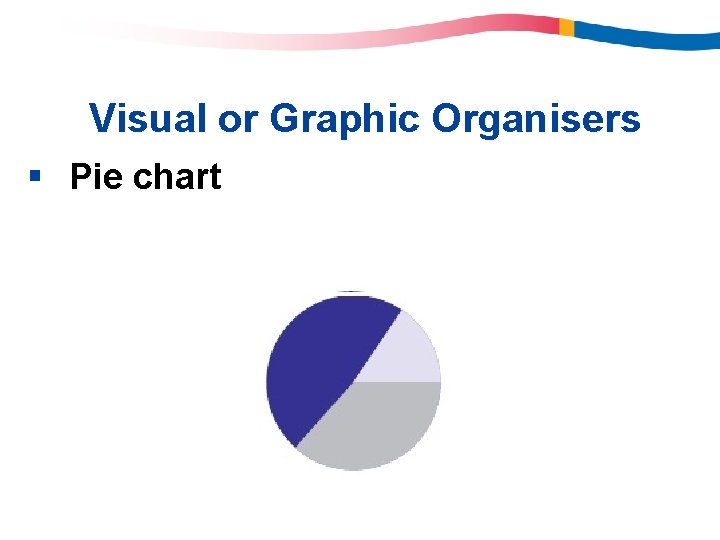
Visual or Graphic Organisers § Pie chart
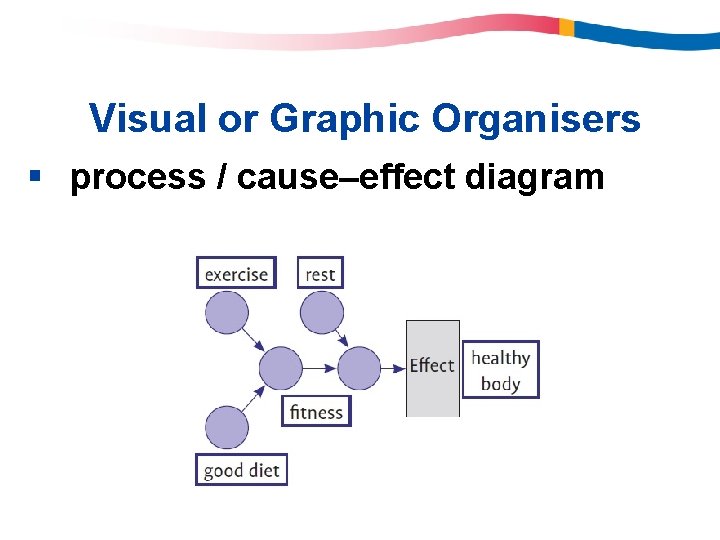
Visual or Graphic Organisers § process / cause–effect diagram
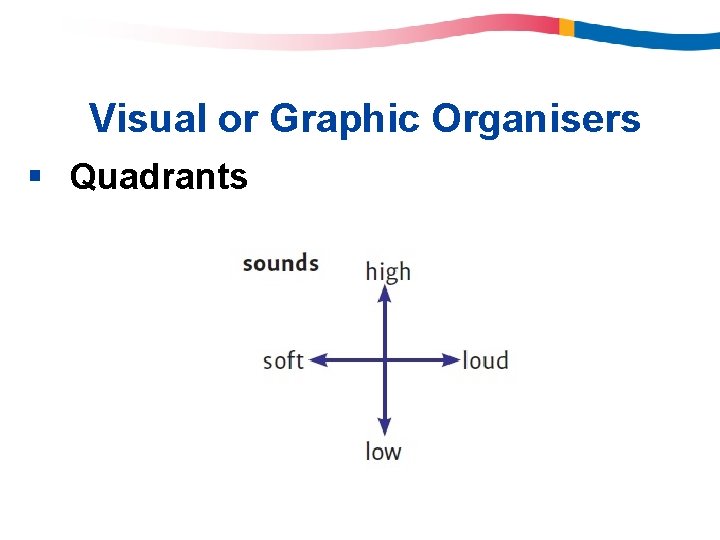
Visual or Graphic Organisers § Quadrants
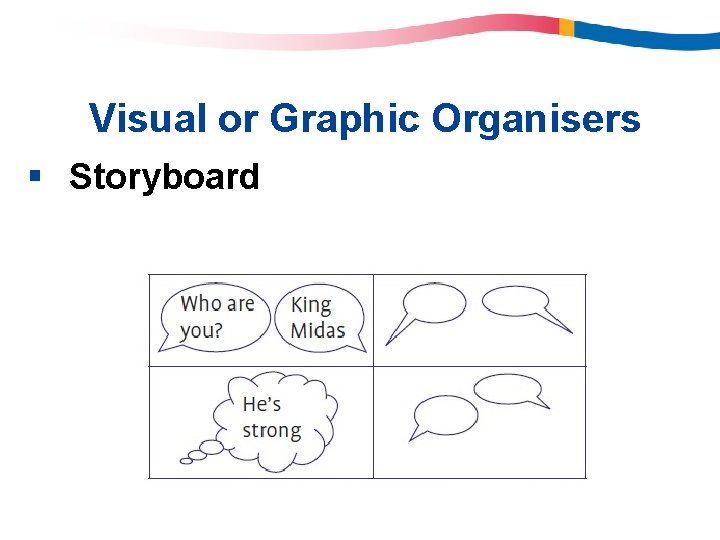
Visual or Graphic Organisers § Storyboard
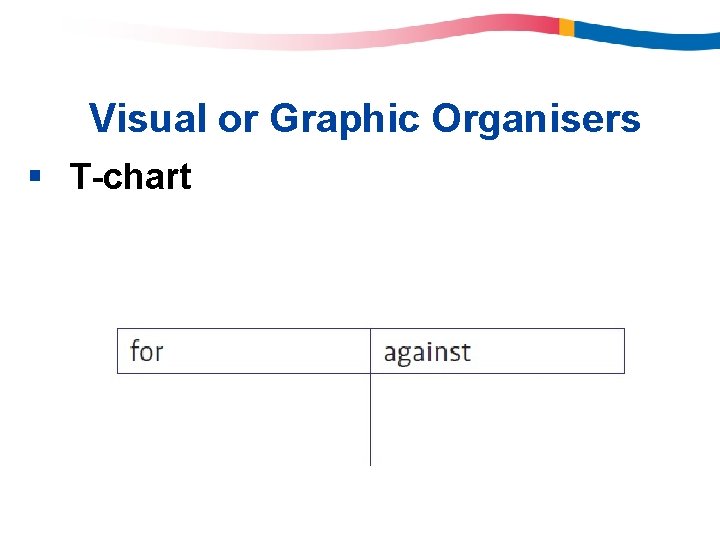
Visual or Graphic Organisers § T-chart
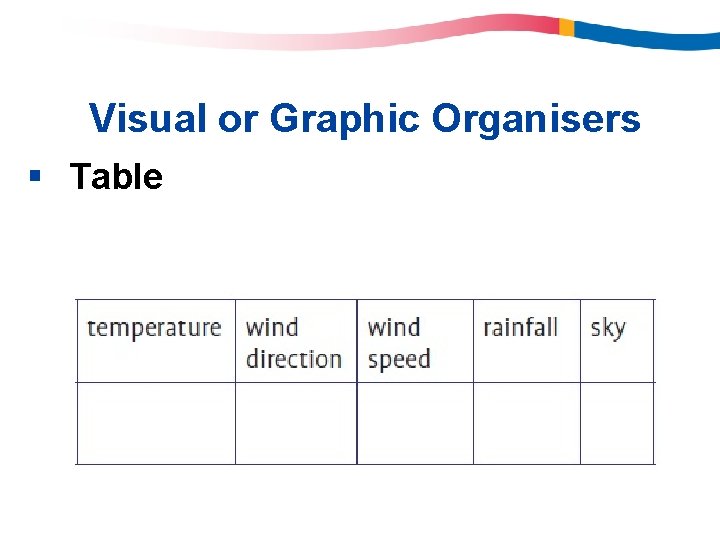
Visual or Graphic Organisers § Table
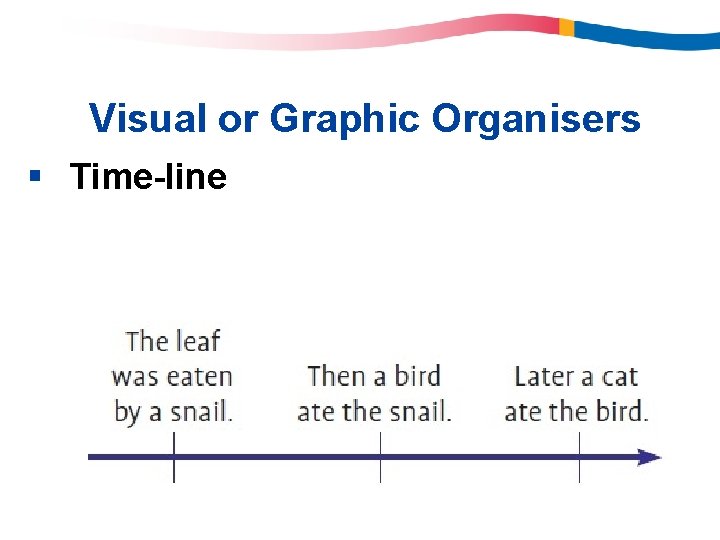
Visual or Graphic Organisers § Time-line
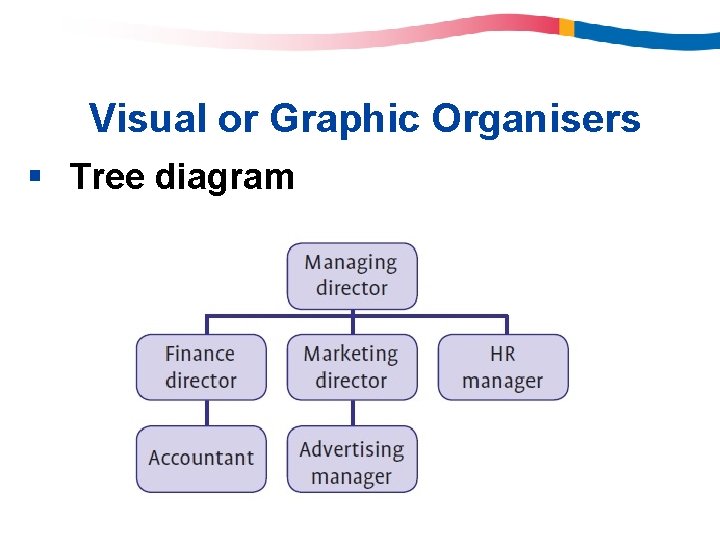
Visual or Graphic Organisers § Tree diagram
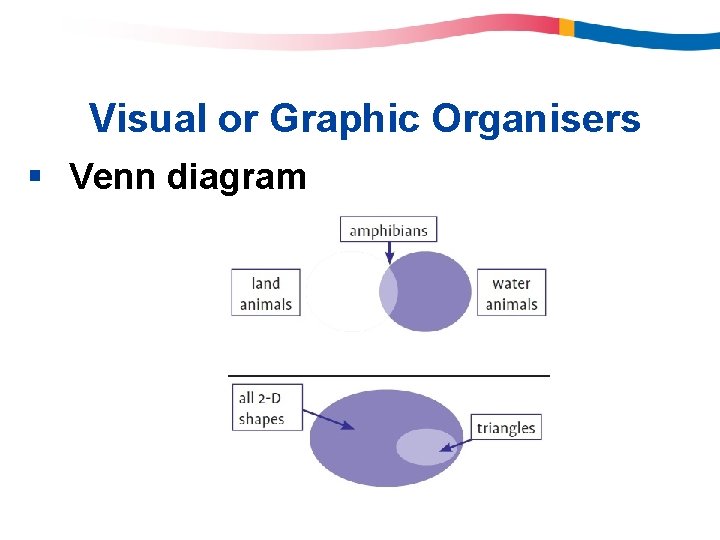
Visual or Graphic Organisers § Venn diagram
Adapting Materials § § reorder language paraphrase language remove unnecessary details reduce length of sentences
Using Classroom Language § § § § § activate prior knowledge present new ideas encourage learners to collaborate develop learners’ understanding try to find out if there any difficulties with subject content help learners develop thinking skills and make links encourage creative talk monitor learning respond to learning needs.
Scaffolding Learning § the steps teachers take to support learners so that they can understand new content and develop new skills § Examples?
Scaffolding Learning § § considering the language we use creating interest breaking down tasks into small steps providing before, during and after task support § using visuals and realia § demonstrating tasks
Scaffolding Learning § using word banks, glossaries, sentence substitution tables, writing frames § using model texts for production of language § providing constructive feedback
Metacognition § § § thinking about thinking Five parts: preparing and planning for learning selecting and using strategies monitoring learning integrating strategies evaluating learning
How can we consolidate learning? Monitoring Reviewing Homework
How can we differentiate learning? § § Input Output the expected outcomes learner autonomy
Assessment § Formative vs Summative
Assessment § Objective vs Subjective
Assessment § Self-assessment § Peer-assessment
Further information www. cambridgeenglish. org
Online Professional Development • Courses Earn a certificate from Cambridge. • Webinars Interact with expert trainers. • Knowledge Articles with industry-leading ideas. Join at www. Cambridge. English. Teacher. org