
TIU Faculty of Science Medical Analysis Department General


- Slides: 9
TIU - Faculty of Science Medical Analysis Department General Microbiology Heshu J. Ahmed/Assist. Lecturer _______________________ Acid fast staining– 2 nd Stage /1 st Semester Heshu. jalal@tiu. edu. iq https: //tiu. edu. iq/ 2020 - 2021
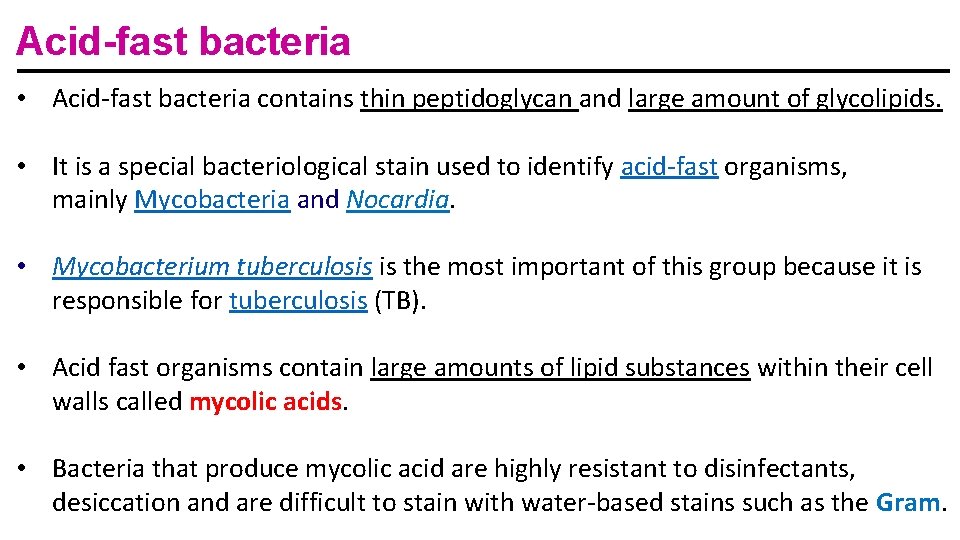
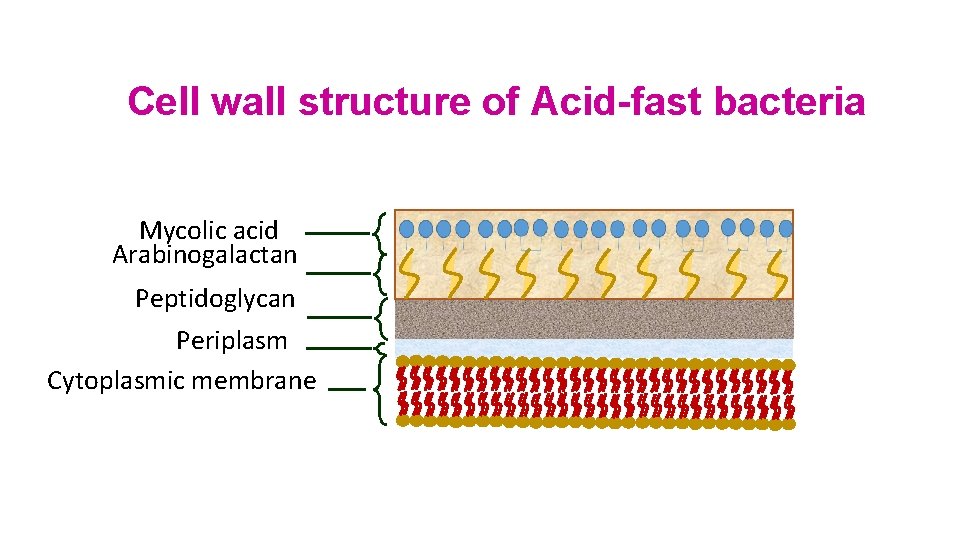
Acid-fast bacteria • Acid-fast bacteria contains thin peptidoglycan and large amount of glycolipids. • It is a special bacteriological stain used to identify acid-fast organisms, mainly Mycobacteria and Nocardia. • Mycobacterium tuberculosis is the most important of this group because it is responsible for tuberculosis (TB). • Acid fast organisms contain large amounts of lipid substances within their cell walls called mycolic acids. • Bacteria that produce mycolic acid are highly resistant to disinfectants, desiccation and are difficult to stain with water-based stains such as the Gram.
Cell wall structure of Acid-fast bacteria Mycolic acid Arabinogalactan Peptidoglycan Periplasm Cytoplasmic membrane
Principle of Acid-fast staining • Ziehl Neelsen (ZN) stain a type of AF staining technique, used as a differential stain to stain mycobacteria and Nocardia. • ZN contains Carbol Fuchsin and phenol • Primary stain (Carbol Fuchsin) binds to cell wall mycolic acids. • Phenol dissolves thick waxy lipid layer mycobacterial cell wall. • Intense decolorization does not release the primary stain from the cell wall of AFB. • Counterstain (Methylene blue dye) stain all non AFB.
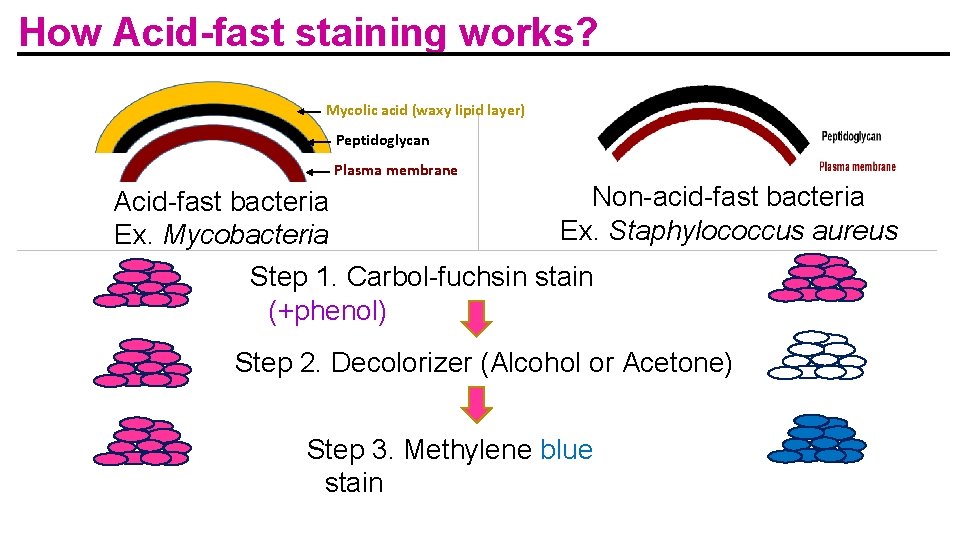
How Acid-fast staining works? Mycolic acid (waxy lipid layer) Peptidoglycan Plasma membrane Non-acid-fast bacteria Acid-fast bacteria Ex. Staphylococcus aureus Ex. Mycobacteria Step 1. Carbol-fuchsin stain (+phenol) Step 2. Decolorizer (Alcohol or Acetone) Step 3. Methylene blue stain
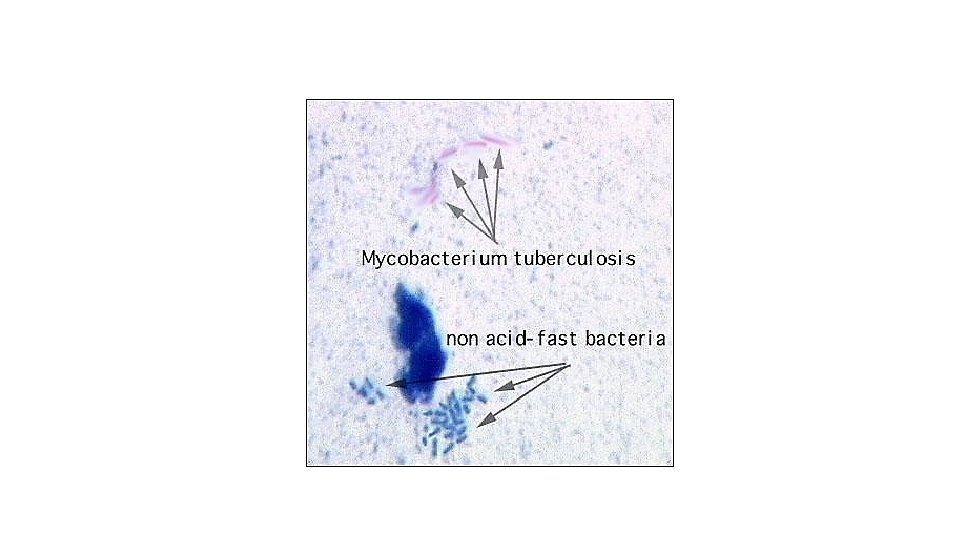
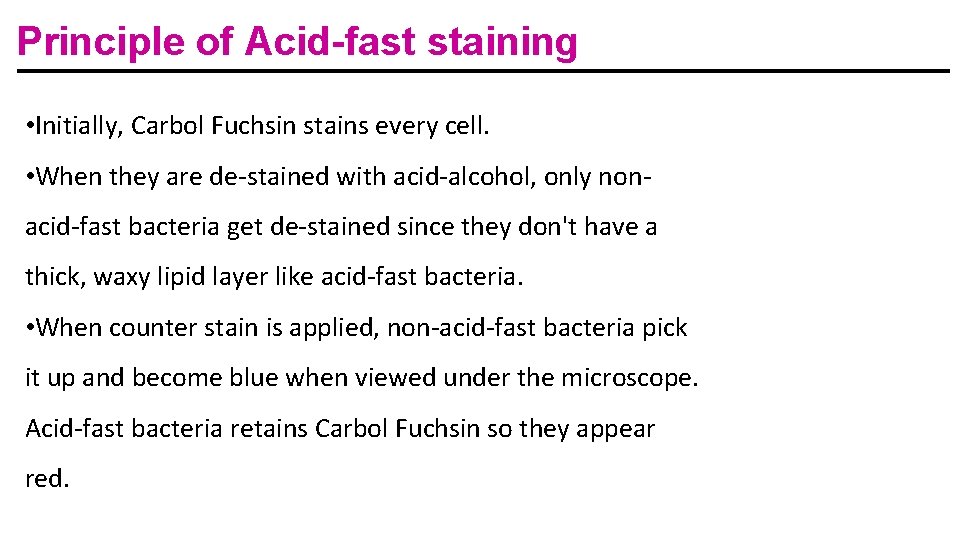
Principle of Acid-fast staining • Initially, Carbol Fuchsin stains every cell. • When they are de-stained with acid-alcohol, only nonacid-fast bacteria get de-stained since they don't have a thick, waxy lipid layer like acid-fast bacteria. • When counter stain is applied, non-acid-fast bacteria pick it up and become blue when viewed under the microscope. Acid-fast bacteria retains Carbol Fuchsin so they appear red.
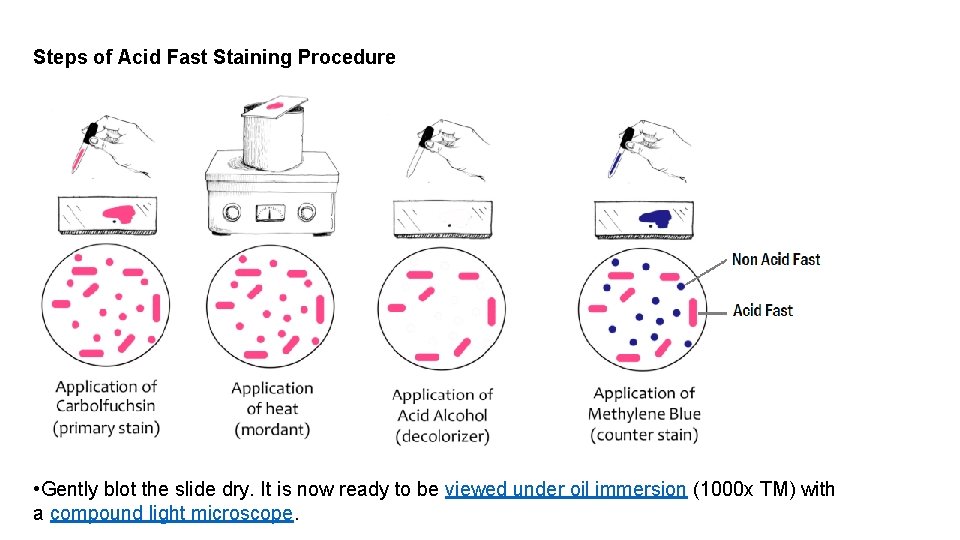
Steps of Acid Fast Staining Procedure The protocol for staining acid-fast organisms is as follows : • Gently blot the slide dry. It is now ready to be viewed under oil immersion (1000 x TM) with a compound light microscope.
Thank you