
Titrations of Polyprotic Acids In polyprotic acids each
- Slides: 13
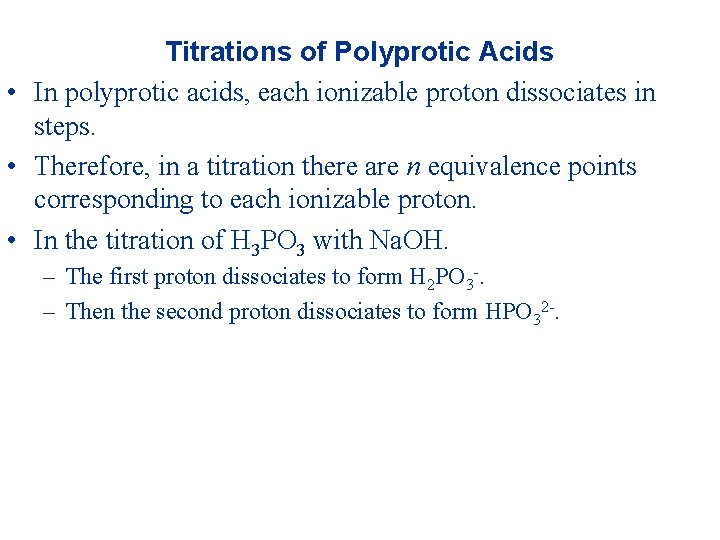
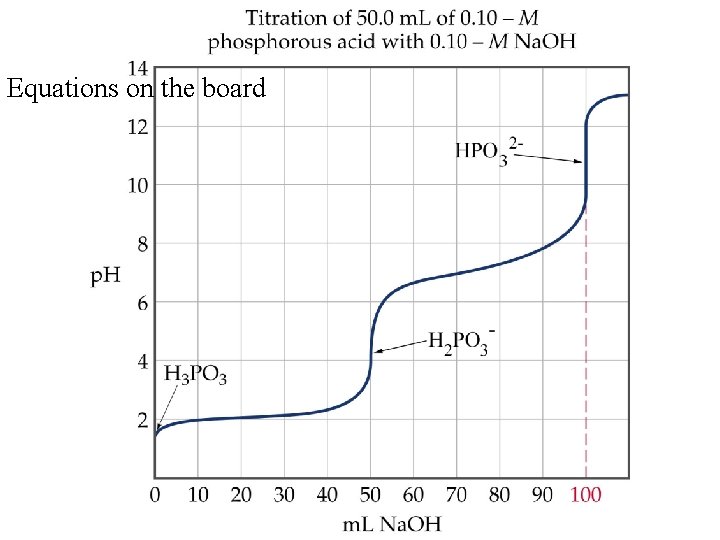
Titrations of Polyprotic Acids • In polyprotic acids, each ionizable proton dissociates in steps. • Therefore, in a titration there are n equivalence points corresponding to each ionizable proton. • In the titration of H 3 PO 3 with Na. OH. – The first proton dissociates to form H 2 PO 3 -. – Then the second proton dissociates to form HPO 32 -.
Equations on the board
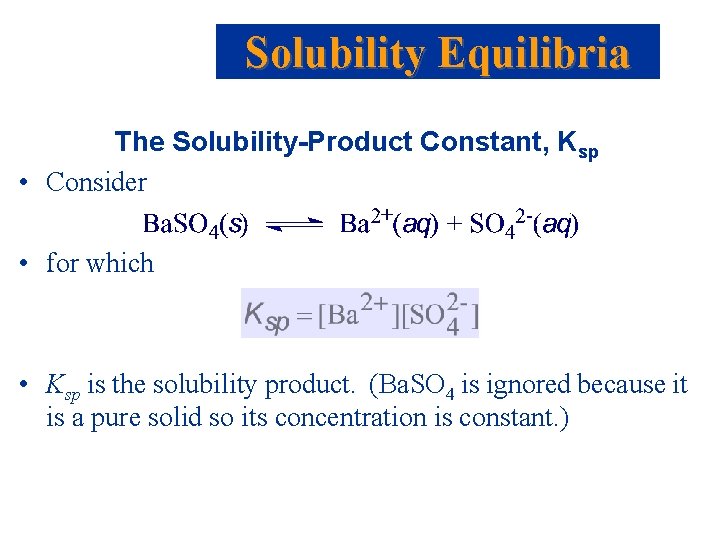
Solubility Equilibria The Solubility-Product Constant, Ksp • Consider • for which • Ksp is the solubility product. (Ba. SO 4 is ignored because it is a pure solid so its concentration is constant. )
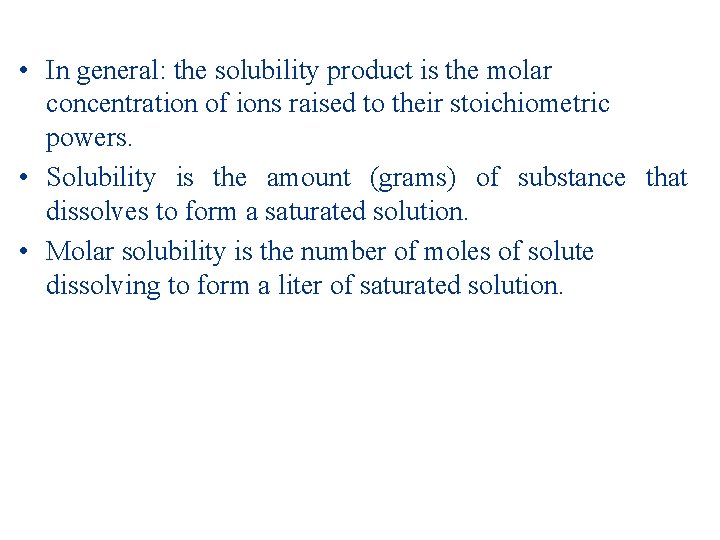
• In general: the solubility product is the molar concentration of ions raised to their stoichiometric powers. • Solubility is the amount (grams) of substance that dissolves to form a saturated solution. • Molar solubility is the number of moles of solute dissolving to form a liter of saturated solution.
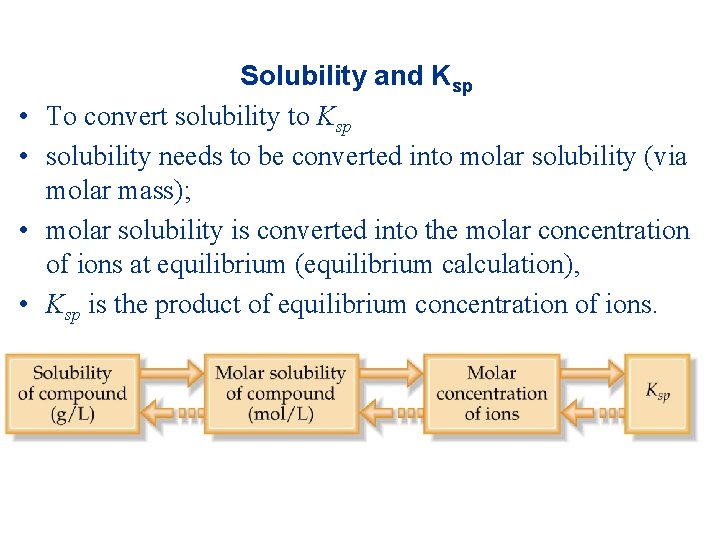
• • Solubility and Ksp To convert solubility to Ksp solubility needs to be converted into molar solubility (via molar mass); molar solubility is converted into the molar concentration of ions at equilibrium (equilibrium calculation), Ksp is the product of equilibrium concentration of ions.
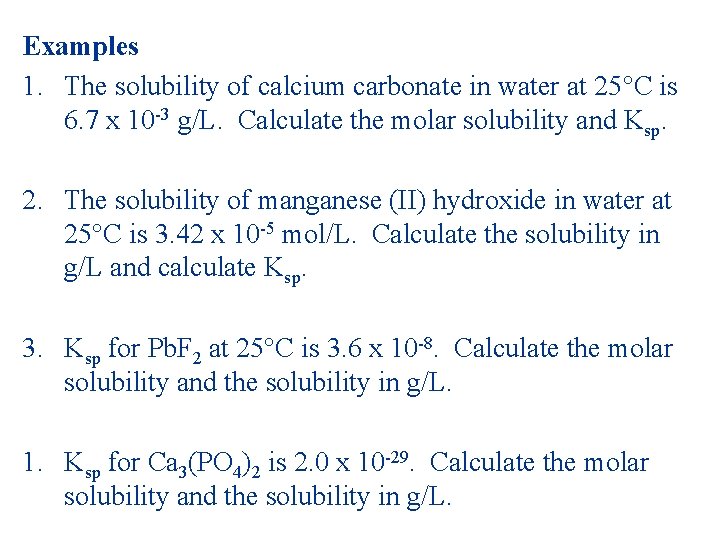
Examples 1. The solubility of calcium carbonate in water at 25°C is 6. 7 x 10 -3 g/L. Calculate the molar solubility and Ksp. 2. The solubility of manganese (II) hydroxide in water at 25°C is 3. 42 x 10 -5 mol/L. Calculate the solubility in g/L and calculate Ksp. 3. Ksp for Pb. F 2 at 25°C is 3. 6 x 10 -8. Calculate the molar solubility and the solubility in g/L. 1. Ksp for Ca 3(PO 4)2 is 2. 0 x 10 -29. Calculate the molar solubility and the solubility in g/L.
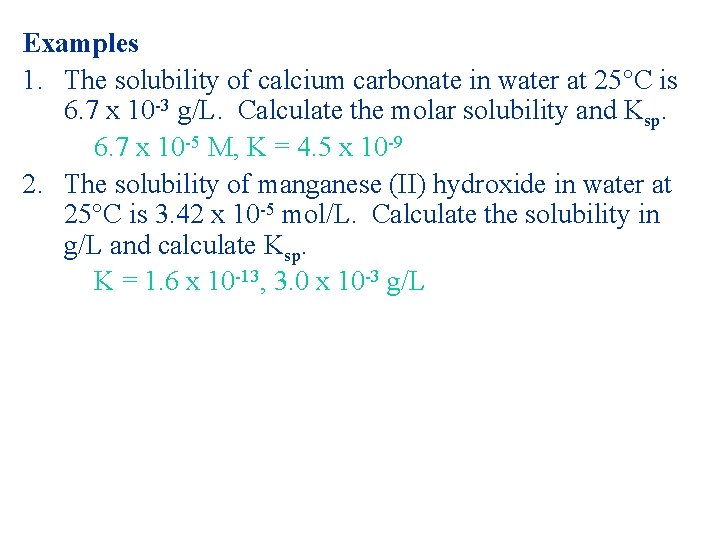
Examples 1. The solubility of calcium carbonate in water at 25°C is 6. 7 x 10 -3 g/L. Calculate the molar solubility and Ksp. 6. 7 x 10 -5 M, K = 4. 5 x 10 -9 2. The solubility of manganese (II) hydroxide in water at 25°C is 3. 42 x 10 -5 mol/L. Calculate the solubility in g/L and calculate Ksp. K = 1. 6 x 10 -13, 3. 0 x 10 -3 g/L
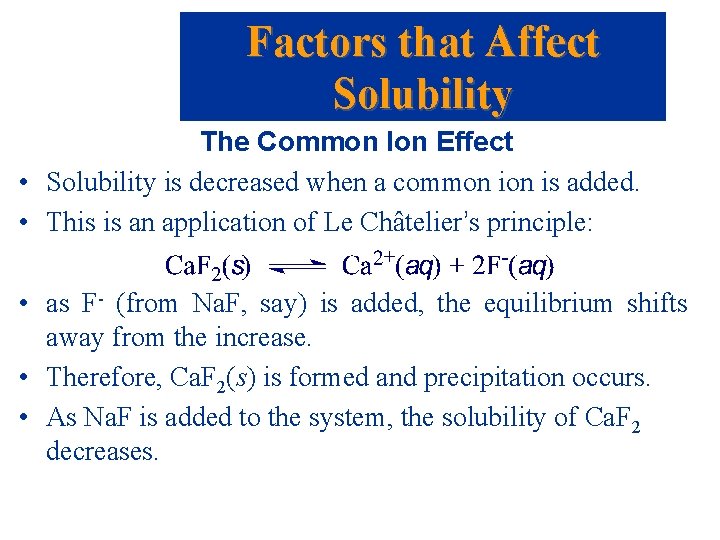
Factors that Affect Solubility The Common Ion Effect • Solubility is decreased when a common is added. • This is an application of Le Châtelier’s principle: • as F- (from Na. F, say) is added, the equilibrium shifts away from the increase. • Therefore, Ca. F 2(s) is formed and precipitation occurs. • As Na. F is added to the system, the solubility of Ca. F 2 decreases.
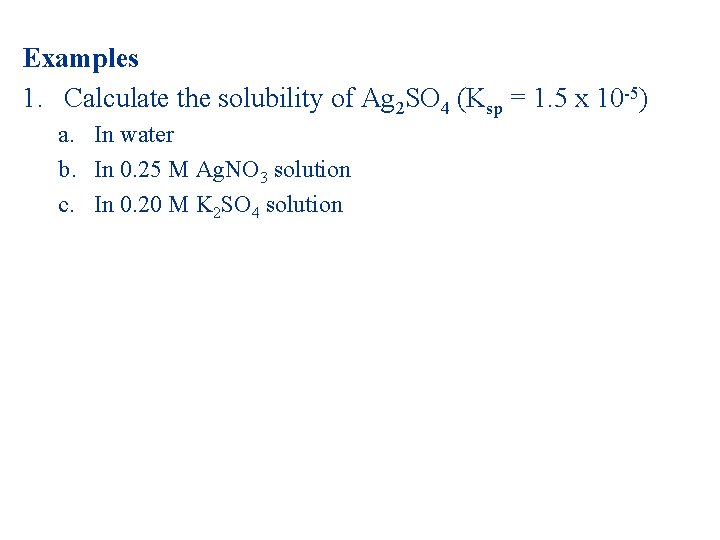
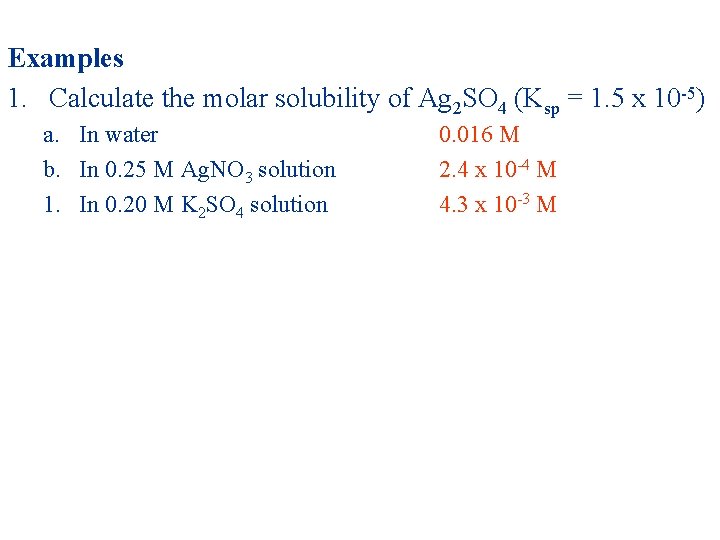
Examples 1. Calculate the solubility of Ag 2 SO 4 (Ksp = 1. 5 x 10 -5) a. In water b. In 0. 25 M Ag. NO 3 solution c. In 0. 20 M K 2 SO 4 solution
Examples 1. Calculate the molar solubility of Ag 2 SO 4 (Ksp = 1. 5 x 10 -5) a. In water b. In 0. 25 M Ag. NO 3 solution 1. In 0. 20 M K 2 SO 4 solution 0. 016 M 2. 4 x 10 -4 M 4. 3 x 10 -3 M
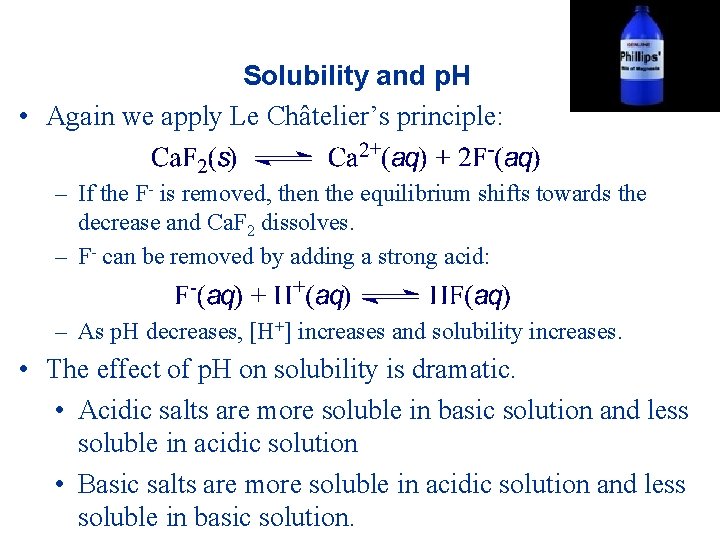
Solubility and p. H • Again we apply Le Châtelier’s principle: – If the F- is removed, then the equilibrium shifts towards the decrease and Ca. F 2 dissolves. – F- can be removed by adding a strong acid: – As p. H decreases, [H+] increases and solubility increases. • The effect of p. H on solubility is dramatic. • Acidic salts are more soluble in basic solution and less soluble in acidic solution • Basic salts are more soluble in acidic solution and less soluble in basic solution.
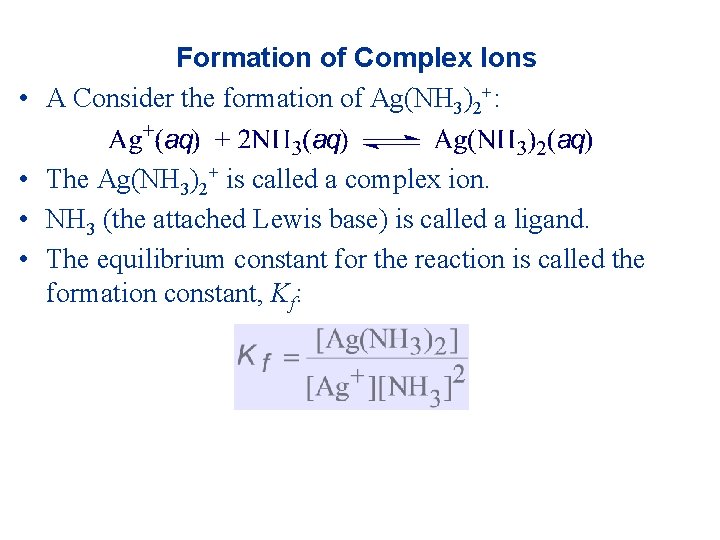
Formation of Complex Ions • A Consider the formation of Ag(NH 3)2+: • The Ag(NH 3)2+ is called a complex ion. • NH 3 (the attached Lewis base) is called a ligand. • The equilibrium constant for the reaction is called the formation constant, Kf:
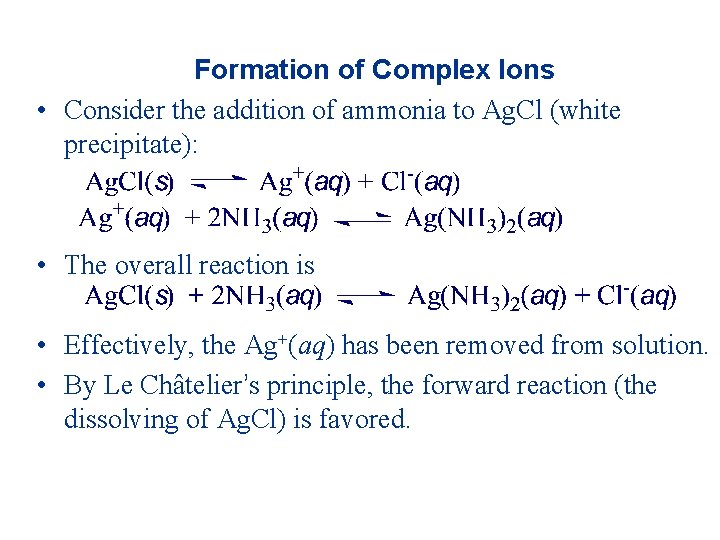
Formation of Complex Ions • Consider the addition of ammonia to Ag. Cl (white precipitate): • The overall reaction is • Effectively, the Ag+(aq) has been removed from solution. • By Le Châtelier’s principle, the forward reaction (the dissolving of Ag. Cl) is favored.