
Titration of the spindle assembly checkpoint in embryonic
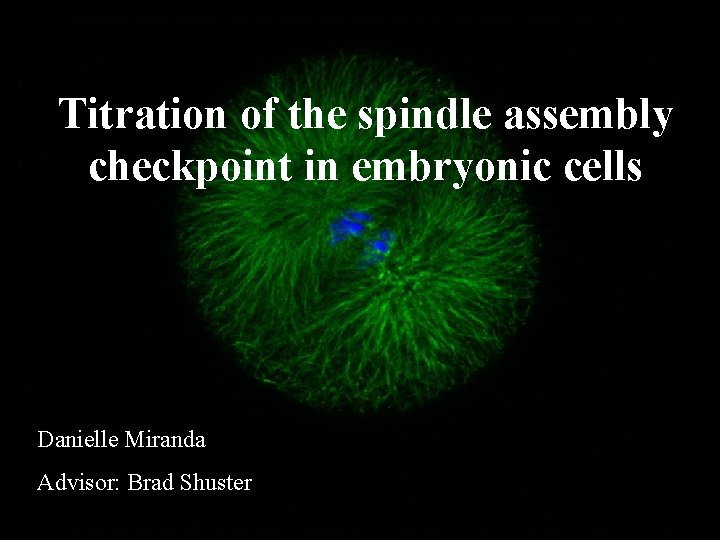
Titration of the spindle assembly checkpoint in embryonic cells Danielle Miranda Advisor: Brad Shuster
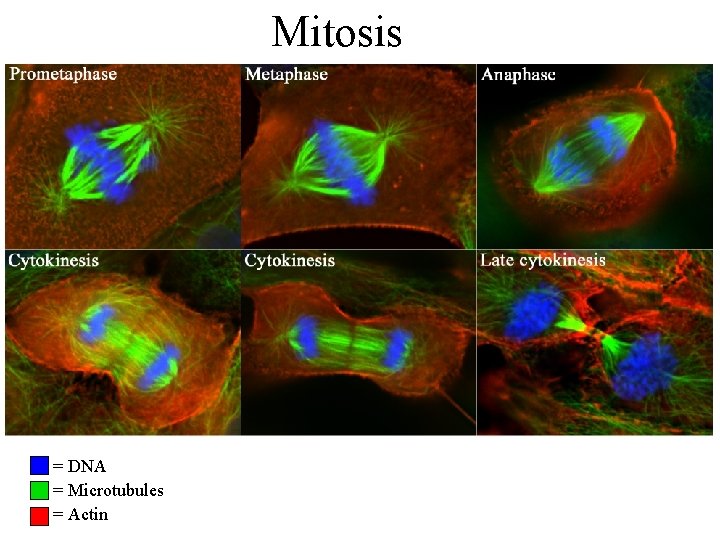
Mitosis = DNA = Microtubules = Actin
The Spindle Assembly Checkpoint (SAC) ensures that cells don’t progress through mitosis if there are chromosome attachment errors The SAC senses microtubule attachment to kinetochores • Loss of attachment or lack of tension activates the checkpoint • Holds cell in mitosis until errors are corrected • If error can’t be corrected, cells die by apoptosis
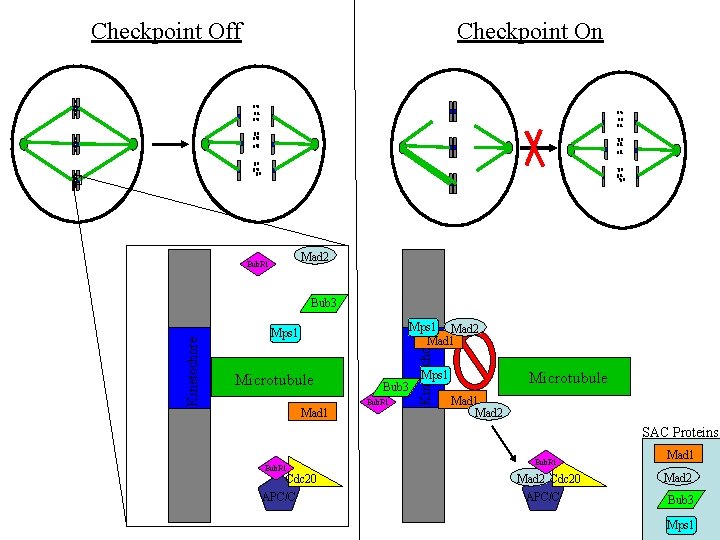
Checkpoint Off Checkpoint On Mad 2 Bub. R 1 Mps 1 Mad 2 Mad 1 Mps 1 Microtubule Mad 1 Bub 3 Bub. R 1 Kinetochore Bub 3 Microtubule Mps 1 Mad 2 SAC Proteins Bub. R 1 Cdc 20 APC/C Bub. R 1 Mad 2 Cdc 20 APC/C Mad 1 Mad 2 Bub 3 Mps 1
Spindle Checkpoint in Somatic vs Embryonic cells • The checkpoint can respond to a single unattached kinetochore in somatic cells • Early embryos are “checkpoint challenged”: * In mammalian and early sea urchin embryos, spindle disruption results in a moderate delay in mitotic exit • Why is this important?
Why are embryos “checkpoint challenged? ” Two possibilities: 1. Checkpoint genes are not expressed in early embryos 2. The kinetochores to cytoplasmic volume ratio in a large cell is insufficient to arrest the cell in mitosis
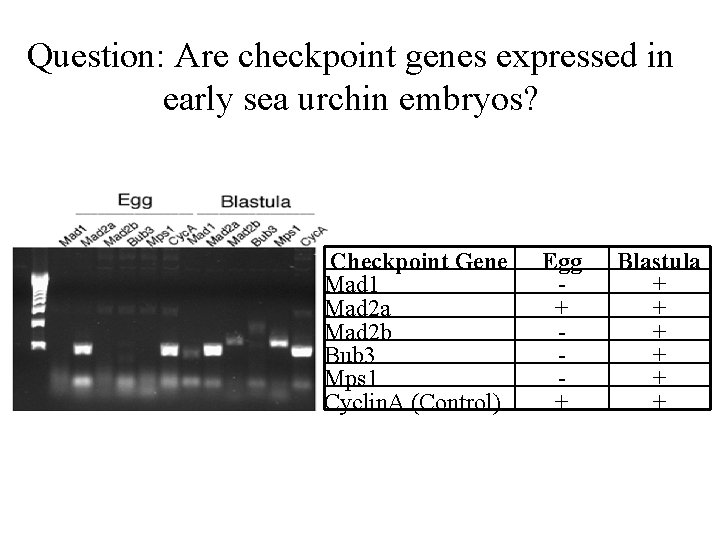
Question: Are checkpoint genes expressed in early sea urchin embryos? Checkpoint Gene Mad 1 Mad 2 a Mad 2 b Bub 3 Mps 1 Cyclin. A (Control) Egg + + Blastula + + +
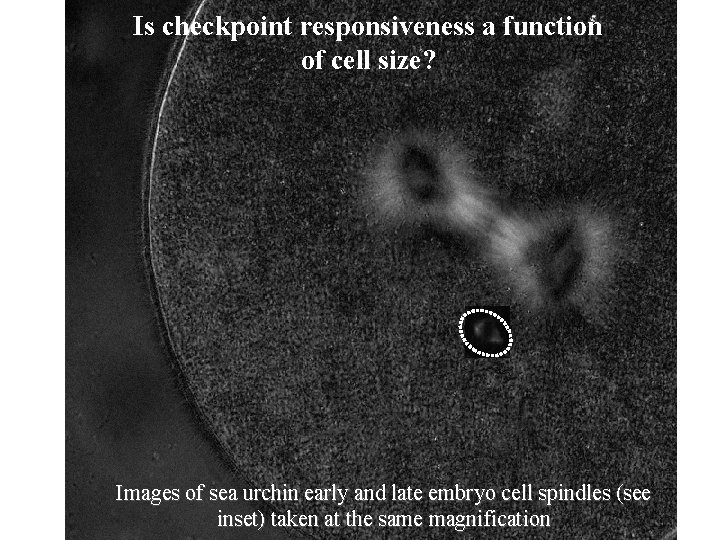
Is checkpoint responsiveness a function of cell size? Images of sea urchin early and late embryo cell spindles (see inset) taken at the same magnification

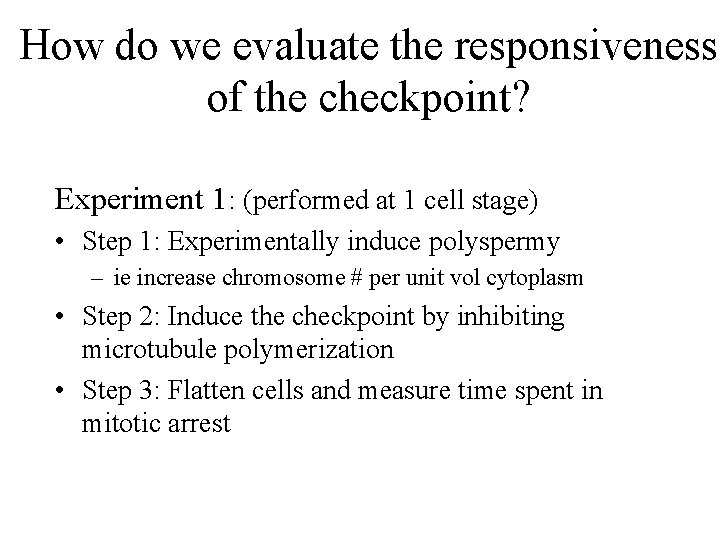
How do we evaluate the responsiveness of the checkpoint? Experiment 1: (performed at 1 cell stage) • Step 1: Experimentally induce polyspermy – ie increase chromosome # per unit vol cytoplasm • Step 2: Induce the checkpoint by inhibiting microtubule polymerization • Step 3: Flatten cells and measure time spent in mitotic arrest
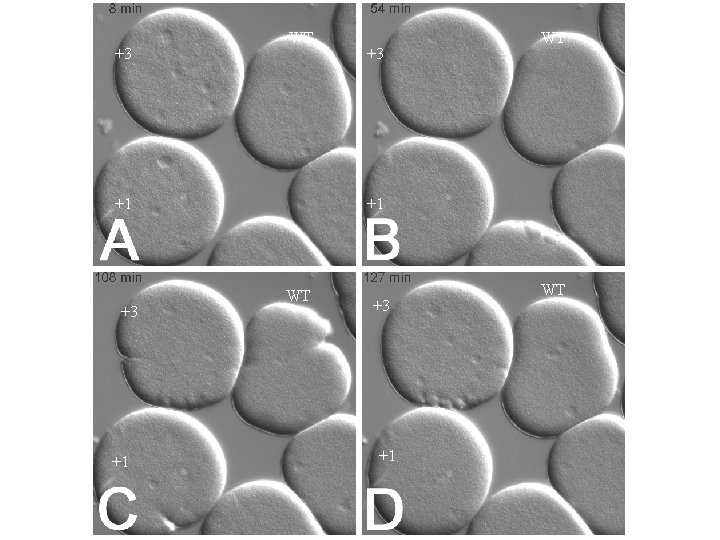
+3 WT +1 WT +3 +1 WT

Time spent in Mitosis
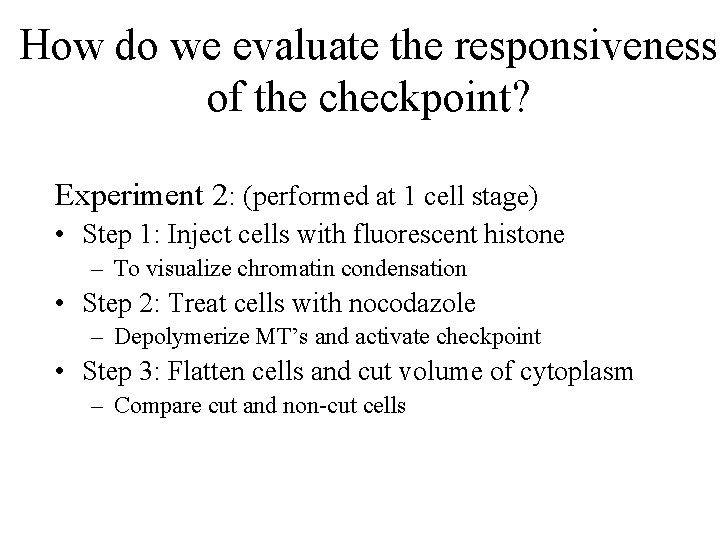
How do we evaluate the responsiveness of the checkpoint? Experiment 2: (performed at 1 cell stage) • Step 1: Inject cells with fluorescent histone – To visualize chromatin condensation • Step 2: Treat cells with nocodazole – Depolymerize MT’s and activate checkpoint • Step 3: Flatten cells and cut volume of cytoplasm – Compare cut and non-cut cells
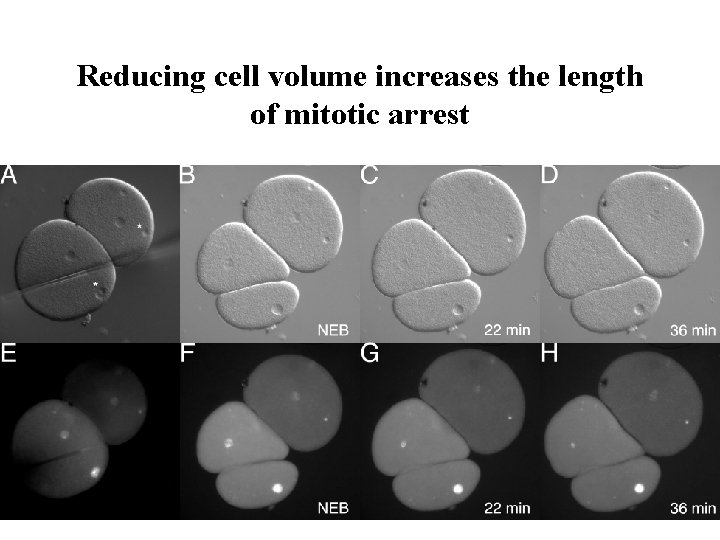
Reducing cell volume increases the length of mitotic arrest
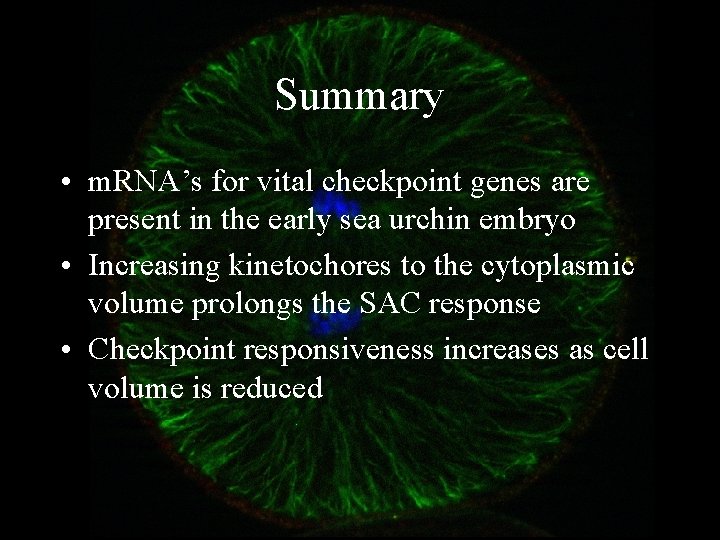
Summary • m. RNA’s for vital checkpoint genes are present in the early sea urchin embryo • Increasing kinetochores to the cytoplasmic volume prolongs the SAC response • Checkpoint responsiveness increases as cell volume is reduced
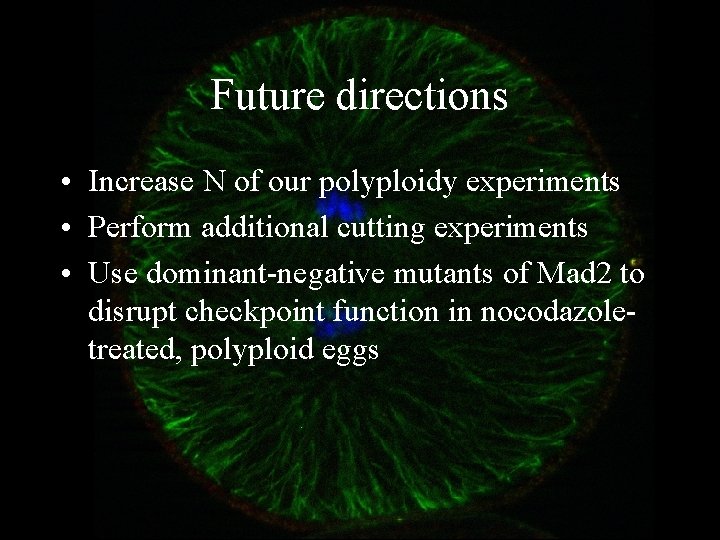
Future directions • Increase N of our polyploidy experiments • Perform additional cutting experiments • Use dominant-negative mutants of Mad 2 to disrupt checkpoint function in nocodazoletreated, polyploid eggs

Acknowledgements • Dr. Shuster and the Shuster Lab • John Pringle (Stanford University) • Funding by the BRIDGES, MARC and SCORE programs
- Slides: 17