
Title NEGLECT FRAMEWORK AND PRACTICE GUIDANCE Neglect The
- Slides: 1
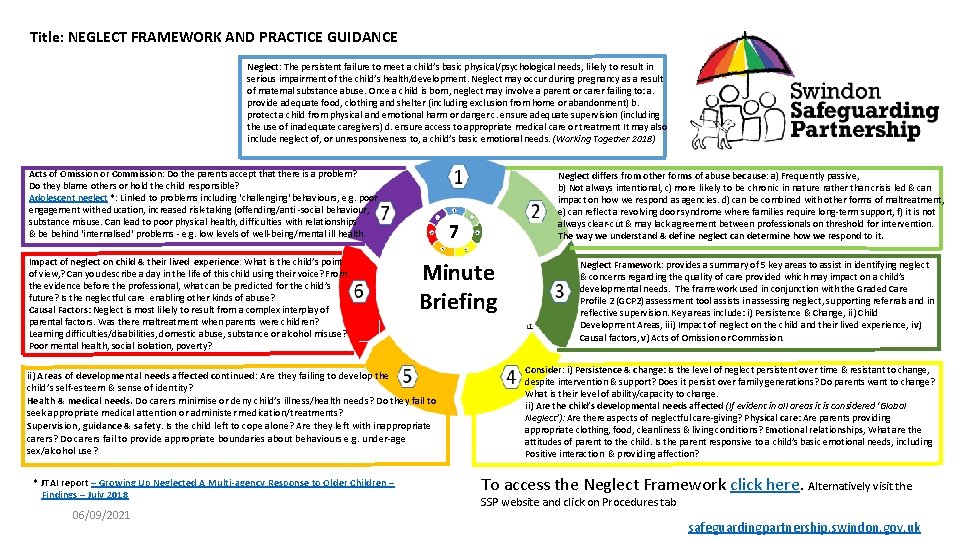
Title: NEGLECT FRAMEWORK AND PRACTICE GUIDANCE Neglect: The persistent failure to meet a child’s basic physical/psychological needs, likely to result in serious impairment of the child’s health/development. Neglect may occur during pregnancy as a result of maternal substance abuse. Once a child is born, neglect may involve a parent or carer failing to: a. provide adequate food, clothing and shelter (including exclusion from home or abandonment) b. protect a child from physical and emotional harm or danger c. ensure adequate supervision (including the use of inadequate caregivers) d. ensure access to appropriate medical care or treatment It may also include neglect of, or unresponsiveness to, a child’s basic emotional needs. (Working Together 2018) Acts of Omission or Commission: Do the parents accept that there is a problem? Do they blame others or hold the child responsible? Adolescent neglect *: Linked to problems including 'challenging' behaviours, e. g. poor engagement with education, increased risk-taking (offending/anti -social behaviour, substance misuse. Can lead to poor physical health, difficulties with relationships & be behind 'internalised' problems - e. g. low levels of well-being/mental ill health. Impact of neglect on child & their lived experience: What is the child’s point of view, ? Can you describe a day in the life of this child using their voice? From the evidence before the professional, what can be predicted for the child’s future? Is the neglectful care enabling other kinds of abuse? Causal Factors: Neglect is most likely to result from a complex interplay of parental factors. Was there maltreatment when parents were children? Learning difficulties/disabilities, domestic abuse, substance or alcohol misuse? Poor mental health, social isolation, poverty? 7 Minute Briefing ii) Areas of developmental needs affected continued: Are they failing to develop the child’s self-esteem & sense of identity? Health & medical needs. Do carers minimise or deny child’s illness/health needs? Do they fail to seek appropriate medical attention or administer medication/treatments? Supervision, guidance & safety. Is the child left to cope alone? Are they left with inappropriate carers? Do carers fail to provide appropriate boundaries about behaviours e. g. under-age sex/alcohol use? * JTAI report – Growing Up Neglected A Multi-agency Response to Older Children – Findings – July 2018 06/09/2021 Neglect differs from other forms of abuse because: a) Frequently passive, b) Not always intentional, c) more likely to be chronic in nature rather than crisis led & can impact on how we respond as agencies. d) can be combined with other forms of maltreatment, e) can reflect a revolving door syndrome where families require long-term support, f) it is not always clear-cut & may lack agreement between professionals on threshold for intervention. The way we understand & define neglect can determine how we respond to it. Neglect Framework: provides a summary of 5 key areas to assist in identifying neglect & concerns regarding the quality of care provided which may impact on a child’s developmental needs. The framework used in conjunction with the Graded Care Profile 2 (GCP 2) assessment tool assists in assessing neglect, supporting referrals and in reflective supervision. Key areas include: i) Persistence & Change, ii) Child Development Areas, iii) Impact of neglect on the child and their lived experience, iv) Causal factors, v) Acts of Omission or Commission. Consider: i) Persistence & change: Is the level of neglect persistent over time & resistant to change, despite intervention & support? Does it persist over family generations? Do parents want to change? What is their level of ability/capacity to change. ii) Are the child’s developmental needs affected (If evident in all areas it is considered ‘Global Neglect’): Are there aspects of neglectful care-giving? Physical care: Are parents providing appropriate clothing, food, cleanliness & living conditions? Emotional relationships, What are the attitudes of parent to the child. Is the parent responsive to a child’s basic emotional needs, including Positive interaction & providing affection? To access the Neglect Framework click here. Alternatively visit the SSP website and click on Procedures tab safeguardingpartnership. swindon. gov. uk