
TISSUES Tissues group of cells that carry out


- Slides: 37
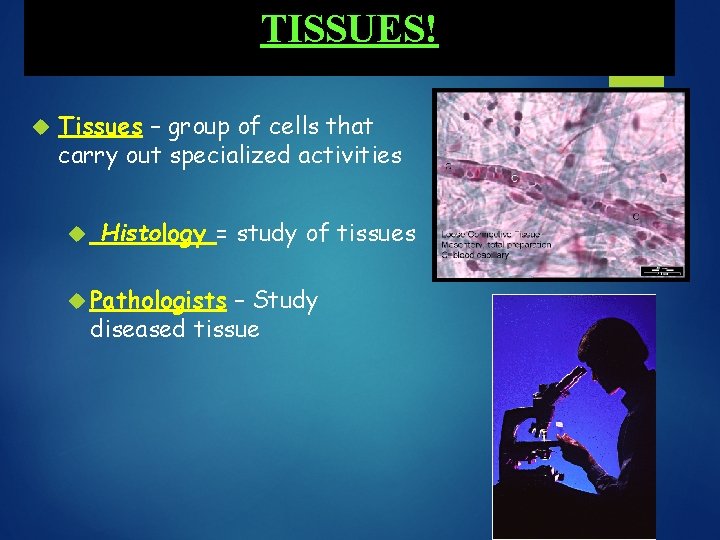
TISSUES! Tissues – group of cells that carry out specialized activities Histology = study of tissues Pathologists – Study diseased tissue
Tissues • TISSUE • similar cells working together • ORGAN • similar tissues that form one structure that works together
4 large groups of tissue types: 1. epithelial 2. connective 3. muscular 4. nervous
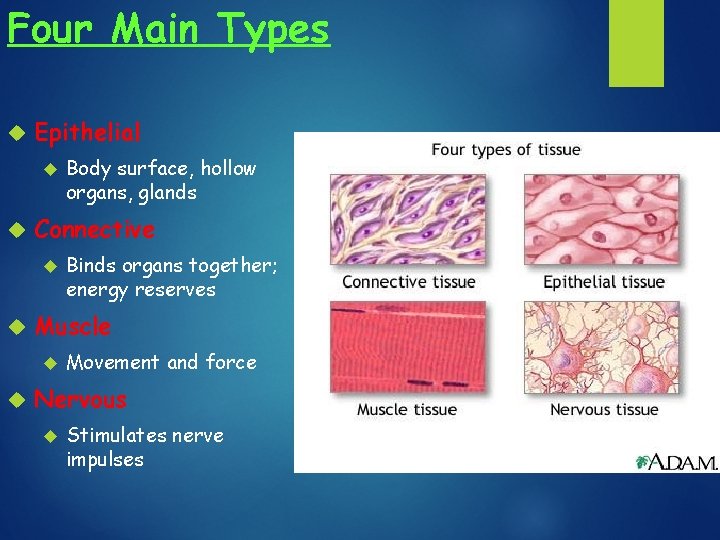
Four Main Types Epithelial Connective Binds organs together; energy reserves Muscle Body surface, hollow organs, glands Movement and force Nervous Stimulates nerve impulses
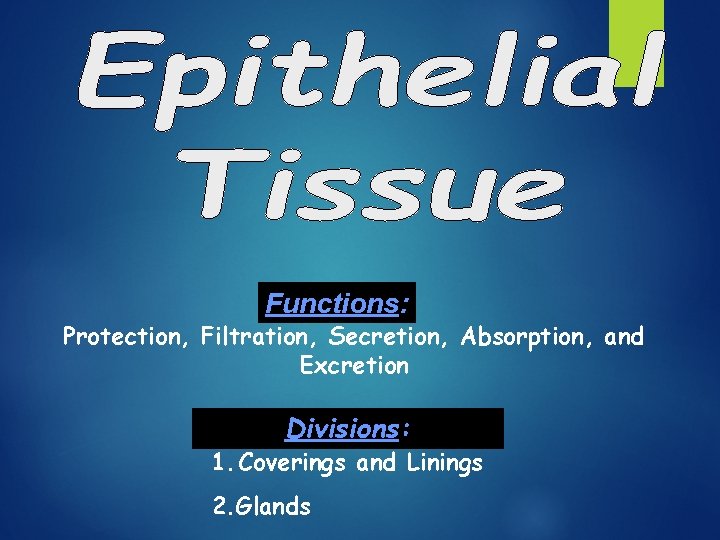
Functions: Protection, Filtration, Secretion, Absorption, and Excretion Divisions: 1. Coverings and Linings 2. Glands
EPITHELIAL Covers outer body Lines hollow organs & body cavities Covers glands
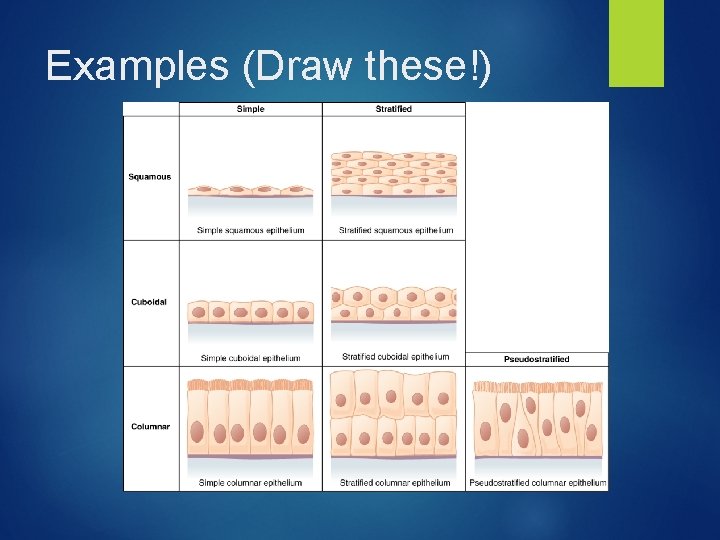
Shape & Layers of epithelial
Examples (Draw these!)
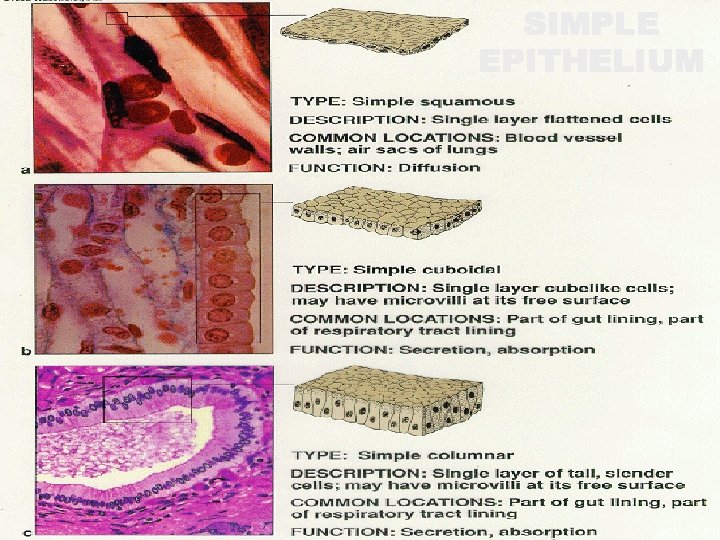
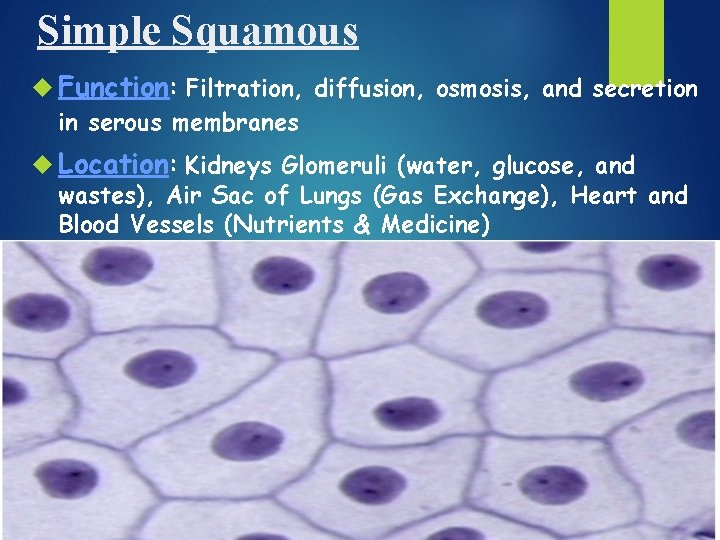
Simple Squamous Function: Filtration, diffusion, osmosis, and secretion in serous membranes Location: Kidneys Glomeruli (water, glucose, and wastes), Air Sac of Lungs (Gas Exchange), Heart and Blood Vessels (Nutrients & Medicine)
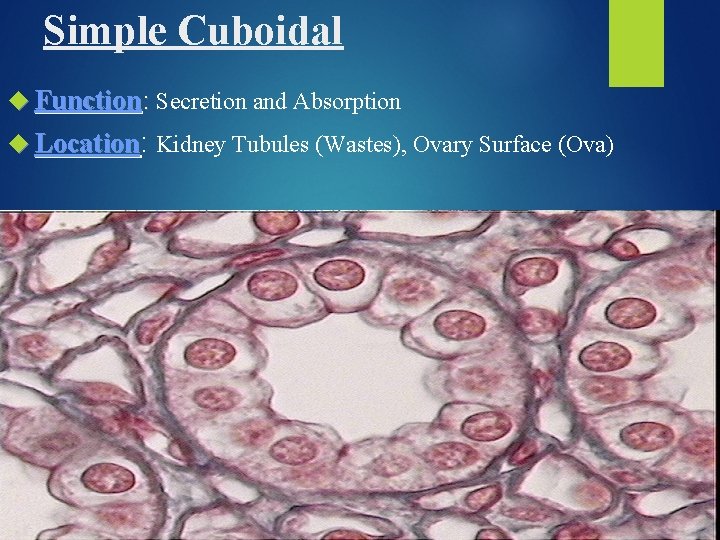
Simple Cuboidal Function: Secretion and Absorption Location: Location Kidney Tubules (Wastes), Ovary Surface (Ova)
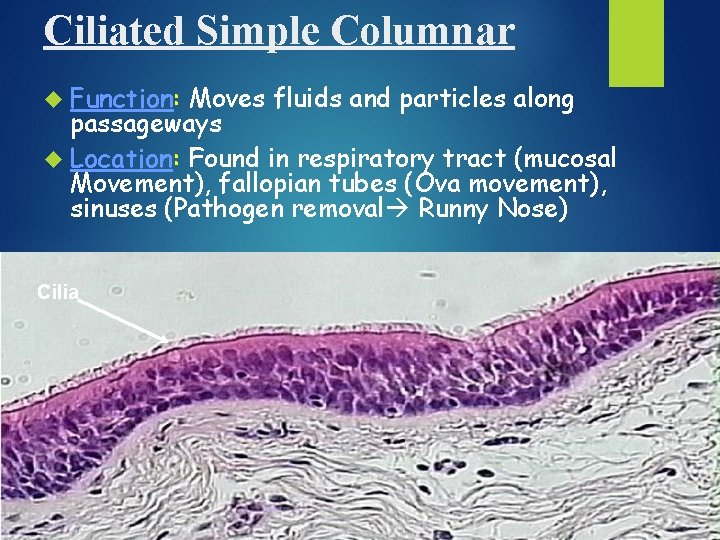
Ciliated Simple Columnar Function: Moves fluids and particles along passageways Location: Found in respiratory tract (mucosal Movement), fallopian tubes (Ova movement), sinuses (Pathogen removal Runny Nose) Cilia
Binds organs together, energy reserves for fat
CONNECTIVE most abundant wide spaces between cells filled with matrix can be liquid, semi-solid, or solid matrix contains elastic fibers & collagen
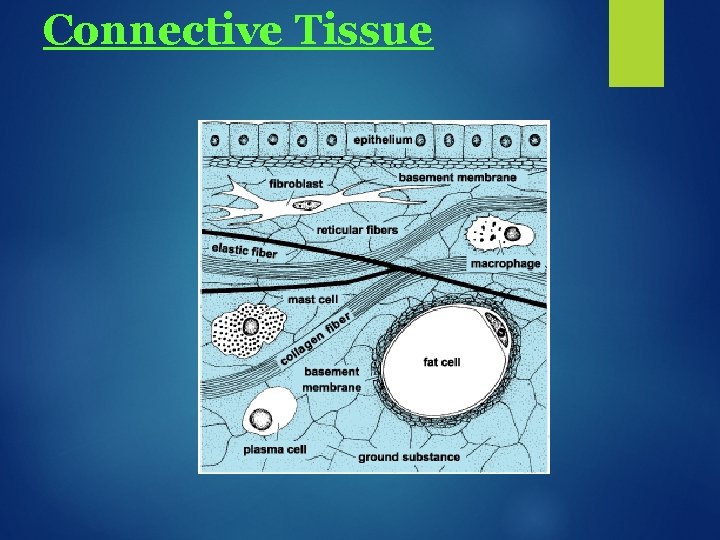
Connective Tissue
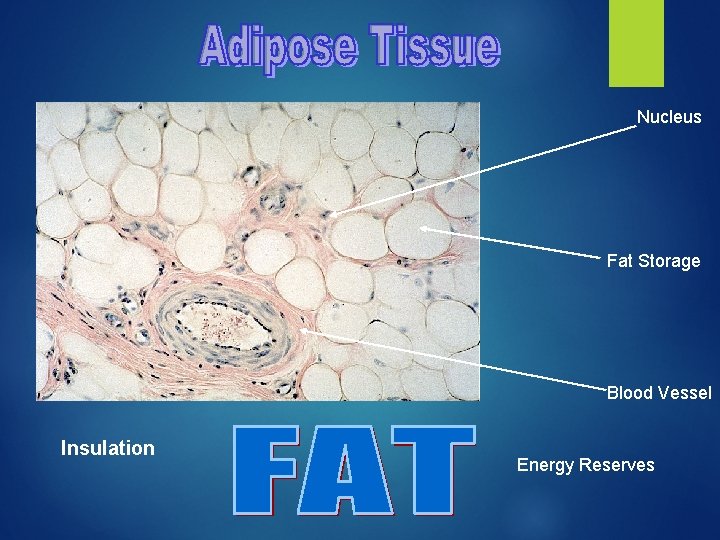
8 1. areolar (loose)- • 2. types of connective tissue: packing material; surrounds organs to prevent them from moving around adipose (loose) https: //www. youtube. com/watch? v=k-_0 ol 8 j. N 0 k https: //www. youtube. com/watch? v=57 g 3 d. Kz. YMu. U • stores FAT; insulation; energy; cushion
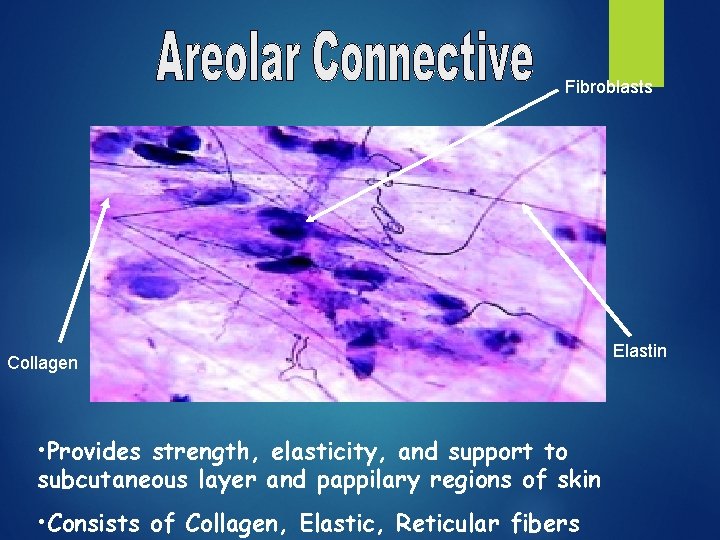
Fibroblasts Collagen • Provides strength, elasticity, and support to subcutaneous layer and pappilary regions of skin • Consists of Collagen, Elastic, Reticular fibers Elastin
Nucleus Fat Storage Blood Vessel Insulation Energy Reserves
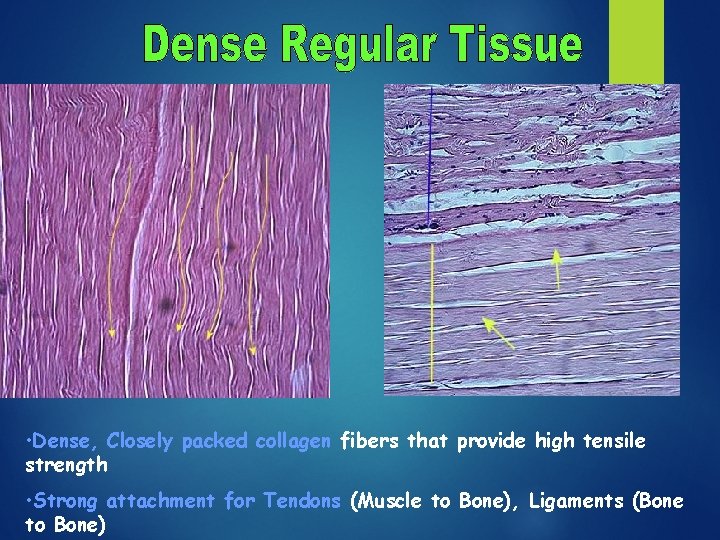
Types of Connective Tissue 3. fibrous- (dense) can withstand force tendons (attach m to b) & ligaments (attach b to b)
• Dense, Closely packed collagen fibers that provide high tensile strength • Strong attachment for Tendons (Muscle to Bone), Ligaments (Bone to Bone)
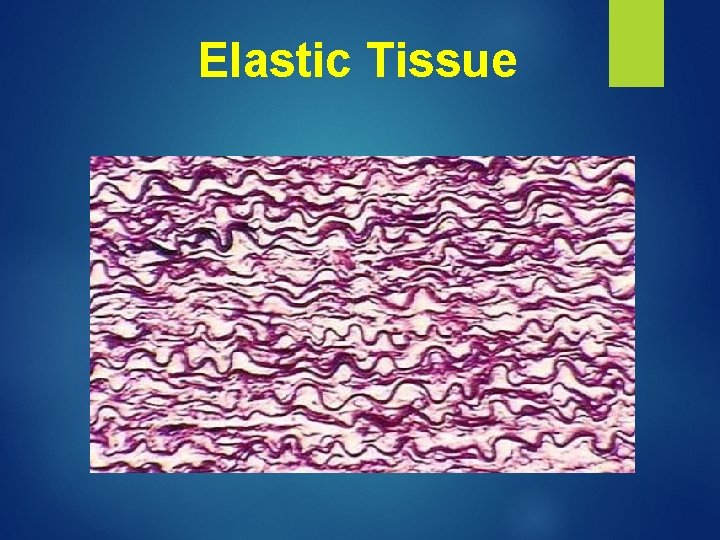
Types of Connective Tissue 4. elastic- joins together 33 vertebrae to keep spine aligned
Elastic Tissue
Types of Connective Tissue 5. cartilage- aka “gristle” covers ends of bones; shock absorbers; nose, ears, trachea, spine
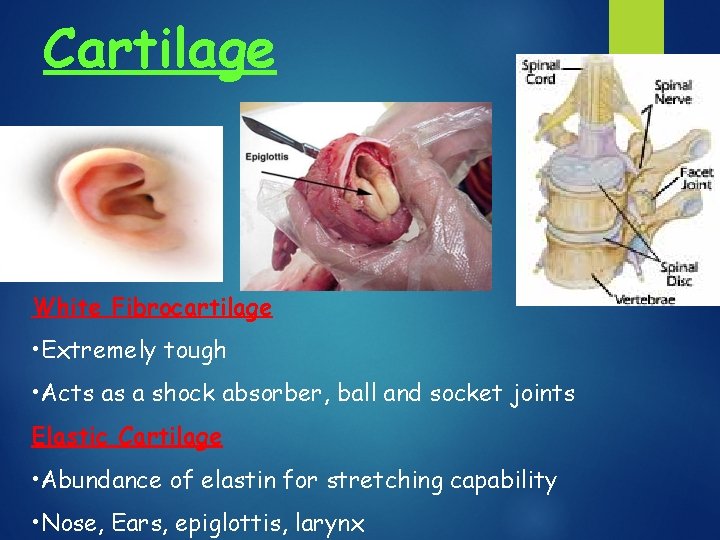
Cartilage White Fibrocartilage • Extremely tough • Acts as a shock absorber, ball and socket joints Elastic Cartilage • Abundance of elastin for stretching capability • Nose, Ears, epiglottis, larynx
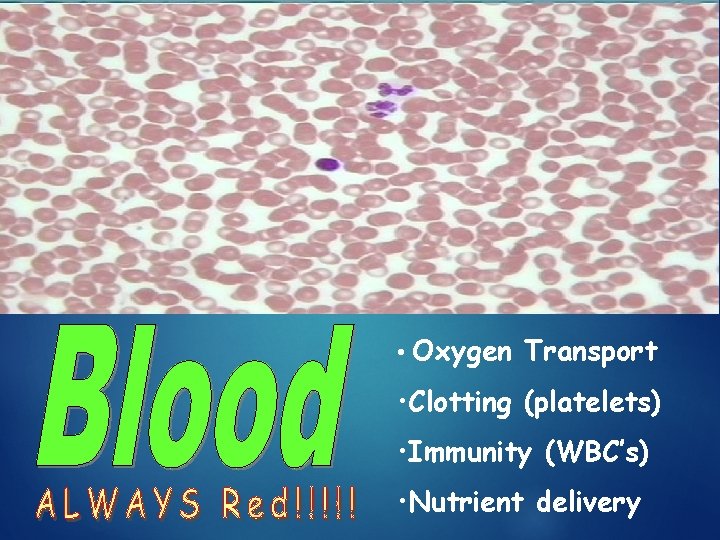
Types of Connective Tissue 6. bone- “osseous tissue”; hard matrix 7. blood the only liquid tissue; 3 types of cells in liquid plasma
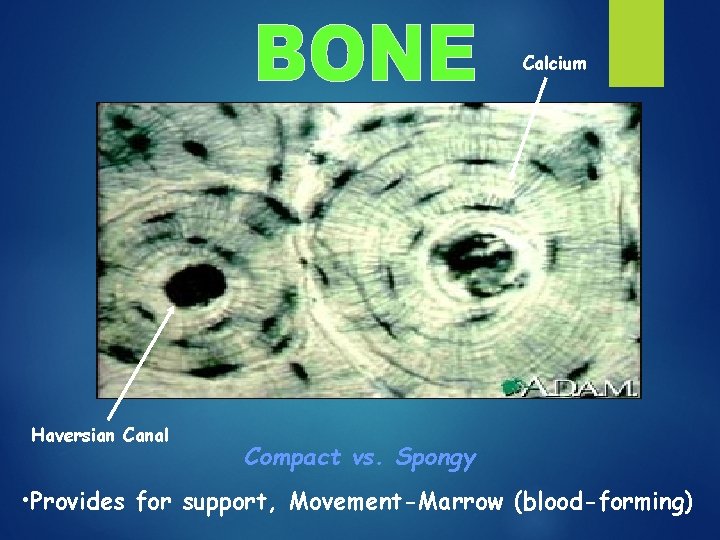
Calcium Haversian Canal Compact vs. Spongy • Provides for support, Movement-Marrow (blood-forming)
• Oxygen Transport • Clotting (platelets) • Immunity (WBC’s) • Nutrient delivery
Types of Connective Tissue 8. reticular- scattered through body phagocytic (ingest bacteria/viruses)
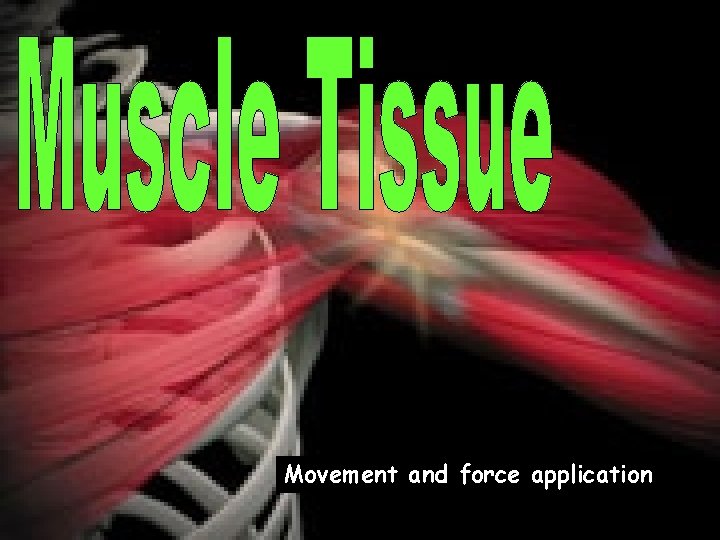
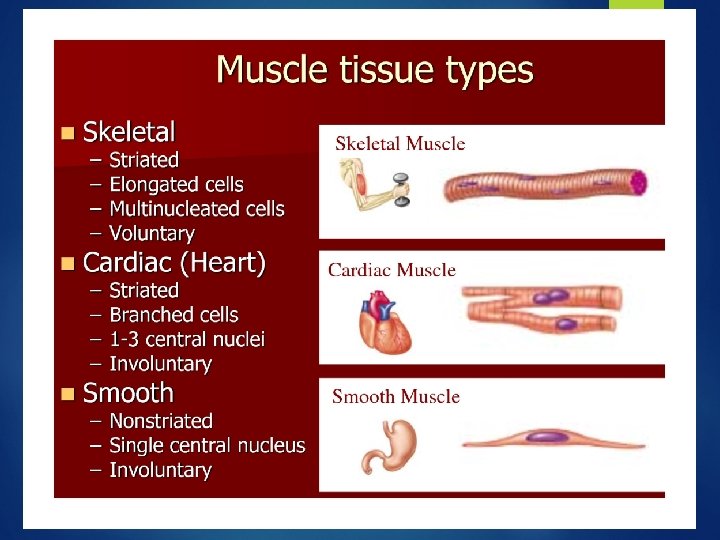
Movement and force application
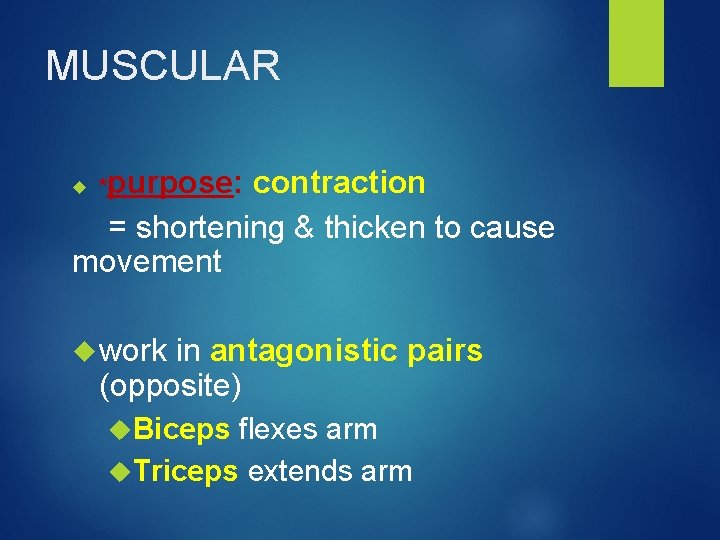
MUSCULAR purpose: contraction = shortening & thicken to cause movement * work in antagonistic pairs (opposite) Biceps flexes arm Triceps extends arm
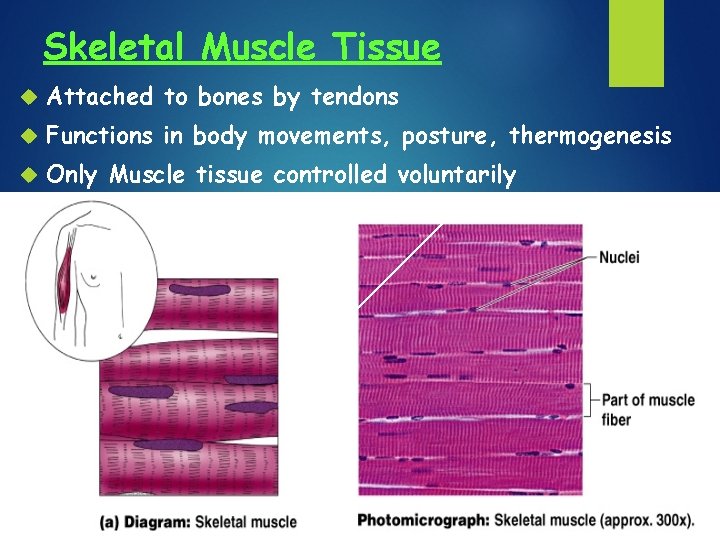
Skeletal Muscle Tissue Attached to bones by tendons Functions in body movements, posture, thermogenesis Only Muscle tissue controlled voluntarily
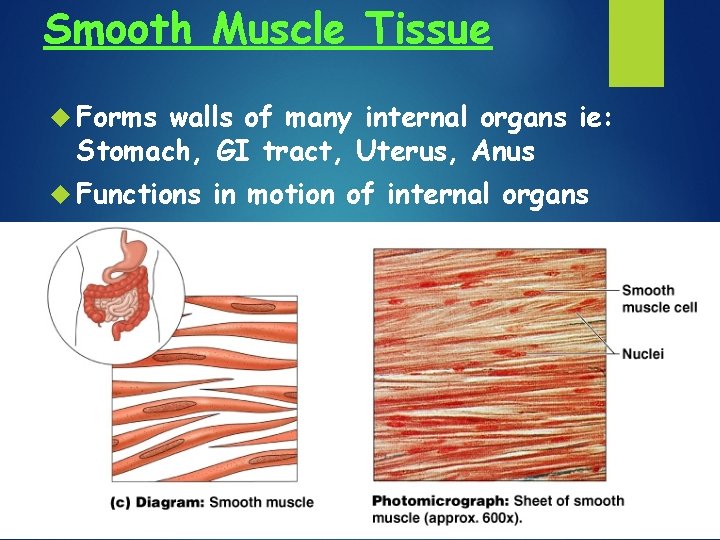
Smooth Muscle Tissue Forms walls of many internal organs ie: Stomach, GI tract, Uterus, Anus Functions in motion of internal organs
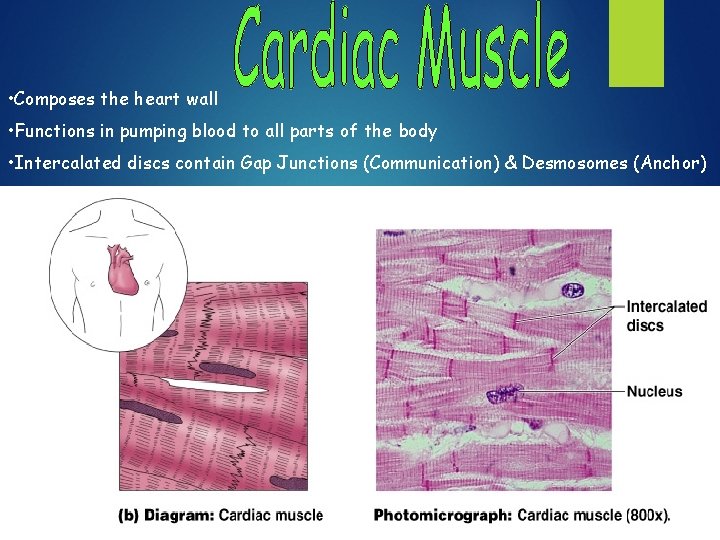
• Composes the heart wall • Functions in pumping blood to all parts of the body • Intercalated discs contain Gap Junctions (Communication) & Desmosomes (Anchor)
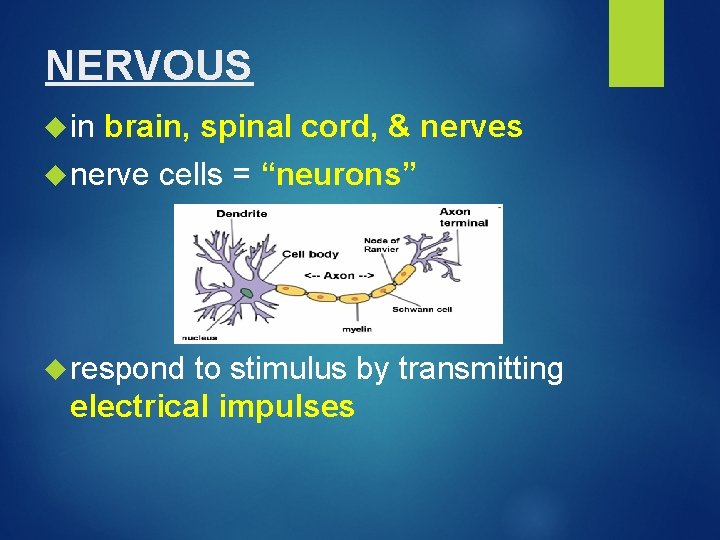
NERVOUS in brain, spinal cord, & nerves nerve cells = “neurons” respond to stimulus by transmitting electrical impulses
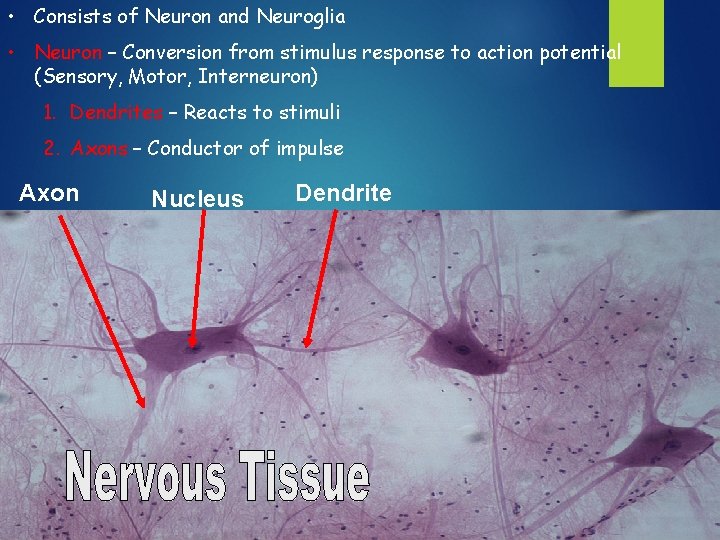
• Consists of Neuron and Neuroglia • Neuron – Conversion from stimulus response to action potential (Sensory, Motor, Interneuron) 1. Dendrites – Reacts to stimuli 2. Axons – Conductor of impulse Axon Nucleus Dendrite
Sad? Need a Tissue?