
Tissues Tissues A group of cells working together

- Slides: 21
Tissues
Tissues • A group of cells working together for a common function.
4 types 1. 2. 3. 4. Epithelial Connective Muscle nervous
epithelial • Characterized by many cells with little space in between • Functions: lines cavities, covers organs, secretes (glands)
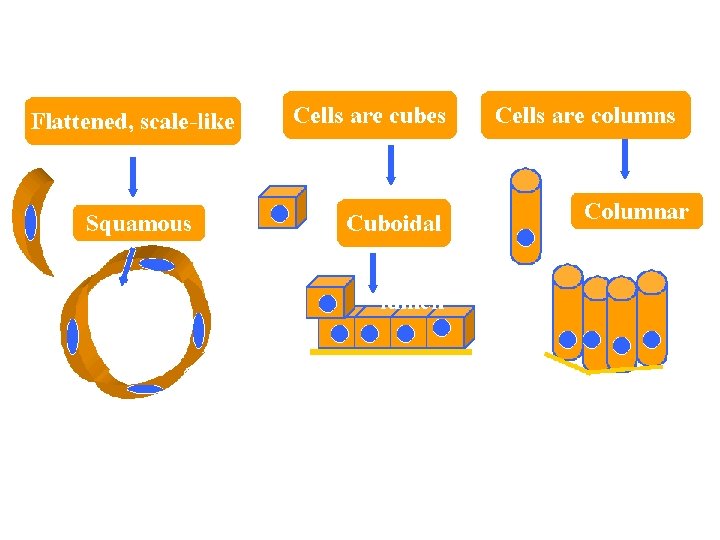
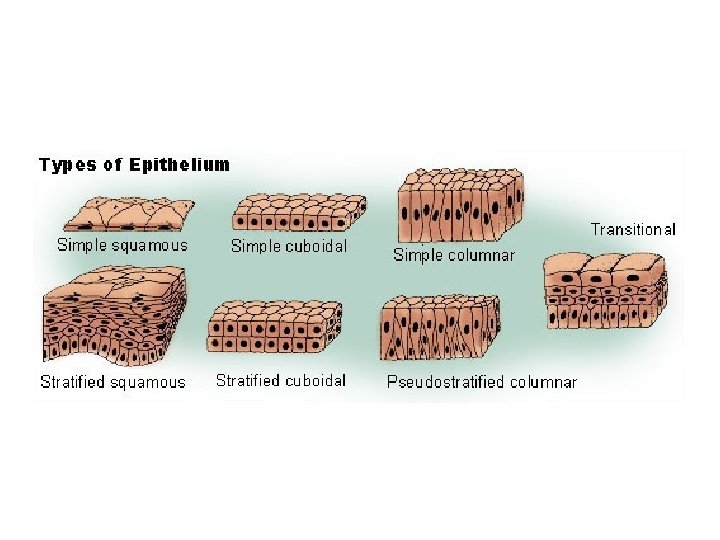
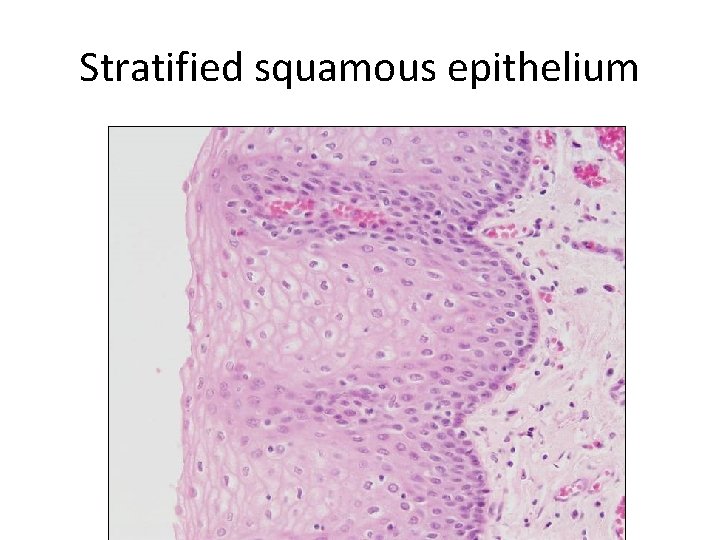
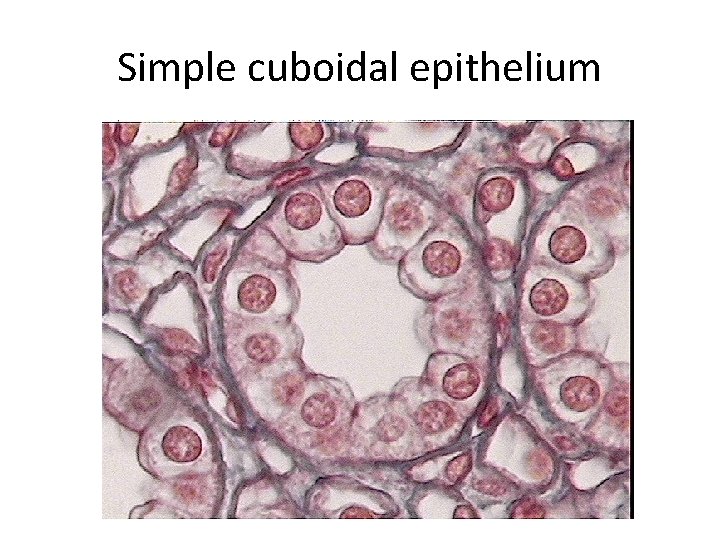
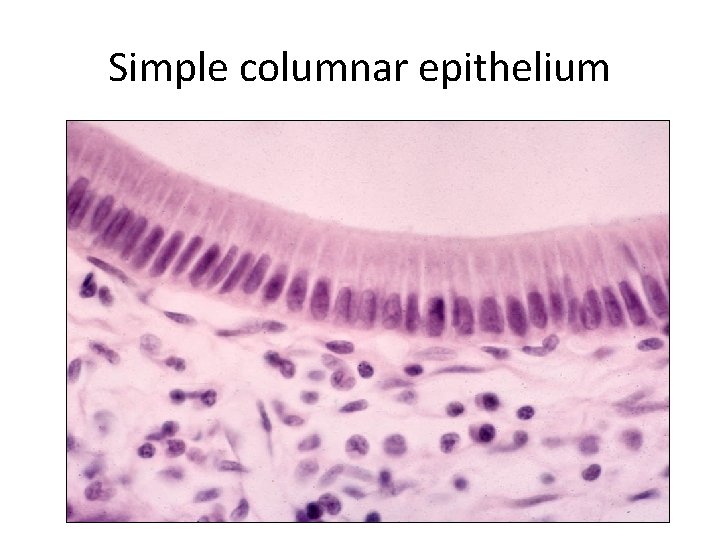
epithelial • Classified by shape of cell – Squamous-flat, scale-like – Cuboidal-same height and width – Columnar-taller than they are wide
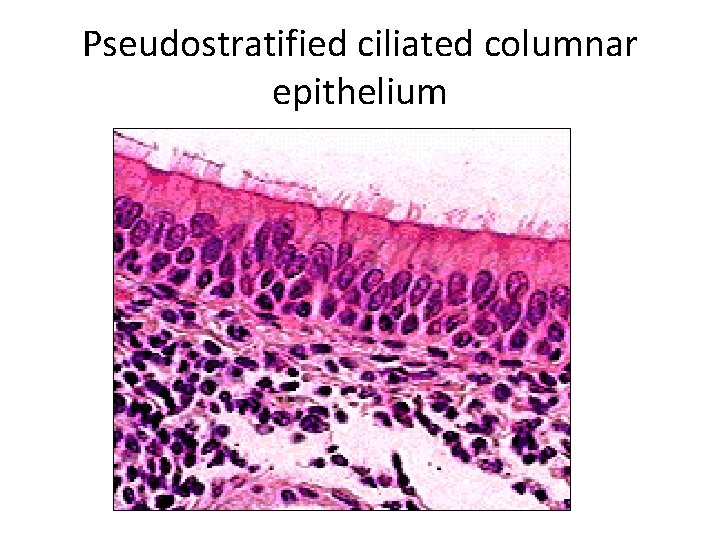
epithelial • Classified based on arrangement – Simple-single layer – Stratified-multilayered – Pseudostratified-appears multilayered, but is actually simple
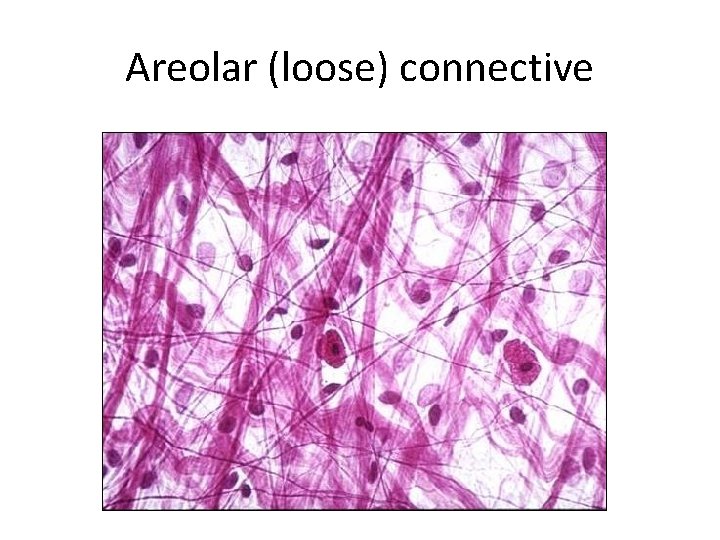
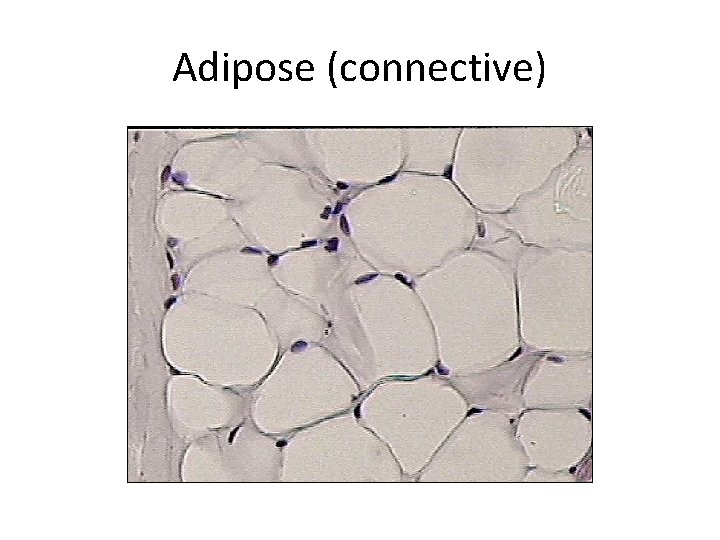
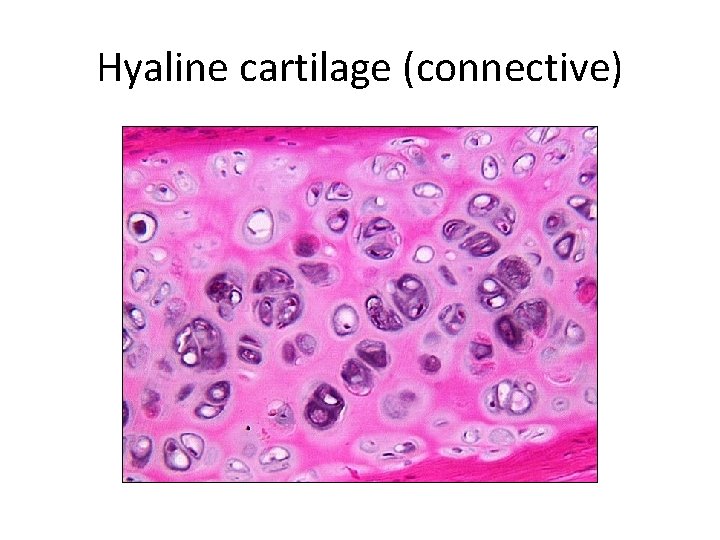
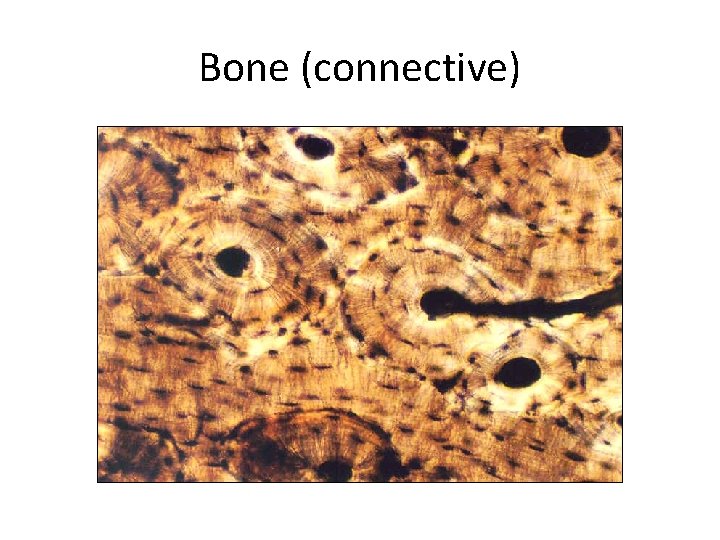
Connective • Characterized by fewer cells with much space in between. • Fibers are typically present • Contains a non-cellular matrix which determines the characteristics of the tissue • Functions: supports, protects, cushions, stores energy, connects
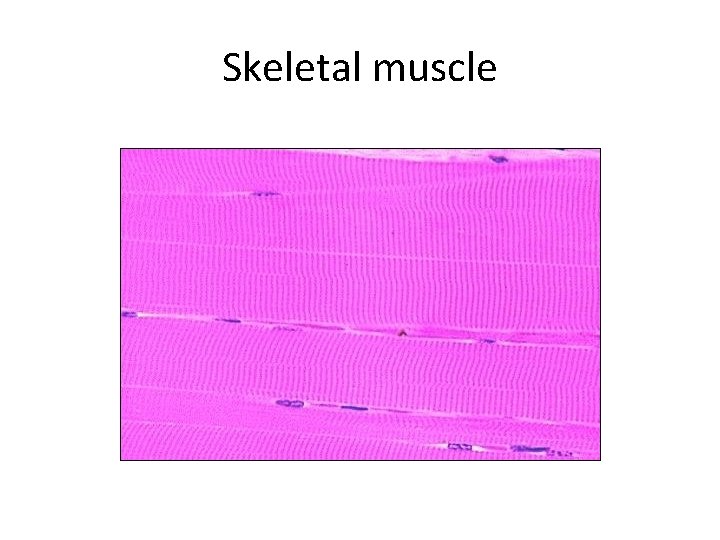
Muscle • Cells shorten (contract) to cause movement • 3 types: 1. Skeletal-connects to bones, striated, voluntary, multinucleated 2. Cardiac-only in the heart, striated, involuntary, branched, intercalated discs 3. Smooth-hollow internal organs, blood vessels, non-striated, involuntary, tapered at ends
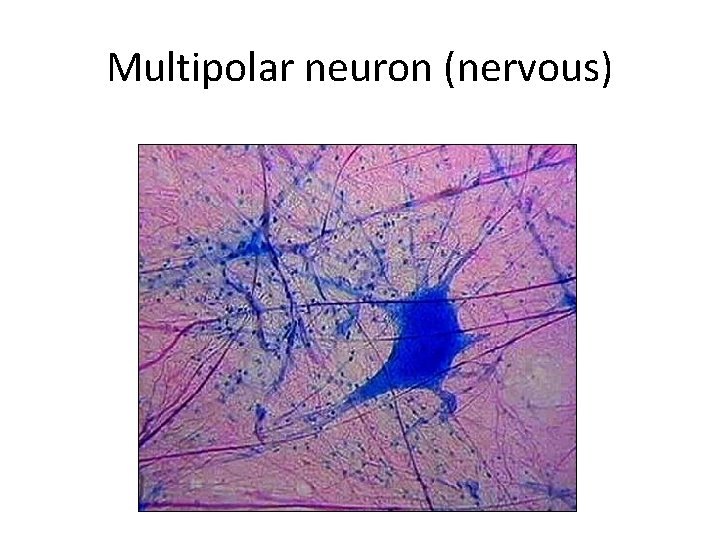
nervous • Respond to stimuli and send impulses • Found in the brain, spinal cord, and nerves • Neuraglial cells-non-conducting, support and protect neurons • Neurons-conducting cells
Stratified squamous epithelium
Simple cuboidal epithelium
Simple columnar epithelium
Pseudostratified ciliated columnar epithelium
Areolar (loose) connective
Adipose (connective)
Hyaline cartilage (connective)
Bone (connective)
Skeletal muscle
Multipolar neuron (nervous)