
Tissues Tissue Types Four major tissue types Epithelial
- Slides: 62
Tissues
Tissue Types • Four major tissue types – Epithelial – Connective – Muscle – Nervous
Epithelial Tissue- General Characteristics • Covers organs and the body • Line body cavities and hollow organs • Have a free surface and a basement membrane • Avascular
More General Characteristics • Cells readily divide • Cells tightly packed • Function in protection, secretion, absorption, and excretion • Classified according to cell shape and number of cell layers
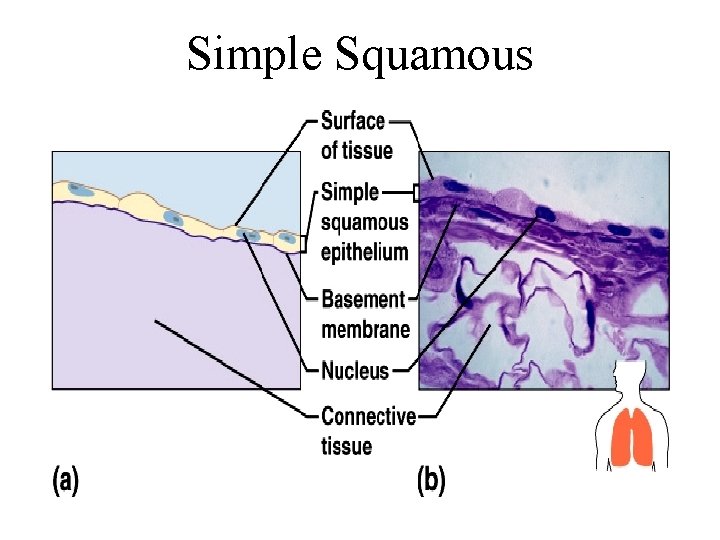
Epithelial Tissue: Simple Squamous • Single layer of flat cells • Substances pass easily through • Line air sacs, blood vessels and lymphatic vessels
Simple Squamous
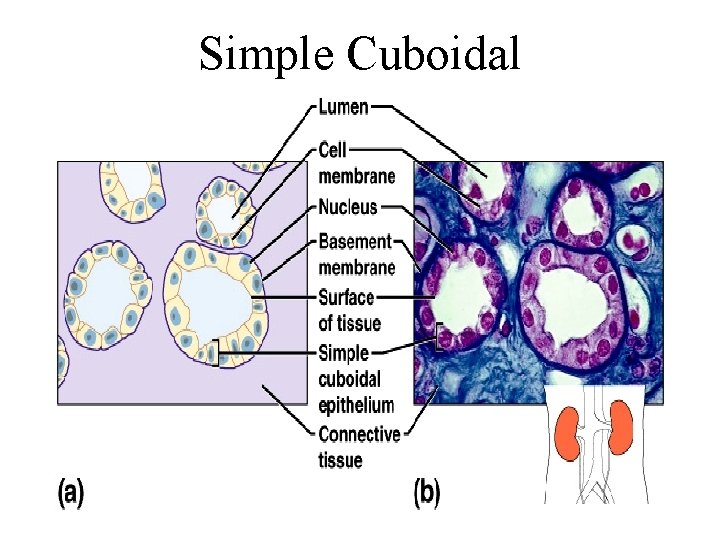
Epithelial Tissue: Simple Cuboidal • Single layer of cube-shaped cells • Line kidney tubules and ducts of some glands • Cover ovaries
Simple Cuboidal
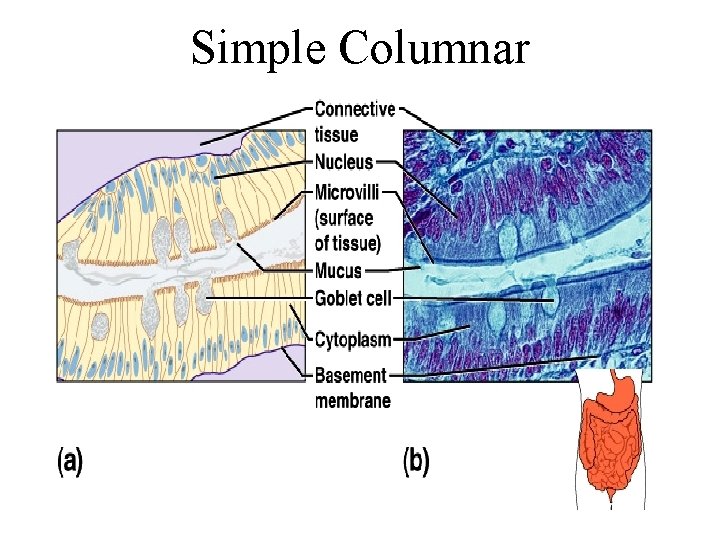
Epithelial Tissue: Simple Columnar • • Single layer of elongated cells Sometimes possess cilia or microvilli Often have goblet cells Line uterus, stomach, intestines
Simple Columnar
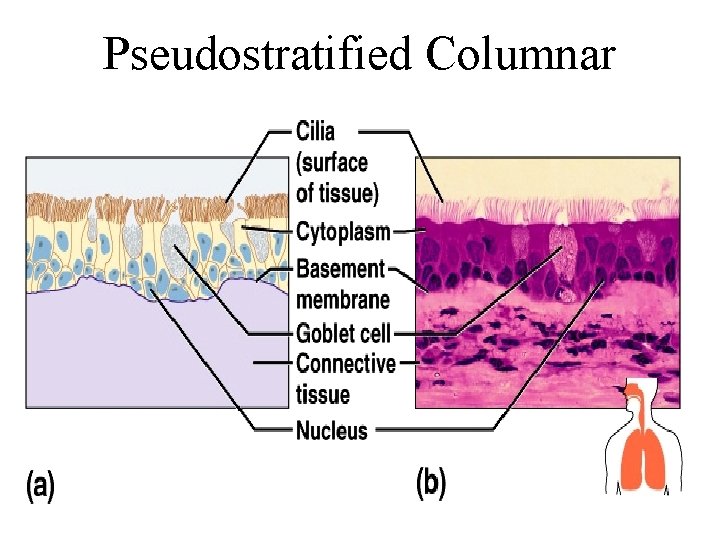
Epithelial Tissue: Pseudostratified Columnar • • Single layer of elongated cells Appear striated Often have cilia and goblet cells Line respiratory passageways
Pseudostratified Columnar
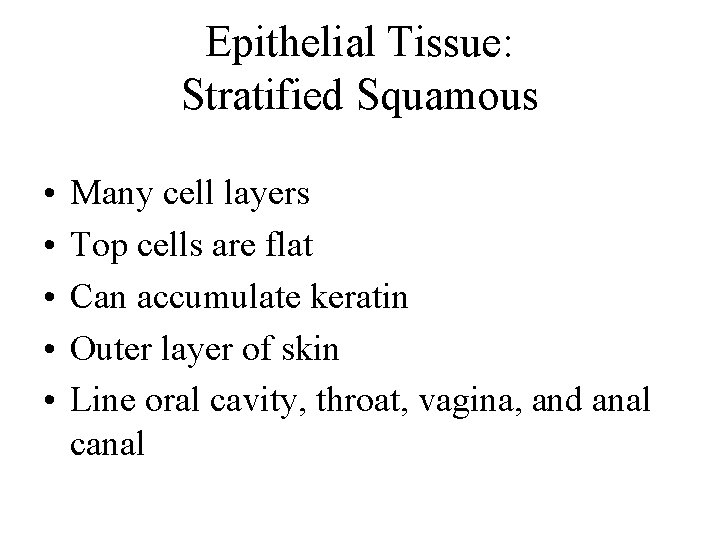
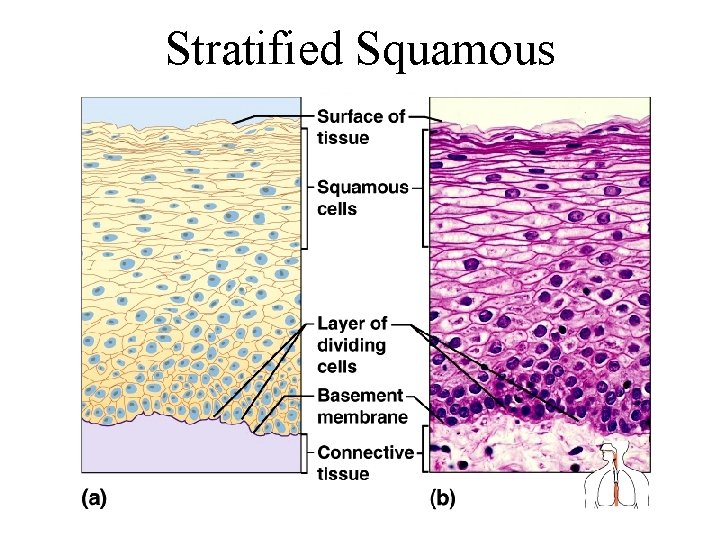
Epithelial Tissue: Stratified Squamous • • • Many cell layers Top cells are flat Can accumulate keratin Outer layer of skin Line oral cavity, throat, vagina, and anal canal
Stratified Squamous
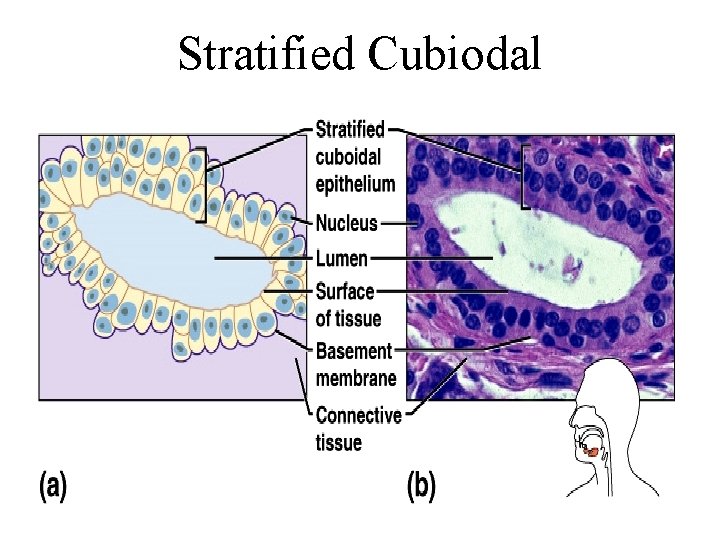
Epithelial Tissue: Stratified Cubiodal • 2 -3 layers • Cube-shaped cells • Line ducts of mammary glands, sweat glands, salivary glands, and the pancreas
Stratified Cubiodal
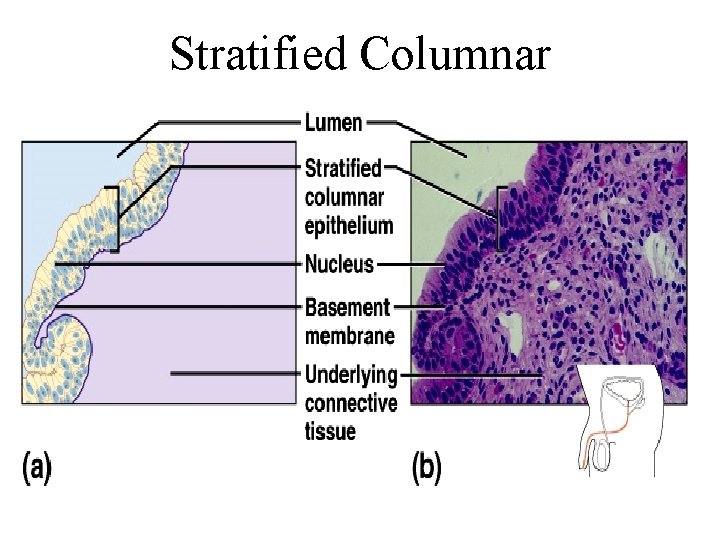
Epithelial Tissue: Stratified Columnar • Top layer of elongated cells • Cube-shaped cells in deeper layers • Line vas deferens, male urethra, and part of pharynx
Stratified Columnar
Epithelial Tissue: Transitional • Many cell layers • Cube-shaped and elongated cells • Line urinary bladder, ureters, and part of urethra
Glandular Epithelium • Composed of cells that are specialized to produce and secrete substances • Endocrine glands are ductless • Exocrine glands have ducts
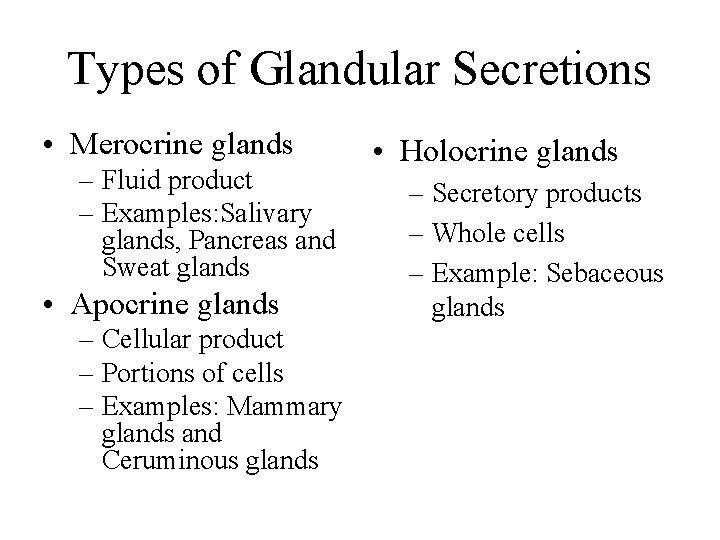
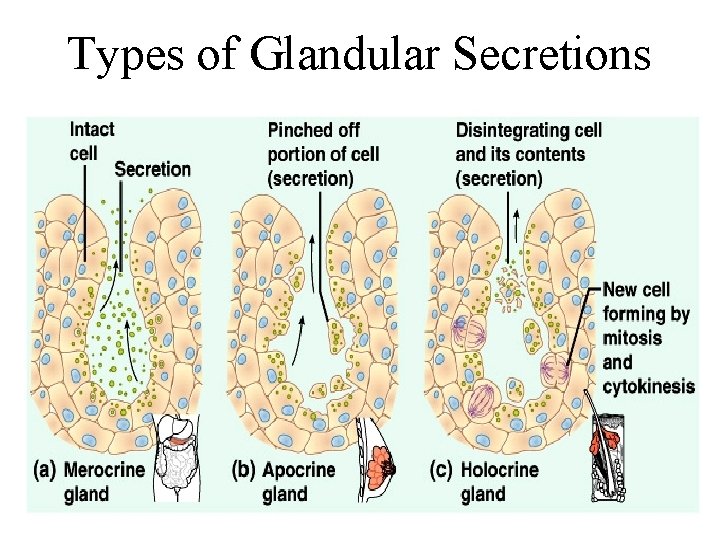
Types of Glandular Secretions • Merocrine glands – Fluid product – Examples: Salivary glands, Pancreas and Sweat glands • Apocrine glands – Cellular product – Portions of cells – Examples: Mammary glands and Ceruminous glands • Holocrine glands – Secretory products – Whole cells – Example: Sebaceous glands
Types of Glandular Secretions
Connective Tissues • General Characteristics – Most abundant tissue type – Have a matrix – Have varying degrees of vascularity – Have cells that usually divide
Connective Tissues • Many functions • Bind structures • Provide support and protection • Serve as frameworks • Fill spaces • Store fat • Produce blood cells • Protect against infections • Help repair tissue damage
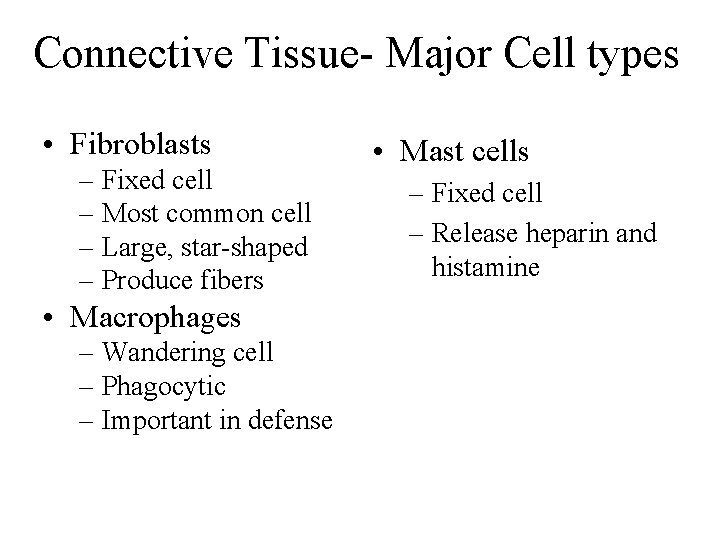
Connective Tissue- Major Cell types • Fibroblasts – Fixed cell – Most common cell – Large, star-shaped – Produce fibers • Macrophages – Wandering cell – Phagocytic – Important in defense • Mast cells – Fixed cell – Release heparin and histamine
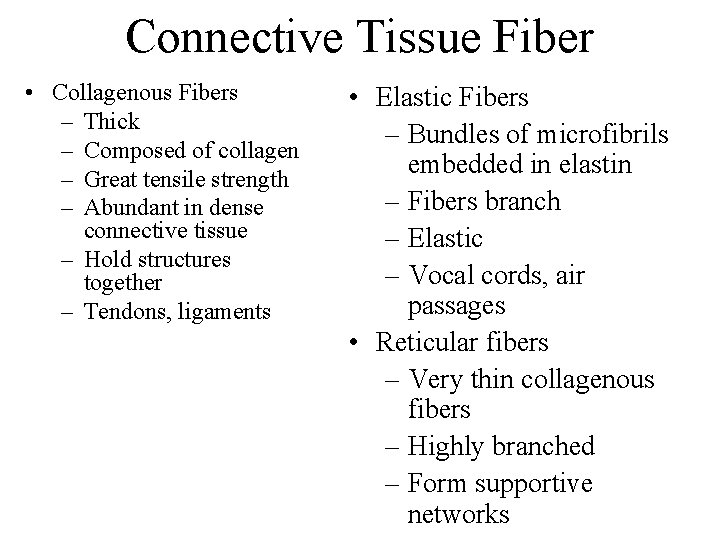
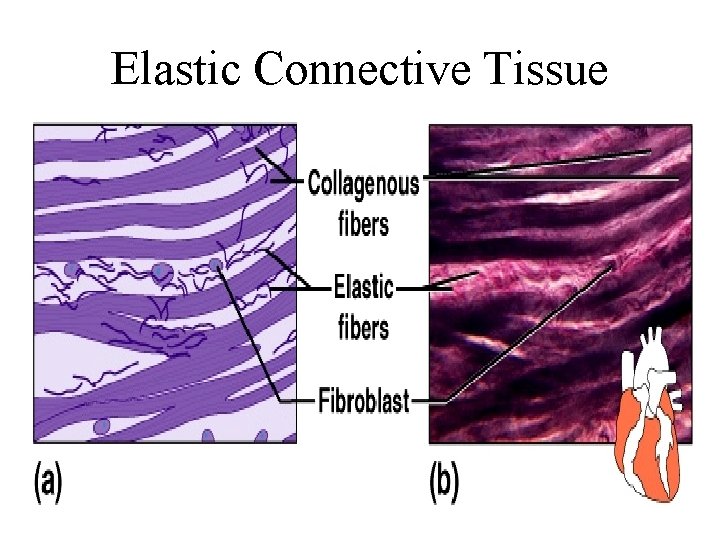
Connective Tissue Fiber • Collagenous Fibers – Thick – Composed of collagen – Great tensile strength – Abundant in dense connective tissue – Hold structures together – Tendons, ligaments • Elastic Fibers – Bundles of microfibrils embedded in elastin – Fibers branch – Elastic – Vocal cords, air passages • Reticular fibers – Very thin collagenous fibers – Highly branched – Form supportive networks
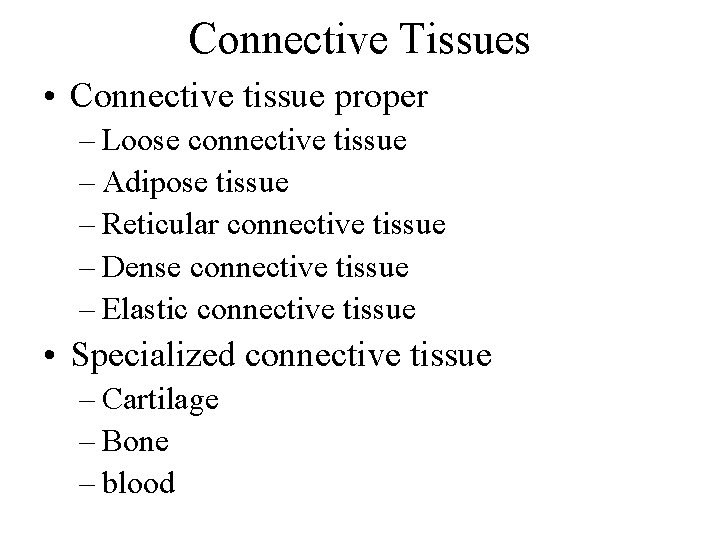
Connective Tissues • Connective tissue proper – Loose connective tissue – Adipose tissue – Reticular connective tissue – Dense connective tissue – Elastic connective tissue • Specialized connective tissue – Cartilage – Bone – blood
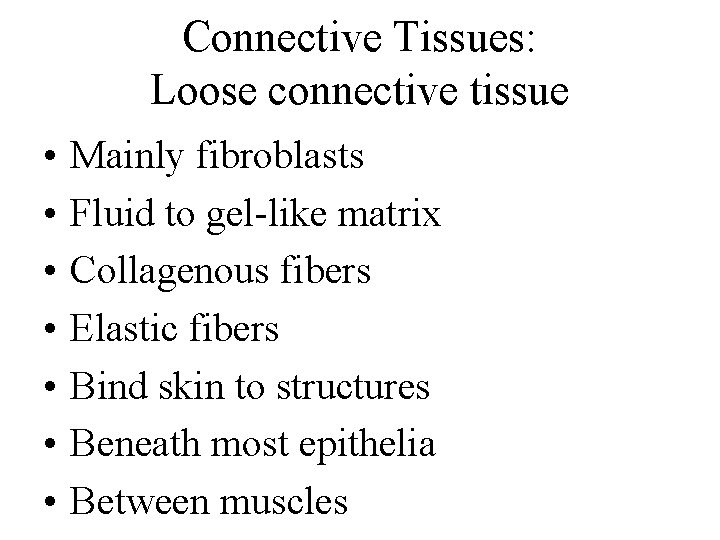
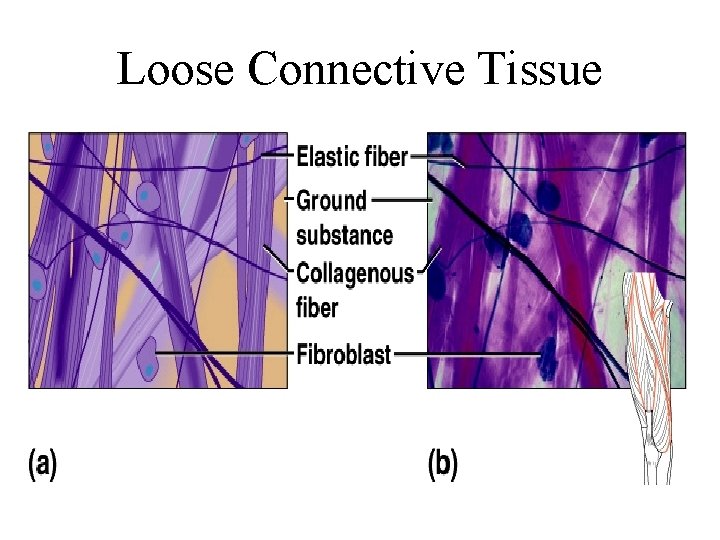
Connective Tissues: Loose connective tissue • • Mainly fibroblasts Fluid to gel-like matrix Collagenous fibers Elastic fibers Bind skin to structures Beneath most epithelia Between muscles
Loose Connective Tissue
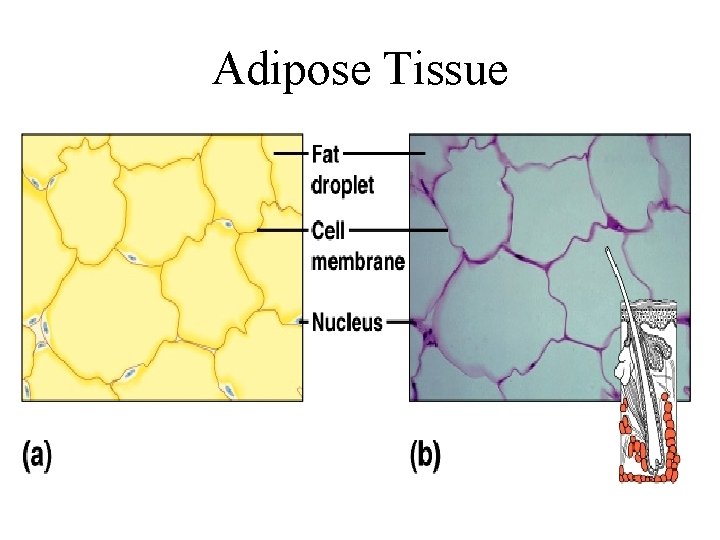
Connective Tissue: Adipose tissue • • Adipocytes Cushions Insulates Store fats Beneath skin Behind eyes Around kidneys and heart
Adipose Tissue
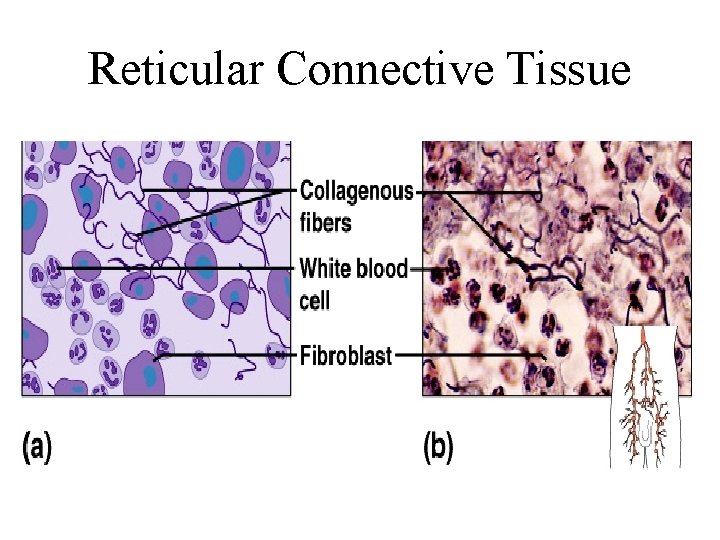
Connective Tissue: Reticular connective tissue – Composed of reticular fibers – Supports – Walls of liver, spleen, lymphatic organs
Reticular Connective Tissue
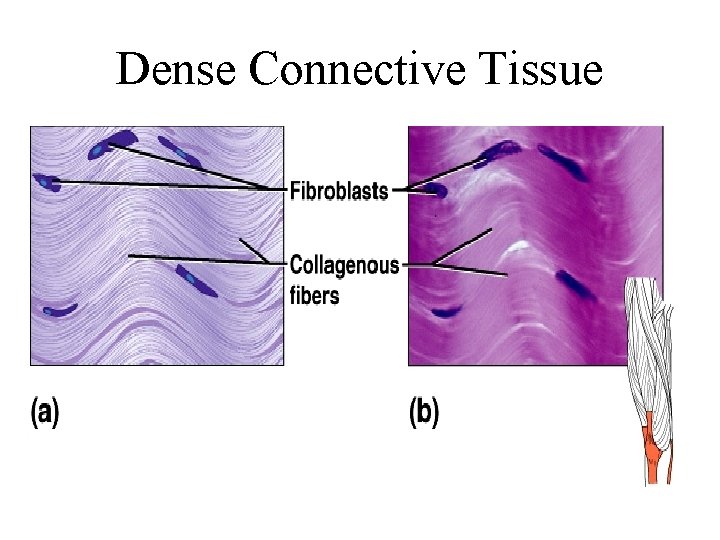
Connective Tissue: Dense connective tissue • • • Packed collagenous fibers Elastic fibers Few fibroblasts Bind body parts together Tendons, ligaments, dermis Poor blood supply
Dense Connective Tissue
Connective Tissue: Elastic connective tissue • • • Abundant in elastic fibers Some collagenous fibers Fibroblasts Attachments between vertebrae Walls of large arteries, airways, heart
Elastic Connective Tissue
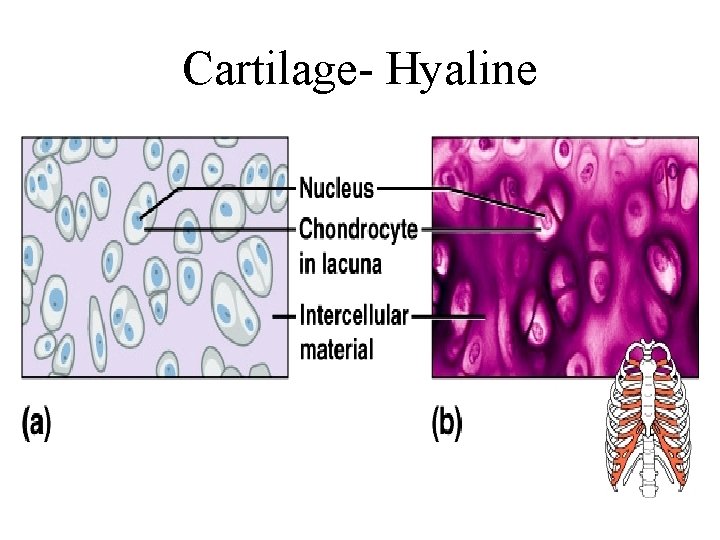
Connective Tissues: Cartilage • • Rigid matrix Chondrocytes in lacunae Poor blood supply Three types – Hyaline – Elastic – fibrocartilage
Connective Tissue: Cartilage. Hyaline • • Most abundant Ends of bones Nose, respiratory passages. Embryonic skeleton
Cartilage- Hyaline
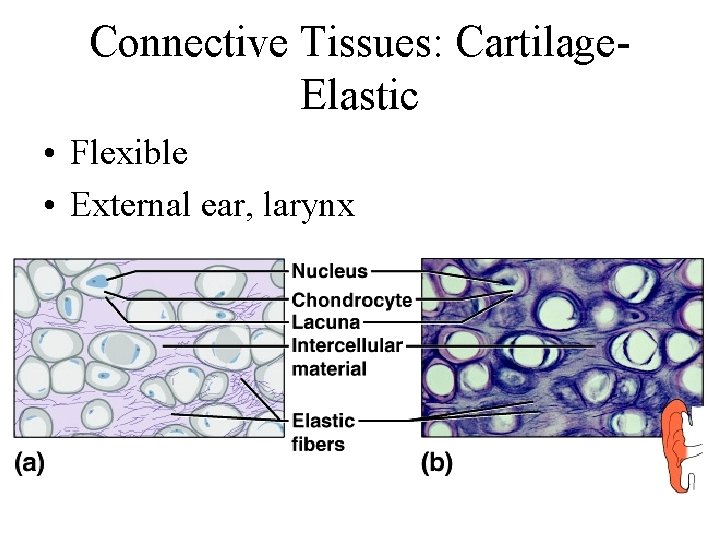
Connective Tissues: Cartilage. Elastic • Flexible • External ear, larynx
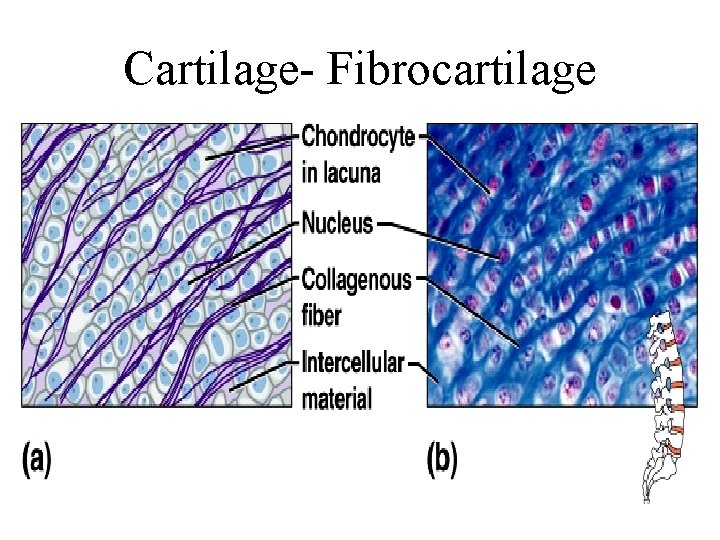
Connective Tissues: Cartilage- Fibrocartilage • • Very tough Shock absorber Intervertebral discs Pads of knee and pelvic girdle
Cartilage- Fibrocartilage
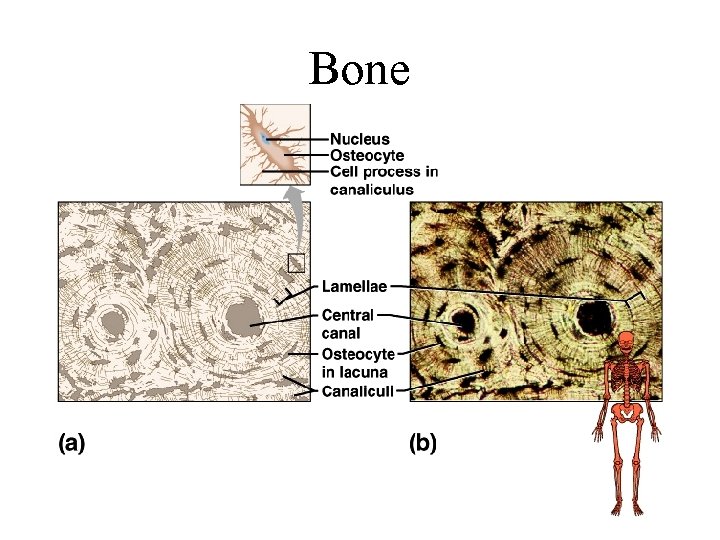
Connective Tissue: Bone • • Solid matrix Supports Protects Forms blood cells Attachment for muscles Skeleton Osteocytes in lacunae
Bone
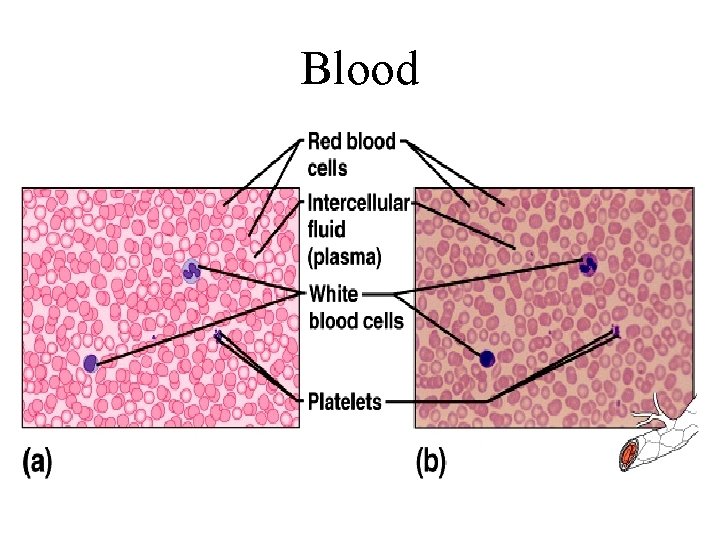
Connective Tissue: Blood • • • Fluid matrix called plasma Red blood cells White blood cells Platelets Transports Defends Clotting Throughout body in blood vessels Heart
Blood
Muscle Tissues • General characteristics – Muscle cells are called muscle fibers – Contractile – Three types • Skeletal • Smooth • cardiac
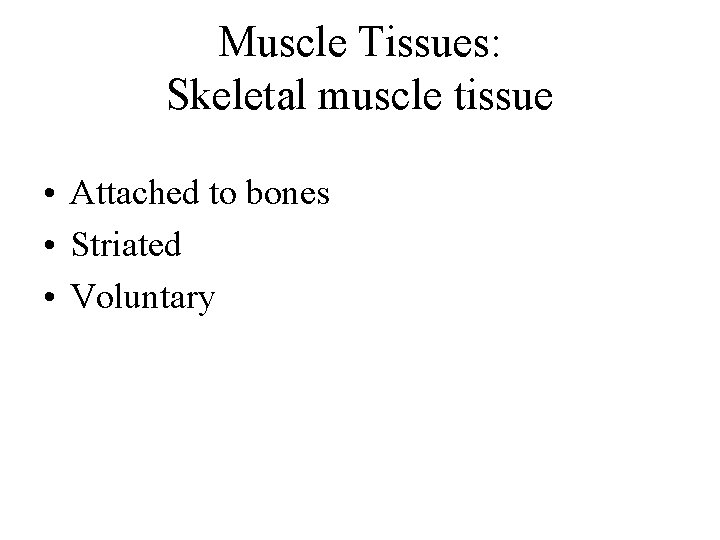
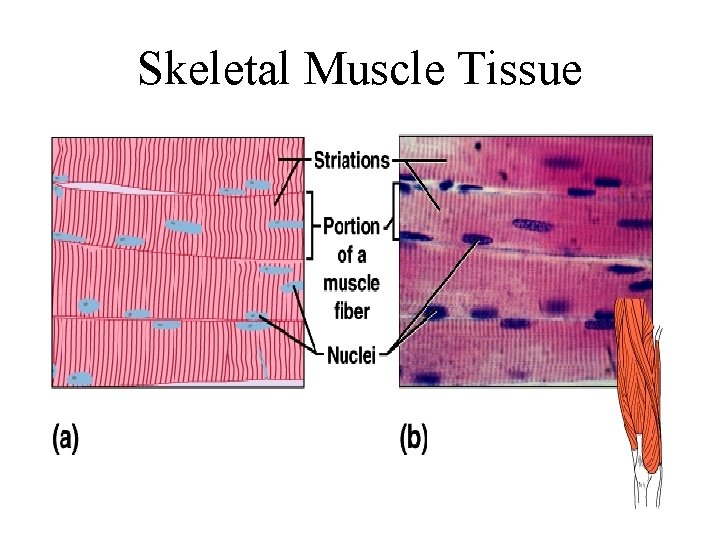
Muscle Tissues: Skeletal muscle tissue • Attached to bones • Striated • Voluntary
Skeletal Muscle Tissue
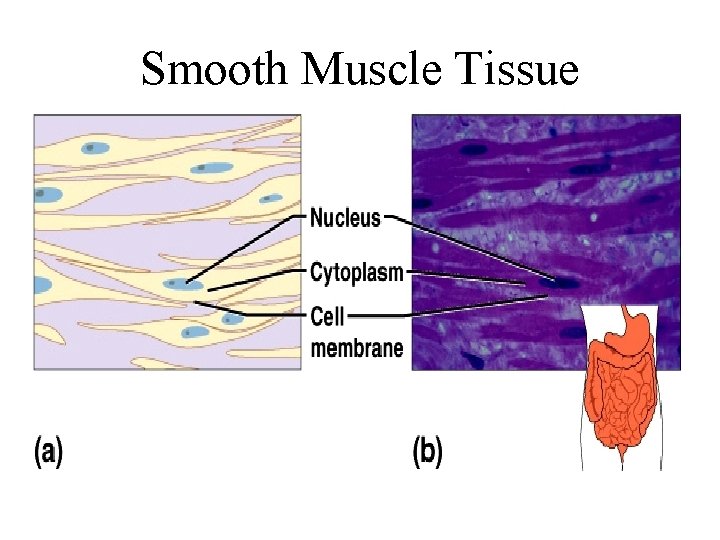
Muscle Tissues: Smooth muscle • • • Walls of organs Skin Walls of blood vessels Involuntary Not striated
Smooth Muscle Tissue
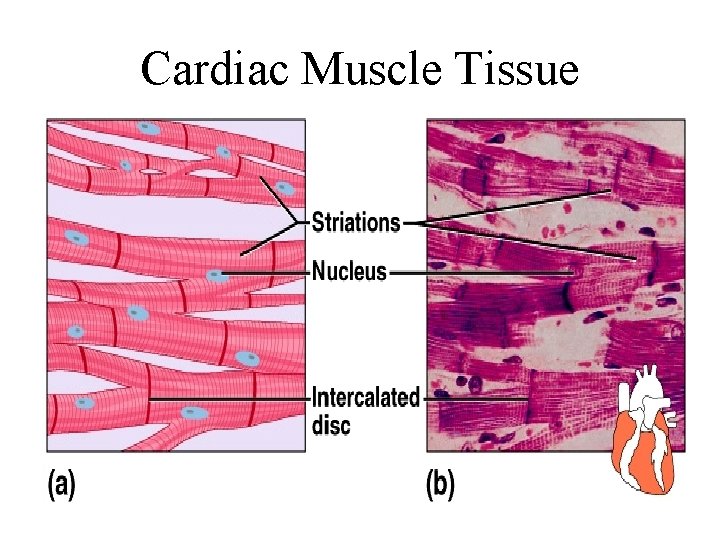
Muscle Tissue: Cardiac muscle • • Heart wall Involuntary Striated Intercalated discs
Cardiac Muscle Tissue
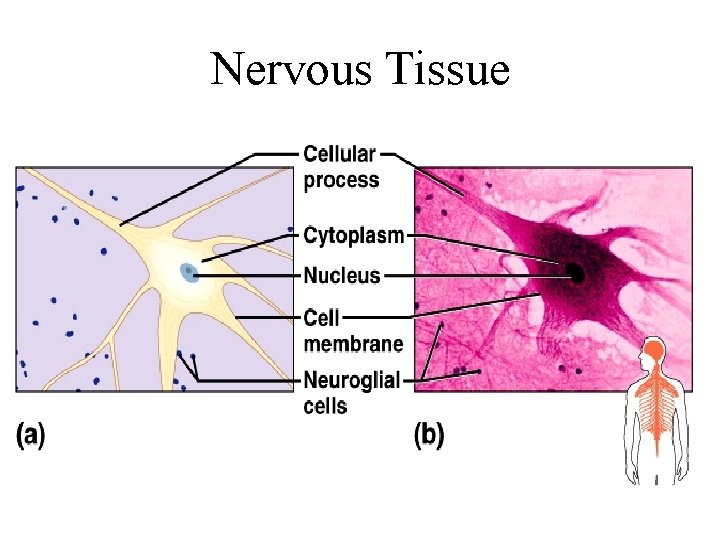
Nervous Tissues • Found in brain, spinal cord, and peripheral nerves • Basic cells neurons • Neuroglial cells are supporting cells • Sensory reception • Conduction of nerve impulses
Nervous Tissue
Types of Epithelial Membranes • Serous • Mucous • Cutaneous
Epithelial Membrane- Serous • Line body cavities that lack openings to outside • Reduce friction • Inner lining of thorax and abdomen • Cover organs of thorax and abdomen • Secrete serous fluid
Epithelial Membrane- Muccous • Line tubes and organs that open to the outside world • Lining of mouth, nose, throat, etc. • Secrete mucus
Epithelial Membrane- Cutaneous • Covers body • Skin
Collagen Disorders • Chondrodysplasia – Collagen chains too wide – Stunted growth – Deformed joints • Hereditary osteoarthritis – Change in amino acid in collagen – Painful joints
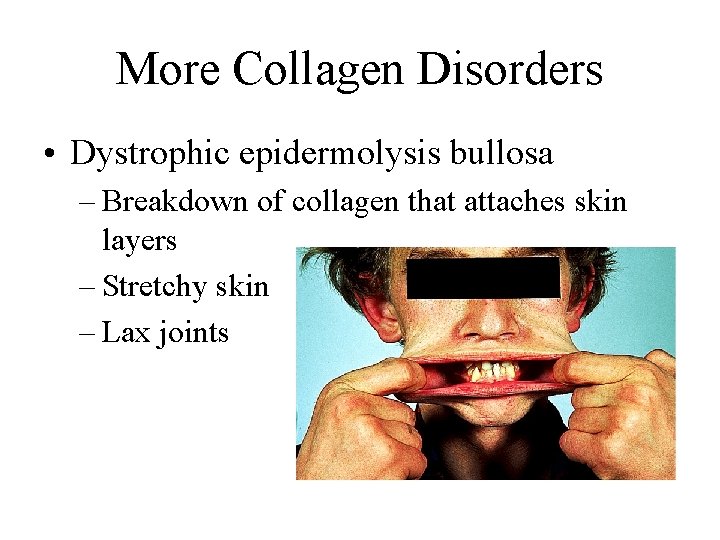
More Collagen Disorders • Dystrophic epidermolysis bullosa – Breakdown of collagen that attaches skin layers – Stretchy skin – Lax joints