
Tissues Tissue and organ 29 tissue assembly of
Tissues
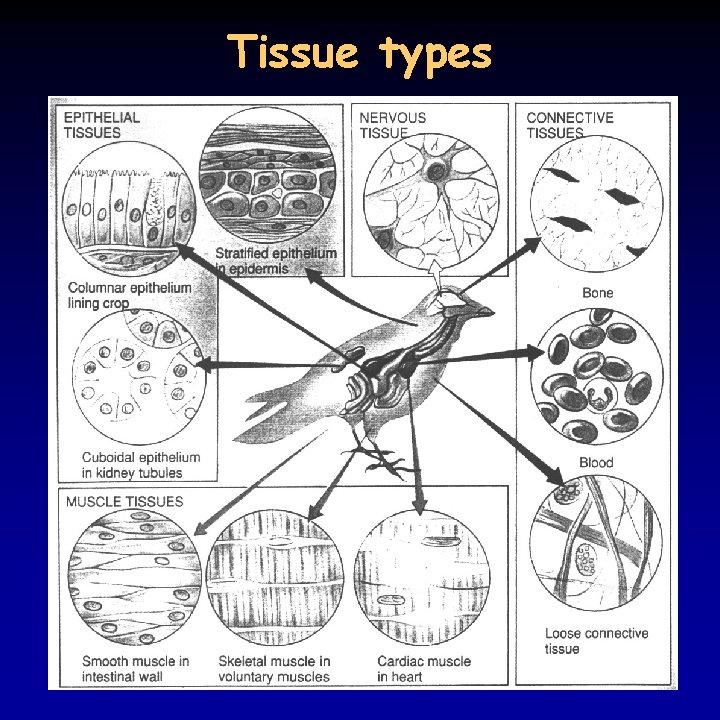
Tissue and organ 2/9 • tissue: assembly of specially differentiated cells • organ: assembly of cells specialized for a given function – in most cases it is built up of several types of tissues • character might be determined by one of the tissues (e. g. bone, muscle) – see brick house • the character of the tissue is determined by the cells and by the components of the interstitial space • tissue types: – epithelial – nervous – connective – muscle
Epithelial tissues 3/9 • main function: to cover surfaces • tightly fitted cells, no interstitial space • it is one layered if there is no mechanical or osmotic stress (blood vessels, body cavities) • it is multilayered (stratified) if it has to resist mechanical or osmotic stress (mouth, anal and vaginal orifices) • specific epithelium is found in the skin (organ!): dead cells in the uppermost layer filled with keratin – defense against evaporation and injuries • columnar, cuboidal and flat epithelium – stratified named after the uppermost layer • specific structures might be present on the surface: – microvilli (kidney, gut): length 0. 5 μ, width 0. 1 μ – 200 million/mm 2 – surface – cillia (respiratory tract): length 10 μ, width 0. 25 μ – 10 million/mm 2 - moving mucus
Connective tissue 4/9 • function: mechanical, but blood • many different types, very heterogeneous • interstitial space is large, it contains fibers (collagen, elastic and reticular fibers) and amorphous material (polysaccharides, anorganic minerals) • classic experiment with chicken bone – acid and heating – see also young and old bones • most important forms: – – – blood bone cartilage tendon adipose tissue
Nervous tissue 5/9 • neuronal and glia cells • neuronal – excitability, glia – supportive (now many other functions as well) • neurons: – – – perikaryon, soma, cell body, Nissl-bodies dendrit (spines), neurit or axon (processes) axon hillock, initial segment, collateral neurit+myelin sheath = neuronal fiber telodendrion unipolar, bipolar, pseudounipolar, multipolar, characteristic dendrit arborization • axons are insulated, except at the very beginning and at the very end • myelin sheath: Schwann cell (periphery), oligodendroglia (centrally) – color is white • non-myelinated thin fibers (C): Schwann cell, but one cell for many axons – color gray
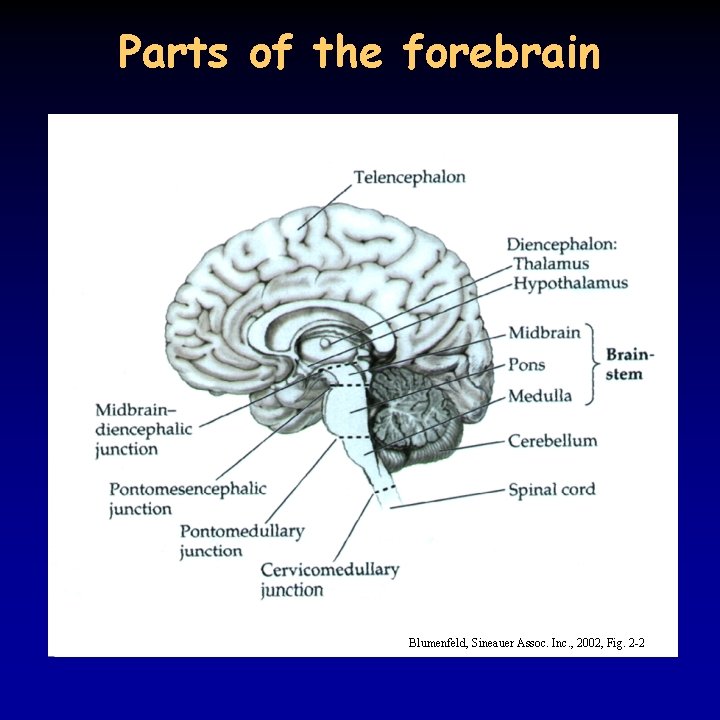
Nervous system I. 6/9 • central nervous system (CNS) = brain and spinal cord • peripheral nervous system (PNS) = cranial and spinal nerves, ganglia, enteric nervous system • central nervous system – spinal cord is segmented: 8 cervical, 12 dorsal, 5 lumbar, 5 sacral, 1 caudal segments – brainstem: medulla, pons (rhombencephalon), midbrain (mesencephalon) – cerebellum – cerebrum (forebrain): diencephalon (thalamus and hypothalamus), telencephalon (basal ganglia and cortex), other areas – cortex is divided into lobes mainly by the bones of the skull: frontal, parietal, temporal, occipital, limbic (e. g. hippocampus), insula, olfactory cortex, corpus callosum , ,
Nervous system II. • central nervous system continued – two main components: white and gray matters – position different in brain and spinal chord – cortex is convoluted in humans, but not in rats – surface – gyrus (gyri), sulcus (sulci) – CNS is covered by three membranes: dura mater, arachnoid, pia mater – inside the CNS: cavities filled with cerebrospinal fluid (CSF) or liquor – lateral ventricles, third and fourth ventricles, central canal – the same fluid within the arachnoid – produced by the chorioid plexes- strictly controlled – bloodbrain barrier (medicines not always penetrate) – one of its functions: mechanical protection by decreasing the weight of the brain (Archimedes) – if removed or lost – headache – disturbances in production and reabsorbtion: hydrocephalus 7/9
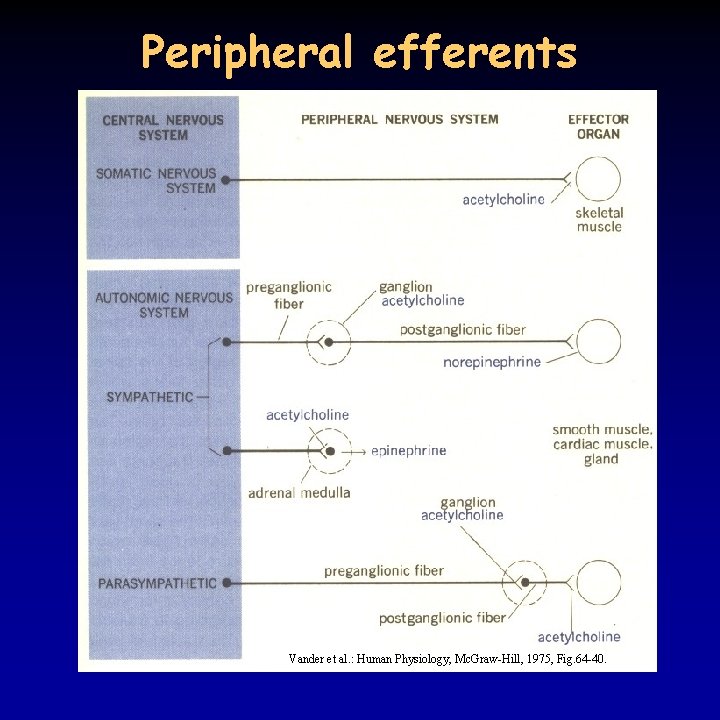
Nervous system III. 8/9 • peripheral nervous system – interface between the environment, the effectors and the central nervous system - sensory and motor parts – sensory part: primary sensory neuron always outside the CNS in a ganglion (e. g. dorsal root ganglion), bipolar or pseudounipolar – motor part is more complicated – somatic and autonomic or vegetative system – the two can be differentiated best at the efferent part of the PNS – afferents are similar, centers are ambiguous – somatic efferents: neuron in brainstem or spinal cord, long dendrites, many inputs, ending on striated muscle fibers directly – leave the CNS in cranial (12 pairs) and spinal (31 pairs) nerves – vegetative efferents: reach smooth muscle, heart or gland cells after a synapse in a ganglion
Nervous system IV. 9/9 • peripheral nervous system continued – vegetative nervous system has two parts – sympathetic: • leaves the CNS with thoracic and lumbar spinal nerves • synapses far from target – paravertebral or prevertebral ganglia • preganglionic fiber – n. ACh, postganglionic fiber mainly – NA, rarely m. ACh (sweat glands) • alpha 1 – IP 3, contraction • alpha 2 – c. AMP inhibition (autoreceptor mainly) • beta 1, 2, 3 – c. AMP increase – relaxation and other effects – parasympathetic: • • • leaves the CNS through cranial and sacral spinal nerves synapses near to the target preganglionic fiber – n. ACh, postganglionic fiber m. ACh M 1 – c. AMP, K-channel inhibition – hypopolarization M 2 – K-channel opening – hyperpolarization – not every organ receives both types of fibers body wall (blood vessels) sympathetic only – not always antagonistic, parasympathetic – local reflexes, regulation, sympathetic – general effects

End of text
Tissue types
Peripheral efferents Vander et al. : Human Physiology, Mc. Graw-Hill, 1975, Fig. 64 -40.
Parts of the forebrain Blumenfeld, Sineauer Assoc. Inc. , 2002, Fig. 2 -2
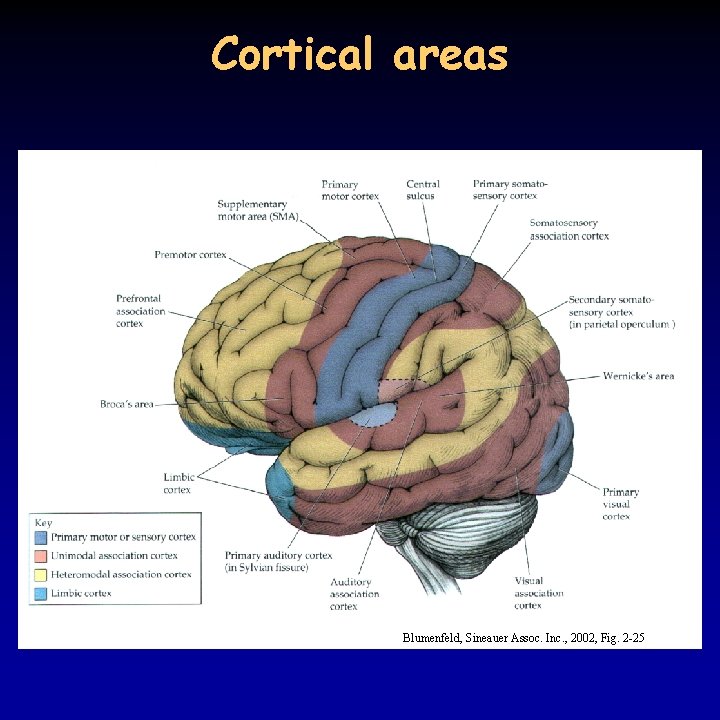
Cortical areas Blumenfeld, Sineauer Assoc. Inc. , 2002, Fig. 2 -25
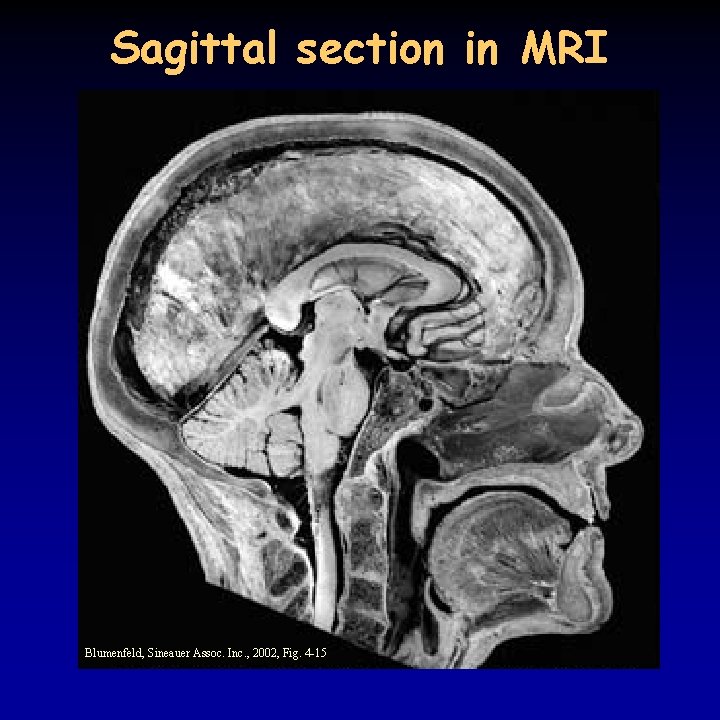
Sagittal section in MRI Blumenfeld, Sineauer Assoc. Inc. , 2002, Fig. 4 -15
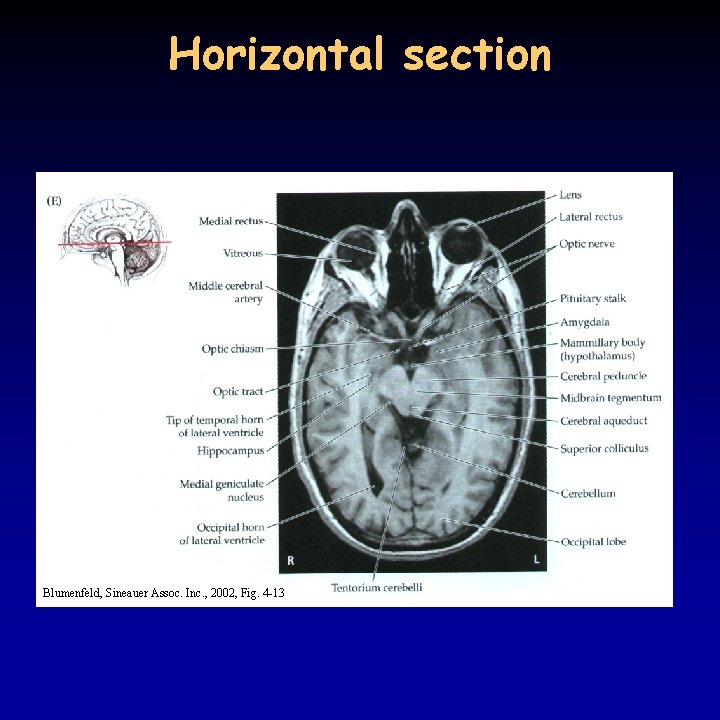
Horizontal section Blumenfeld, Sineauer Assoc. Inc. , 2002, Fig. 4 -13
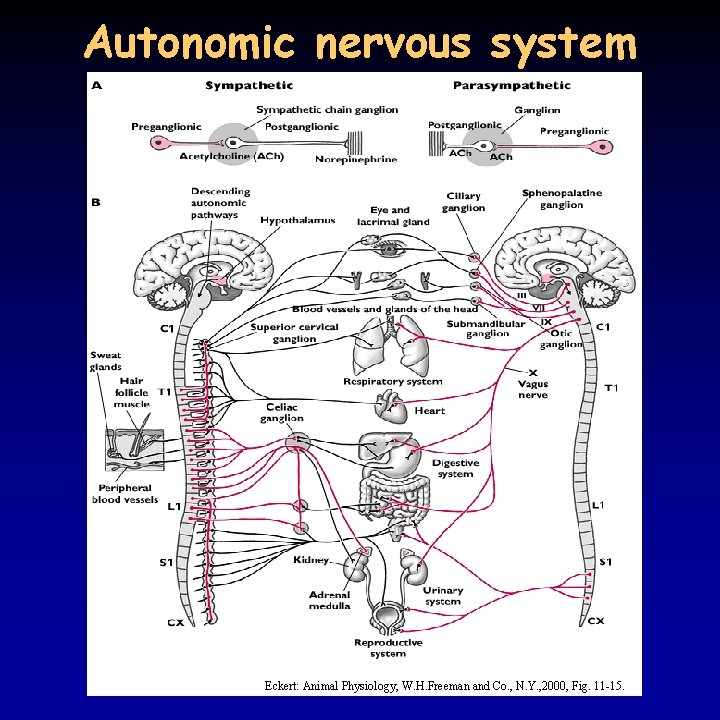
Autonomic nervous system Eckert: Animal Physiology, W. H. Freeman and Co. , N. Y. , 2000, Fig. 11 -15.
- Slides: 17