
Tissues Pg 74 87 What is a Tissue
- Slides: 41
Tissues Pg 74 - 87
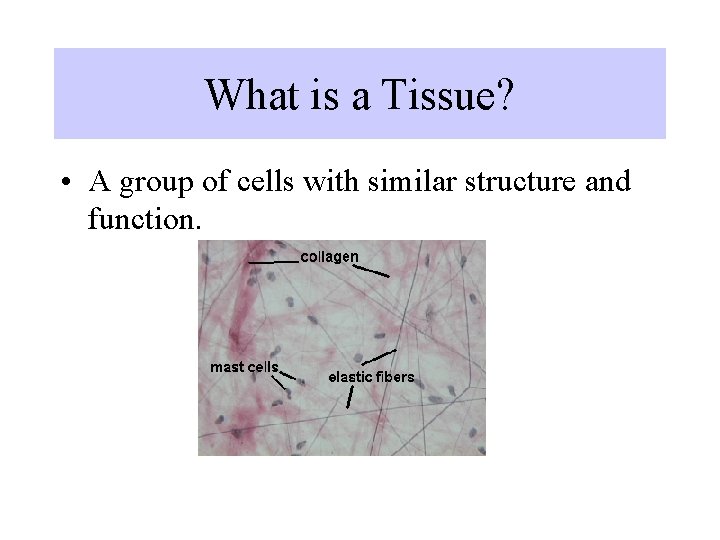
What is a Tissue? • A group of cells with similar structure and function.
How can we grow tissues? How can we make cells of each tissue type? • Through the use of stem cells. • How do we grow stem cells? • What is a stem cell? • • • Stem Cell Differentiation Growing Stem Cells
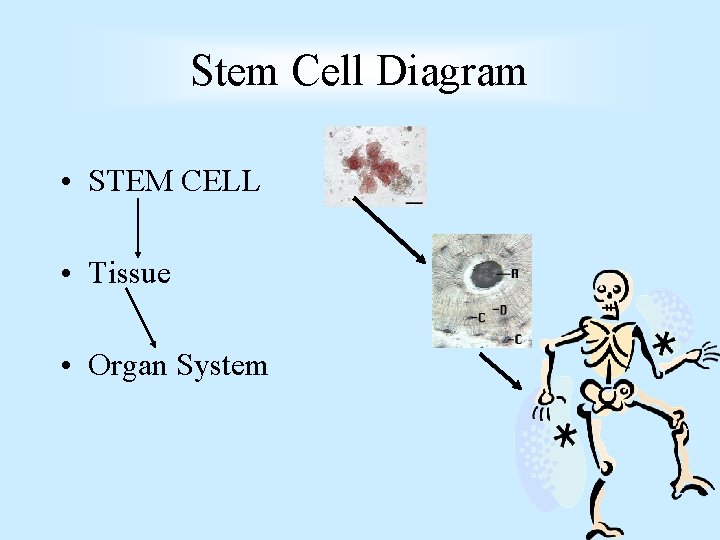
Stem Cell Diagram • STEM CELL • Tissue • Organ System
Epithelial Tissue • Epithe = laid on / covering • Lining, covering, and glandular tissue of the body. • Jobs: Protection, Absorption, Filtration, Secretion
How are Epithelial Cells Made? Mapping Cell Fates
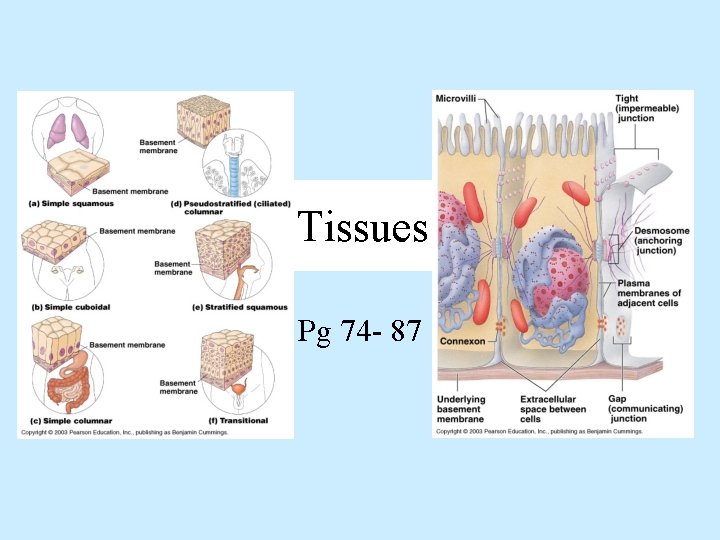
What are the 2 Parts of tissues? • Apical Surface: Exposed surface of the cell. Free side. May have cilia or villi • Basement Membrane: Lower surface • Epithelial tissue is Avascular: no blood supply. Diffusion.
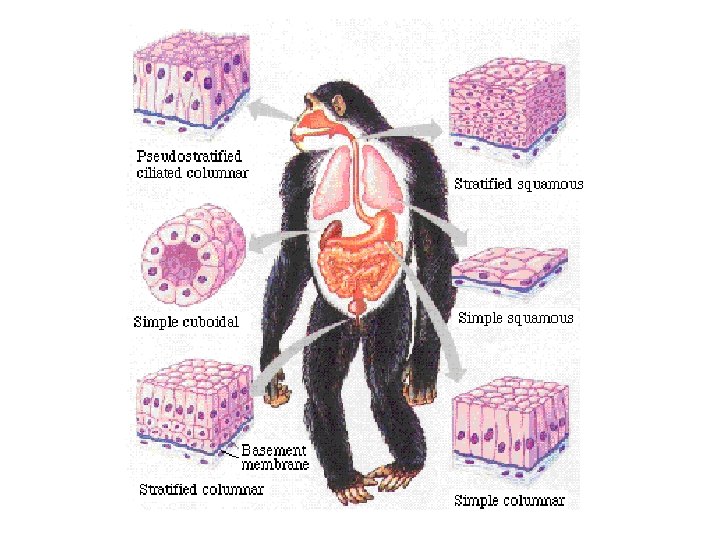
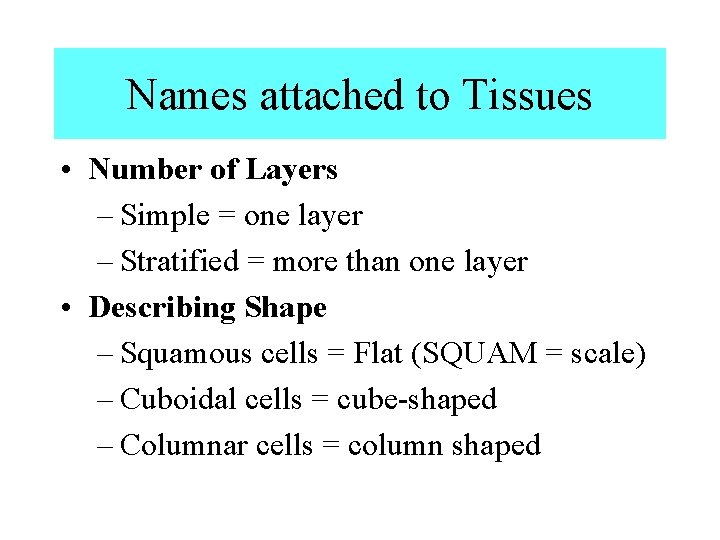
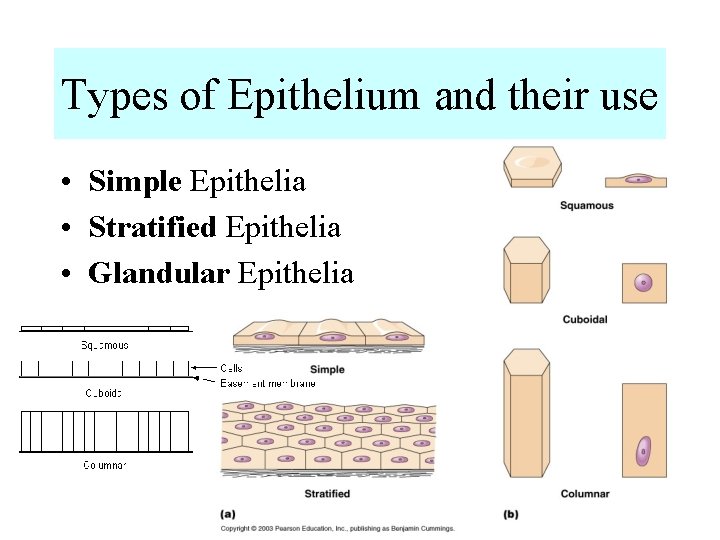
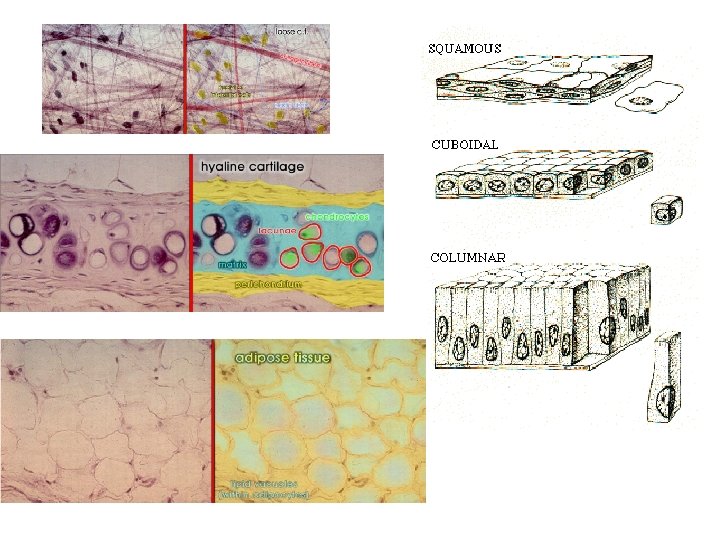
Names attached to Tissues • Number of Layers – Simple = one layer – Stratified = more than one layer • Describing Shape – Squamous cells = Flat (SQUAM = scale) – Cuboidal cells = cube-shaped – Columnar cells = column shaped
Types of Epithelium and their use • Simple Epithelia • Stratified Epithelia • Glandular Epithelia
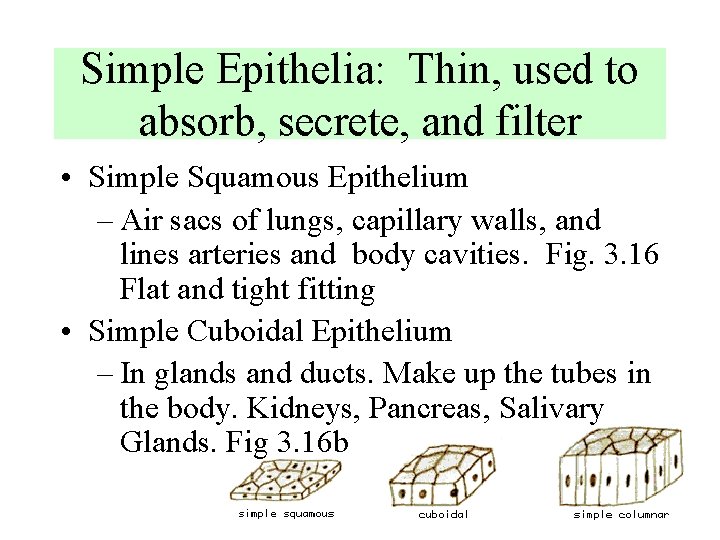
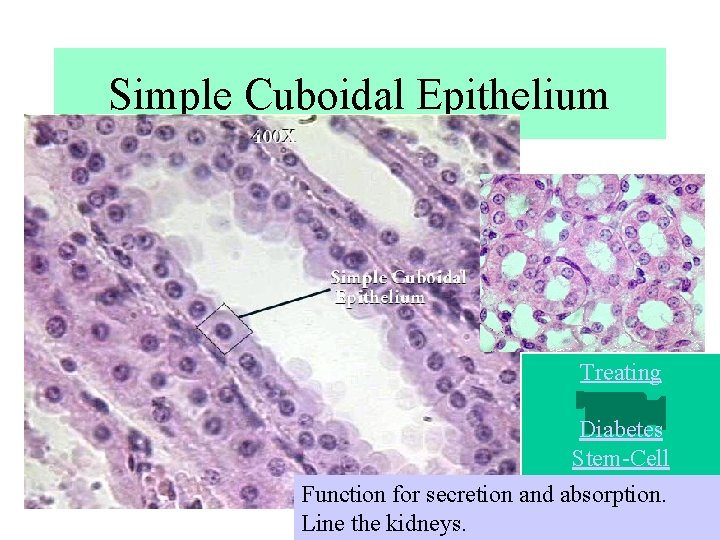
Simple Epithelia: Thin, used to absorb, secrete, and filter • Simple Squamous Epithelium – Air sacs of lungs, capillary walls, and lines arteries and body cavities. Fig. 3. 16 Flat and tight fitting • Simple Cuboidal Epithelium – In glands and ducts. Make up the tubes in the body. Kidneys, Pancreas, Salivary Glands. Fig 3. 16 b
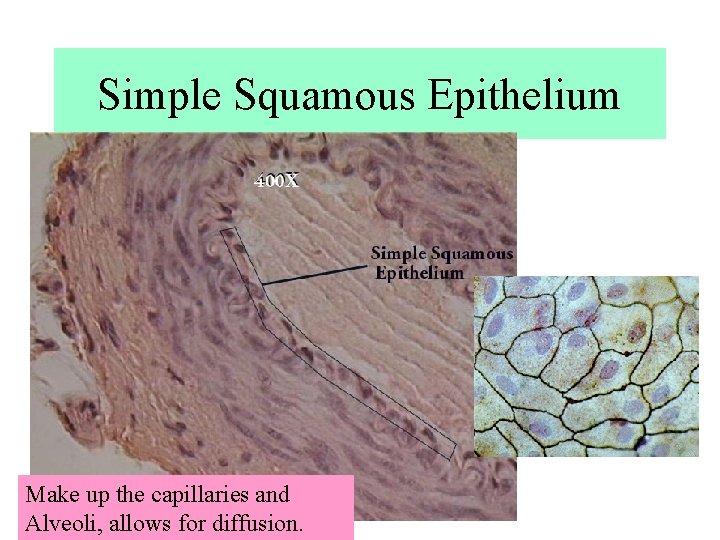
Simple Squamous Epithelium Make up the capillaries and Alveoli, allows for diffusion.
Simple Cuboidal Epithelium Treating Diabetes Stem-Cell Function for secretion and absorption. Line the kidneys.
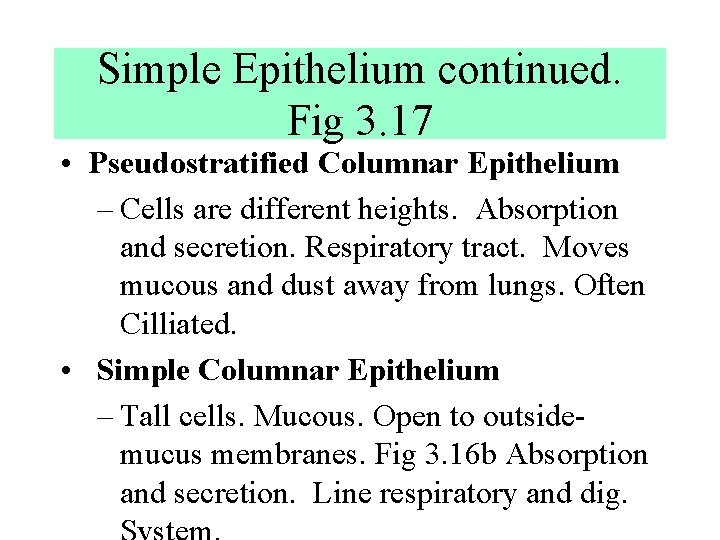
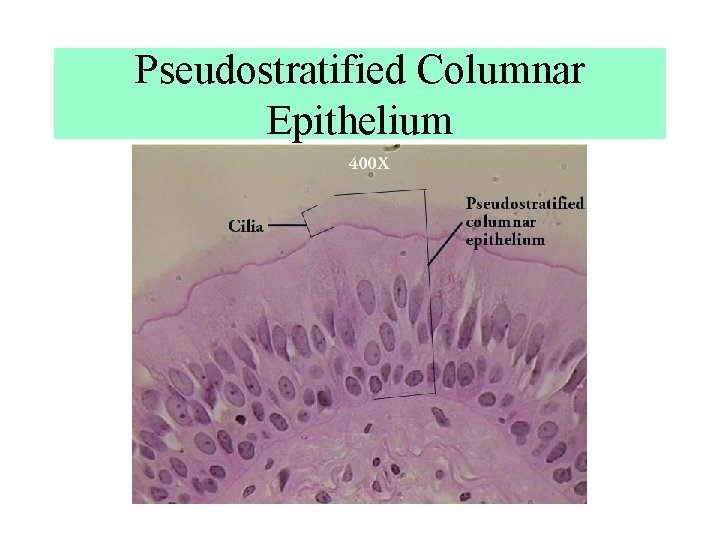
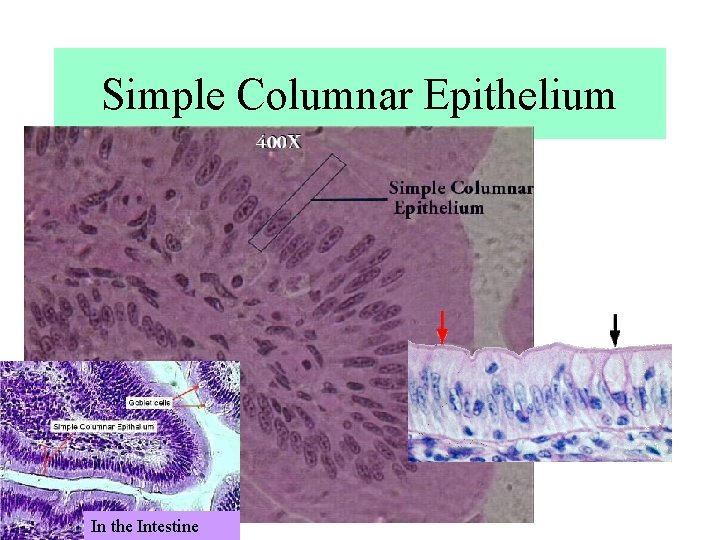
Simple Epithelium continued. Fig 3. 17 • Pseudostratified Columnar Epithelium – Cells are different heights. Absorption and secretion. Respiratory tract. Moves mucous and dust away from lungs. Often Cilliated. • Simple Columnar Epithelium – Tall cells. Mucous. Open to outsidemucus membranes. Fig 3. 16 b Absorption and secretion. Line respiratory and dig.
Pseudostratified Columnar Epithelium
Simple Columnar Epithelium In the Intestine
What are the types of Stratified Epithelia? • Stratified Squamous Epithelium • Statified Cuboidal and Columnar Epithelium • Transitional Epithelium • Glandular Epithelium
Stratified Epithelia • Stratified Squamous Epithelium – Most common form in the body. Good for areas of high friction: Mouth, Hands, etc. • Stratified Transitional Epithelium – Only found in the Urinary system. Stretch and retract well.
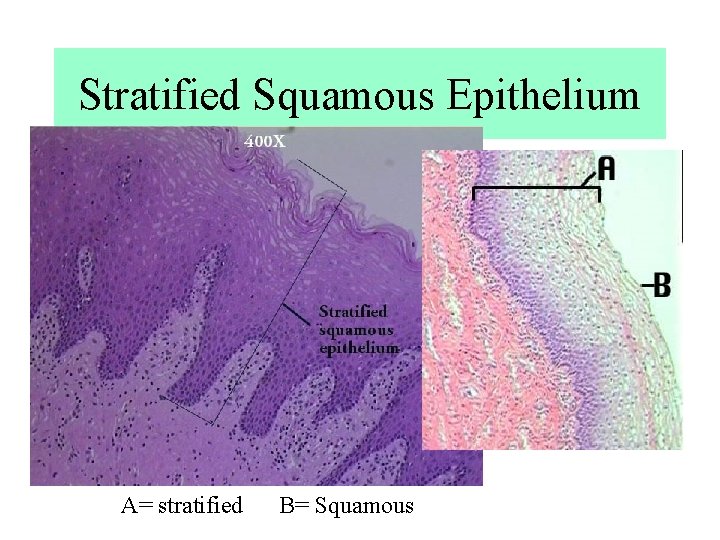
Stratified Squamous Epithelium A= stratified B= Squamous
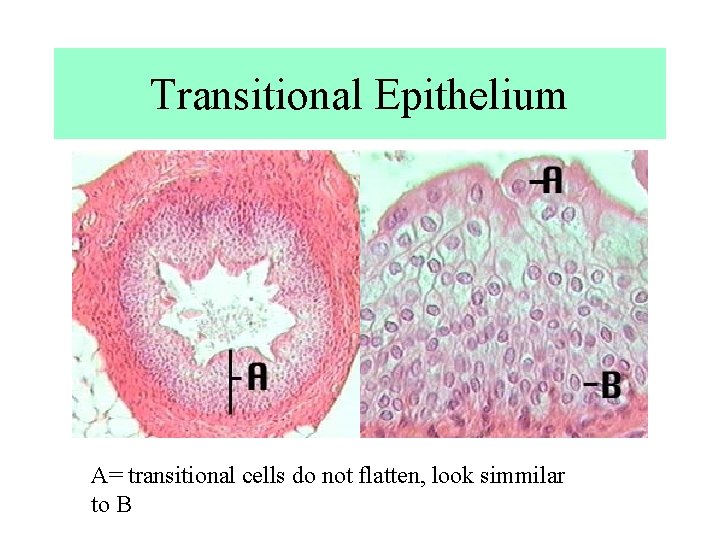
Transitional Epithelium A= transitional cells do not flatten, look simmilar to B
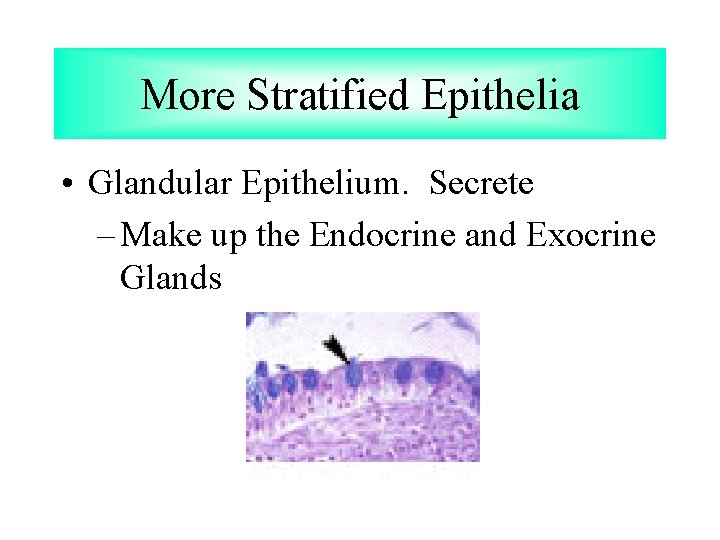
More Stratified Epithelia • Glandular Epithelium. Secrete – Make up the Endocrine and Exocrine Glands
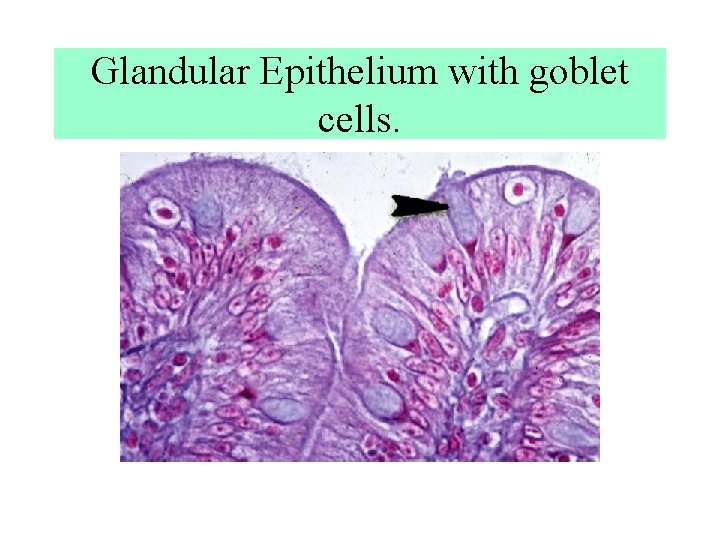
Glandular Epithelium with goblet cells.
What are the types of Connective Tissue? (most common Tissue) • Dense Connective Tissue – Cartilage – Bone – Ligaments and Tendons • Loose Connective Tissue – Areolar Tissue – Adipose Tissue – Blood
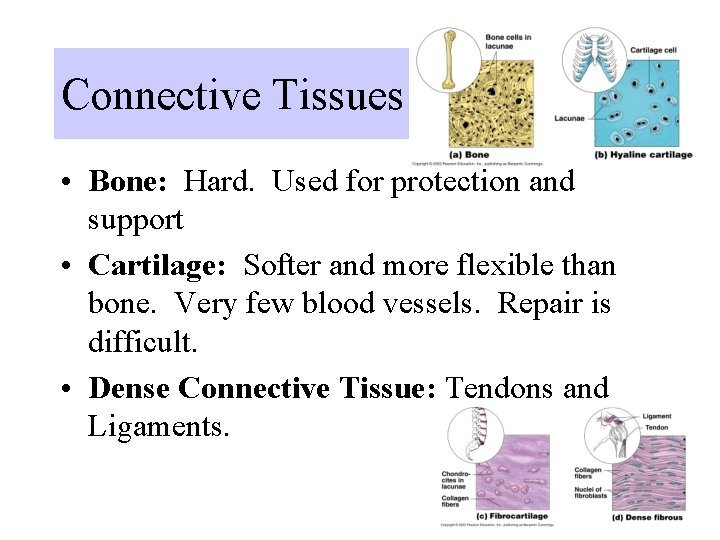
Connective Tissues • Bone: Hard. Used for protection and support • Cartilage: Softer and more flexible than bone. Very few blood vessels. Repair is difficult. • Dense Connective Tissue: Tendons and Ligaments.
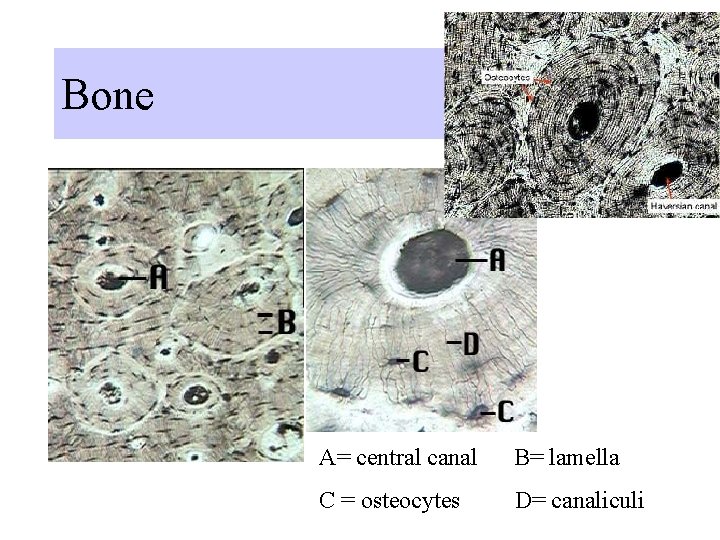
Bone A= central canal B= lamella C = osteocytes D= canaliculi
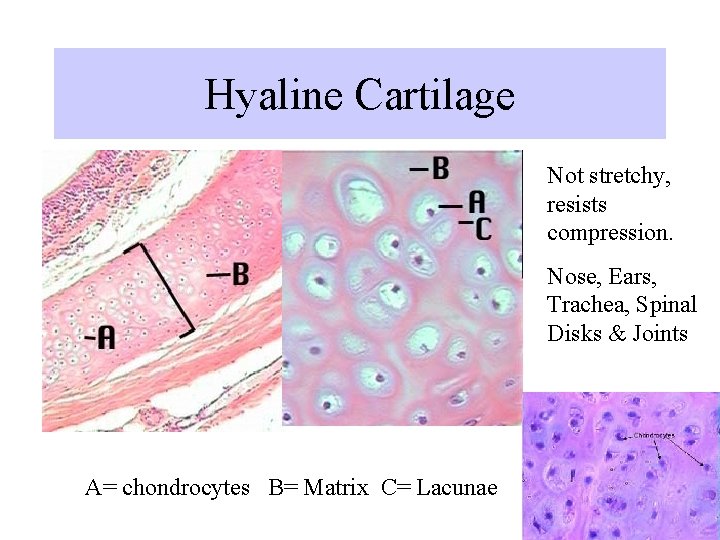
Hyaline Cartilage Not stretchy, resists compression. Nose, Ears, Trachea, Spinal Disks & Joints A= chondrocytes B= Matrix C= Lacunae
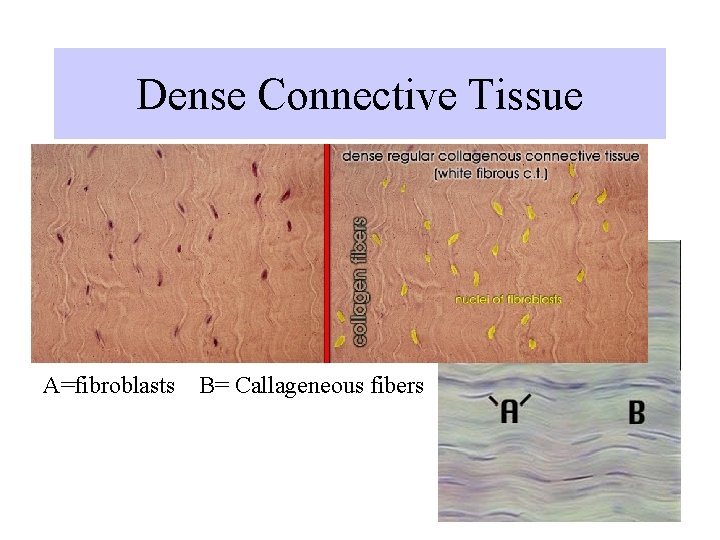
Dense Connective Tissue A=fibroblasts B= Callageneous fibers
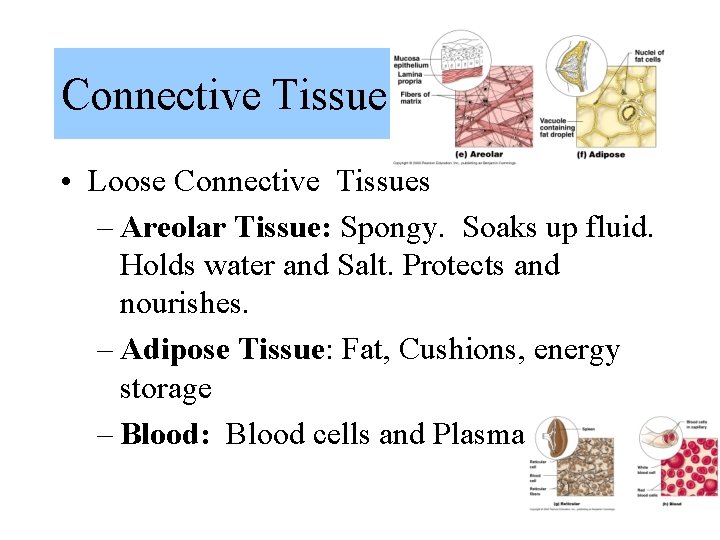
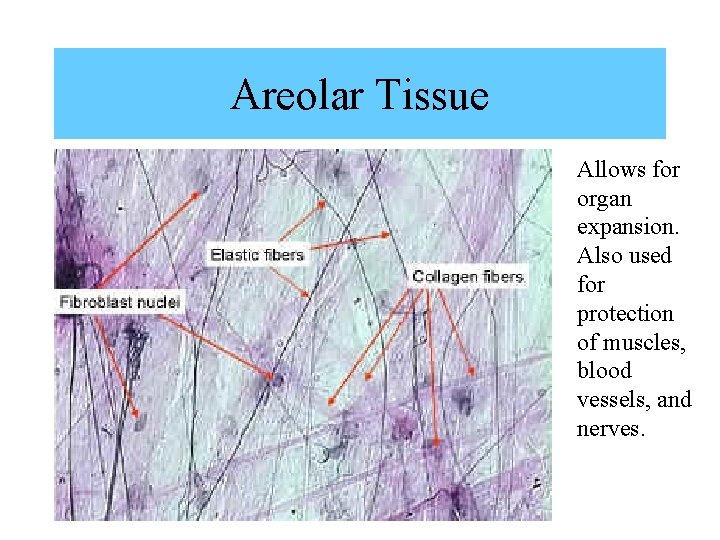
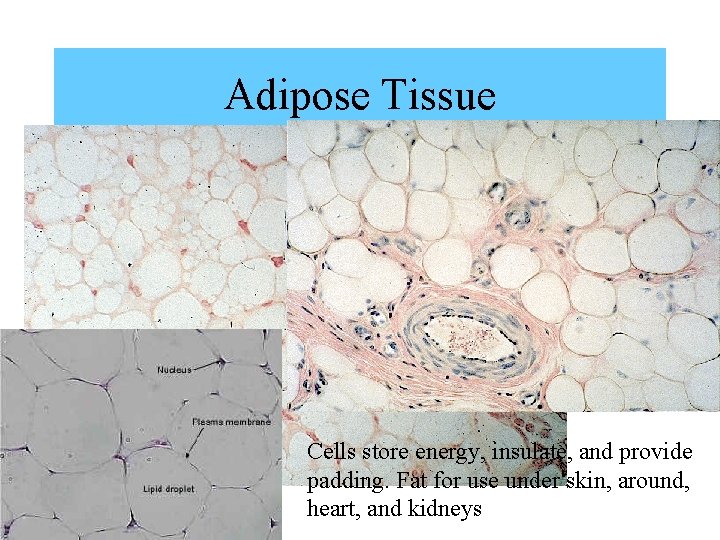
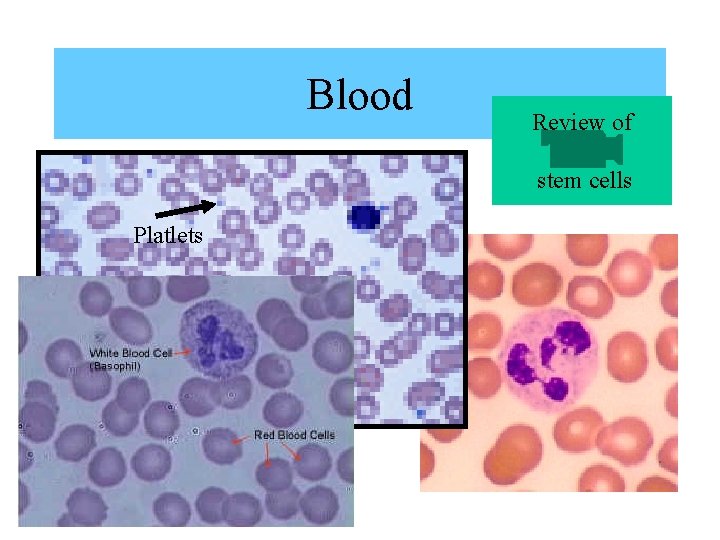
Connective Tissue • Loose Connective Tissues – Areolar Tissue: Spongy. Soaks up fluid. Holds water and Salt. Protects and nourishes. – Adipose Tissue: Fat, Cushions, energy storage – Blood: Blood cells and Plasma
Areolar Tissue Allows for organ expansion. Also used for protection of muscles, blood vessels, and nerves.
Adipose Tissue Cells store energy, insulate, and provide padding. Fat for use under skin, around, heart, and kidneys
Blood Review of stem cells Platlets
How do stem cells help make blood? • Stem Cell Research. How is the procedure done?
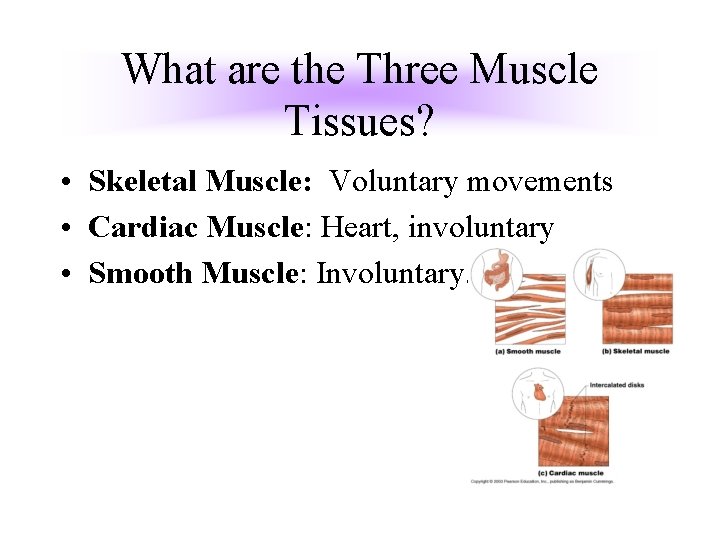
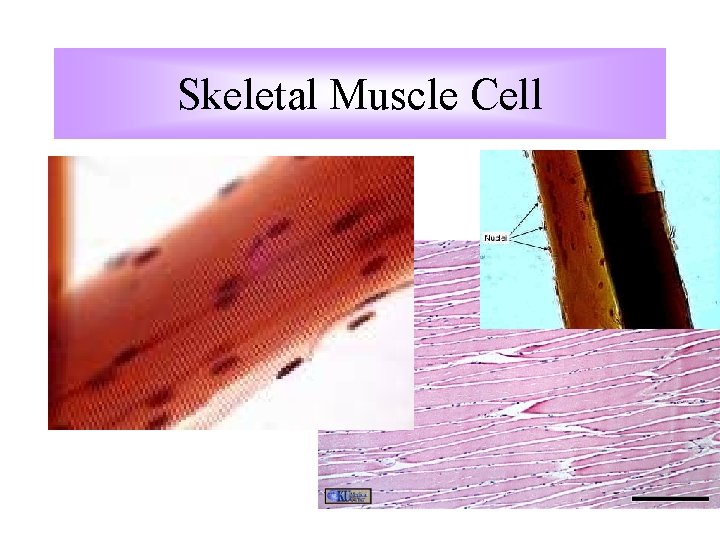
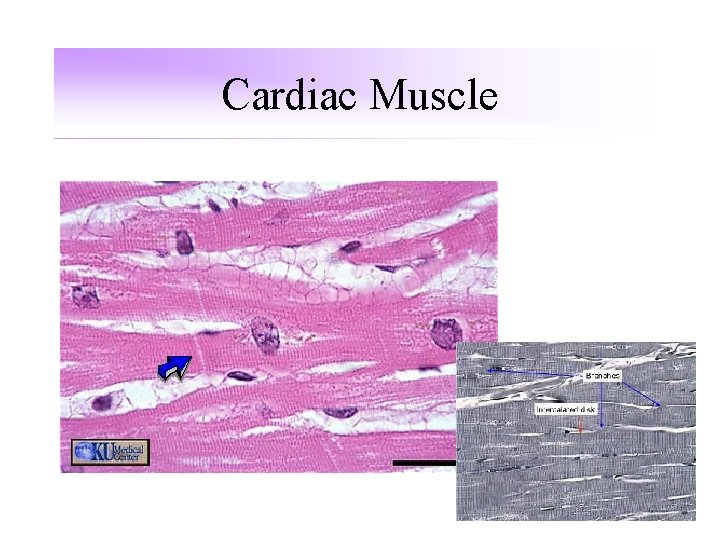
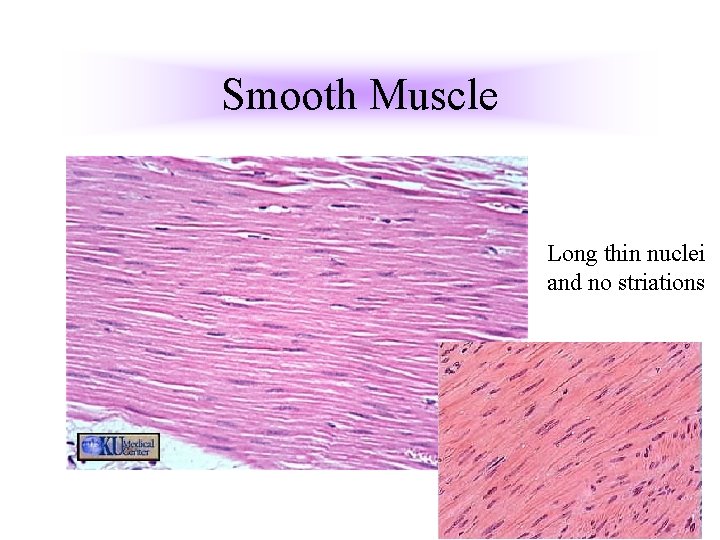
What are the Three Muscle Tissues? • Skeletal Muscle: Voluntary movements • Cardiac Muscle: Heart, involuntary • Smooth Muscle: Involuntary.
Skeletal Muscle Cell
Cardiac Muscle
Smooth Muscle Long thin nuclei and no striations
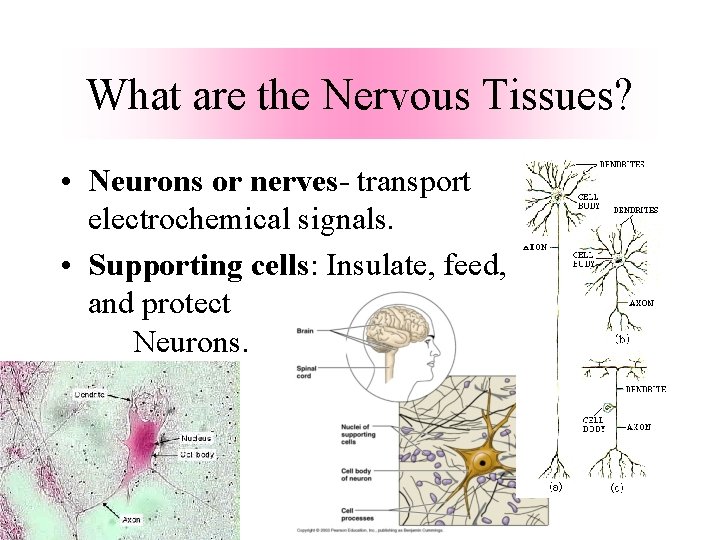
What are the Nervous Tissues? • Neurons or nerves- transport electrochemical signals. • Supporting cells: Insulate, feed, and protect Neurons.
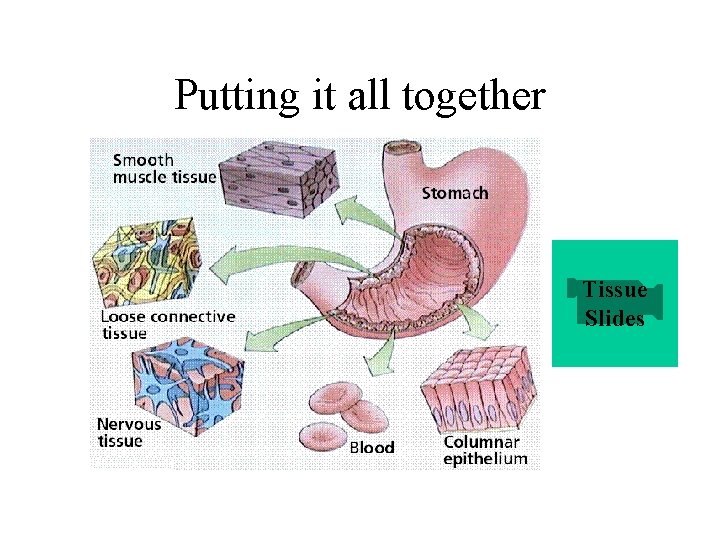
Putting it all together Tissue Slides
The Controversies and Possibilities of Stem Cells PBS VIDEO STEM CELLS Quicktime Movie Adult Stem Cells
Where could Stem Cells Lead? • How could we use this technology on humans? Newt Arm Regeneration Reprograming Cancer Cells