
Tissues Organs Systems ANATOMY PHYSIOLOGY HONORS TURNER COLLEGE

- Slides: 28
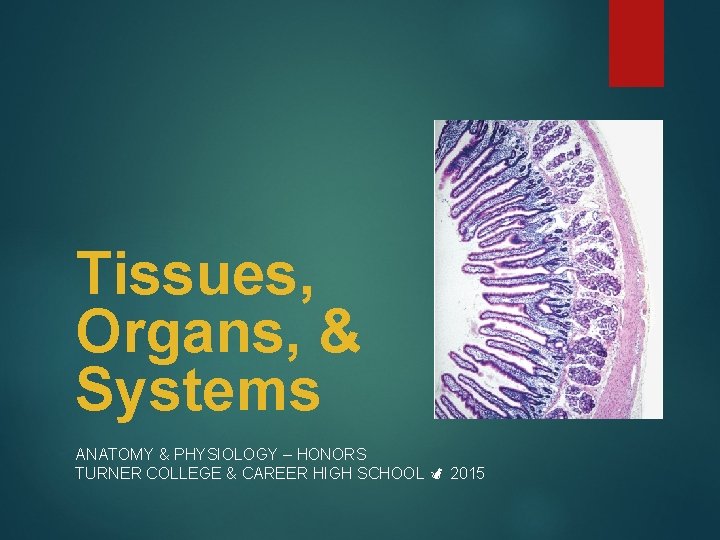
Tissues, Organs, & Systems ANATOMY & PHYSIOLOGY – HONORS TURNER COLLEGE & CAREER HIGH SCHOOL 2015
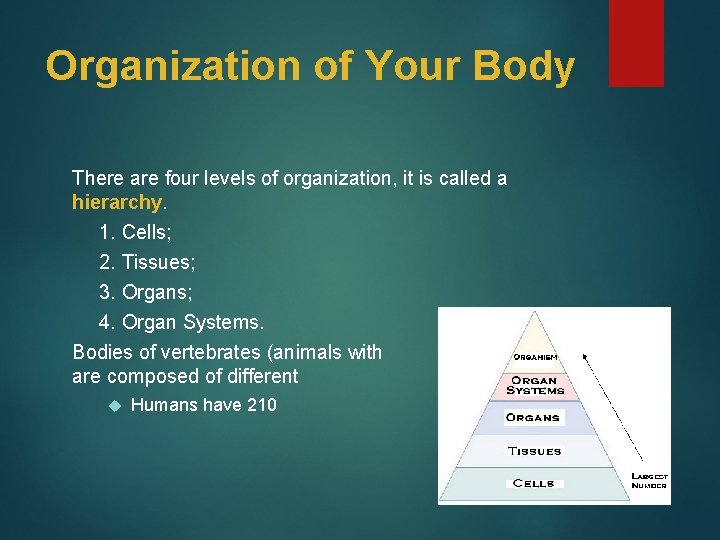
Organization of Your Body There are four levels of organization, it is called a hierarchy. 1. Cells; 2. Tissues; 3. Organs; 4. Organ Systems. Bodies of vertebrates (animals with are composed of different Humans have 210 spines) cell types
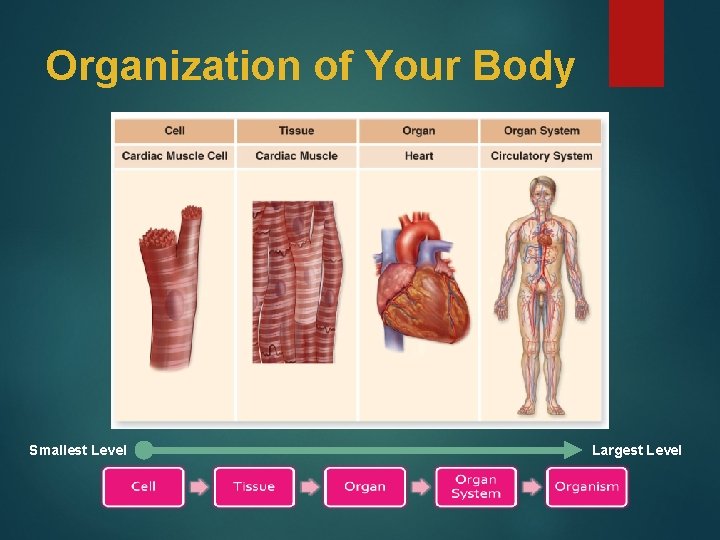
Organization of Your Body Smallest Level Largest Level
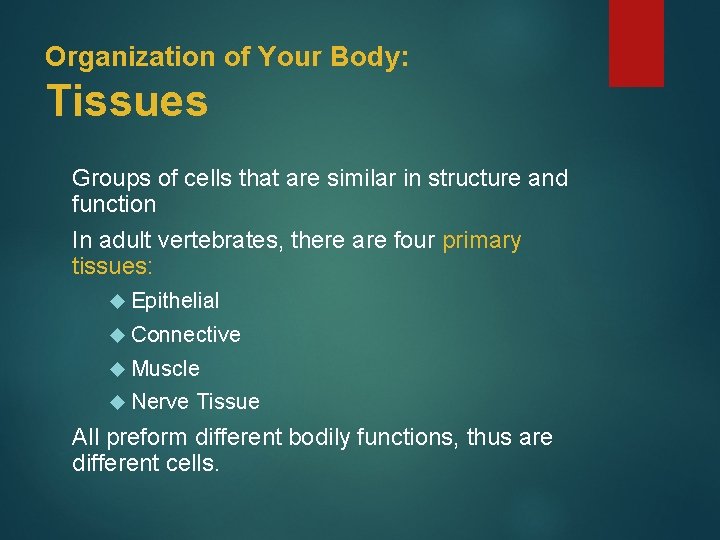
Organization of Your Body: Tissues Groups of cells that are similar in structure and function In adult vertebrates, there are four primary tissues: Epithelial Connective Muscle Nerve Tissue All preform different bodily functions, thus are different cells.
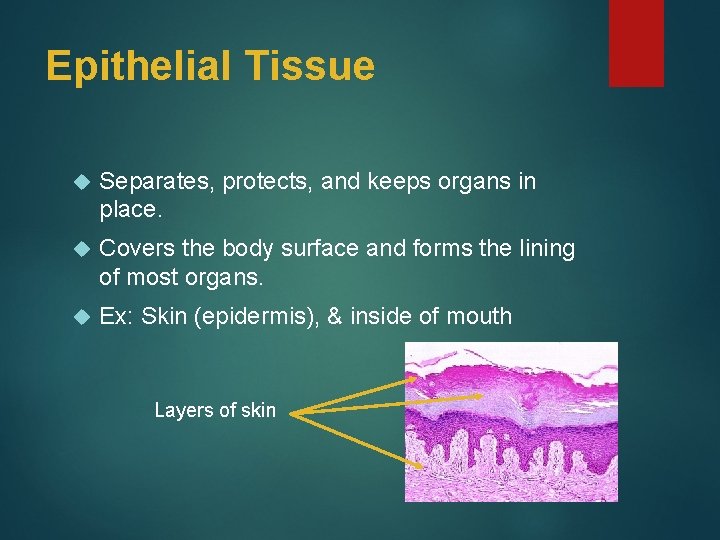
Epithelial Tissue Separates, protects, and keeps organs in place. Covers the body surface and forms the lining of most organs. Ex: Skin (epidermis), & inside of mouth Layers of skin
Epithelial Tissue
Connective Tissue Provides support and structure to the body, also fills spaces. The most abundant tissue in the human body. Ex: Blood, bones, cartilage, and fat.
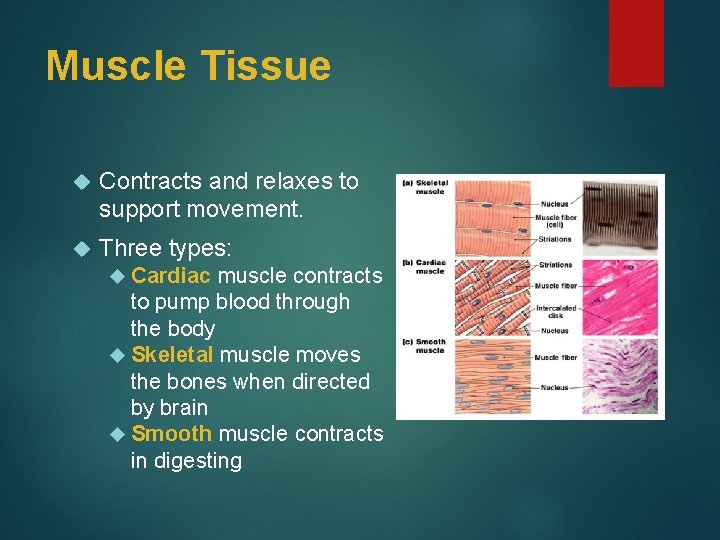
Muscle Tissue Contracts and relaxes to support movement. Three types: Cardiac muscle contracts to pump blood through the body Skeletal muscle moves the bones when directed by brain Smooth muscle contracts in digesting
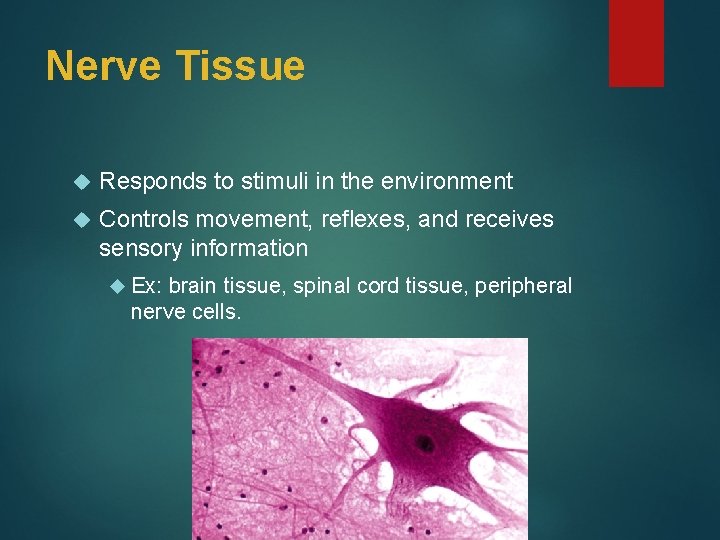
Nerve Tissue Responds to stimuli in the environment Controls movement, reflexes, and receives sensory information Ex: brain tissue, spinal cord tissue, peripheral nerve cells.
Organization of Your Body: Organs Combinations of different tissues that form a structural and functional unit. Any organ that is essential to life is called a vital organ. Examples: Heart - Pumps blood throughout the body. Liver - Removes toxins from the blood, produces chemicals that help in digestion. Lungs - Supplies oxygen to the blood and removes CO 2 from blood. Brain - The control center of the body.
Organization of Your Body: Organ Systems Groups of organs that cooperate to perform the major activities of the body. The vertebrate body contains 11 principal organ systems. integumentary system nervous system respiratory system digestive system excretory system skeletal system muscular system circulatory system endocrine system reproductive system lymphatic (immune) system
Organization of Your Body: Organ Systems Organ systems communicate, integrate, support and move, maintain and regulate, defend, reproduce the body. Communicate outside environment changes: Three organ systems detect external stimuli and coordinate the body’s responses Nervous, Support The sensory and endocrine systems and movement: musculoskeletal system consists of two interrelated organ systems
Organization of Your Body: Organ Systems ► Regulation and maintenance: Four organ systems regulate and maintain the body’s chemistry; called HOMEOSTASIS. ► Digestive, circulatory, respiratory and excretory systems. ► ► Defense: The body defends itself with two organ systems: ► Integumentary and immune. ► ► Reproduction and development ► The Reproductive system.
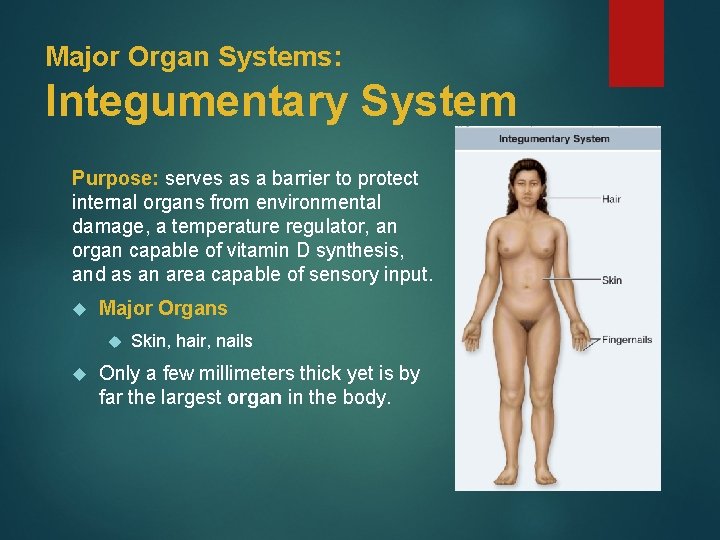
Major Organ Systems: Integumentary System Purpose: serves as a barrier to protect internal organs from environmental damage, a temperature regulator, an organ capable of vitamin D synthesis, and as an area capable of sensory input. Major Organs Skin, hair, nails Only a few millimeters thick yet is by far the largest organ in the body.
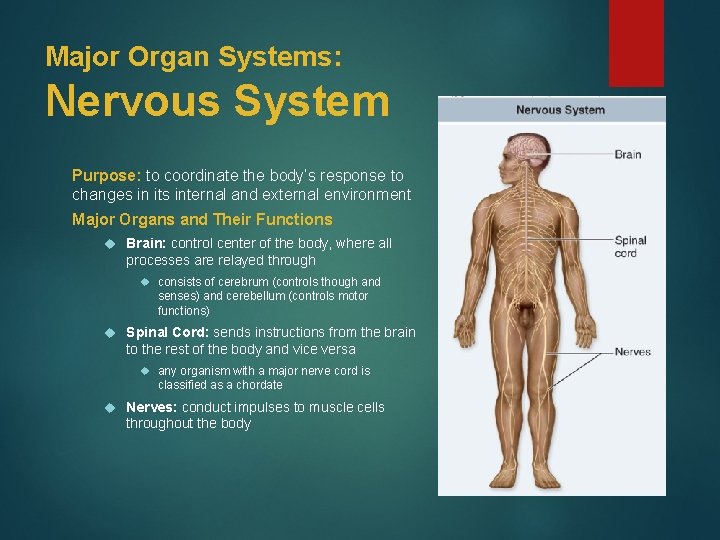
Major Organ Systems: Nervous System Purpose: to coordinate the body’s response to changes in its internal and external environment Major Organs and Their Functions Brain: control center of the body, where all processes are relayed through consists of cerebrum (controls though and senses) and cerebellum (controls motor functions) Spinal Cord: sends instructions from the brain to the rest of the body and vice versa any organism with a major nerve cord is classified as a chordate Nerves: conduct impulses to muscle cells throughout the body
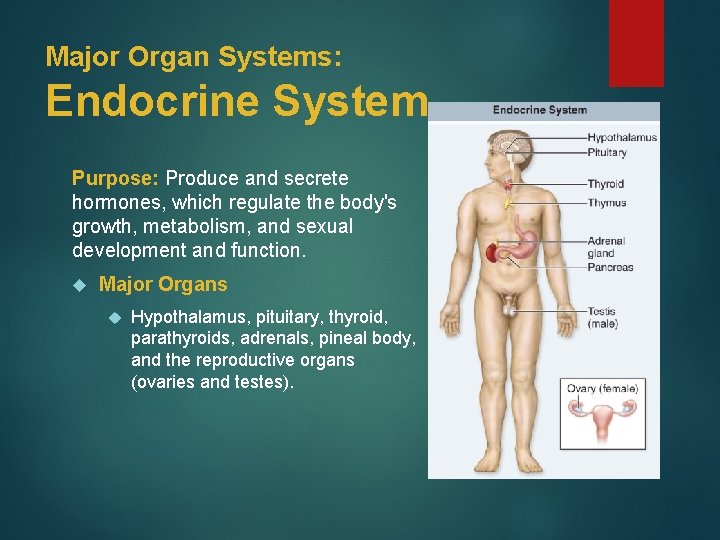
Major Organ Systems: Endocrine System Purpose: Produce and secrete hormones, which regulate the body's growth, metabolism, and sexual development and function. Major Organs Hypothalamus, pituitary, thyroid, parathyroids, adrenals, pineal body, and the reproductive organs (ovaries and testes).
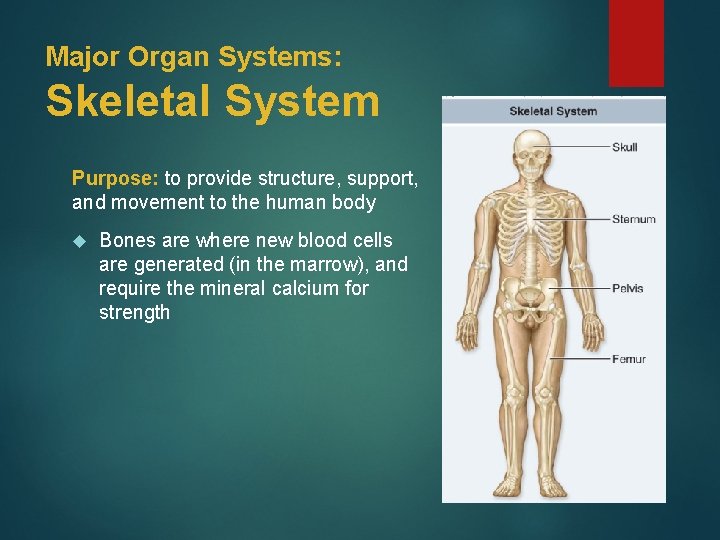
Major Organ Systems: Skeletal System Purpose: to provide structure, support, and movement to the human body Bones are where new blood cells are generated (in the marrow), and require the mineral calcium for strength
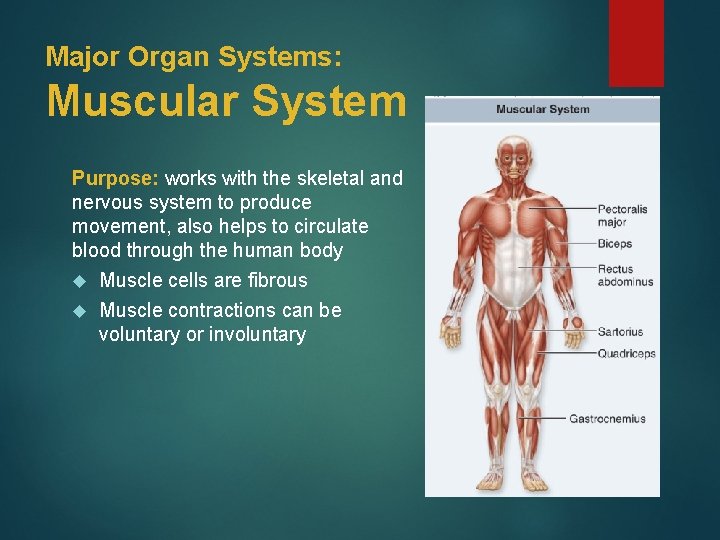
Major Organ Systems: Muscular System Purpose: works with the skeletal and nervous system to produce movement, also helps to circulate blood through the human body Muscle cells are fibrous Muscle contractions can be voluntary or involuntary
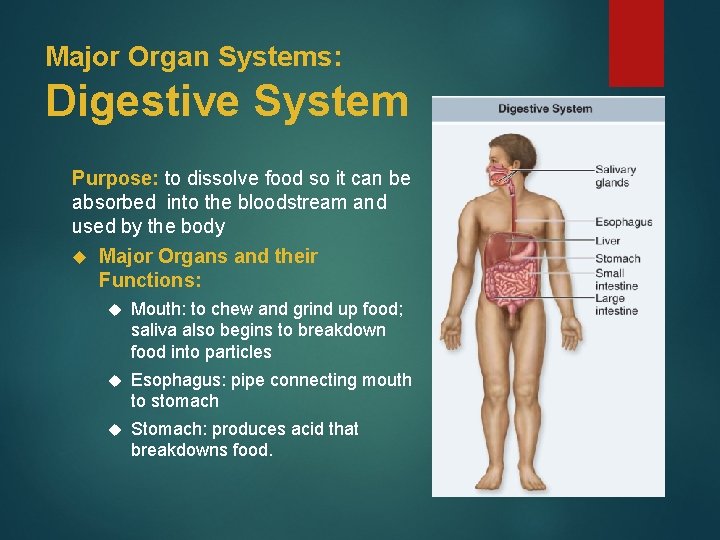
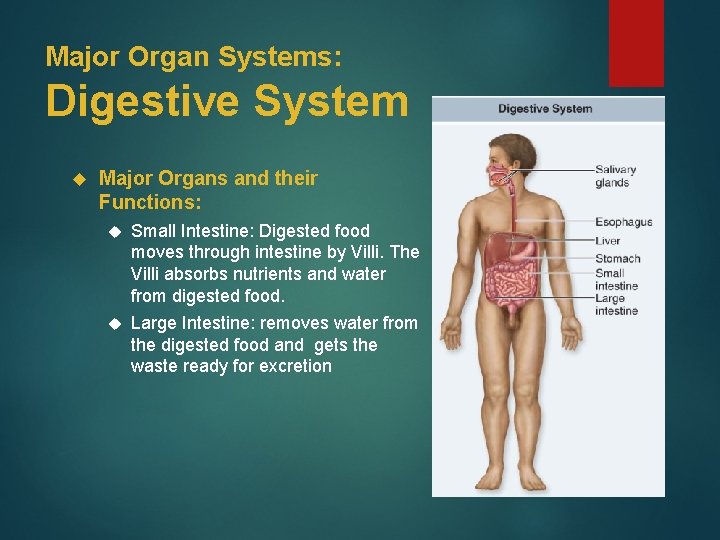
Major Organ Systems: Digestive System Purpose: to dissolve food so it can be absorbed into the bloodstream and used by the body Major Organs and their Functions: Mouth: to chew and grind up food; saliva also begins to breakdown food into particles Esophagus: pipe connecting mouth to stomach Stomach: produces acid that breakdowns food.
Major Organ Systems: Digestive System Major Organs and their Functions: Small Intestine: Digested food moves through intestine by Villi. The Villi absorbs nutrients and water from digested food. Large Intestine: removes water from the digested food and gets the waste ready for excretion
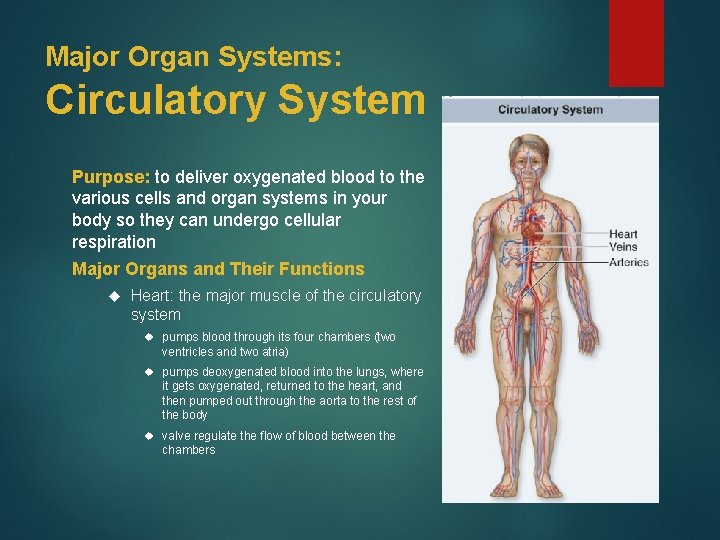
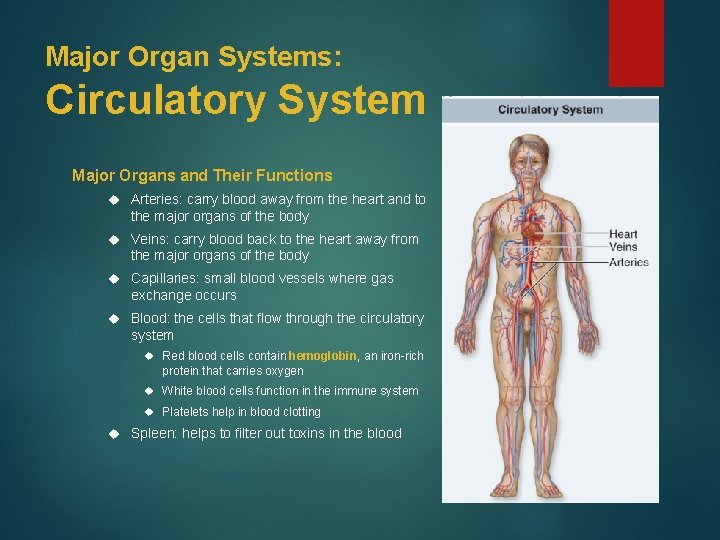
Major Organ Systems: Circulatory System Purpose: to deliver oxygenated blood to the various cells and organ systems in your body so they can undergo cellular respiration Major Organs and Their Functions Heart: the major muscle of the circulatory system pumps blood through its four chambers (two ventricles and two atria) pumps deoxygenated blood into the lungs, where it gets oxygenated, returned to the heart, and then pumped out through the aorta to the rest of the body valve regulate the flow of blood between the chambers
Major Organ Systems: Circulatory System Major Organs and Their Functions Arteries: carry blood away from the heart and to the major organs of the body Veins: carry blood back to the heart away from the major organs of the body Capillaries: small blood vessels where gas exchange occurs Blood: the cells that flow through the circulatory system Red blood cells contain hemoglobin, an iron-rich protein that carries oxygen White blood cells function in the immune system Platelets help in blood clotting Spleen: helps to filter out toxins in the blood
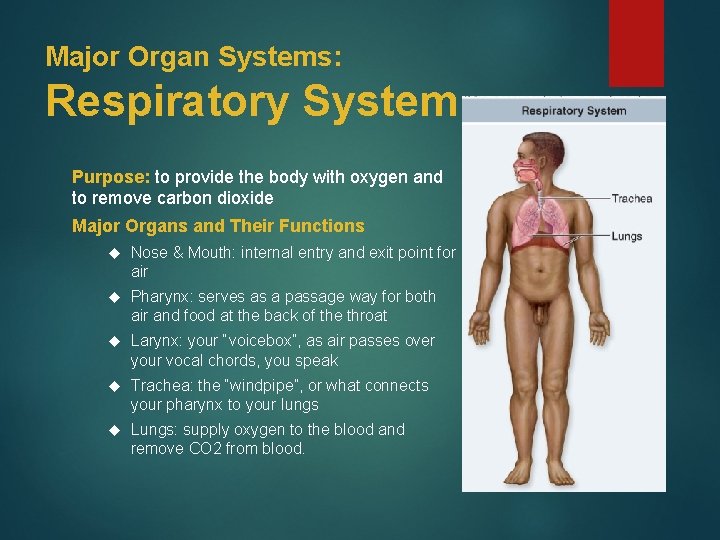
Major Organ Systems: Respiratory System Purpose: to provide the body with oxygen and to remove carbon dioxide Major Organs and Their Functions Nose & Mouth: internal entry and exit point for air Pharynx: serves as a passage way for both air and food at the back of the throat Larynx: your “voicebox”, as air passes over your vocal chords, you speak Trachea: the “windpipe”, or what connects your pharynx to your lungs Lungs: supply oxygen to the blood and remove CO 2 from blood.
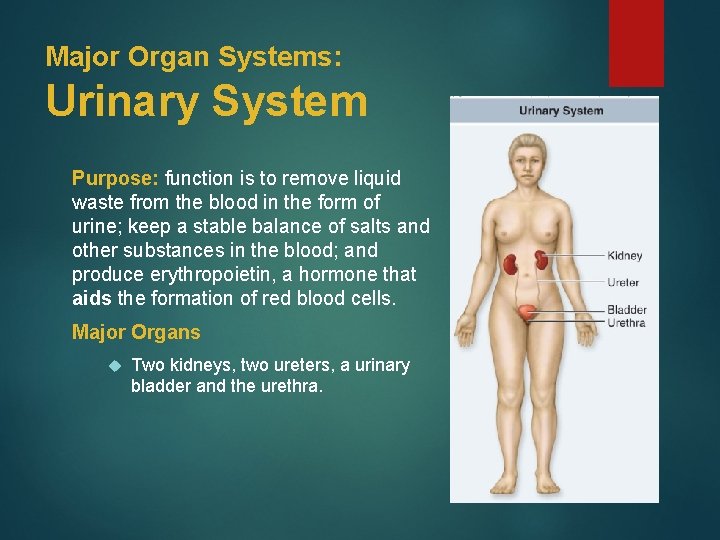
Major Organ Systems: Urinary System Purpose: function is to remove liquid waste from the blood in the form of urine; keep a stable balance of salts and other substances in the blood; and produce erythropoietin, a hormone that aids the formation of red blood cells. Major Organs Two kidneys, two ureters, a urinary bladder and the urethra.
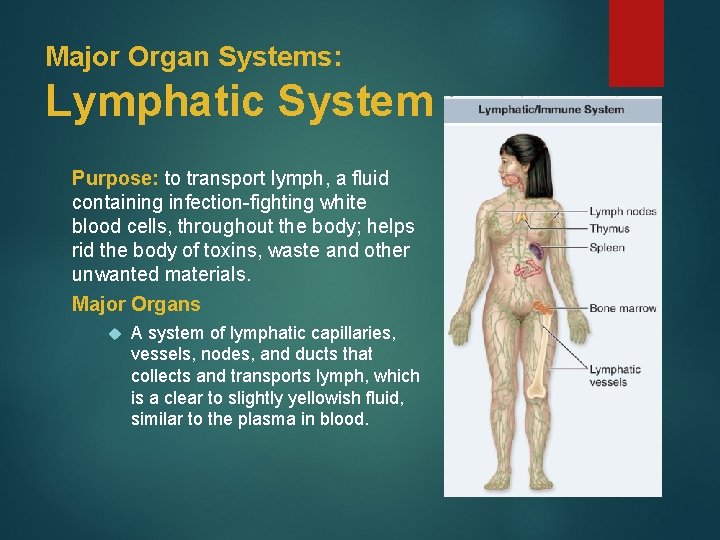
Major Organ Systems: Lymphatic System Purpose: to transport lymph, a fluid containing infection-fighting white blood cells, throughout the body; helps rid the body of toxins, waste and other unwanted materials. Major Organs A system of lymphatic capillaries, vessels, nodes, and ducts that collects and transports lymph, which is a clear to slightly yellowish fluid, similar to the plasma in blood.
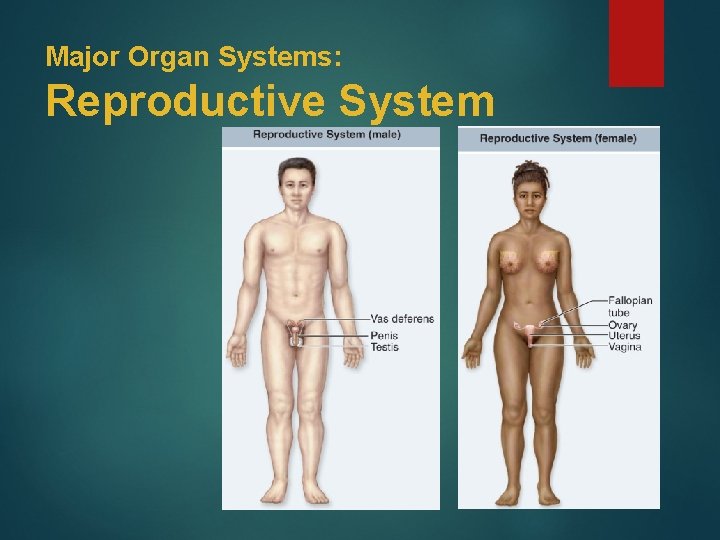
Major Organ Systems: Reproductive System
Homeostasis As animals have evolved, specialization of body structures has increased For cells to function efficiently and interact properly, internal body conditions must be relatively constant The dynamic constancy of the internal environment is called homeostasis It is essential for life
Homeostasis Humans have set points for body temperature, blood glucose concentrations, electrolyte (ion) concentration, tendon tension, etc. We are endothermic: can maintain a relatively constant body temperature (37 o. C or 98. 6 o. F) Changes in body temperature are detected by the hypothalamus in the brain