
Tissues Histology the study of tissues 4 tissue
- Slides: 32
Tissues Histology- the study of tissues
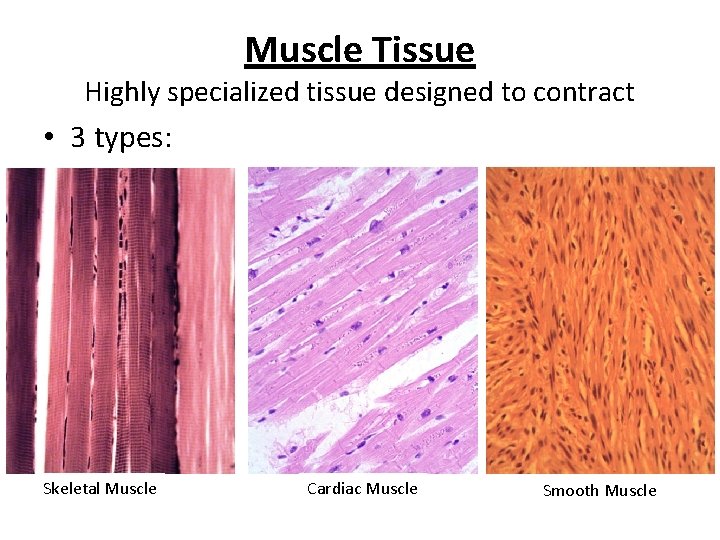
4 tissue types 1. Epithelial Tissue – Covers both internal and external surfaces 2. Muscle Tissue – Highly specialized tissue designed to contract 3. Nervous Tissue – 2 types of cells neurons (carry signal) and neuroglia (care for and support neurons). 4. Connective Tissue – Connects, protects, supports, insulated, energy storage, blood formation, & body tissue repair (Scars)
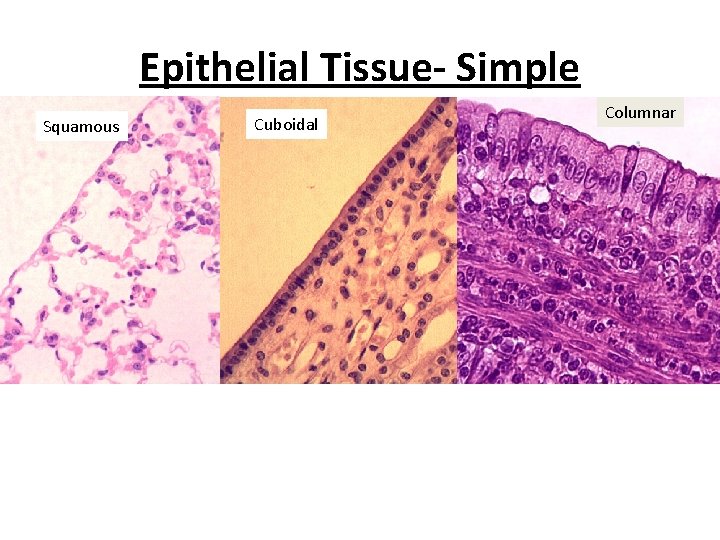
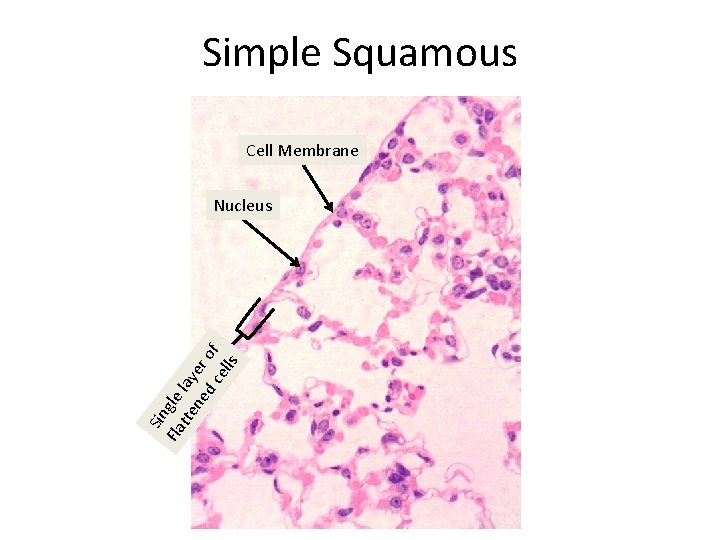
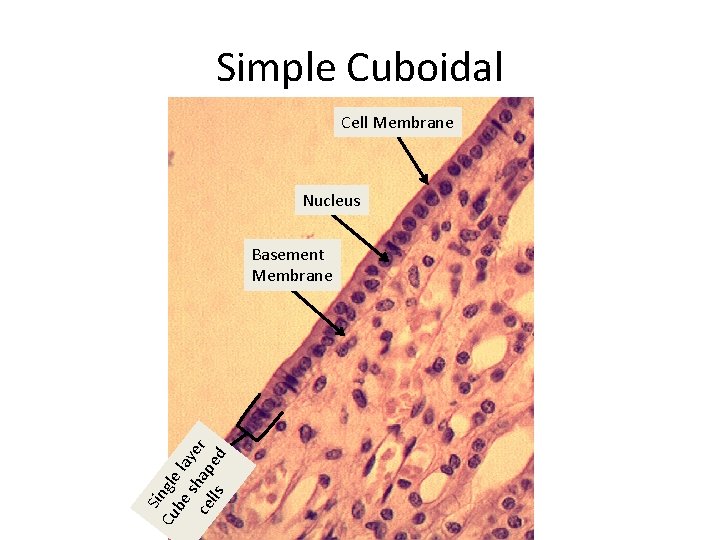
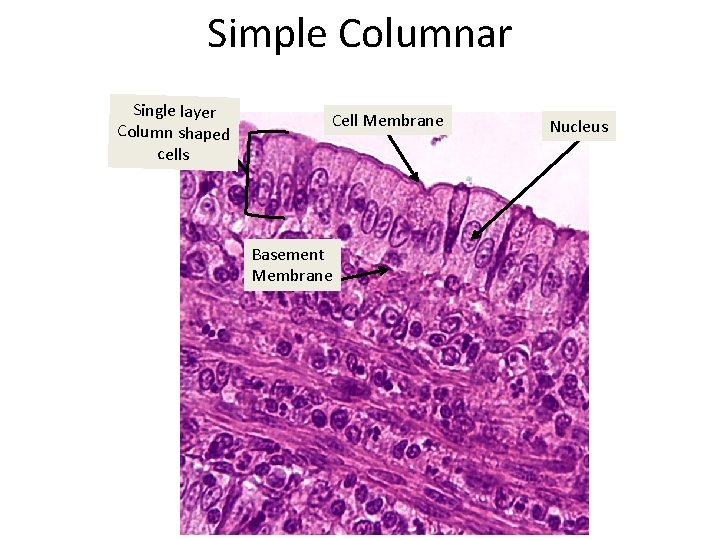
Epithelial Tissue • # of layers – Simple one – Stratified >1 • Cell shape – Cuboidal- Cube shaped – Columnar – column shaped – Sqamous- squished like a pancake.
Epithelial Tissue- Simple Squamous Cuboidal Columnar
Simple Squamous Cell Membrane Sin Fla gle tte lay ne er d c of ell s Nucleus
Simple Cuboidal Cell Membrane Nucleus Sin Cu gle be la s y ce hap er lls ed Basement Membrane
Simple Columnar Single layer Column shaped cells Cell Membrane Basement Membrane Nucleus
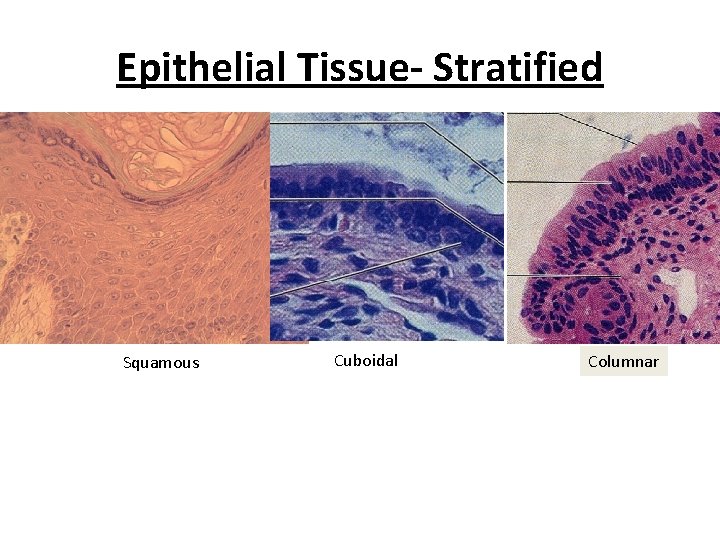
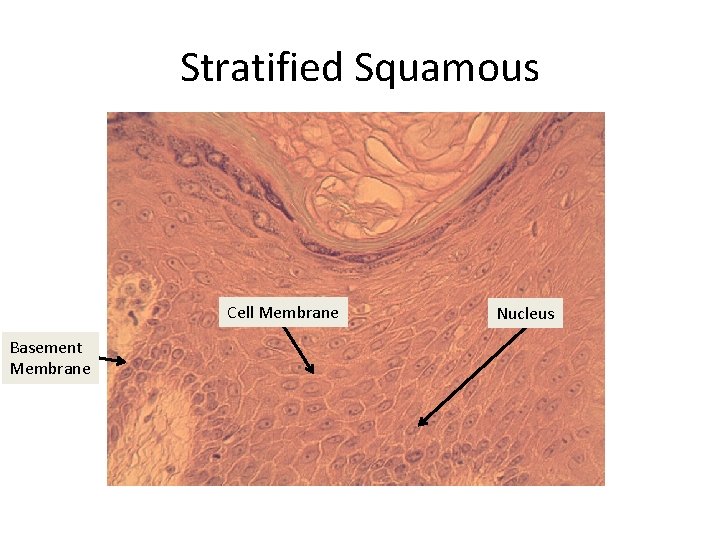
Epithelial Tissue- Stratified Squamous Cuboidal Columnar
Stratified Squamous Cell Membrane Basement Membrane Nucleus
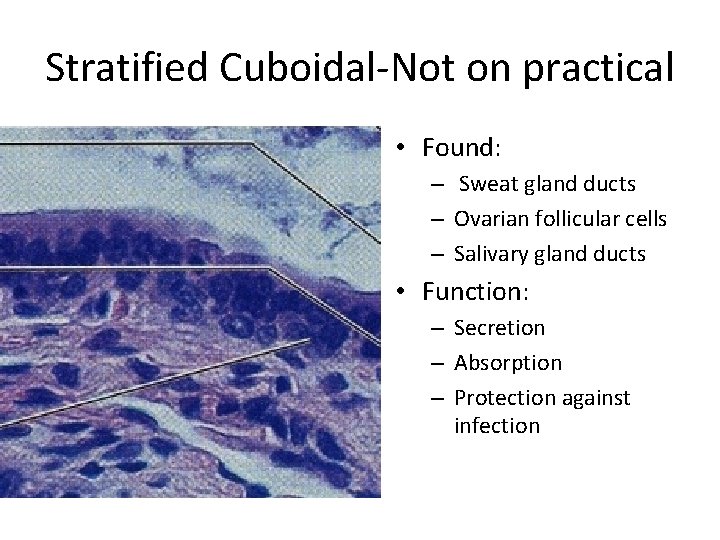
Stratified Cuboidal-Not on practical • Found: – Sweat gland ducts – Ovarian follicular cells – Salivary gland ducts • Function: – Secretion – Absorption – Protection against infection
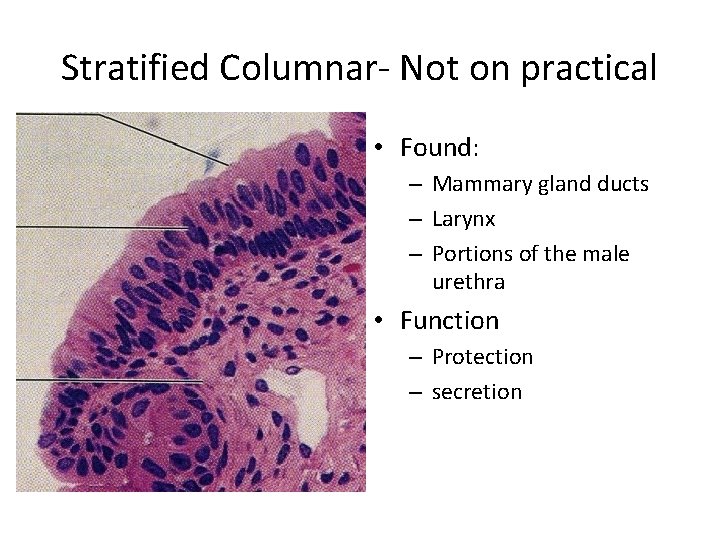
Stratified Columnar- Not on practical • Found: – Mammary gland ducts – Larynx – Portions of the male urethra • Function – Protection – secretion
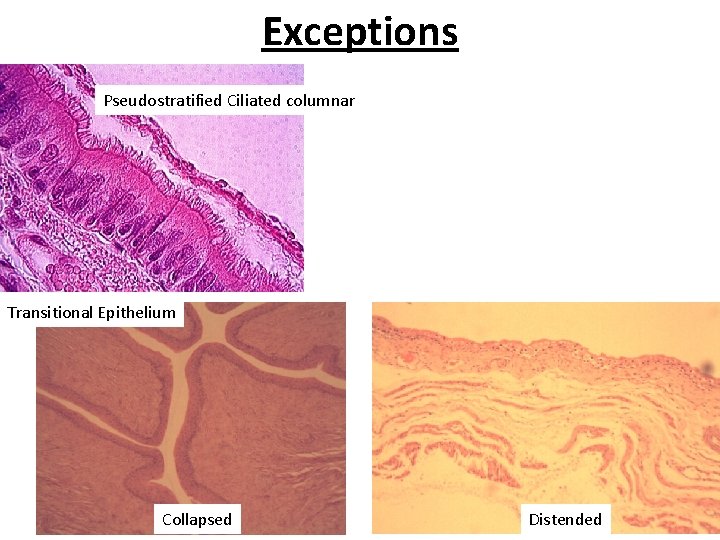
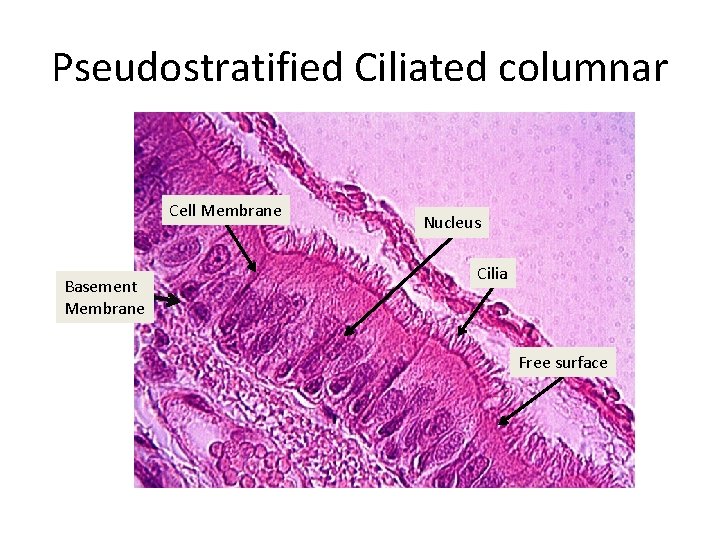
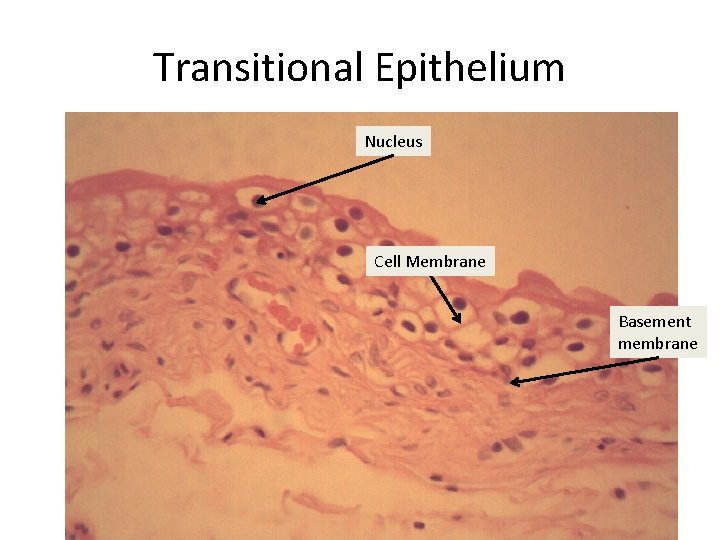
Exceptions Pseudostratified Ciliated columnar Transitional Epithelium Collapsed Distended
Pseudostratified Ciliated columnar Cell Membrane Basement Membrane Nucleus Cilia Free surface
Transitional Epithelium Nucleus Cell Membrane Basement membrane
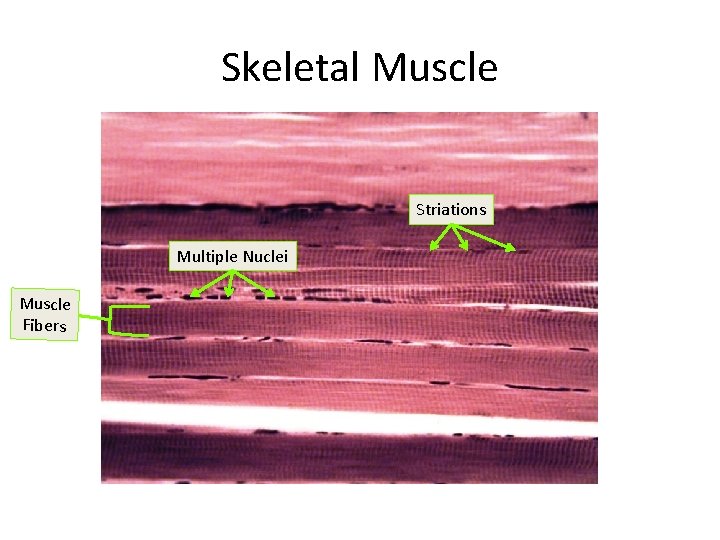
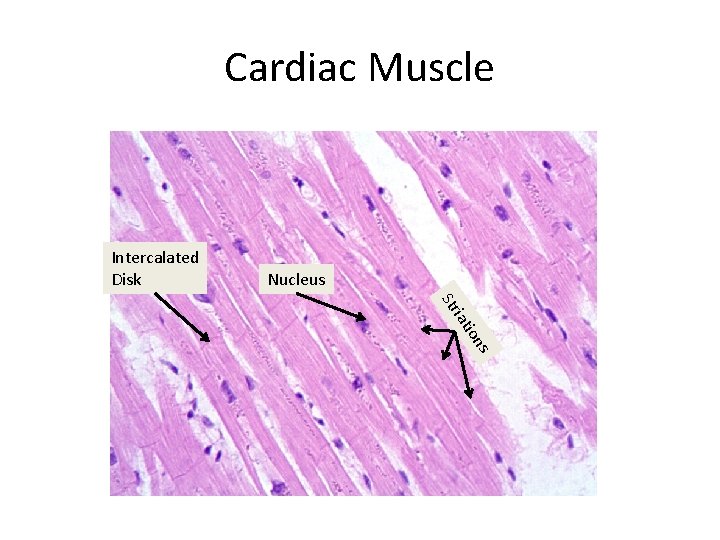
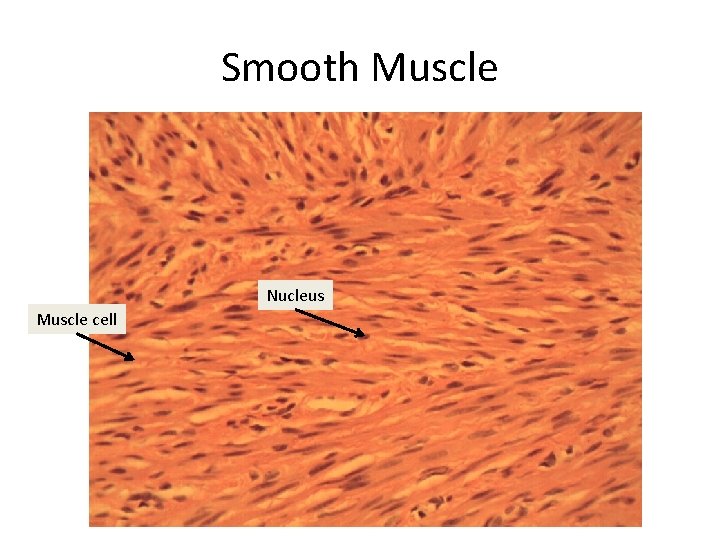
Muscle Tissue Highly specialized tissue designed to contract • 3 types: Skeletal Muscle Cardiac Muscle Smooth Muscle
Skeletal Muscle Striations Multiple Nuclei Muscle Fibers
Cardiac Muscle Intercalated Disk Nucleus s ion iat Str
Smooth Muscle Nucleus Muscle cell
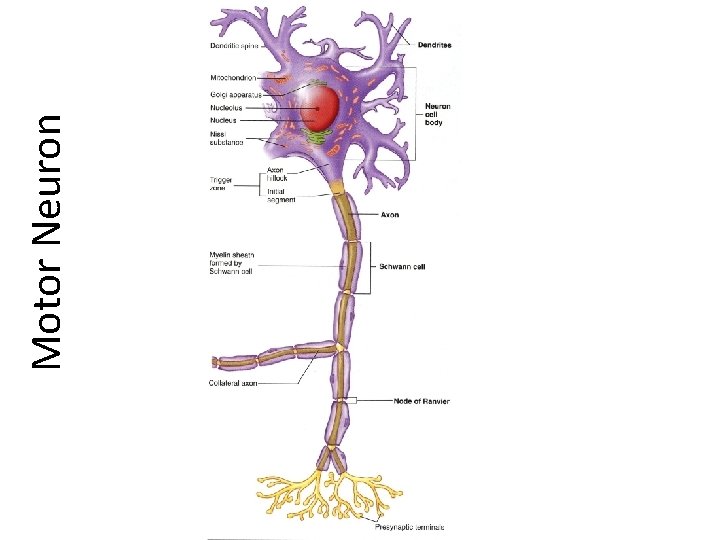
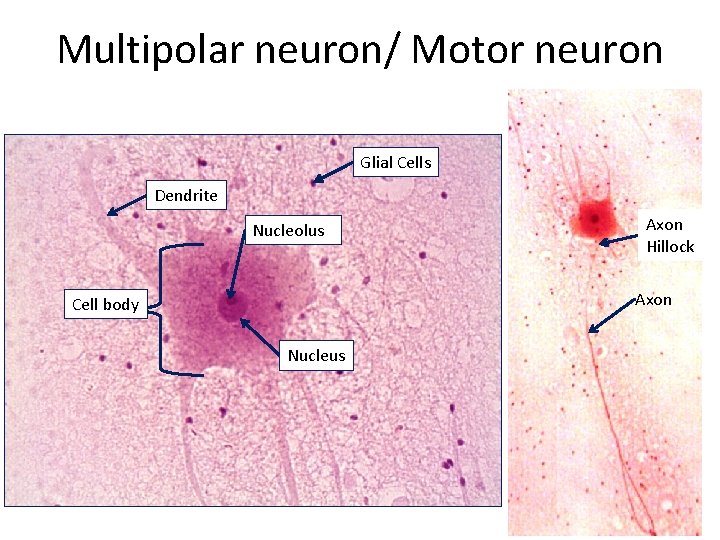
Nervous Tissue • Two major cell populations 1. Neurons- specialized cells that receive stimuli and conduct impulses all over the body 2. Neuroglia- special cells that protect, support, and insulate the more delicate neurons
Motor Neuron
Multipolar neuron/ Motor neuron Glial Cells Dendrite Nucleolus Axon Hillock Axon Cell body Nucleus
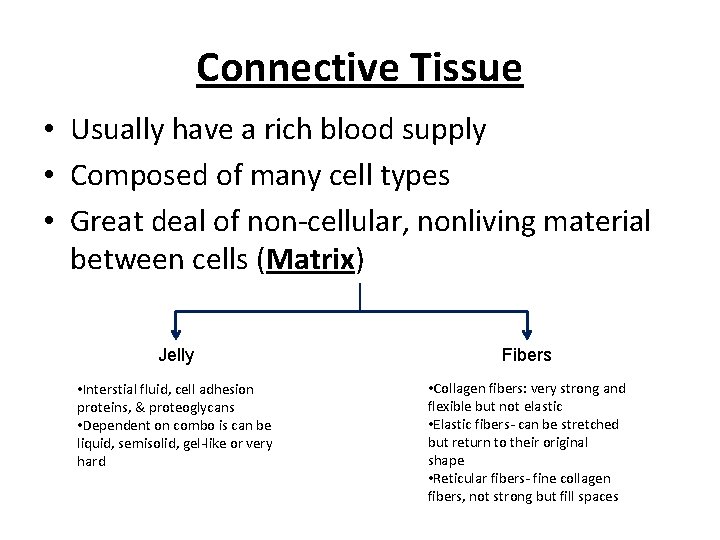
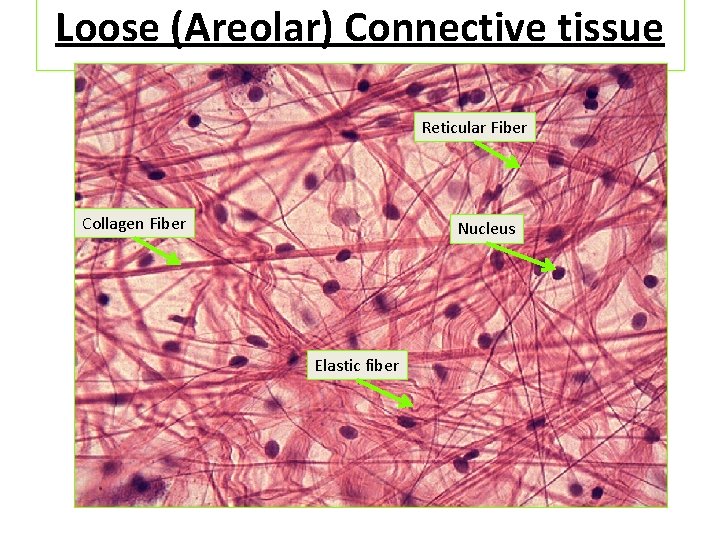
Connective Tissue • Usually have a rich blood supply • Composed of many cell types • Great deal of non-cellular, nonliving material between cells (Matrix) Jelly Fibers • Interstial fluid, cell adhesion proteins, & proteoglycans • Dependent on combo is can be liquid, semisolid, gel-like or very hard • Collagen fibers: very strong and flexible but not elastic • Elastic fibers- can be stretched but return to their original shape • Reticular fibers- fine collagen fibers, not strong but fill spaces
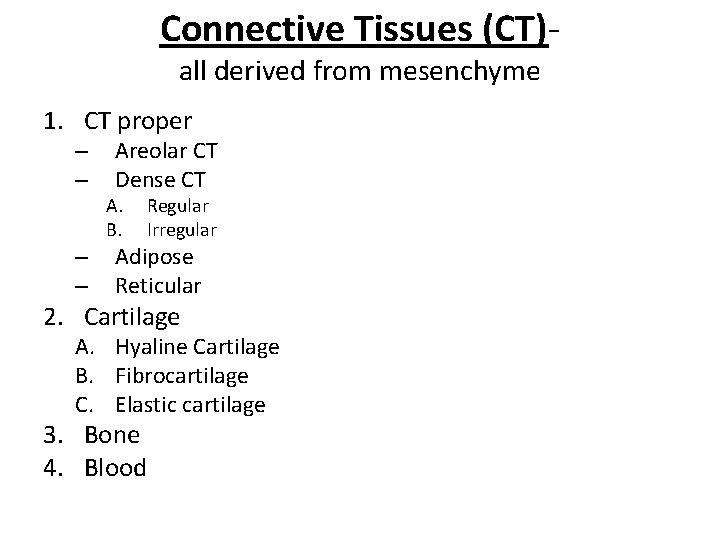
Connective Tissues (CT)all derived from mesenchyme 1. CT proper – – Areolar CT Dense CT A. B. – – Regular Irregular Adipose Reticular 2. Cartilage A. Hyaline Cartilage B. Fibrocartilage C. Elastic cartilage 3. Bone 4. Blood
Loose (Areolar) Connective tissue Reticular Fiber Collagen Fiber Nucleus Elastic fiber
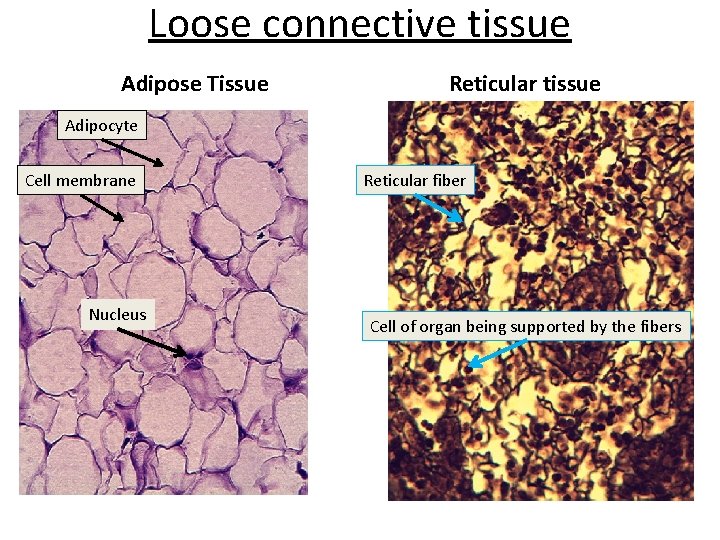
Loose connective tissue Adipose Tissue Reticular tissue Adipocyte Cell membrane Nucleus Reticular fiber Cell of organ being supported by the fibers
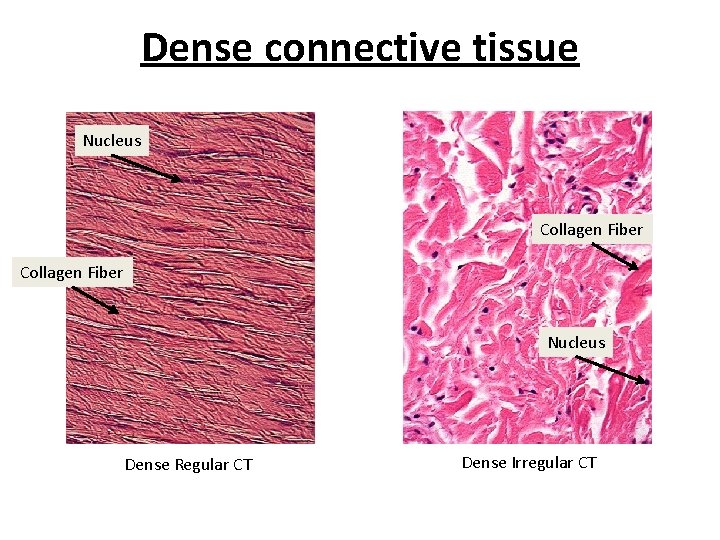
Dense connective tissue Nucleus Collagen Fiber Nucleus Dense Regular CT Dense Irregular CT
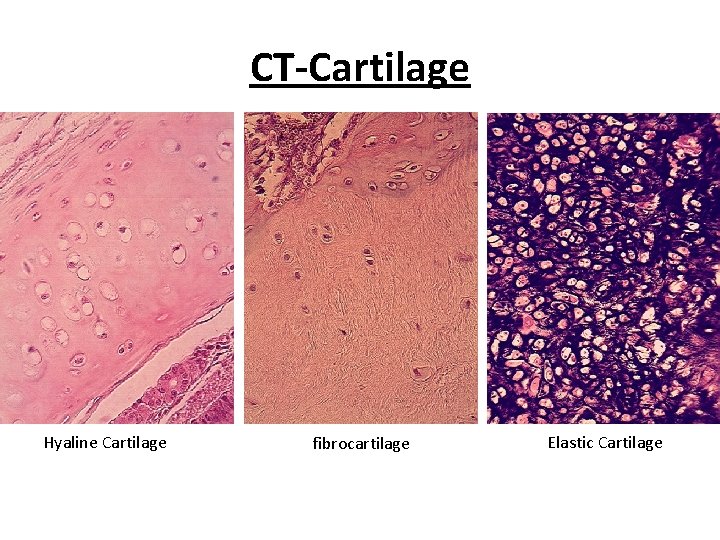
CT-Cartilage Hyaline Cartilage fibrocartilage Elastic Cartilage
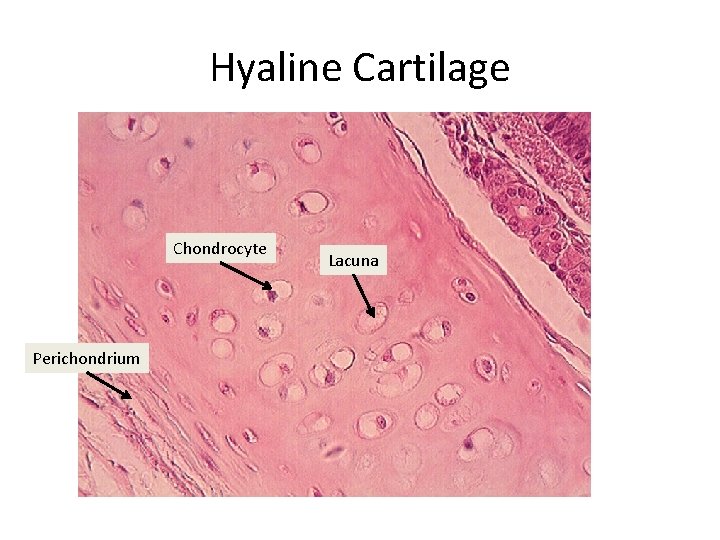
Hyaline Cartilage Chondrocyte Perichondrium Lacuna
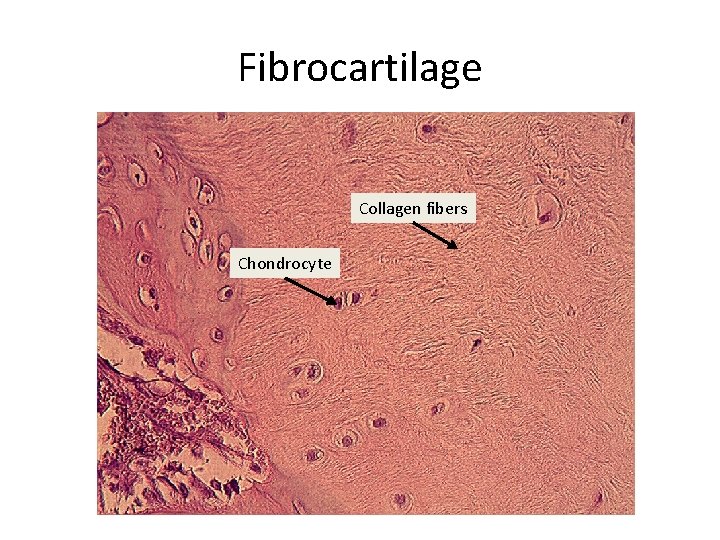
Fibrocartilage Collagen fibers Chondrocyte
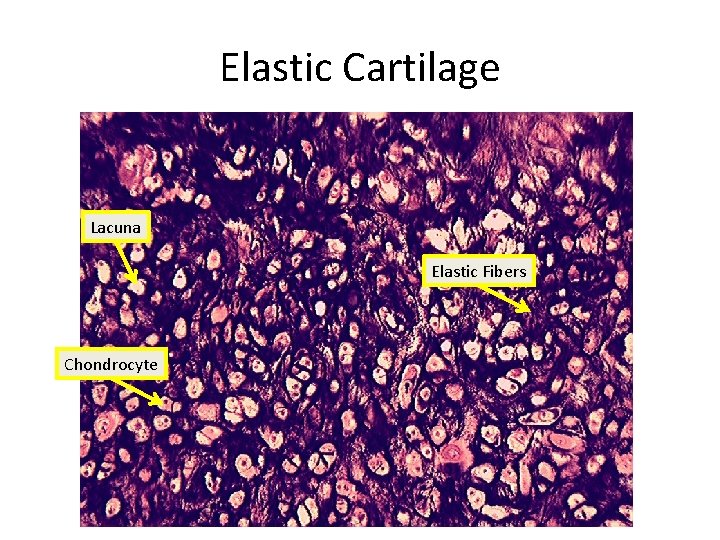
Elastic Cartilage Lacuna Elastic Fibers Chondrocyte
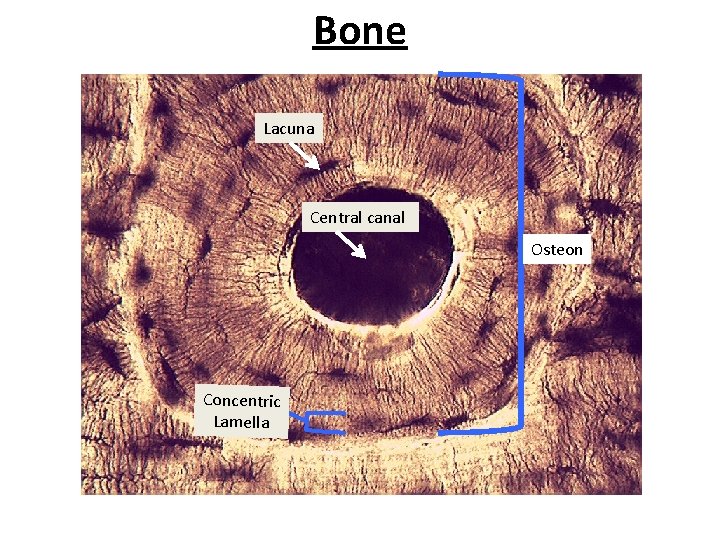
Bone Lacuna Central canal Osteon Concentric Lamella
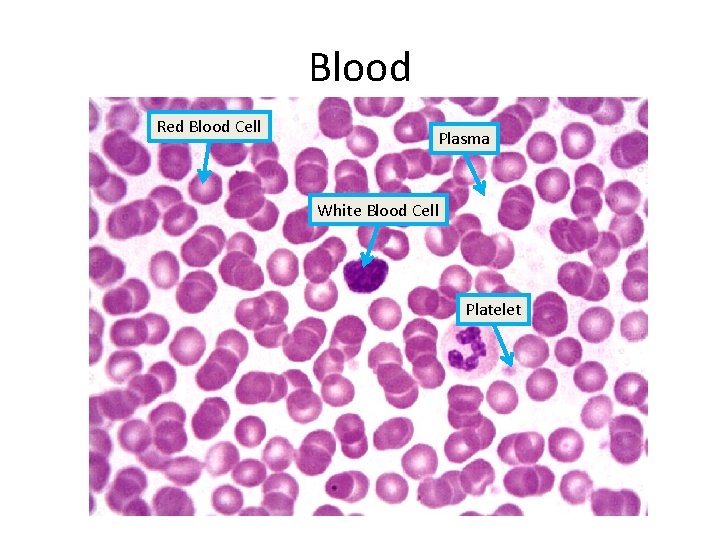
Blood Red Blood Cell Plasma White Blood Cell Platelet