
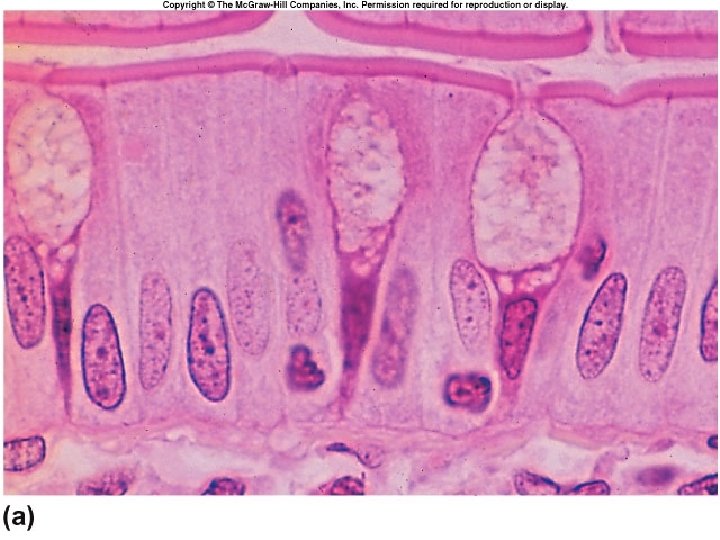
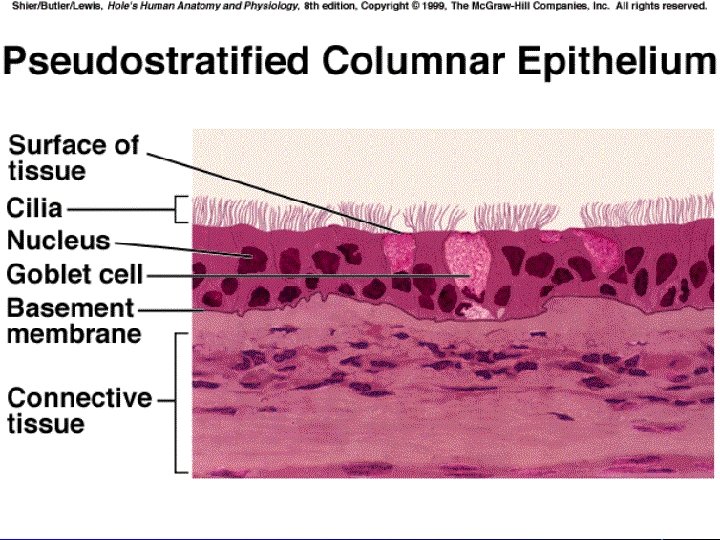
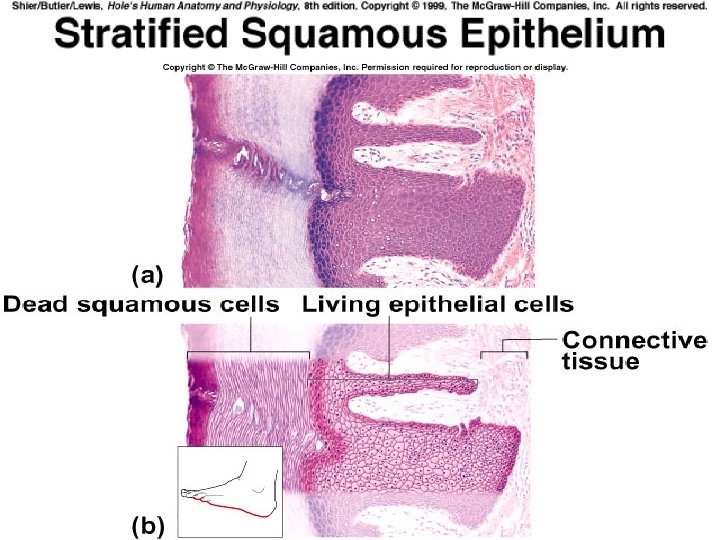
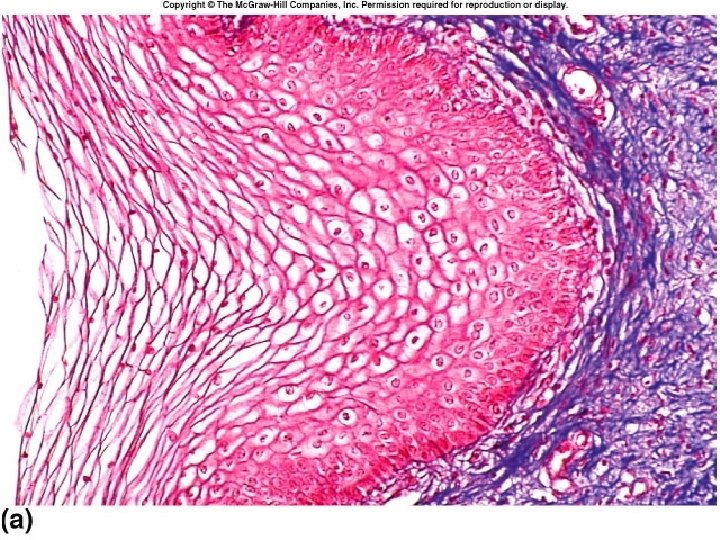
Tissues Chapter 5 1 Tissue Type Epithelial Tissue
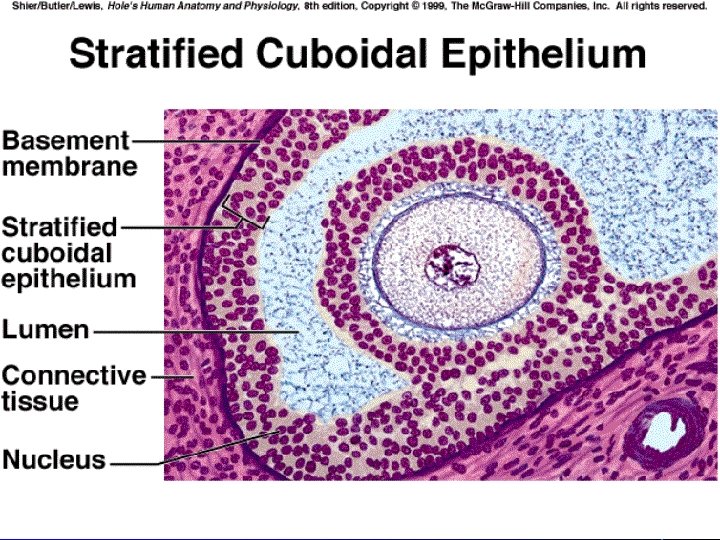
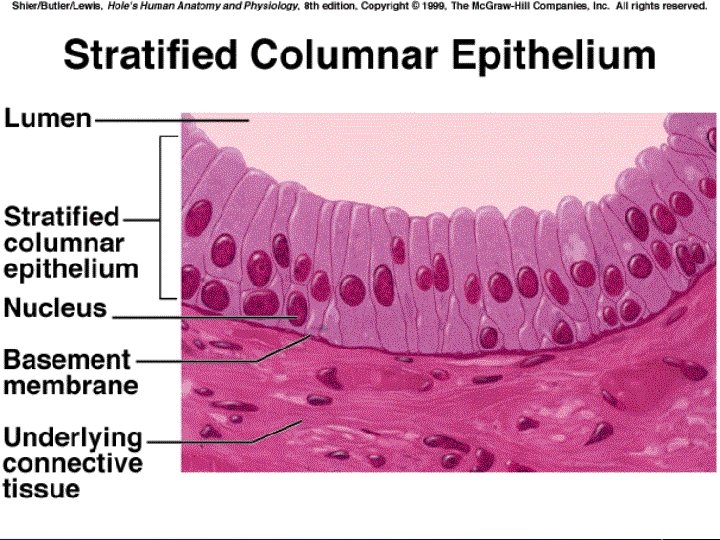
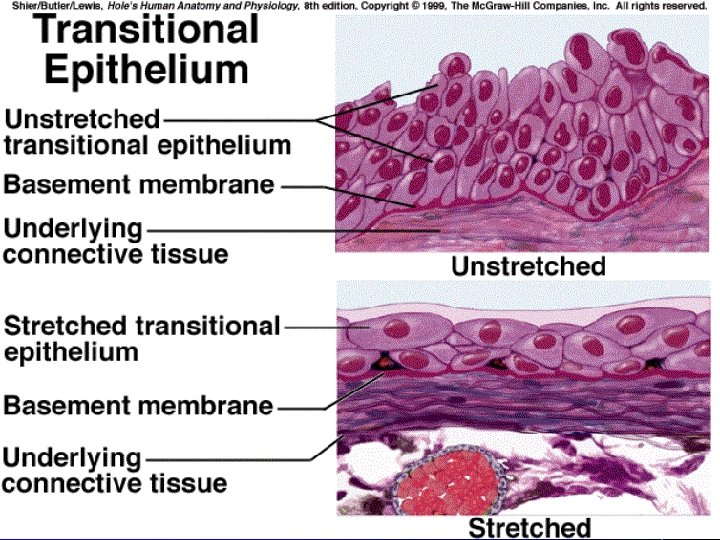

- Slides: 46
Tissues Chapter 5
#1 Tissue Type Epithelial Tissue
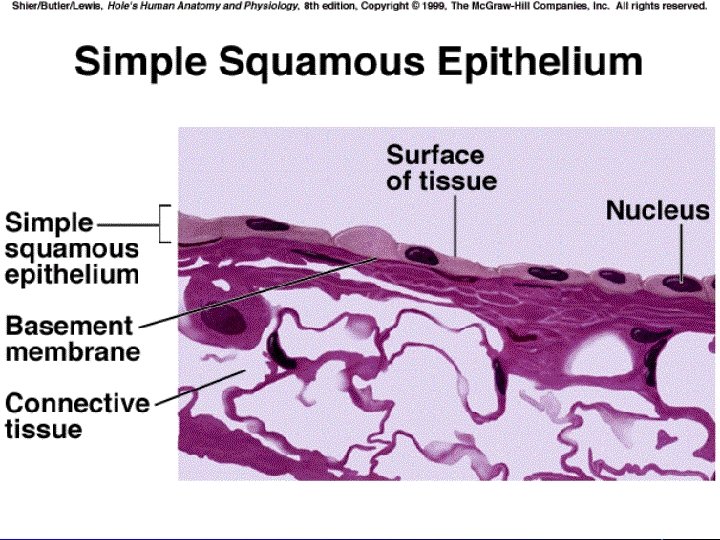
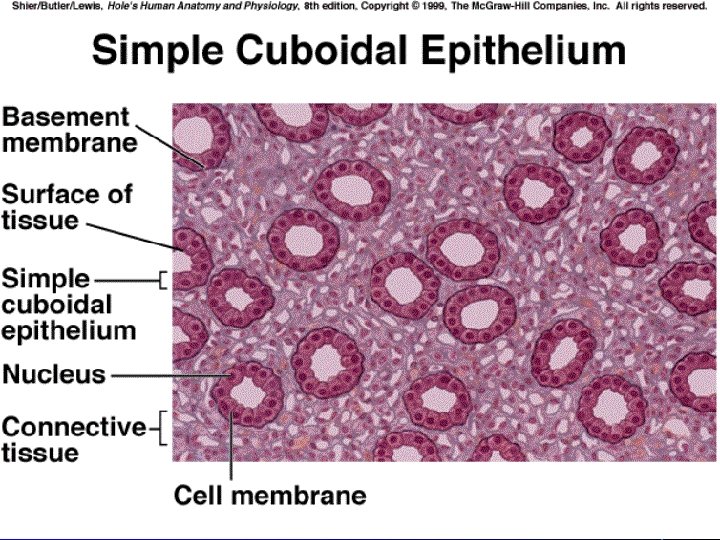
Endothelium l Mucous l Cutaneous l Serous – Visceral – Parietal
Glandular l l Endocrine – into blood, entire body Exocrine – into ducts, specific organ – Apocrine l l Fill and overflow Mammary glands – Holocrine l l Fill and rupture Acne (sebaceous oil glands) – Merocrine l l Move substances out by exocytosis Sweat glands, salivary glands
#2 Tissue Type Connective Tissue – Mesenchyme & Connective Proper
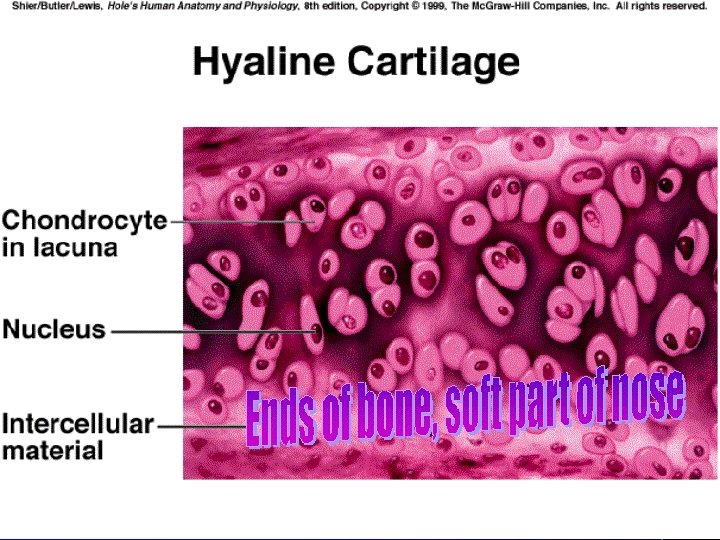
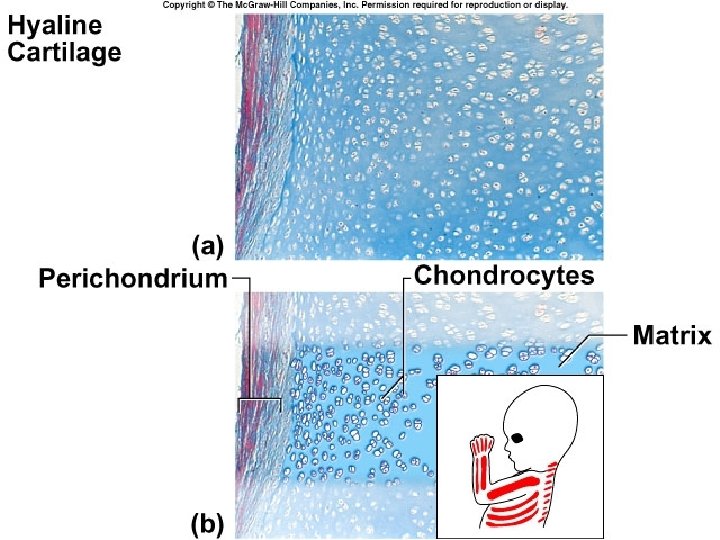
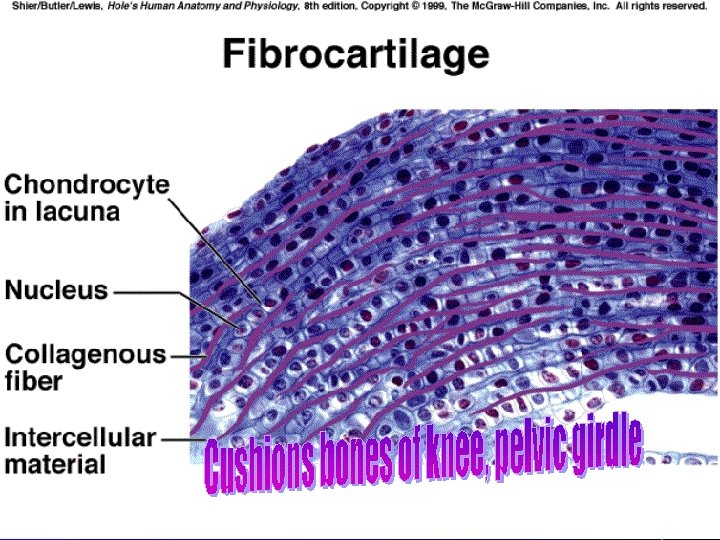
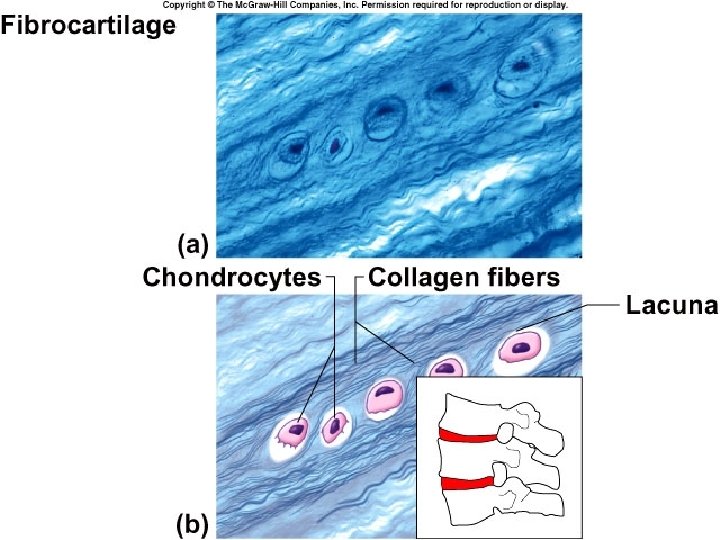
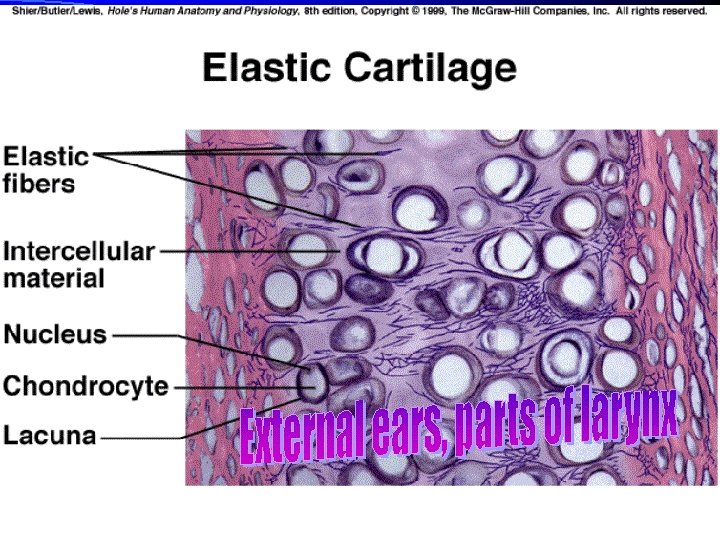
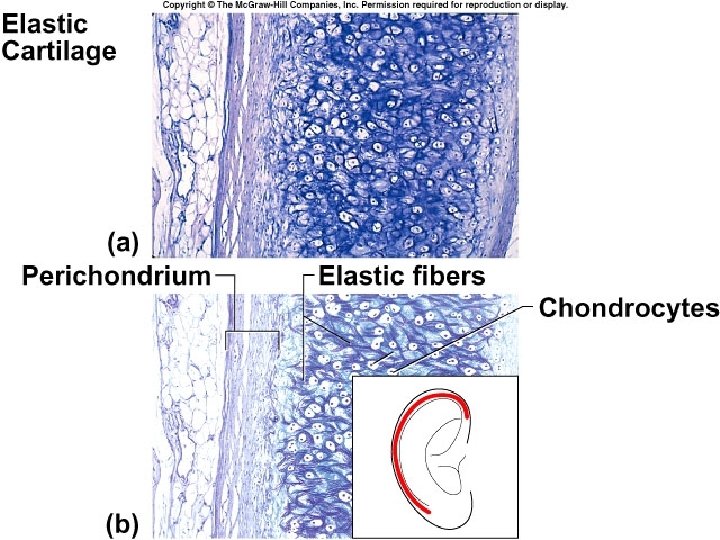
Connective Proper Cartilage – Hyaline, Fibrocartilage, Elastic, Bone, and Blood
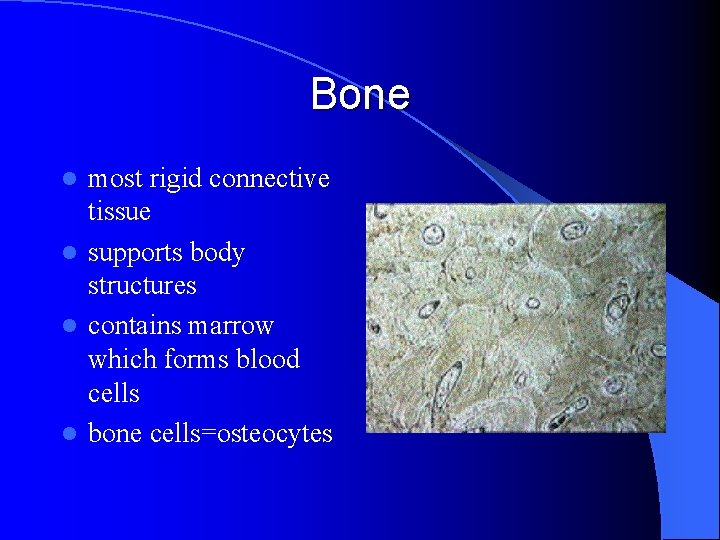
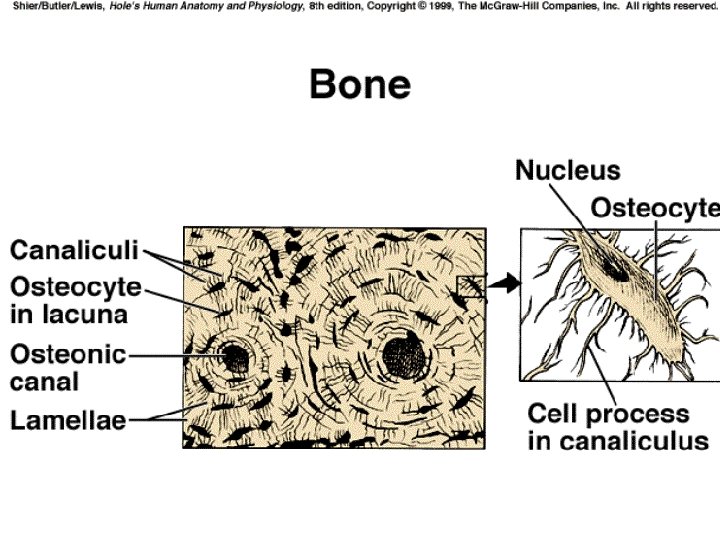
Bone most rigid connective tissue l supports body structures l contains marrow which forms blood cells l bone cells=osteocytes l
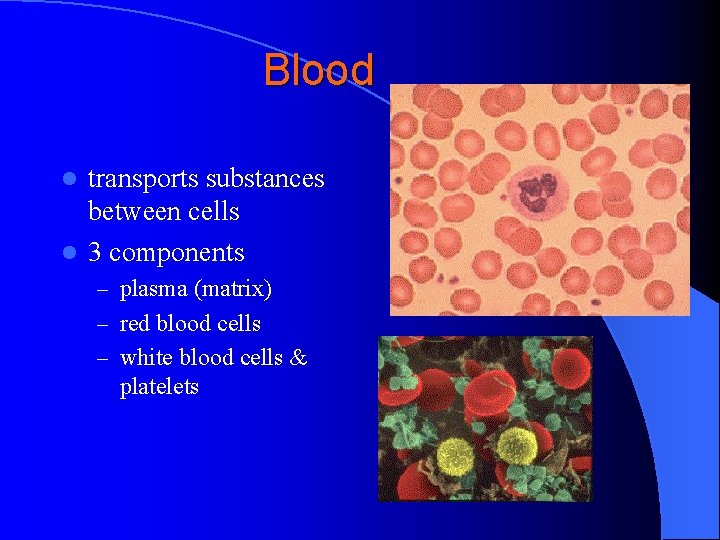
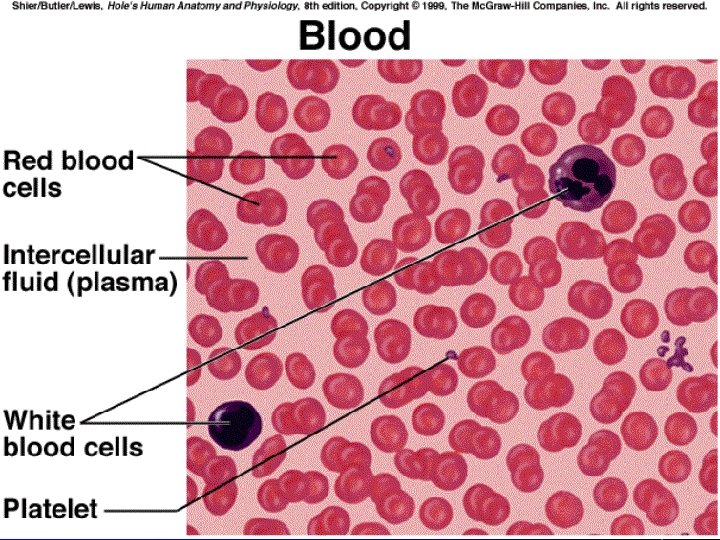
Blood transports substances between cells l 3 components l – plasma (matrix) – red blood cells – white blood cells & platelets
Connective Proper Loose Tissue – Areolar, Adipose, Reticular
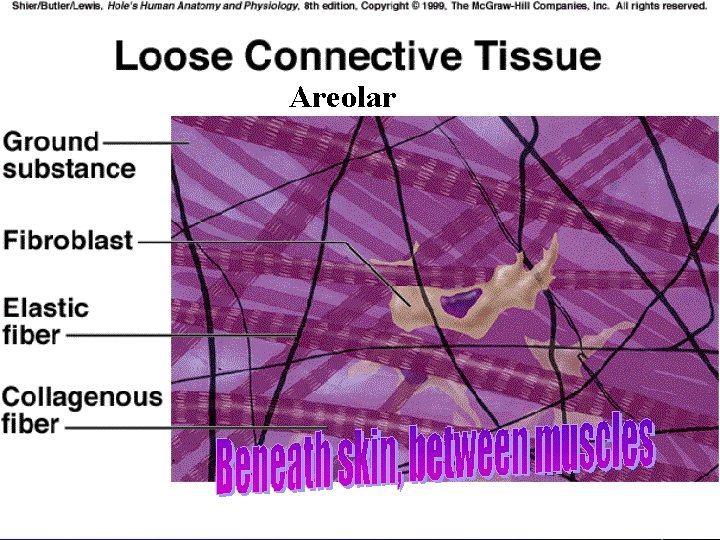
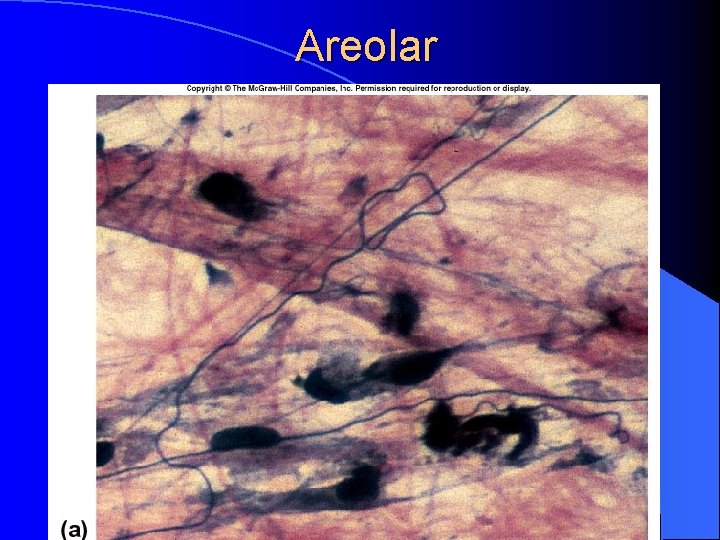
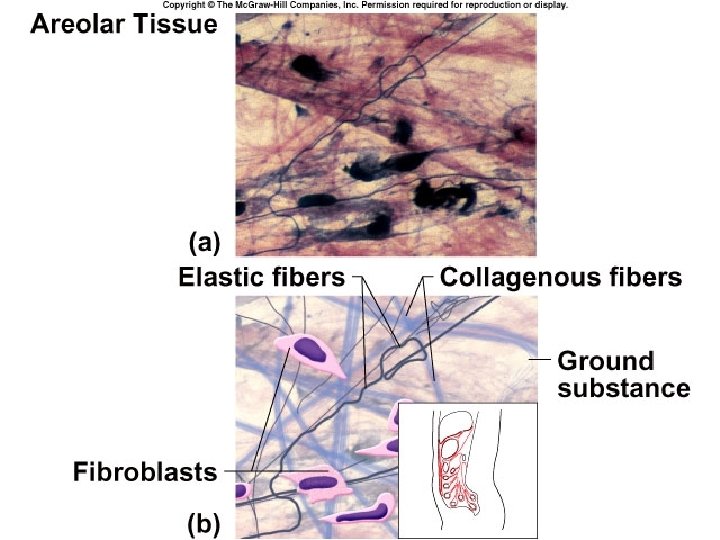
Areolar
Areolar
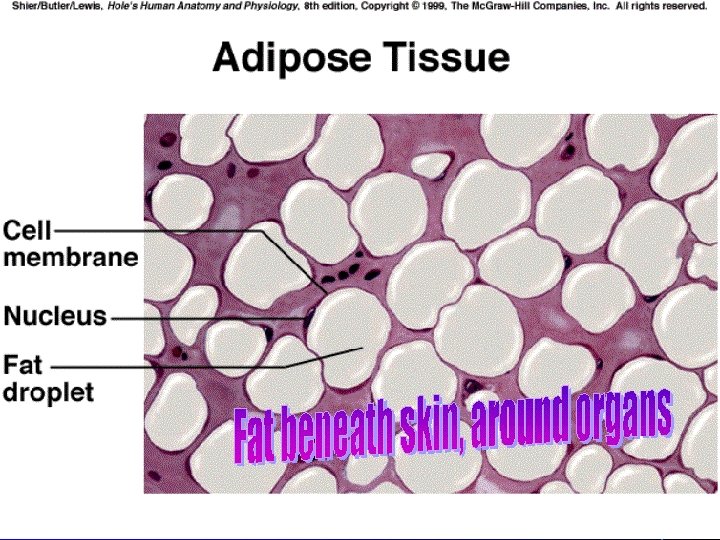
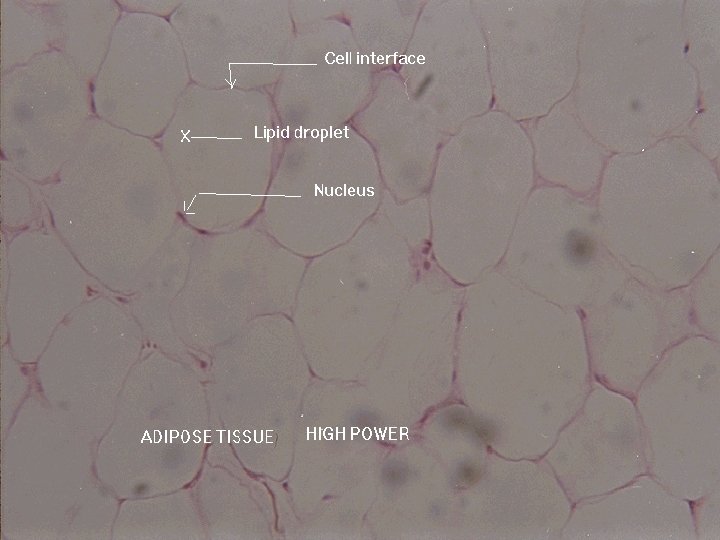
Adipose
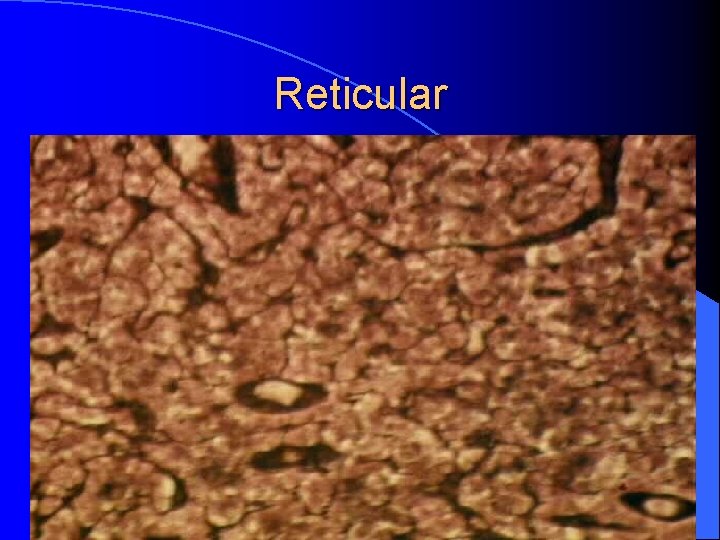
Reticular
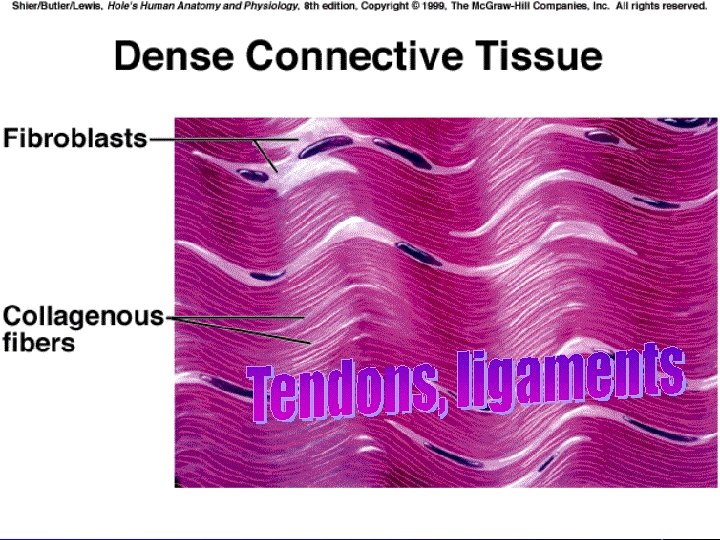
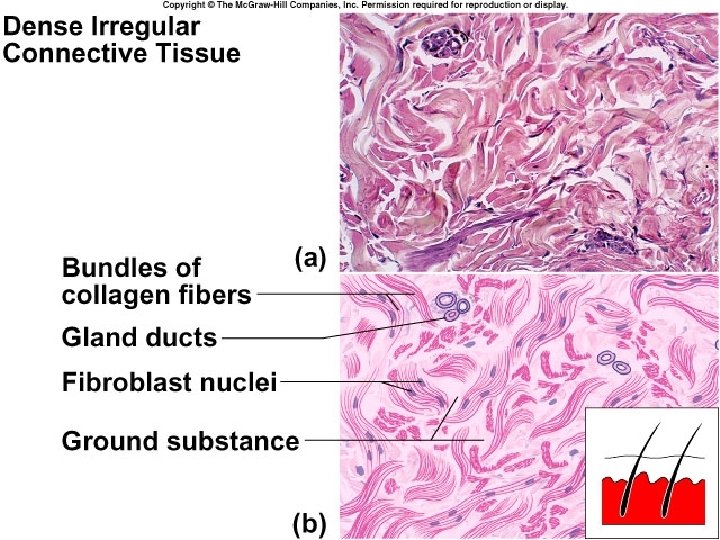
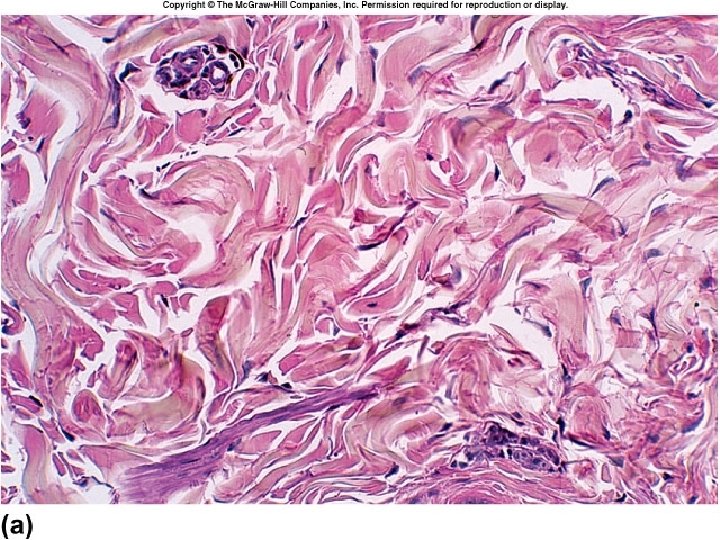
Connective Proper Dense – Regular, Irregular, and Elastic
#3 Tissue Type Muscle Tissue – Skeletal, Smooth, and Cardiac
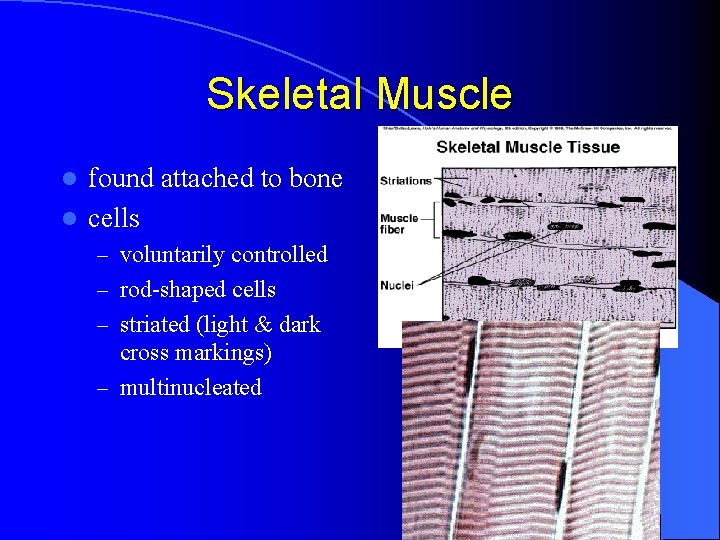
Skeletal Muscle found attached to bone l cells l – voluntarily controlled – rod-shaped cells – striated (light & dark cross markings) – multinucleated
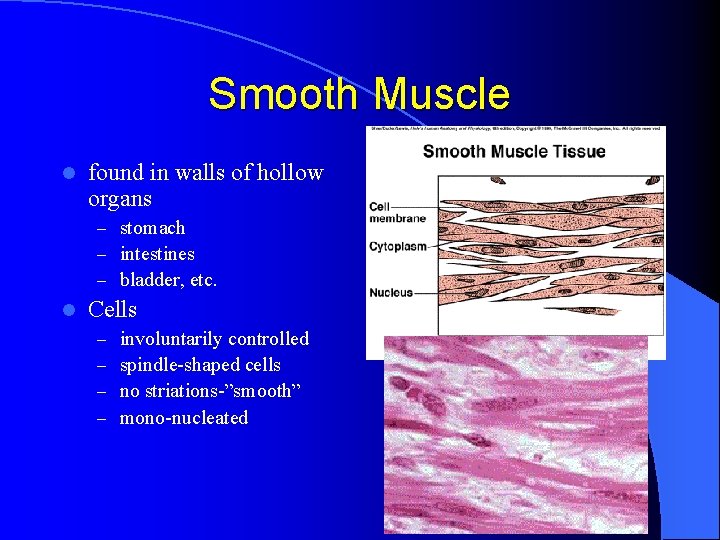
Smooth Muscle l found in walls of hollow organs – stomach – intestines – bladder, etc. l Cells – – involuntarily controlled spindle-shaped cells no striations-”smooth” mono-nucleated
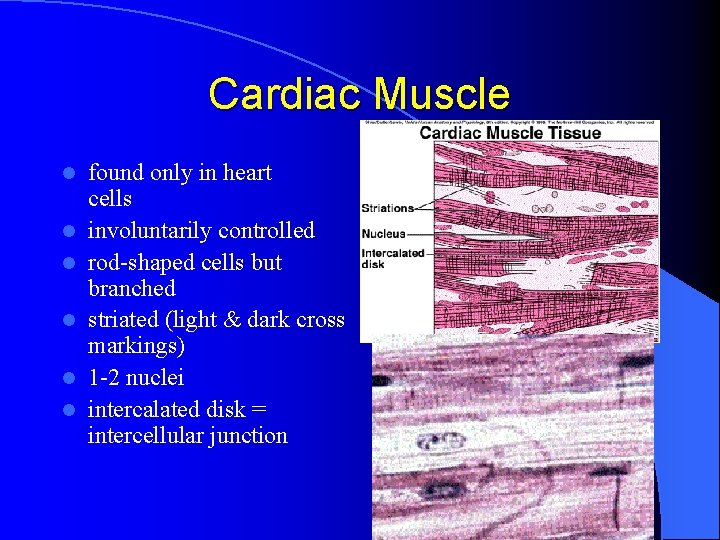
Cardiac Muscle l l l found only in heart cells involuntarily controlled rod-shaped cells but branched striated (light & dark cross markings) 1 -2 nuclei intercalated disk = intercellular junction
#4 Tissue Type Nervous Tissue
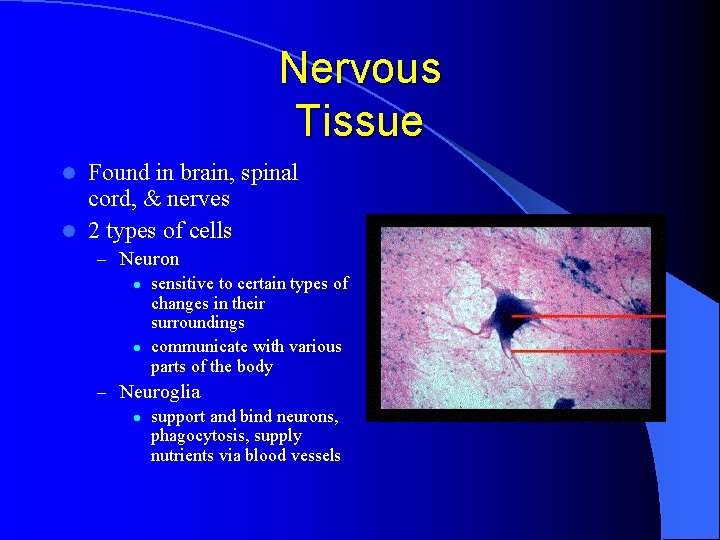
Nervous Tissue Found in brain, spinal cord, & nerves l 2 types of cells l – Neuron l sensitive to certain types of changes in their surroundings l communicate with various parts of the body – Neuroglia l support and bind neurons, phagocytosis, supply nutrients via blood vessels
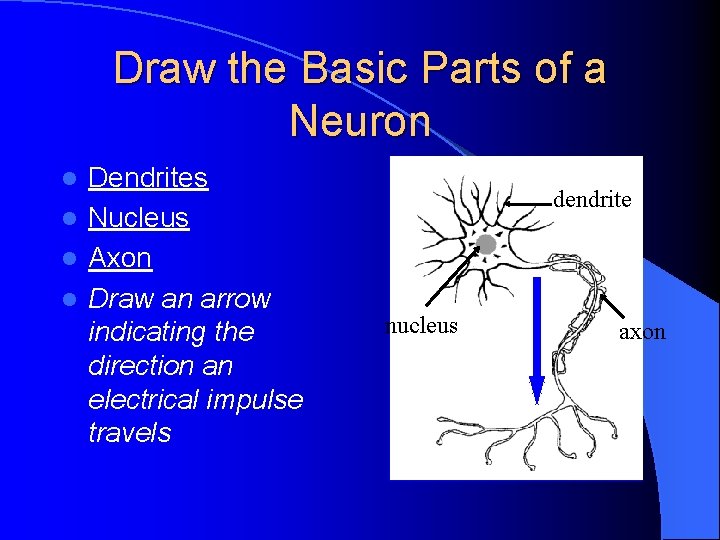
Draw the Basic Parts of a Neuron Dendrites l Nucleus l Axon l Draw an arrow indicating the direction an electrical impulse travels l dendrite nucleus axon
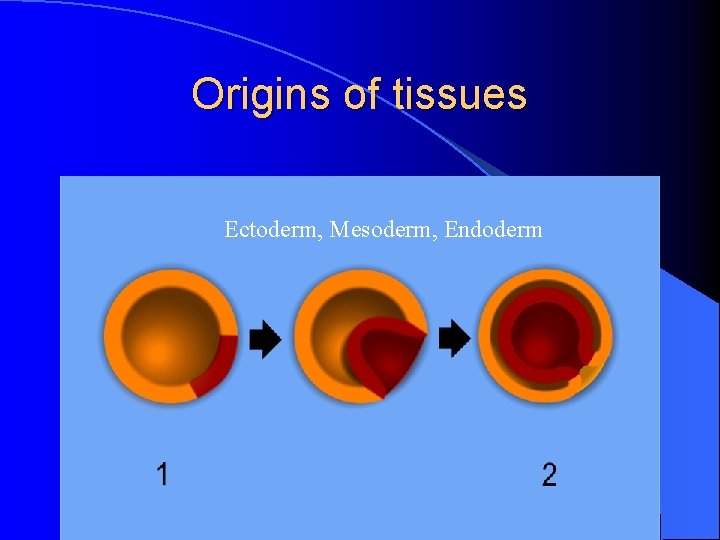
Origins of tissues Ectoderm, Mesoderm, Endoderm