
Tissue Types Histology How we examine tissues Teased
- Slides: 13
Tissue Types Histology How we examine tissues: Teased, smeared or squashed samples, scraped – we are looking at whole cells Thin sections – very thin sections of the tissue are made using a microtome after tissue has been either frozen or embedded in some sort of solid substance like wax or plastic – Staining – In either case stains are used so enhance contrast in the specimen
Key Terms n n Histology: n the study of tissues. Tissues: n groups of cells which are similar in structure and which perform common or related functions.
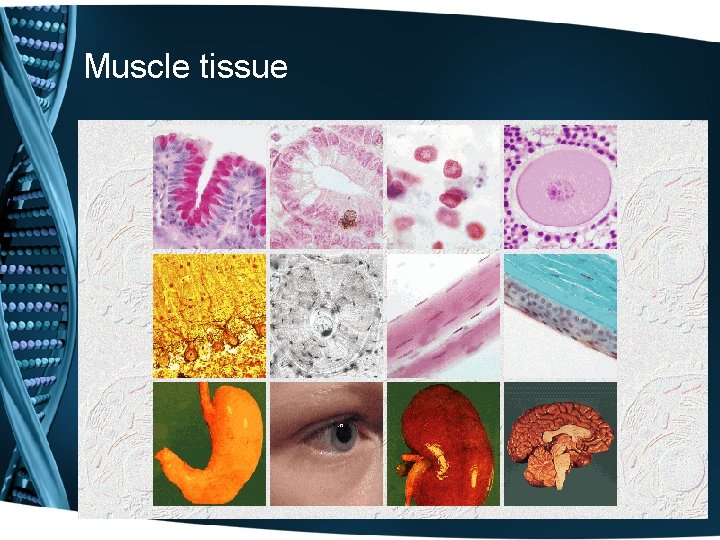
Muscle Tissue • Muscle tissue is a specialized tissue that are able to contract. • Two types of muscle tissue… • Voluntary-muscles that you are able to control • Involuntary-muscles that you cannot control
Muscle tissue
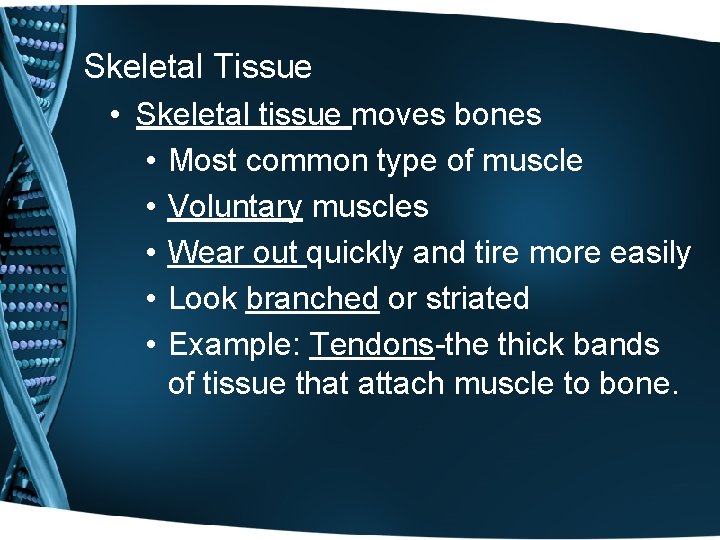
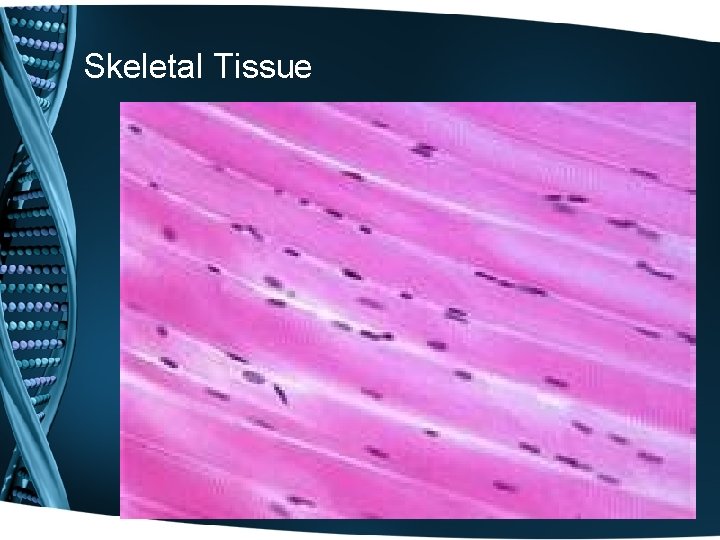
Skeletal Tissue • Skeletal tissue moves bones • Most common type of muscle • Voluntary muscles • Wear out quickly and tire more easily • Look branched or striated • Example: Tendons-the thick bands of tissue that attach muscle to bone.
Skeletal Tissue
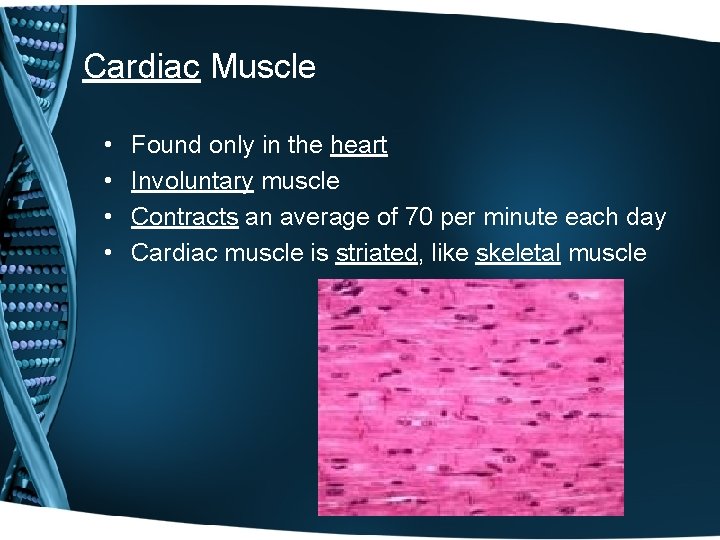
Cardiac Muscle • • Found only in the heart Involuntary muscle Contracts an average of 70 per minute each day Cardiac muscle is striated, like skeletal muscle
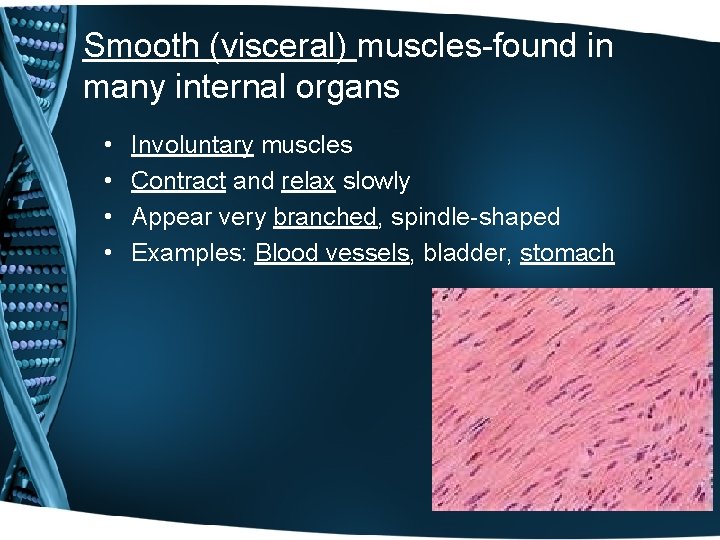
Smooth (visceral) muscles-found in many internal organs • • Involuntary muscles Contract and relax slowly Appear very branched, spindle-shaped Examples: Blood vessels, bladder, stomach
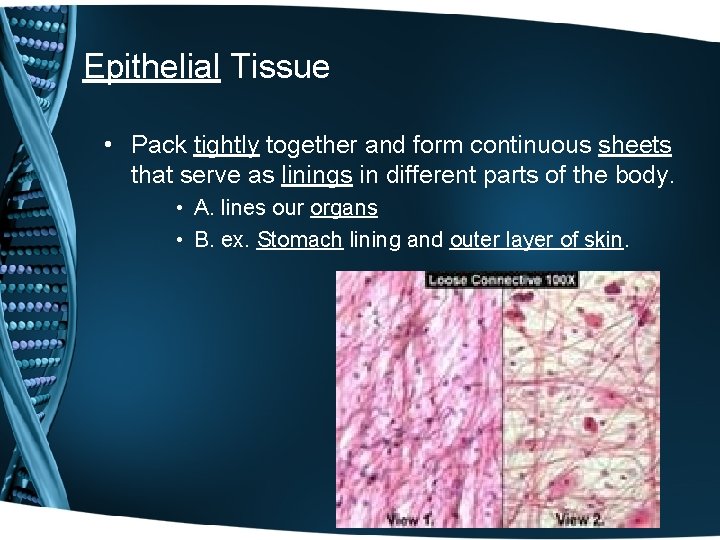
Epithelial Tissue • Pack tightly together and form continuous sheets that serve as linings in different parts of the body. • A. lines our organs • B. ex. Stomach lining and outer layer of skin.
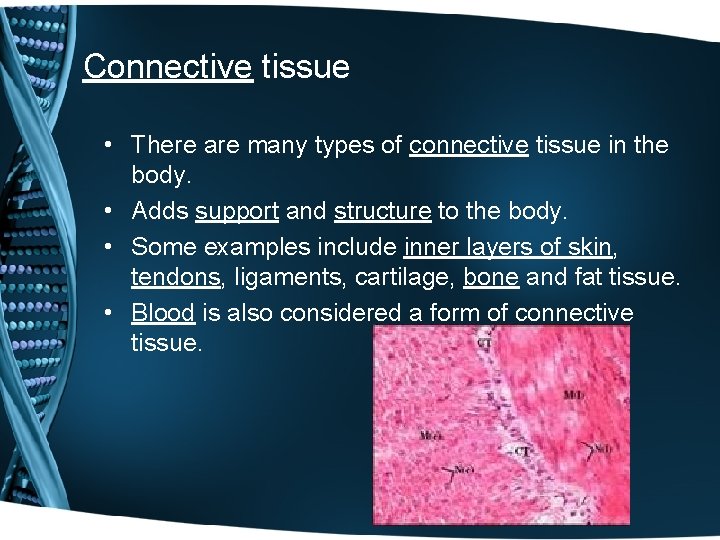
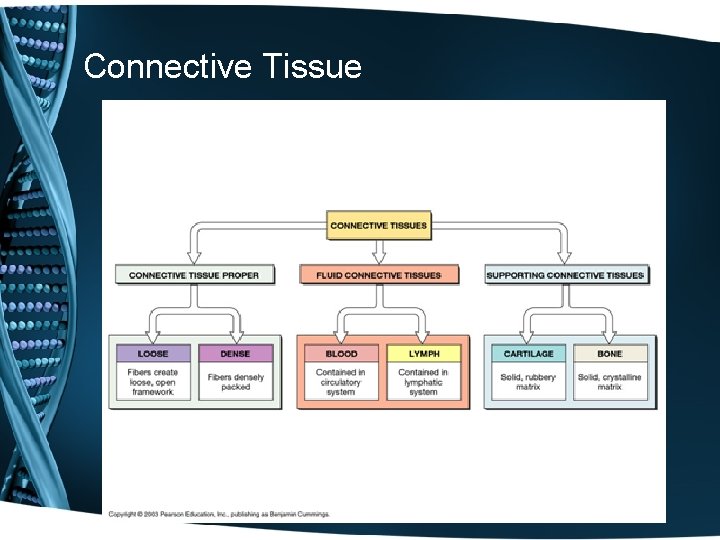
Connective tissue • There are many types of connective tissue in the body. • Adds support and structure to the body. • Some examples include inner layers of skin, tendons, ligaments, cartilage, bone and fat tissue. • Blood is also considered a form of connective tissue.
Connective Tissue
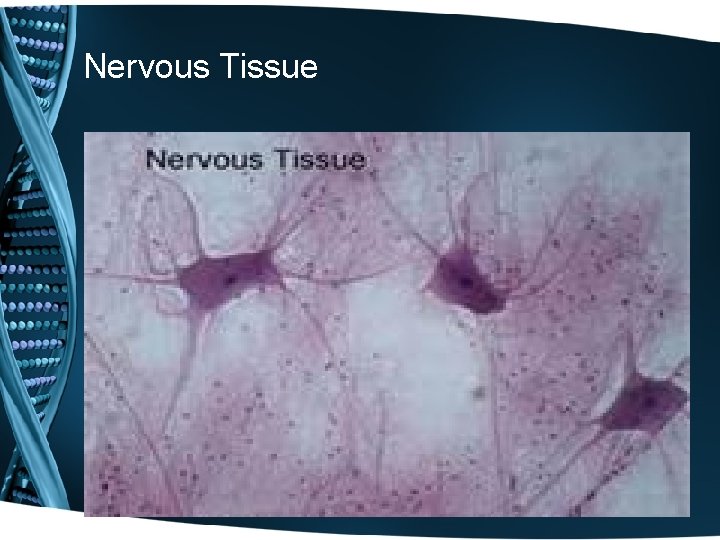
Nerve Tissue • Contains two types of cells: neurons and glial cells. • Has the ability to generate and conduct electrical signals in the body. • These electrical messages are managed by nerve tissue in the brain and transmitted down the spinal cord to the body. • Gives signals to muscles and informs us of environmental conditions (hot, cold, humid) • Examples are brain, spinal cord, nerves
Nervous Tissue