
Tissue Culture LAB 2 TISSUE CULTURE EQUIPEMENT T
Tissue Culture LAB# 2 TISSUE CULTURE EQUIPEMENT T. A Roba Attar T. A. Roba Attar
Cell Culture Equipment • The specific requirements of a cell culture laboratory depend mainly on the type of research conducted. • However, all cell culture laboratories have the common requirement of being free from pathogenic microorganisms (i. e. , asepsis), and share some of the same basic equipment that is essential for culturing cells. T. A. Roba Attar
Basic equipment Cell culture hood Incubator Centrifuge Refrigerator & freezer Cell counter Inverted microscope Liquid nitrogen T. A. Roba Attar
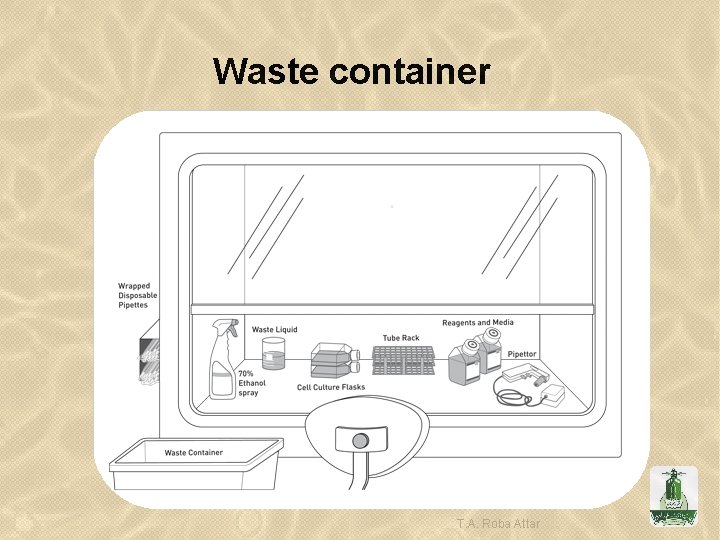
Expanded & additional equipment • PH meter • Confocal microscope • Flow cytometer • Cell culture vessel • Pipette • Waste containers • Syringes and needles T. A. Roba Attar
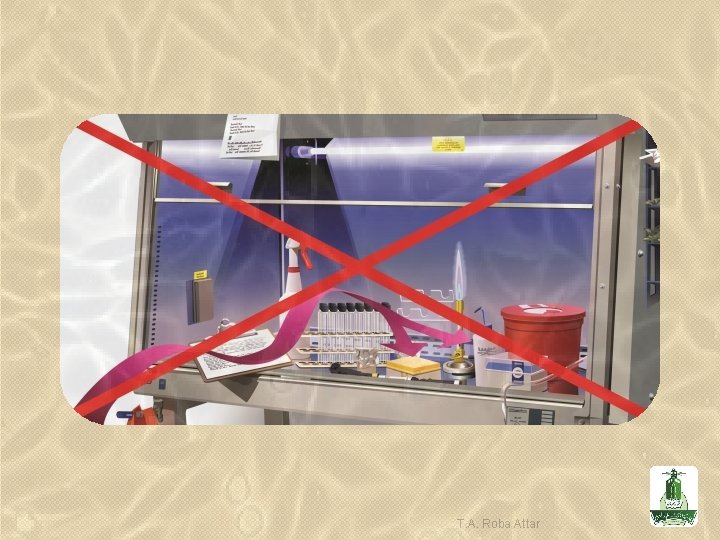
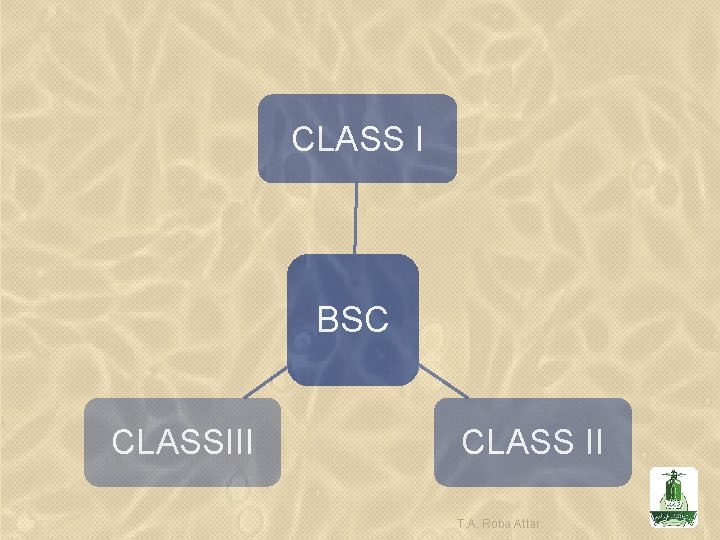
Cell Culture Hood • There are three different types of Biological Safety Cabinets (BSC) which are classified based on § effectiveness of personnel. § environment § product protection § airflow dynamics. • Usually equipped with UV light for sterilization of the work surface – use it BEFORE and AFTER not during work. • Hood is not a storage area! T. A. Roba Attar
T. A. Roba Attar
CLASS I BSC CLASSIII CLASS II T. A. Roba Attar
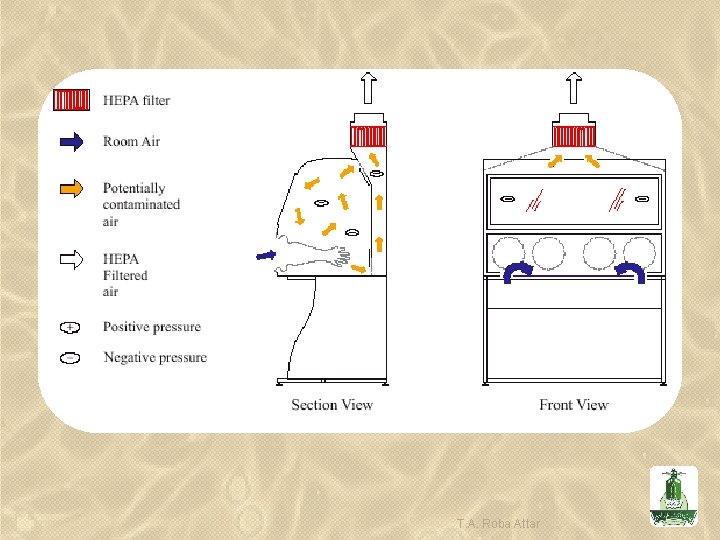
BSC CLASS I ventilated cabinets which provide protection for the researcher and the environment. • • They are normally characterized by a non-recirculated, inward airflow away from the operator via a limited fixed access opening. • If this air is re-circulated back into the laboratory the exhausted air must be HEPA filtered. • Class I Biological Safety Cabinets may or may not be vented via the facilities Heating, Ventilation, and Air. Conditioning HVAC system. T. A. Roba Attar
T. A. Roba Attar
High efficiency partial air (hepa) • HEPA stands for "high efficiency particulate absorbing" or "high efficiency particulate arrestance”. • Theoretically it can removes at least 99. 97% of dust, pollen, mold, bacteria and any airborne particles with a size of 0. 3 micrometres (μm) at 85 litres per minute (Lpm). • In some cases, they can even remove or reduce viral contamination. • The diameter specification of 0. 3 responds to the most penetrating particle size (MPPS). Particles that are smaller or larger are trapped with even higher efficiency. T. A. Roba Attar
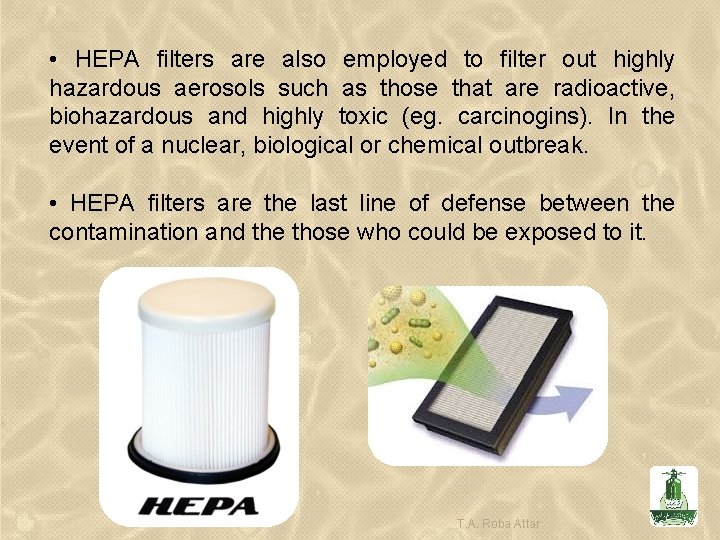
• HEPA filters are also employed to filter out highly hazardous aerosols such as those that are radioactive, biohazardous and highly toxic (eg. carcinogins). In the event of a nuclear, biological or chemical outbreak. • HEPA filters are the last line of defense between the contamination and the those who could be exposed to it. T. A. Roba Attar
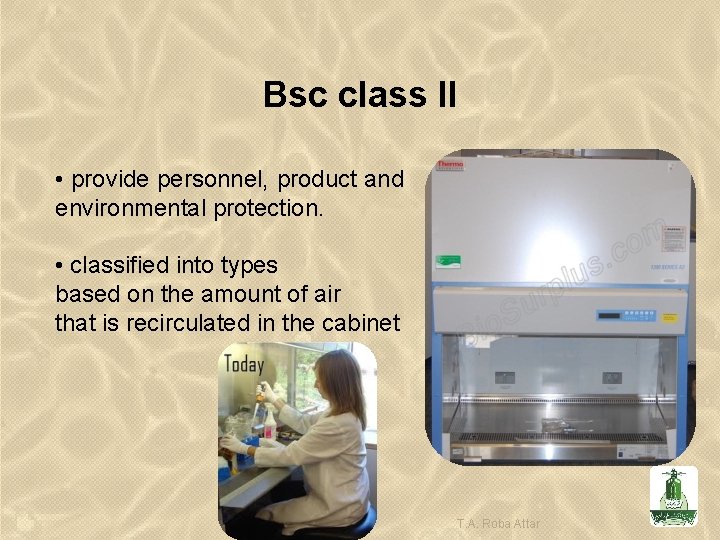
Bsc class II • provide personnel, product and environmental protection. • classified into types based on the amount of air that is recirculated in the cabinet T. A. Roba Attar

BSC CLASS 11 Type A 2 Type B 1 Type B 2 T. A. Roba Attar
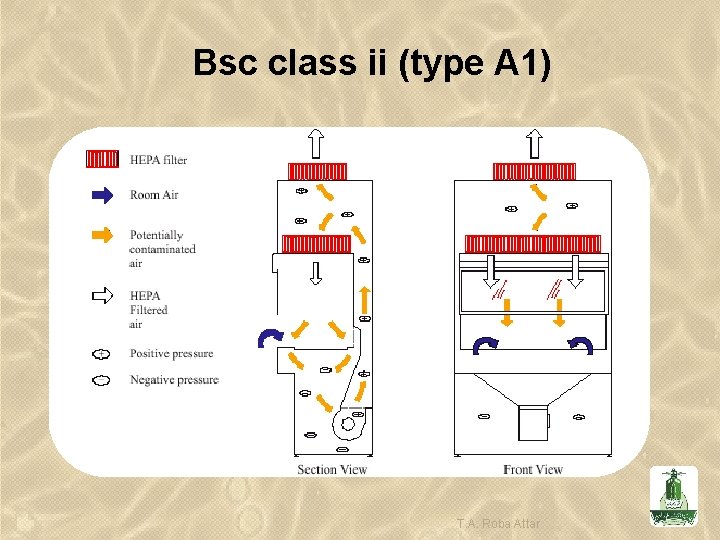
Bsc class ii (type A 1) • characterized by a limited fixed inward air flow access opening which provides protection to the researcher. • vertical downward HEPA filtered work zone for product Protection • and a HEPA filtered exhaust for environmental protection. T. A. Roba Attar
Bsc class ii (type A 1) T. A. Roba Attar
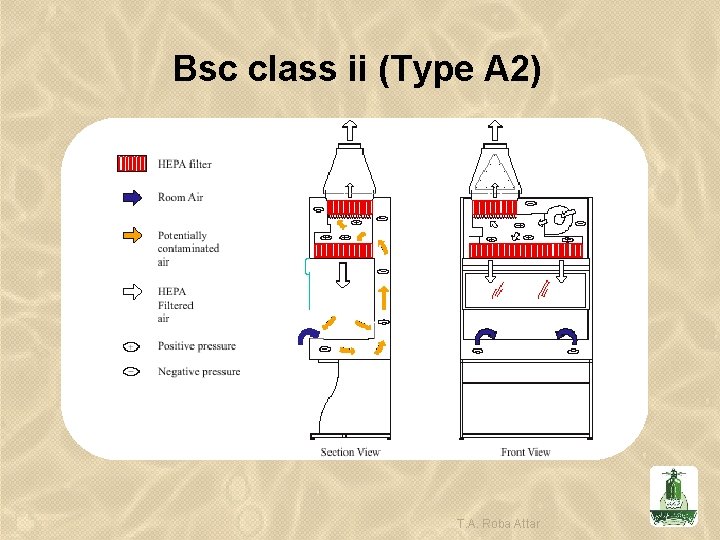
Bsc class ii (Type A 2) • 70% re-circulated within the cabinet • and 30% exhausted air back into the laboratory or vented to the outside. T. A. Roba Attar
Bsc class ii (Type A 2) T. A. Roba Attar
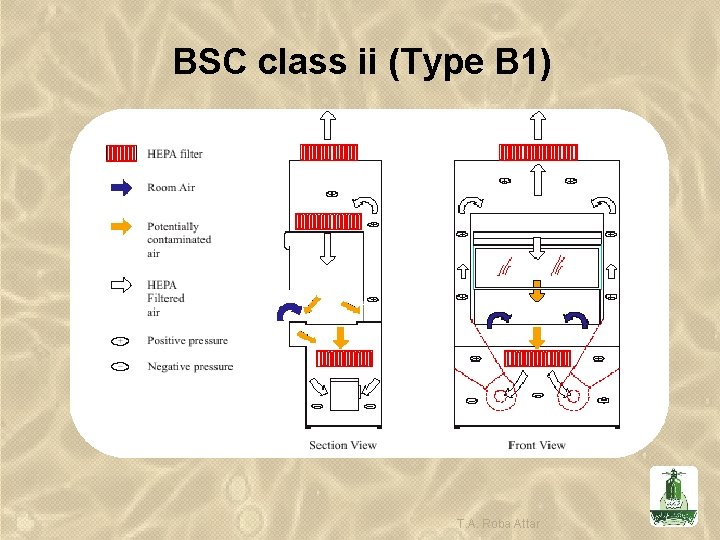
BSC class ii (Type B 1) • approximately 30% re-circulate of the air within the Cabinet • 70% exhausted to the outside via an external ventilation system. T. A. Roba Attar
BSC class ii (Type B 1) T. A. Roba Attar
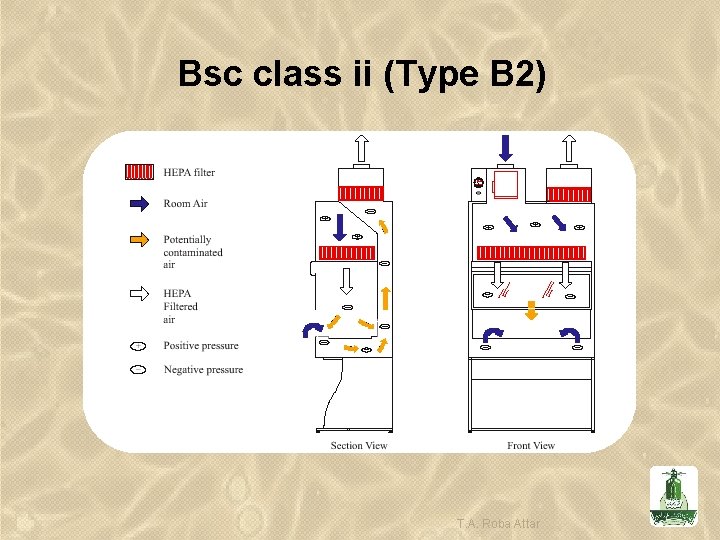
Bsc class ii (Type B 2) • 100% exhausted via an external ventilation system. • and have no recirculation. T. A. Roba Attar
Bsc class ii (Type B 2) T. A. Roba Attar
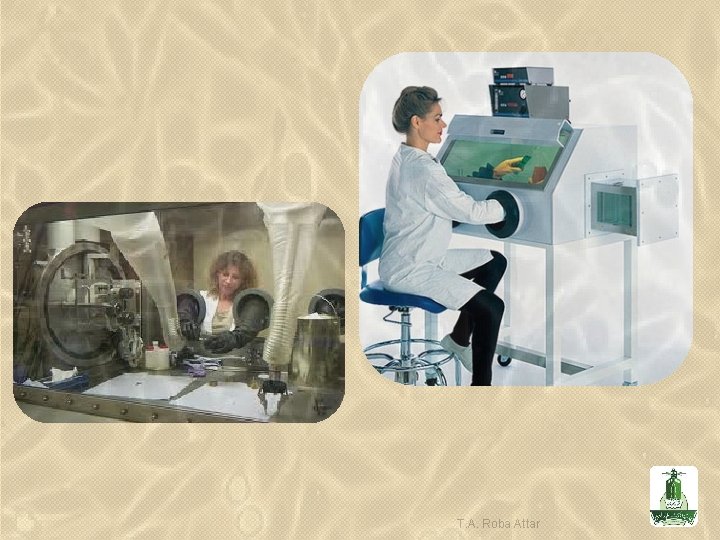
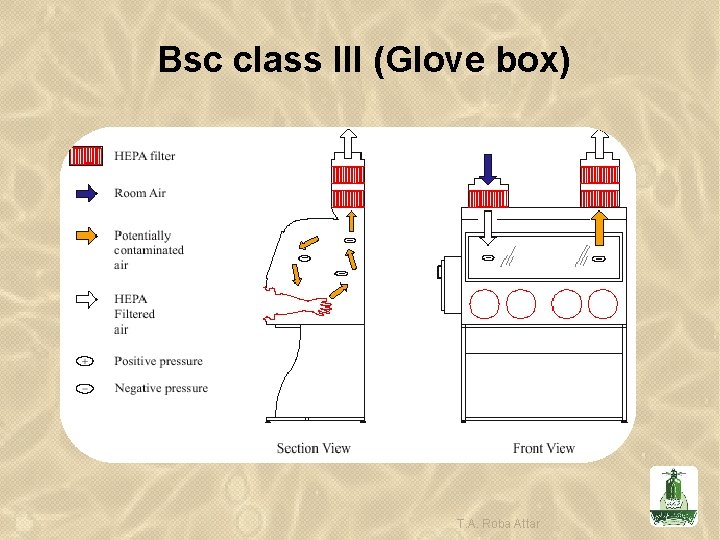
Bsc class III (Glove box) • provide the ultimate protection for personnel, product and the environment. • They are characterized by a completely enclosed, gas tight, negative pressure, HEPA filtered, ventilated workspace which is accessed through rubber gloves which are attached to the unit. • The air that is exhausted is treated via a double HEPA filtration system or through a combination of HEPA filtration and incineration. T. A. Roba Attar
T. A. Roba Attar
Bsc class III (Glove box) T. A. Roba Attar
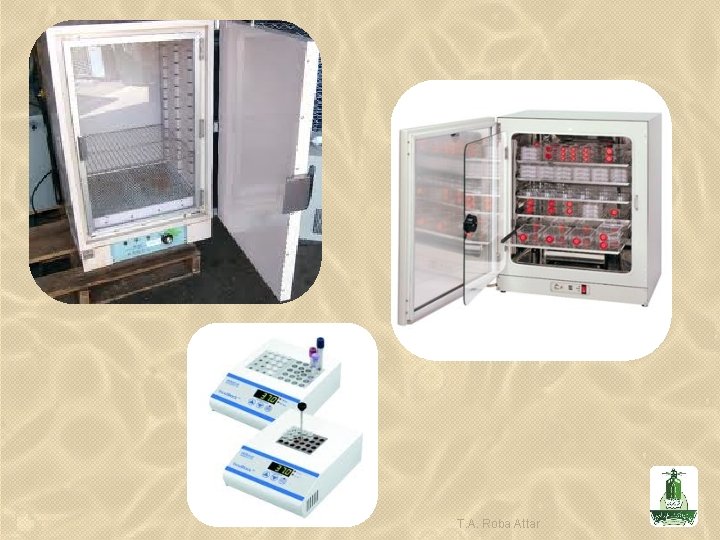
Incubator • The purpose of the incubator is to provide the appropriate environment for cell growth. • The incubator should be large enough for your laboratory needs and should have temperature control to within ± 0. 2°C. • Stainless steel incubators allow easy cleaning and provide corrosion protection, especially if humid air is required for incubation. • Although the requirement for aseptic conditions in a cell culture incubator is not as stringent as that in a cell culture hood, frequent cleaning of the incubator is essential to avoid contamination of cell cultures. T. A. Roba Attar
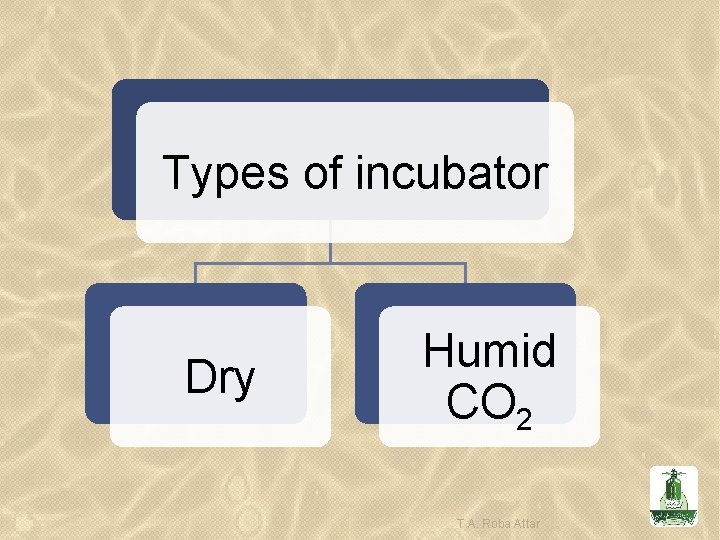
Types of incubator Dry Humid CO 2 T. A. Roba Attar
- Dry incubators: are more economical, but require the cell cultures to be incubated in sealed flasks to prevent evaporation. Placing a water dish in a dry incubator can provide some humidity, but they do not allow precise control of atmospheric conditions in the incubator. - Humid CO 2 incubators are more expensive, but allow superior control of culture conditions. They can be used to incubate cells cultured in Petri dishes or multiwell plates, which require a controlled atmosphere of high humidity and increased CO 2 tension. T. A. Roba Attar
T. A. Roba Attar
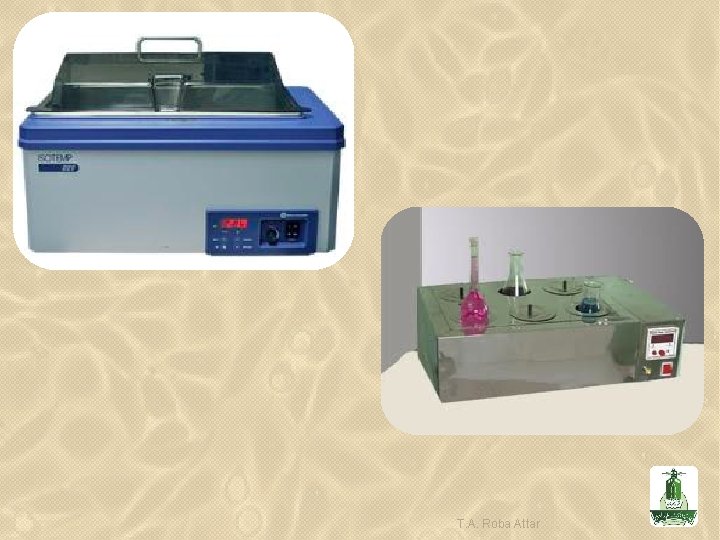
Water Bath • A device for regulating the temperature of anything subjected to heat, by surrounding the vessel containing it with another vessel containing water which can be kept at a desired temperature; also, a vessel designed for this purpose. • tool used to maintain a very stable temperature much like an incubator. T. A. Roba Attar
T. A. Roba Attar
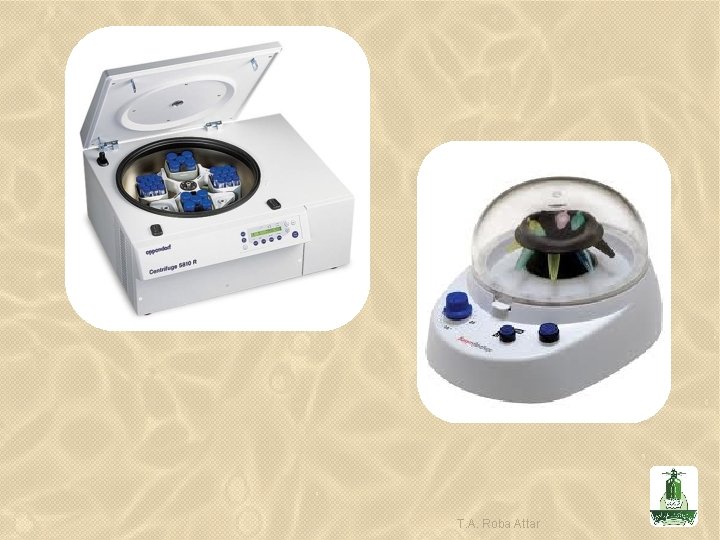
Centrifuge • A laboratory centrifuge is a piece of laboratory equipment, driven by a motor, which spins liquid samples at high speed. There are various types of centrifuges, depending on the size and the sample capacity. � Like all other centrifuge, laboratory centrifuges work by the sedimentation principle, where the centripetal acceleration is used to separate substances of greater and lesser density. • Centrifugation is used to remove - protein products. - dead cells - cell debris, etc. T. A. Roba Attar
T. A. Roba Attar
Refrigerators • For small cell culture laboratories, a domestic refrigerator (preferably one without an autodefrost freezer) is an adequate and inexpensive piece of equipment for storing reagents and media at 2– 8°C. • For larger laboratories, a cold room restricted to cell culture is more appropriate. Make sure that the refrigerator or the cold room is cleaned regularly to avoid contamination. T. A. Roba Attar

Freezers • Most cell culture reagents can be stored at – 5°C to – 20°C; therefore an ultra deep freezer (i. e. , a – 80°C freezer) is optional for storing most reagents. • While most reagents can withstand temperature oscillations in an autodefrost (i. e. , self-thawing) freezer, some reagents such as antibiotics and enzymes should be stored in a freezer that does not autodefrost. T. A. Roba Attar
Cryogenic storage • Cell lines in continuous culture are likely to suffer from genetic instability as their passage number increases; therefore, it is essential to prepare working stocks of the cells and preserve them in cryogenic storage. • Do not store cells in – 20°C or – 80°C freezers. why? . because their viability quickly decreases when they are stored at these temperatures. • This liquid nitrogen method has been successful with many species that cannot be preserved by lyophilization. T. A. Roba Attar
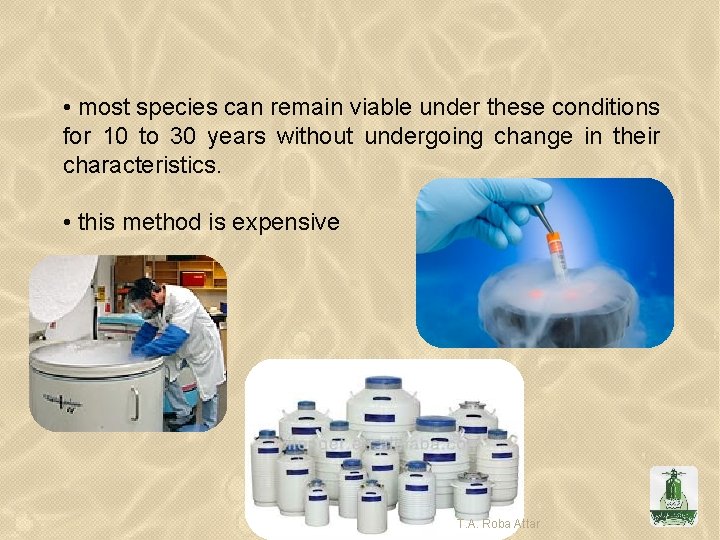
• most species can remain viable under these conditions for 10 to 30 years without undergoing change in their characteristics. • this method is expensive T. A. Roba Attar
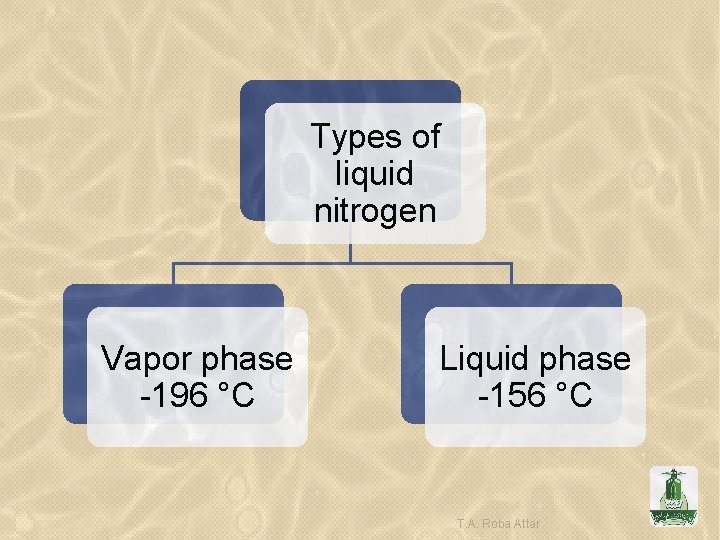
Types of liquid nitrogen Vapor phase -196 °C Liquid phase -156 °C T. A. Roba Attar
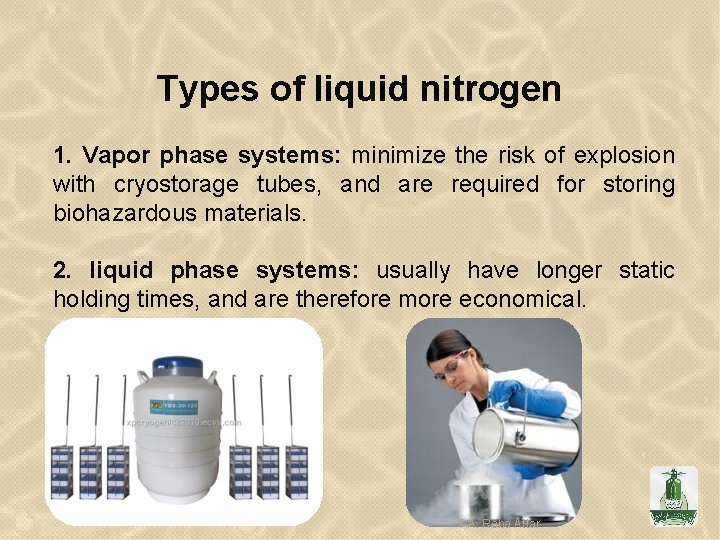
Types of liquid nitrogen 1. Vapor phase systems: minimize the risk of explosion with cryostorage tubes, and are required for storing biohazardous materials. 2. liquid phase systems: usually have longer static holding times, and are therefore more economical. T. A. Roba Attar
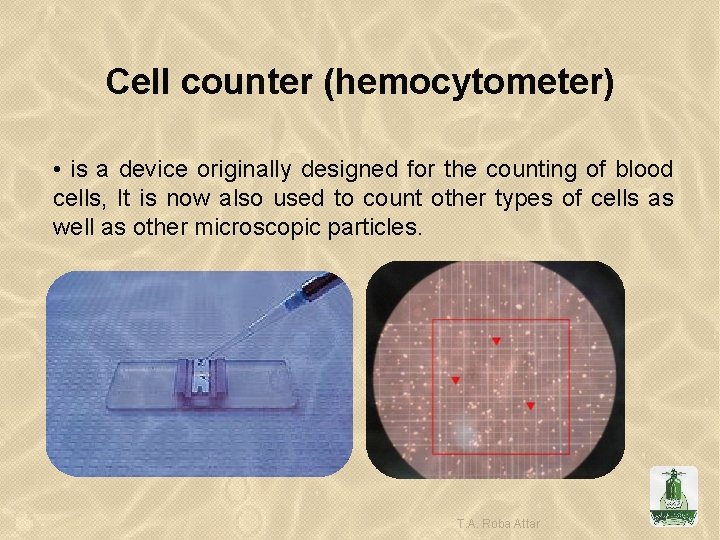
Cell counter (hemocytometer) • is a device originally designed for the counting of blood cells, It is now also used to count other types of cells as well as other microscopic particles. T. A. Roba Attar
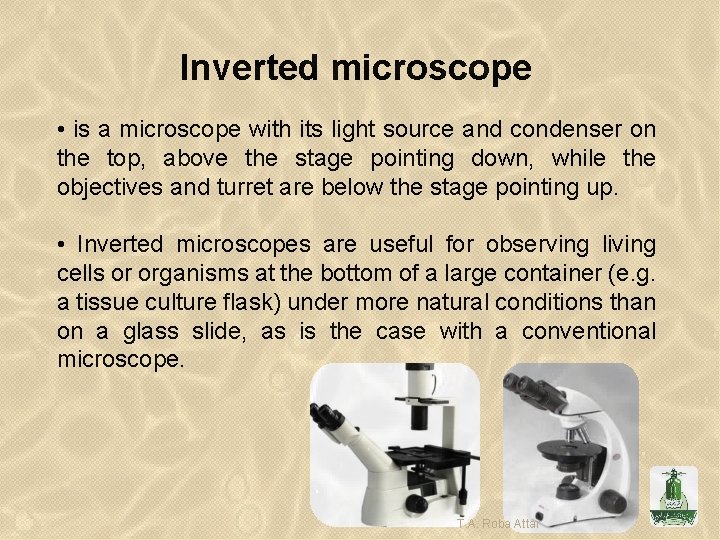
Inverted microscope • is a microscope with its light source and condenser on the top, above the stage pointing down, while the objectives and turret are below the stage pointing up. • Inverted microscopes are useful for observing living cells or organisms at the bottom of a large container (e. g. a tissue culture flask) under more natural conditions than on a glass slide, as is the case with a conventional microscope. T. A. Roba Attar
PH meter • Is an electronic instrument used for measuring the p. H (acidity or alkalinity) of a liquid. • A typical p. H meter consists of a special measuring probe (a glass electrode) connected to an electronic meter that measures and displays the p. H reading. • The p. H value of a substance is directly related to the ratio of the hydrogen ion and hydroxyl ion concentrations. • If the H+ concentration is higher than OH- the material is acidic. • If the OH- concentration is higher than H+ the material is T. A. Roba Attar basic.
• 7 is neutral, < is acidic, >7 is basic. • The addition of acid to water increases the concentration of hydrogen ions and reduces the concentration of hydroxyl ions. • The addition of a base would increase the concentration of hydroxyl ions and decrease the concentration of hydrogen ions. T. A. Roba Attar
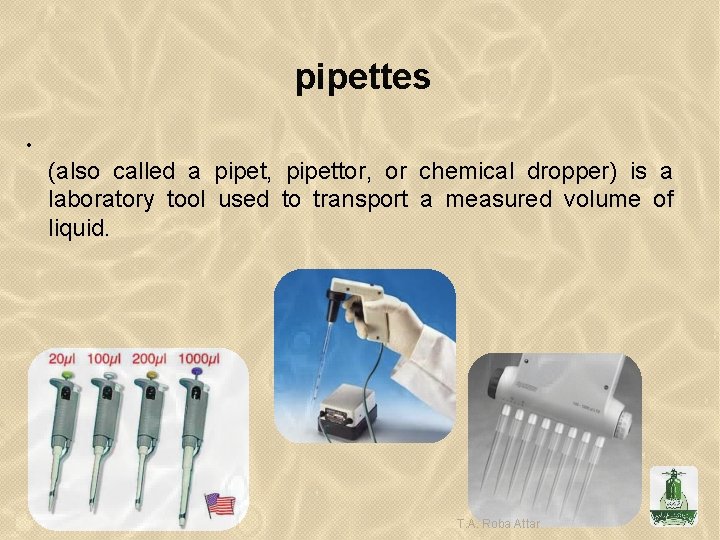
pipettes • (also called a pipet, pipettor, or chemical dropper) is a laboratory tool used to transport a measured volume of liquid. T. A. Roba Attar

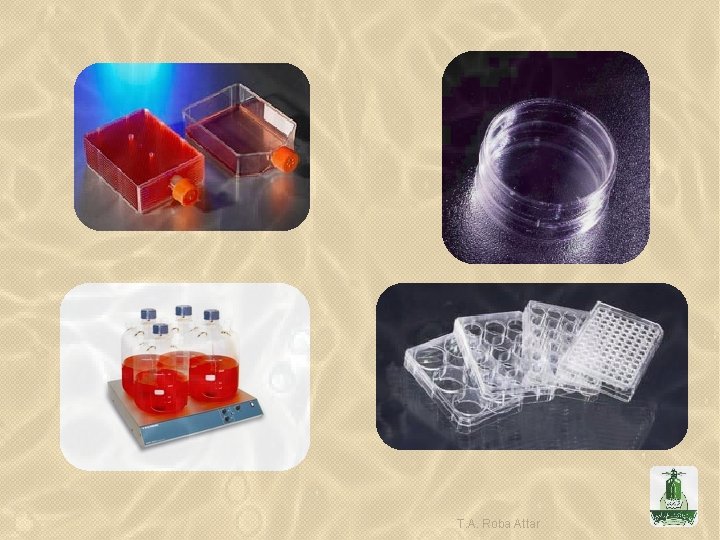
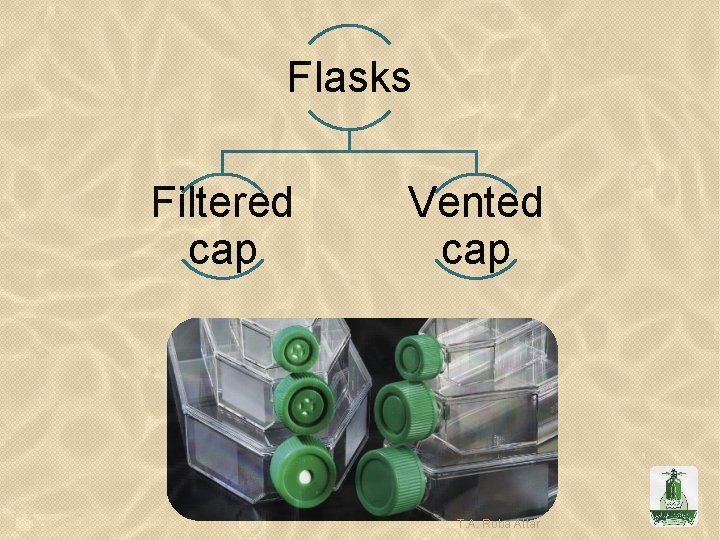
Flasks • Tissue culture flasks provide an even surface refinement in the growth zone. • The inside surface treatment must provide an optimal growth surface on the flask base for the most varied matrix-dependent tissue cultures. • The untreated side and top inside surfaces of tissue culture flasks reduce the amount of cell loss during the separation phases, because undesired tissue adhesion outside the growth zone is diminished. • The modern tissue culture flasks are available with filtered or vented caps which ensure the accessibility of the interior of the flask, and the cap closure. T. A. Roba Attar
T. A. Roba Attar
Flasks Filtered cap Vented cap T. A. Roba Attar
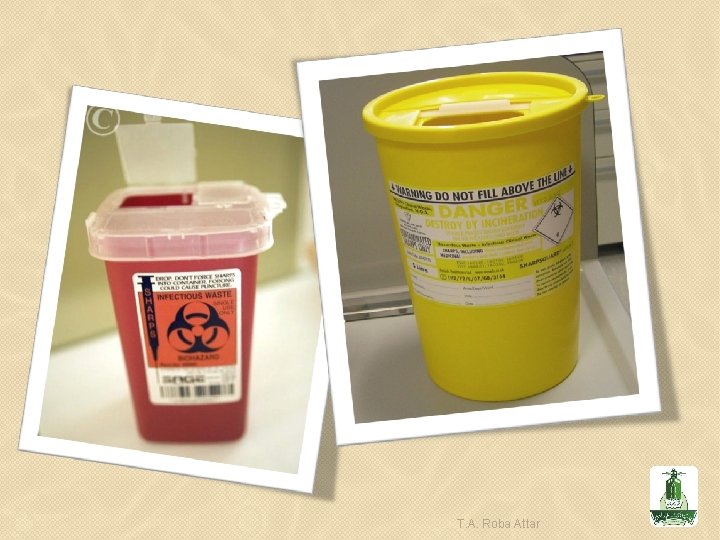
Waste container T. A. Roba Attar
T. A. Roba Attar
Storage A cell culture laboratory should have storage areas for liquids such as media and reagents, for chemicals such as drugs and antibiotics, for consumables such as disposable pipettes, culture vessels, and gloves, for glassware such as media bottles and glass pipettes, for specialized equipment, and for tissues and cells. Glassware, plastics, and specilized equipment can be stored at ambient temperature on shelves and in drawers; however, it is important to store all media, reagents, and chemicals according to the instructions on the label. • • Some media, reagents, and chemicals are sensitive to light; while their normal laboratory use under lighted conditions is tolerated, they should be stored in the dark or wrapped in aluminum foil when. T. A. not use. Robain Attar

T. A. Roba Attar
- Slides: 50