
TIPSMAPP Meeting 3 Losses and Gains The Need

- Slides: 17
TIPS-MAPP Meeting 3 Losses and Gains: The Need to Be a Loss Expert
• What do you recall from last meeting? • Family Consultations • Self Studies • Turn in Strengths/Needs Worksheets share a strength and a need • Any feedback for the leaders so far? 3 -A
Being a Loss Expert While living we have all experienced both maturational and situational losses. • This is a strength we would like you to draw upon as you: • Care for children in your home. • Reach out to their biological family.
Maturational Loss and Gains Maturational Losses generally happen as we grow. They are anticipated events. Lets look at the life cycle of our life: • Consider the life steps or events that we usually experience. • What is the loss that comes with that experience? • What is a gain that comes with the loss?
Situational Losses • Caused by unusual or unexpected circumstances. • Do not always have gains that go along with these losses. • What are some of the losses you can think of that we do not always expect?
Situational Losses • • • Illness or injury Loss of parent, child , or spouse. Loss of home due to finances or disaster or relocation. Loss of ability to conceive or give birth to a child. Loss of hopes, “dreams”, or “innocence” through sexual abuse or sexual attack. • Loss of healthy child due to child’s having a handicap. • Loss of spouse due to divorce. • Loss of friends due moving.
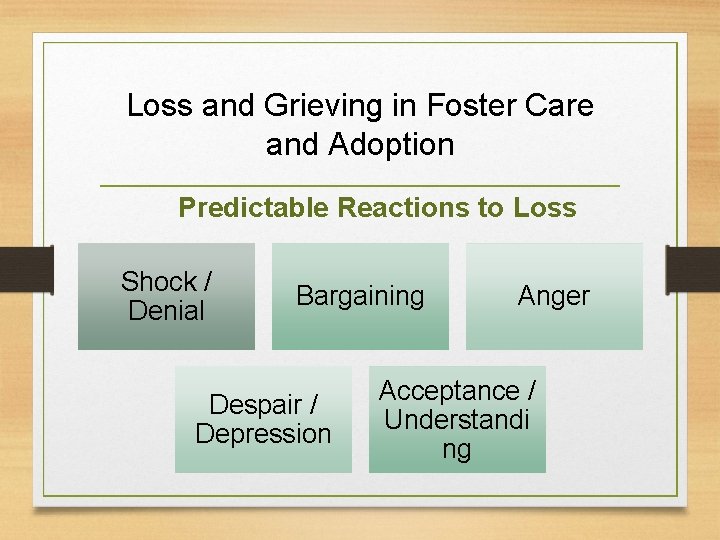
Loss and Grieving in Foster Care and Adoption Predictable Reactions to Loss Shock / Denial Bargaining Despair / Depression Anger Acceptance / Understandi ng
Developmental Grieving Developmental grieving is grieving experienced at milestones in a child’s, youth’s, or adult’s life. Developmental grieving is caused by memories of previous losses.
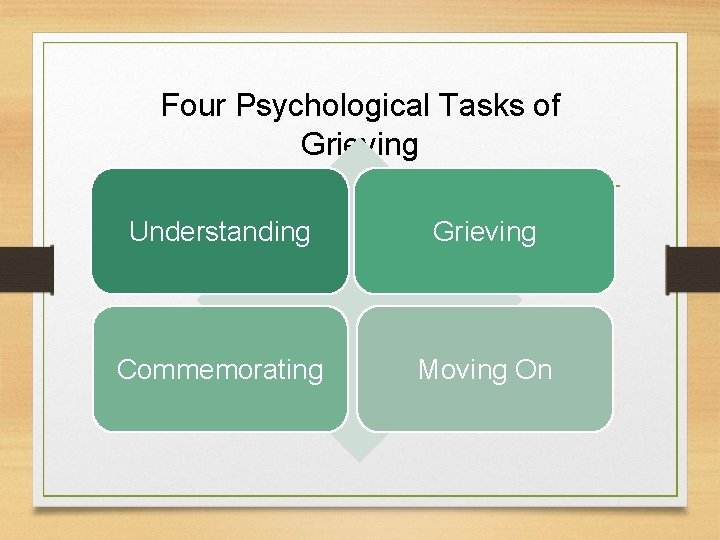
Four Psychological Tasks of Grieving Understanding Grieving Commemorating Moving On
Break • 2 Corinthians 1: 3 -4 “Blessed be the God and Father of our Lord Jesus Christ, the Father of mercies and God of all comfort, who comforts us in all our tribulation, that we may be able to comfort those who are in any trouble, with the comfort with which we ourselves are comforted by God. ”
Helping Children with Healthy Grieving Small Group Directions: Handout 4 Select a facilitator to keep the group on task Select a reporter Answer questions on your handout You have 7 minutes
Partnership In Loss: Turning Losses into Gains • Co-Leaders Share • How have your own experiences with separation, loss and grieving made you stronger so you can help others? • Are there losses in your own lives that you are still grieving that may make it difficult to help a the youth/child grieve a specific issue?
Helping Children with Healthy Grieving Family Assessment Questions Directions: Handout 5 Share your insights about your individual and family maturational and situational losses Share ideas about how your losses create challenges for your family if you were helping THESE children recover from loss You have 10 minutes
Roadwork Review all handouts from Meeting 3, handouts titled, “The Life Book” (#3) and “Bonding and Attachment. ” (#7) Bring your questions to Meeting 4. Complete Handout 5—Family Assessment Questions Complete Handout 6—Strengths and Needs If you have not experienced infertility complete the general tasks.