
Tips for Writing Narrative New ideas mean new
- Slides: 11
Tips for Writing Narrative
New ideas mean new paragraphs § Start a new paragraph and indent every time you… § Change scenes § Start talking about a different character § Move from one speaker to another
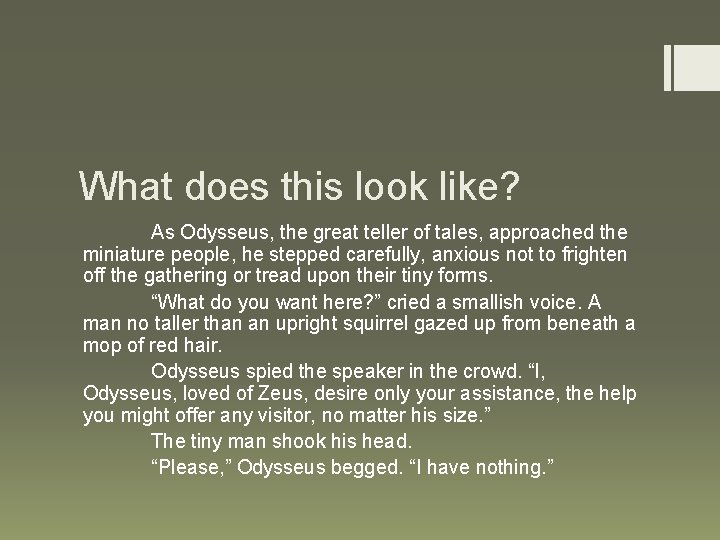
What does this look like? As Odysseus, the great teller of tales, approached the miniature people, he stepped carefully, anxious not to frighten off the gathering or tread upon their tiny forms. “What do you want here? ” cried a smallish voice. A man no taller than an upright squirrel gazed up from beneath a mop of red hair. Odysseus spied the speaker in the crowd. “I, Odysseus, loved of Zeus, desire only your assistance, the help you might offer any visitor, no matter his size. ” The tiny man shook his head. “Please, ” Odysseus begged. “I have nothing. ”
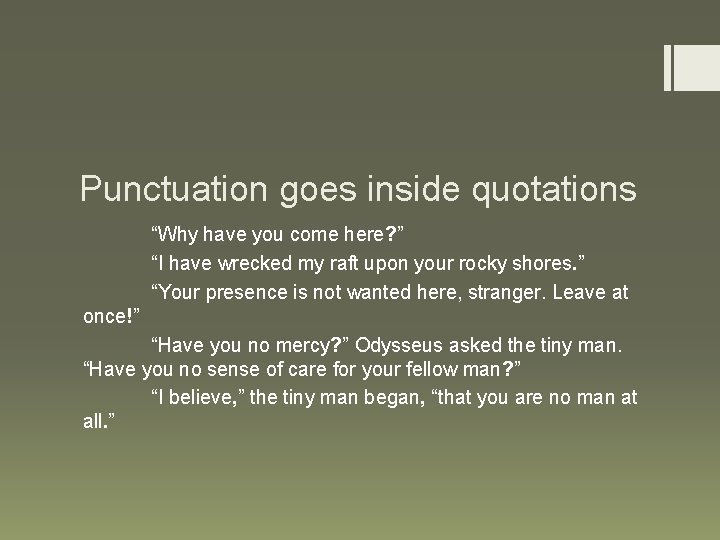
Punctuation goes inside quotations “Why have you come here? ” “I have wrecked my raft upon your rocky shores. ” “Your presence is not wanted here, stranger. Leave at once!” “Have you no mercy? ” Odysseus asked the tiny man. “Have you no sense of care for your fellow man? ” “I believe, ” the tiny man began, “that you are no man at all. ”
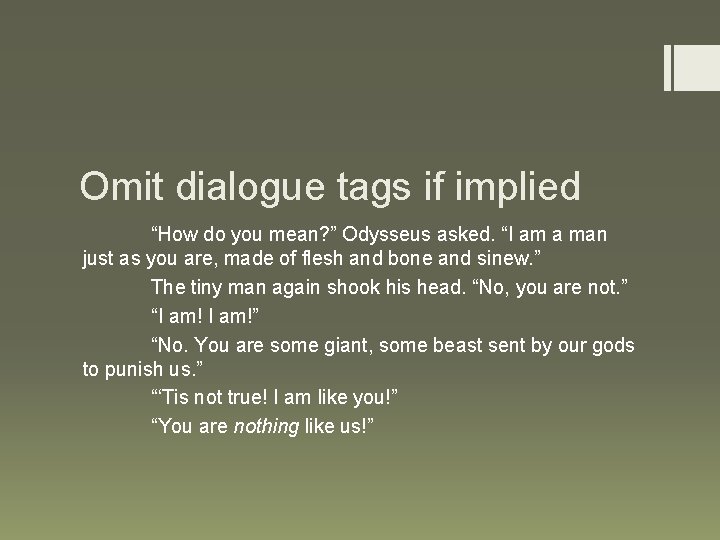
Omit dialogue tags if implied “How do you mean? ” Odysseus asked. “I am a man just as you are, made of flesh and bone and sinew. ” The tiny man again shook his head. “No, you are not. ” “I am!” “No. You are some giant, some beast sent by our gods to punish us. ” “‘Tis not true! I am like you!” “You are nothing like us!”
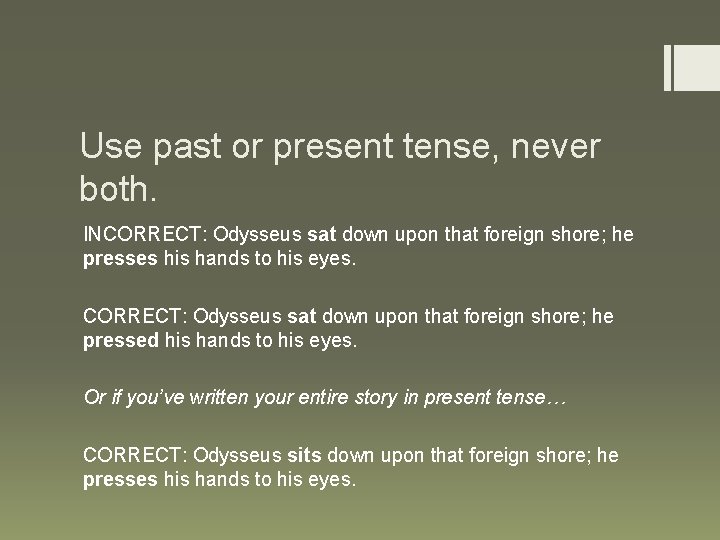
Use past or present tense, never both. INCORRECT: Odysseus sat down upon that foreign shore; he presses his hands to his eyes. CORRECT: Odysseus sat down upon that foreign shore; he pressed his hands to his eyes. Or if you’ve written your entire story in present tense… CORRECT: Odysseus sits down upon that foreign shore; he presses his hands to his eyes.
Show; don’t tell. Build your story by showing what happens instead of explaining it or summarizing. § Narrative (action) § Description (setting, characters) § Dialogue
Example #1: Telling Odysseus defused the situation by telling a joke.
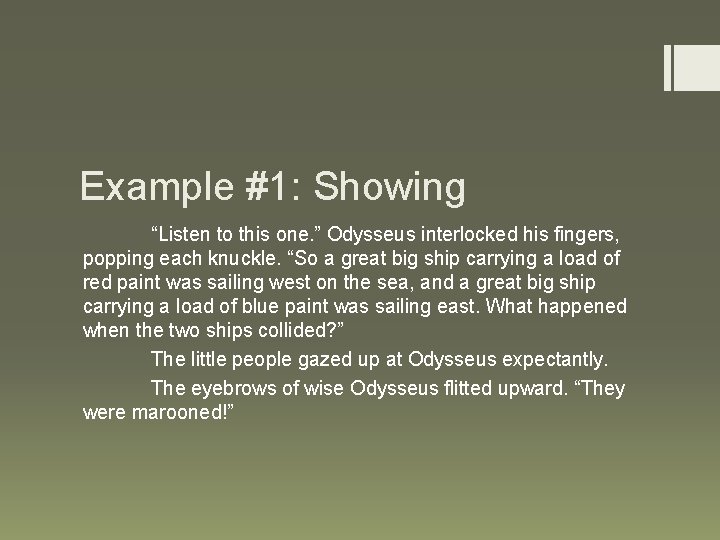
Example #1: Showing “Listen to this one. ” Odysseus interlocked his fingers, popping each knuckle. “So a great big ship carrying a load of red paint was sailing west on the sea, and a great big ship carrying a load of blue paint was sailing east. What happened when the two ships collided? ” The little people gazed up at Odysseus expectantly. The eyebrows of wise Odysseus flitted upward. “They were marooned!”
Example #2: Telling The little man did not think the joke was funny. He was angry.
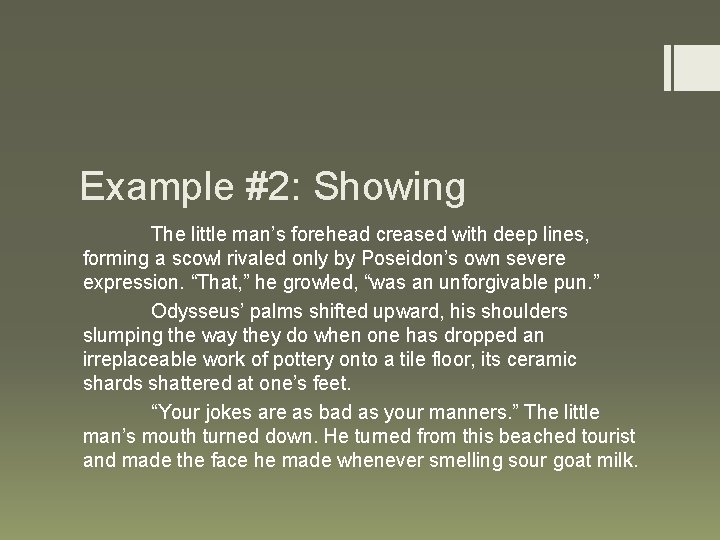
Example #2: Showing The little man’s forehead creased with deep lines, forming a scowl rivaled only by Poseidon’s own severe expression. “That, ” he growled, “was an unforgivable pun. ” Odysseus’ palms shifted upward, his shoulders slumping the way they do when one has dropped an irreplaceable work of pottery onto a tile floor, its ceramic shards shattered at one’s feet. “Your jokes are as bad as your manners. ” The little man’s mouth turned down. He turned from this beached tourist and made the face he made whenever smelling sour goat milk.