
Tin Terne Coated Steel Resistance Welding Lesson Objectives
Tin & Terne Coated Steel
Resistance Welding Lesson Objectives When you finish this lesson you will understand: • Keywords Learning Activities 1. View Slides; 2. Read Notes, 3. Listen to lecture 4. Do on-line workbook

Tin Plating • Hot Dipped • Electro-tin Plating Post Plating Treatment • Chromate • Painted
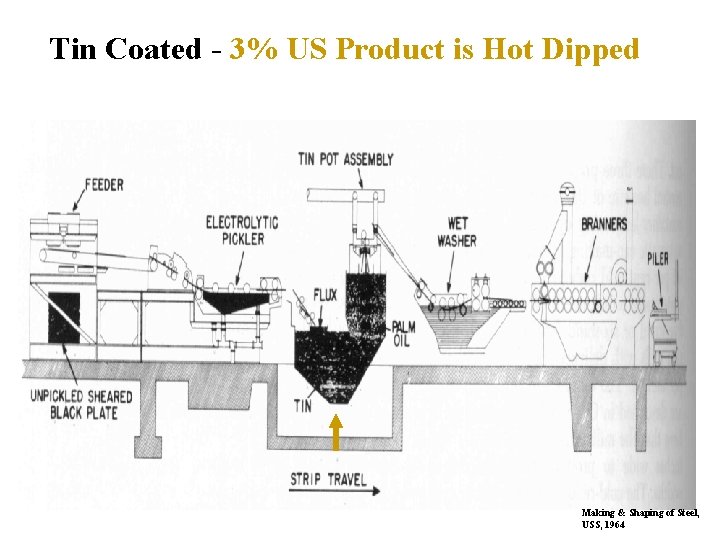
Tin Coated - 3% US Product is Hot Dipped Making & Shaping of Steel, USS, 1964
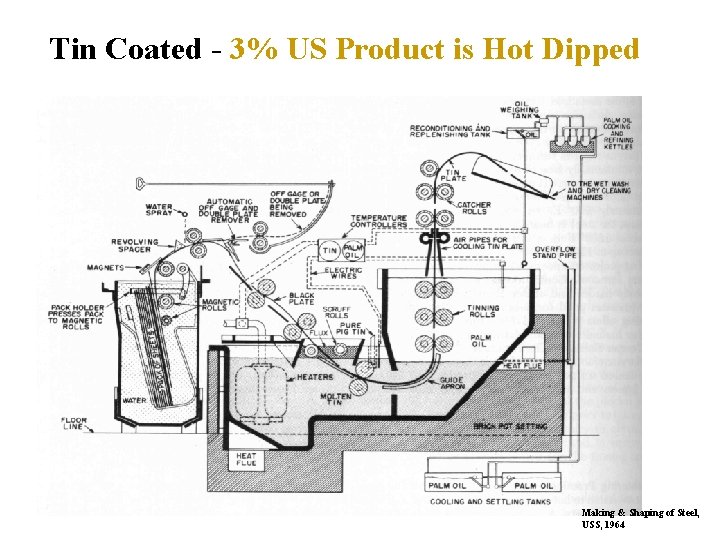
Tin Coated - 3% US Product is Hot Dipped Making & Shaping of Steel, USS, 1964
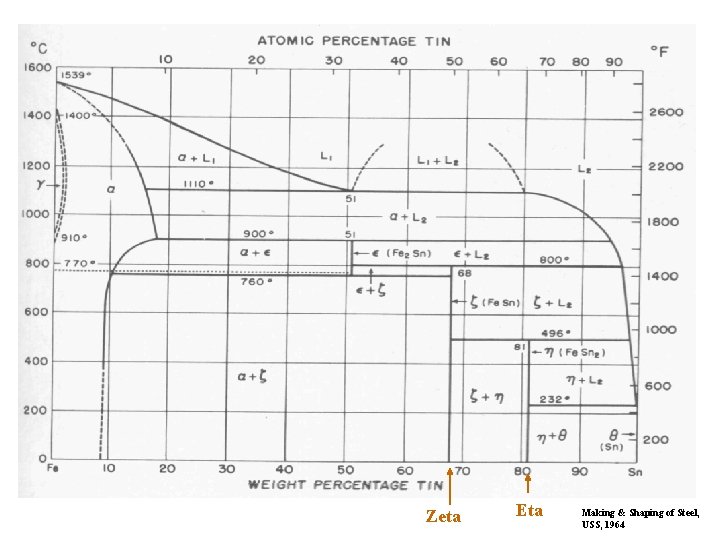
Zeta Eta Making & Shaping of Steel, USS, 1964
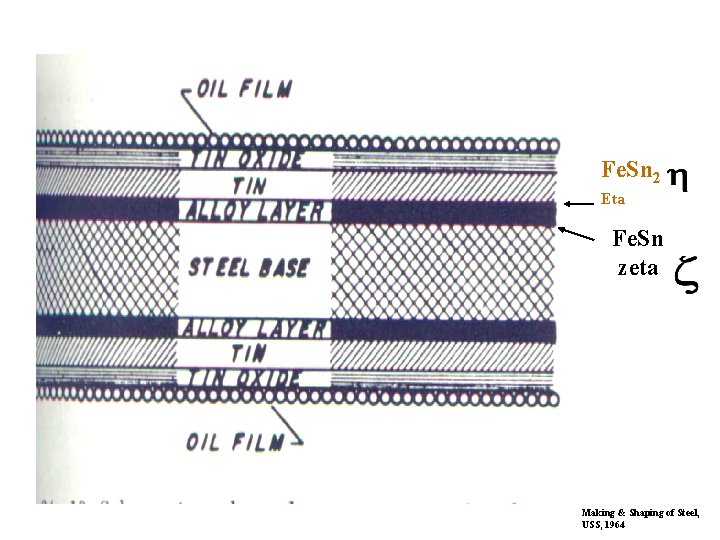
Fe. Sn 2 Eta Fe. Sn zeta Making & Shaping of Steel, USS, 1964
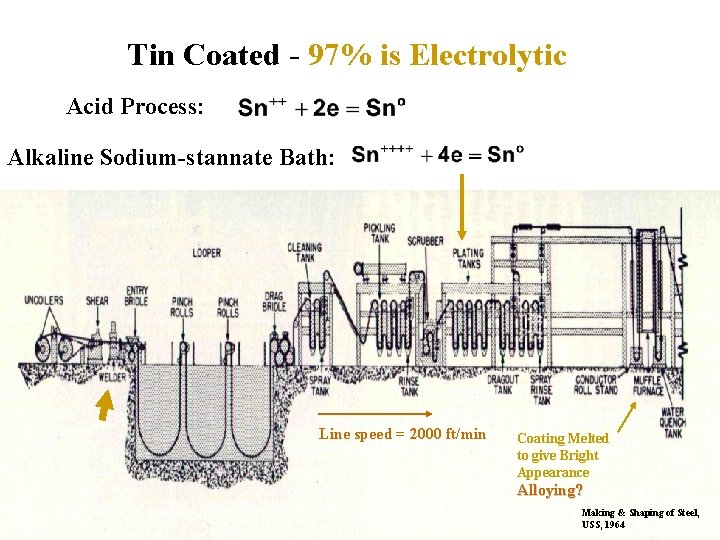
Tin Coated - 97% is Electrolytic Acid Process: Alkaline Sodium-stannate Bath: Line speed = 2000 ft/min Coating Melted to give Bright Appearance Alloying? Making & Shaping of Steel, USS, 1964
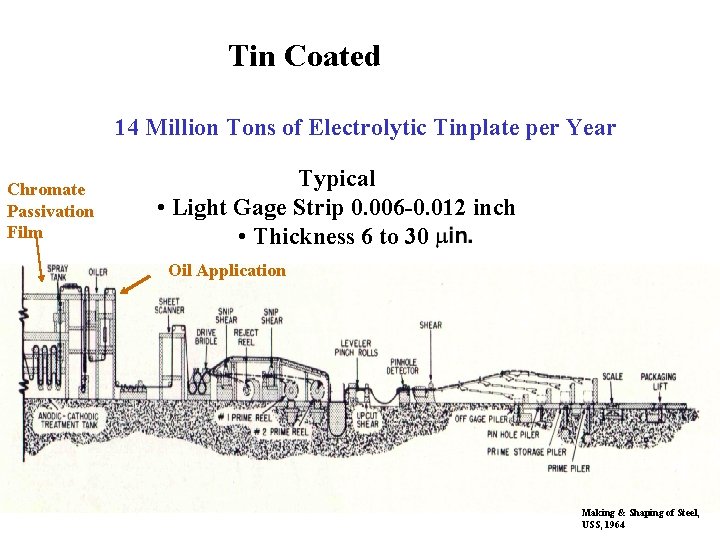
Tin Coated 14 Million Tons of Electrolytic Tinplate per Year Chromate Passivation Film Typical • Light Gage Strip 0. 006 -0. 012 inch • Thickness 6 to 30 Oil Application Making & Shaping of Steel, USS, 1964
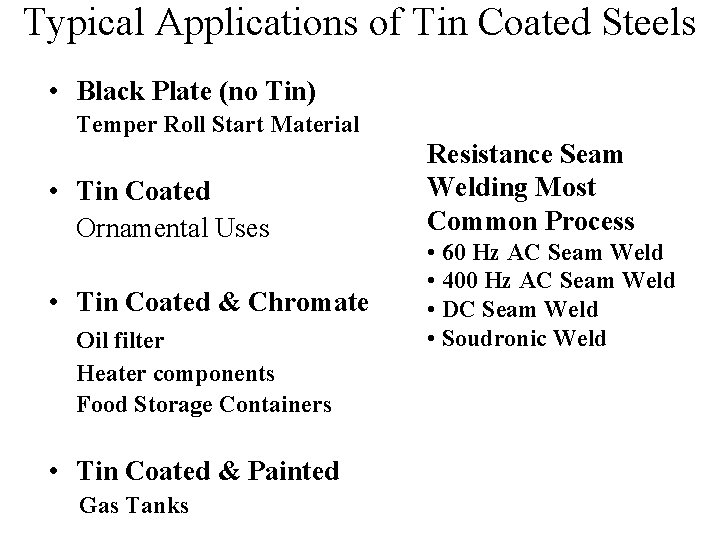
Typical Applications of Tin Coated Steels • Black Plate (no Tin) Temper Roll Start Material • Tin Coated Ornamental Uses • Tin Coated & Chromate Oil filter Heater components Food Storage Containers • Tin Coated & Painted Gas Tanks Resistance Seam Welding Most Common Process • 60 Hz AC Seam Weld • 400 Hz AC Seam Weld • DC Seam Weld • Soudronic Weld
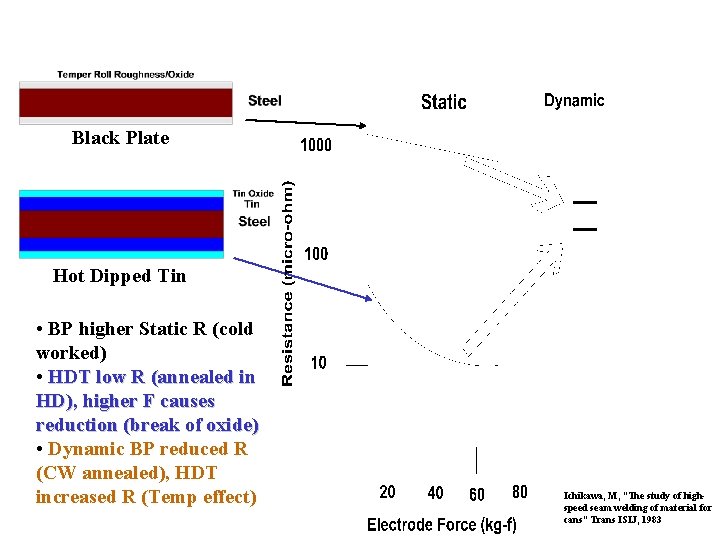
Black Plate Hot Dipped Tin • BP higher Static R (cold worked) • HDT low R (annealed in HD), higher F causes reduction (break of oxide) • Dynamic BP reduced R (CW annealed), HDT increased R (Temp effect) Ichikawa, M, “The study of highspeed seam welding of material for cans” Trans ISIJ, 1983
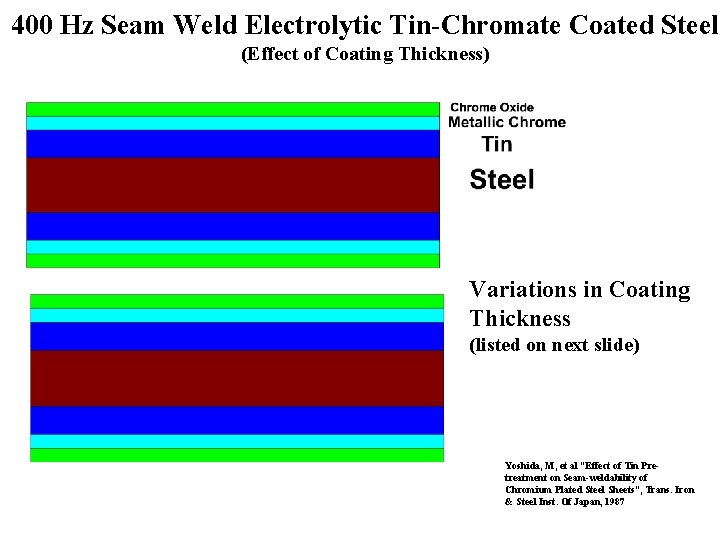
400 Hz Seam Weld Electrolytic Tin-Chromate Coated Steel (Effect of Coating Thickness) Variations in Coating Thickness (listed on next slide) Yoshida, M, et al “Effect of Tin Pretreatment on Seam-weldability of Chromium Plated Steel Sheets”, Trans. Iron & Steel Inst. Of Japan, 1987
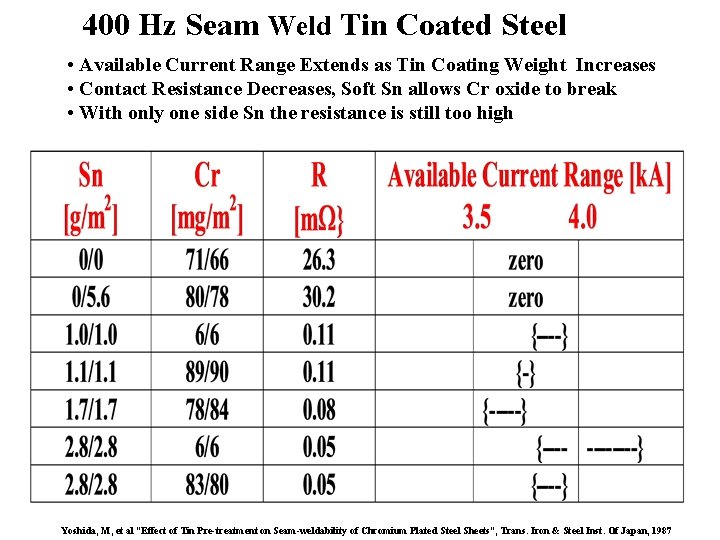
400 Hz Seam Weld Tin Coated Steel • Available Current Range Extends as Tin Coating Weight Increases • Contact Resistance Decreases, Soft Sn allows Cr oxide to break • With only one side Sn the resistance is still too high Yoshida, M, et al “Effect of Tin Pre-treatment on Seam-weldability of Chromium Plated Steel Sheets”, Trans. Iron & Steel Inst. Of Japan, 1987
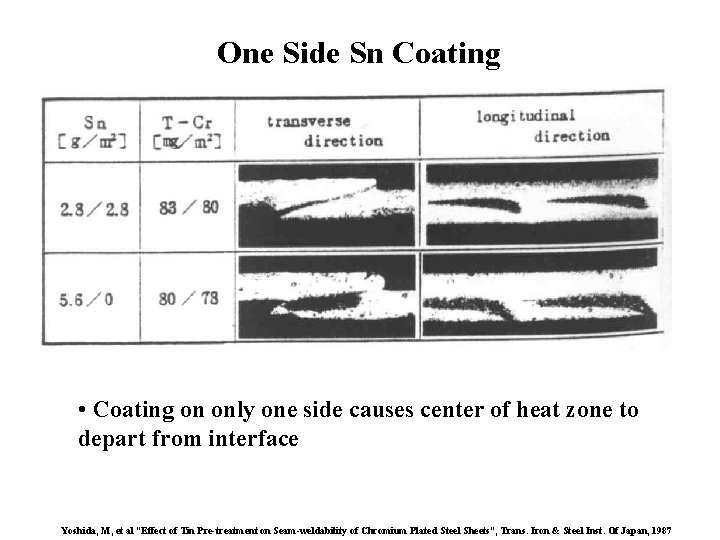
One Side Sn Coating • Coating on only one side causes center of heat zone to depart from interface Yoshida, M, et al “Effect of Tin Pre-treatment on Seam-weldability of Chromium Plated Steel Sheets”, Trans. Iron & Steel Inst. Of Japan, 1987
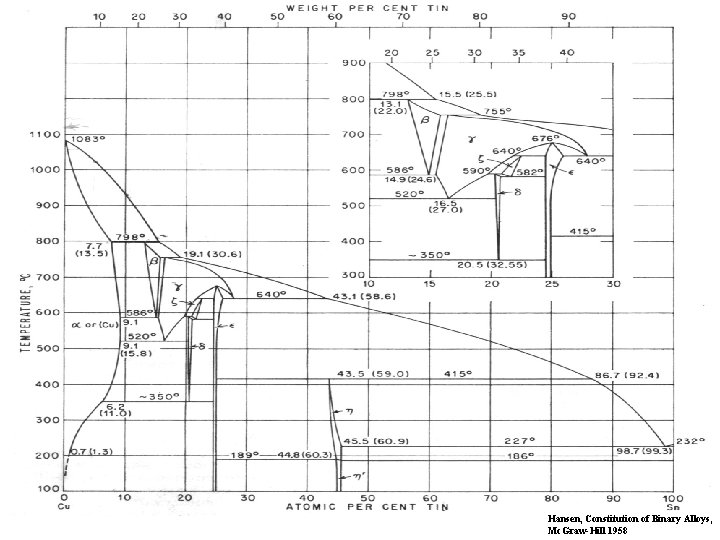
Hansen, Constitution of Binary Alloys, Mc. Graw-Hill 1958

Welding of Tinplate by Soudronic Welding of Cans A = Feeder B = Roll-Former C = Can Body Transfer D = Welding AWS Welding Handbook
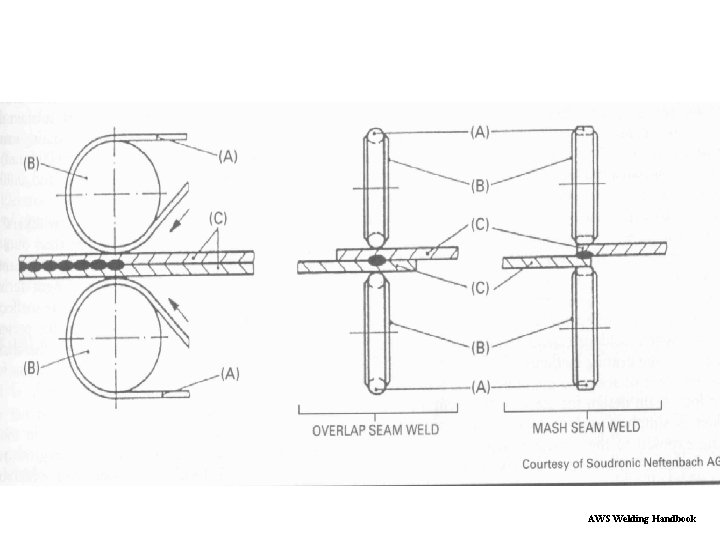
AWS Welding Handbook

Welding Problems with Tin Plated Steels To Assure Consistent Weldability of Tinplate, You Must Specify: • Base Metal Composition, thickness, temper, & surface finish • Coating Thickness & Reflow Process • Passivation Treatment • Oil Treatment

A Level of 0. 5% Tin in Weld Metal Can Cause Embrittlement
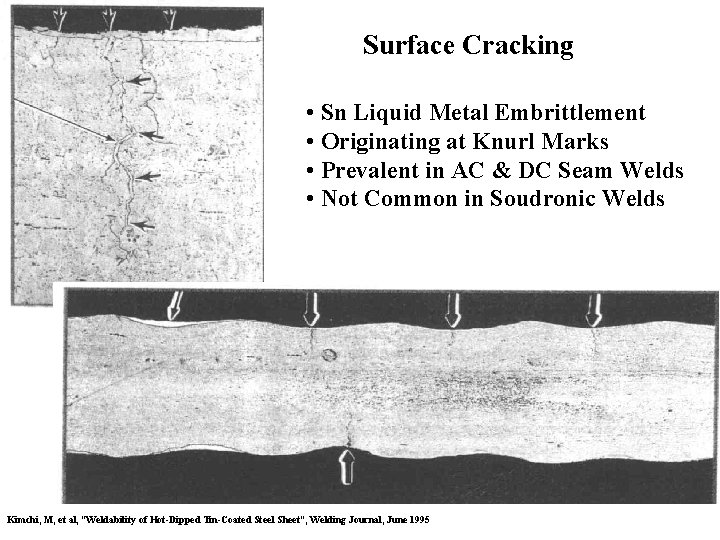
Surface Cracking • Sn Liquid Metal Embrittlement • Originating at Knurl Marks • Prevalent in AC & DC Seam Welds • Not Common in Soudronic Welds Kimchi, M, et al, “Weldability of Hot-Dipped Tin-Coated Steel Sheet”, Welding Journal, June 1995

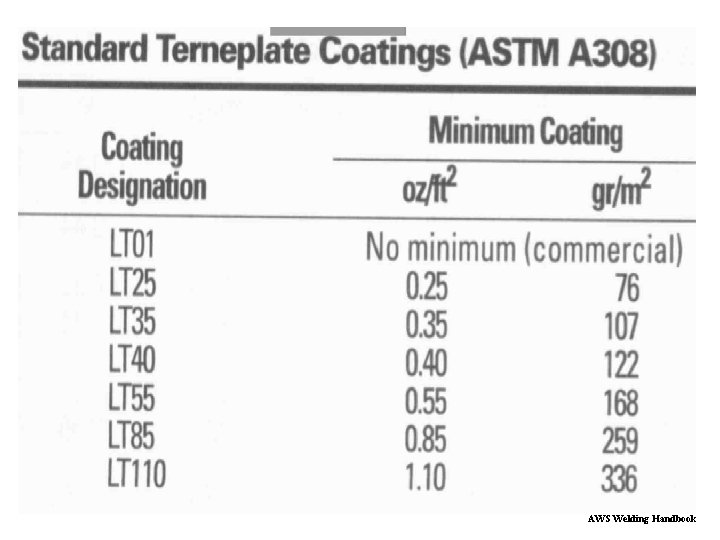
Terne Coating Clean Sheet Travel Speed Controls Thickness Palm Oil Terne Metal 80%Pb - 20%Sn (3 -20%) 620 - 680 F (Pb Insoluble in Fe, Sn helps wet)
AWS Welding Handbook

Typical Applications of Terne Coated Steels • Long Terne Gas tanks Fuel lines Brake lines Radiator parts Heater parts Air cleaners
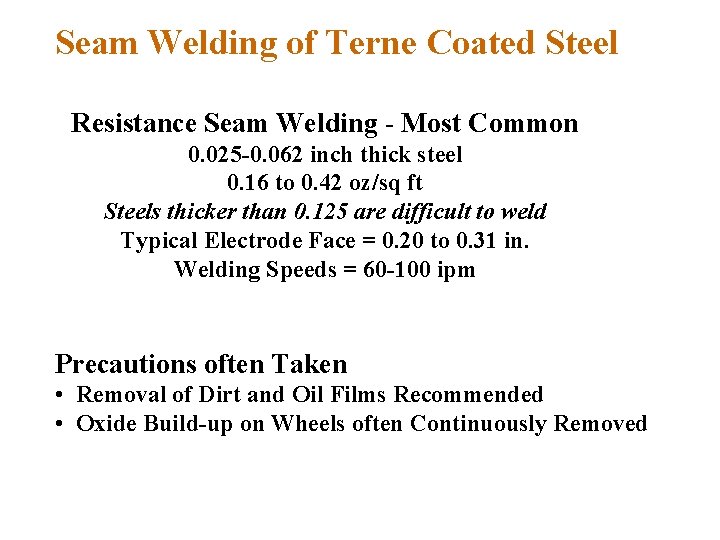
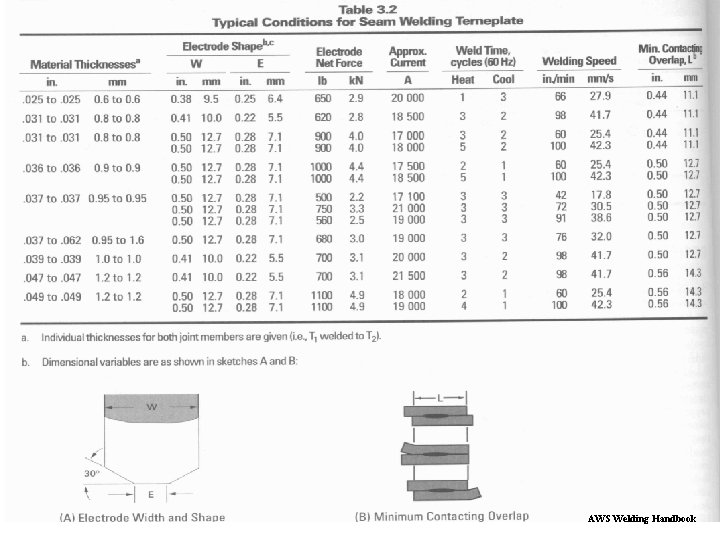
Seam Welding of Terne Coated Steel Resistance Seam Welding - Most Common 0. 025 -0. 062 inch thick steel 0. 16 to 0. 42 oz/sq ft Steels thicker than 0. 125 are difficult to weld Typical Electrode Face = 0. 20 to 0. 31 in. Welding Speeds = 60 -100 ipm Precautions often Taken • Removal of Dirt and Oil Films Recommended • Oxide Build-up on Wheels often Continuously Removed
AWS Welding Handbook
Electrode Wear Greer H, Begeman M, “Resistance Seam Welding of Terne Plate” Welding Journal, June 1960
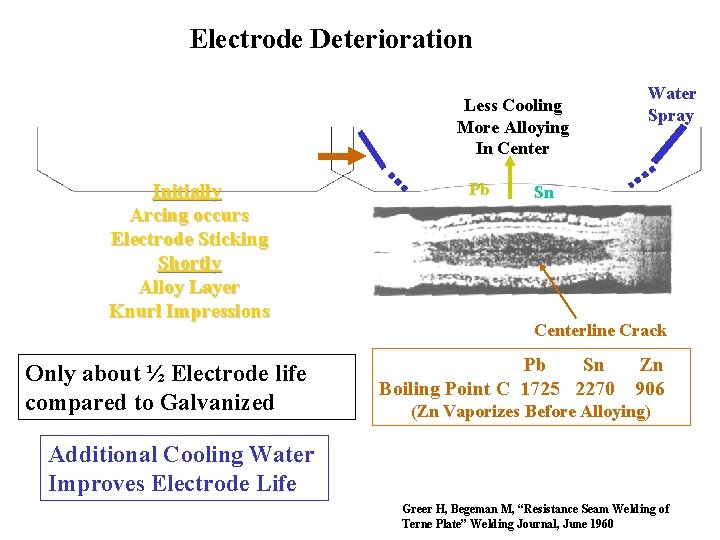
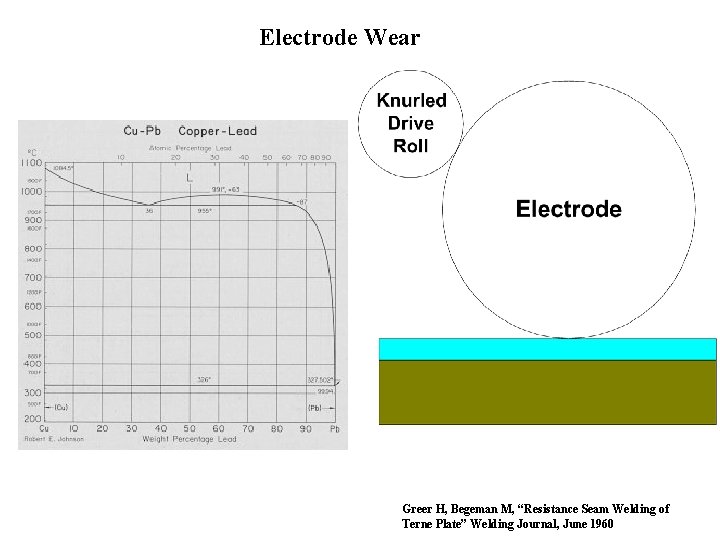
Electrode Deterioration Less Cooling More Alloying In Center Initially Arcing occurs Electrode Sticking Shortly Alloy Layer Knurl Impressions Only about ½ Electrode life compared to Galvanized Pb Water Spray Sn Centerline Crack Pb Sn Boiling Point C 1725 2270 Zn 906 (Zn Vaporizes Before Alloying) Additional Cooling Water Improves Electrode Life Greer H, Begeman M, “Resistance Seam Welding of Terne Plate” Welding Journal, June 1960
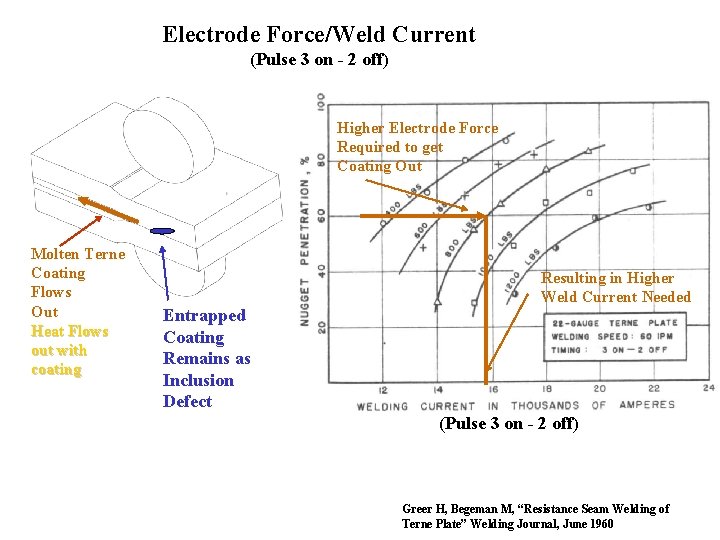
Electrode Force/Weld Current (Pulse 3 on - 2 off) Higher Electrode Force Required to get Coating Out Molten Terne Coating Flows Out Heat Flows out with coating Entrapped Coating Remains as Inclusion Defect Resulting in Higher Weld Current Needed (Pulse 3 on - 2 off) Greer H, Begeman M, “Resistance Seam Welding of Terne Plate” Welding Journal, June 1960
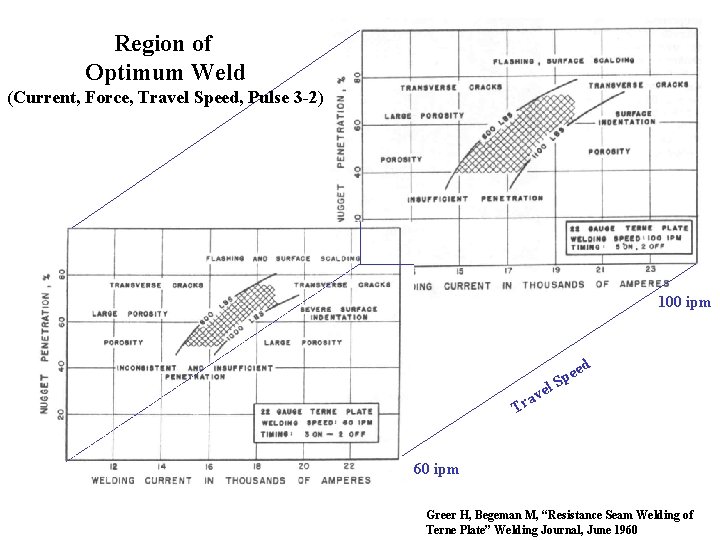
Region of Optimum Weld (Current, Force, Travel Speed, Pulse 3 -2) 100 ipm el av Tr ed e Sp 60 ipm Greer H, Begeman M, “Resistance Seam Welding of Terne Plate” Welding Journal, June 1960

Current Range as a Function of Gage Greer H, Begeman M, “Resistance Seam Welding of Terne Plate” Welding Journal, June 1960
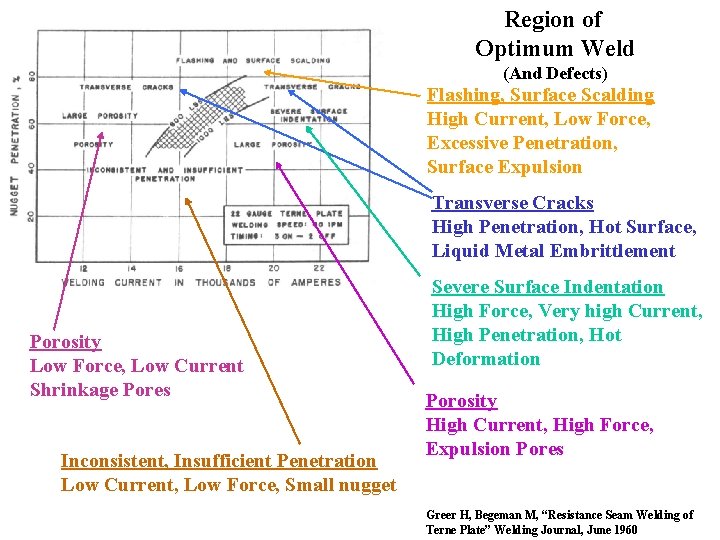
Region of Optimum Weld (And Defects) Flashing, Surface Scalding High Current, Low Force, Excessive Penetration, Surface Expulsion Transverse Cracks High Penetration, Hot Surface, Liquid Metal Embrittlement Porosity Low Force, Low Current Shrinkage Pores Inconsistent, Insufficient Penetration Low Current, Low Force, Small nugget Severe Surface Indentation High Force, Very high Current, High Penetration, Hot Deformation Porosity High Current, High Force, Expulsion Pores Greer H, Begeman M, “Resistance Seam Welding of Terne Plate” Welding Journal, June 1960
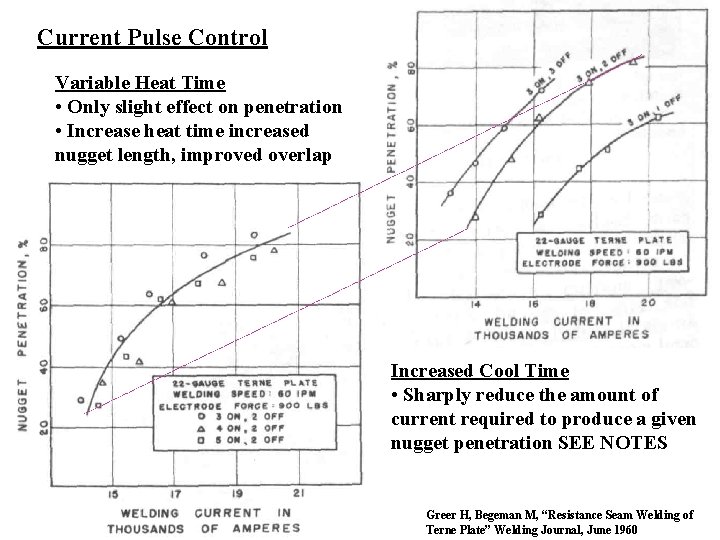
Current Pulse Control Variable Heat Time • Only slight effect on penetration • Increase heat time increased nugget length, improved overlap Increased Cool Time • Sharply reduce the amount of current required to produce a given nugget penetration SEE NOTES Greer H, Begeman M, “Resistance Seam Welding of Terne Plate” Welding Journal, June 1960
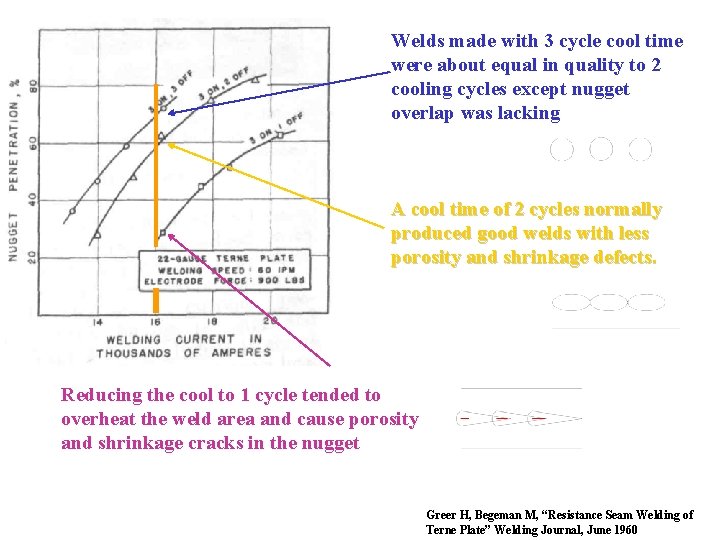
Welds made with 3 cycle cool time were about equal in quality to 2 cooling cycles except nugget overlap was lacking A cool time of 2 cycles normally produced good welds with less porosity and shrinkage defects. Reducing the cool to 1 cycle tended to overheat the weld area and cause porosity and shrinkage cracks in the nugget Greer H, Begeman M, “Resistance Seam Welding of Terne Plate” Welding Journal, June 1960
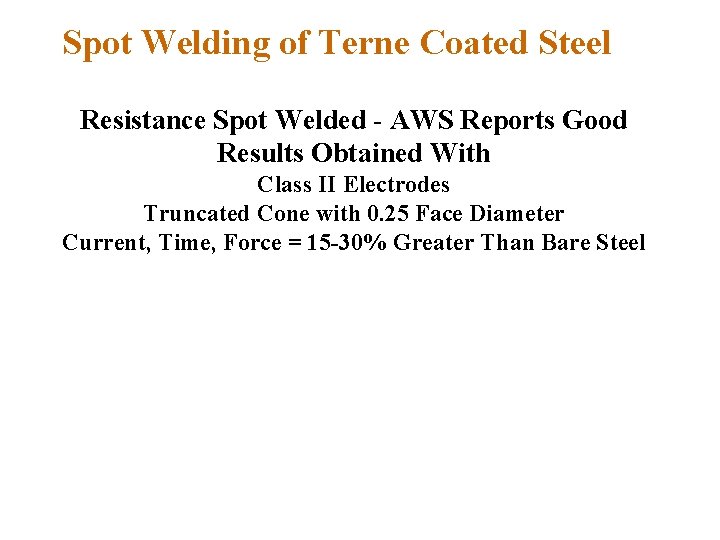
Spot Welding of Terne Coated Steel Resistance Spot Welded - AWS Reports Good Results Obtained With Class II Electrodes Truncated Cone with 0. 25 Face Diameter Current, Time, Force = 15 -30% Greater Than Bare Steel
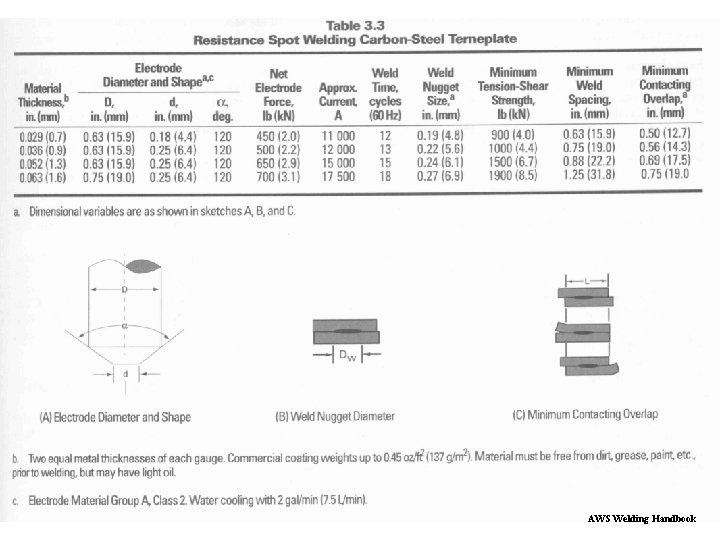
AWS Welding Handbook

Some Comparisons Between Tin and Terne Welding
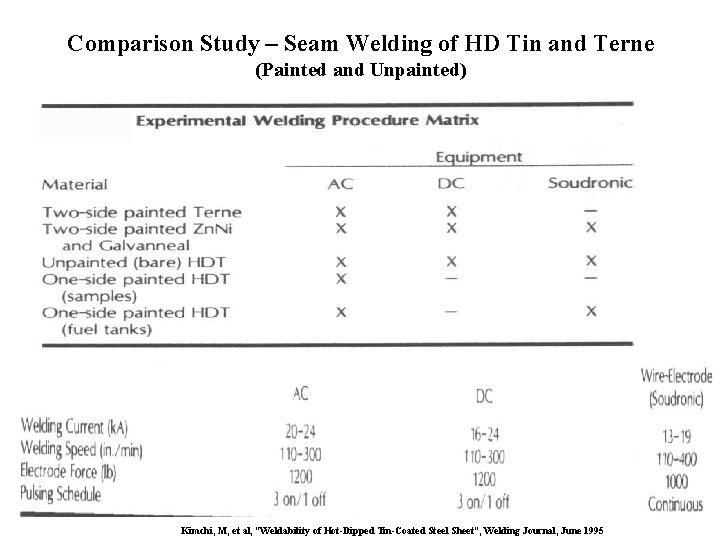
Comparison Study – Seam Welding of HD Tin and Terne (Painted and Unpainted) Kimchi, M, et al, “Weldability of Hot-Dipped Tin-Coated Steel Sheet”, Welding Journal, June 1995
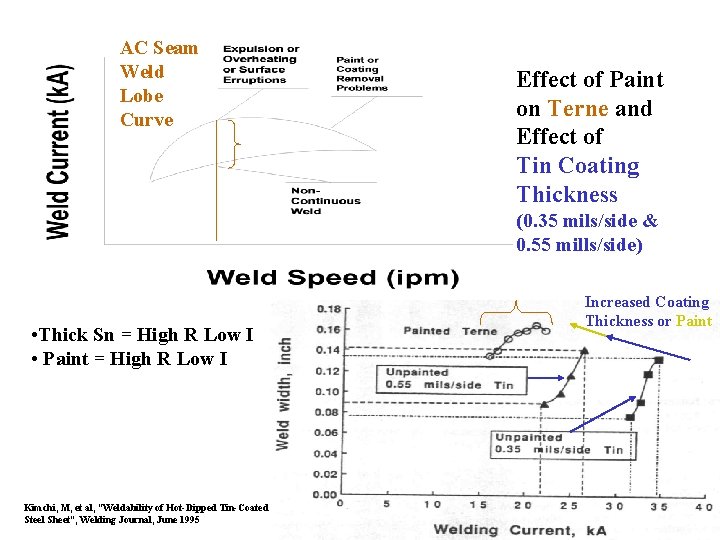
AC Seam Weld Lobe Curve Effect of Paint on Terne and Effect of Tin Coating Thickness (0. 35 mils/side & 0. 55 mills/side) • Thick Sn = High R Low I • Paint = High R Low I Kimchi, M, et al, “Weldability of Hot-Dipped Tin-Coated Steel Sheet”, Welding Journal, June 1995 Increased Coating Thickness or Paint
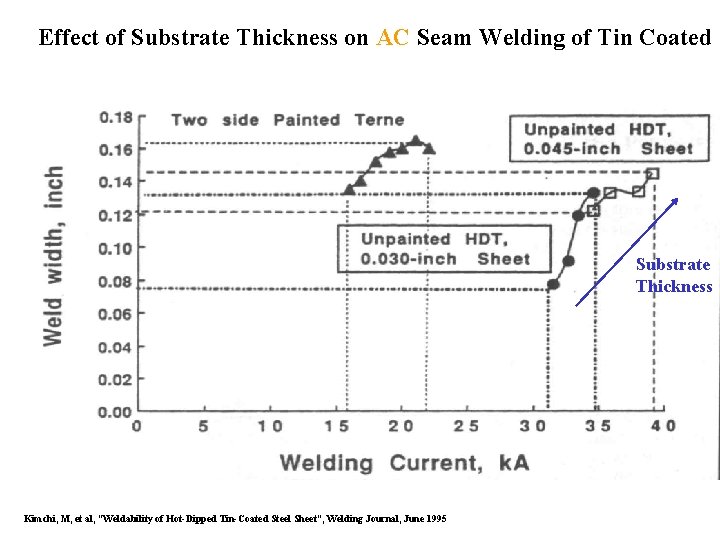
Effect of Substrate Thickness on AC Seam Welding of Tin Coated Substrate Thickness Kimchi, M, et al, “Weldability of Hot-Dipped Tin-Coated Steel Sheet”, Welding Journal, June 1995
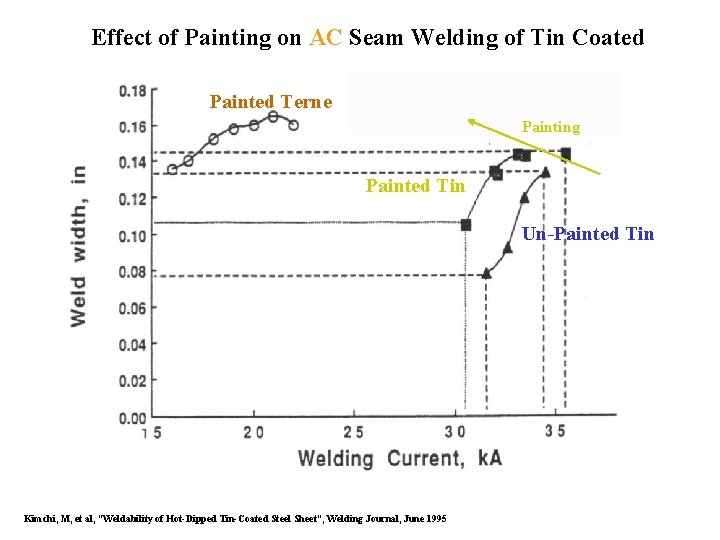
Effect of Painting on AC Seam Welding of Tin Coated Painted Terne Painting Painted Tin Un-Painted Tin Kimchi, M, et al, “Weldability of Hot-Dipped Tin-Coated Steel Sheet”, Welding Journal, June 1995
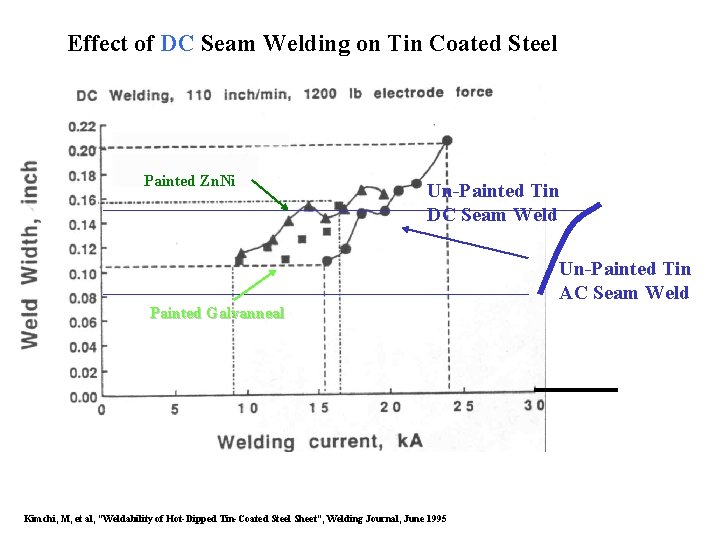
Effect of DC Seam Welding on Tin Coated Steel Painted Zn. Ni Un-Painted Tin DC Seam Weld Un-Painted Tin AC Seam Weld Painted Galvanneal Kimchi, M, et al, “Weldability of Hot-Dipped Tin-Coated Steel Sheet”, Welding Journal, June 1995
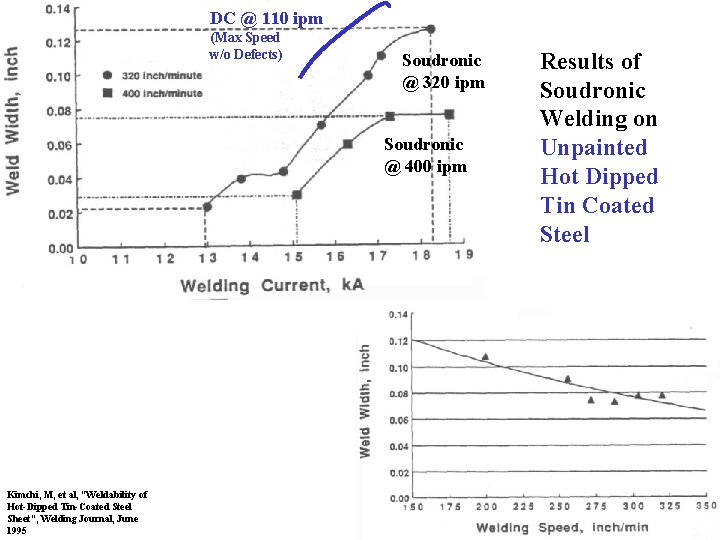
DC @ 110 ipm (Max Speed w/o Defects) Soudronic @ 320 ipm Soudronic @ 400 ipm Kimchi, M, et al, “Weldability of Hot-Dipped Tin-Coated Steel Sheet”, Welding Journal, June 1995 Results of Soudronic Welding on Unpainted Hot Dipped Tin Coated Steel

- Slides: 43