
Timeline Sumeria Egypt 3500 Sumerian city states form
- Slides: 48
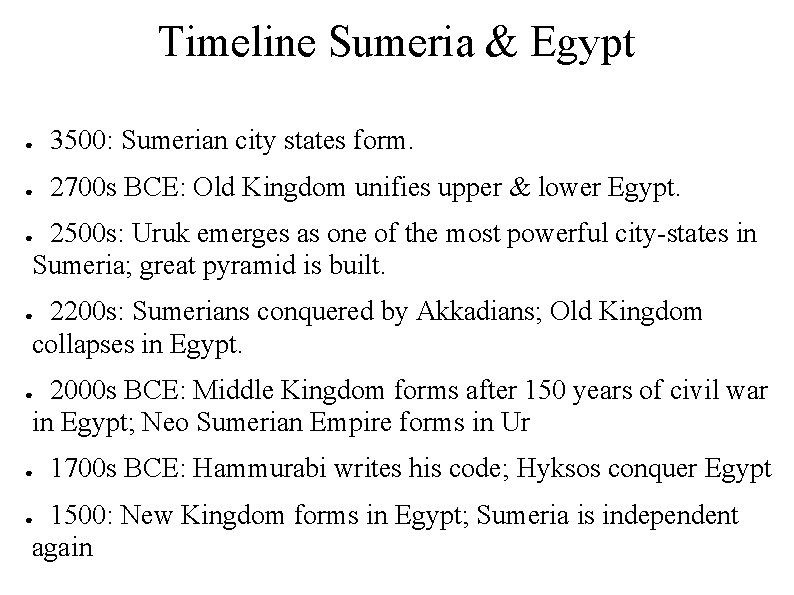
Timeline Sumeria & Egypt ● 3500: Sumerian city states form. ● 2700 s BCE: Old Kingdom unifies upper & lower Egypt. 2500 s: Uruk emerges as one of the most powerful city-states in Sumeria; great pyramid is built. ● 2200 s: Sumerians conquered by Akkadians; Old Kingdom collapses in Egypt. ● 2000 s BCE: Middle Kingdom forms after 150 years of civil war in Egypt; Neo Sumerian Empire forms in Ur ● ● 1700 s BCE: Hammurabi writes his code; Hyksos conquer Egypt 1500: New Kingdom forms in Egypt; Sumeria is independent again ●
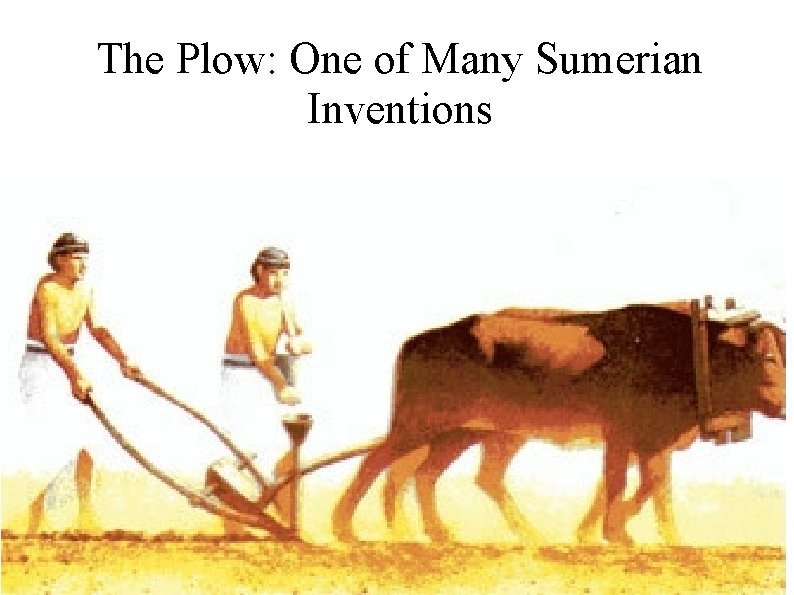
The Plow: One of Many Sumerian Inventions
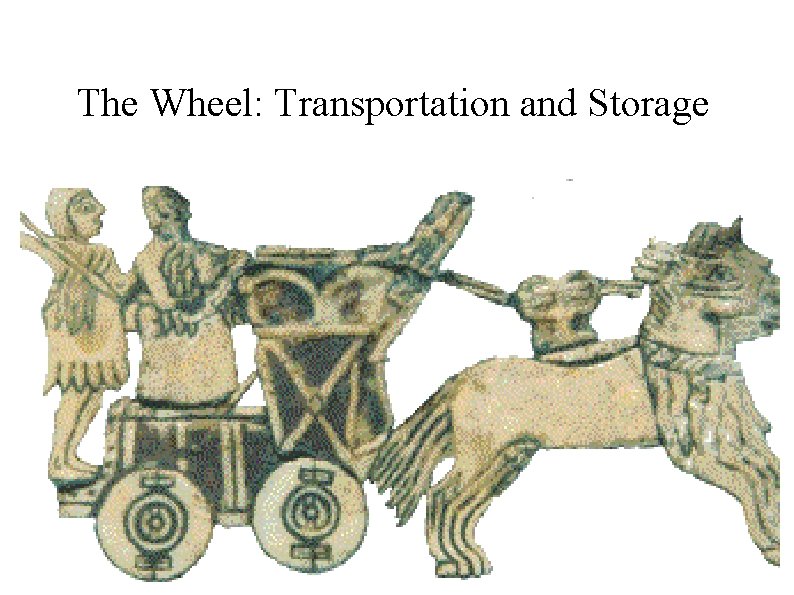
The Wheel: Transportation and Storage
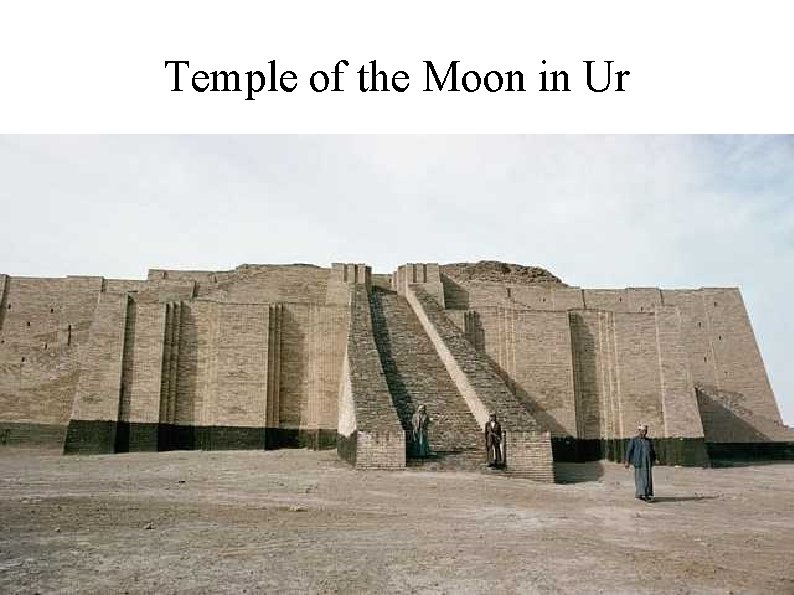
Temple of the Moon in Ur
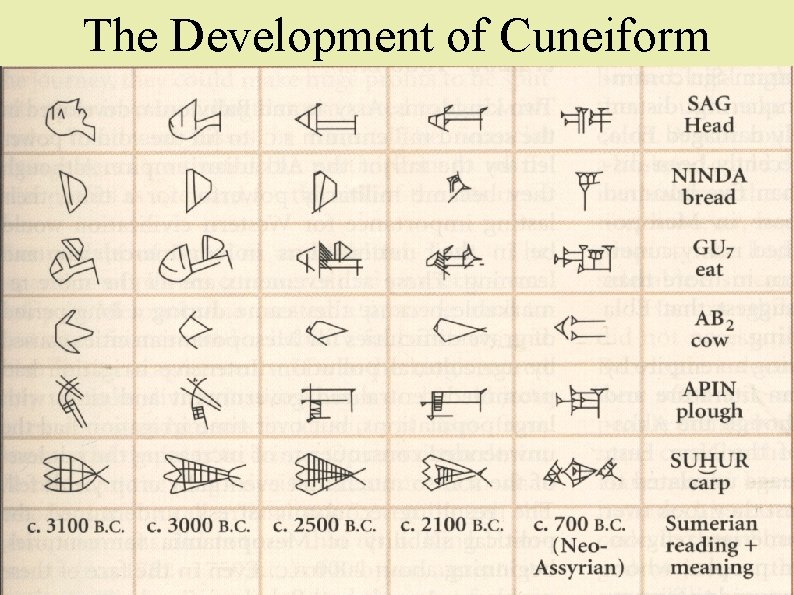
The Development of Cuneiform
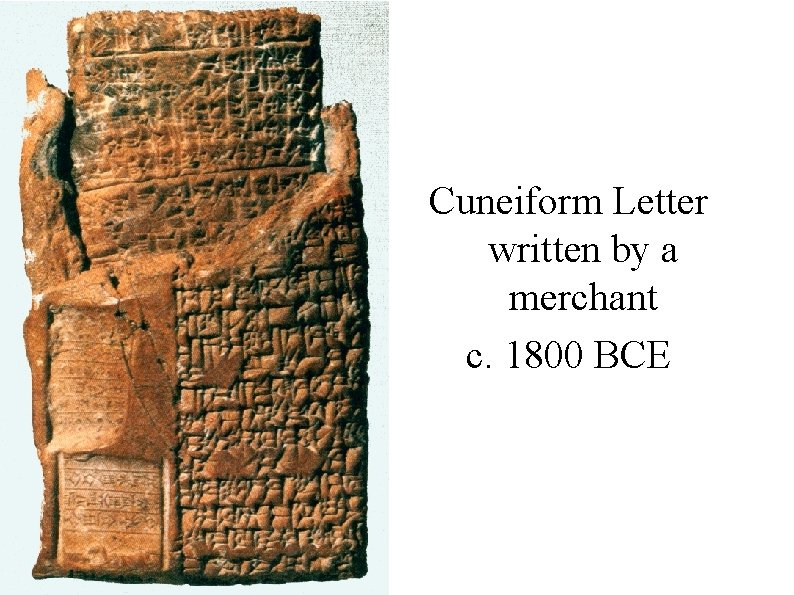
Cuneiform Letter written by a merchant c. 1800 BCE
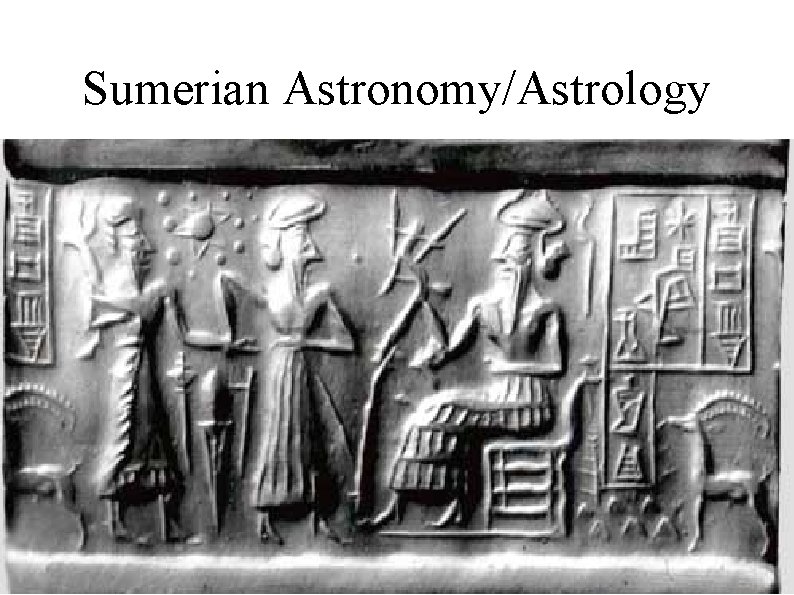
Sumerian Astronomy/Astrology
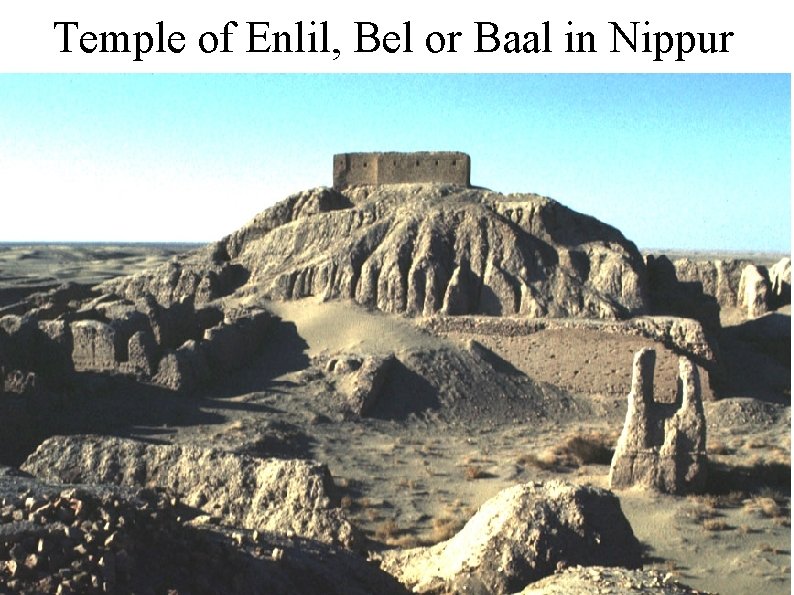
Temple of Enlil, Bel or Baal in Nippur
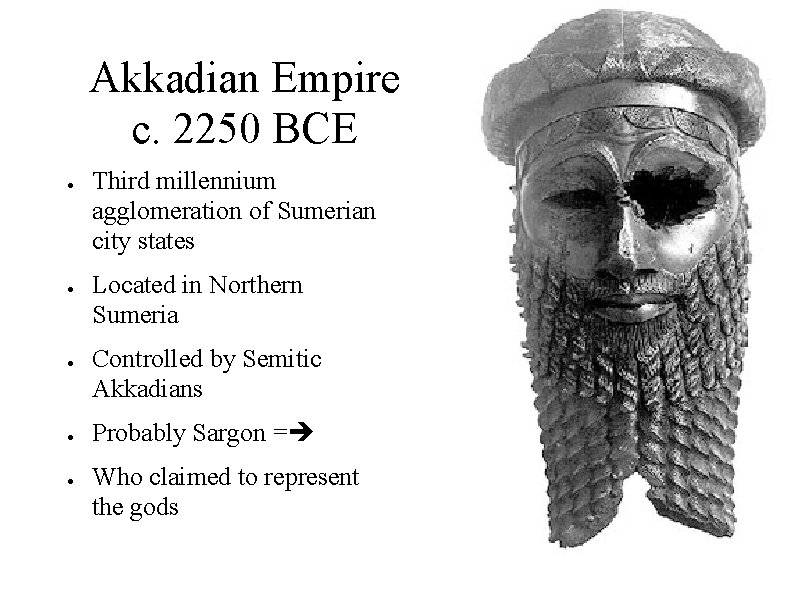
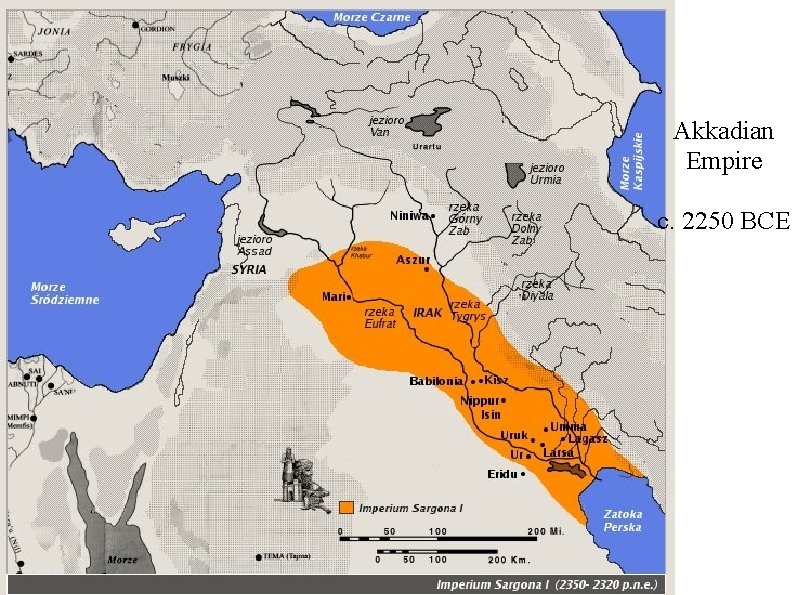
Akkadian Empire c. 2250 BCE ● ● ● Third millennium agglomeration of Sumerian city states Located in Northern Sumeria Controlled by Semitic Akkadians Probably Sargon = Who claimed to represent the gods
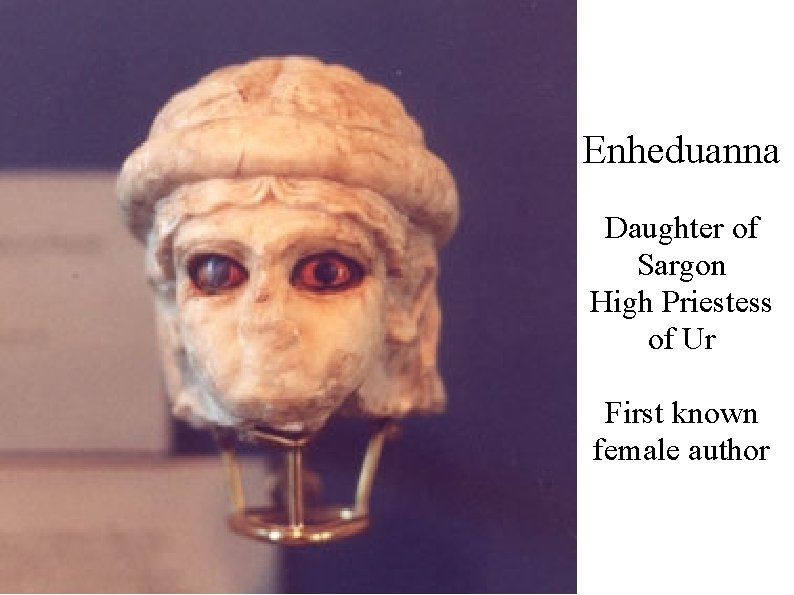
Enheduanna Daughter of Sargon High Priestess of Ur First known female author
Akkadian Empire c. 2250 BCE
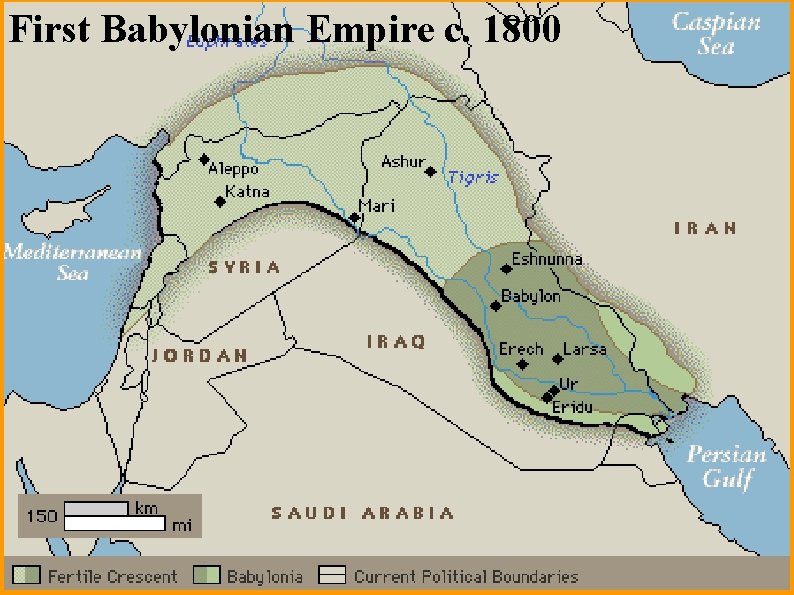
First Babylonian Empire c. 1800
Discuss Hammurabi’s Code ● ● ● Why was a written legal code an important innovation? What other civilizations tended to have written codes? Why would a ruler want to avoid putting down laws in writing?
Why did Hammurabi write the code according to the introduction to his code? Did the items in the code reinforce these stated purposes? What types of punishments did the code employ? What type of society was evident in the Code of Hammurabi?
Why did Hammurabi write his code? A. To protect the weak B. Because the gods asked him to C. To destroy the wicked D. To bring about righteousness E. All of the above
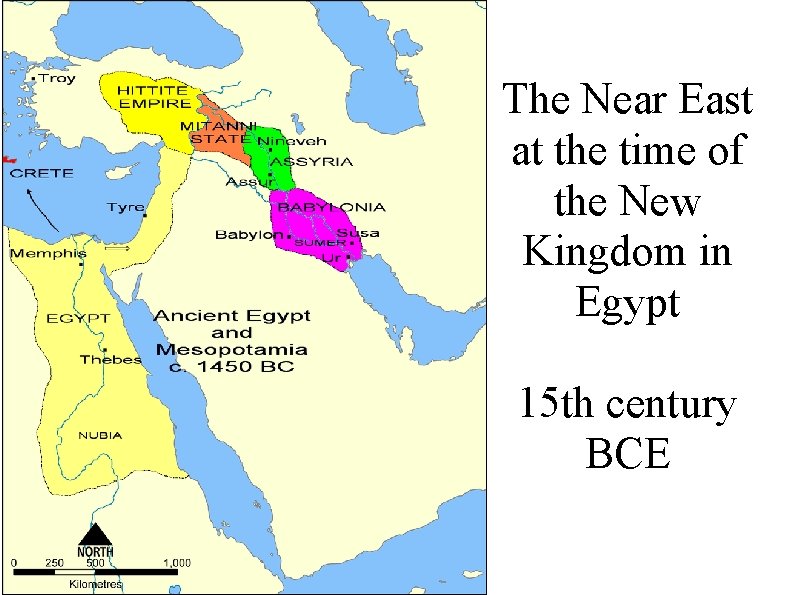
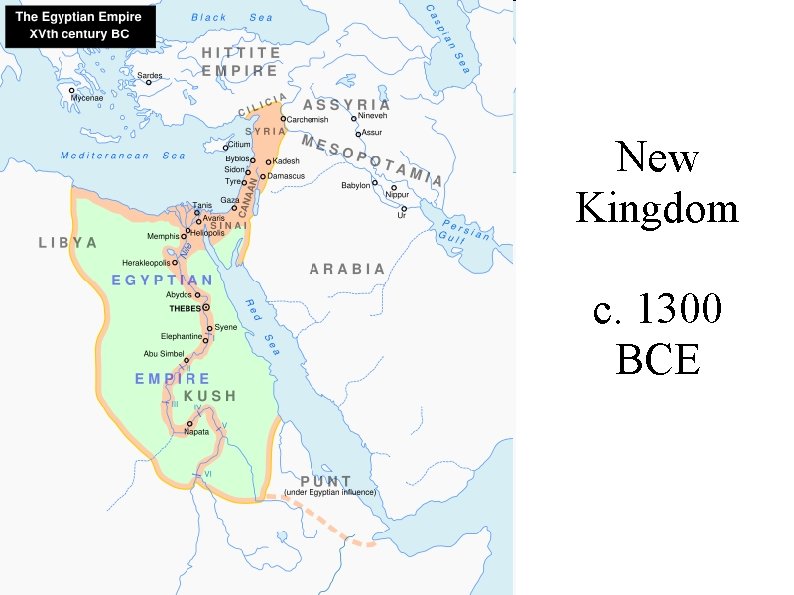
The Near East at the time of the New Kingdom in Egypt 15 th century BCE
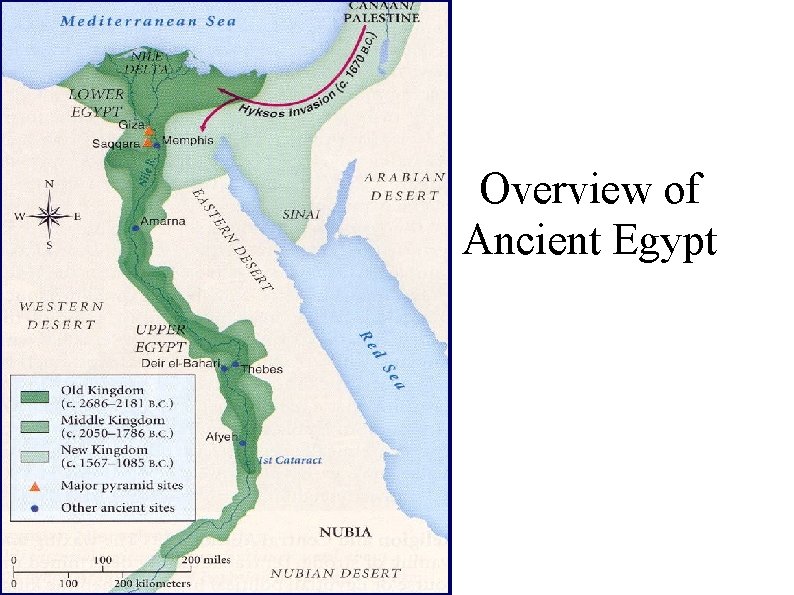
Overview of Ancient Egypt
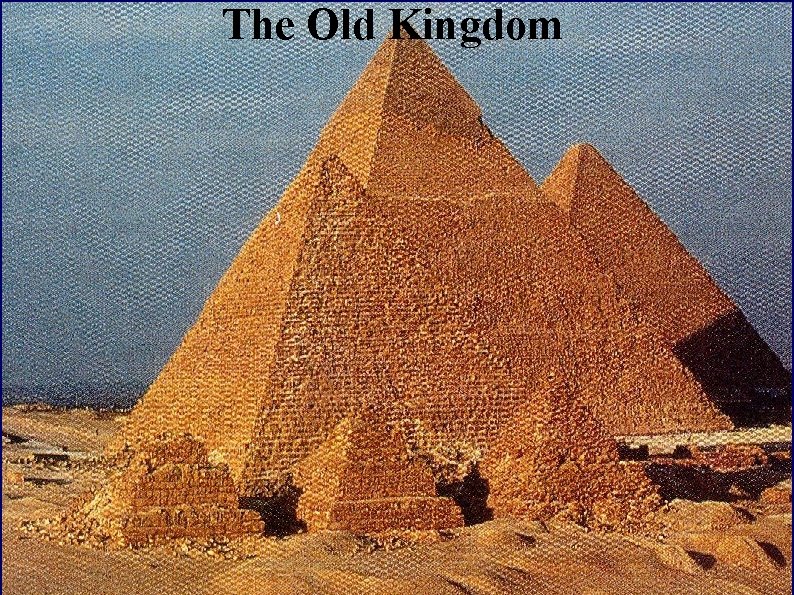
The Old Kingdom
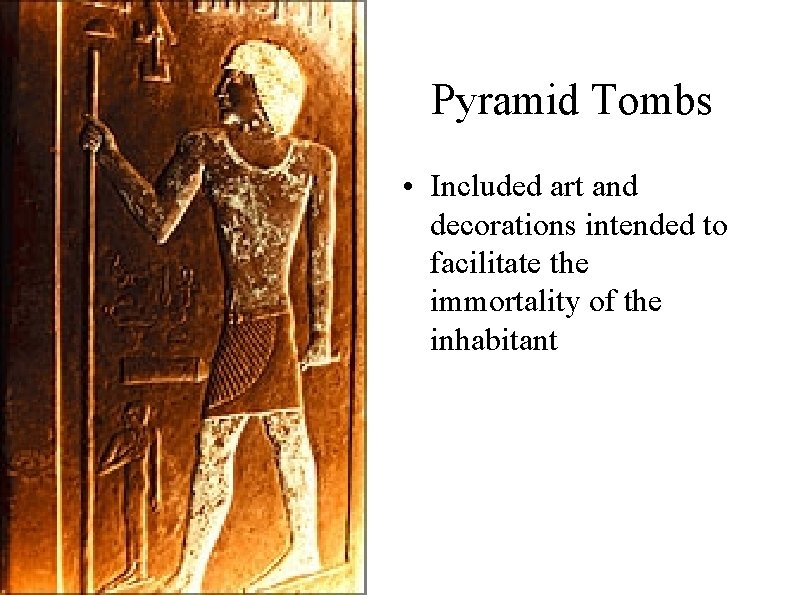
Pyramid Tombs • Included art and decorations intended to facilitate the immortality of the inhabitant
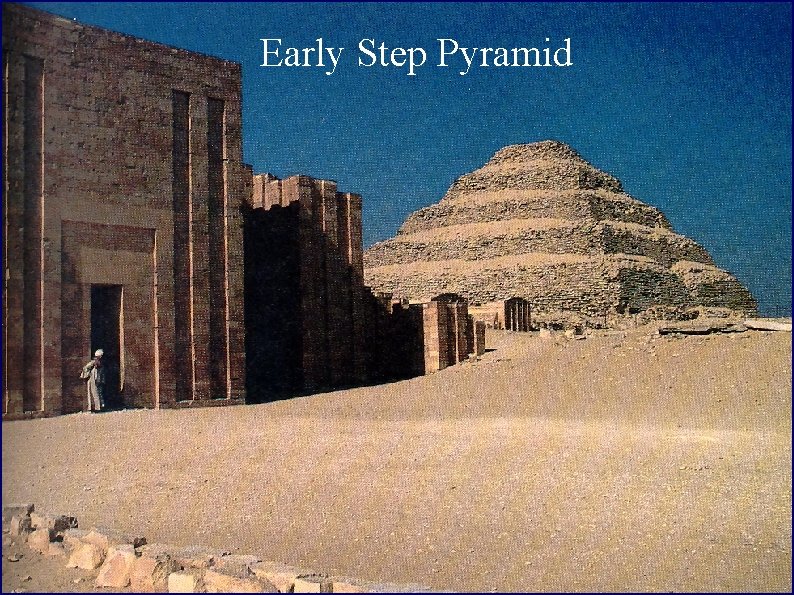
Early Step Pyramid
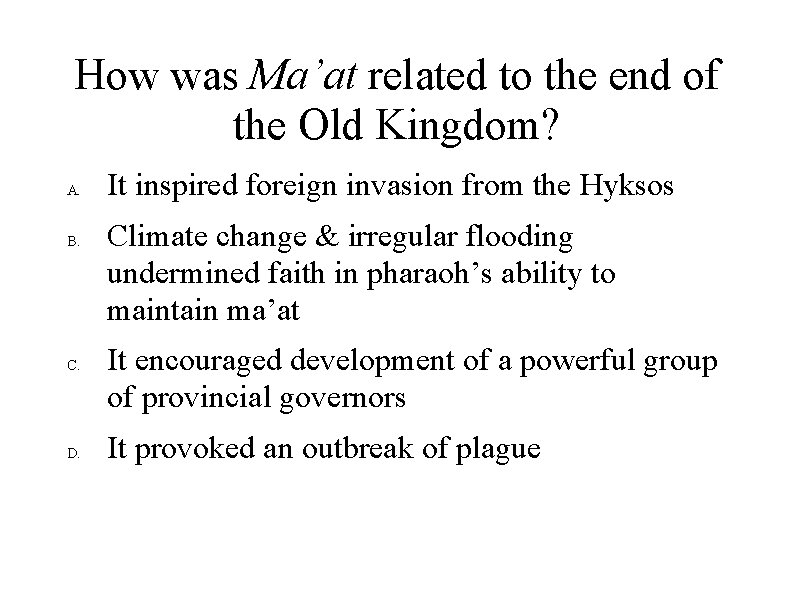
How was Ma’at related to the end of the Old Kingdom? A. B. C. D. It inspired foreign invasion from the Hyksos Climate change & irregular flooding undermined faith in pharaoh’s ability to maintain ma’at It encouraged development of a powerful group of provincial governors It provoked an outbreak of plague
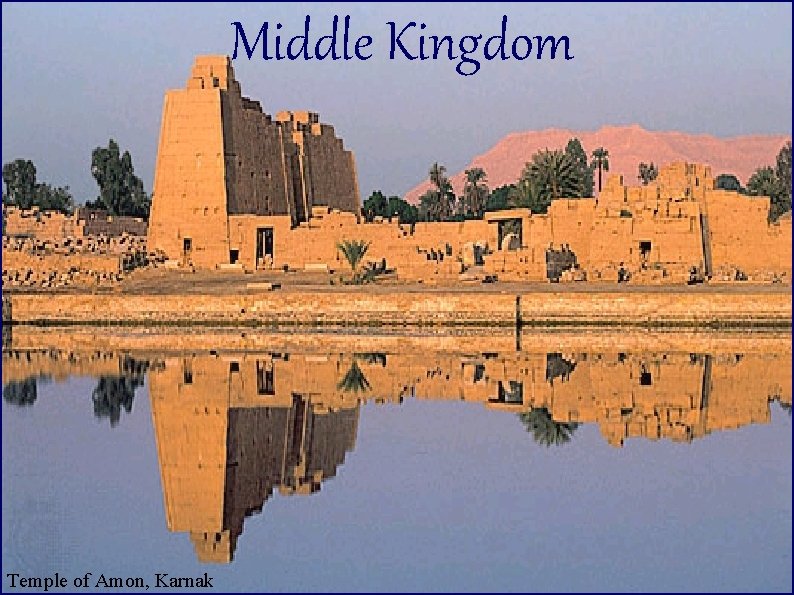
Middle Kingdom Temple of Amon, Karnak
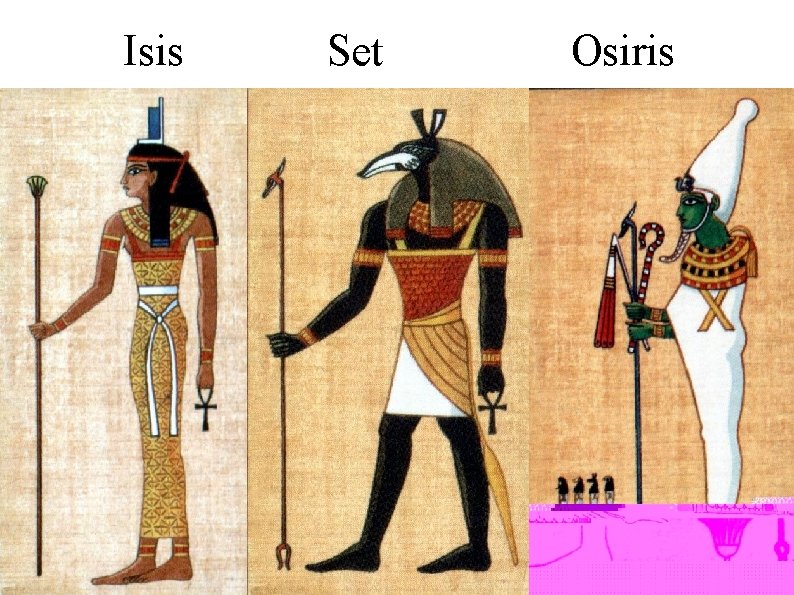
Isis Set Osiris
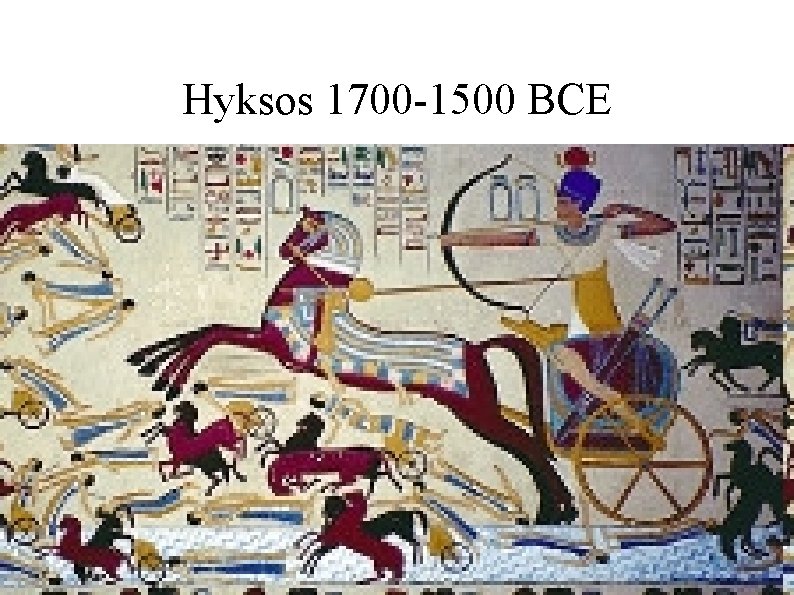
Hyksos 1700 -1500 BCE
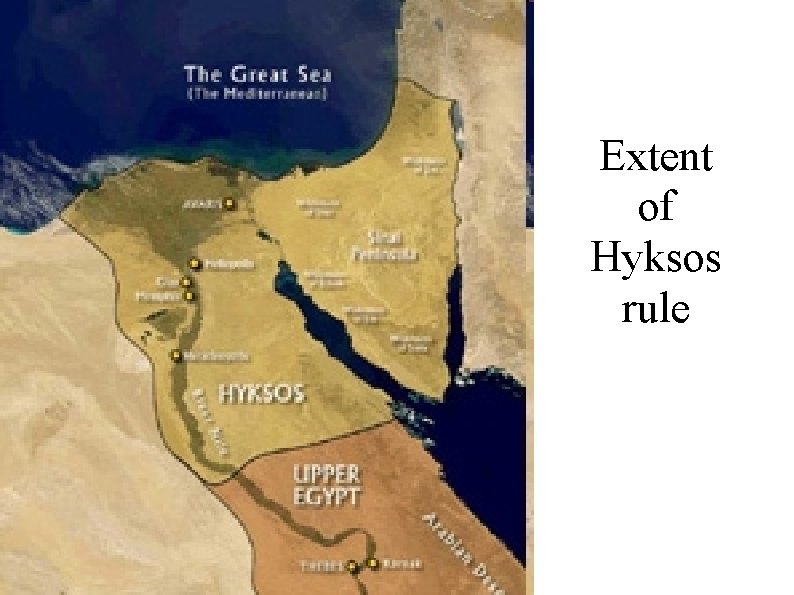
Extent of Hyksos rule
New Kingdom c. 1300 BCE
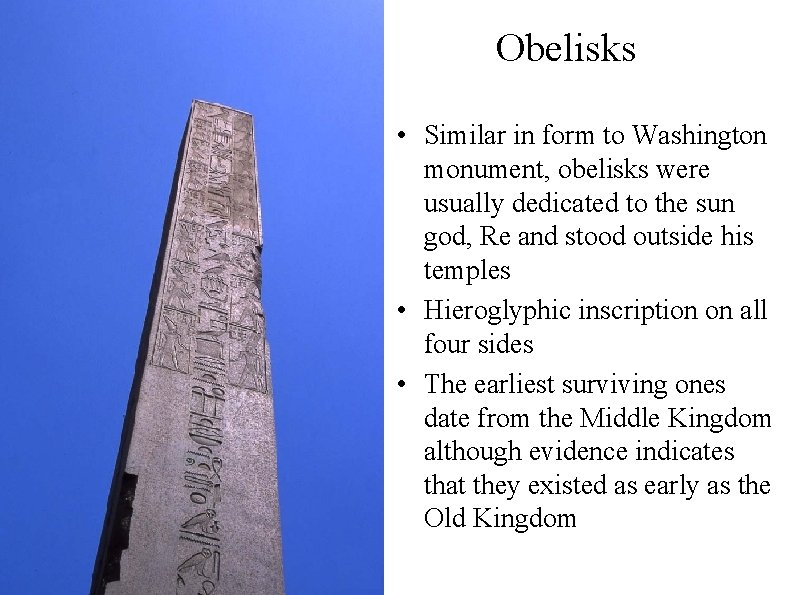
Obelisks • Similar in form to Washington monument, obelisks were usually dedicated to the sun god, Re and stood outside his temples • Hieroglyphic inscription on all four sides • The earliest surviving ones date from the Middle Kingdom although evidence indicates that they existed as early as the Old Kingdom
Discuss the Book of Exodus? ● ● In what context did the Ten Commandments appear? How would you categorize the various commandments? What was the nature of the covenant between God and Moses? How does the text demonstrate that the Hebrews struggled with monotheism?
Overview ● Pre-dynastic period ● Old Kingdom ● Middle Kingdom ● The Hyksos ● Discussion of Gifts
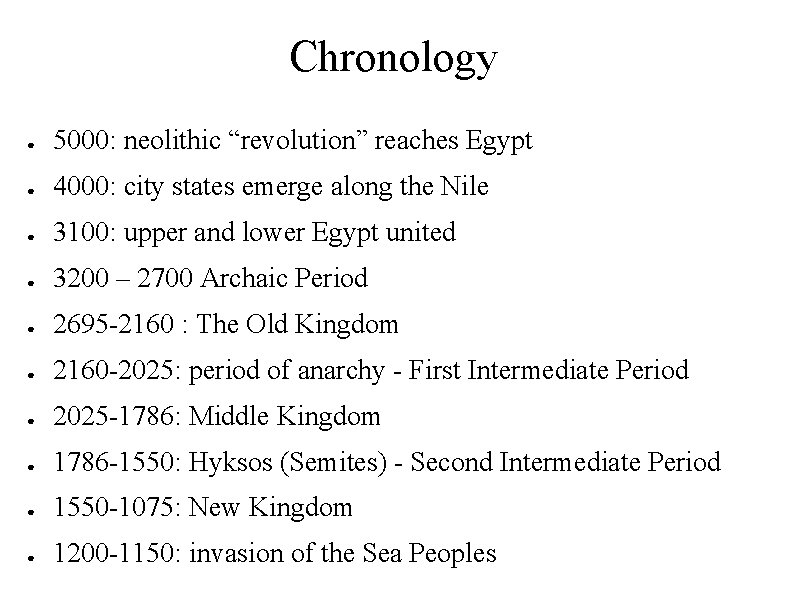
Chronology ● 5000: neolithic “revolution” reaches Egypt ● 4000: city states emerge along the Nile ● 3100: upper and lower Egypt united ● 3200 – 2700 Archaic Period ● 2695 -2160 : The Old Kingdom ● 2160 -2025: period of anarchy - First Intermediate Period ● 2025 -1786: Middle Kingdom ● 1786 -1550: Hyksos (Semites) - Second Intermediate Period ● 1550 -1075: New Kingdom ● 1200 -1150: invasion of the Sea Peoples
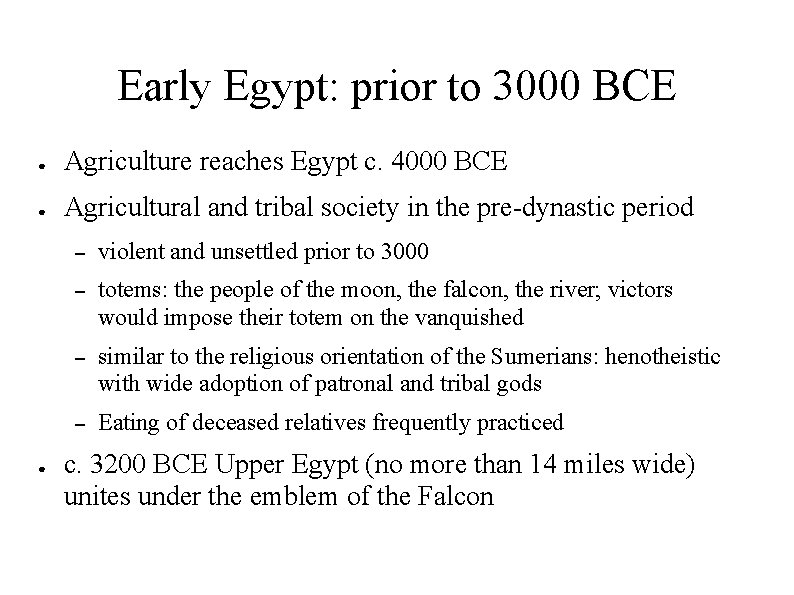
Early Egypt: prior to 3000 BCE ● Agriculture reaches Egypt c. 4000 BCE ● Agricultural and tribal society in the pre-dynastic period ● – violent and unsettled prior to 3000 – totems: the people of the moon, the falcon, the river; victors would impose their totem on the vanquished – similar to the religious orientation of the Sumerians: henotheistic with wide adoption of patronal and tribal gods – Eating of deceased relatives frequently practiced c. 3200 BCE Upper Egypt (no more than 14 miles wide) unites under the emblem of the Falcon
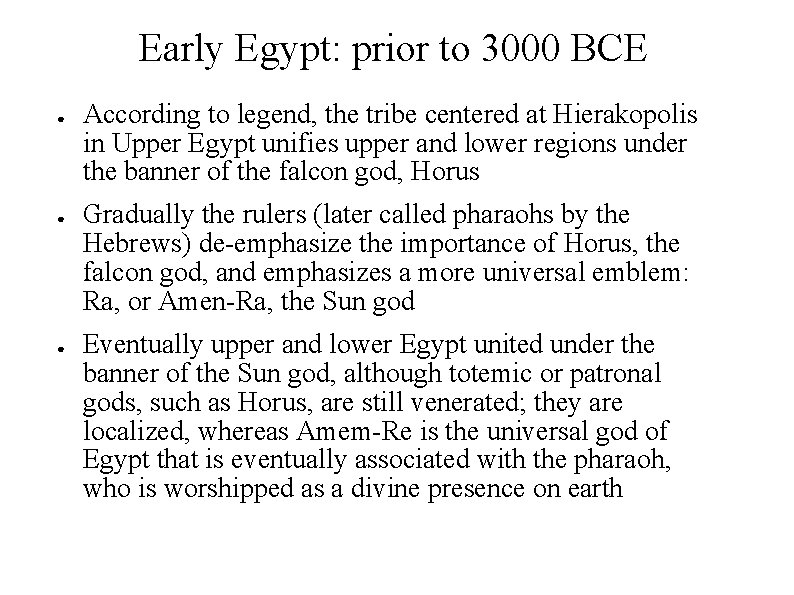
Early Egypt: prior to 3000 BCE ● ● ● According to legend, the tribe centered at Hierakopolis in Upper Egypt unifies upper and lower regions under the banner of the falcon god, Horus Gradually the rulers (later called pharaohs by the Hebrews) de-emphasize the importance of Horus, the falcon god, and emphasizes a more universal emblem: Ra, or Amen-Ra, the Sun god Eventually upper and lower Egypt united under the banner of the Sun god, although totemic or patronal gods, such as Horus, are still venerated; they are localized, whereas Amem-Re is the universal god of Egypt that is eventually associated with the pharaoh, who is worshipped as a divine presence on earth
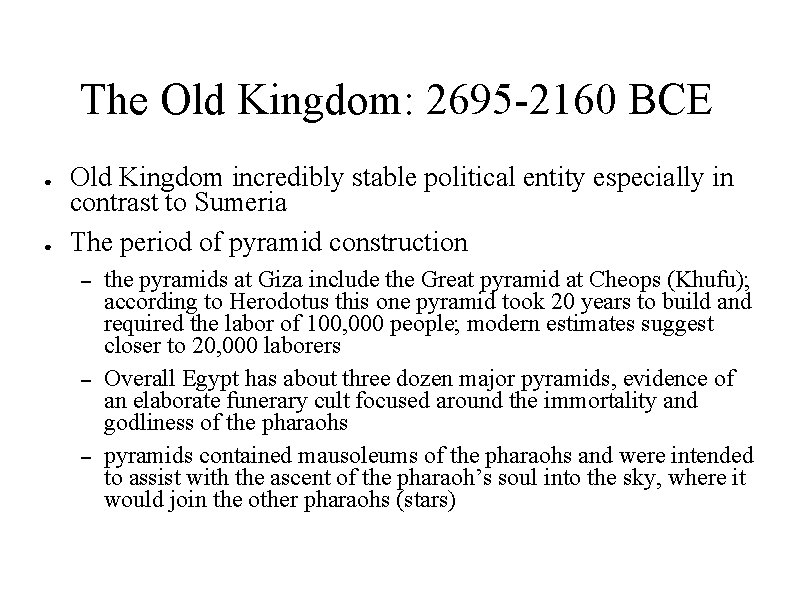
The Old Kingdom: 2695 -2160 BCE ● ● Old Kingdom incredibly stable political entity especially in contrast to Sumeria The period of pyramid construction – – – the pyramids at Giza include the Great pyramid at Cheops (Khufu); according to Herodotus this one pyramid took 20 years to build and required the labor of 100, 000 people; modern estimates suggest closer to 20, 000 laborers Overall Egypt has about three dozen major pyramids, evidence of an elaborate funerary cult focused around the immortality and godliness of the pharaohs pyramids contained mausoleums of the pharaohs and were intended to assist with the ascent of the pharaoh’s soul into the sky, where it would join the other pharaohs (stars)
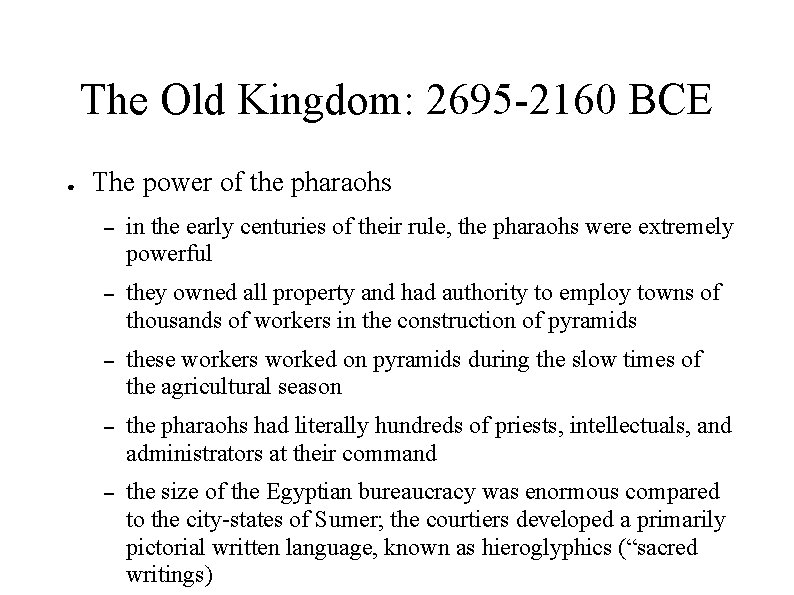
The Old Kingdom: 2695 -2160 BCE ● The power of the pharaohs – in the early centuries of their rule, the pharaohs were extremely powerful – they owned all property and had authority to employ towns of thousands of workers in the construction of pyramids – these workers worked on pyramids during the slow times of the agricultural season – the pharaohs had literally hundreds of priests, intellectuals, and administrators at their command – the size of the Egyptian bureaucracy was enormous compared to the city-states of Sumer; the courtiers developed a primarily pictorial written language, known as hieroglyphics (“sacred writings)
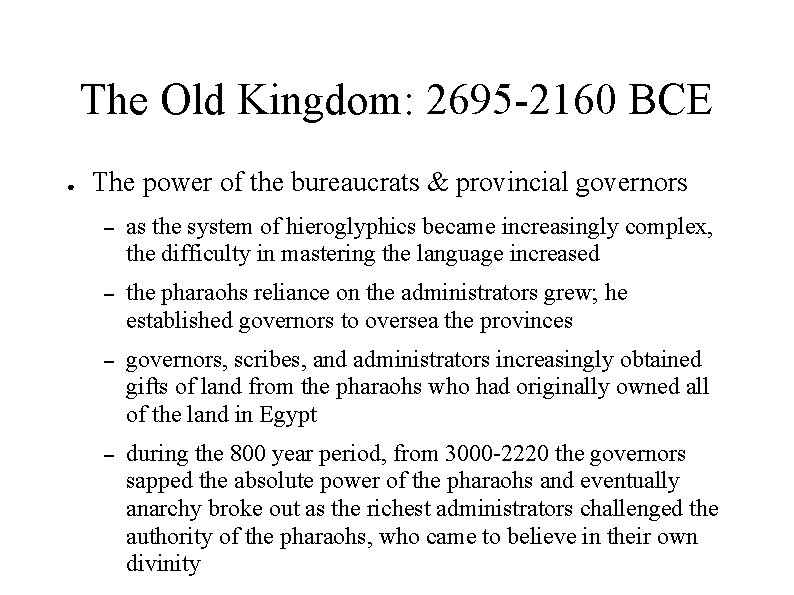
The Old Kingdom: 2695 -2160 BCE ● The power of the bureaucrats & provincial governors – as the system of hieroglyphics became increasingly complex, the difficulty in mastering the language increased – the pharaohs reliance on the administrators grew; he established governors to oversea the provinces – governors, scribes, and administrators increasingly obtained gifts of land from the pharaohs who had originally owned all of the land in Egypt – during the 800 year period, from 3000 -2220 the governors sapped the absolute power of the pharaohs and eventually anarchy broke out as the richest administrators challenged the authority of the pharaohs, who came to believe in their own divinity
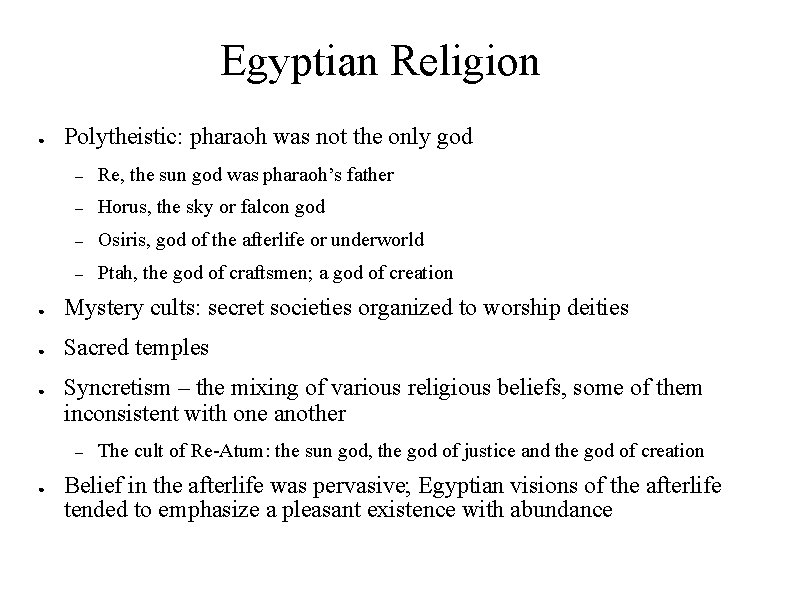
Egyptian Religion ● Polytheistic: pharaoh was not the only god – Re, the sun god was pharaoh’s father – Horus, the sky or falcon god – Osiris, god of the afterlife or underworld – Ptah, the god of craftsmen; a god of creation ● Mystery cults: secret societies organized to worship deities ● Sacred temples ● Syncretism – the mixing of various religious beliefs, some of them inconsistent with one another – ● The cult of Re-Atum: the sun god, the god of justice and the god of creation Belief in the afterlife was pervasive; Egyptian visions of the afterlife tended to emphasize a pleasant existence with abundance
Egyptian Religion ● ● Egyptian evidence suggests that initially only the pharaohs enjoyed immortality but by 2000 a discernible trend toward democratization of the afterlife was apparent in Egyptian culture The development of the cult of Isis and Osiris – beginnings during the Old Kingdom – based on an elaborate mythology – potential for an afterlife; initially restricted to pharaohs but gradually opens up – sins accumulate in the heart during this life – the hearts is weighed against and feather at death and if lighter the soul proceeds to heaven
The Middle Kingdom (2025 -1786) ● ● Governor of Thebes establishes order and consolidates control after period of unrest, civil war, ends Old Kingdom Pharaohs open administrative positions up to larger portion of the literate ● Tombs become less ostentatious: no more pyramids ● Democratization of the afterlife ● ● public works projects dedicated to agriculture rather than funerary rites Literature produced
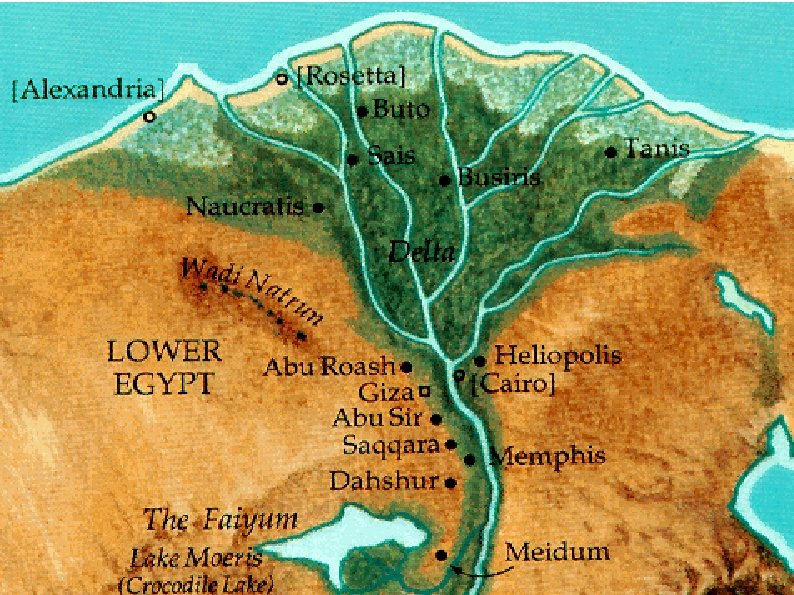
The Hyksos: 1786 -1560 ● ● Invasion of Lower Egypt (Nile Delta) from Semitic people living in the Levant A Bronze Age Culture that connected the rather isolated Egypt to the rest of the Eastern Mediterranean, which had quietly been developing commercial networks Introduced chariots, bronze armor, and bow & arrows to the Egyptians It was during their rule that the Hebrews settled in Egypt; also Semitic the Hebrews probably enjoyed preferential treatment during the rule of the Hyksos
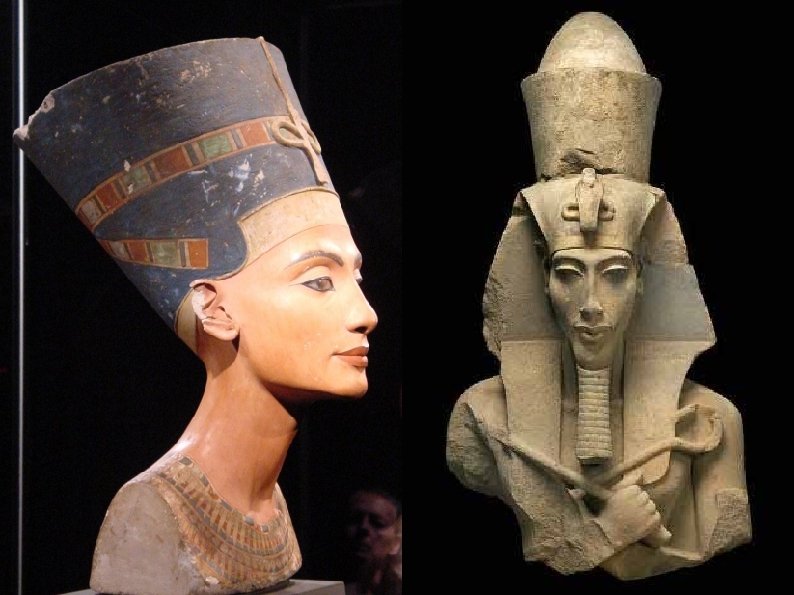
The New Kingdom: 1560 -1075 ● Egypt becomes an empire – ● ● ● its connection to the rest of the Mediterranean culture is strengthened The term pharaoh first comes into usage as the Hebrews fall into servitude and then escape to Sinai (Exodus) c. 1200 Experiment with monotheism in the 1300 s (rule of Akhenaten or Amenhotep IV, 1351 -1335) when pharaoh declares Aten the only God revolt by temple priests (especially of Amun-Re) and masses of the population
Invasion of the Sea Peoples: 1200 -1150 ● Somewhat mysterious disruption of civilized life in the eastern Mediterranean – end of Bronze Age trade networks – Introduction of iron into weaponry – affected various regions for hundred of years – war may have been accompanied by famine and plague
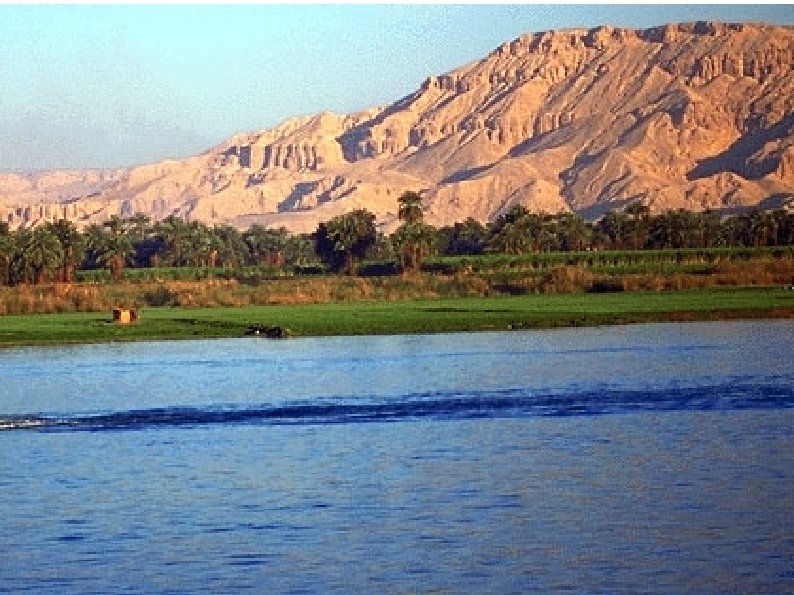
Comparison Between Egypt & Sumeria ● ● ● Except for a few interruptions c. 2200 -2100, life in Egypt was relatively static and peaceful for over 1000 years (3000 -1800) BCE) Unlike, Sumeria, which was a conglomeration of city-states, Egypt was predominately a large agricultural polity that was under the direct rule of the power ruler/gods, the pharaohs Egyptian life fell into an easy predictable rhythm with the flooding of the Nile Egyptian kings claimed to be gods, Sumerian rulers claimed to be representatives of gods Egyptian visions of the afterlife tended to be more optimistic
Summary ● ● Egypt developed a very prosperous society during the Old Kingdom and this prosperity continued to characterize Egypt throughout most of ancient times Even during the Roman Empire, Egypt exported much of the grain that was to feed the masses who flocked to Rome The Egyptians consistently displayed mastery in architecture and great building projects from pyramids to temples and obelisks The pharaohs were great patrons of painting, sculpture, and architecture; they employed thousands of artisans at a very early period c. 2700 BCE
Summary ● The Hebrew encounter with Egyptian religion probably influenced the formation of their monotheistic principles, which strengthened following their servitude in Egypt; this period was also influential in developing the aspects of the Hebrew religion that emphasized God’s love of the dispossessed and downtrodden, a feature that Christianity would later amplify