
Timeline in the Evolution of Democracy eline m
- Slides: 12
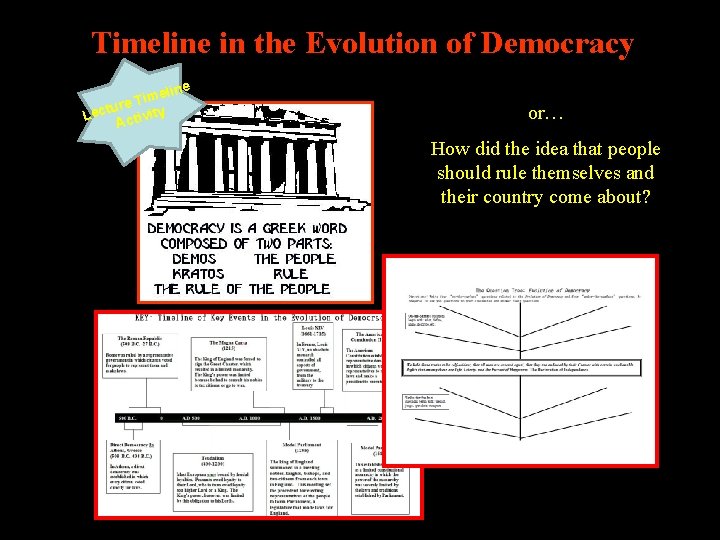
Timeline in the Evolution of Democracy eline m i T ure Lect ctivity A or… How did the idea that people should rule themselves and their country come about?
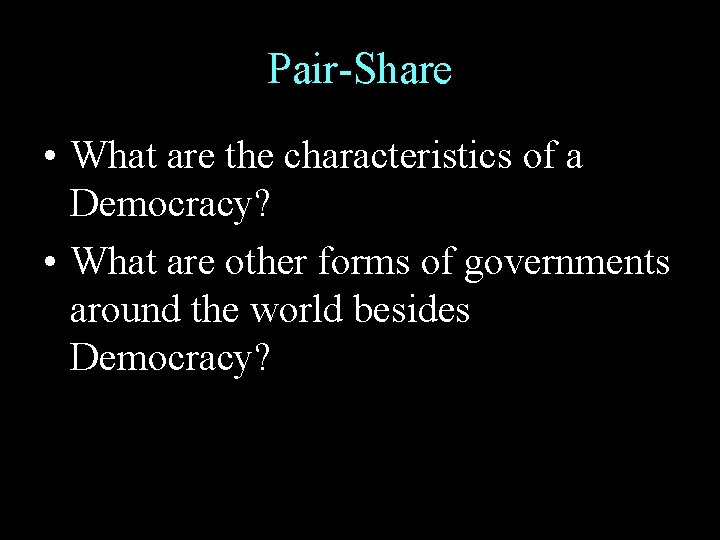
Pair-Share • What are the characteristics of a Democracy? • What are other forms of governments around the world besides Democracy?
Objective • Students will be able to trace the evolution of Democracy by creating a question tree.
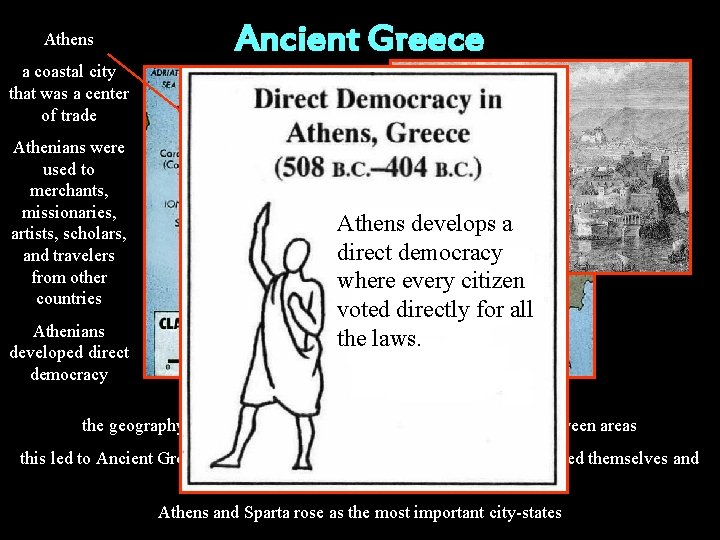
Athens a coastal city that was a center of trade Athenians were used to merchants, missionaries, artists, scholars, and travelers from other countries Athenians developed direct democracy Ancient Greece Athens develops a direct democracy where every citizen voted directly for all the laws. Greece is a nation of islands and mountains the geography resulted in difficulty to communicate and travel between areas this led to Ancient Greece developing city-states, where individual cities ruled themselves and some of the land around the city Athens and Sparta rose as the most important city-states
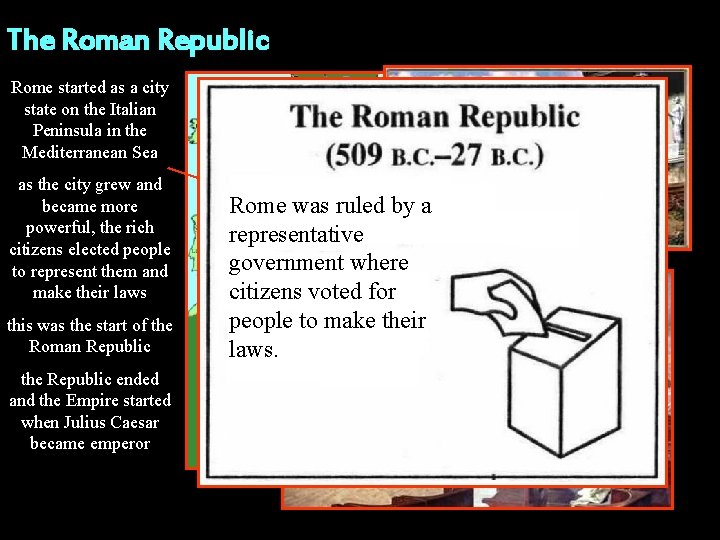
The Roman Republic Rome started as a city state on the Italian Peninsula in the Mediterranean Sea as the city grew and became more powerful, the rich citizens elected people to represent them and make their laws this was the start of the Roman Republic the Republic ended and the Empire started when Julius Caesar became emperor Rome was ruled by a representative government where citizens voted for people to make their laws.
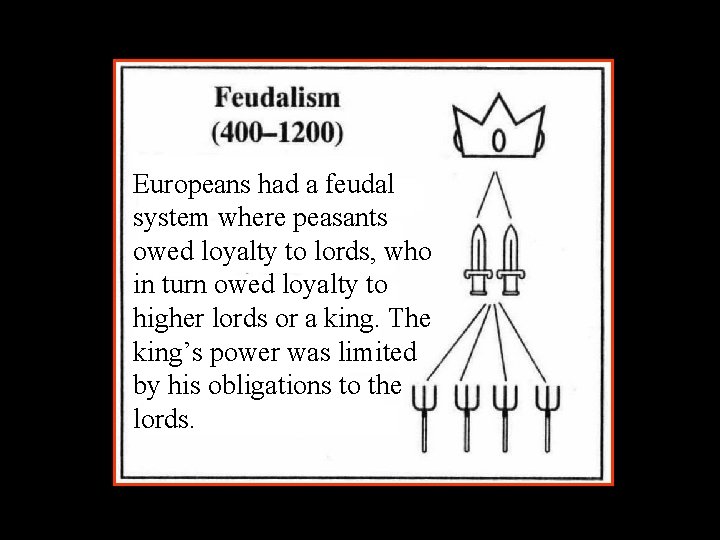
Europeans had a feudal system where peasants owed loyalty to lords, who in turn owed loyalty to higher lords or a king. The king’s power was limited by his obligations to the lords.
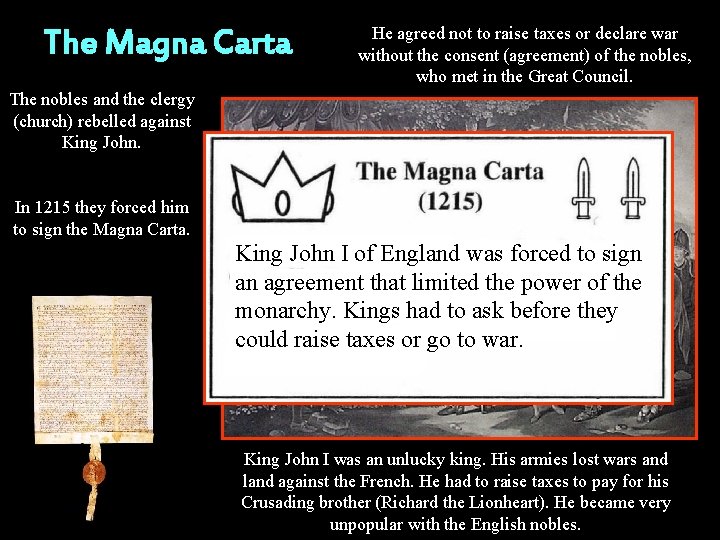
The Magna Carta He agreed not to raise taxes or declare war without the consent (agreement) of the nobles, who met in the Great Council. The nobles and the clergy (church) rebelled against King John. In 1215 they forced him to sign the Magna Carta. King John I of England was forced to sign an agreement that limited the power of the monarchy. Kings had to ask before they could raise taxes or go to war. King John I was an unlucky king. His armies lost wars and land against the French. He had to raise taxes to pay for his Crusading brother (Richard the Lionheart). He became very unpopular with the English nobles.
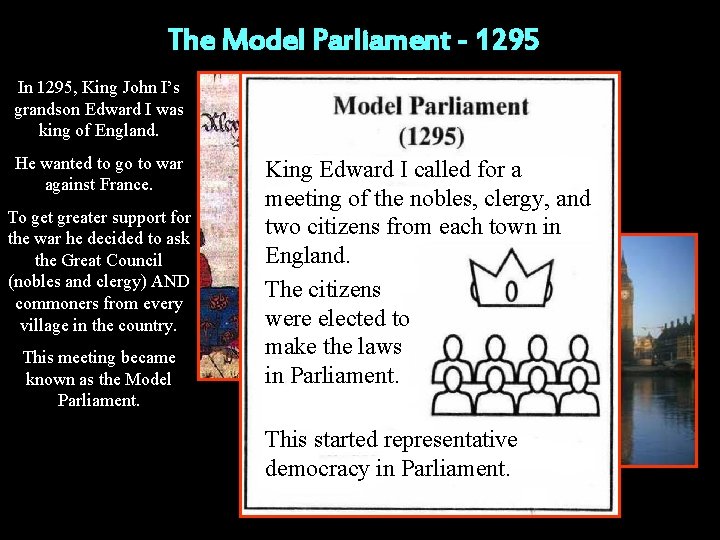
The Model Parliament - 1295 In 1295, King John I’s grandson Edward I was king of England. He wanted to go to war against France. To get greater support for the war he decided to ask the Great Council (nobles and clergy) AND commoners from every village in the country. This meeting became known as the Model Parliament. King Edward I called for a meeting of the nobles, clergy, and two citizens from each town in England. The citizens were elected to make the laws in Parliament. This started representative democracy in Parliament.
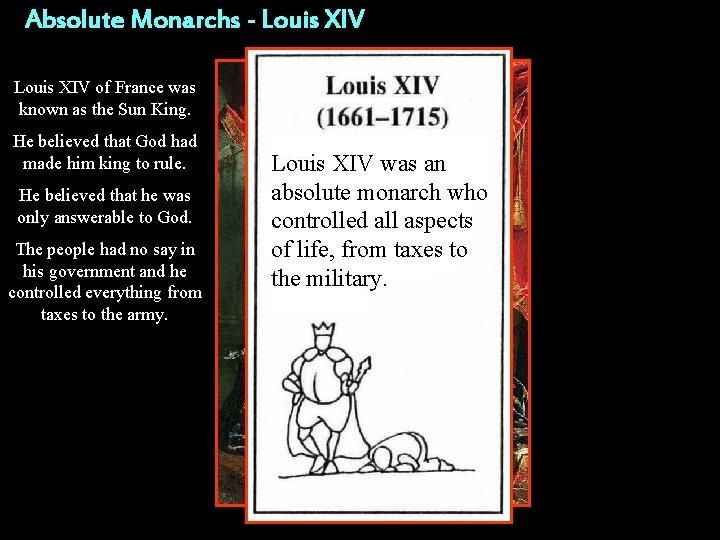
Absolute Monarchs - Louis XIV of France was known as the Sun King. He believed that God had made him king to rule. He believed that he was only answerable to God. The people had no say in his government and he controlled everything from taxes to the army. Louis XIV was an absolute monarch who controlled all aspects of life, from taxes to the military.
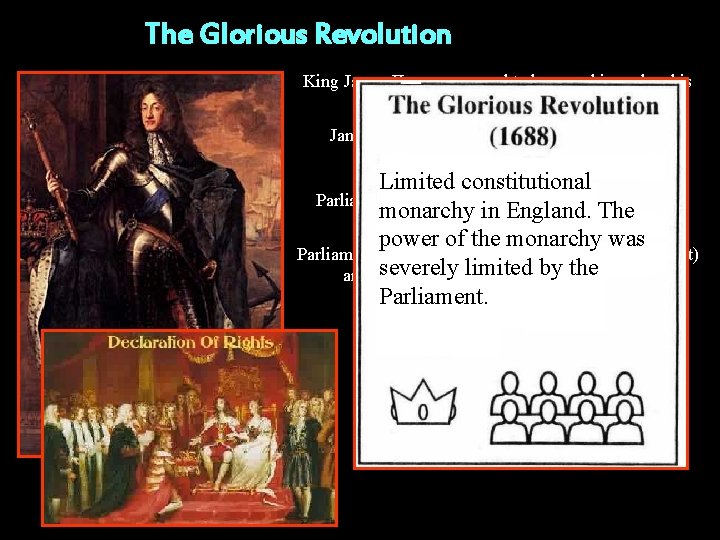
The Glorious Revolution King James II was supposed to become king when his brother, King Charles II died in 1685. James II believed in the Divine Right of kings. He was also a catholic. Limited constitutional Parliament decided that it did not want an absolute monarchy in England. The monarch or a catholic to be king. power of the monarchy was Parliament asked James’s daughter (Mary, a Protestant) severely the (of the and her husband limited William ofby Orange Netherlands) to become king and queen. Parliament decided who would be king and how much power the monarchs could have.
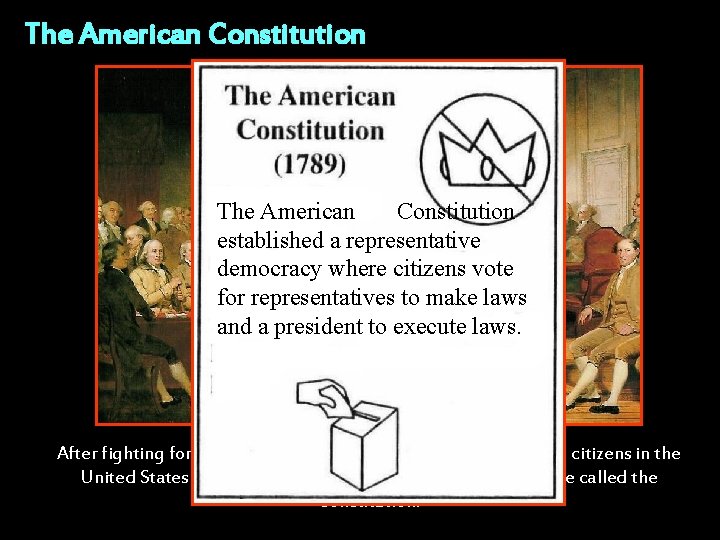
The American Constitution established a representative democracy where citizens vote for representatives to make laws and a president to execute laws. After fighting for, and winning, their independence from Britain, citizens in the United States of America formed their own set of laws that are called the Constitution.
Wrap-Up • Complete the question tree. • Create 4 On-the-Surface and 4 Under-the-Surface questions • Be prepared to ask your questions to your classmates and answer their questions.