
Time to Think the Thinking Environment How good
- Slides: 12
Time to Think & the Thinking Environment “How good boards become great boards depends critically on the quality of their conversations… Action at board level is essentially thinking and conversation is thinking out loud at the highest level of the enterprise” The Good Governance Forum, 2012 Here in the 21 st Century, thinking for yourself is still a radical act.
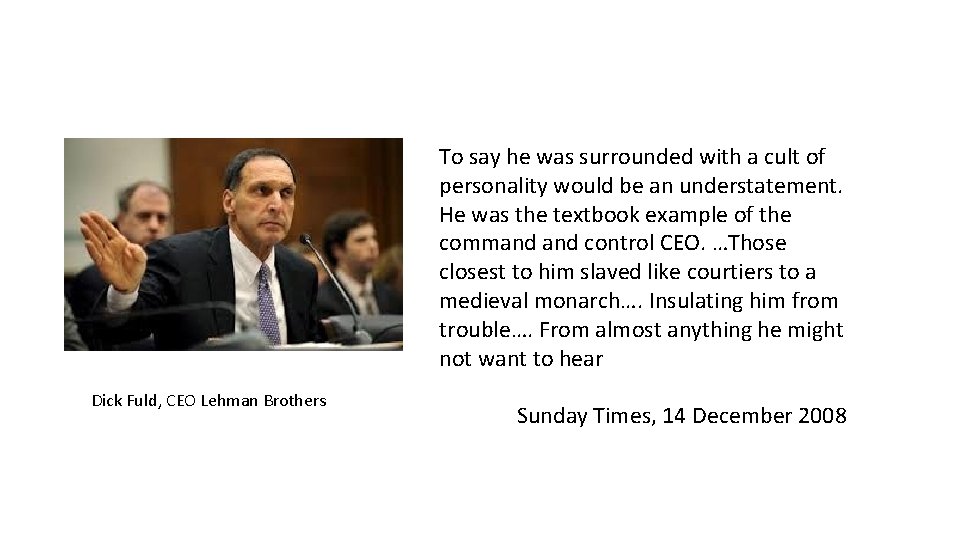
To say he was surrounded with a cult of personality would be an understatement. He was the textbook example of the command control CEO. …Those closest to him slaved like courtiers to a medieval monarch…. Insulating him from trouble…. From almost anything he might not want to hear Dick Fuld, CEO Lehman Brothers Sunday Times, 14 December 2008
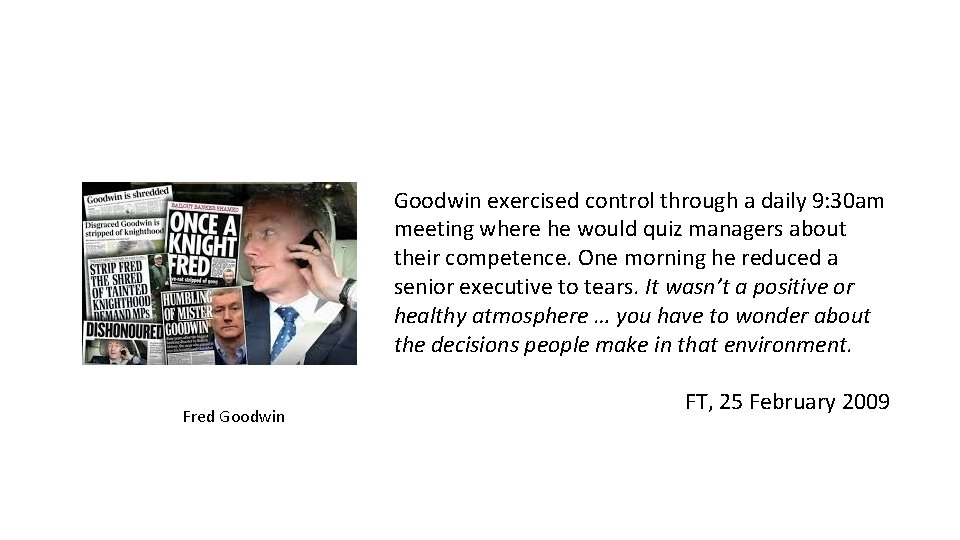
Goodwin exercised control through a daily 9: 30 am meeting where he would quiz managers about their competence. One morning he reduced a senior executive to tears. It wasn’t a positive or healthy atmosphere … you have to wonder about the decisions people make in that environment. Fred Goodwin FT, 25 February 2009
Airmic Study – Roads to Ruin • Dominant personalities or groups • Inappropriate allocation of time to matters requiring discussion or debate • Lack of preparation in advance of the meeting • An unhelpful manner of presenting information to the board • Fear
Beyond 20 Seconds - the independent mind of the board. We cannot solve the problems of the 21 st century with the 20 th century mindset that created them.
Time to Think Everything we do depends on the quality of the thinking we do first. Our thinking depends on the way we treat each other while we are thinking.
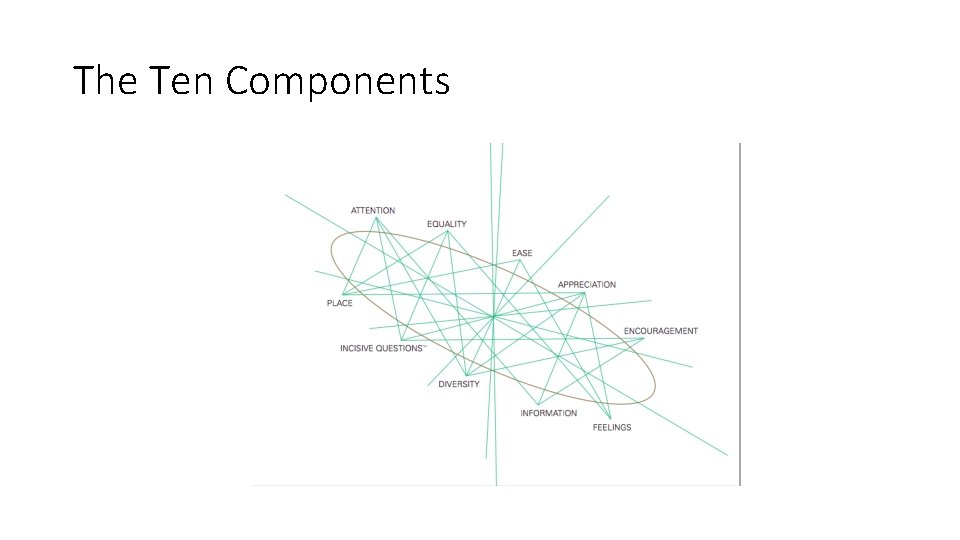
The Ten Components
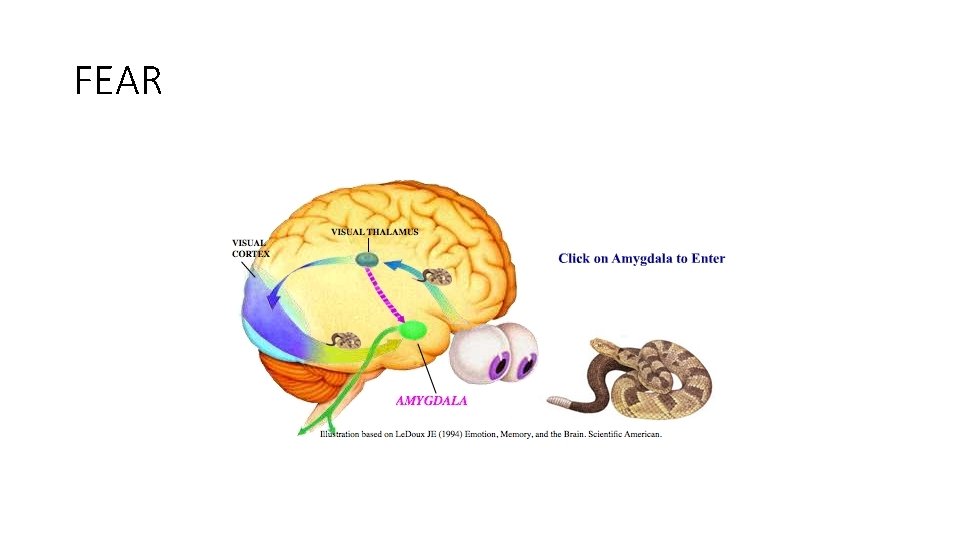
FEAR
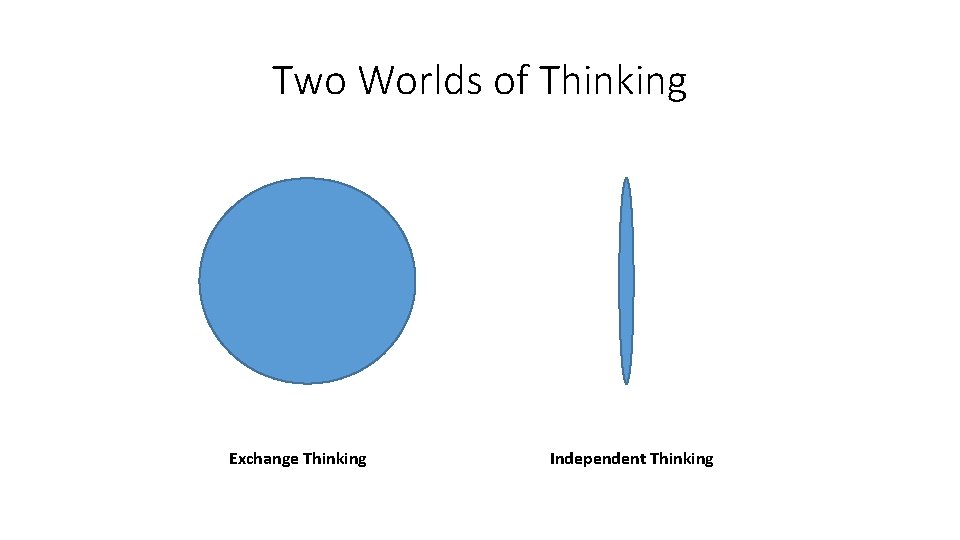
Two Worlds of Thinking Exchange Thinking Independent Thinking
The Thinking Environment • A surfacing of better ideas, resolution of issues and greater structure and rigour including better preparation. • An environment where people can and do think independently for themselves regardless of hierarchy and power differentials. • A more trusting and less competitive environment. • Meetings that are more mindful, improve team performance and even well-being.
Time spent in meetings Human capital cost of approximately $14. 1 bn per year not including meeting infrastructure costs.
Thinking Pairs If we knew we could conduct better more productive meetings, what would change For us? What more do you think Or feel Or want to say?