
TIME SERIES Forecasting OF SP 500 INDEX STAT

- Slides: 39
TIME SERIES Forecasting OF S&P 500 INDEX STAT 689 v
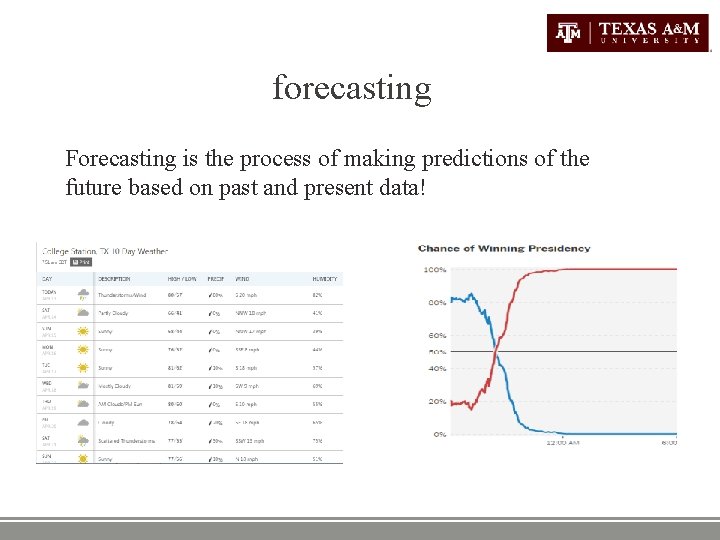
forecasting Forecasting is the process of making predictions of the future based on past and present data!
forecasting • Coming up with predictions is important. • It is also very hard since none has the correct model of the world. • Explaining a particular kind of prediction is equally important, since you can make a more compelling case out of it.
How to forecast? • Are causal relationships necessary forecasting? Not necessarily! A lot of times, the past observations of certain variables are the best forecasters of future observations. • Can we just use anything? Not necessarily, since there a lot of spurious co-movements. • What to do? Strike a balance! Good models are the ones that capture time series properties of the data, as well as adhere to some economic theory.
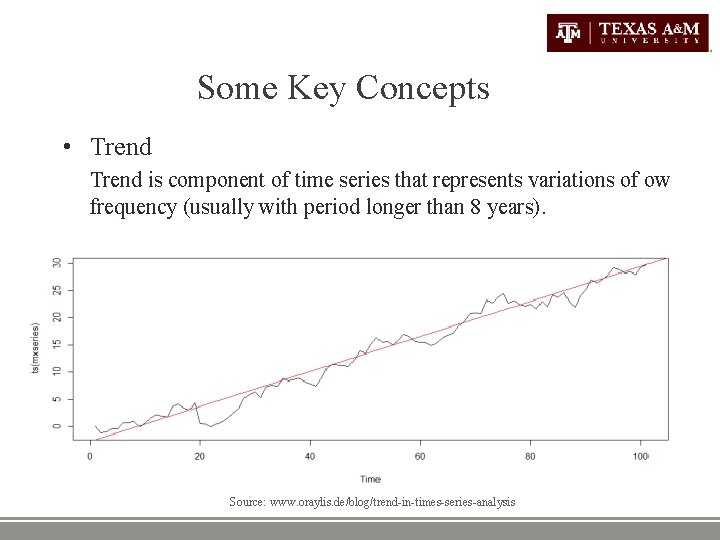
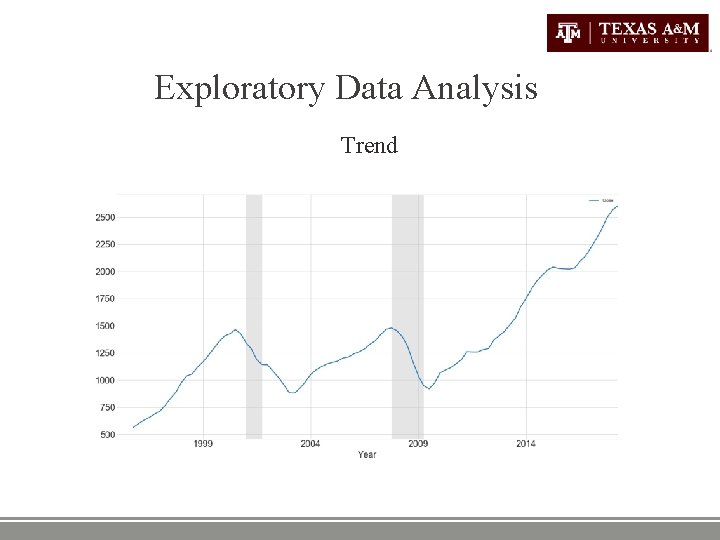
Some Key Concepts • Trend is component of time series that represents variations of ow frequency (usually with period longer than 8 years). Source: www. oraylis. de/blog/trend-in-times-series-analysis
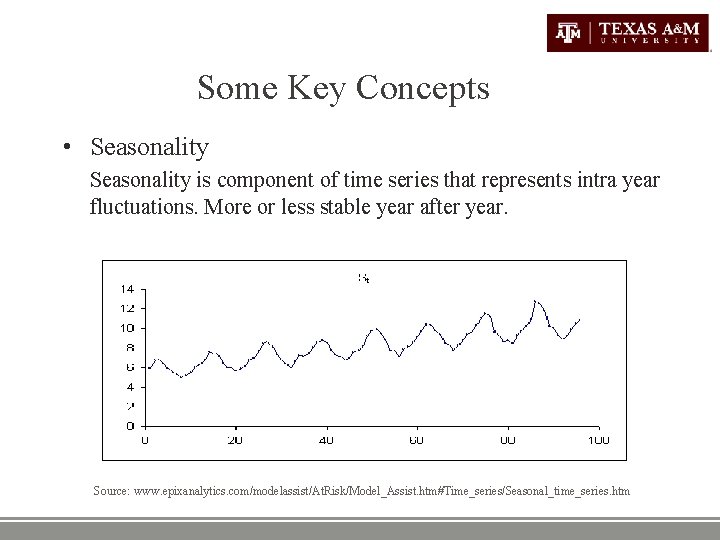
Some Key Concepts • Seasonality is component of time series that represents intra year fluctuations. More or less stable year after year. Source: www. epixanalytics. com/modelassist/At. Risk/Model_Assist. htm#Time_series/Seasonal_time_series. htm
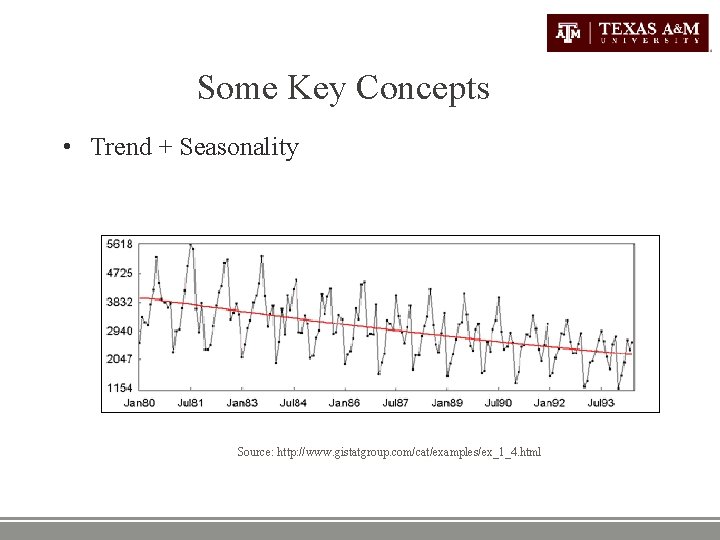
Some Key Concepts • Trend + Seasonality Source: http: //www. gistatgroup. com/cat/examples/ex_1_4. html
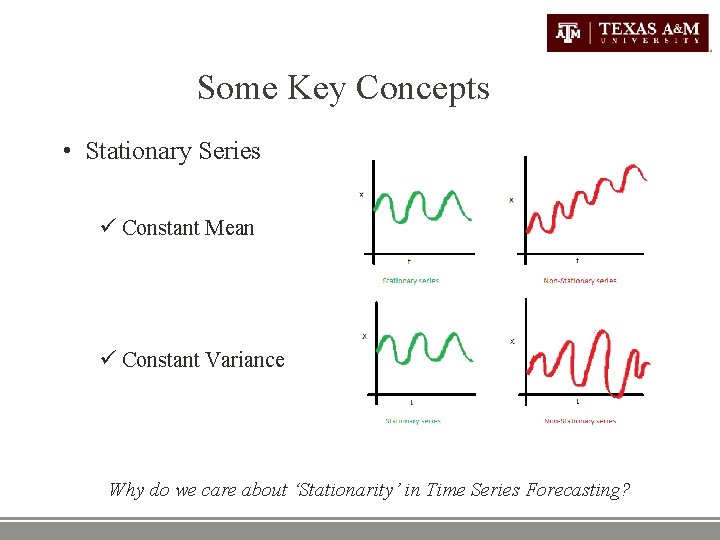
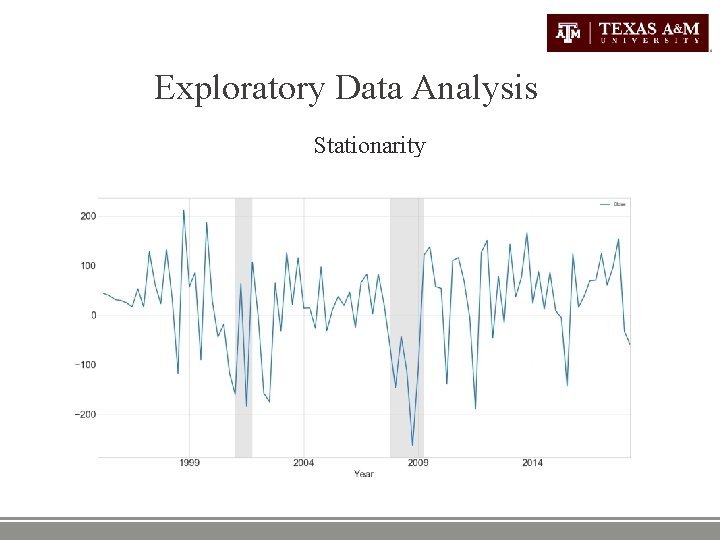
Some Key Concepts • Stationary Series ü Constant Mean ü Constant Variance Why do we care about ‘Stationarity’ in Time Series Forecasting?
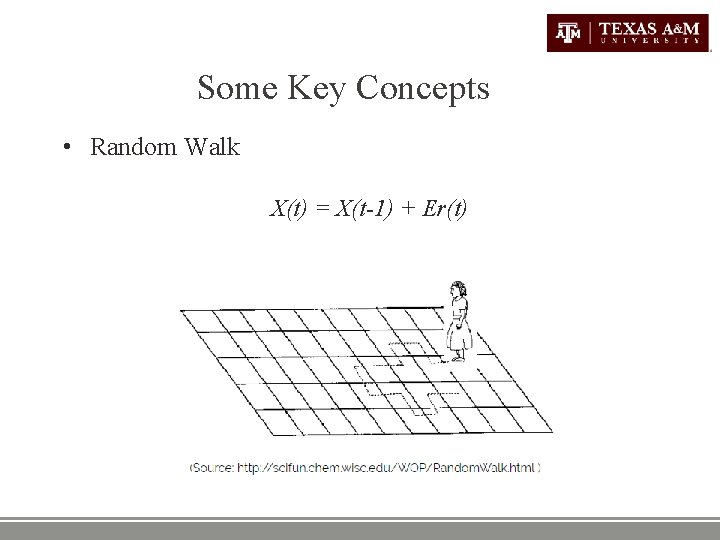
Some Key Concepts • Random Walk X(t) = X(t-1) + Er(t)
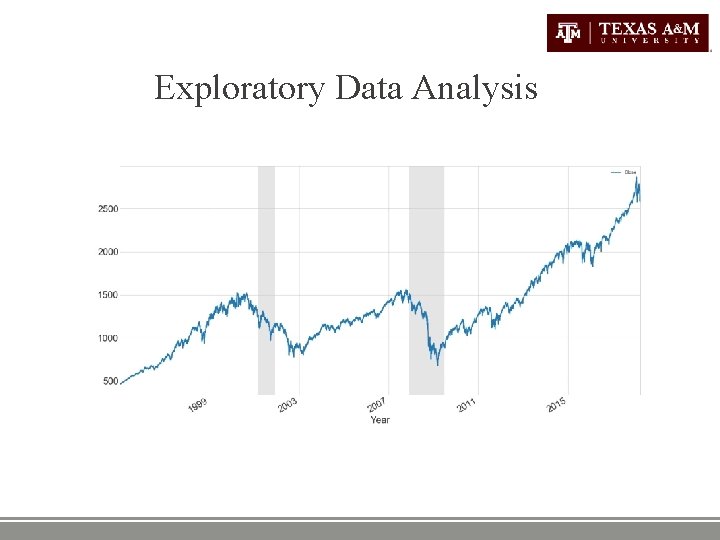
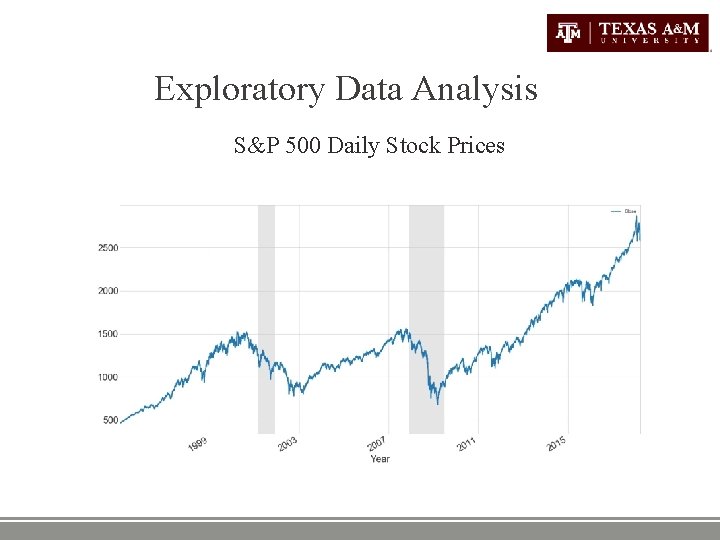
Data • The Standard & Poor's 500, often abbreviated as the S&P 500, or just the S&P, is an American stock market index based on the market capitalizations of 500 large companies having common stock listed on the NYSE or NASDAQ. • S&P 500 is a good representative of US stock market as well as US economy. • Stock Prices from January, 1995 to March 2018 are used forecasting.
Exploratory Data Analysis
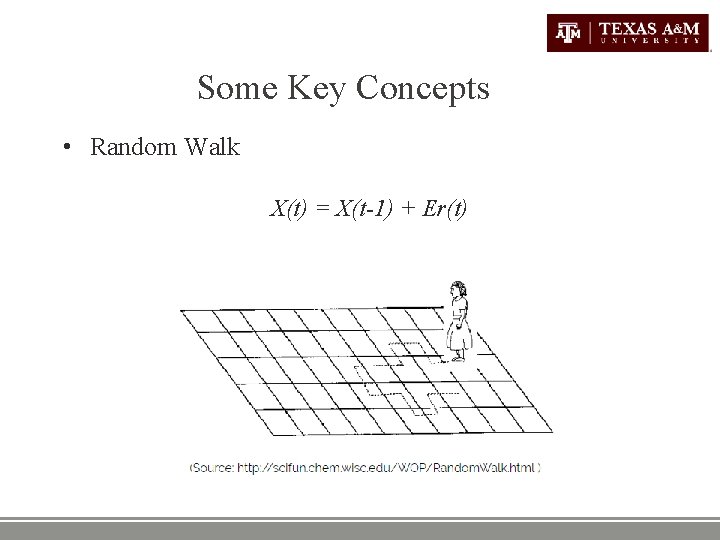
Some Key Concepts • Random Walk X(t) = X(t-1) + Er(t)
Exploratory Data Analysis S&P 500 Daily Stock Prices
Exploratory Data Analysis Trend
Exploratory Data Analysis Stationarity
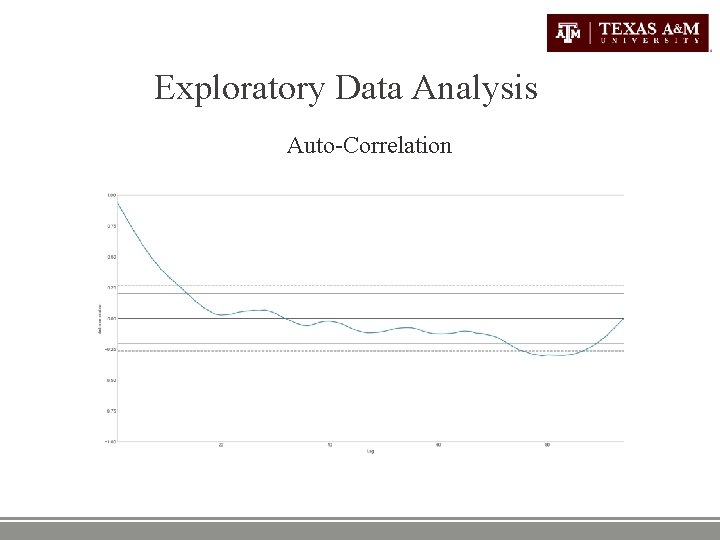
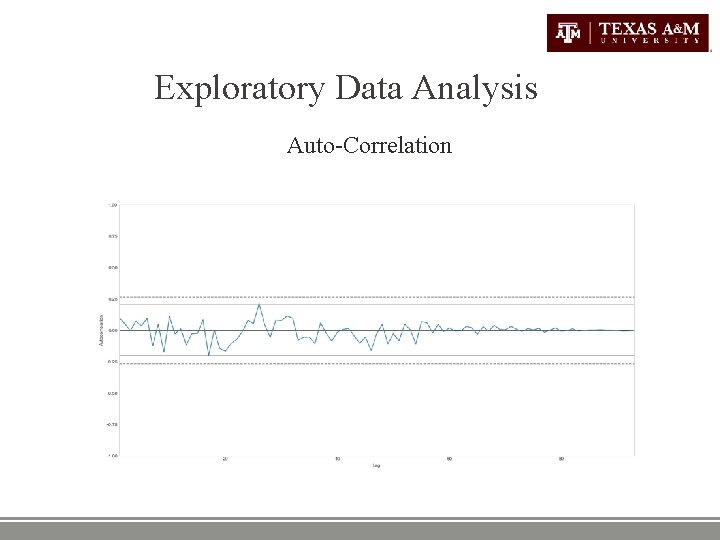
Exploratory Data Analysis Auto-Correlation
Exploratory Data Analysis Auto-Correlation
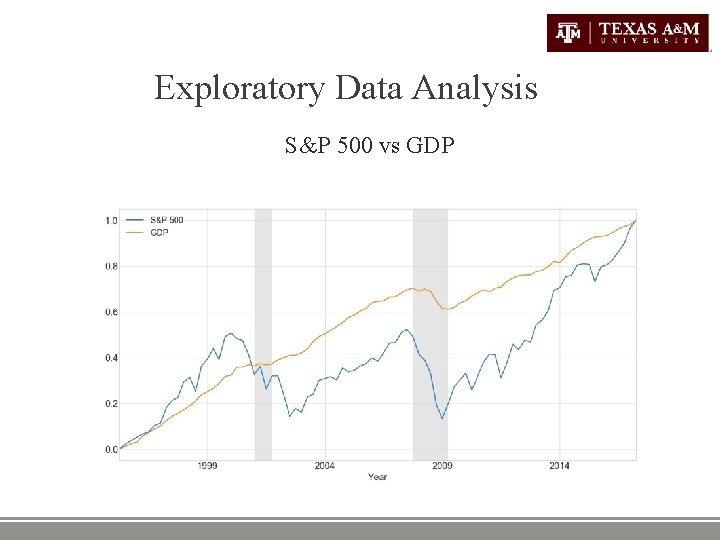
Exploratory Data Analysis S&P 500 vs GDP
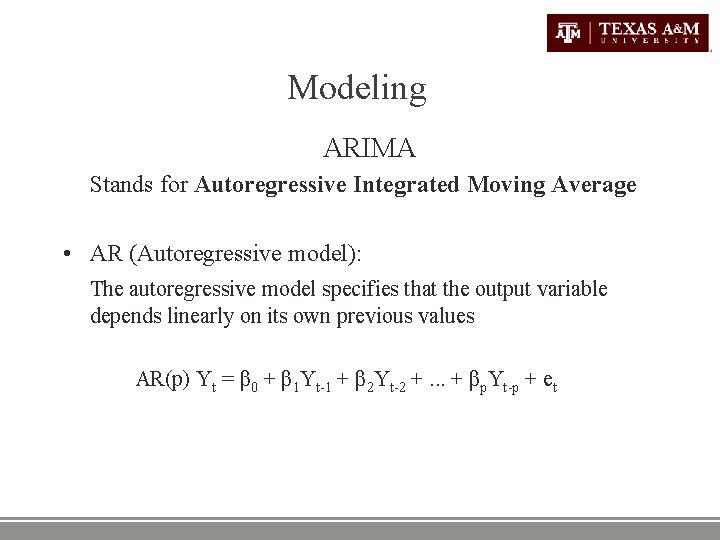
Modeling ARIMA Stands for Autoregressive Integrated Moving Average • AR (Autoregressive model): The autoregressive model specifies that the output variable depends linearly on its own previous values AR(p) Yt = β 0 + β 1 Yt-1 + β 2 Yt-2 +. . . + βp. Yt-p + et
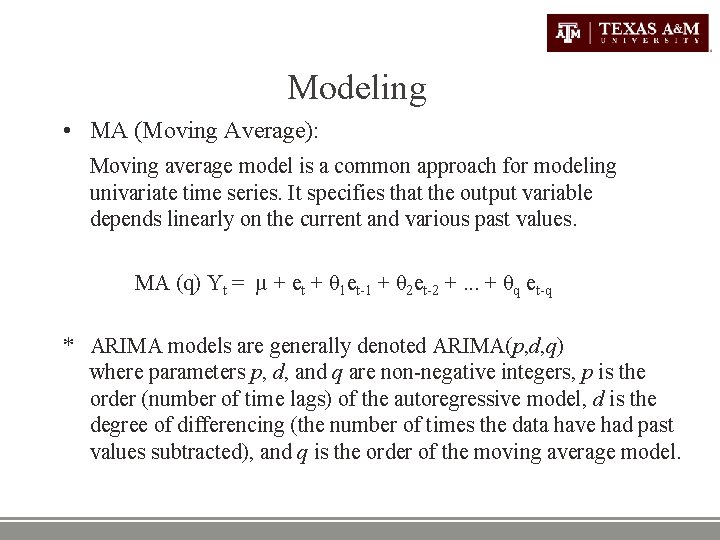
Modeling • MA (Moving Average): Moving average model is a common approach for modeling univariate time series. It specifies that the output variable depends linearly on the current and various past values. MA (q) Yt = µ + et + θ 1 et-1 + θ 2 et-2 +. . . + θq et-q * ARIMA models are generally denoted ARIMA(p, d, q) where parameters p, d, and q are non-negative integers, p is the order (number of time lags) of the autoregressive model, d is the degree of differencing (the number of times the data have had past values subtracted), and q is the order of the moving average model.
Modeling • RNN– Recurrent Neural Networks What is RNN ? Why are we using RNN for time series ? Why not regular Neural Nets?
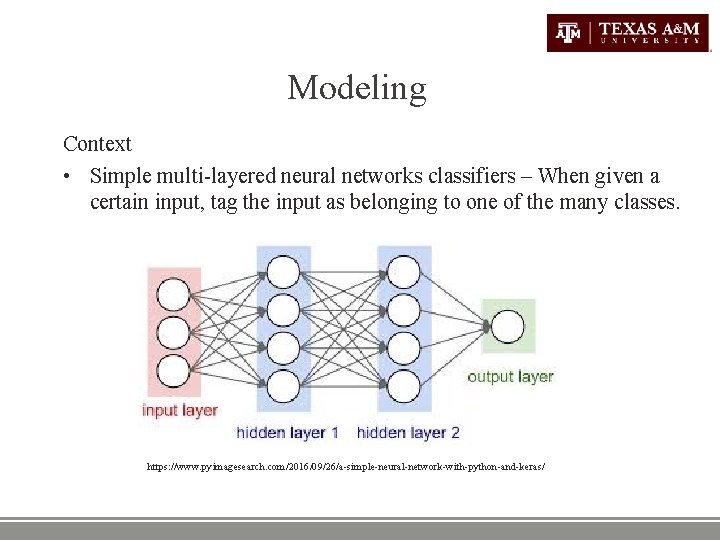
Modeling Context • Simple multi-layered neural networks classifiers – When given a certain input, tag the input as belonging to one of the many classes. https: //www. pyimagesearch. com/2016/09/26/a-simple-neural-network-with-python-and-keras/
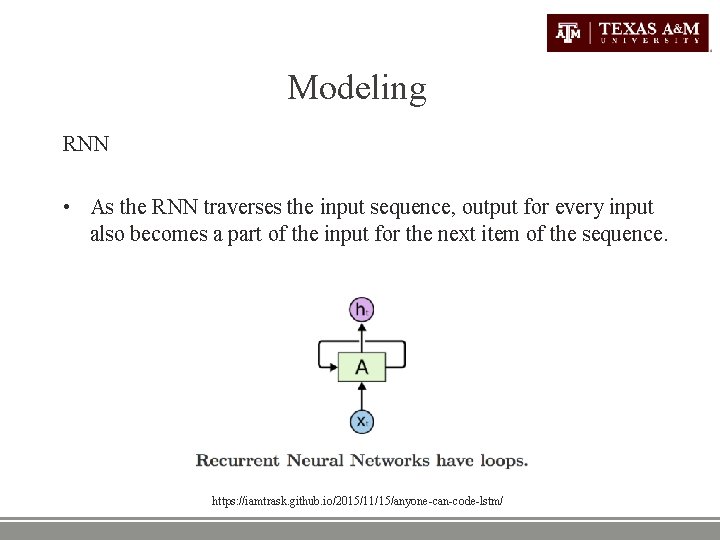
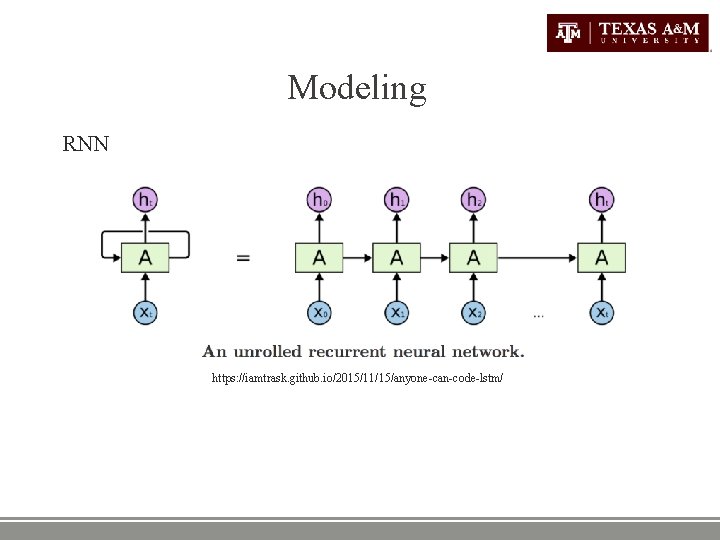
Modeling RNN • As the RNN traverses the input sequence, output for every input also becomes a part of the input for the next item of the sequence. https: //iamtrask. github. io/2015/11/15/anyone-can-code-lstm/
Modeling RNN https: //iamtrask. github. io/2015/11/15/anyone-can-code-lstm/
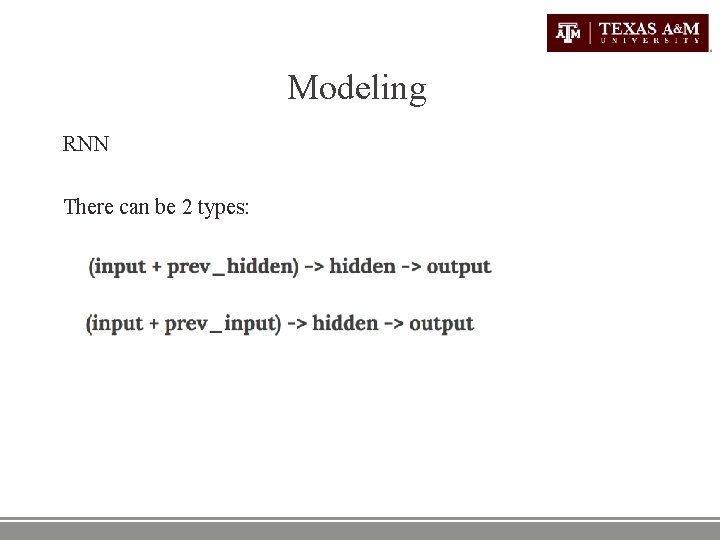
Modeling RNN There can be 2 types:
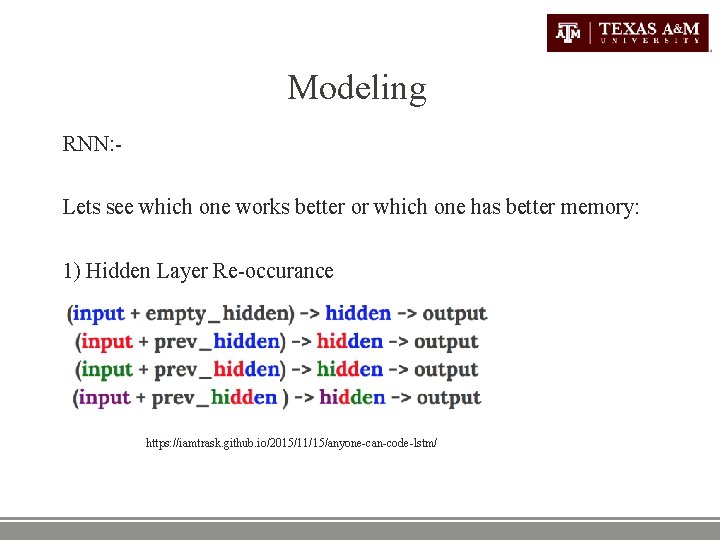
Modeling RNN: - Lets see which one works better or which one has better memory: 1) Hidden Layer Re-occurance https: //iamtrask. github. io/2015/11/15/anyone-can-code-lstm/
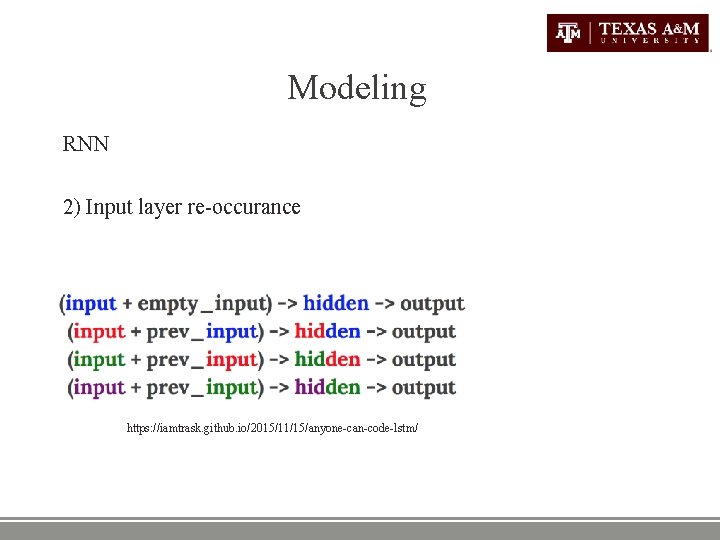
Modeling RNN 2) Input layer re-occurance https: //iamtrask. github. io/2015/11/15/anyone-can-code-lstm/
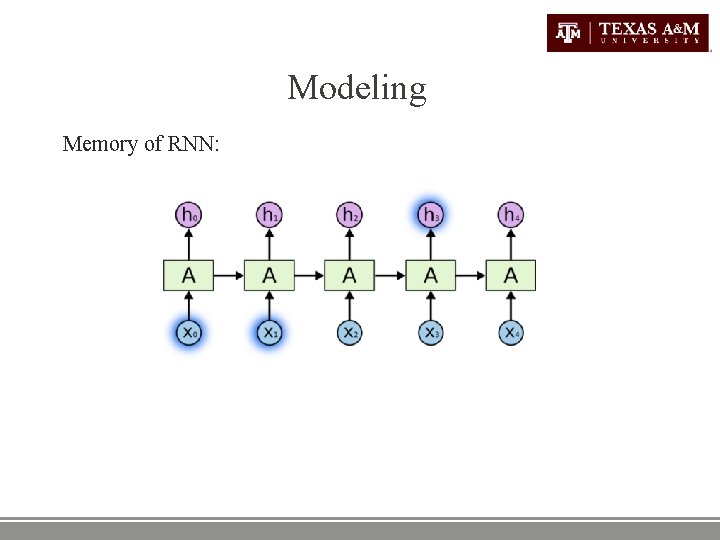
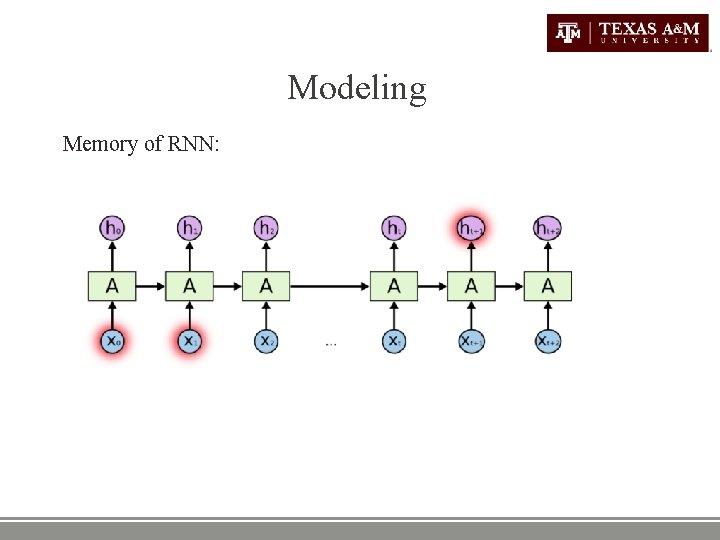
Modeling Memory of RNN:
Modeling Memory of RNN:
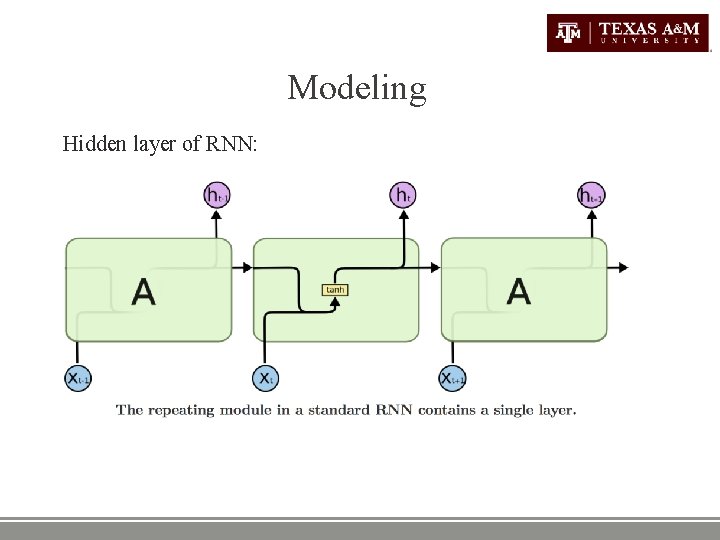
Modeling Hidden layer of RNN:
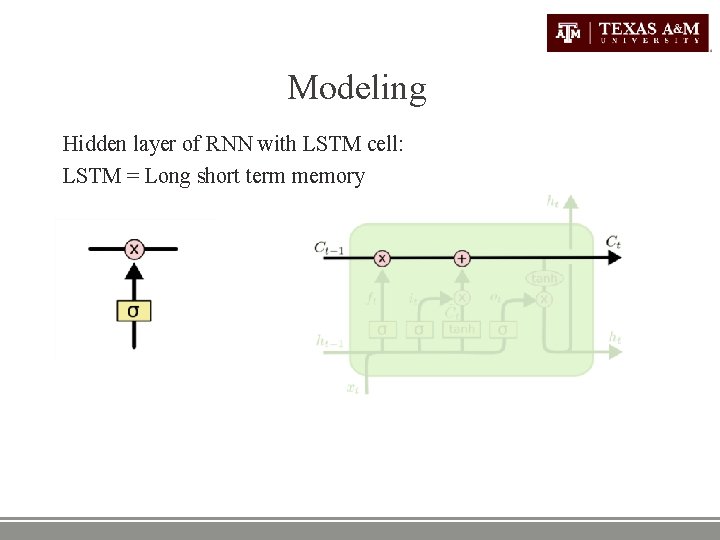
Modeling RNN with LSTM: • Long Short Term Memory is a RNN architecture which addresses the problem of training over long sequences and retaining memory. • A simple recurrent network suffers from a fundamental problem of not being able to capture long-term dependencies in a sequence.
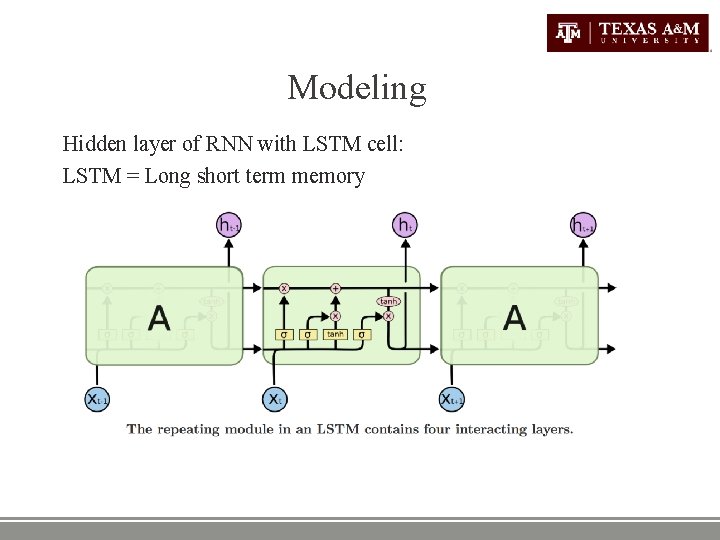
Modeling Hidden layer of RNN with LSTM cell: LSTM = Long short term memory
Modeling Hidden layer of RNN with LSTM cell: LSTM = Long short term memory
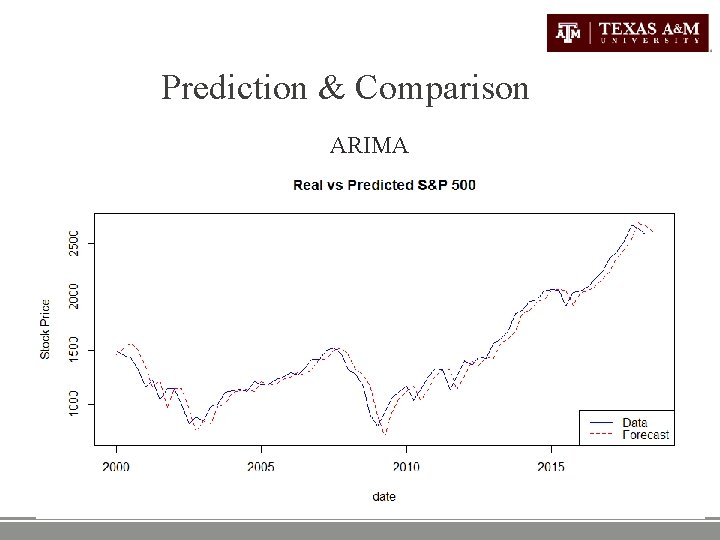
Prediction & Comparison ARIMA
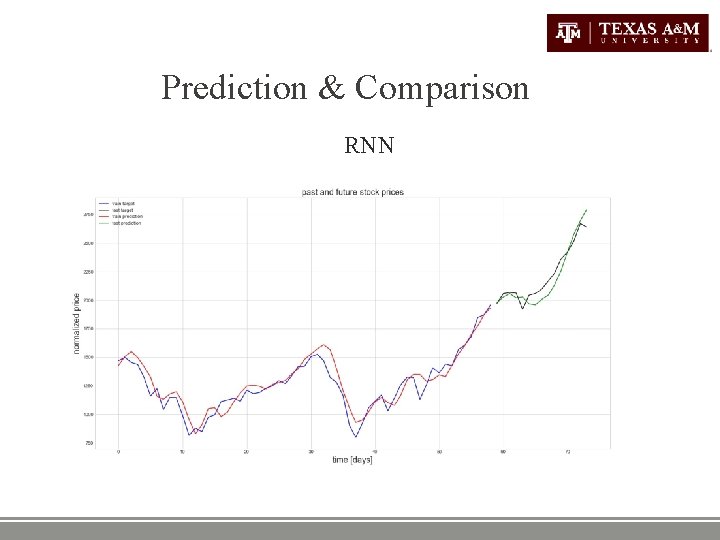
Prediction & Comparison RNN
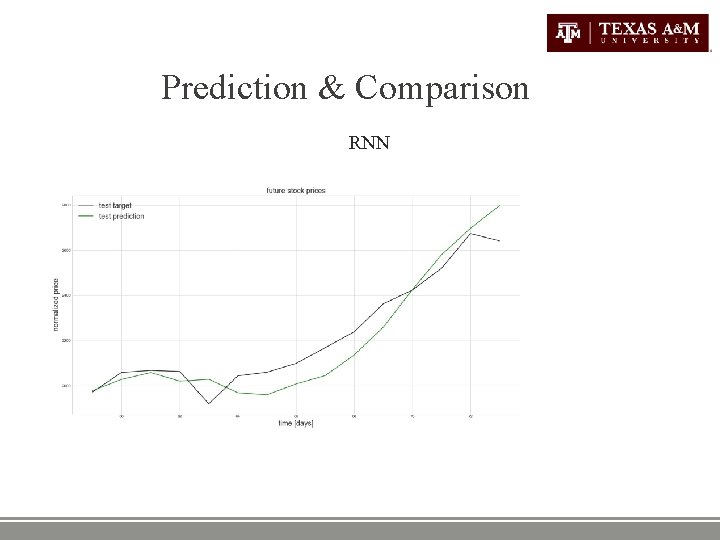
Prediction & Comparison RNN
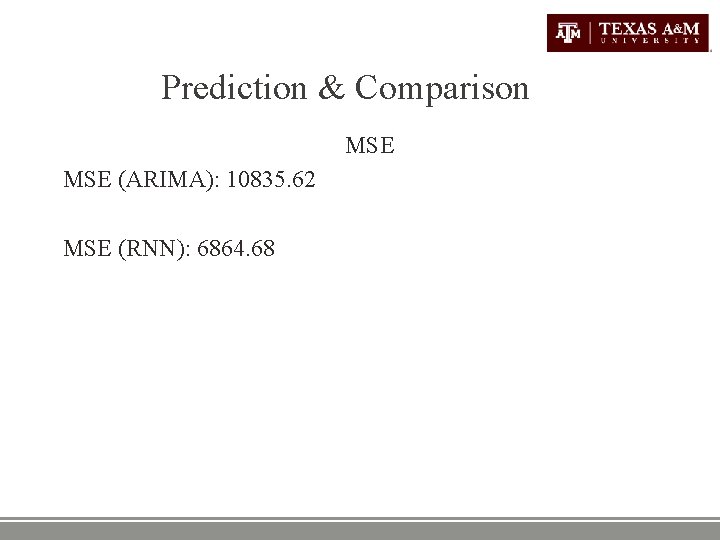
Prediction & Comparison MSE (ARIMA): 10835. 62 MSE (RNN): 6864. 68
Questions?