
Time for School A functionbased approach to improving
Time for School! A function-based approach to improving school attendance Southern Maine Autism Conference March 7, 2020
Disclaimer Neither the BACB or Woodfords Family Services is responsible for or endorses the content of this presentation. This training will not result in any state or national certification relevant to the conduct of assessment or intervention or constitute training sufficient to implement these procedures without professional guidance.

Common Attributes of Non-Attending Students …None, some, or all may apply
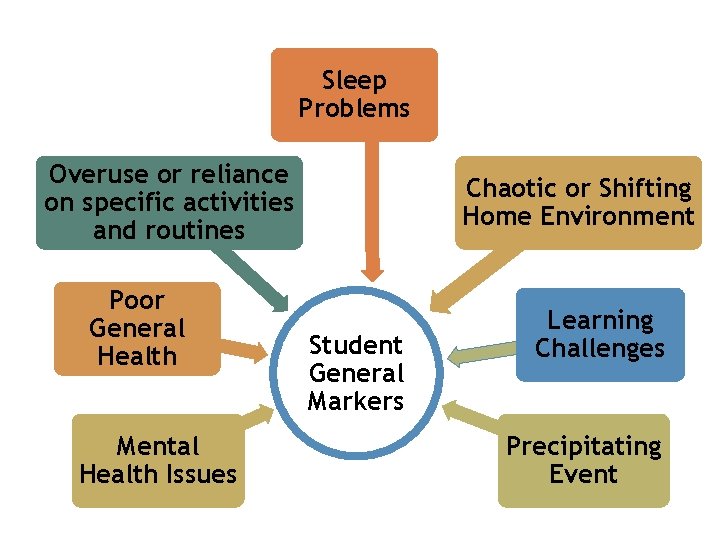
Sleep Problems Overuse or reliance on specific activities and routines Poor General Health Mental Health Issues Chaotic or Shifting Home Environment Student General Markers Learning Challenges Precipitating Event
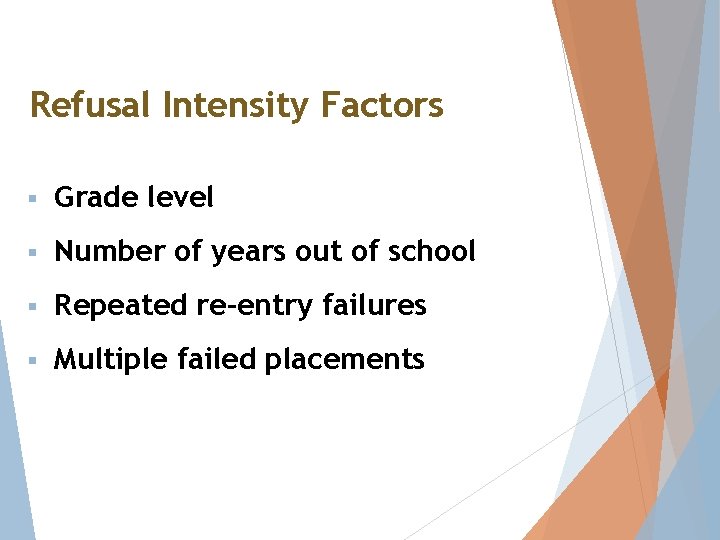
Refusal Intensity Factors § Grade level § Number of years out of school § Repeated re-entry failures § Multiple failed placements
Child Refusal Intensity Factors § Chronic sleep problems § Self-directed schedule § Use of nonfunctional coping strategies (screens, substances) § Not engaged with therapeutic services
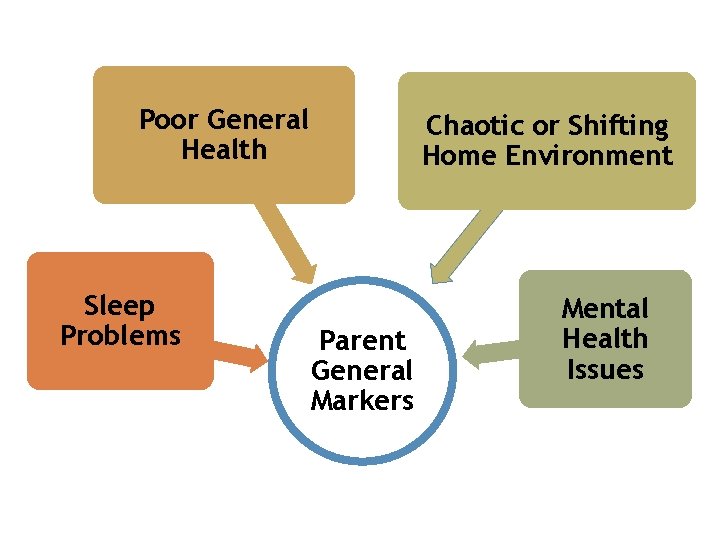
Poor General Health Sleep Problems Chaotic or Shifting Home Environment Parent General Markers Mental Health Issues
Parent Refusal Intensity Factors § Multiple parent-terminated placements § Preference for alternate placement § Not engaged with therapeutic services § Parent school history § Consequences of insisting child attend § Capacity to tolerate child discomfort § Level of parent-school hostility
High Risk School Features § Chaotic, overwhelming environment § Disorganized instruction § Inconsistent discipline § Traditional discipline code § Multiple placements within school § Poor relationship with parents § School viewed by parents as deceptive, ineffective, non-communicative § Featured on parent Facebook page…

Ways to Think about Non-Attendance Topography-Based Diagnostic-Based Function-Based
Topography-Based Approach § Reliance on behavioral topography - what behaviors “look like” - may lead to inappropriate placement § Because student with ID engages in aggression, they should go to the high rolling Bellagio Program § But…Not everyone belongs in Vegas
Diagnosis-Based Approach § Reliance on diagnosis may lead to a cookbook intervention … tasty recipe that won’t digest well § Try ‘X’ for students with § § Anxiety (generalized, social) § Trauma (PTSD) § Depression Helpful for putting behavior in context

Function-Based Approach § Addresses the reinforcer for refusal as well as… § Setting events § Antecedents § Competing Responses These components will be your focus when planning re-entry
Function-Based Approach …with a pinch of diagnostic presentation…
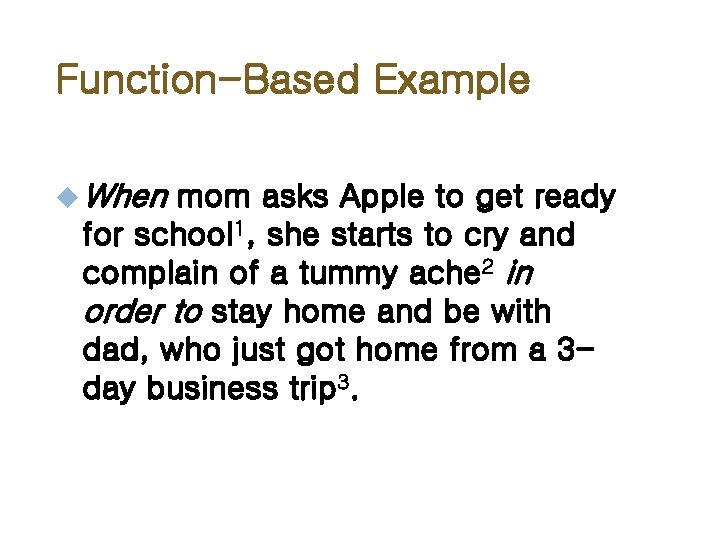
Function-Based Example When mom asks Apple to get ready for school 1, she starts to cry and complain of a tummy ache 2 in order to stay home and be with dad, who just got home from a 3 day business trip 3.
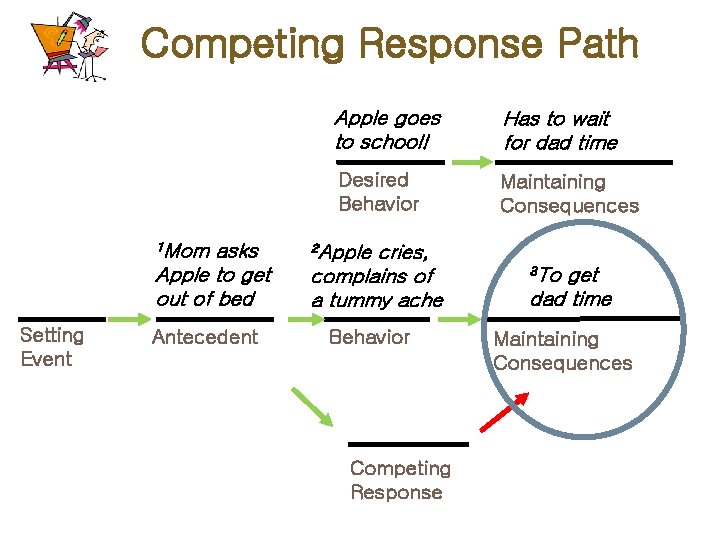
Competing Response Path 1 Mom asks Apple to get out of bed Setting Event Antecedent Apple goes to school! Has to wait for dad time Desired Behavior Maintaining Consequences 2 Apple cries, complains of a tummy ache Behavior Competing Response 3 To get dad time Maintaining Consequences

Gathering Information Interviews and Observation
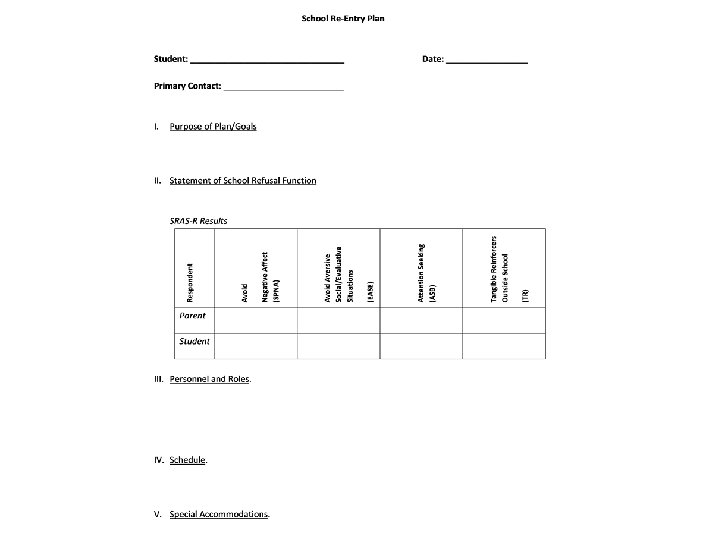
Structured Interviews § Functional Behavioral Assessment Interview (Parent and Student; full) § School Refusal Assessment Scale –R Parent and Student complete SEPARATELY (free and easy) § Functional Behavior(al) Assessment of Absenteeism and Truancy (excellent guided FBA process)
Direct Observation § § What does it look like when parent asks their child to… § Get ready for school? § Get on the bus? § Get out of the vehicle? § Go into the school building? What does it look like when student § Arrives to school? § Is asked to do work, be social, follow rules?

The School Refusal Assessment Scale - Revised Let’s take a look!
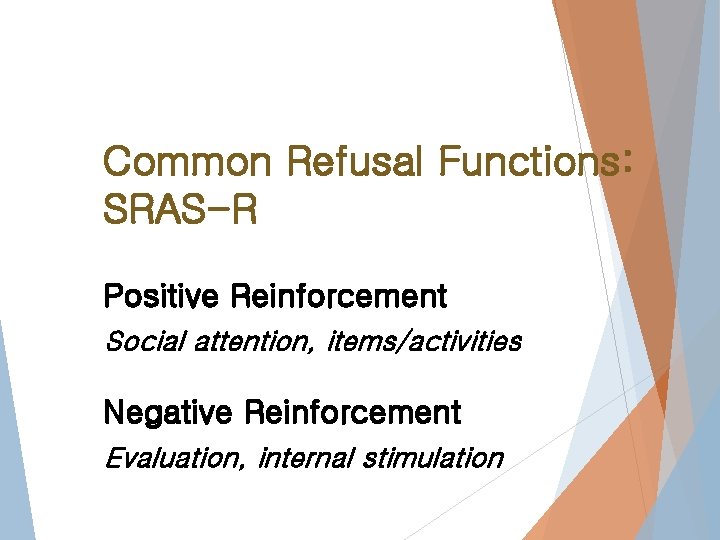
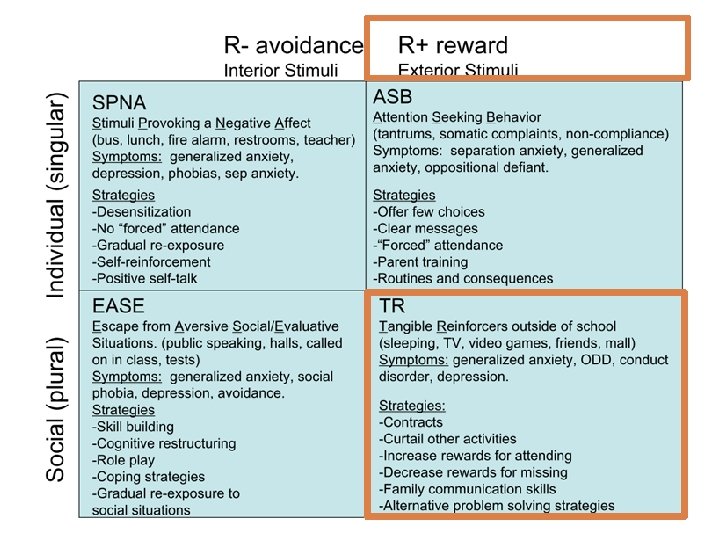
Common Refusal Functions: SRAS-R Positive Reinforcement Social attention, items/activities Negative Reinforcement Evaluation, internal stimulation
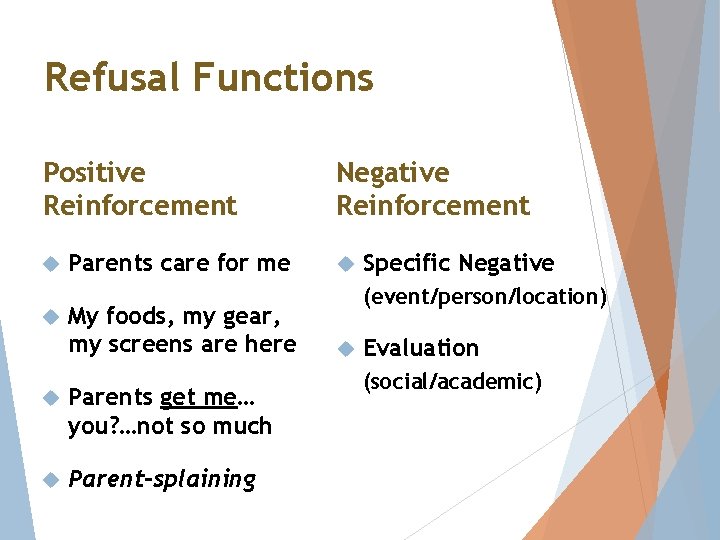
Refusal Functions Positive Reinforcement Parents care for me My foods, my gear, my screens are here Parents get me… you? …not so much Parent-splaining Negative Reinforcement Specific Negative (event/person/location) Evaluation (social/academic)
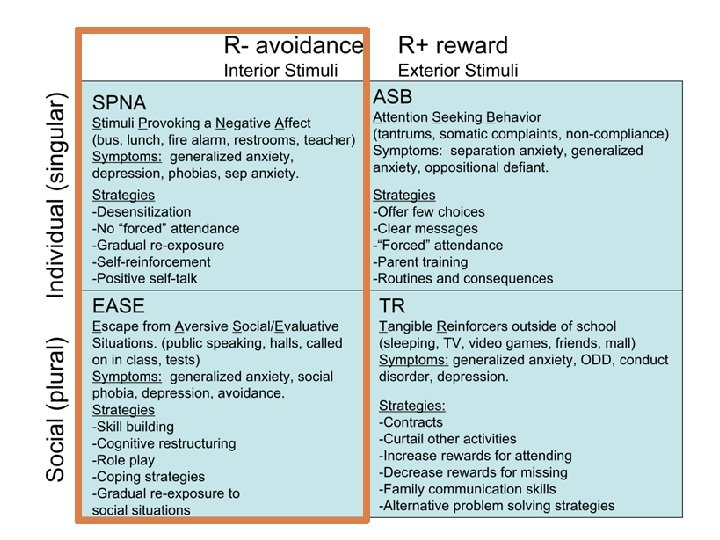
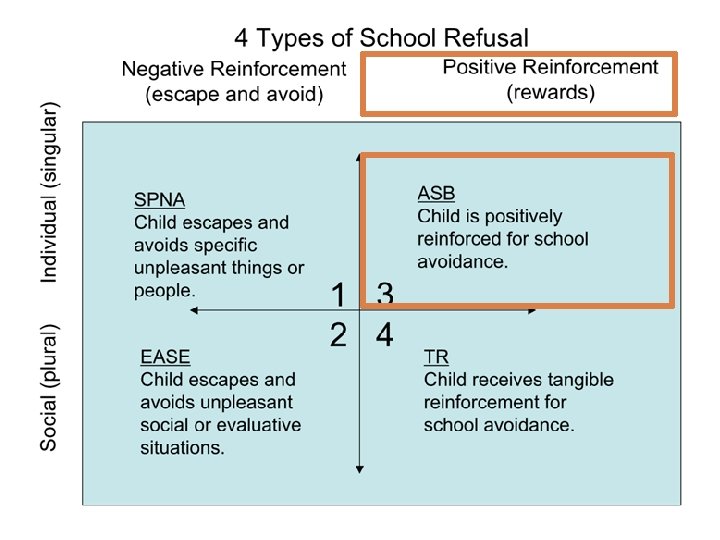
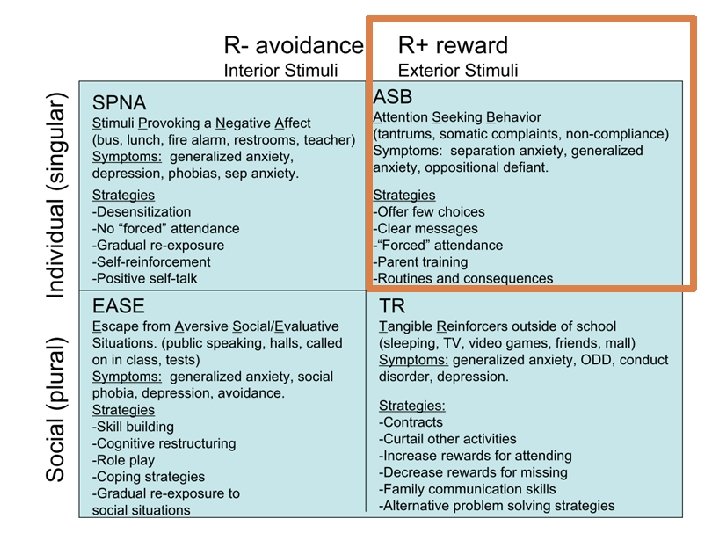
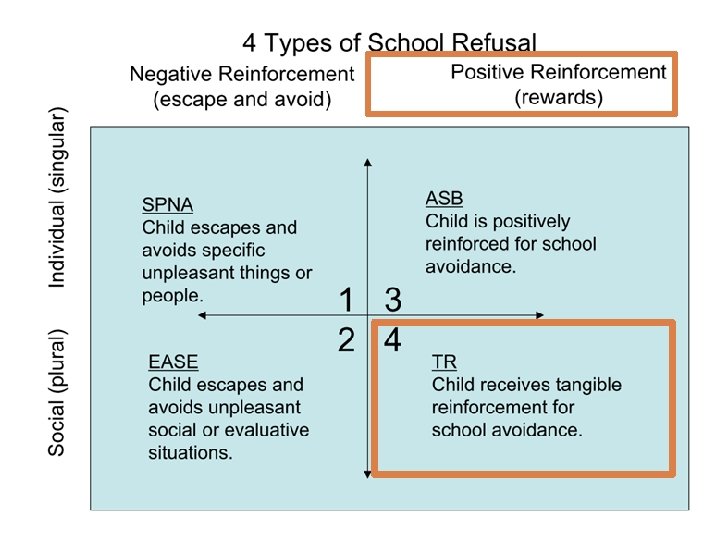
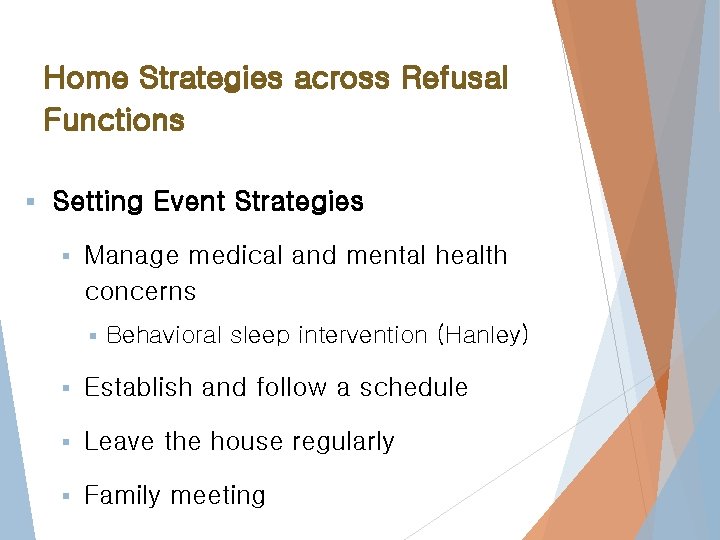
Home Strategies across Refusal Functions § Setting Event Strategies § Manage medical and mental health concerns § Behavioral sleep intervention (Hanley) § Establish and follow a schedule § Leave the house regularly § Family meeting
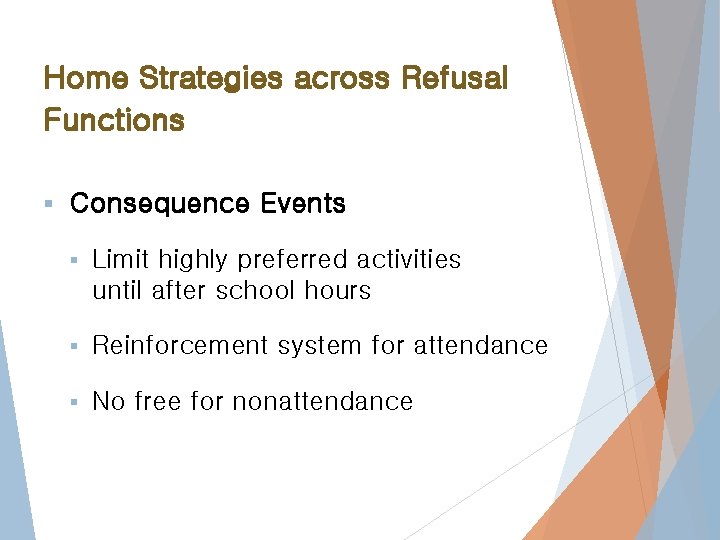
Home Strategies across Refusal Functions § Consequence Events § Limit highly preferred activities until after school hours § Reinforcement system for attendance § No free for nonattendance

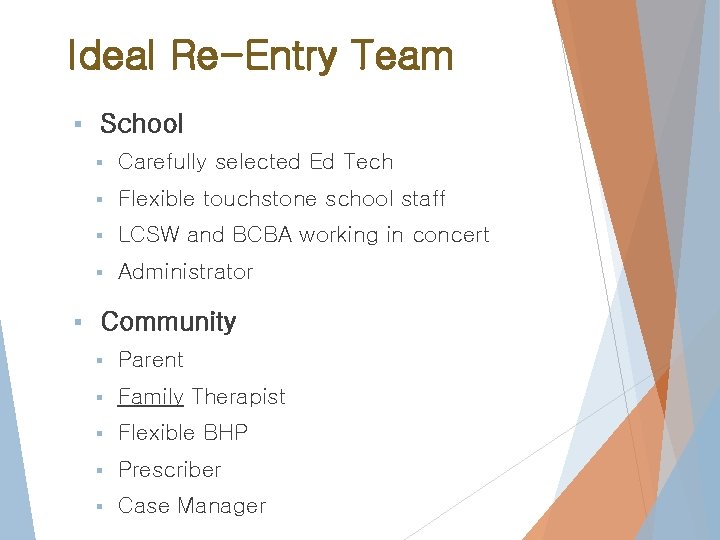
Ideal Re-Entry Team § § School § Carefully selected Ed Tech § Flexible touchstone school staff § LCSW and BCBA working in concert § Administrator Community § Parent § Family Therapist § Flexible BHP § Prescriber § Case Manager
Re-Entry Plan Rules § Write one (see handout) § Establish the plan well in advance of implementation to give everyone time to ask questions, get organized, and change their mind § Ensure full understanding of the plan by all parties. Use video, visual supports, etc. as needed § Involve parents on site at school ONLY if necessary and concurrently develop a plan for fading them out

Re-Entry Plan Rules § When student has had multiple placement failures, do not include a step back in the plan. § § Instead, ensure that the expectation for attendance is sufficiently low that it can be easily attained. Don’t allow student to exceed the expectation for attendance (hours per day, number of days) and don’t request that they stay – no matter how well the day is going. § Instead, let the student know that you will let the team know of their interest and they will develop a new plan.
Please Don’t § Rush the process § Let the lawyers override clinicians who do this for a living § § The objective is progress, not meeting arbitrary deadlines Draw lines in the sand
Please Do § Intervene early § Recognize when you are not an effective team player and take a time out of the process § Recognize that some time in school is better than no time in school. § Find evaluators who will provide differential diagnoses and declare a definitive DSM-V diagnosis in the report.

THANK YOU! Dr. Gretchen L. Jefferson gjefferson@woodfords. org Senior Behavior Analyst Woodfords Family Services Nationally Certified School Psychologist Board Certified Behavior Analyst - Doctoral
- Slides: 41